Encountering Nations, Forging Empires: American Art
 Call Kai
 Learn
Learn Practice Test
 Spaced Repetition
 Match
Match Flashcards
 Knowt Play
1/19

There's no tags or description
Looks like no tags are added yet.
Name | Mastery | Learn | Test | Matching | Spaced | Call with Kai |
|---|
No analytics yet
Send a link to your students to track their progress
20 Terms
Artist(s) Once Known
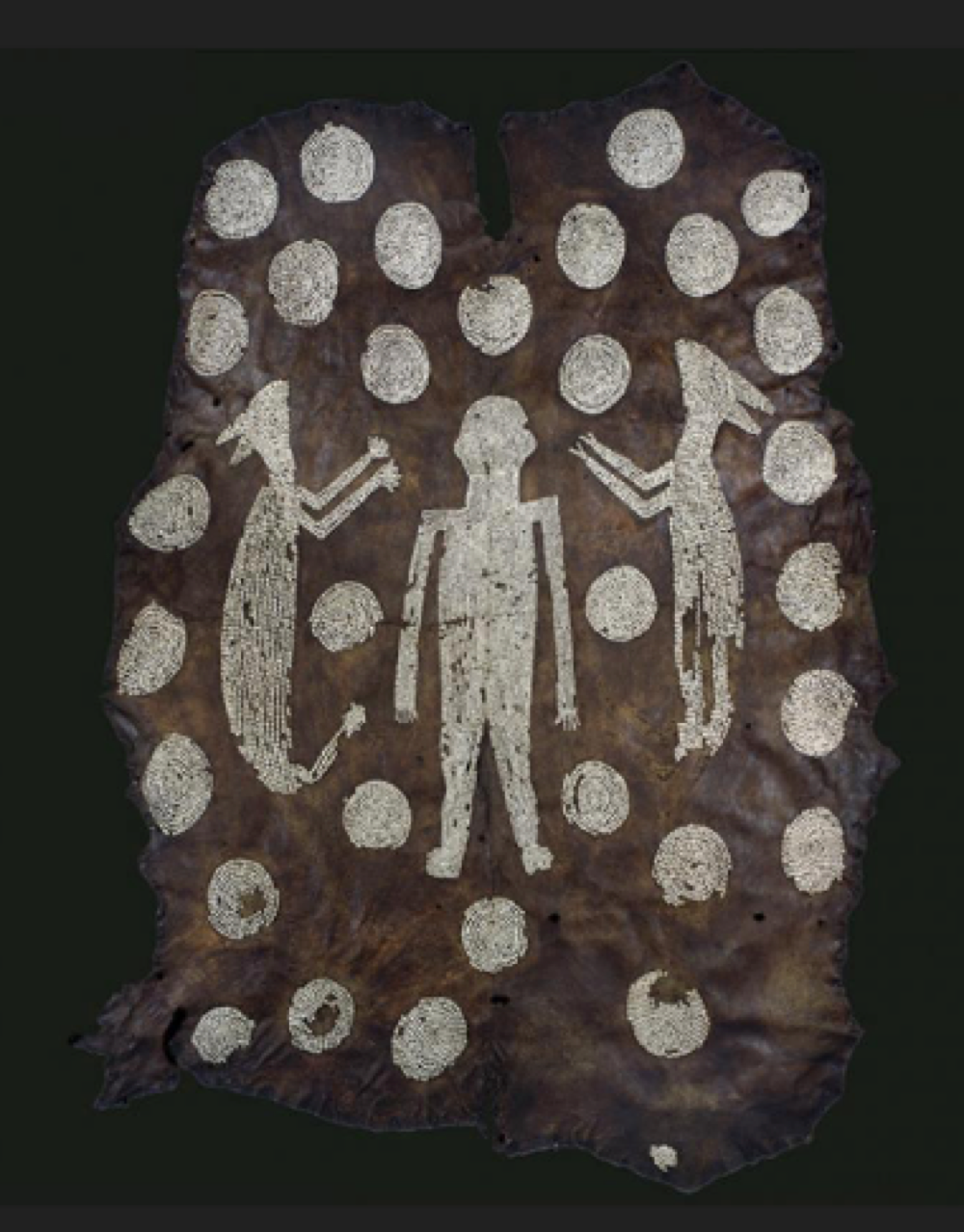
Powhatan’s mantle, before 1638 (Oxford, Ashmolean Museum)
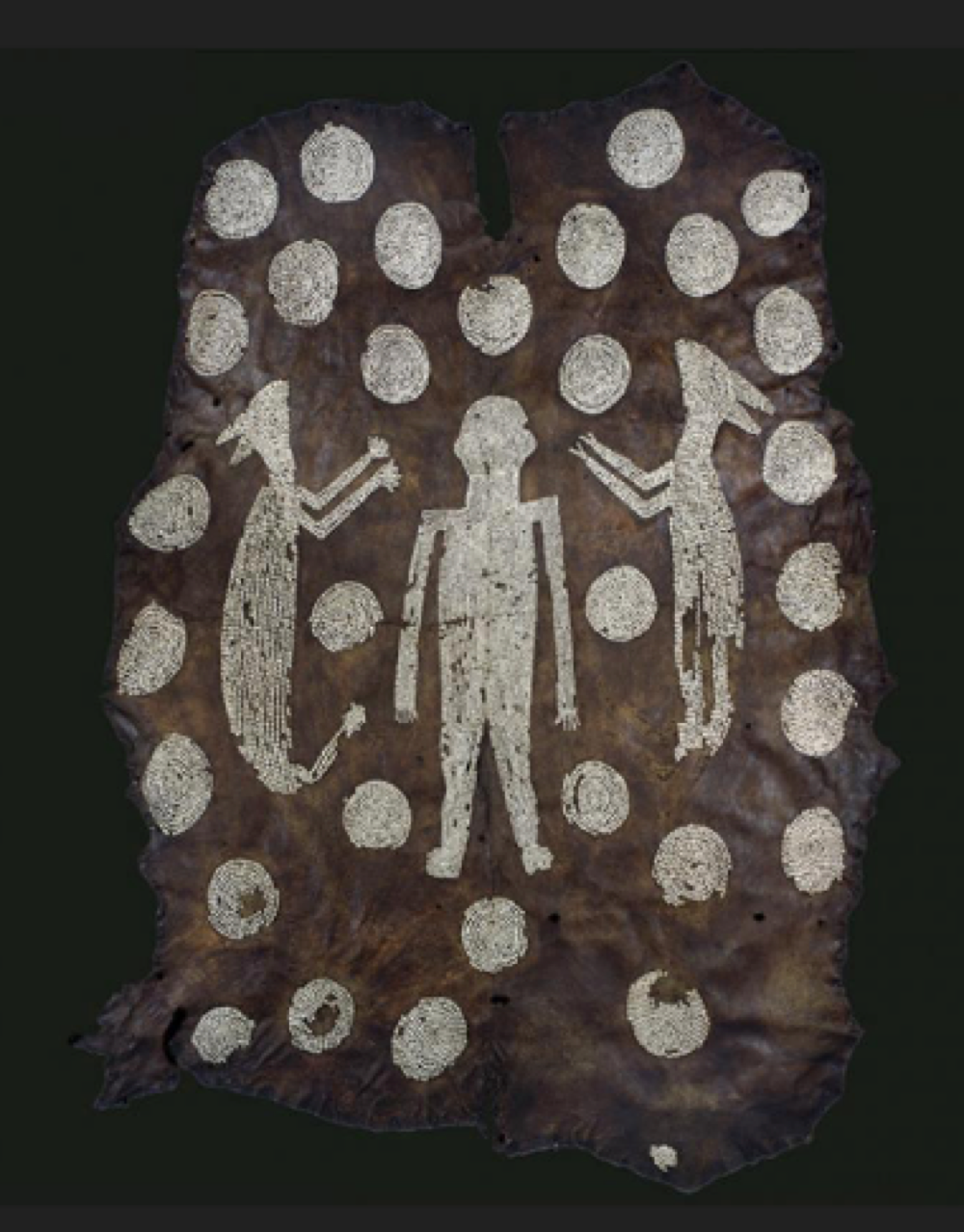
Describe the overall composition of the mantle and its significance
unclear if belonged to Powhatan, too large to wear, deer hides and beadwork: human figure with important centrality, 4 legged animals, surrounded by 34 circles: tribes or nations, power based on who holds it: don’t know how it got to London collection-gift or ritual
After makers from the Onondaga Nation (ca. 1790s)
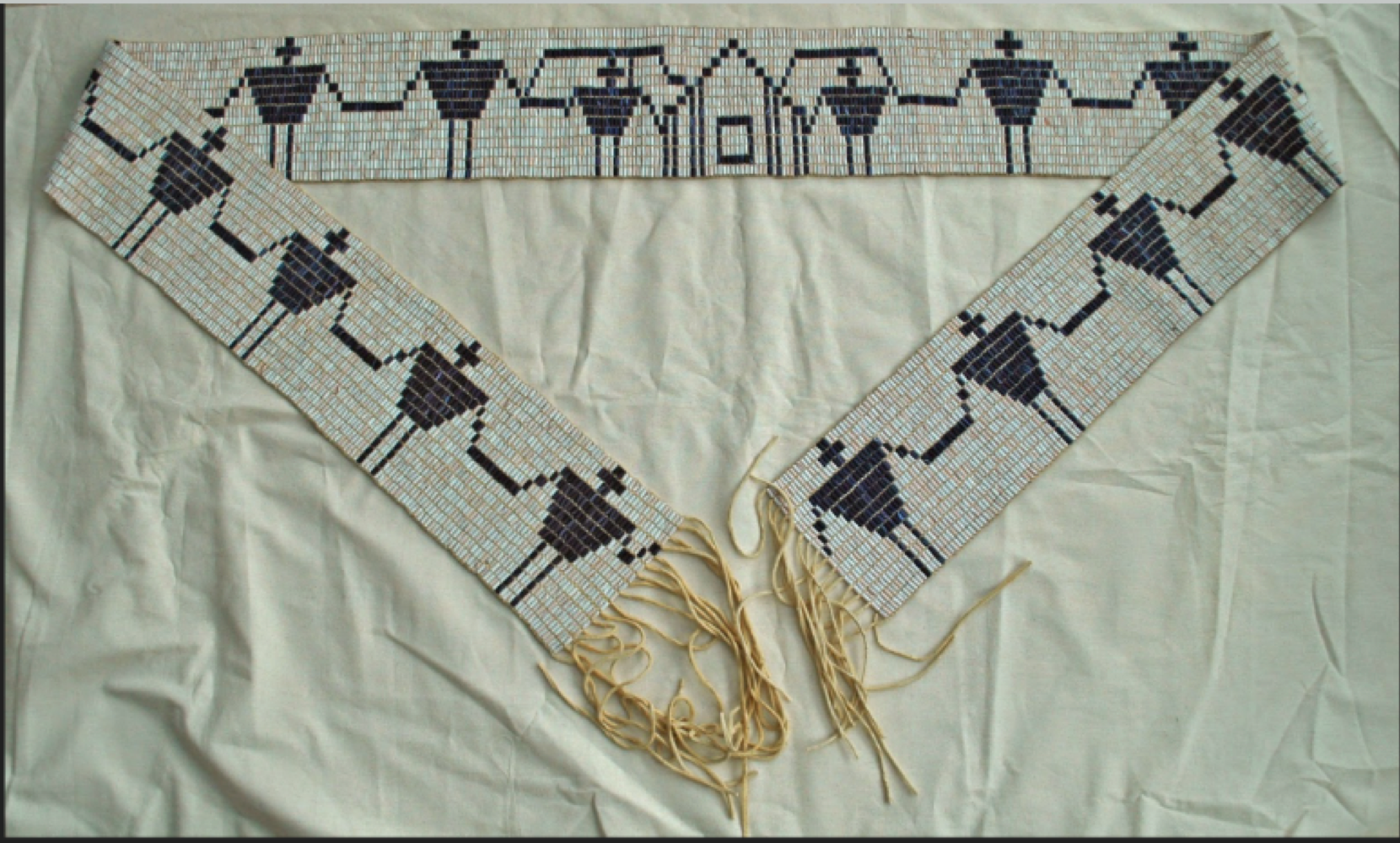
Replica of George Washington Covenant Belt, original 1794 (Onondaga Nation)
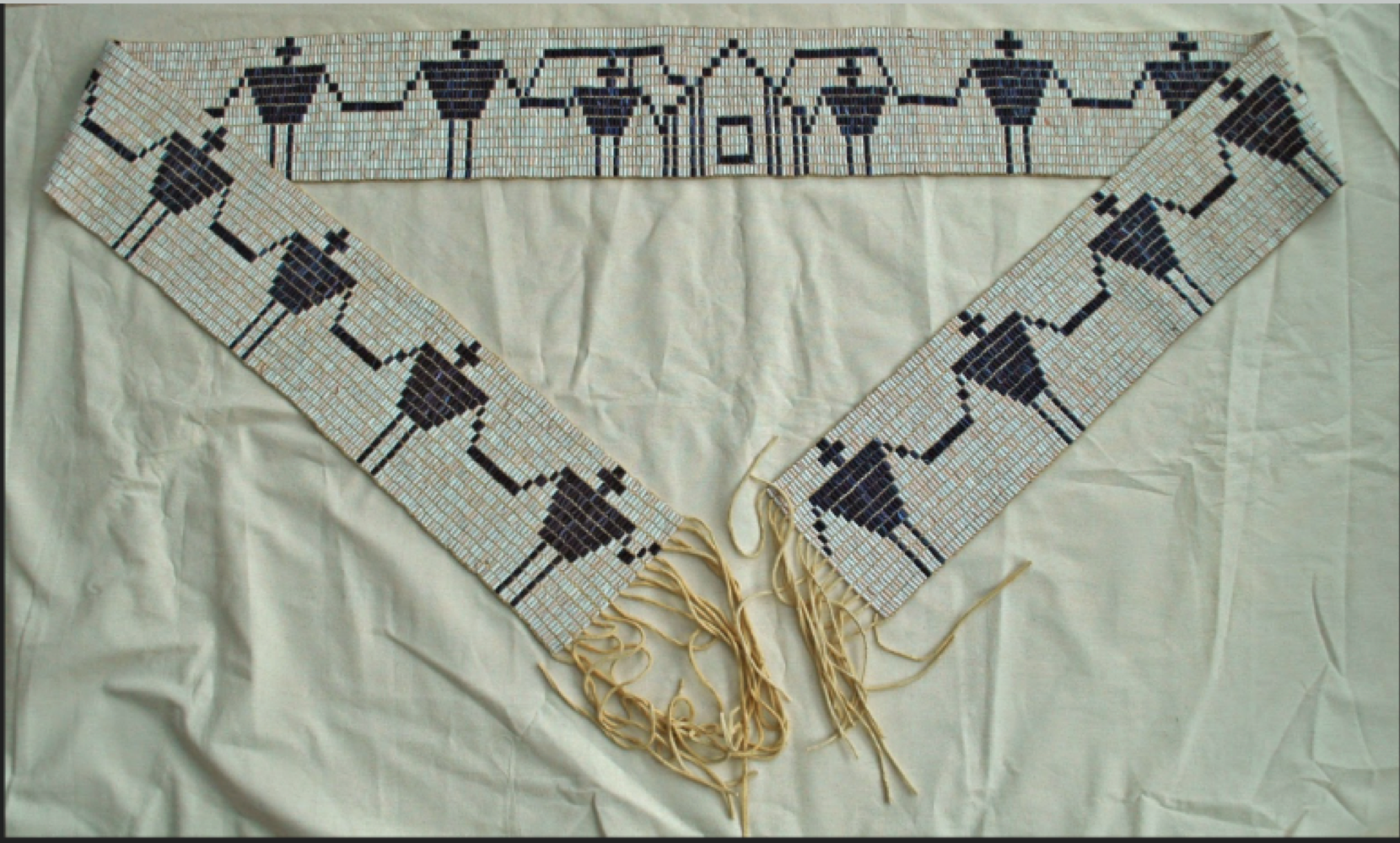
What does the Belt depict and its context
ratification of 1794 treaty: established peace between Americans and Native American land rights=mutual sovereignty, commissioned by GW and made by tribal women
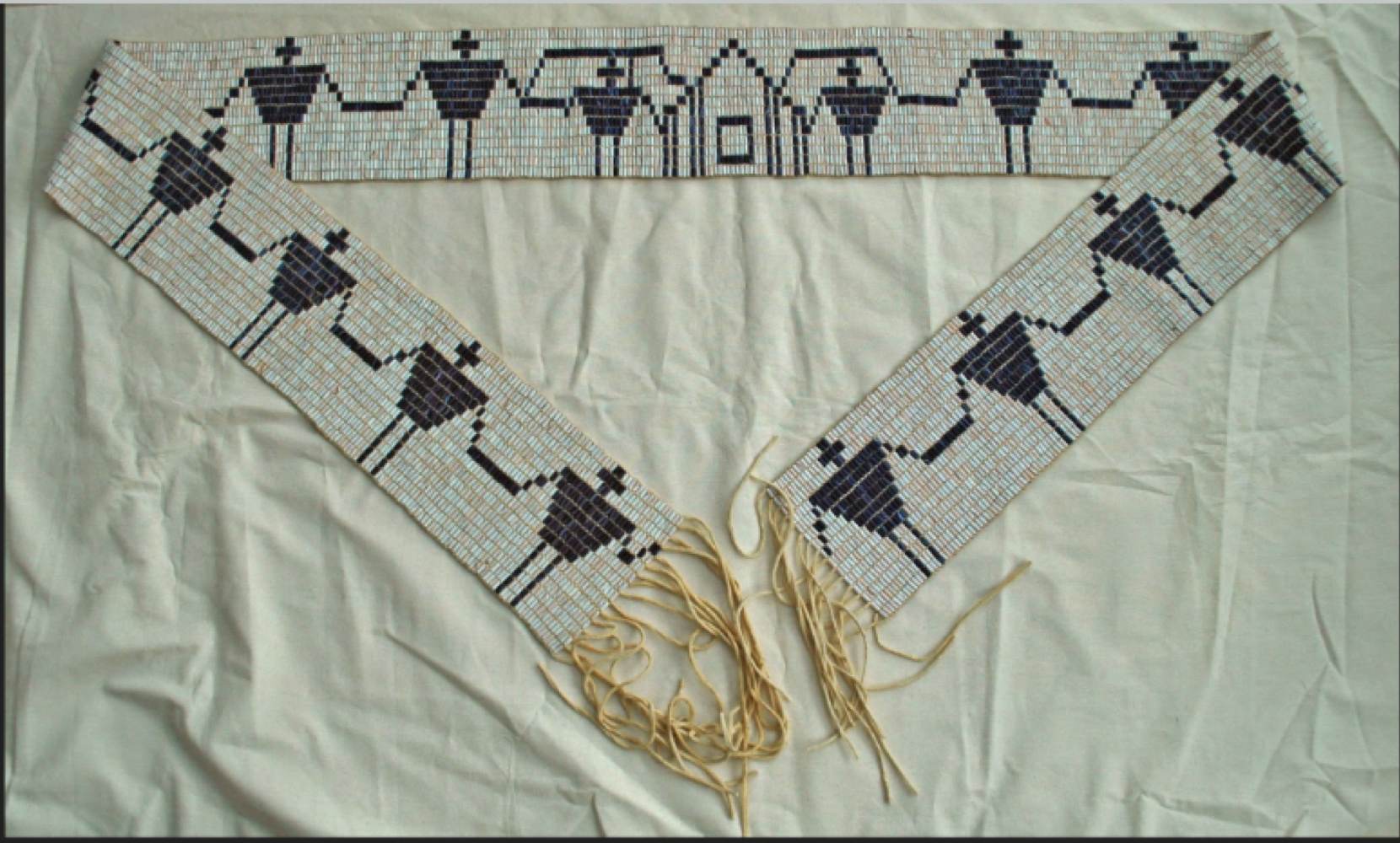
Describe the composition of the Belt and its significance
very long, 13 large figures=the colonies hold hands, 2 central figures around house: George Washington and tribal leader, asymmetry with ideas of collectivity among peers vs. hierarchy of written treaty
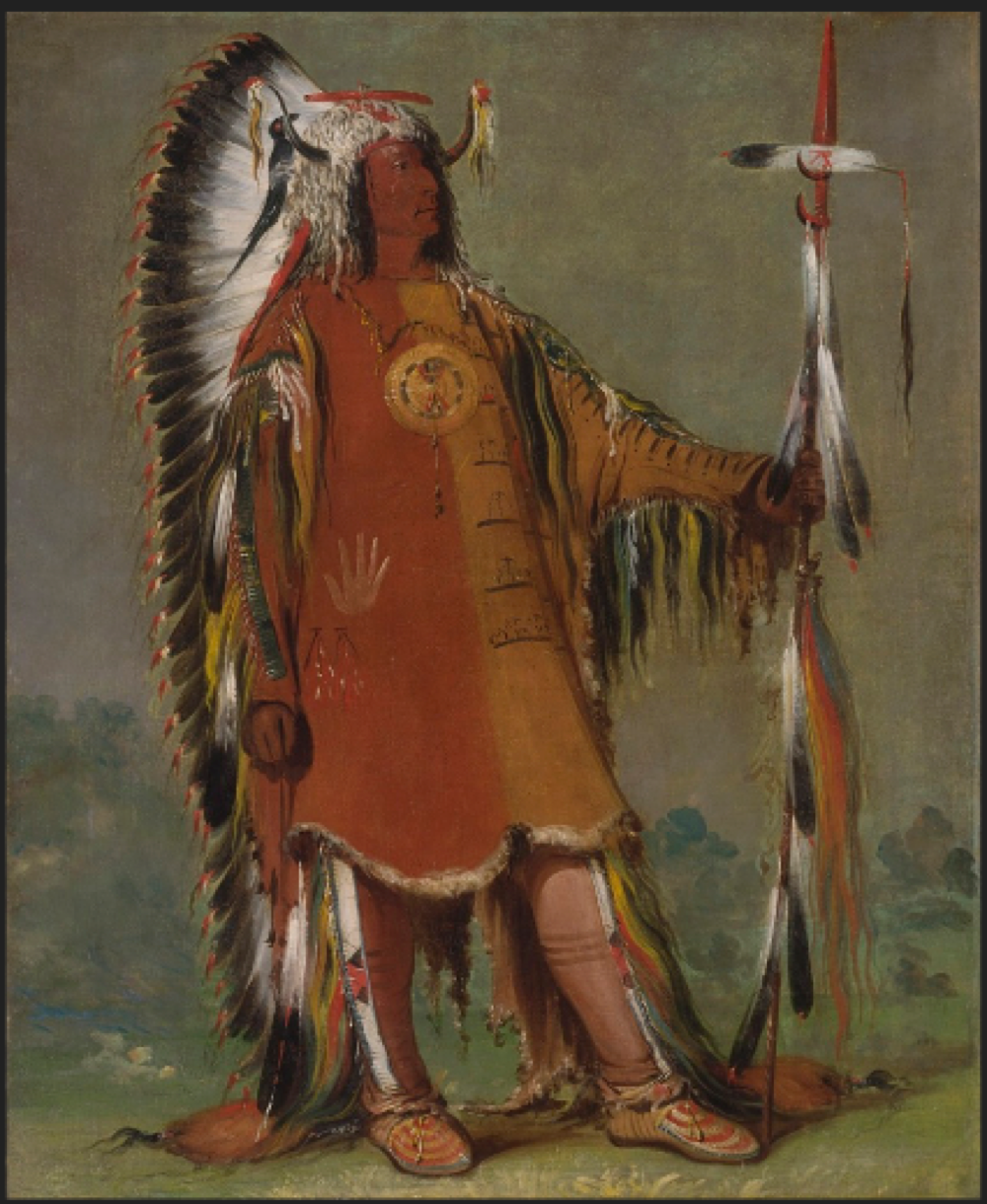
George Catlin (1796-1872)
Máh-to-tóh-pa, Four Bears, Second Chief, in Full Dress, 1832
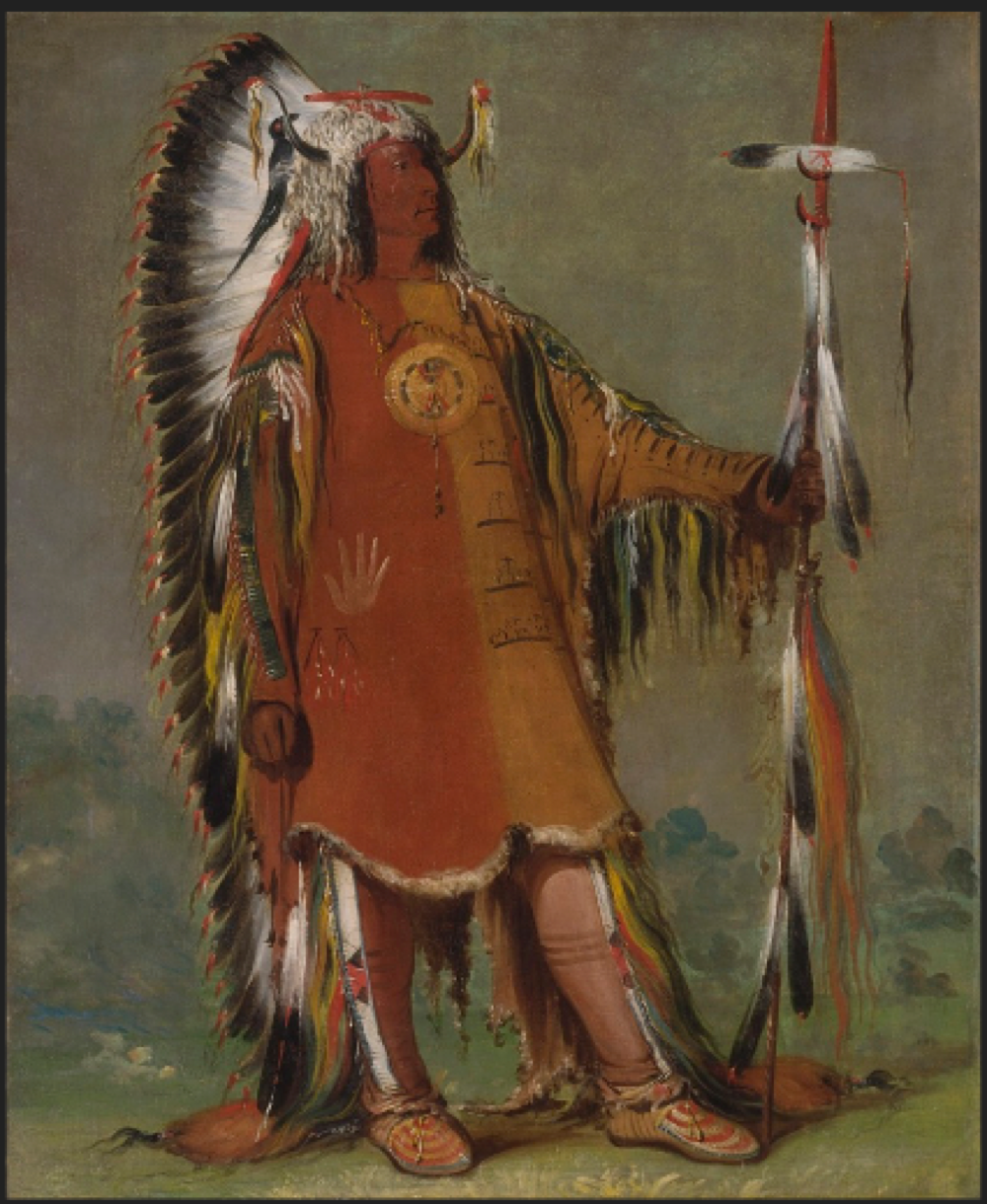
Describe the overall composition of the four bears and its significance
made by American colonizer: assumed natives would be left behind so created documentary evidence: mythology of vanishing races and documenting them=salvage anthropology, Mato-tope: crafted image=artist omitted things he actually wore
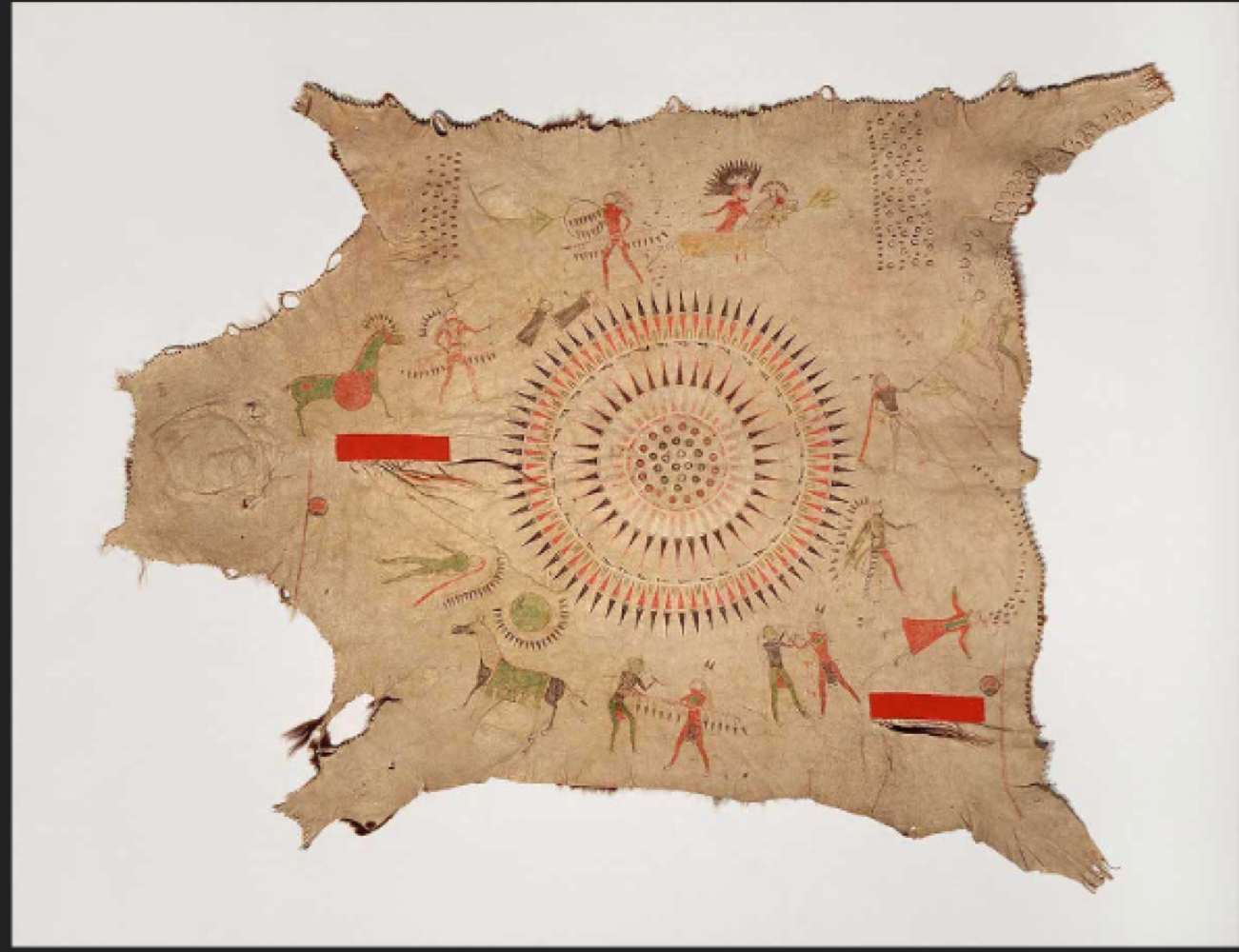
Mato-tope (Four Bears) (1796-1872)
Robe, ca. 1835 (Bern, Switzerland, Bern Historical Museum )
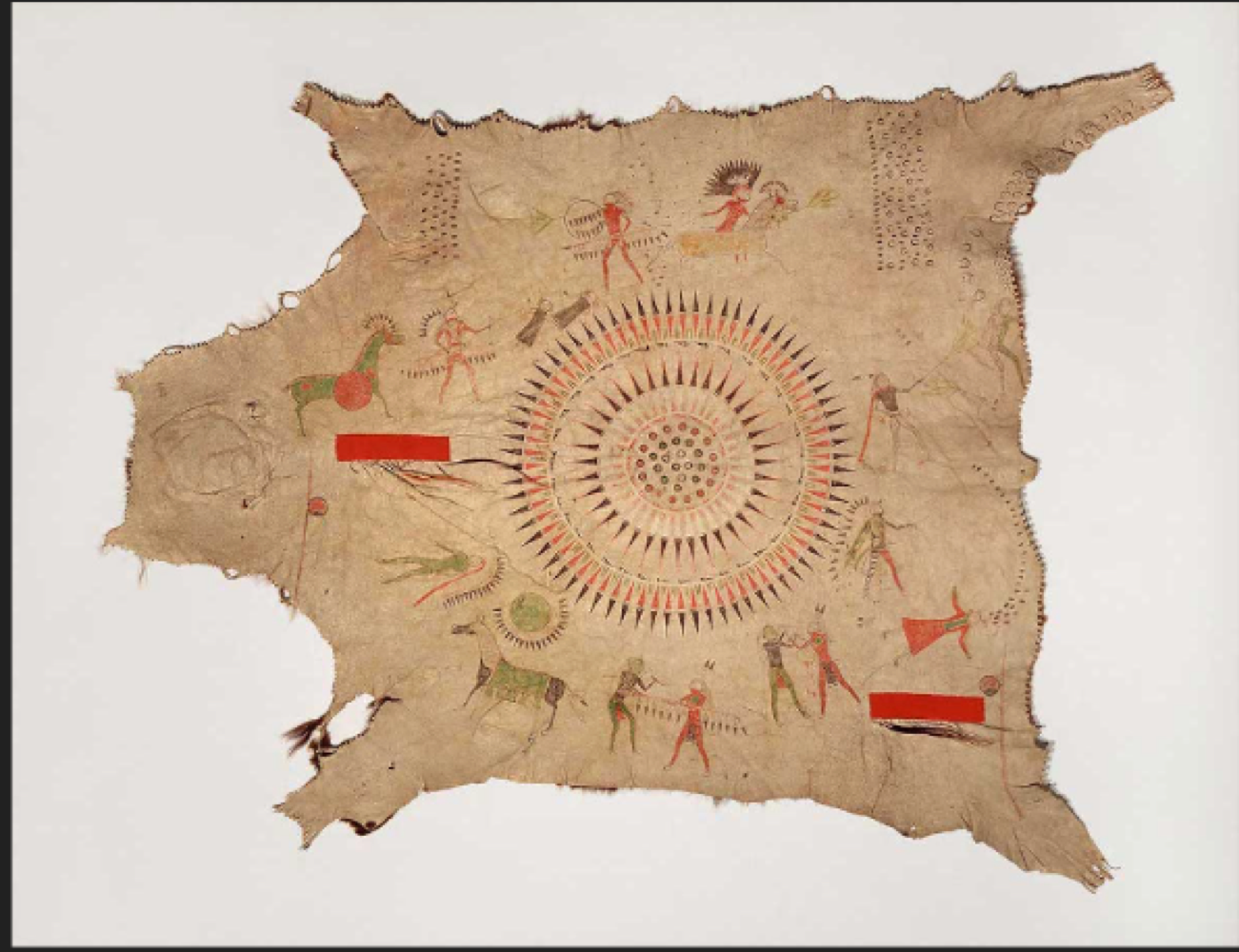
Describe the overall composition of the four bears robe and its significance
shows how Mato-tope represented himself, not always meant to be worn: gifts, narrative aids for history, experiment with perspective, adaptability
Benjamin West, (1738-1820)
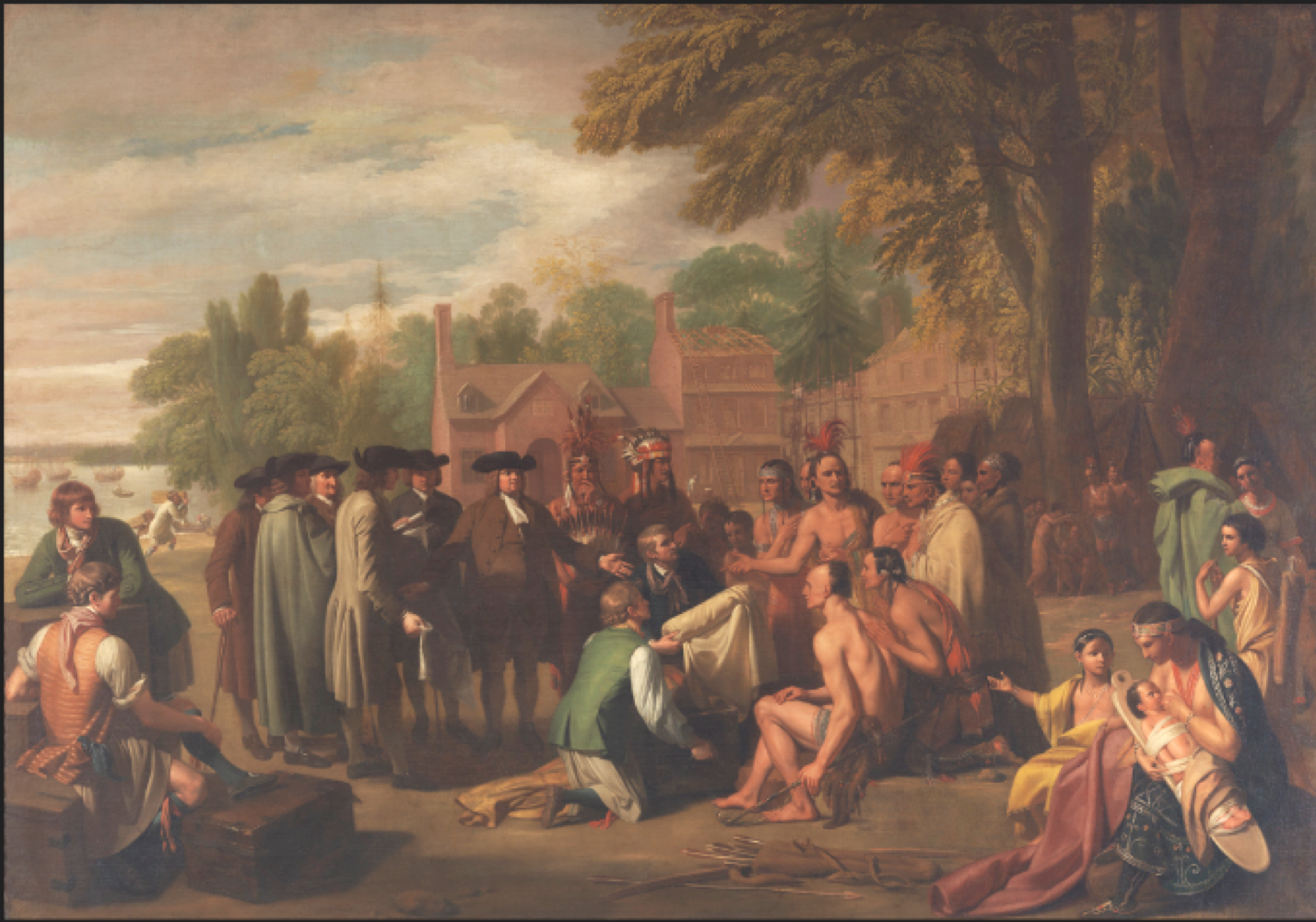
Penn’s Treaty with the Indians, 1771-1772 (Philadelphia, Pennsylvania Academy of the Fine Arts)
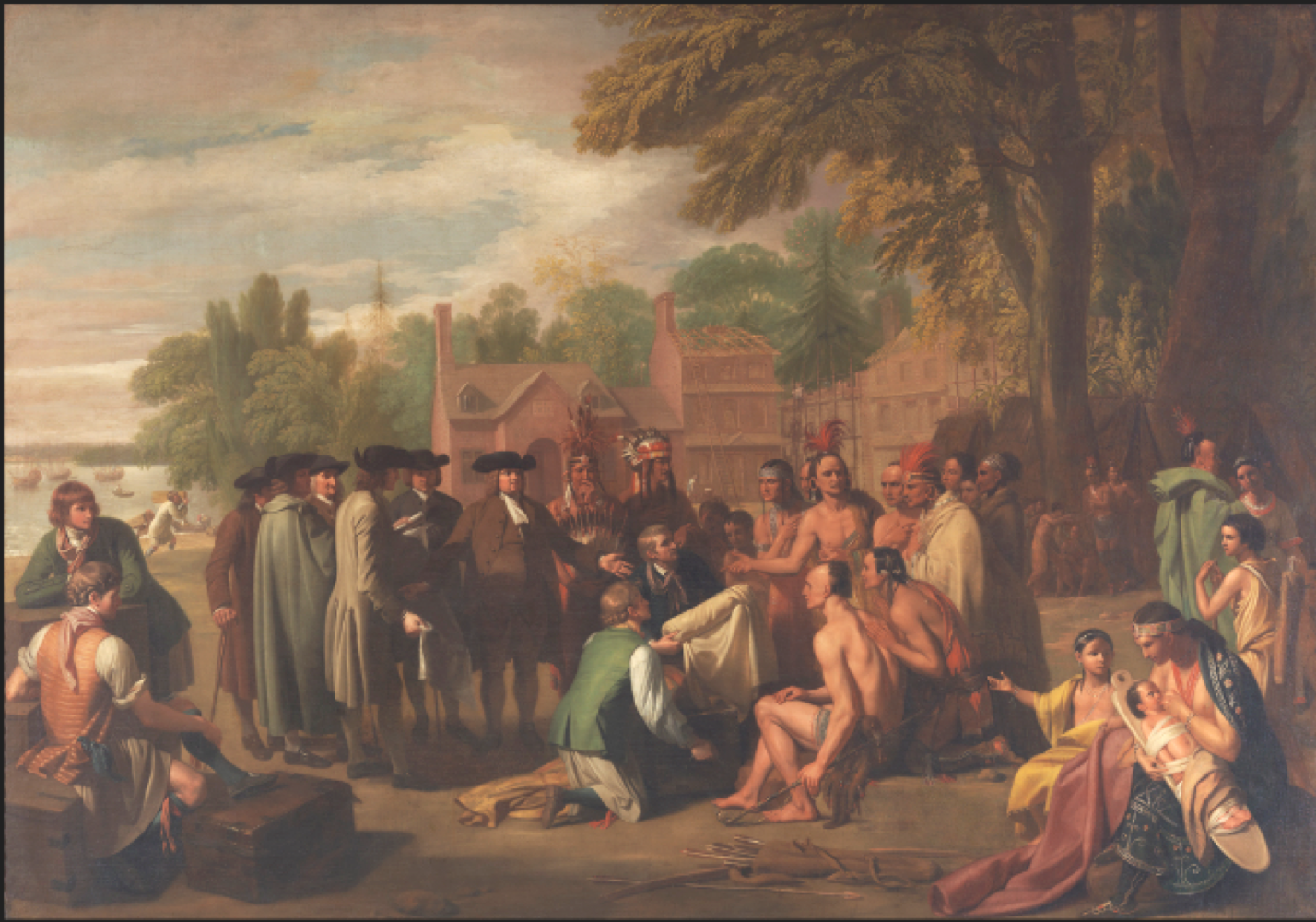
Describe the context of Benjamin West and its significance
born in colonies, trained abroad in London, tour of Italy, studied classical antiquity= artistic identity forged in Europe
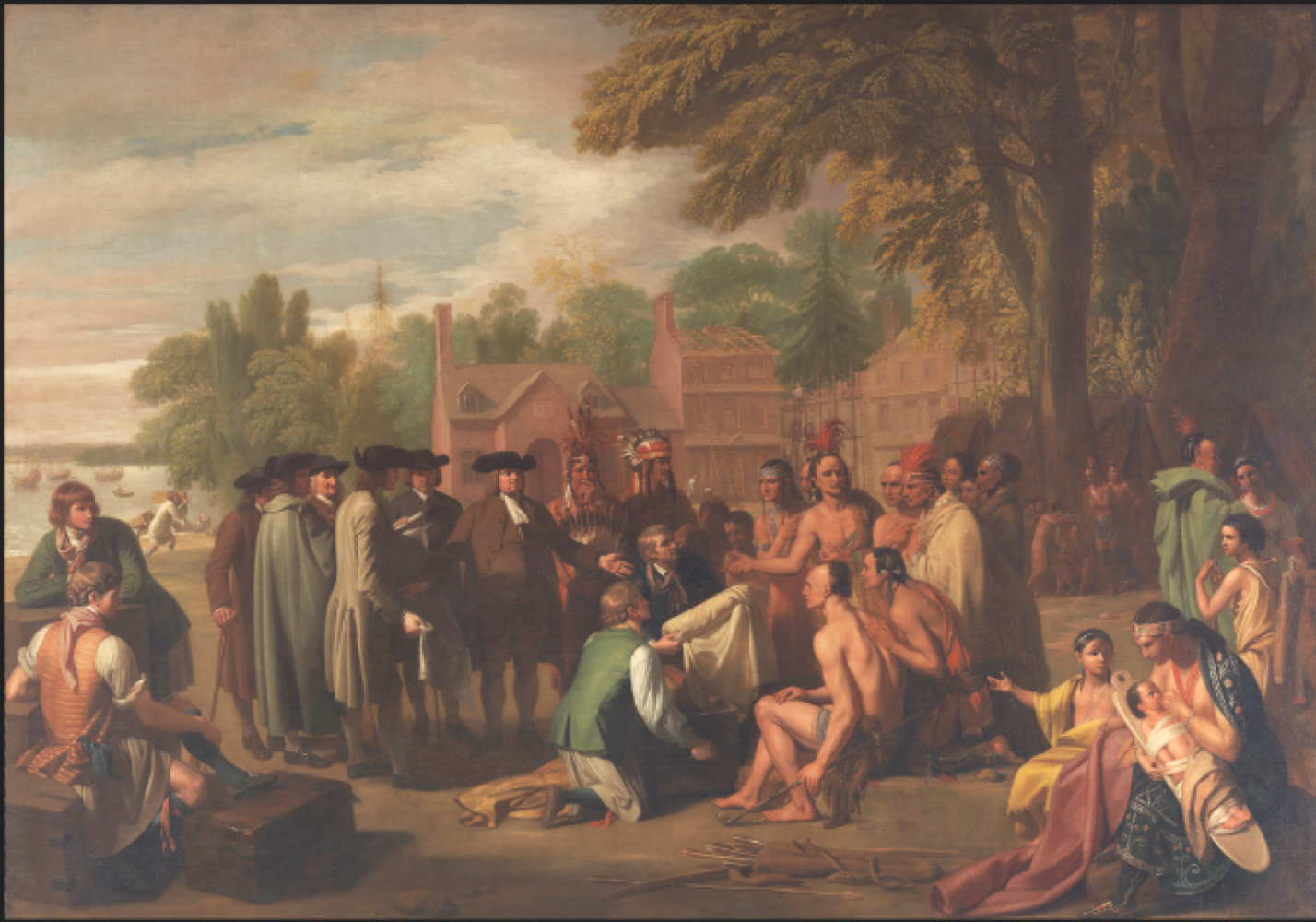
Describe the context of the Penns treaty painting and its significance
founding in Pennsylvania, made near revolutionary war years after treaty took place=monument making, Penns son commissioned for damage control: tyrant for land holdings, framed his family as benevolent and entitled to land, had been granted land by english king
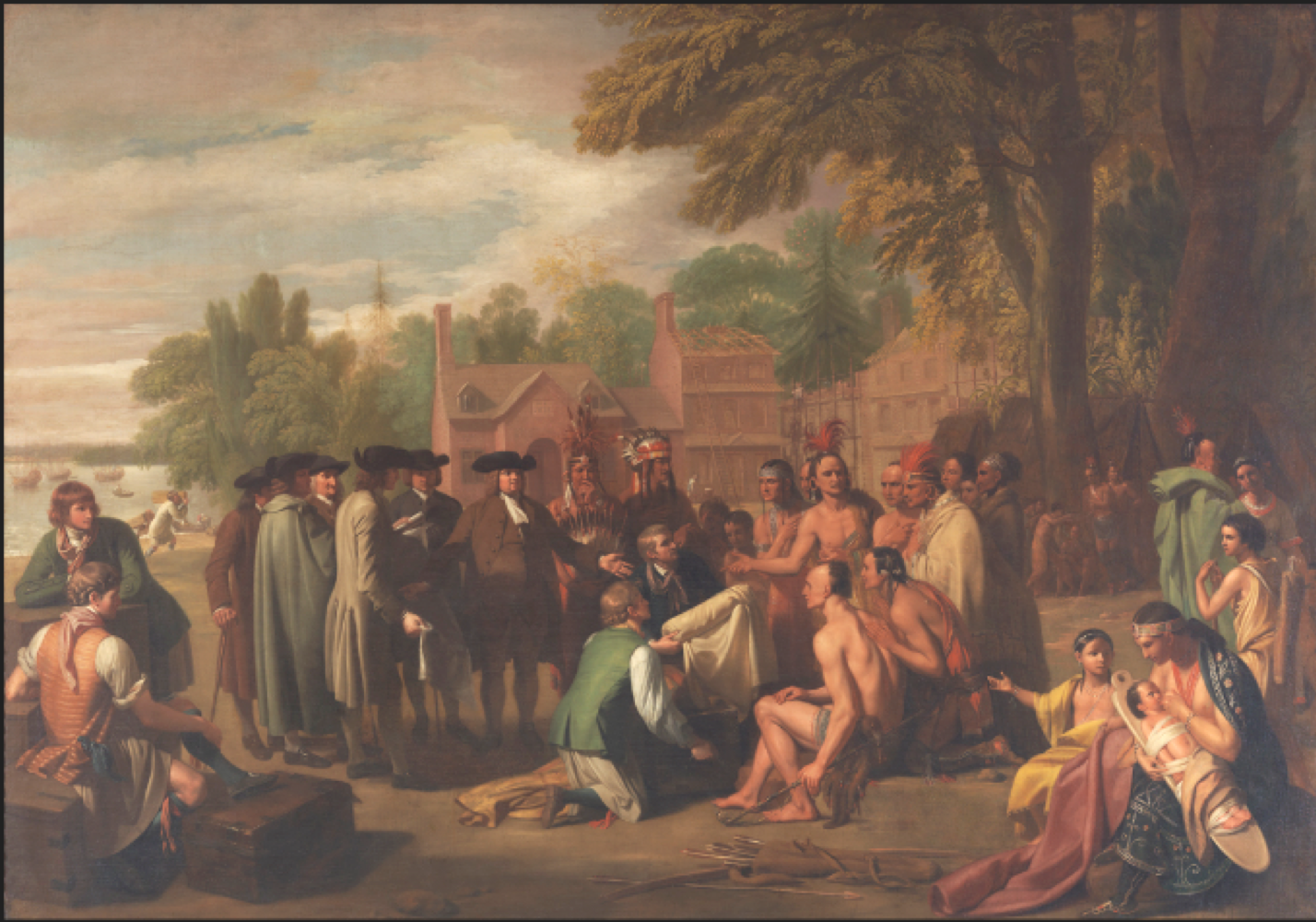
Describe the overall composition of Penns treaty and its significance
monumental, offers cloth for land: undyed ivory vs Indians wearing dyed clothes=have traded in the past, this event never happened, sheltered pyramid shape with background, West study ancient sculpture=modeled Native men, theatrical drama with the gestures: stage like foreground=called on euro painters, distance himself from Britain
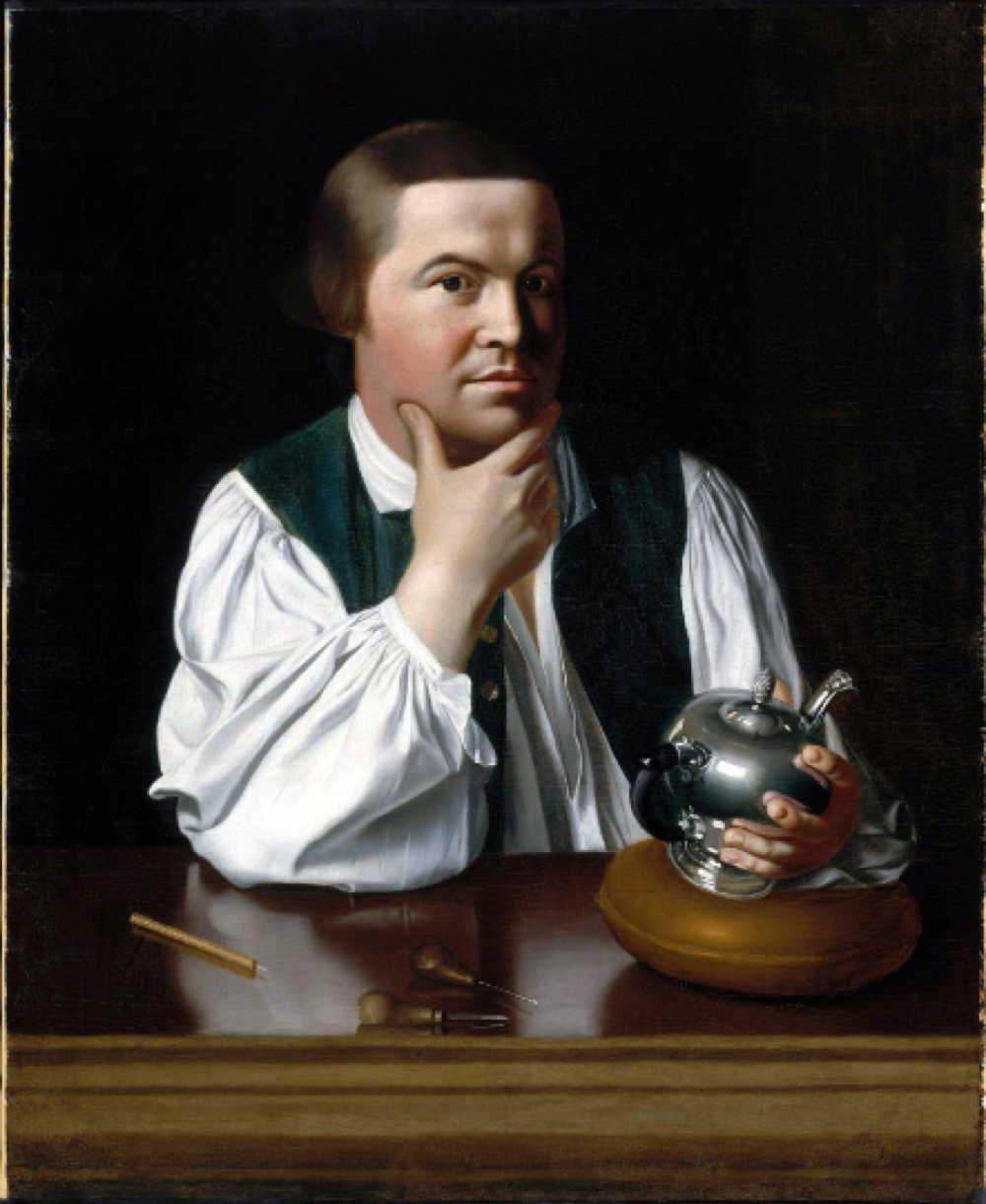
John Singleton Copley (1738-1815) Paul Revere, 1768
(Boston, Museum of Fine Arts)
Describe the context of the Paul Revere painting and its significance
artist mentored by Benjamin West, Copley as fellow artist=his painting and Reveres work, teapot=tea politically charged: made on brink of Boston Tea party and shows trade of tea
Describe the overall composition of the Paul Revere painting and its significance
working class silversmith, shown not in finery: artisan clothing, shown working and we interrupted him, engraving teapot, tools just put down, pose of contemplation, visual echo of head-intellect and teapot, viewer on the other side of the table seeking his work, loving detail in reflections
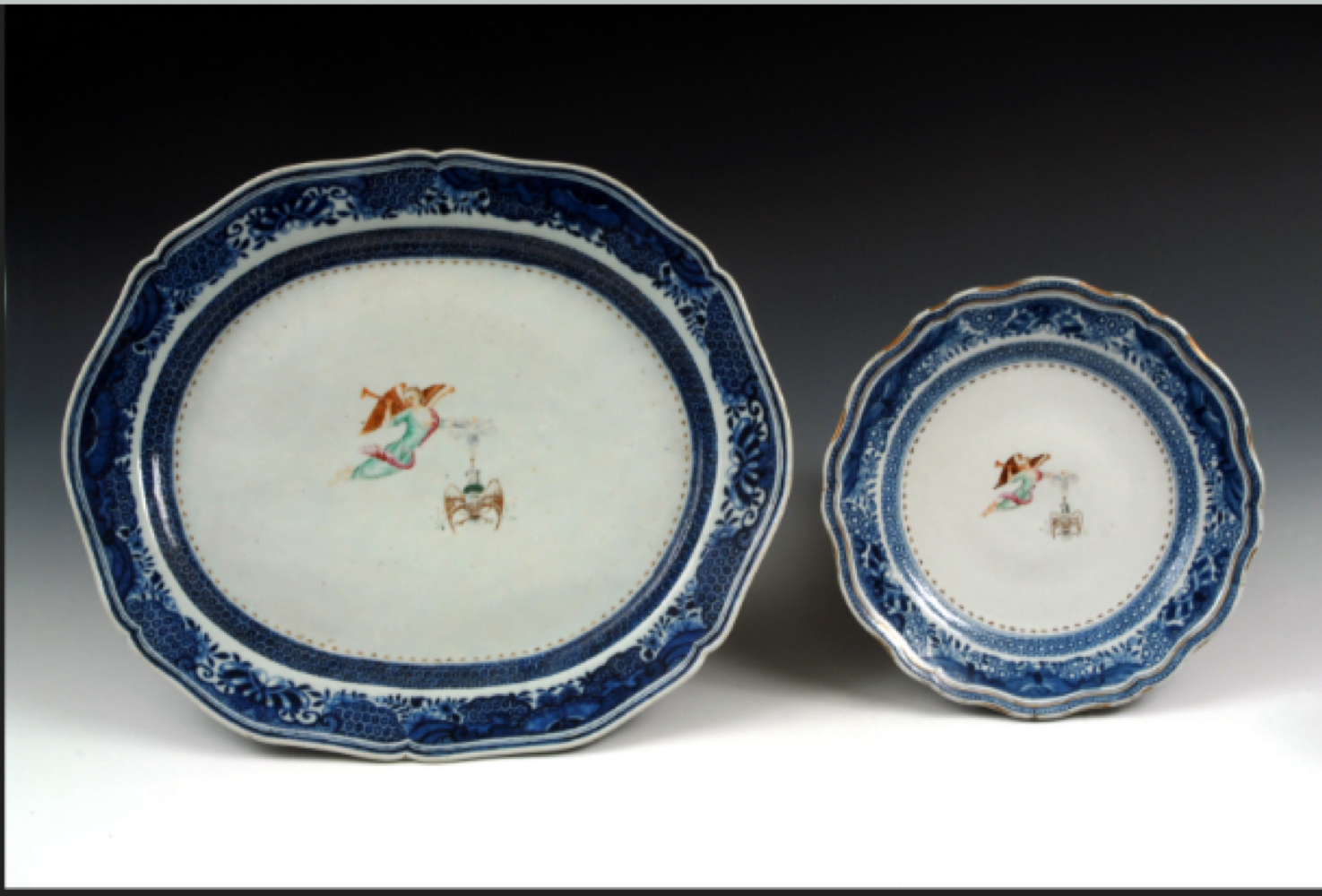
Artisans of Jingdezhen (ca. 1770-1790s)
George Washington’s Society of the Cincinnati Dinner Service, ca. 1785 (Washington, D.C., Society of the Cincinnati)
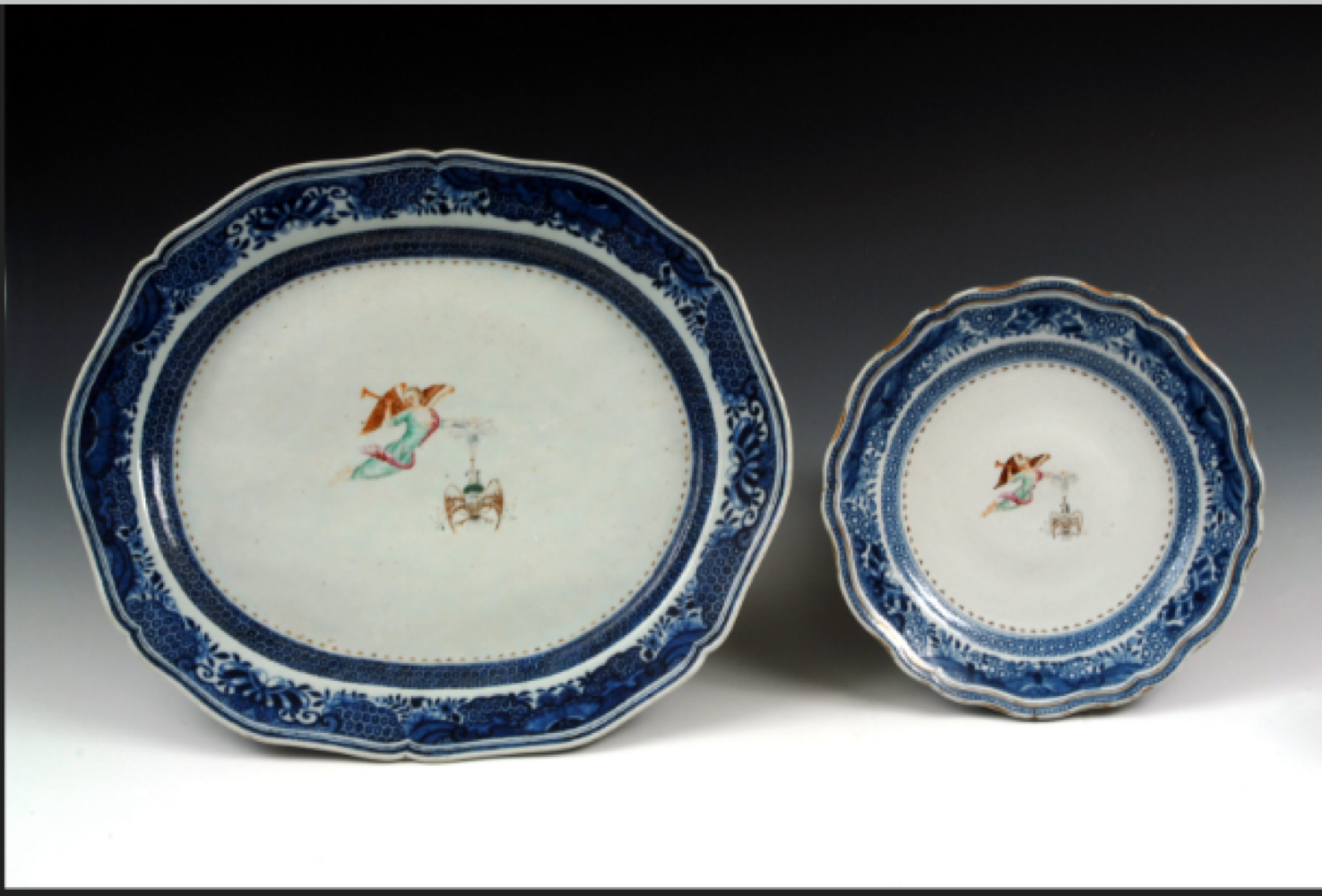
describe the context of the plates
porcelain=luxury good from China: there for many goods, available through trade
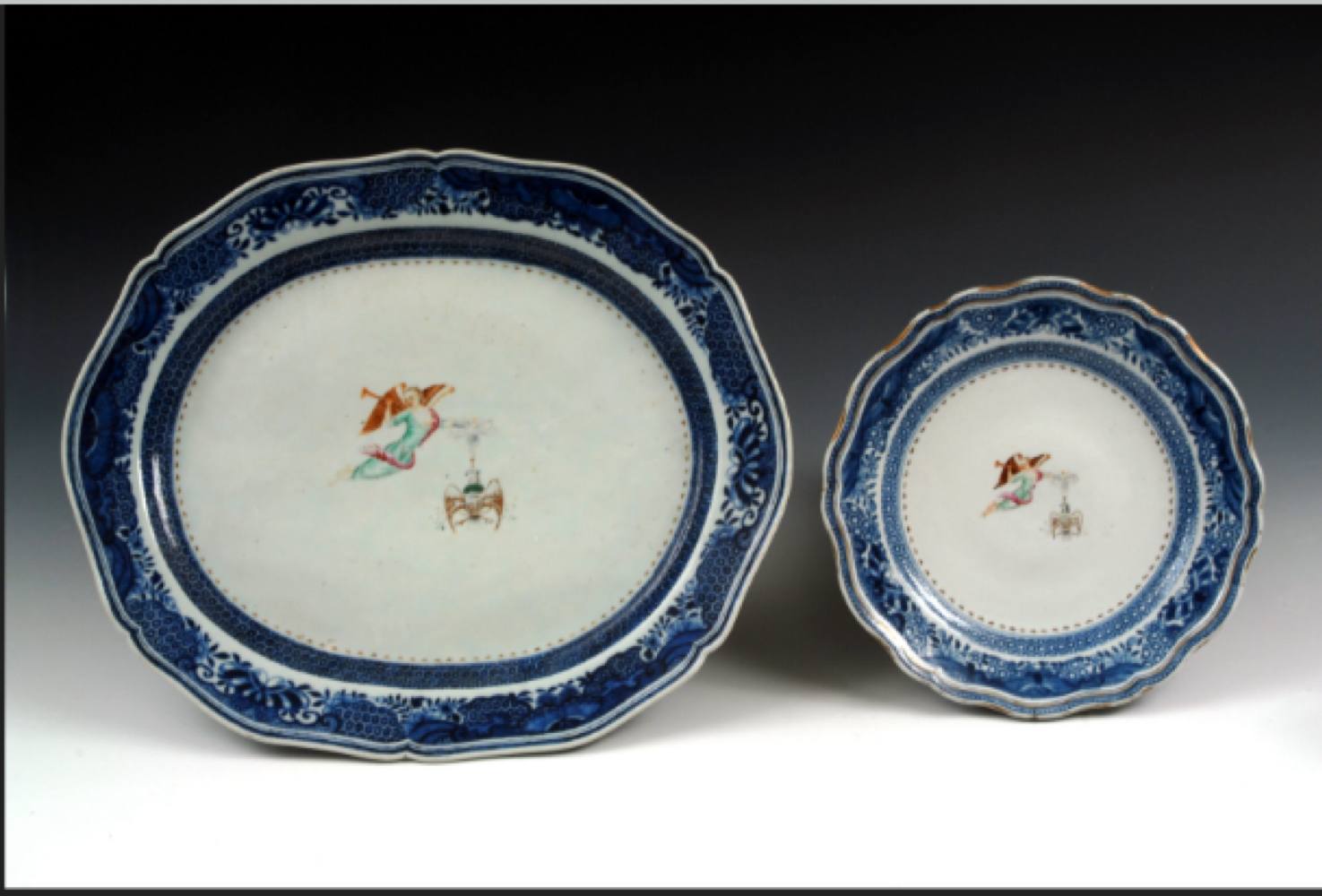
Describe the overall composition of the plates and its significance
made by artist in China, motif: blue glaze of geometric forms and British East India company, central figure and gold gilding=enamel achieves more color, border motif crisp because of glaze, gold figure rubbed away because enamel erodes quickly, eagle insignia of society of Cincinnati: memory of war of independence and bond between the officers, winged figure of fame blows trumpet, repetitive design emphasizes fraternity, to be celebrated in company
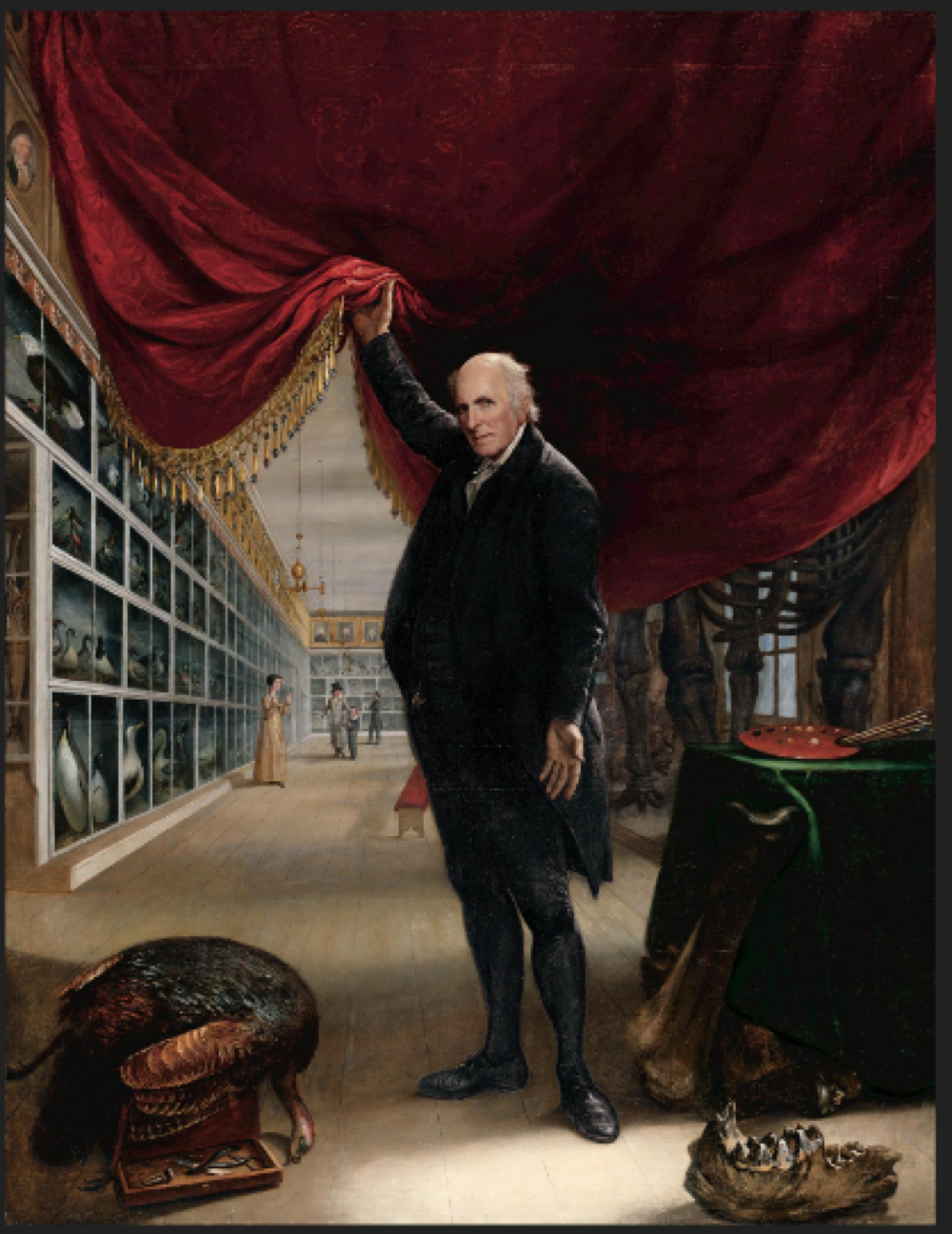
Charles Willson Peale (1741-1827) The Artist in His Museum, 1822
(Philadelphia, Pennsylvania Academy of the Fine Arts)

