Vocabs to tap your mind (Japanese version)
 Studied by 0 people
 Call Kai
 Learn
Learn Practice Test
 Spaced Repetition
 Match
Match Flashcards
 Knowt Play
1/78

Earn XP
Description and Tags
Name | Mastery | Learn | Test | Matching | Spaced | Call with Kai |
|---|
No analytics yet
Send a link to your students to track their progress
79 Terms
たべる
to eat, consume food
Common usage: 食べる
Ex:
すしをたべる。(Sushi wo taberu. – I eat sushi.)
きょうのひるごはんをたべましたか?(Kyou no hirugohan wo tabemashita ka? – Have you eaten lunch today?)
💡 Note:
This is a Group 2 verb, the polite form is たべます (tabemasu).
のむ
to drink
Common usage: 飲む
Ex
みずをのむ。(Mizu wo nomu. – I drink water.)
コーヒーをのまない?(Koohii wo nomanai? – Don’t you drink coffee?)
💡Note:
This is a Group 1 verb, the polite form is のみます (nomimasu).
いく
to go, move towards
Common usage: 行く
Ex:
がっこうへいく。(Gakkou e iku. – I go to school.)
あしたどこへいきますか?(Ashita doko e ikimasu ka? – Where are you going tomorrow?)
💡 Note:
This is a Group 1 verb, the polite form is いきます (ikimasu).
みる
to look at, to see
Common usage: 見る
Ex:
テレビをみる。(Terebi wo miru. – I watch TV.)
そのほんをみてもいいですか?(Sono hon wo mite mo ii desu ka? – May I look at that book?)
💡 Note:
This is a Group 2 verb, the polite form is みます (mimasu).
きく
to listen to, to ask
Common usage: 聞く
Ex:
おんがくをきく。(Ongaku wo kiku. – I listen to music.)
せんせいにしつもんをききました。(Sensei ni shitsumon wo kikimashita. – I asked the teacher a question.)
💡 Note:
This is a Group 1 verb, the polite form is ききます (kikimasu).
あう
to meet, encounter
Common usage: 会う
Ex:
ともだちにあう。(Tomodachi ni au. – I meet a friend.)
あした、せんせいにあいます。(Ashita, sensei ni aimasu. – Tomorrow, I will meet the teacher.)
💡 Note:
This is a Group 1 verb, the polite form is あいます (aimasu).
ある
to be (used for inanimate objects)
Common usage: ある
Ex:
そこにほんがあります。(Soko ni hon ga arimasu. – There is a book there.)
こうえんにきれいな花があります。(Kouen ni kirei na hana ga arimasu. – There are beautiful flowers in the park.)
💡 Note:
Used for inanimate objects, the polite form is あります (arimasu).
いる
to be (used for animate objects)
ねこがいる。(Neko ga iru. – There is a cat.)
だれかいますか?(Dareka imasu ka? – Is there anyone?)
Note:
Used for animate objects (people and animals), the polite form is います (imasu).
とる
to take, capture
Common usage: 取る
Ex:
しゃしんをとる。(Shashin wo toru. – I take a photo.)
かみをとってください。(Kami wo totte kudasai. – Please take the paper.)
💡 Note:
This is a Group 1 verb, the polite form is とります (torimasu).
わかる
to understand, comprehend
Common usage: 分かる
Ex:
この日本語がわかります。(Kono nihongo ga wakarimasu. – I understand this Japanese.)
それはわかりません。(Sore wa wakarimasen. – I don’t understand that.)
💡 Note:
This is a Group 1 verb, the polite form is わかります (wakarimasu).
学区制 (がっくせい)
Học sinh, sinh viên
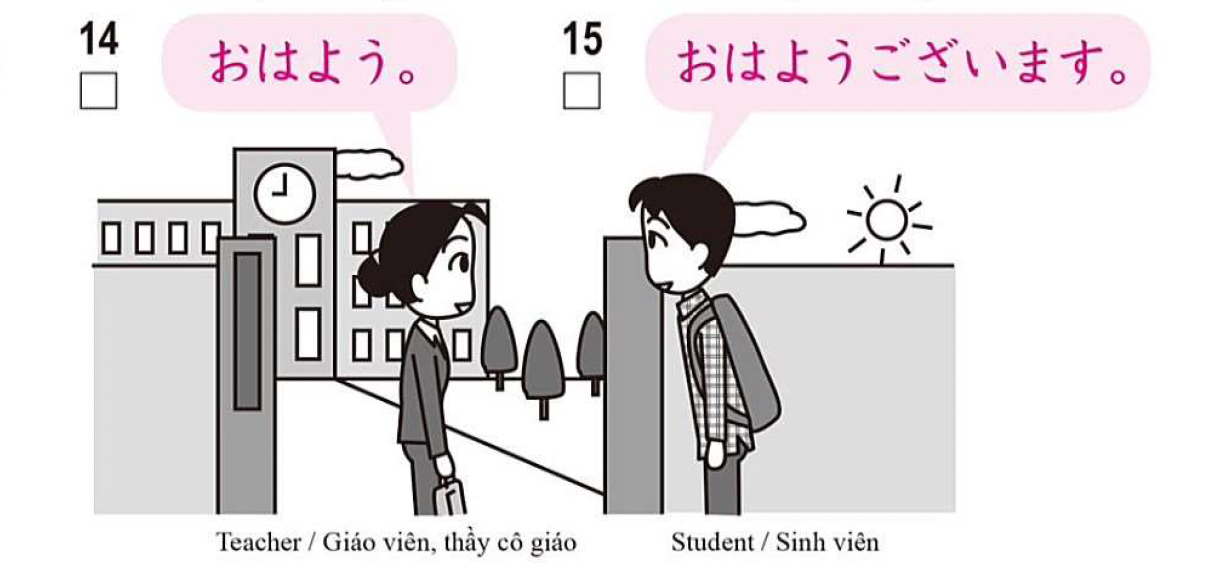
おはよう
おはようございます
Chào buổi sáng
Chào buổi sáng (lới đáp lại theo cách lịch sự)
こんにちは
Chào buổi trưa
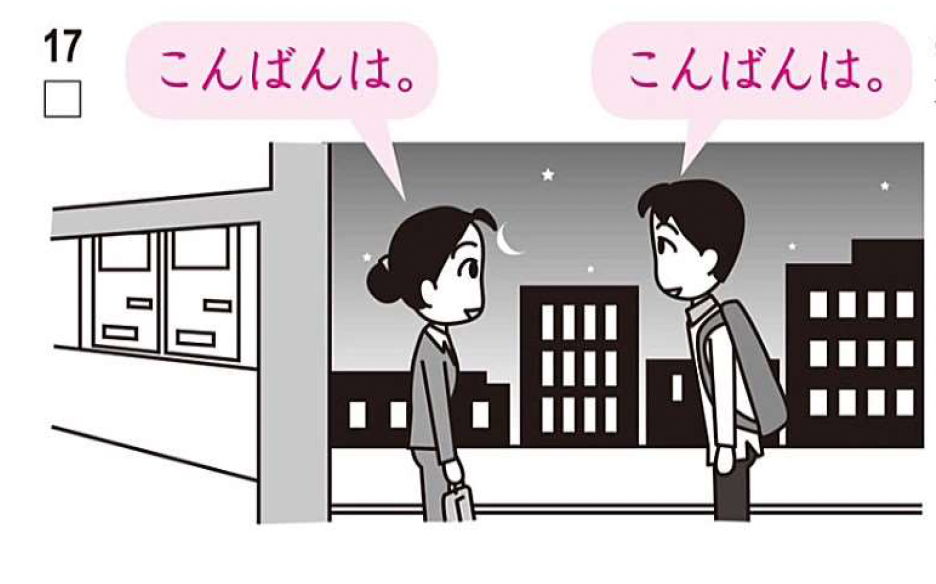
こんばんは
Chào buổi tối
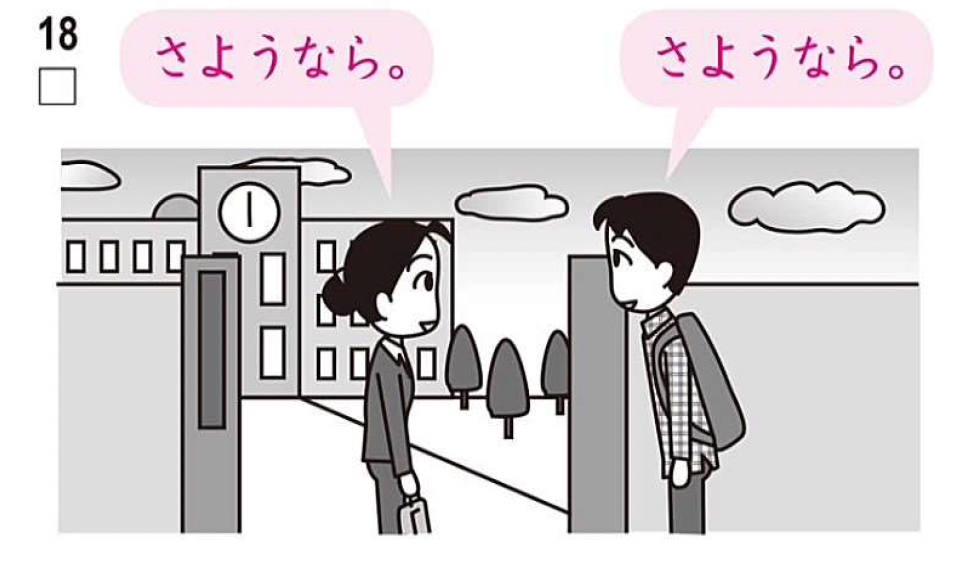
さようなら
Chào tạm biệt
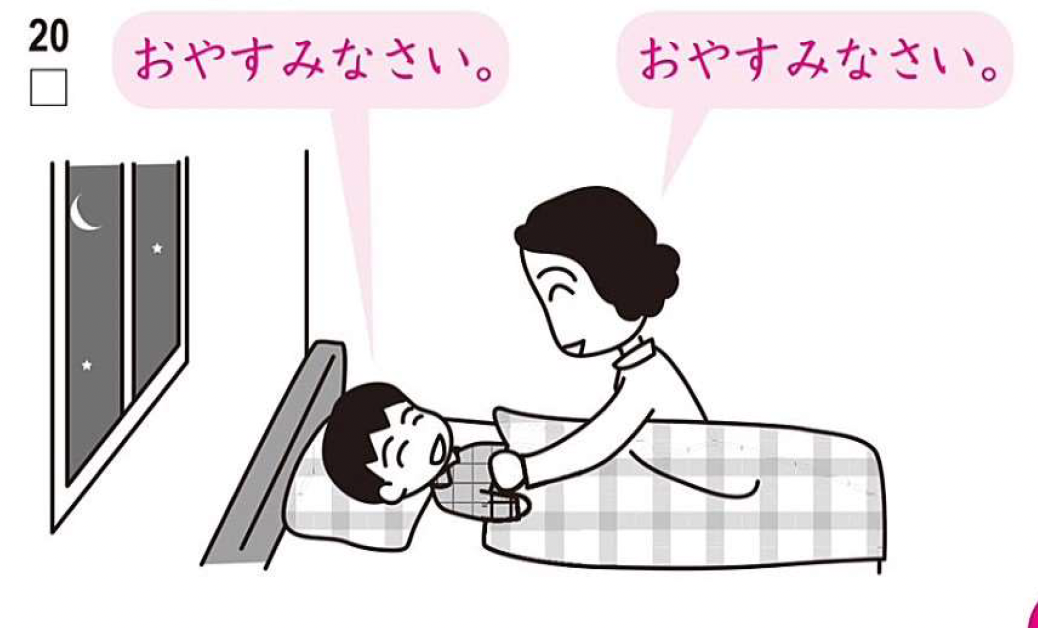
おやすみなさい
Chúc ngủ ngon
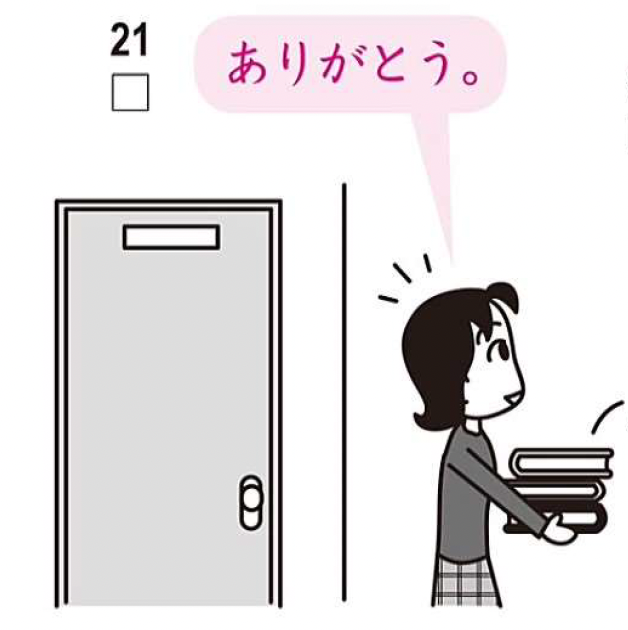
ありがとう
ありがとうございます
ありがとございました
When to use each?
Cám ơn
Informal
Use -masu in polite context (to teacher, employer,…)
-mashita is simply past tense of same form of verb. Literally means “thank you for having done this”
Ex: Some one lends you a book so you say this when returning it to that person, very polite and formal
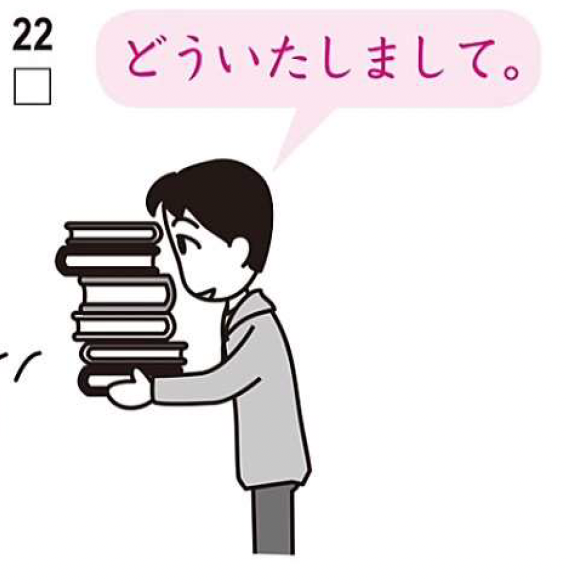
どういたしまして
You’re welcome
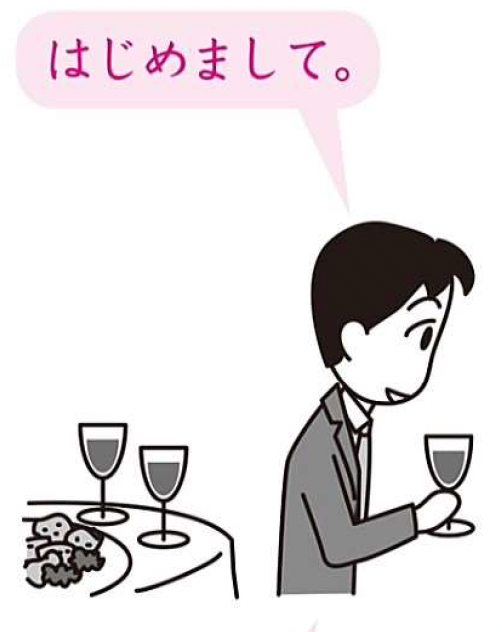
はじめまして
Xin chào
Dùng ở lần gặp đầu tiên (trong buổi tiệc, sự kiện,…)
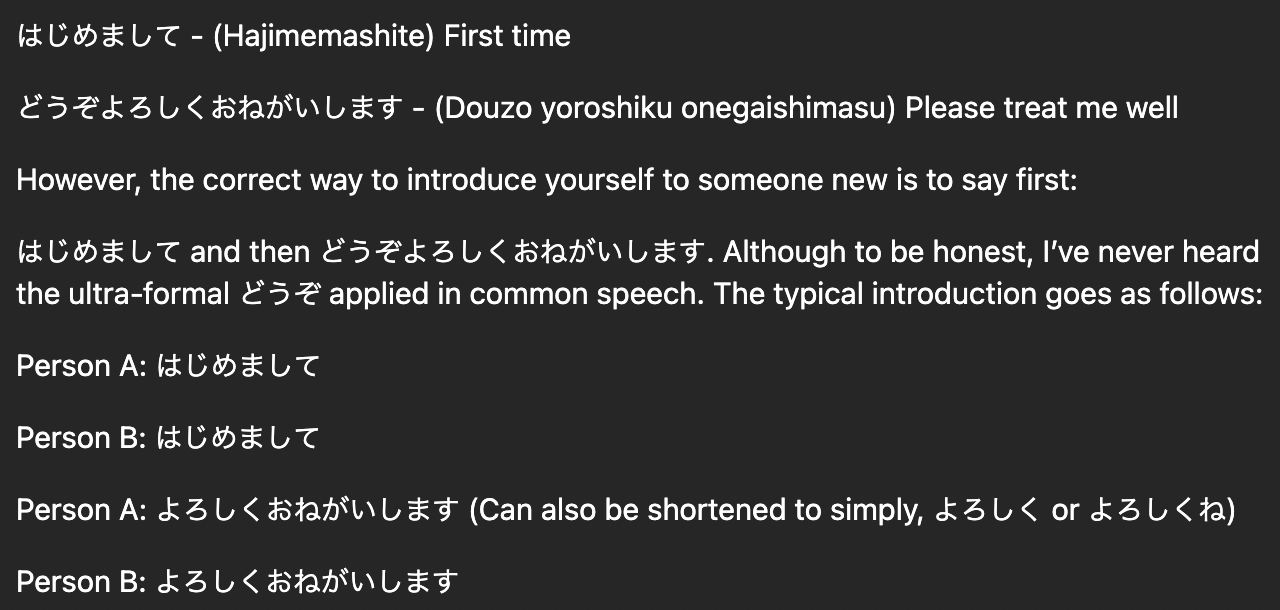
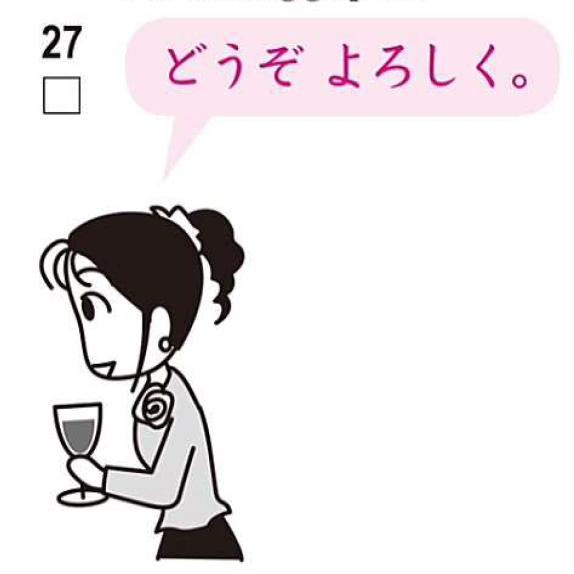
どうぞよろしく
Vâng, mong được bạn chiếu cố
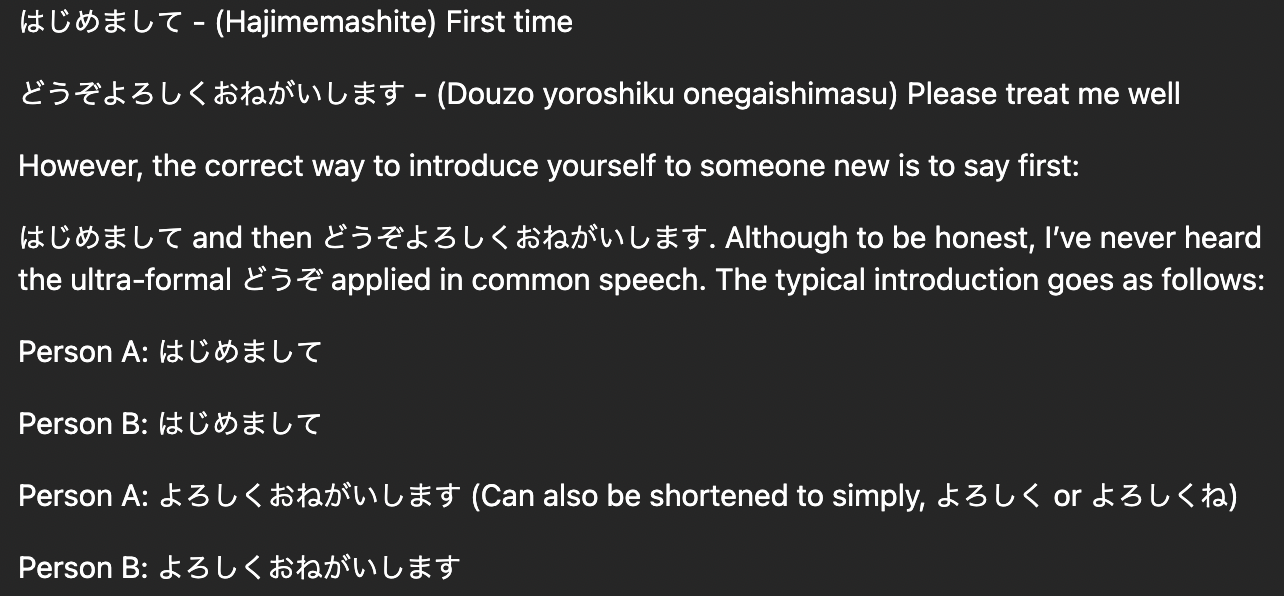
Đây là cách giao tiếp thông thường ở Nhật, không có ý nhờ vả mà chỉ là cách đáp lại như xin chào.
人 (ひと)
Human, a person
元気 (げんき)
Healthy, lively
友達 (ともだち)
友達 (ともだち) – Friend
例: わたしはよい友達がいます。(Watashi wa ii tomodachi ga imasu. – I have good friends.)
例: 友達といっしょにえいがをみます。(Tomodachi to issho ni eiga wo mimasu. – I watch movies with my friends.)
うん
Yes
Use in yes/ no question
ううん
No
Use in yes/ no quesiton
明日 (あした)
Tomorrow
今日 (きょう)
Today
試験 (しけん)
Exam
でも
But
誰 (だれ)
Who
私 (わたし)
Me, myself
弁護士 (べんごし)
Lawyer
医者 (いしゃ)
Doctor
かっこいい
Cool
静か (しずか)
Quiet
例: かれのへやは静かです。(Kare no heya wa shizuka desu. – His room is quiet.)
例: 静かなばしょでべんきょうするのがすきです。(Shizuka na basho de benkyou suru no ga suki desu. – I like studying in quiet places.)
きれい
Pretty, Clean
例: きれいなはながさいています。(Kirei na hana ga saiteimasu. – Pretty flowers are blooming.)
例: このへやはきれいです。(Kono heya wa kirei desu. – This room is clean.)
親切 (しんせつ)
Kind
例: かのじょは親切な人です。(Kanojo wa shinsetsu na hito desu. – She is a kind person.)
例: 親切にしてくれてありがとう。(Shinsetsu ni shite kurete arigatou. – Thank you for being kind.)
魚 (さかな)
Fish
例: 魚がすきです。(Sakana ga suki desu. – I like fish.)
例: 魚をたべるのはけんこうにいいです。(Sakana wo taberu no wa kenkou ni yoi desu. – Eating fish is good for your health.)
好き (すき)
Likable, Desirable
例: わたしはにほんのぶんかがすきです。(Watashi wa Nihon no bunka ga suki desu. – I like Japanese culture.)
例: あなたのすきなたべものはなんですか?(Anata no suki na tabemono wa nan desu ka? – What is your favorite food?)
肉 (にく)
Meat
例: 肉をたべるのがすきです。(Niku wo taberu no ga suki desu. – I like eating meat.)
例: ぎゅうにくはとてもおいしいです。(Gyuu niku wa totemo oishii desu. – Beef is very delicious.)
野菜 (やさい)
Vegetables
例: 野菜をたくさんたべるようにしています。(Yasai wo takusan taberu you ni shiteimasu. – I try to eat a lot of vegetables.)
例: 野菜はけんこうにいいです。(Yasai wa kenkou ni yoi desu. – Vegetables are good for health.)
嫌い (きらい)
Distasteful, Hateful
例: 私は嫌いな食べ物があります。(Watashi wa kirai na tabemono ga arimasu. – I have food I don't like.)
例: 彼は嫌いなことを言いました。(Kare wa kirai na koto wo iimashita. – He said something hateful.)
食べ物 (たべもの)
Food
例: 私の好きな食べ物は寿司です。(Watashi no suki na tabemono wa sushi desu. – My favorite food is sushi.)
例: 食べ物はおいしいです。(Tabemono wa oishii desu. – The food is tasty.)
おいしい (i-adj)
Tasty
例: このケーキはおいしいです。(Kono keeki wa oishii desu. – This cake is tasty.)
例: これはとてもおいしい食べ物です。(Kore wa totemo oishii tabemono desu. – This is very tasty food.)
高い (たかい)
High, Tall, Expensive
例: このビルは高いです。(Kono biru wa takai desu. – This building is tall.)
例: このバッグは高いです。(Kono baggu wa takai desu. – This bag is expensive.)
ビル
Building
例: あのビルは新しいです。(Ano biru wa atarashii desu. – That building is new.)
例: ビルの上にレストランがあります。(Biru no ue ni resutoran ga arimasu. – There is a restaurant on top of the building.)
値段 (ねだん)
Price
例: このレストランの値段は高いです。(Kono resutoran no nedan wa takai desu. – The price of this restaurant is high.)
例: この服の値段は安いです。(Kono fuku no nedan wa yasui desu. – The price of this clothing is cheap.)
レストラン
Restaurant
例: 私たちはレストランに行きます。(Watashitachi wa resutoran ni ikimasu. – We are going to the restaurant.)
例: あのレストランはおいしい料理があります。(Ano resutoran wa oishii ryouri ga arimasu. – That restaurant has delicious food.)
あまり / あんまり
Not very (used with negative)
例: あまりお金がありません。(Amari okane ga arimasen. – I don’t have much money.)
例: あんまり好きじゃないです。(Anmari suki janai desu. – I don’t really like it.)
好き (すき)
Likable, Desirable
例: 私は映画が好きです。(Watashi wa eiga ga suki desu. – I like movies.)
例: 彼は好きな音楽を聞いています。(Kare wa suki na ongaku wo kiiteimasu. – He is listening to his favorite music.)
いい (i-adj)
Good
例: これはいい本です。(Kore wa ii hon desu. – This is a good book.)
例: あなたはいい人です。(Anata wa ii hito desu. – You are a good person.)
かれ(彼)
he; boyfriend
彼はせが高いです。
(Kare wa se ga takai desu. – He is tall.)彼は私のボーイフレンドです。
(Kare wa watashi no bōifurendo desu. – He is my boyfriend.)
Context decides whether it means “he” or “boyfriend.”
分かる(わかる)
to understand (u-verb)
日本語が分かりますか?
(Nihongo ga wakarimasu ka? – Do you understand Japanese?)先生の説明が分かりやすいです。
(Sensei no setsumei ga wakari yasui desu. – The teacher’s explanation is easy to understand.)
Note: Often used with が (ga) to mark the thing understood.
見る(みる)
to see, to look (ru-verb)
映画を見ました。
(Eiga o mimashita. – I watched a movie.)星を見ている。
(Hoshi o mite iru. – I am looking at the stars.)
Note: Also used for "to watch" and "to observe."
寝る(ねる)
to sleep
毎晩11時に寝ます。
Maiban jūichi-ji ni nemasu. – I go to bed at 11 every night.赤ちゃんが寝ています。
Akachan ga neteimasu. – The baby is sleeping.
Note: used for sleeping or lying down.
起きる(おきる)
to wake; to occur
早く起きました。
Hayaku okimashita. – I woke up early.地震が起きました。
Jishin ga okimashita. – An earthquake occurred.
考える(かんがえる)
to think
将来のことを考えています。
Shōrai no koto o kangaeteimasu. – I am thinking about the future.よく考えてください。
Yoku kangaete kudasai. – Please think carefully.
Note: A ru-verb, often used for deep or deliberate thinking.
教える(おしえる)
to teach; to inform
日本語を教えています。
Nihongo o oshieteimasu. – I teach Japanese.道を教えてくれませんか?
Michi o oshiete kuremasen ka? – Can you tell me the way?
Note: A ru-verb. Can also mean "to tell" or "to show" depending on context.
出る(でる)
to come out; to leave
部屋から出ました。
Heya kara demashita. – I left the room.映画に出ています。
Eiga ni deteimasu. – He/She is in the movie.
Note: A ru-verb. Often used with に (ni) or から (kara).
着る(きる)
to wear
シャツを着ています。
Shatsu o kiteimasu. – I am wearing a shirt.明日、新しい服を着ます。
Ashita, atarashii fuku o kimasu. – I’ll wear new clothes tomorrow.
Note: A ru-verb for clothing worn on the upper body.
話す(はなす)
to speak; to talk
日本語を話します。
Nihongo o hanashimasu. – I speak Japanese.少しだけ英語を話せます。
Sukoshi dake eigo o hanasemasu. – I can speak only a little English.
Note: A u-verb. Common in everyday conversation.
聞く(きく)
to ask; to listen
音楽を聞いています。
Ongaku o kiiteimasu. – I’m listening to music.先生に質問を聞きました。
Sensei ni shitsumon o kikimashita. – I asked the teacher a question.
Note: A u-verb with dual meaning—context tells you whether it means "to listen" or "to ask."
泳ぐ(およぐ)
to swim
川で泳ぎました。
Kawa de oyogimashita. – I swam in the river.毎週プールで泳ぎます。
Maishū pūru de oyogimasu. – I swim in the pool every week.
Note: A u-verb. Often used with locations marked by で (de).
遊ぶ(あそぶ)
to play; to have fun
子どもたちは公園で遊んでいます。
Kodomotachi wa kōen de asondeimasu. – The children are playing in the park.友達とゲームを遊びました。
Tomodachi to gēmu o asobimashita. – I played a game with my friend.
Note: A u-verb, often used for leisure or recreational activities.
待つ(まつ)
to wait
バスを待っています。
Basu o matteimasu. – I’m waiting for the bus.少し待ってください。
Sukoshi matte kudasai. – Please wait a moment.
Note: A u-verb, commonly paired with を or で.
買う(かう)
to buy
新しい靴を買いました。
Atarashii kutsu o kaimashita. – I bought new shoes.スーパーで野菜を買います。
Sūpā de yasai o kaimasu. – I buy vegetables at the supermarket.
Note: A u-verb often used with を and a place marked with で.
死ぬ(しぬ)
to die
花が枯れて死にました。
Hana ga karete shinimashita. – The flower withered and died.そのキャラクターはゲームで死んだ。
Sono kyarakutā wa gēmu de shinda. – That character died in the game.
Note: A u-verb and one of the rare verbs ending in ぬ.
する
to do
宿題をします。
Shukudai o shimasu. – I’ll do my homework.スポーツをするのが好きです。
Supōtsu o suru no ga suki desu. – I like playing sports.
Note: An irregular verb used with many noun-based actions.
来る(くる)
to come
友達が家に来ます。
Tomodachi ga ie ni kimasu. – My friend is coming to my house.毎日、学校に来る。
Mainichi, gakkō ni kuru. – I come to school every day.
Note: An irregular verb. The polite form is 来ます (kimasu), and the plain form is 来る (kuru).
書く(かく)
to write
手紙を書きました。
Tegami o kakimashita. – I wrote a letter.漢字をノートに書いてください。
Kanji o nōto ni kaite kudasai. – Please write the kanji in your notebook.
Note: A u-verb. “書いて” is the て-form, often used in requests.
読む(よむ)
to read
毎日新聞を読みます。
Mainichi shinbun o yomimasu. – I read the newspaper every day.本を読むのが好きです。
Hon o yomu no ga suki desu. – I like reading books.
Note: A u-verb. Used for anything that involves reading text.
帰る(かえる)
to return; to go home
六時に家に帰ります。
Roku-ji ni ie ni kaerimasu. – I return home at six.学校から帰ってきました。
Gakkō kara kaette kimashita. – I came back from school.
Note: A u-verb. Despite ending in -る, it does not follow the ru-verb pattern.
会う(あう)
to meet
明日、友達に会います。
Ashita, tomodachi ni aimasu. – I will meet a friend tomorrow.駅で先生に会いました。
Eki de sensei ni aimashita. – I met my teacher at the station.
Note: A u-verb. The person you meet is marked with に.
作る(つくる)
to make; to create
朝ごはんを作ります。
Asagohan o tsukurimasu. – I make breakfast.父は家具を作るのが得意です。
Chichi wa kagu o tsukuru no ga tokui desu. – My dad is good at making furniture.Note: A u-verb, widely used for cooking, building, or producing things.
売る(うる)
to sell
古い本を売りました。
Furui hon o urimashita. – I sold old books.スーパーで果物を売っています。
Sūpā de kudamono o utteimasu. – They sell fruit at the supermarket.
Note: A u-verb, often paired with を (thing sold) and で (place).
使う(つかう)
to use
この辞書を使います。
Kono jisho o tsukaimasu. – I use this dictionary.パソコンを使って勉強します。
Pasokon o tsukatte benkyō shimasu. – I study using a computer.
Note: A u-verb. Frequently used in both tech and daily contexts.
働く(はたらく)
to work
父は銀行で働いています。
Chichi wa ginkō de hataraiteimasu. – My dad works at a bank.学生のとき、カフェで働きました。
Gakusei no toki, kafe de hatarakimashita. – I worked at a café when I was a student.
Note: A u-verb, typically used for physical or regular employment.
お金【おかね】
money
お金がありません。
Okane ga arimasen.
I don’t have money.お金をためています。
Okane o tameteimasu.
I’m saving money.
Note: The honorific お is commonly attached, making it more polite.
猫【ねこ】
Definition: cat
猫が好きです。
Neko ga suki desu.
I like cats.あの猫はかわいいですね。
Ano neko wa kawaii desu ne.
That cat is cute, isn’t it?
Note: A staple noun in beginner vocabulary; often used in casual contexts.
 Note
Note  Flashcards (21)