Quantity Theory, Inflation, and Money Demand
 Studied by 0 people
 Call Kai
 Learn
Learn Practice Test
 Spaced Repetition
 Match
Match Flashcards
 Knowt Play
1/64

There's no tags or description
Looks like no tags are added yet.
Name | Mastery | Learn | Test | Matching | Spaced | Call with Kai |
|---|
No analytics yet
Send a link to your students to track their progress
65 Terms
Quantity Theory of Money
Relationship between money supply and price level.
Velocity of Money
Frequency a dollar is spent annually.
Equation of Exchange
M × V = P × Y, money dynamics.
Money Supply (M)
Total amount of money in circulation.
Price Level (P)
Average level of prices in an economy.
Aggregate Output (Y)
Total production in an economy, or GDP.
Nominal GDP (PY)
Total income measured at current prices.
Liquidity Preference Theory
Demand for money based on transaction needs.
Portfolio Choice Theory
Factors influencing how wealth is allocated.
Fisher's Quantity Theory
Nominal income determined by money supply changes.
Short Run Velocity
Velocity remains stable in the short term.
Long Run Inflation
Inflation linked to money supply growth.
Equilibrium in Money Market
M equals demand for money (Md).
Demand for Money (Md)
Determined by transactions at fixed income level.
Interest Rates and Money Demand
Demand for money unaffected by interest rates.
Classical Economists' View
Wages and prices are flexible in economy.
Full-Employment Level
Output level when all resources are utilized.
Inflationary Monetary Policy
Budget deficits can lead to increased money supply.
Liquidity Preference
Desire to hold cash over other assets.
Portfolio Factors
Risk, return, and liquidity influence money demand.
Empirical Evidence
Data supporting liquidity and portfolio theories.
Percentage Change
Sum of percentage changes in variables.
Equation of Exchange
Relationship between money supply, velocity, price, and output.
Inflation Rate
Growth rate of the price level.
Constant Velocity
Assumption that money velocity does not change.
Quantity Theory of Money
Theory linking money supply growth to inflation.
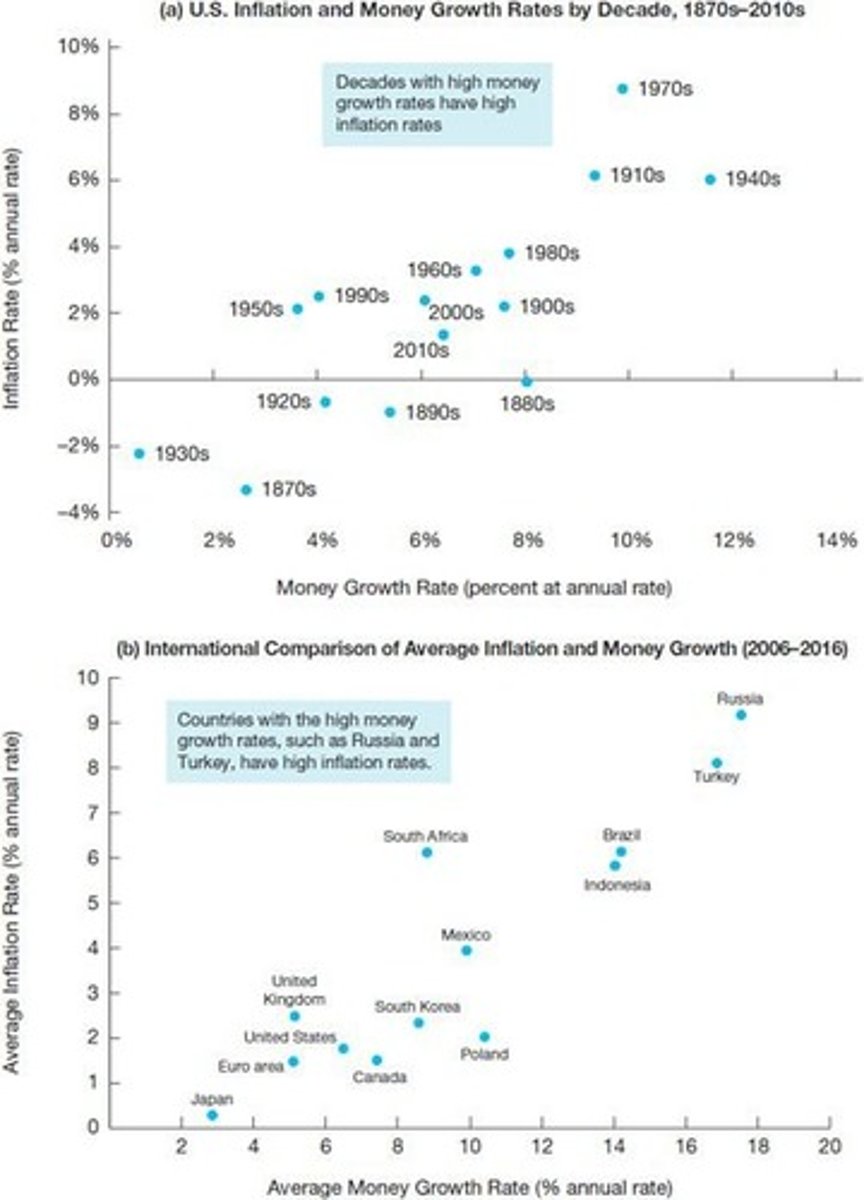
Money Growth Rate
Rate at which money supply increases.
Budget Deficit
Government spending exceeding its revenue.
Government Bonds
Debt securities issued to finance spending.
Monetary Base
Total amount of money in circulation.
Hyperinflation
Inflation exceeding 50% per month.
Liquidity Preference Theory
Theory explaining why individuals hold money.
Transactions Motive
Need for money for everyday transactions.
Precautionary Motive
Holding money for unexpected expenses.
Speculative Motive
Holding money as a store of wealth.
Real Money
Value of money adjusted for inflation.
Nominal Money
Face value of money without inflation adjustment.
Payment Technology
Methods that affect money demand.
Income Effect
Change in money demand based on income.
Public Bond Holdings
Public ownership of government-issued bonds.
Zimbabwe Hyperinflation
Extreme inflation case in early 2000s.
FRED Database
Source for economic data from Federal Reserve.
Keynesian Economics
Economic theory focusing on total spending.
Real Money Balances
Demand for money adjusted for price level.
Interest Rate (i)
Cost of borrowing money, inversely affects demand.
Real Income (Y)
Income adjusted for inflation, positively affects demand.
Velocity of Money
Rate at which money circulates in the economy.
Procyclical Movement
Economic indicators moving in the same direction.
Portfolio Theory
Investment strategy balancing risk and return.
Liquidity Preference
Desire to hold cash versus other assets.
Opportunity Cost
Potential return lost when choosing one option over another.
Precautionary Demand
Holding money for unexpected expenses or emergencies.
Nominal Interest Rate
Stated interest rate without inflation adjustment.
Wealth Effect
Increased wealth leads to higher money demand.
Riskiness of Assets
Perceived danger of investment affecting money demand.
Inflation Risk
Potential decrease in money's purchasing power over time.
Liquidity of Assets
Ease of converting assets into cash.
Demand Response to Interest Rates
Higher rates decrease money demand due to opportunity cost.
Demand Response to Income
Higher income increases demand for money.
Payment Technology
Advancements reducing need for physical cash.
Federal Reserve Policy
Central bank's approach to managing money supply.
Stability of Money Demand
Consistency in money demand affects economic predictions.
Aggregate Spending
Total expenditure in an economy over a period.
Quantity Theory of Money
Money supply directly influences price levels.
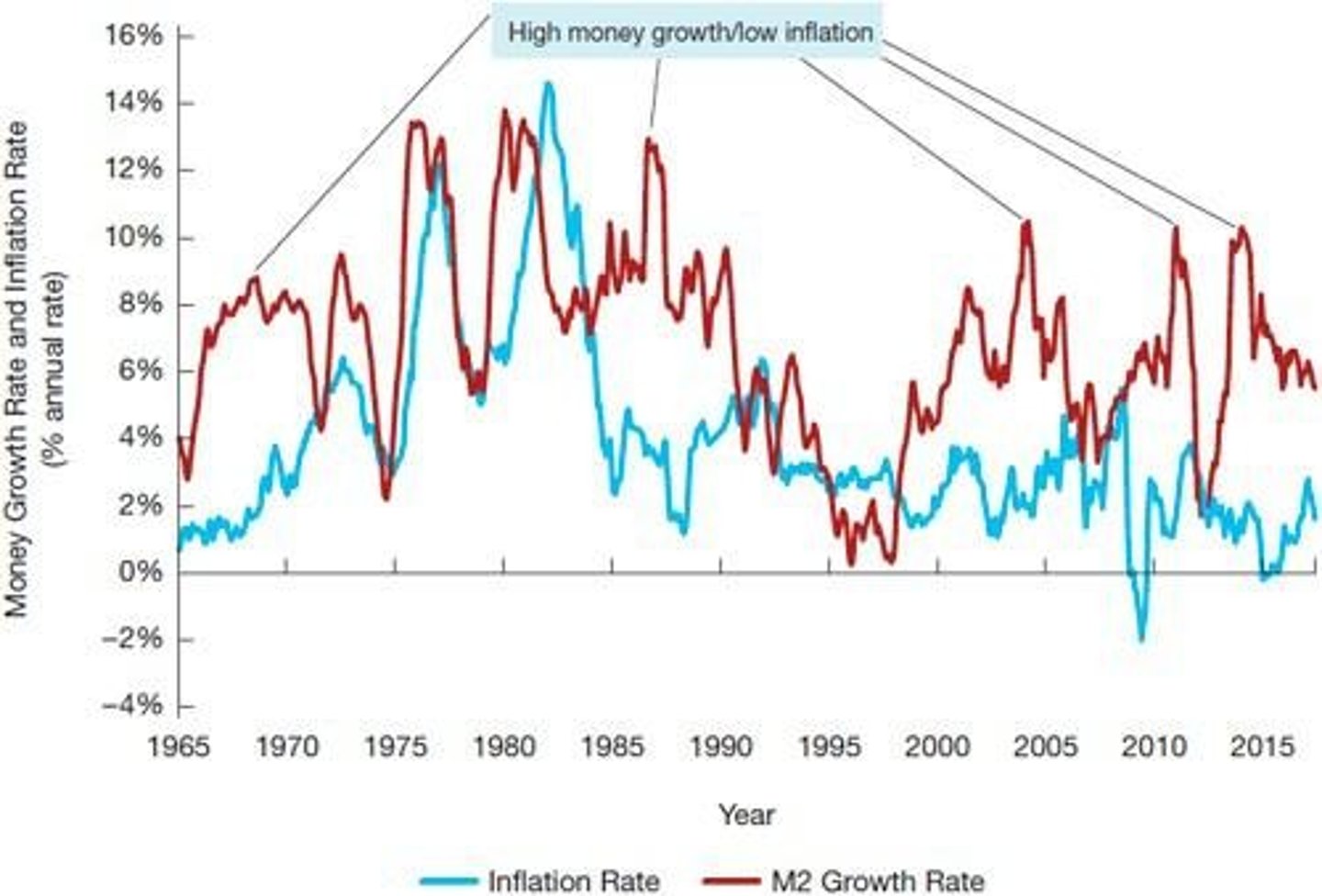
Unpredictable Velocity
Fluctuations in money circulation complicate economic forecasting.
 Note
Note  Flashcards (29)