topic 4: nervous system - sensory "input"
 Studied by 0 people
 Call Kai
 Learn
Learn Practice Test
 Spaced Repetition
 Match
Match Flashcards
 Knowt Play
1/34

There's no tags or description
Looks like no tags are added yet.
Name | Mastery | Learn | Test | Matching | Spaced | Call with Kai |
|---|
No analytics yet
Send a link to your students to track their progress
35 Terms
what is the role of the sensory (afferent) nervous system?
it detects internal and external stimuli and relays that information to the central nervous system, initiating perception, homeostasis, and reflexes
why are specialized sensory receptors essential for homeostasis?
because changes must be detected before effectors can respond
body cannot correct deviations from homeostasis without sensory input
why is understanding the sensory nervous system important in physiology and disease?
it explains how the body interacts with its environment and is essential for understanding and managing sensory disorders such as chronic pain and diabetic neuropathy
what is a sensory receptor?
detects a specific type of stimulus (e.g. temperature, pressure) and converts it into a neural signal
why do sensory receptors respond only to specific stimuli?
because each receptor is specialized to detect one type of stimulus (stimulus specificity)
what are the two main structural types of receptors?
dendrites of unipolar sensory neurons (sensory receptors are unipolar)
individual cells which synapse to neurons (e.g. hair cells in the inner ear)
what happens when a receptor (R) is stimulated?
stimulus causes opening of gated channels (usually Na+) on receptor membrane
a graded potential occurs on the receptor membrane (stimulus becomes electrical)
what are the types of graded potentials?
generator potentials
receptor potentials
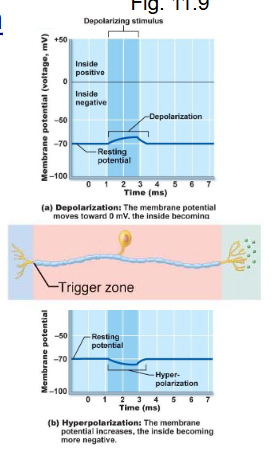
what are generator potentials
a type of graded potential that occurs on the dendrites of a first order sensory neuron and directly generates an action potential on the axon of that same neuron
on the sensory neuron itself
caused by direct stimulus or nt from receptor cell
what is a receptor potential?
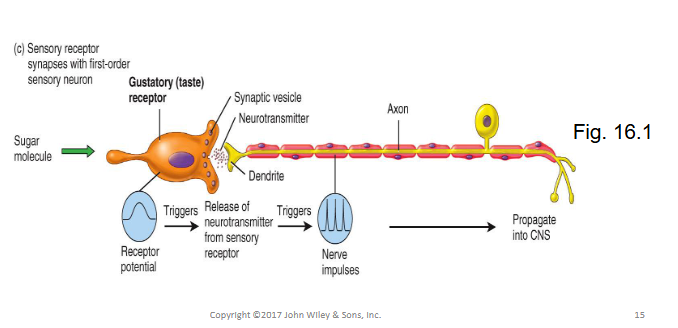
in this case the receptor cell is a separate cell from the sensory neuron
receptor potential occurs on the specialized receptor cell, causing the release of neurotransmitter onto the dendrites of the sensory neuron
not a neuron but sensory receptor
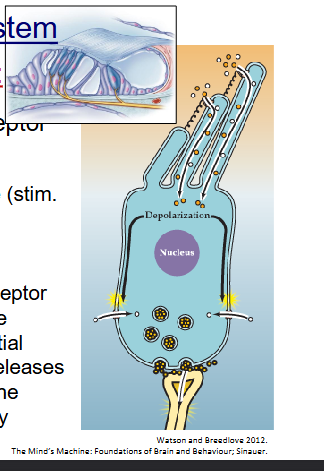
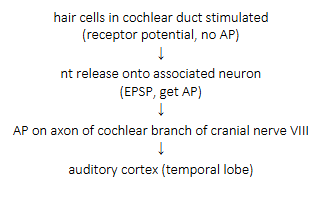
an example of a receptor potential is hair cell in inner ear (no axon)
in response to a stimulus, a receptor potential is created on the hair cell
receptor potential causes the hair cell to release neurotransmitter onto the associated sensory neuron
an EPSP occurs on dendrites of the sensory neuron
the EPSP generates an action potential on the axon of the sensory neuron (will be interpreted by the brain as a sound)
what are the types of receptors?
phasic receptors
tonic receptors
what are phasic receptors?
receptors respond to stimulus change
in the presence of a constant stimulus they show adaption (usually a decrease in sensitivity)
important with touch receptors
when wearing a shirt, you’re not constantly thinking about it
fast adapting
what are examples of phasic receptors?
touch (mechanoreceptors in skin)
smell (olfactory receptors)
phasic receptor example: you put a hat on
mechanoreceptors in the skin such as Pacinian/lamellated corpuscle (which are phasic receptors) detect the onset of the stimulus and initially there is a burst of APs (you feel the hat on your head)
over time the receptors adapt that and the AP frequency to the CNS decreases (brain no longer perceives the stimulus even though the stimulus is maintain at constant strength
when the hat is removed - the receptors respond again tot eh change in pressure and there is a burst of APs - you notice the absence of the hat, but this sensation will fade as the receptors adapt to the lack of stimulus
what are tonic receptors?
in the presence of a constant stimulus, the frequency of APs remains constant - little to No adaptation
provide continuous monitoring of sensory information and have a protective function
examples of tonic receptors
proprioceptors (posture) and some nociceptors (pain)
what is the purpose of tonic receptors
monitor presence and intensity of stimulus
body wants to remove itself from the stimulus
how does the brain perceive different types of stimuli?
mainly by the type of receptor stimulated
axon activated by receptor → synaptic connections to part of CNS concerned with that sense
what does it mean that sensory pathways are '“hardwired”
each receptor activates a specific axon and synapses in a specific region of the CNS, so the brain always knows what type of stimulus and where it came from
why is pressure on the eyeball perceived as light?
the brain perceives sensory stimuli based on which receptor and sensory pathway are activated, not the physical nature of the stimulus itself
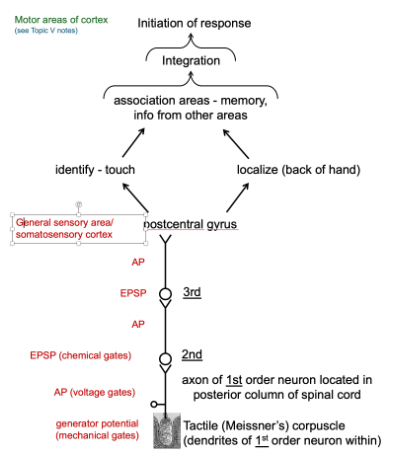
what happens when the Messner’s corpuscle (touch receptor) is stimulated in the right index finger?
impulses to postcentral gyrus region for right index finger
how does the brain perceive stimuli of different strengths?
mainly by frequency of APs (#/time) going to CNS
the stronger the stimulus, the higher the AP frequency (and vice versa)
a stronger stimulus also activates more receptors (e.g. pressure and touch together)
e.g. determining if feather or brick (heavy sends AP at higher frequency)
what are sensory (ascending) pathways?
neural pathways that carry sensory information from receptors to the brain
how many neurons are involved in sensory ascending pathways?
three neurons in sequence: first-order (initial), second-order (synapsing with CNS), and third-order neurons (sends to particular lobe in brain)
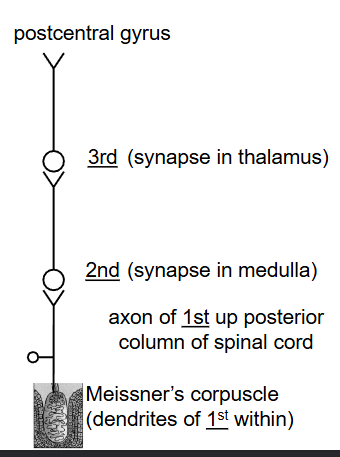
what sensory modality is carried by the posterior (dorsal) column pathway?
touch (fine touch, vibration, proprioception)
motor areas of cortex
what happens to light as it enters the eye?
light enters through the pupil and is focused on the retina, where the image is reduced in size and inverted
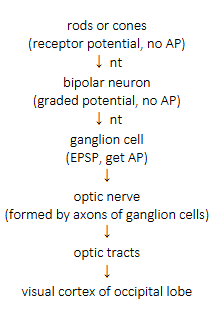
what happens when light hits rods and cones?
light triggers a chemical reaction in rods and/or cones that produces a receptor potential (graded potential).
photons of light gate ions → cause depolarization
vision
hearing
equilibrium (sense of balance)
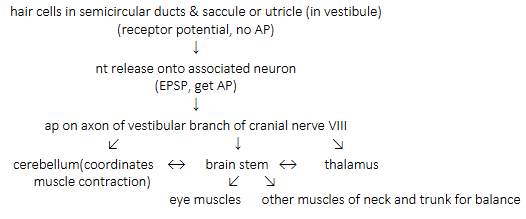
what receptors help maintain balance?
proprioceptors
what are proprioceptors and their function?
respond to internal stimuli
occur in skeletal muscles, tendons, joints, and ligaments, and in connective tissue coverings of bones and muscles
advise the brain of out body’s position and movements by monitoring how much the organs containing these receptors are stretched
how do rods and cones have different thresholds for activation?
rods: very sensitive, best suited for night and peripheral vision, only have 1 single kind of visual pigment
cones: need bright light for activation (low sensitivity), but react more rapidly, have 3 kinds of visual pigment
 Note
Note  Flashcards (24)