biol251 exam 2
 Call Kai
 Learn
Learn Practice Test
 Spaced Repetition
 Match
Match Flashcards
 Knowt Play
1/65

There's no tags or description
Looks like no tags are added yet.
Name | Mastery | Learn | Test | Matching | Spaced | Call with Kai |
|---|
No analytics yet
Send a link to your students to track their progress
66 Terms
climate change measurements
global temperature, CO2 concentrations, sea level
glacial climate state
“ice age” ; low sea levels, ice caps over entire continents
interglacial climate state
ice caps in polar regions, large temperature zones, moderate sea levels
greenhouse climate state
no ice caps, high sea levels, very hot (dinosaurs)
climate change
weather conditions in an area over a long period of time (no shorter than 30 years)
global warming
implies warming happens all the time (people dont experience it day-to-day; outdated)
global (climate change)
whole planet; ecosystems are interdependent and interconnected
(global) climate (change)
not just surface temperature, but global processes; 30+ years
(global climate) change
not moving in all one direction; ripple effect, unforseen interaction and consequences
paris climate agreement
international treaty; main objective is to limit global warming to under 2 degrees celsius
requirements for paris climate agreement
must report (transparency, must be measuring); NOT legally binding (not required to hit targets)
nationally determined contributions (NDCs) (FACT)
finances/fairness
ambition
credibility
transparency
greenhouse gas effect
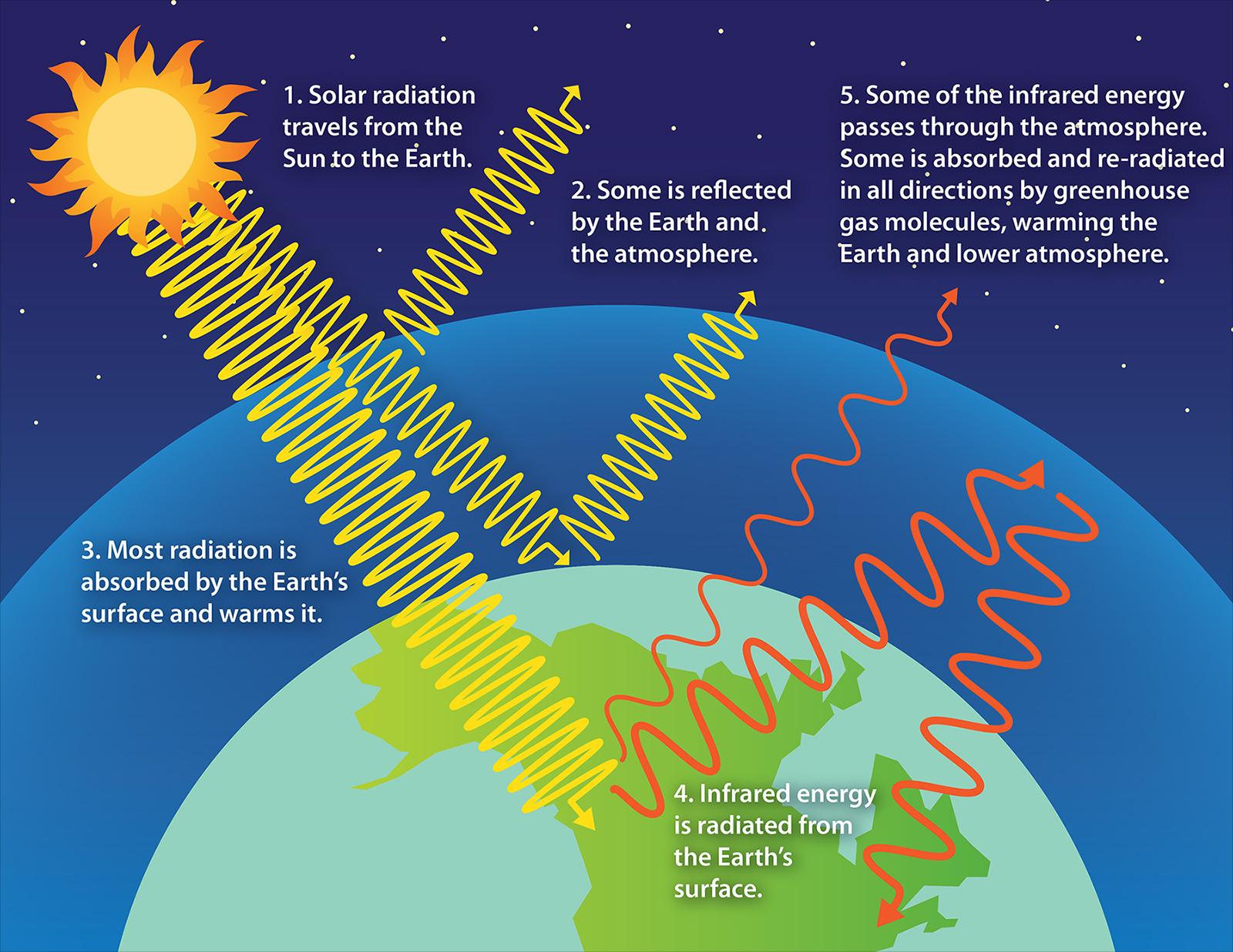
greenhouse gases (list)
CO2 (carbon), CH4 (methane), N2O (nitrous oxide), H2O (water)
montreal protocol (1987)
reduce ozone-depleting substances (Chlorofluorocarbons aka CFCs); major sucess but still ongoing
kyoto protocol (1997)
legally binding; goal to reduce GHGs, did not include major emitters (US, China); unsuccessful
greta thunberg
activist whose goal was immediate action to mitigate climate change and the effects of it; “how dare you” speech at UN, fridays for the future (school strike)
evansville climate action plan
reduce GHG emissions and reduce contribution to climate change
strengthen economy (sustainable development)
significantly reduce waste
improve air quality
H2O
highest percent of a GHG in atmosphere
CO2
highest percent man made GHG
global warming potential (GWP)
atmospheric lifetime; amt of long wave radiation each molecule can absorb
4 distinct zones in atmosphere
land → space
troposphere → stratosphere → mesosphere → thermosphere
tropo pause separating each part
atmosphere
gas molecules, relatively densely packed near the surface and thinning
seasonal rhythm
photosynthesis in northern hemisphere; happens because CO2 rises in winter (no photosynthesis), and decreases in spring/summer because trees grow and take in CO2
convection currents
heat-driven cycles that occur in the air and ocean, redistributing heat and moisture around the globe
warm air/water rises
at altitude, air cools and sinks
region weather patterns defined where convection currents meet
troposphere
gravity holds air molecules close to earth’s surface = denser than other layers
stratosphere
ozone layer
mesophere
middle layer, where meteors burn up due to friction
thermosphere
heated layer, produces northern lights
exosphere
outermost atmospheric layer
global ocean currents
heat/warm water changes climate
la niña
cold water hits south american and has strong upwelling current; brings nutrients via fishing
el niño
leads to more extreme weather conditions due to warmer weather; natural disasters
GHGs are in
troposphere
albedo effect
reflective heat (snow/ice) (positive feedback loop) ; reason why arctic is warming faster
convection
cold air gets pushed to edges, then circles back to the poles as warm air
hydrocarbons
materials made of strands of hydrogen and carbon materials
oil/gas formation
come from phytoplankton that existed millions of years ago. they die, sink to the bottom, and are transformed into ______ after millions of years
coal formation
comes from old swamps/bodies of waters(not oceans), buried under layers with heat/pressure, plant matter is formed into ______ after millions of years
are oil/gas/coal considered natural resources
no, since they cannot be renewed in our life time
coal (usefulness)
generate electricity
ways to mine coal
underground mines (E coast)
mountaintop removal (E coast)
surface area mines (W coast)
partially decomposed organic material (PEAT)
accumulates in small amounts, which is why it takes a long time for plant matter to be buried and eventually turn into coal
reserve of coal can get…
bigger or smaller depending on new technology, new discoveries, etc.
environmental issues from coal usage
climate change: dust particles/methane
water pollution: acid mine drainage
biodiversity loss/habitat loss
human health risks
clean air act of 1963 / clean water act 1972
3 goals
improve air quality
protect public health
reduce environmental pollution
envionmental protection agency (EPA)
set standards
monitor emissions
regulate industry
top oil countries
venezuela, saudi arabia, iran, canada, iraq
refined oil/gasoline
most consumed oil in the world
why do we trade oil?
not all oil is the same
primary extraction of oil
drilling and pumping, forcing oil to the surface; verticle process
secondary extraction of oil
after flow of oil stops, water/steam is injected to increase pressure, forcing more oil to the surface; verticle process
fracking
breaking subsurface underground, cracks open up oil/natural gas reserves; horizontal drilling; very high pressure; TERRIBLE for environment
tar sands
northern canada; oil bonded w/ loose-grained rock; uses steam to liquify and separate oil
natural gas is primarily…
methane; fastest growing fossil fuel energy source
methane provides…
biggest chunk of our electricity
pros of methane
produces less waste, and GHGs
cons of methane
gas pipelines can leak GHGs and cause fires
cost of fossil fuel dominace
non renewable and will be difficult as resources decline, international conflict from competition for fossil fuels, resources are not evenly distributed
alternative energy
wind/solar/geothermal reduce air pollution and climate change effects, but its cheaper to extract
cap and trade
limit on total emissions that companies can produce each year; if a company doesn’t use all of it, it can sell it to another company
companies have to pay more if they dont stay under the number of emissions
caps emissions but still putting same amt in atmosphere
carbon tax
tax on companies based on how much carbon they produce
companies hesitant bc reforms to avoid this tax is expensive (would rather just pay the fine)
there are exceptions from the tax (defense, agriculture, safety)
carbon capture and storage
capturing CO2 from natural gas plants or factories, transporting it via pipelines, and stored into rock formations deep under the surface
has been successful at reducing current emissions
risks come with storage (leaks can be deadly)
expensive and hard to implement in smaller countries
weather
Current or short term state of the atmosphere
how we get energy from coal
energy transferred as heat → water/steam store of heat energy → energy transferred as movement → turbine → energy transferred as movement → generator → energy transferred as electricity
environmental issues from coal plants
air pollution: carbon dioxide
water pollution: thermal pollution, acid/rain
land degradation: where to put all the waste?

