Respiratory System
 Call Kai
 Learn
Learn Practice Test
 Spaced Repetition
 Match
Match Flashcards
 Knowt Play
1/60

There's no tags or description
Looks like no tags are added yet.
Name | Mastery | Learn | Test | Matching | Spaced | Call with Kai |
|---|
No analytics yet
Send a link to your students to track their progress
61 Terms
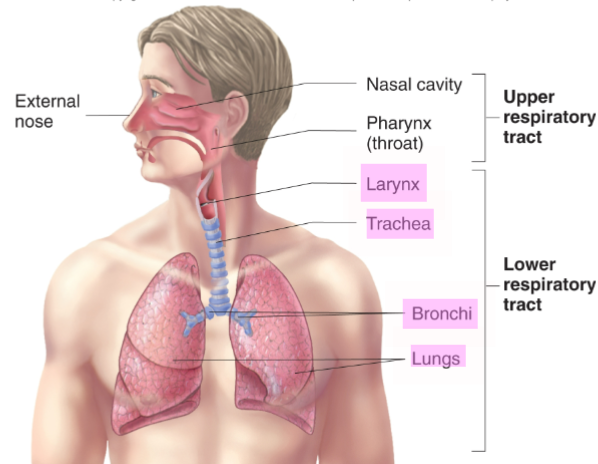
What are the three main structures of the Upper Respiratory Tract?
1. External nose
2. Nasal cavity
3. Pharynx
What are the four main structures of the Lower Respiratory Tract?
1. Larynx
2. Trachea
3. Bronchi
4. Lungs
What is Ventilation?
Breathing; the movement of air into and out of the lungs.
What is External Respiration?
The exchange of O2 and CO2 between the air in the lungs and the blood.
What is Gas Transport?
The movement of O2 and CO2 in the blood to and from cells.
What is Internal Respiration?
The exchange of O2 and CO2 between the blood and the tissues.
What is the External nose mainly composed of?
Hyaline cartilage.
What is the function of the external nose?
Directs air into the nasal cavity.
The nasal cavity extends from the ______ to the ______.
Nares (nostrils) to Choane.
What are Choane?
Openings to the pharynx
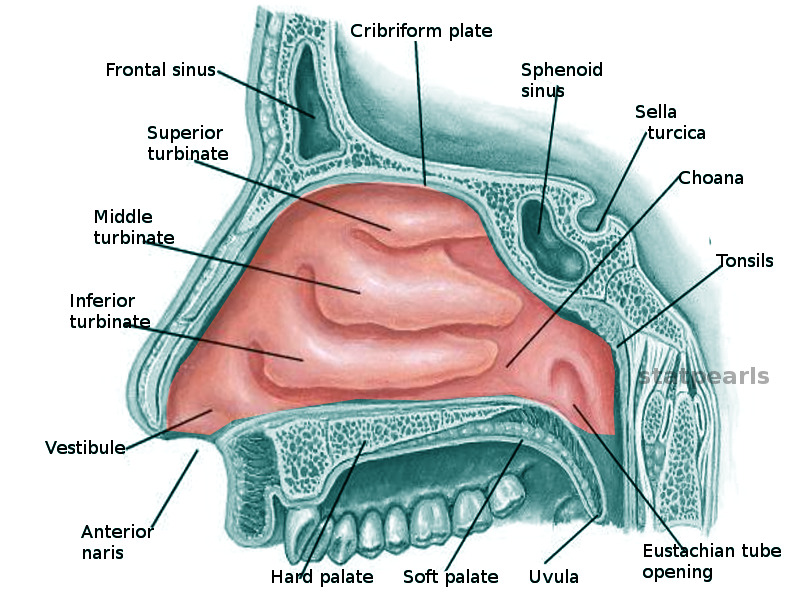
What are the three functions of the Nasal Cavity?
Filters
warms
moistens air.
What are Conchae (turbinates)?
Three bony projections on each side of the nasal cavity that increase surface area.
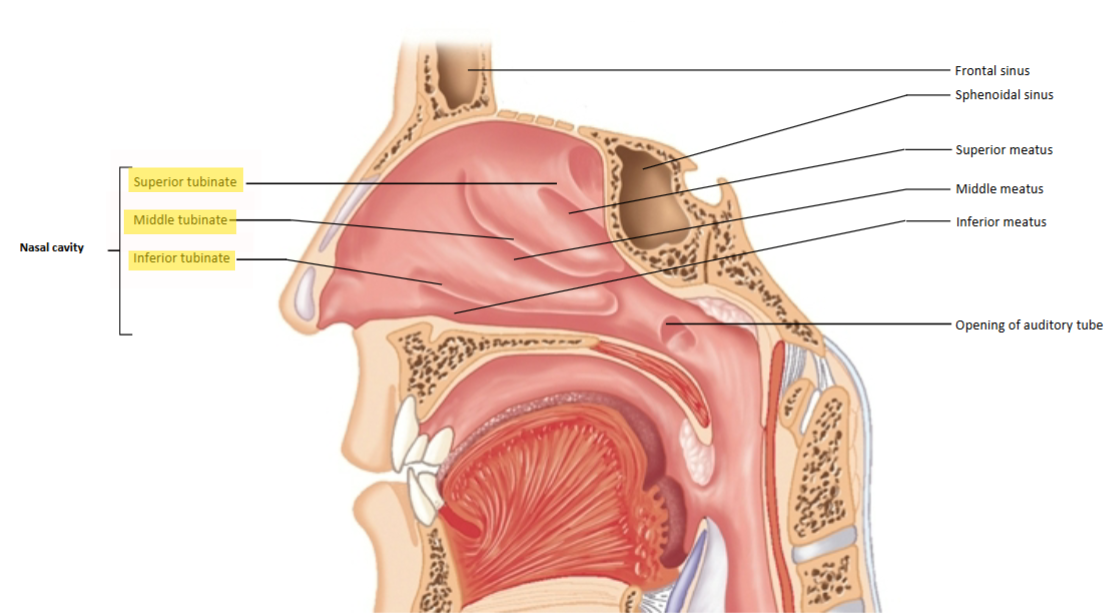
What are the three functions of the Conchae (turbinate)?
1. Increase surface area
2. Help clean air
3. Help humidify and warm air
The nasal cavity contains openings for what two things?
1. Nasolacrimal Ducts
2. Paranasal Sinuses
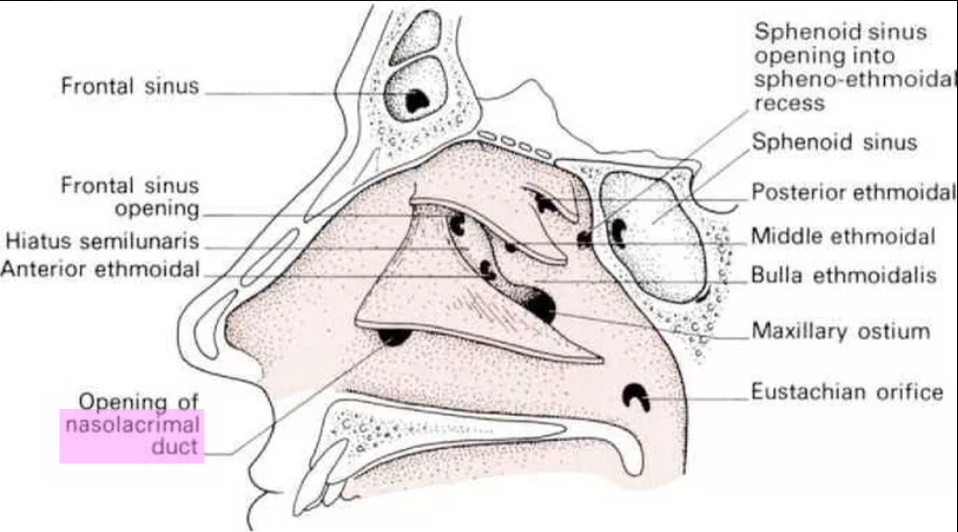
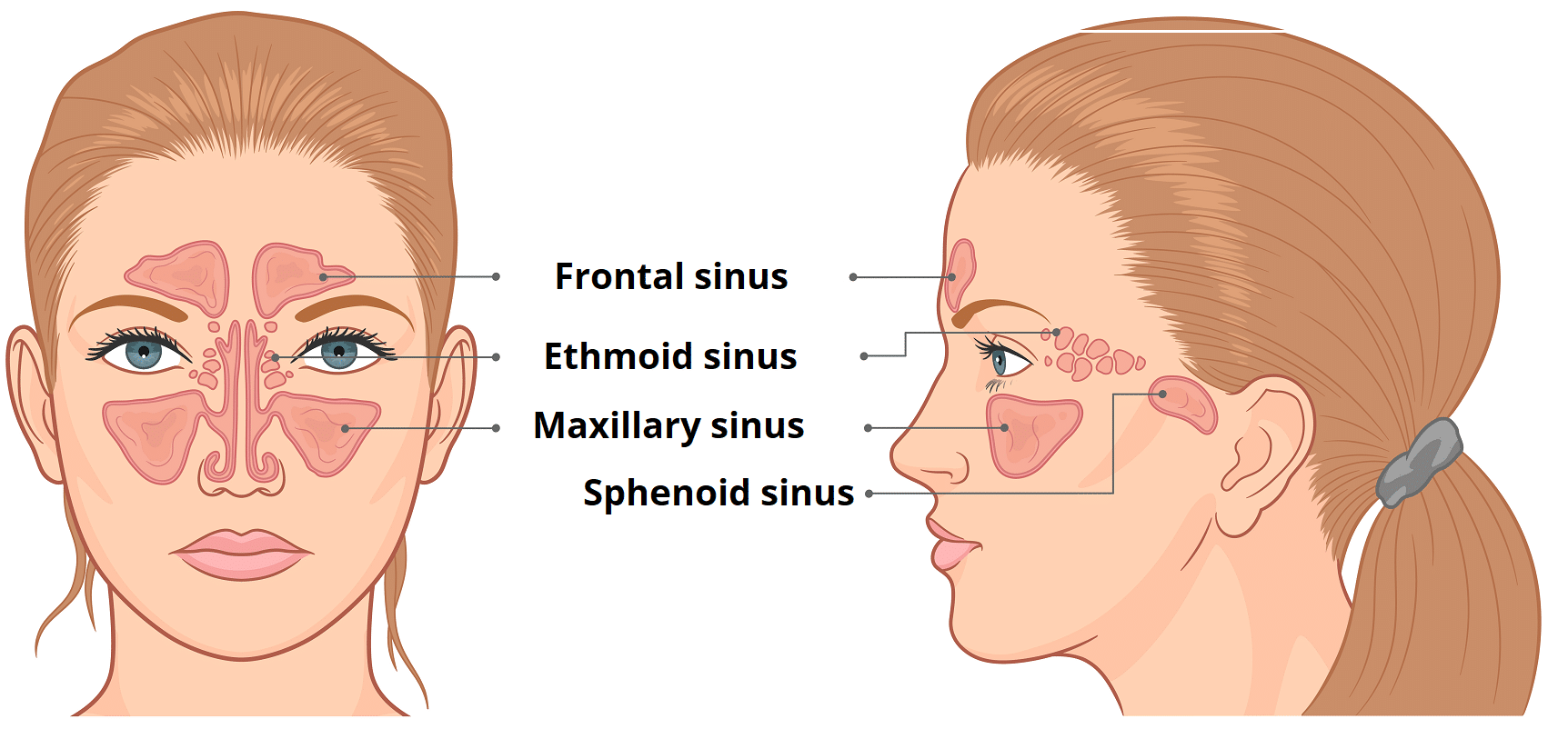
What are Paranasal Sinuses?
Air-filled spaces within bone that open into the nasal cavity and are lined with mucous.
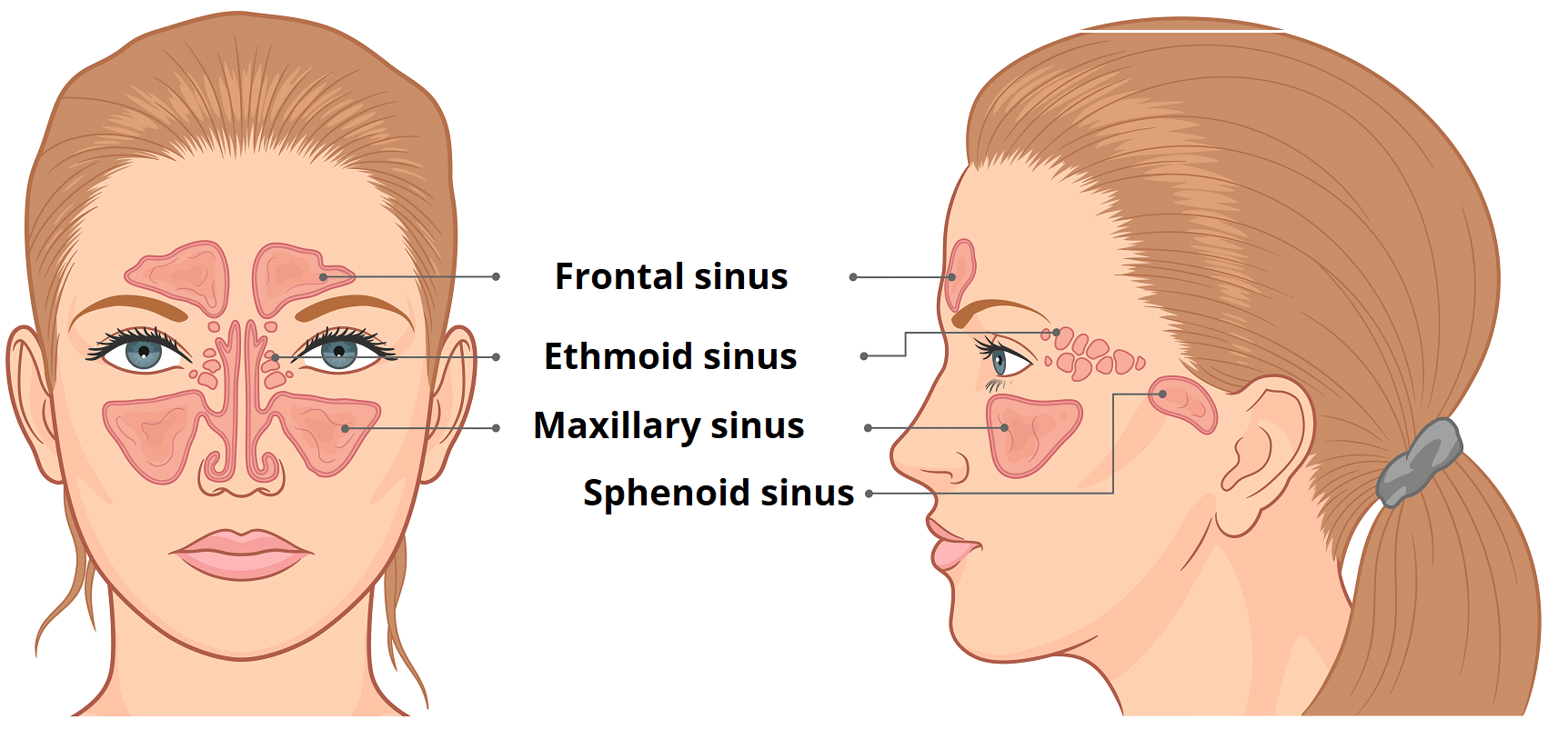
Name the Paranasal Sinuses
frontal sinus
ethmoid sinus
maxillary sinus
sphenoid sinus
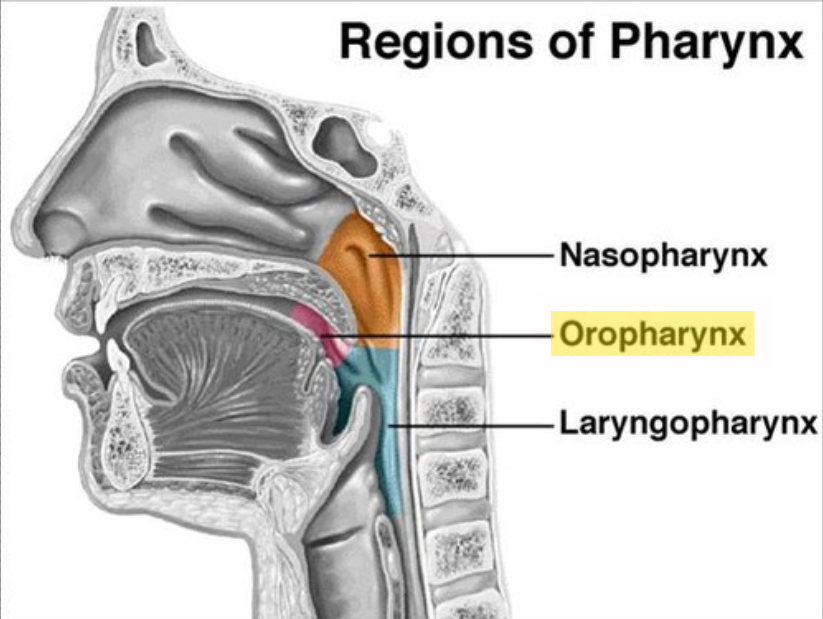
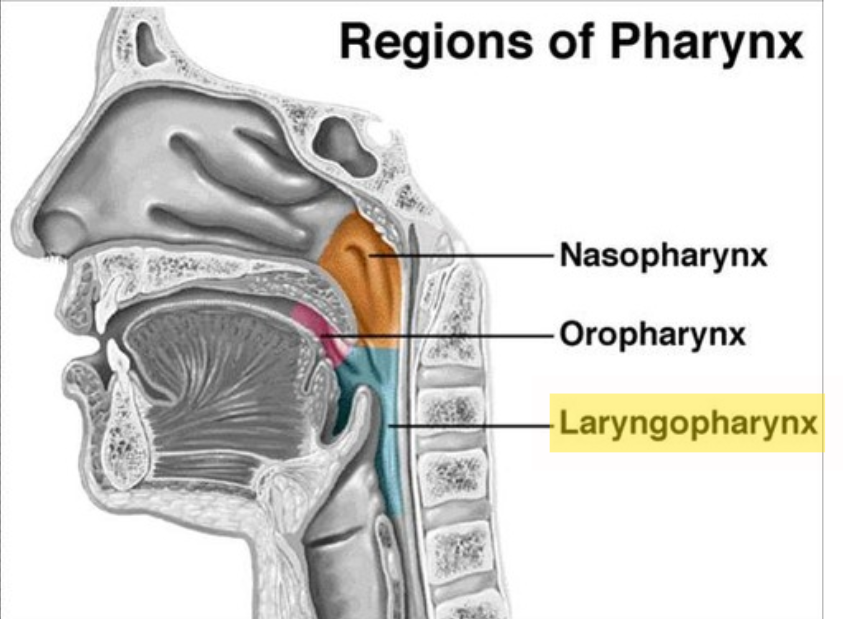
What are the three regions of the Pharynx?
1. Nasopharynx
2. Oropharynx
3. Laryngopharynx
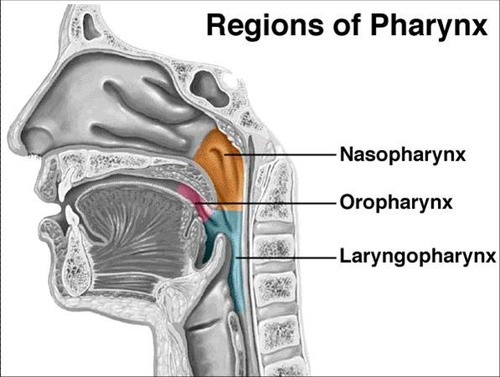
Describe the Nasopharynx (location and function).
Posterior to the Nasal Cavity; it takes in air.
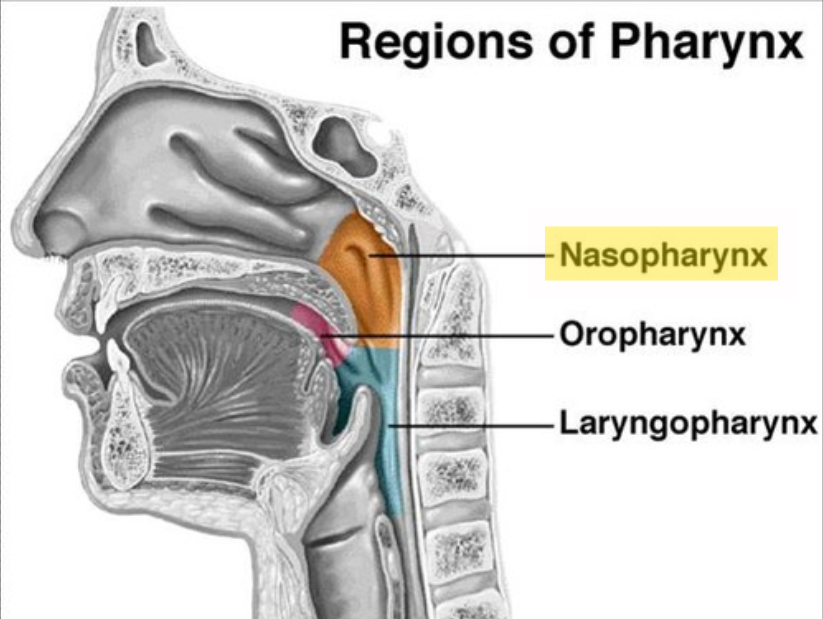
Describe the Oropharynx (location and function).
Posterior to the Oral Cavity; extends from uvula to epiglottis; takes in food, drink, and air.
Describe the Laryngopharynx (location and function).
Extends from epiglottis to esophagus; food and drink pass through.
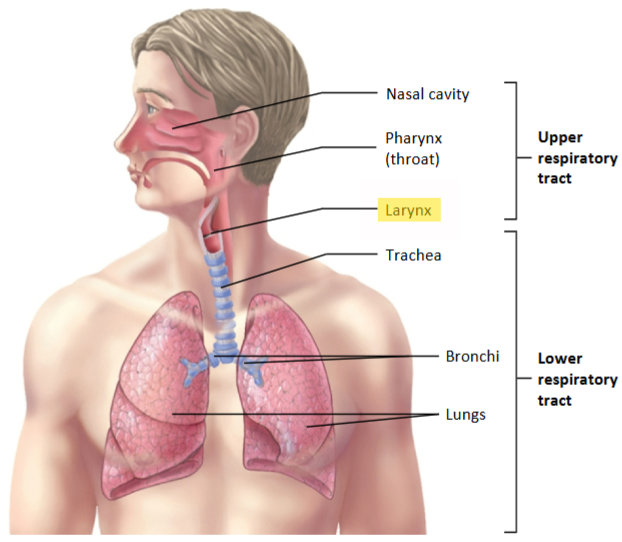
What is the function of the Larynx?
Passageway for air between the pharynx and trachea; site of voice production.
What is the Larynx suspended from?
The Hyoid bone.
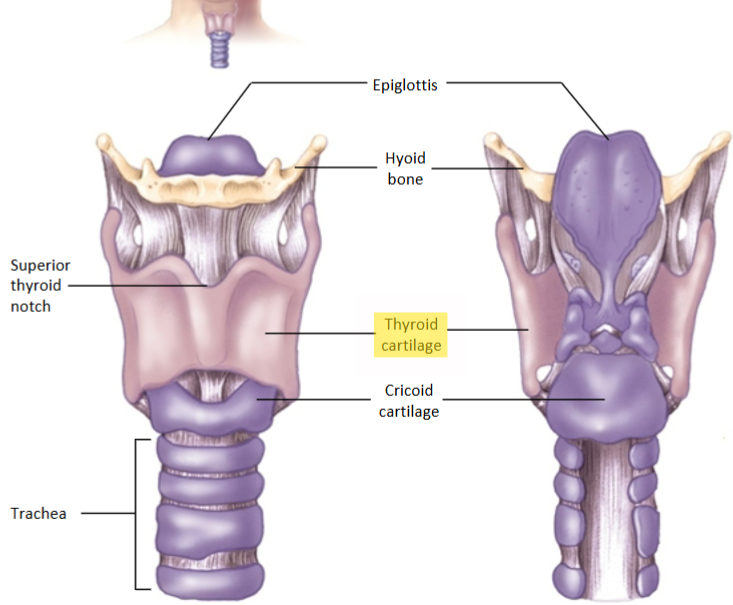
What is the Thyroid cartilage?
The largest piece of cartilage in the larynx; also called the "Adam's apple." (laryngeal prominence)
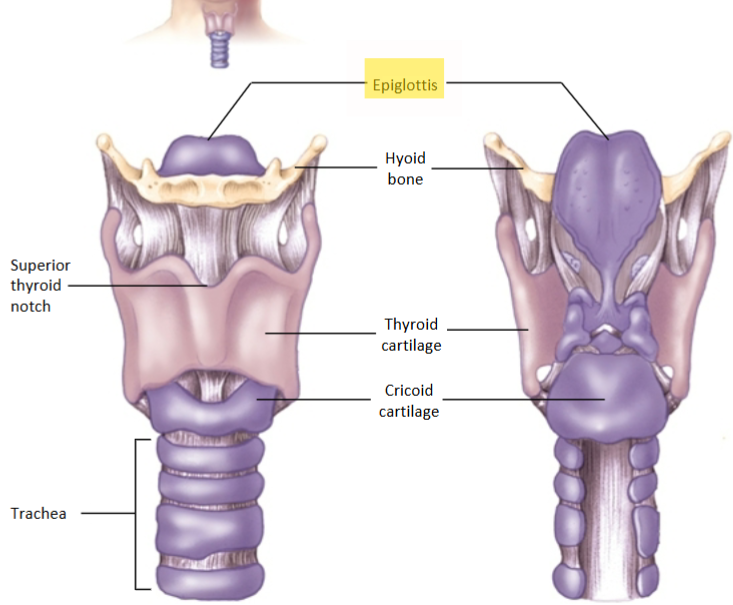
What is the function of the Epiglottis?
A cartilage flap that prevents swallowed materials from entering the airway.
What is Laryngitis?
Inflammation of the vocal folds caused by overuse, dry air, or infection.
How is sound (voice) produced?
Air moves past the vocal chords, causing them to vibrate.
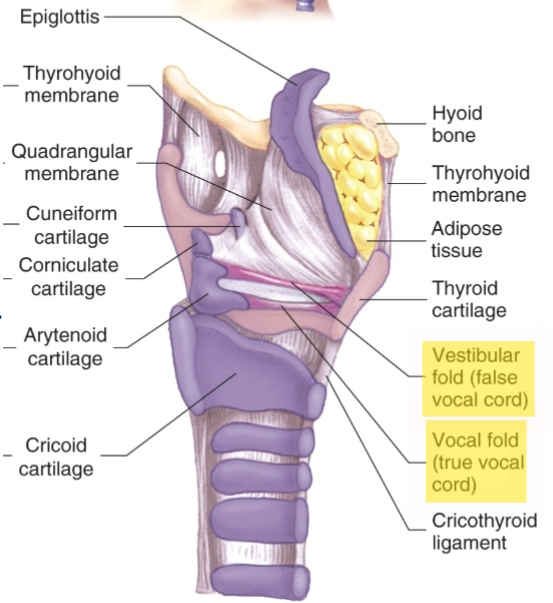
What determines the loudness of a sound?
The force of air.
What determines the pitch of a sound?
The tension of the vocal chords.
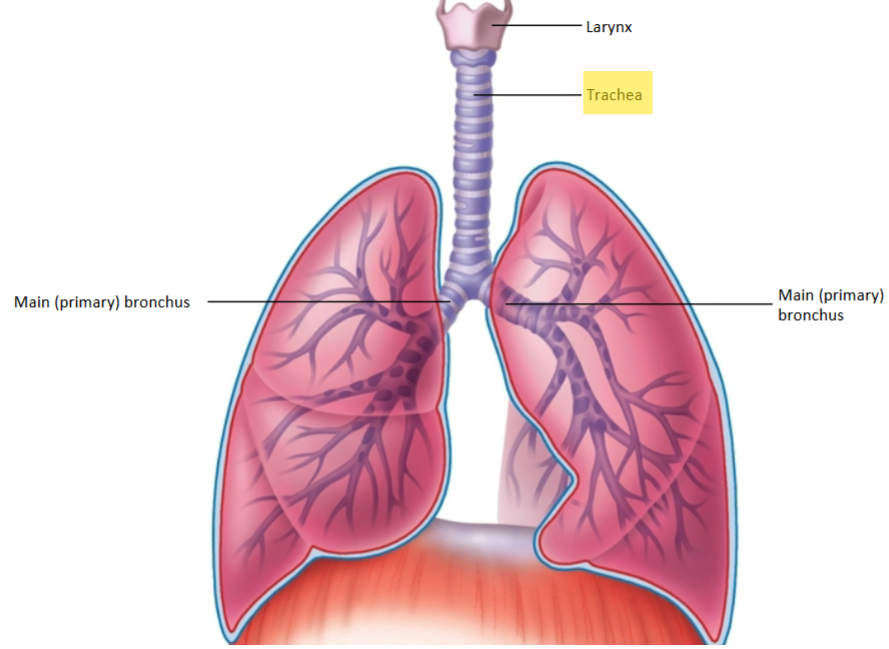
Describe the structure of the Trachea (windpipe).
Consists of 16-20 C-shaped pieces of cartilage,
lined with ciliated pseudostratified columnar epithelium.
What happens to the trachea when you smoke?
Smoking kills the cilia.
What dislodges materials from the trachea?
Coughing
What is the Respiratory Membrane?
The thin barrier where gas exchange between air and blood occurs.
What structures form the Respiratory Membrane?
The walls of the alveoli and the walls of the capillaries.
List the 5 layers of the Respiratory Membrane (from inside the alveolus to the blood).
1. Thin layer of fluid (surfactant)
2. Alveolar epithelium (simple squamous)
3. Basement membrane of alveolar epithelium
4. Basement membrane of capillary endothelium
5. Capillary endothelium (simple squamous)
What are the primary organs of respiration?
The Lungs.
How many lobes does the right lung have?
3 lobes.
How many lobes does the left lung have?
2 lobes
Where does air exchange occur in the lungs?
In the Alveoli, across the respiratory membrane.
What are Alveoli?
Small air sacs
surrounded by capillaries
where gas exchange occurs.
Approximately how many alveoli are in the lungs?
300 million
What causes an Asthma attack?
Contraction of smooth muscle in the terminal bronchioles, leading to reduced airflow into the alveoli.
List the air passageways of the lungs in order from largest to smallest.
1. Primary bronchi
2. Lobar (secondary) bronchi
3. Segmental (tertiary) bronchi
4. Bronchioles
5. Terminal bronchioles
6. Respiratory bronchioles
7. Alveolar ducts
8. Alveoli
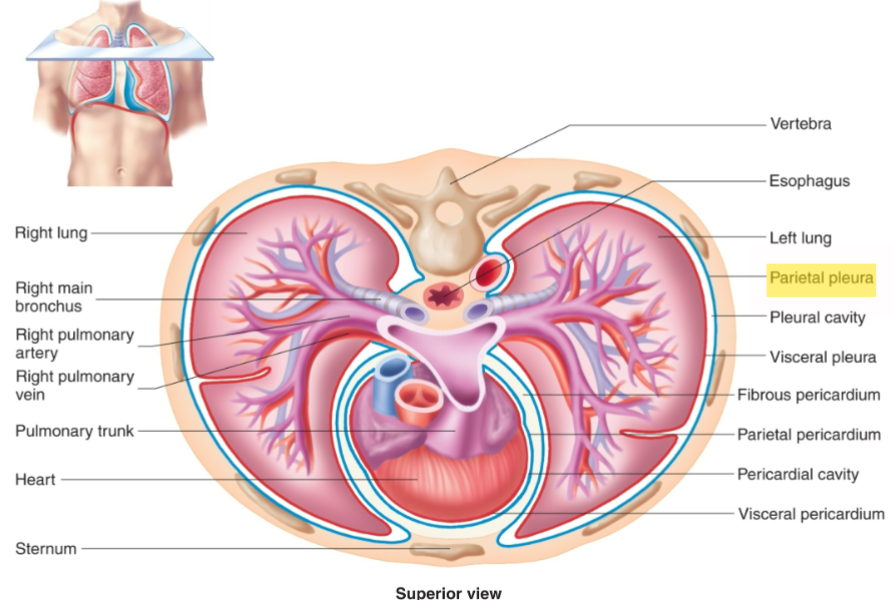
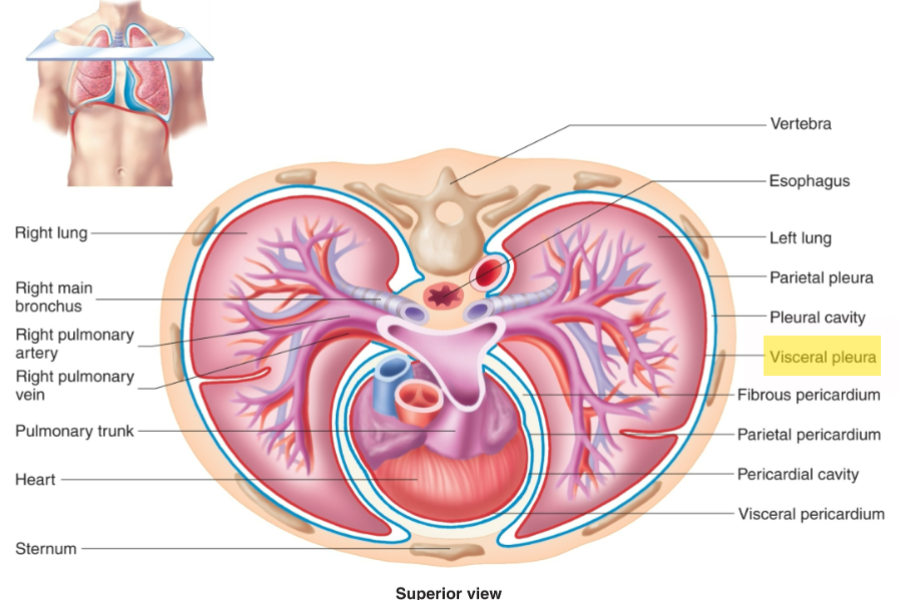
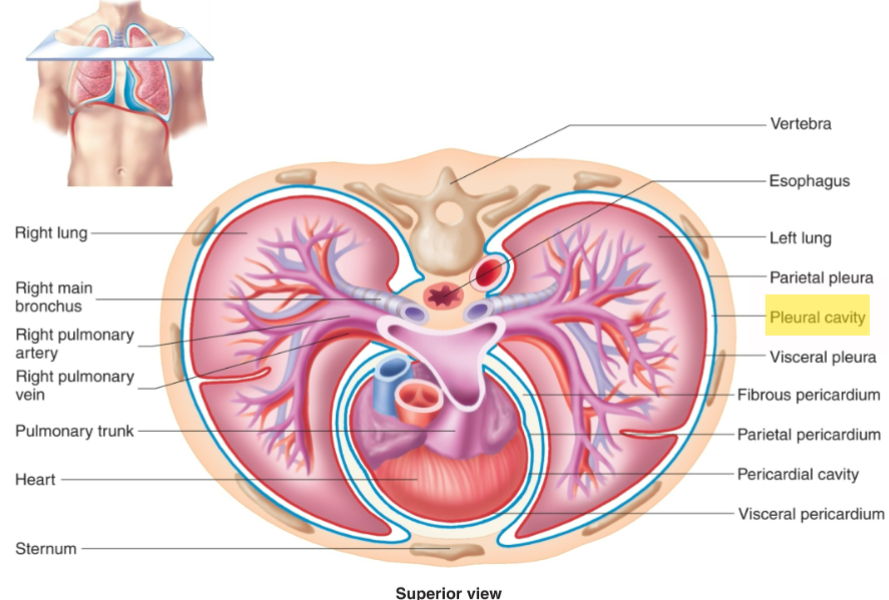
What is the Pleura?
The double-layered membrane around the lungs.
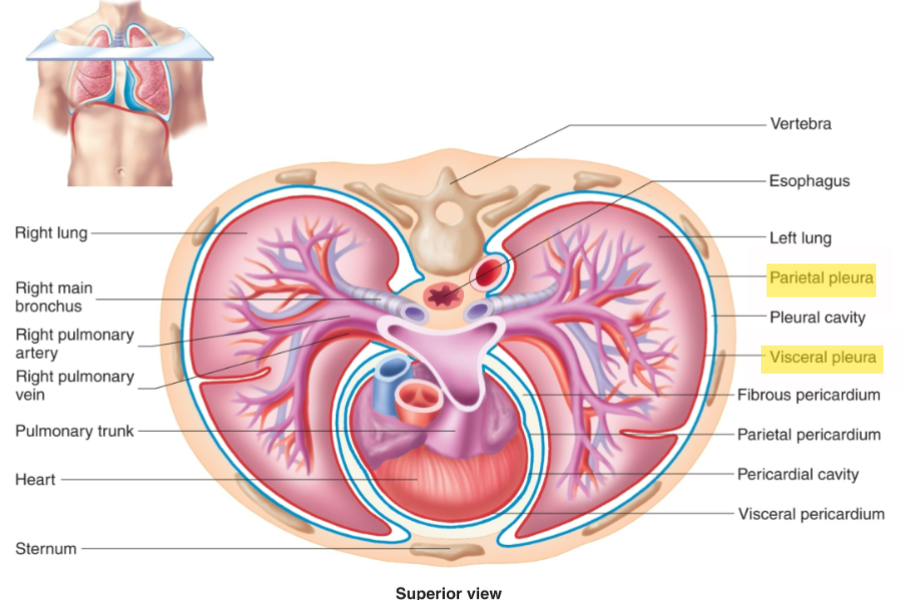
What is the Parietal pleura?
The membrane that lines the thoracic cavity.
What is the Visceral pleura?
The membrane that covers the lung's surface.
What is the Pleural cavity?
The space around each lung.
How does the thoracic wall change during Inspiration?
The thoracic wall expands.
How does the thoracic wall change during Expiration?
The thoracic wall compresses.
What is the major muscle of respiration?
The Diaphragm
What other muscles are used in normal breathing?
Intercostal muscles.
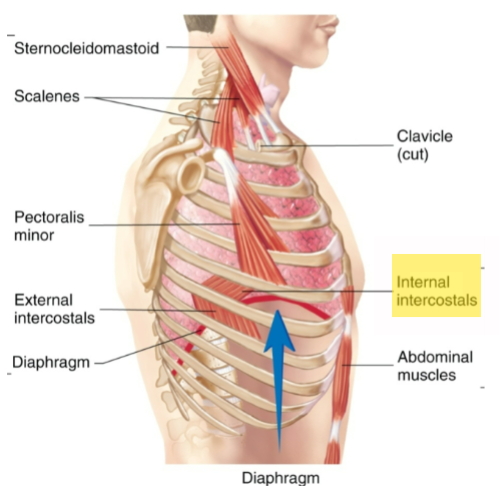
What are "accessory muscles" used for?
Forced inspiration (neck muscles) and forced expiration (abdominal muscles).
Define Tidal Volume (TV).
Breathe is coming in and out, quiet breathing, inspiration and expiration.
Define Inspiratory Reserve Volume (IRV).
That is how much more you can breathe in. The purple part. Also much larger than expiratory volume.
Define Expiratory Reserve Volume (ERV).
How much breath can you breathe out.
What is Inspiratory Capacity? (and formula)
All the air you can possibly breathe in.
Formula: Tidal Volume + Inspiratory Reserve Volume
What is Vital Capacity? (and formula)
All the air you can expire after a maximal inspiration.
Formula: Tidal Volume + IRV + ERV
What is Functional Residual Capacity? (and formula)
The amount of air remaining in the lungs after a quiet expiration.
Formula: Expiratory Reserve Volume + Residual Volume
What is Total Lung Capacity? (and formula)
The sum of all volumes.
Formula: TV + IRV + ERV + RV
According to Boyle's Law, if the volume of a container (thoracic cavity) increases, what happens to the air pressure inside?
The air pressure decreases.
During Inspiration, why does air move into the lungs?
The thoracic cavity volume increases, decreasing alveolar pressure. Atmospheric pressure becomes greater than alveolar pressure, so air moves in.
During Expiration, why does air move out of the lungs?
The thoracic cavity volume decreases, increasing alveolar pressure. Alveolar pressure becomes greater than atmospheric pressure, so air moves out.

