Sex Matters Midterm
 Studied by 1 person
 Call Kai
 Learn
Learn Practice Test
 Spaced Repetition
 Match
Match Flashcards
 Knowt Play
1/103

There's no tags or description
Looks like no tags are added yet.
Name | Mastery | Learn | Test | Matching | Spaced | Call with Kai |
|---|
No analytics yet
Send a link to your students to track their progress
104 Terms
Healthy Sexual Development can lead to
healthy intimate and sexual relationships, self-efficacy, and autonomy in sexual decision making and establishment in sexual identity
Humans, typically, begin their sexual lives in their teen years. This means clinicians should... (Koyama et al)
Focus on positive ways to help teens develop healthy relationships while providing guidance around reducing unsafe sexual behaviors
What is the most effective in changing youth behavior regarding sex? (Koyama et al)
Comprehensive sex education (including skills-based interventions)
What has larger effects on teens in developing countries? (Koyama et al)
Early childbearing, HIV exposure, child marriage, limited access to education, and poverty
What can affect how children receive information about sexual education? (Koyama et al)
Demographic factors, social norms (beliefs surrounding pre-martial sex and marriage age), access to media, religious beliefs, public policies, access to education
What should social policy do when teaching sex ed? (Koyama et al)
Stray away from abstinence-only education and the promotion of post-martial sex and begin providing them with necessary tools to develop sexual identity and make responsible decisions to create healthy relationships
Four domains of risk and protective factors influencing teen sexual behavior (Koyama et al)
individual biological factors, disadvantage, disorganization, and dysfunction in teenagers' lives, sexual values, norms, attitudes, and modeled behavior, and teenagers' connection with adults and organizations that discourage sex, unprotected sex, or early childbearing.
Protective factors for abstinence (Koyama et al)
higher levels of education, younger age, lack of substance use, and lack of a relationship
Factors to know if adolescents is sexually active / having safe sex (Koyama et al)
higher familial wealth, parents with no alcohol or drug problems, high family self esteem, fear of STDs/HIV
Interventions to promote safer sex/prevent precocious sexual activity (Koyama et al)
Family/Individual: decrease substance use, encouraging continued education, improving relationships with child and peers
Community: increasing educational and work opportunities and decreasing poverty
Most utilized form of contraception (Koyama et al)
Condoms as most developing countries don't have access to modern contraceptives
Factors that put a person a risk for teen pregnancy (Koyama et al)
lower socioeconomic status, leaving school early or disliking school, family disruption, early sexual initiation, and increasing number of partners
How can pediatricians and adolescent medicine experts help teens improve individual determinants of sexual health? (Koyama et al)
helping teens clarify their own values about sexuality, demonstrating condom use, and encouraging youth to talk about their emotions around sex with their partners and family
FSH (follicle stimulating hormone) for men
stimulate maturation of germ cells, induces Sertoli cells (cells that protect and nurture sperm) to secrete Inhibin (which inhibits release of FSH) and to form the blood/testes barrier
LH (luteinizing hormone) for women
Stimulates release of Estrogen, Surge triggers ovulation and formation of corpus luteum which makes , in turn preparing the endometrium for implantation
Estrogen
development of female secondary sexual characteristics, such as breasts
Thickening of endometrium and regulating the menstrual cycle
Promotes bone growth
Testosterone is produced where
Produced Primarily in the Testes, but also in the ovaries and the adrenal glands
Testosterone (anabolic)
growth of muscle mass, strength, bone maturation.
Testosterone (other effects)
Increased libido, growth of adam's apple
DHT (dihydrotestosterone)
The most potent form of testosterone, DHT promotes prostate growth, sebaceous gland activity, male pattern baldness, and body, facial and pubic hair growth, penile growth
Oxytocin
a hormone released by the pituitary gland that has bonding/attachment effects
Prolactin
stimulates milk production, reduced libido, breast growth
Zona Glomerulosa
mineralocorticoids. Regulate blood pressure
Zona Fasciculata:
Produces Cortisol (Main Stress Hormone)
Zona Reticularis
Produces dehydroepiandrosterone (DHEA), androstenedione and dihydrotestosterone (DHT) - the masculinizing sex hormones
SRY
sex determining region of the y chromosome
Congenital Adrenal Hyperplasia (CAH)
Any of several autosomal recessive disorders resulting from defects in steroid production
Can lead to deficient or excessive sex hormone production
17-alpha-hydroxylase deficiency
● Rate: 1 in 50,000 births
● Cause: Defect in gene coding for enzyme 17-alpha-hydroxylase
● Effect: Imagine the deficiency as a road block... if that enzyme is not working, what do you guess will
happen?Steroidogenesis: the multistep process for biosynthesis of steroid hormones from cholesterol. Primary organs for steroidogenesis in the male are the pair of testes and adrenal glands.Effects:
Elevated Blood Pressure In females:
● Normal female internal and external anatomy
● Very little estrogen production (thus increase in GnRH, FSH/LH) delayed puberty In males:
● Very little testosterone production
● External genitalia ranges from reduced penis size to normal female external anatomy
21-alpha-hydroxylase deficiency (variation of CAH)
Rate: 1 in 15,000 live births
● Cause: Defect in gene coding for enzyme 21-alpha-hydroxylase
Effects:
● Low blood pressure
In females:
● Increased sex hormones/testosterone
● Masculinized/ambiguous genitalia
In males:
● Normal internal/external genitalia
Living with AIS 5-alpha-reductase deficiency
● Rate: Depends on the population... for example in the 1970's in the Dominican Republic, the rate was 1:90 males.
● Cause: mutation in one of two genes that code for 5-AR. One is on Chromosome 2, and the other is on Chromosome 5.
Klinefelter's Syndrome Features
Undersized penis and testes
Typically sterile
Low androgens → decreased libido
Psychiatric comorbidity
Endocrine effects:
Primary failure of testes to produce adequate testosterone, so less NEGATIVE INHIBITION
This leads to increase in GnRH → increases in LH/ FSH
Klinefelter's Syndrome Psychiatric Effects
Psychiatric Effects
Lose about 15 IQ points for every extra X...some can have as many as 4 X's
Increased risk of learning disorders and ADHD
Increased prevalence of mood, anxiety, psychotic, and behavioral disorders
Turner's Syndrome
In 1938, Henry Turner described Turner syndrome which is one of the most common chromosomal abnormalities
More than 95% of adult women with Turner syndrome exhibit short stature and infertility
Rate: 1 in 2000 females
Turner's Syndrome Features and Cause
Cause: 45, XO - females have only one X
Features:
Short stature
Ovarian failure
Normal external genitalia
Shield chest, Webbed neck
Turner's Syndrome Endocrine and Psychiatric Effects and Treatment
Endocrine Effects
Decreased Estrogen → lack of feedback inhibition → increased FSH/LH
Decreased Thyroid Functioning
Higher risk of Diabetes
Psychiatric Effects
No effects on intelligence
IQ is 10 points lower
Increased prevalence of learning disorders and ADHD
Adjustment issues
Treatment:
Growth Hormone
Estrogen
Thyroid Hormon
Physiology of erection
1. Arousal of any type (including dreams, thoughts, sensations... occurs in REM sleep)
2. Parasympathetic Nervous System (opposite of flight or fight) kicks in (Mnemonic = point)
3. Neurotransmitters cause relaxation of muscles around corpora cavernosa and spongiosa, allowing blood to flow in... the increased pressure traps the blood in the penis, maintaining the erection
4. Eventually, the Sympathetic Nervous System (the Flight or Fight System) kicks in leading to orgasm. (Mnemonic = shoot)
5. A refractory period follows
Regular Puberty
Age 10 for girls (average menarche: 12.5yrs). Age 12 for boys
Why are women getting earlier periods?
Women are receiving their periods earlier because periods are heavily dependent on body fat. Long ago when food security wasn't as regular and malnourished women would not get their period on time or never.
Eating disorders such as anorexia/ bulimia nervosa → Fat cells produce estrogen (Bodies need a certain level of fat to have puberty)
Puberty LH Girls
LH also leads to testosterone production (much less than in boys), most of which is estrogen.
To complicate things, FSH also rises during this time and encourages increased aromatase activity
(thus increasing change from testosterone/estrogen)
Puberty Timeline
Puberty (Timeline)
1. GONADARCHE: Enlargement of the gonads.
Testicular enlargement increased ability to make testosterone Ovarian growth increased ability to make more estrogen **arche - latin, "beginning"
2. Thelarche: Breast Development Tanner Stages 1-5
Tanner 1: No Breast Development Tanner 5: Fully Developed Breasts Tanner 2: Thelarche
3. Pubarche (approx age 12): First appearance of pubic hairReflects rising levels of androgens (male sex hormones) from adrenal glands and from testes
4. Menarche
First menstrual bleeding
Delayed Puberty
No menarche and no thelarche by age 13 or...
● Failure of menses to occur by age 16In the presence of normal growth and secondary sex characteristics
● In boys, no signs of sexual maturation by age 15
Delayed Puberty Causes
Ovaries/Testicles GenesNutrition Psychiatric
Brain Etiologies:
● Some Pituitary Tumors
● Strokes
● Head Trauma
Delayed Puberty Gonadal/Genetic Reasons
Ovarian/Testicular Dysgenesis: failure of gonads to develop; surgical removal of gonzad (i.e., testicular cancer)
Polycystic Ovarian Syndrome
Gene mutations in FSH/LH/GnRH receptors
Family of "late-bloomers"
Delayed Puberty Genetic Reasons
Kallmann Syndrome: GnRH deficiency + no sense of smell
Women with this condition have little to no breast development
Delays puberty for all
Klinefelter's Syndrome: Klinefelter syndrome is a genetic condition in which a boy is born with an extra X chromosome
Delayed Puberty Nutritional Reasons
Need a critical body fat level to have a functioning reproductive system
Up to 50% of highly active female athletes can be amenorrheic (Souza, 2009)
Any cause of low weight can be a cause (chronic illness, malnutrition, etc...)
Delayed Puberty Psychiatric
Anorexia Nervosa
Less than 85% of ideal weight, fear of becoming fat, amenorrhea
Highest mortality of any psychiatric disorder - fatal in 4-18% of cases
Depression
Some psychotropic medication
precocious puberty
Signs of puberty prior to age 6-8 in females and age 9 in males.
precocious puberty genetic reasons
Sometimes precocious puberty will run in families
Racial disparities
Black girls have a earlier age of menarche than other racial/ethnic groups raised in similar environments with similar levels of body fat
precocious puberty exogenous reasons
Obesity
Exposure to Androgens
One type of exogenous steroids is a gel - Androgel...children who are in frequent contact with men who use the gel can be catapulted into early puberty
precocious puberty effects
On average precocious puberty is more damaging for females while delayed puberty is more damaging with males. Women are more likely to experience depression.
Freud Psychosexual Stages
Oral
Anal
Phallic
Latency
Genital
Phallic Stage
Freud's third stage of development, when the genitals become the focus of concern and pleasure. (3 to 6)
Girls:
Pleasure in the clitoris and vagina spread to pleasure in the body
Girls become more aware of their bodies and more curious about their own bodies and others (ie mother's body)
Idealize mother's body/envy mother's body/wish they had it
Exhibitionism
Boys feel excited/overwhelmed/anxious/pleased/puzzled by nature of penile erections
Comes to idealize father and father's large penis wants to acquire it which leads to castration anxiety based on fear of retaliation
latency stage
the fourth psychosexual stage (6 years old - adolescence)
Sexual impulses overcome by repression, reaction formation of morality, shame and disgust as well as aesthetic ideals
Relative not absolute latency
Masturbation fantasies almost universal
Expanding environment helps decrease genital urgency; ie school, peers →increased opportunity for sublimation
Positive self-esteem, counterbalance masturbation guilt
Genital stage overview
Freud's last stage of personality development, from the onset of puberty through adulthood, during which the sexual conflicts of childhood resurface (at puberty) and are often resolved during adolescence). (Puberty+)
Genital stage (Pre-adolescence)
Body adjustments and dealing with intensified sexual drives w/ increased genital sensitivity and reacitivity
Preference for same sex friendships/groups
Genital Stage (adolescence and adulthood)
Adolescence:
First menses and first emission
Girls better educated than boys
Resurgence of earlier conflicts including pre-oedipal and oedipal
Masturbation form of practice and a way to take possession of his newly matured sexual body and a way to take responsibility for sexual wishes
Increased conflict around masturbation b/c of oedipal fantasies
Mature identifications with parents
New object: satisfy both dependent and sexual needs
preoperational stage
(2 - 7 years old)
Beginning to use words to represent objects.
Early on personifies objects—animism
Egocentric-believes everyone sees things from his perspective, Thinking influenced by fantasy
Fantasy is reality for children
Psychosis is rare because of this in this age range
Poor sense of time
Cannot give you a time frame
Anything that isn’t happening right this second is yesterday
Anchor points is important because they can differentiate these
Can classify objects by group-red blocks, or all squares
Egocentrism
Theory of mind
People don’t know what you know
Having a theory of mind allows us to understand that others have unique beliefs and desires that are different from our own, enabling us to engage in daily social interaction as we interpret the mental states and infer the behaviors of those around us
concrete operational stage
(7 - 11 years old)
Can think logically about objects and events
Can understand death is permanent
Can order objects in series
Develops ability to think abstractly
Conservation-The understanding that something stays the same in quantity even though its appearance changes.
Reversibility-The child now understands that numbers or objects can be changed and then returned to their original state. (4+4=8)
Formal Operational stage
(11 years and up)
No longer needs concrete objects to make rational judgments
Capable of hypothetical and deductive reasoning
Becomes concerned with the future and ideological problems
Erikson's Psychosocial Stages
stage theory of psychosocial development, lifespan consists of eight dilemmas that must be solved correctly in order to solve the next dilemma
Industry vs. Inferiority (Erikson)
5-12 years - Children busily learn to be competent and productive or feel inferior and unable to do anything well.
Generativity vs. Stagnation
Erikson's stage of social development in which middle-aged people begin to devote themselves more to fulfilling one's potential and doing public service. (40 and 65)
Integrity vs. Despair
Erikson's final stage in which those near the end of life look back and evaluate their lives. (65+)
How have modern theorists studied sexual behavior?
They watched MRIs and EKGs while people were having sex and masturbating.
Survey Parents and Caretakers
Retrospective reports from adults
Study children who are brought in for treatment due to concern about their sexual behaviors
What behaviors adults most commonly recall?
Usually before the age of 13.
73% recall sexual behaviors with other children
34% recall showing their genitals to another child
16% recall stimulating intercourse with another child
5% recall inserting an object into the vagina or rectum of another child
4% recalled oral genital contact during childhood
normal sexual behavior in children
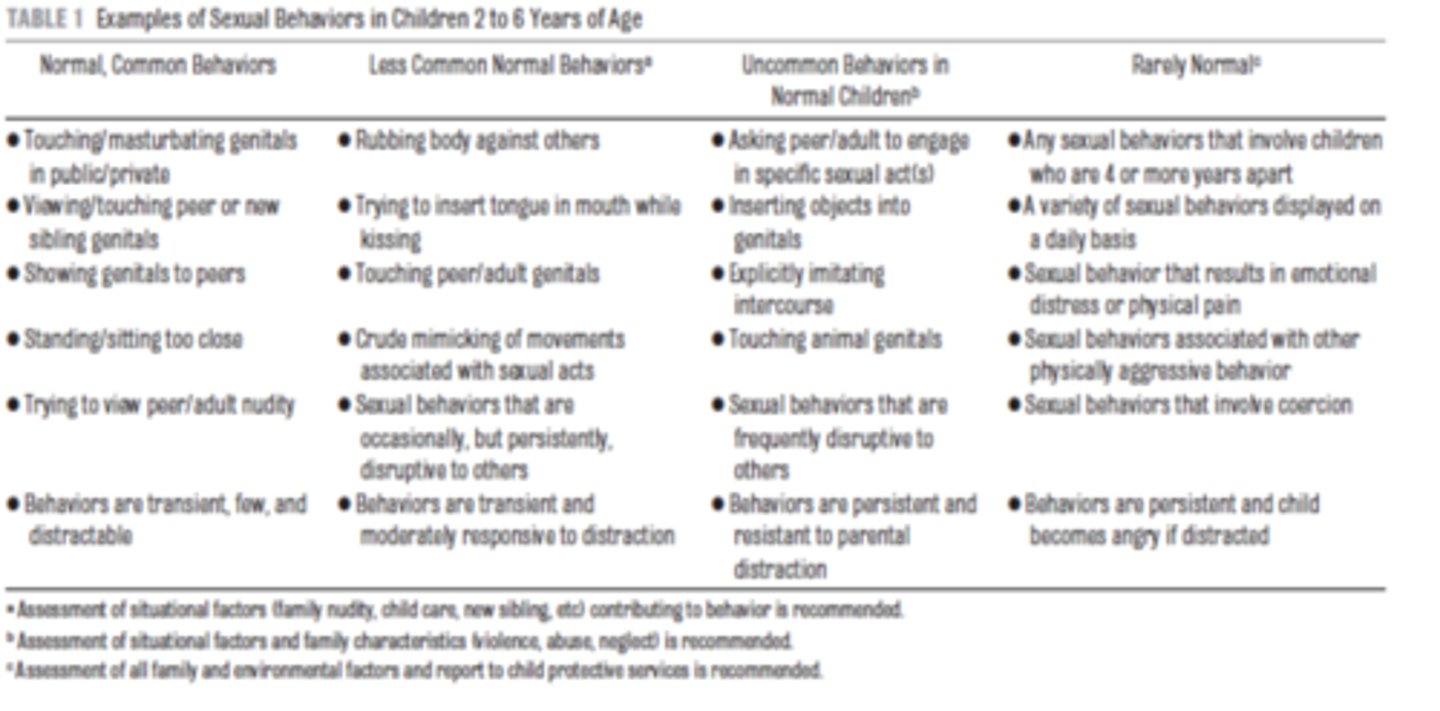
sexual dysfunction due to trauma
Sexual behavior problems significantly related to living in homes with disruption including:
Criminal activity, or violence
The greater the number of life stressors the greater the frequency of sexual behaviors observed
Parental battering, death, hospitalization, deaths of other family members, child illness and hospitalization
Child abuse more likely in homes where there is violence and criminal activity
68% of children with sexual behavior problems have witnessed intimate partner violence among their
caregivers
Mahler's Theory
• Initial state of infant - fusion or symbiosis with mother
• Development represents a process of separation - individuation
• These patterns form the core of adult patterns of relationships
In Mahler's theory, child development takes place in phases, each with several sub phases: Normal autistic phase - First few weeks of life. The infant is detached and self-absorbed. Spends most of his/her time sleeping. Mahler later abandoned this phase, based on new findings from her infant research
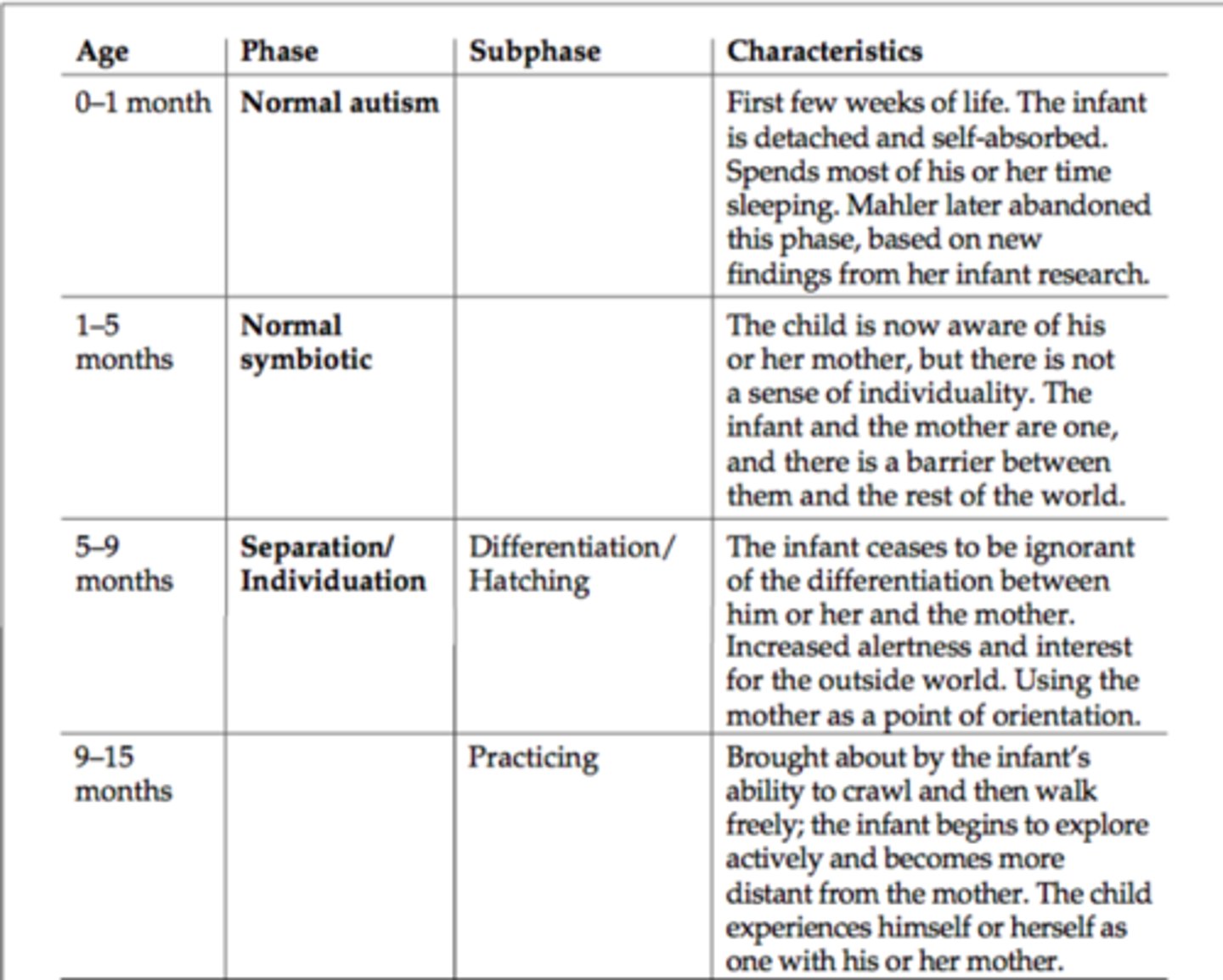
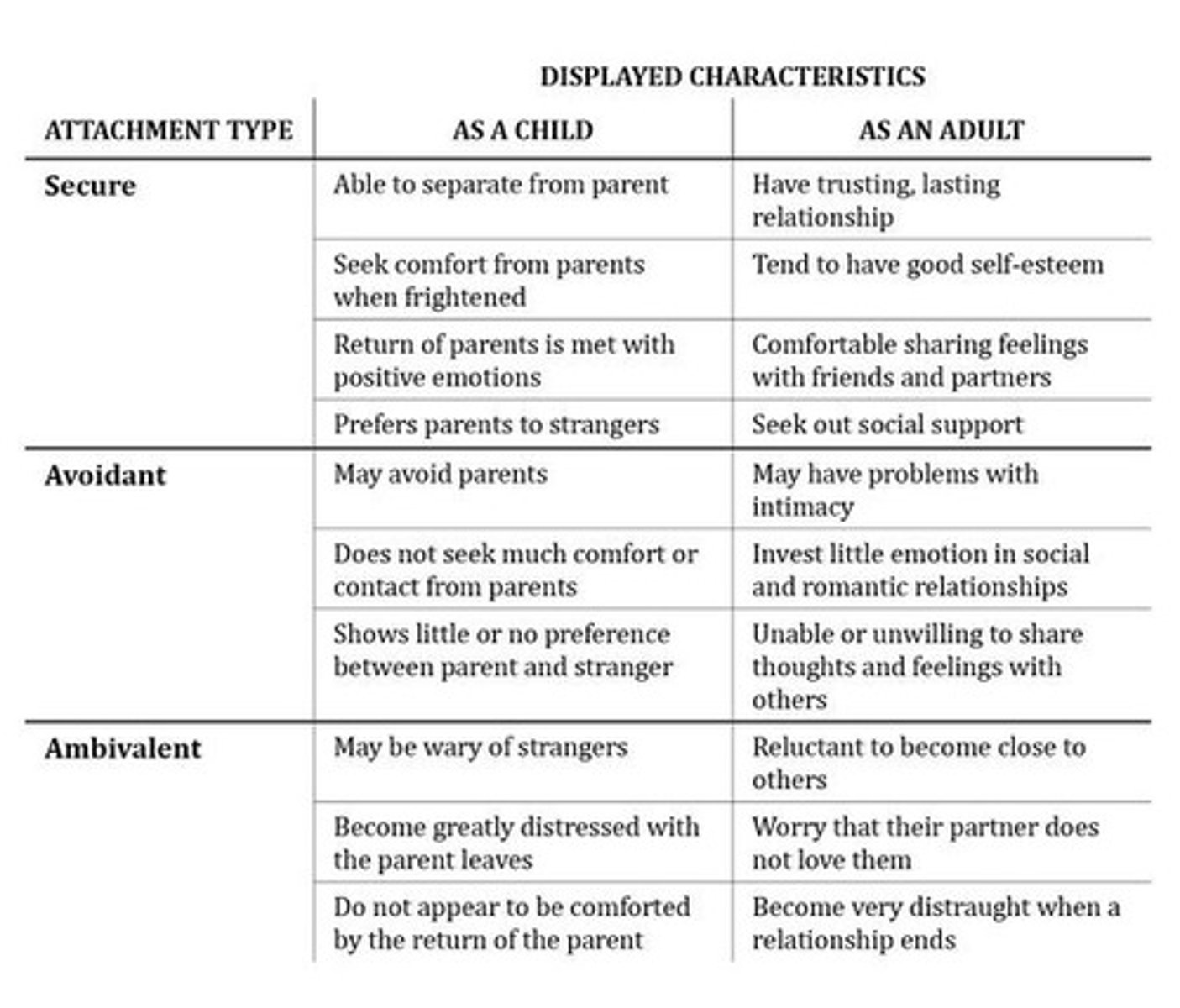
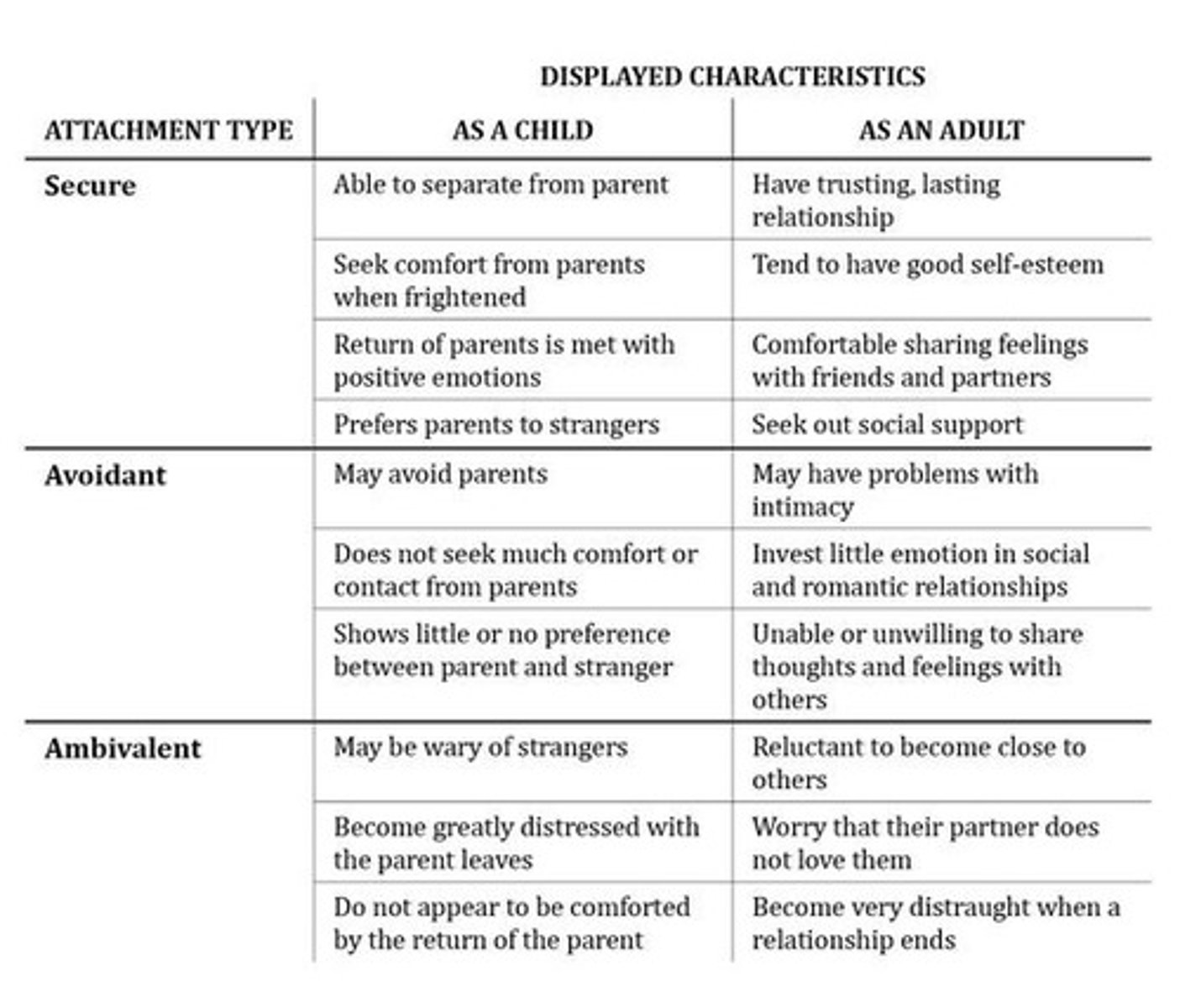
Ainsworth theory of attachment
Ainsworth's maternal sensitivity hypothesis argues that a child's attachment style is dependent on the behavior their mother shows towards them.Based on these observations, Ainsworth concluded that there were three major styles of attachment: secure attachment, ambivalent-insecure attachment, and avoidant-insecure attachment
Koyama et al. reading focuses on
examining global trends of adolescent sexual behavior to inform clinical practitioners which leads to development of interventions and educational strategies for healthy sexual development
Some risk/protective factors are (Koyama et al)
similar globally, whereas others differed by sex and community
How can educators help teens receive a comprehensive sexual education? (Koyama et al)
By addressing larger and structural issues like gender equality, poverty, educational boarders
Ways to understand adolescent's motivation for sex (Koyama et al)
Programs that help them identify nonsexual ways to establish intimacy, breakdown of gender stereotypes, and facilitate discussion around healthful aspects of sexual activity when developmentally appropriate.
What limits effectiveness of sex education? (Koyama et al)
Not acknowledging the normalcy of teenagers exploring and establishing their sexual identity
Most comprehensive approach to sexual health education (Koyama et al)
a comprehensive approach targeting individual, family, community, and structural changes
Hormone
a substance synthesized by one tissue that is conveyed by the bloodstream to another tissue to effect physiologic activity (i.e. body's summons system, like jury duty)
GnRH
causes pituitary to release LH and FSH, made in hypothalamus, released in pulsatile fashion. Constant in men and varies throughout menstrual cycle
FSH (follicle stimulating hormone) for women
Stimulate maturation of germ cells, Stimulates Follicular growth, Helps regulate menstruation,
Hormones released by posterior pituitary
FSH (Follicle Stimulating Hormone)
LH (Leuteinizing Hormone)
ACTH (Adrenocroticotropic Hormone)
Prolactin
Hormone(s) released by posterior pituitary
oxytocin (made in HTM)
Hormone(s) released by hypothalamus
GNRH (Gonadotropin Releasing Hormone), CRH (Corticotropin Releasing Hormone)
Hormones released by testes, ovaries, adrenal glands:
Dehydroepiandrosterone (DHEA) and DHEA-S
Androstenedione
Dihydrotestosterone (DHT)
Testosterone
Estrogen
Progesterone
LH (luteinizing hormone) for men
Acts on Leydig cells in testes to produce testosterone
Testosterone (androgenic effects)
maturation of sex organs, and secondary sex characteristics.
Know how testosterone and estrogen are related and how one converts to the other
Aromatization is the process that converts testosterone into estrogen. This is a natural process your body goes through to maintain homeostasis. The reason that this process is called aromatization is because aromatization is named after the chief enzyme involved in the conversion – aromatase. Testosterone is one of the hormones that is formed in the pathway of steroidogenesis both in males and females and is converted to estradiol by aromatase enzyme in both ovarian follicles in females and seminiferous tubules of testes in males.
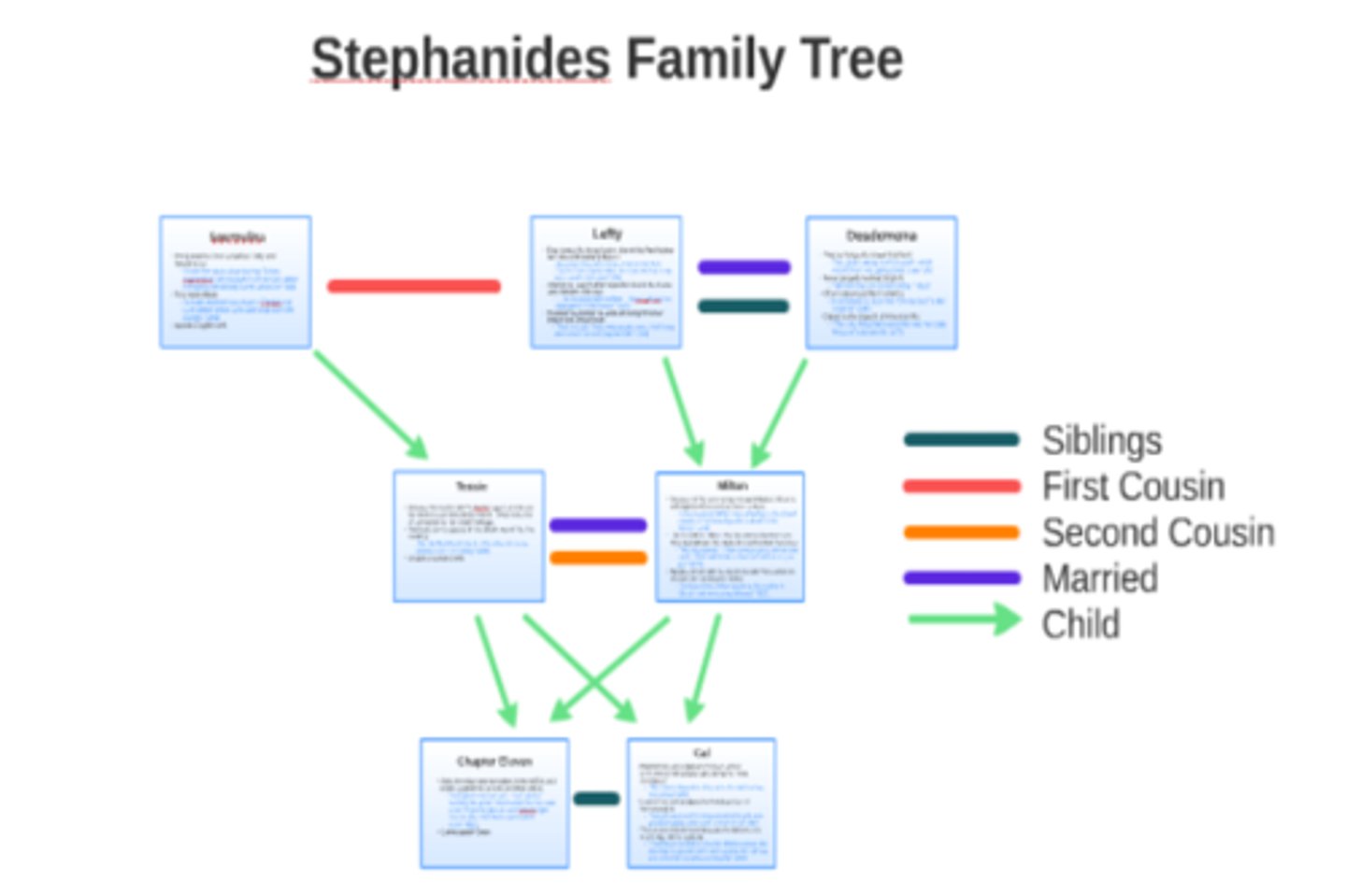
Know about Callie from Middlesex
Calliope "Callie" (later changes name to Cal) Helen Stephanides is the omniscient narrator of the novel. In 1960, he was born with 5-alpha-reductase deficiency, a mutation that causes him to physically look like a girl, when in fact, he possesses the hormones of a boy.
Klinefelter's Syndrome
In 1942, Klinefelter et al published a report on 9 men who had enlarged breasts, sparse facial and body hair, small testes, and an inability to produce sperm
Rate: 1 in 1000
Cause: XXY - an extra X can make a big difference
Klinefelter's Syndrome Treatment
Androgen Replacement Therapy (Testosterone injected) should begin at puberty
Adjusted to correct for elevated FSH/LH
Testosterone can improve psychiatric status
Puberty LH Boys
Increased LH leads to testosterone and DHT production primary and secondary sexual development
Puberty Girls Estrogen
As estrogen levels increase, a switch is turned in the hypothalamus.
Instead of feedback inhibition: Increased estrogen increased LH
Increased LH increased estrogenAnd round and round till LH Surges which signals ovulation.
Oral Stage
Freud's first stage of psychosexual development during which pleasure is centered in the mouth. (0 - 18 months)
Piaget's stages of cognitive development
1. sensorimotor
2. preoperational
3. concrete operational
4. formal operational
sensorimotor stage
(0 - 2 years old)
Child learns about self and environment.
At two, kid learns he is separate from his environment
Object permanence: Objects continue to exist even though outside of his reach and senses (peek-a-boo)
Develops at 8 to 12 months
Thought comes from sensation and movement
He/she realizes he can move and pull things etc he/she is agent of action
Autonomy vs. Shame and Doubt
1 to 3 years. Erikson's stage in which a toddler learns to exercise will and to do things independently; failure to do so causes shame and doubt
Initiative vs. Guilt
Erikson's third stage in which the child finds independence in planning, playing and other activities. 3 to 5 years
Ego Integrity vs. Role Confusion
12 to 18 (Erikson) People in late adulthood either achieve a sense of integrity of the self by accepting the lives they have lived or yield to despair that their lives cannot be relived
Intimacy vs. Isolation
Erikson's stage in which individuals form deeply personal relationships, marry, begin families. (19 and 40)
Bowlby's attachment theory
children are biologically predisposed to develop attachments with caregivers as a means of increasing the chances of their own survival. Bowlby (1969) believed that attachment behaviors (such as proximity seeking) are instinctive and will be activated by
any conditions that seem to threaten the achievement of proximity, such as separation, insecurity, and fear.
Aromatase
an enzyme responsible for a key step in the biosynthesis of estrogens & catalyze many reactions involved in steroidogenesis
Androgen Insensitivity Syndrome (AIS)
Karyotype: 46, XYCause: X-linked recessive trait
● Defect in Androgen Receptor Gene on X chromosome
● Testosterone made normally but unable to be used; it gets converted by aromatase to estrogen
● Appear Phenotypically Female
Babies appear to have typical female external genitalia, but...
● Testes are palpated in inguinal canal
● Blind Vagina - no uterus
● Internal male structures are present
 Note
Note  Flashcards (178)