L6 Immunity Against Viral Infections: IFN Pathways
 Studied by 0 people
 Call Kai
 Learn
Learn Practice Test
 Spaced Repetition
 Match
Match Flashcards
 Knowt Play
1/24

Earn XP
Description and Tags
Flashcards covering innate immunity against viral infections, focusing on interferons (IFNs), their pathways, and the role of NK cells, based on lecture notes.
Name | Mastery | Learn | Test | Matching | Spaced | Call with Kai |
|---|
No analytics yet
Send a link to your students to track their progress
25 Terms
How are immune responses described in terms of their linearity?
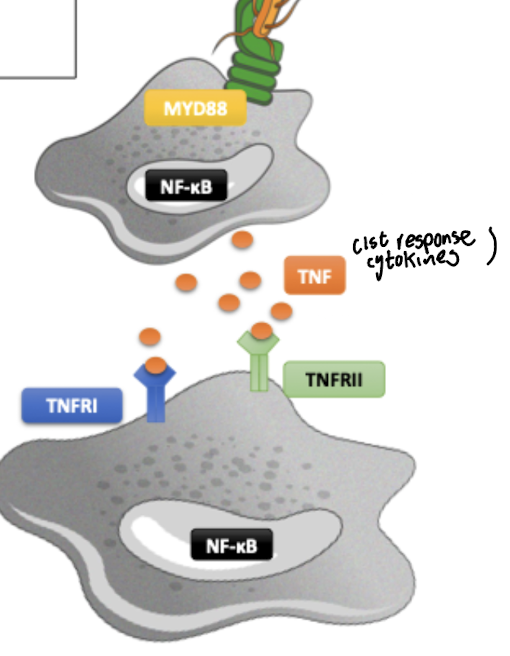
They are more like a wave, where one molecule produced through a certain pathway can activate the same pathway in other ways
Eg. TNF-NF-kB
What is viral genetic material surrounded by?
an protein envelope (capsid)
How do viruses replicate within a host?
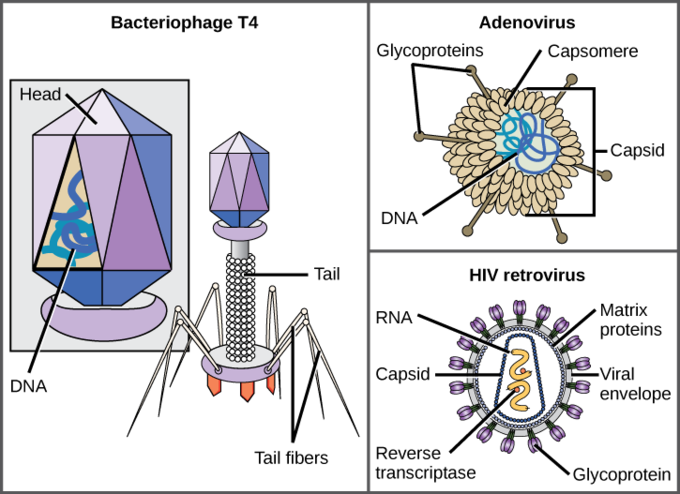
Viruses replicate by injecting their genetic material (DNA or RNA) into a host cell.
Hijack the host's cellular machinery, including ribosomes and enzymes, to produce viral proteins and new viral genetic material, effectively 'borrowing' the host's protein production machinery to create new virus particles.
why are viruses known for their strength in simplicity?
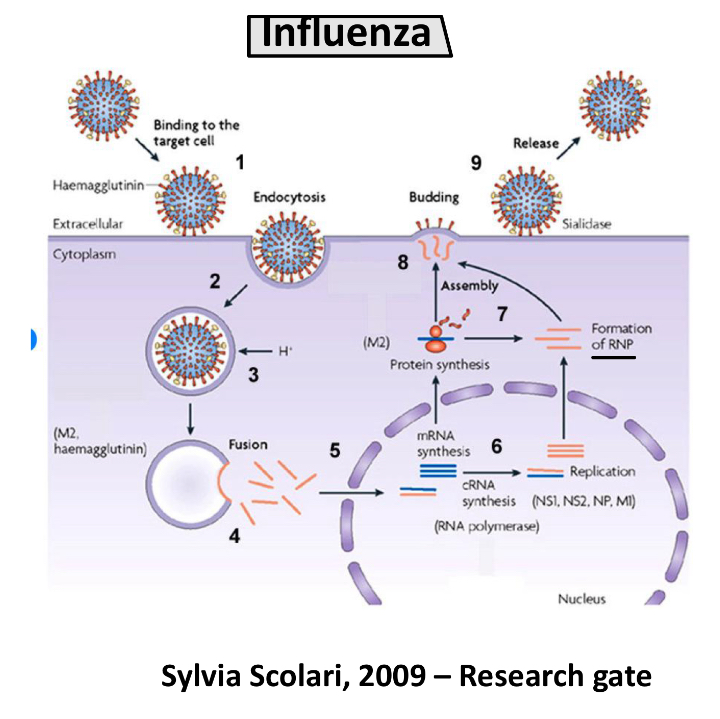
Few proteins in viruses (i.e 15 proteins form HIV) vs >100k in humans.
• Highly adaptable, flexible organisms (can mutate quickly to adapt to host, hence why new vaccines need to be developed each flu season).
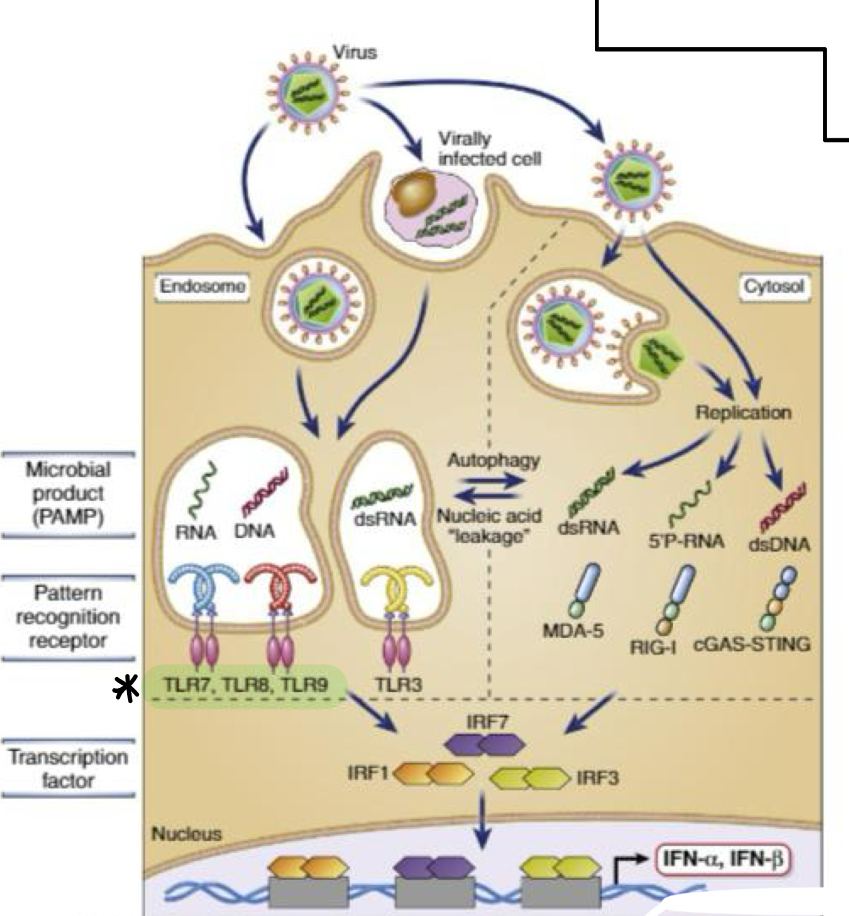
How does the innate immune system sense double-stranded RNAs (dsRNAs) from viruses like Rotavirus?
Via TLR3.
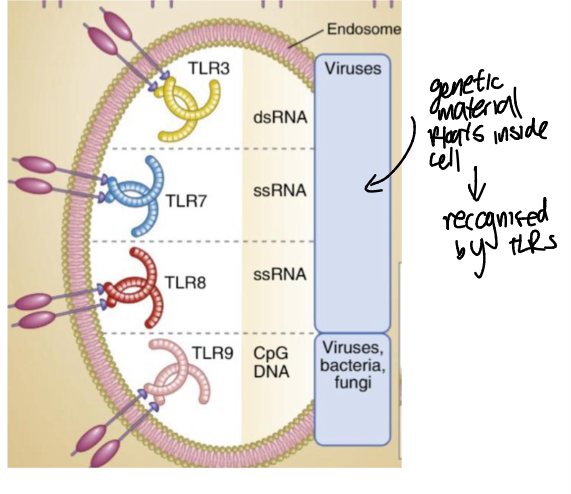
Which Toll-like Receptors (TLRs) sense single-stranded RNAs (ssRNAs) generated by viruses like HIV?
TLR7 and TLR8.
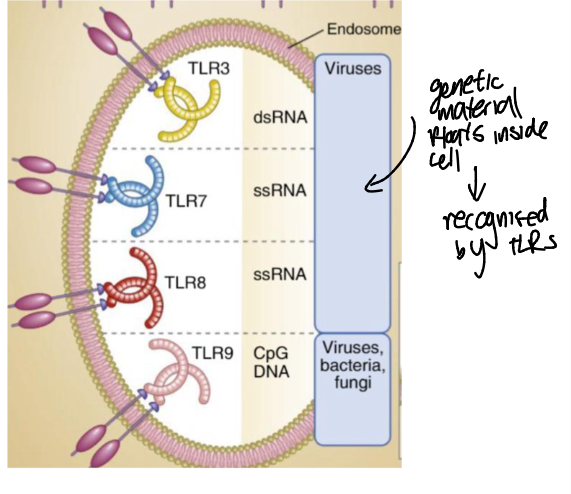
How does the innate immune system sense CpG DNA from viruses like herpes simplex virus type-1?
Via TLR9.
*CpG DNA is where Cytosines are connected to guanines by a phosphate bond, not common in vertebrate DNA
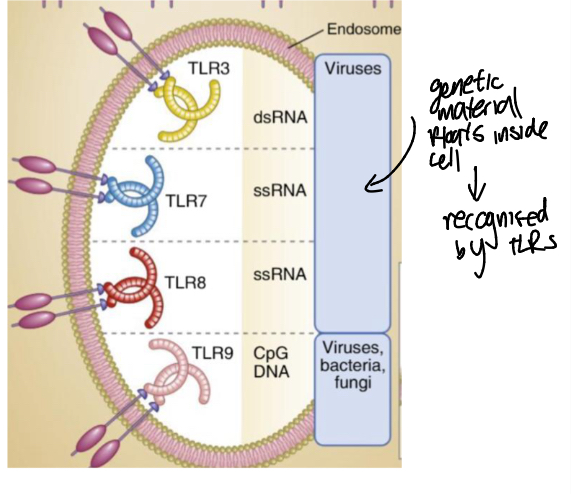
Besides TLRs, what other receptors sense viral RNA?
RIG-I-like receptors.
Receptors detect cytoplasmic viral RNAs, triggering antiviral responses.
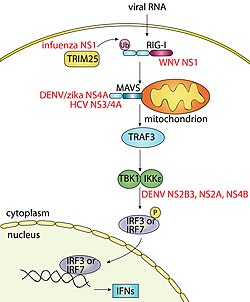
What are Interferons (IFNs) and what is their primary function?
Cytokines released in response to TLR/Rig-I-like sensing of viral nucleic acids, primarily to 'interfere' with viral replication to prevent spread.
What are the 3 main types of Interferons?
Type I :
IFN-α
IFN-β
IFN-γ (Type II)
In what cell types is the Type I IFN IFN-a produced in?
Primarily produced by plasmacytoid dendritic cells and macrophages in response to viral infections.
Act quickly and are apart of our innate immune systems
What are plasmocytoid dendritic cells?
Plasmacytoid dendritic cells (pDCs) are specialised immune cells that produce large amounts of type I interferons, which leads to increased MHC I expression and NK cell activation
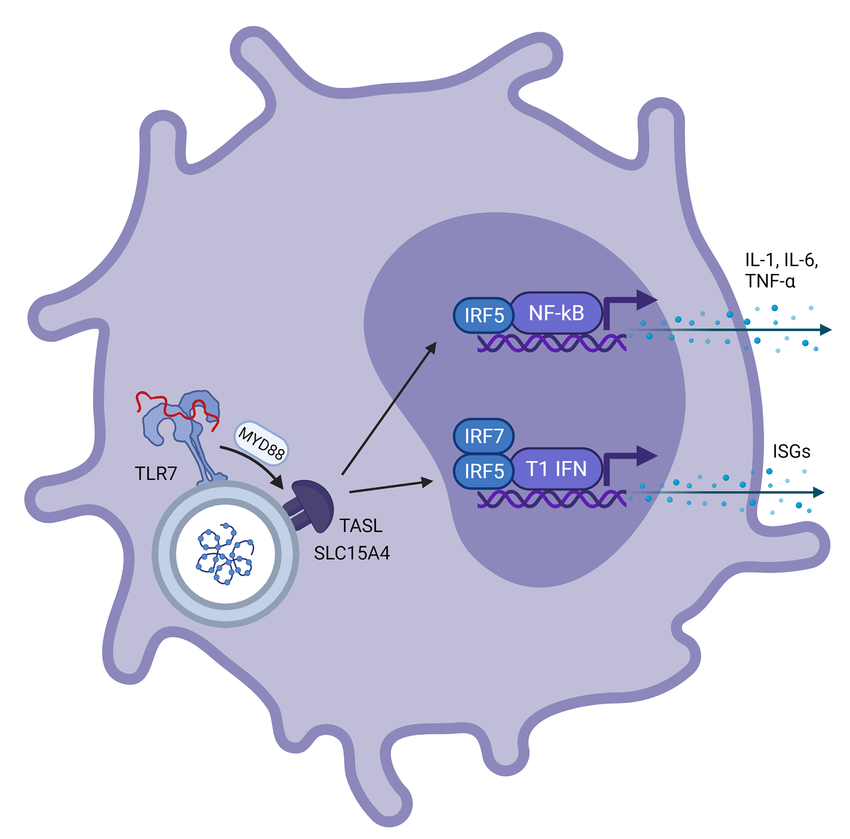
What mediates IFN expression?
IFN regulatory factors (IRFs) in the cytosol are phosphorylated and translocate to the nucleus
Mediated by the transcription of IFN genes.
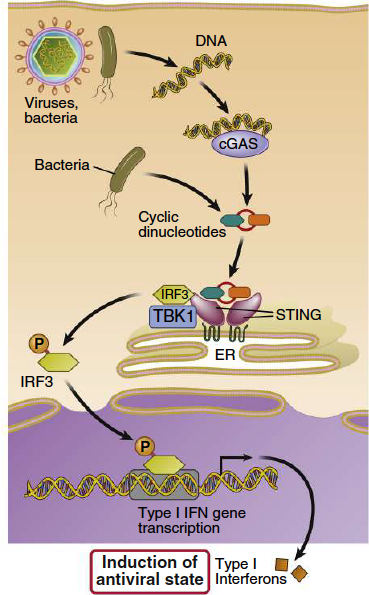
What do infected cells secrete that activates anti-viral responses?
Type I IFNs (IFN-α and IFN-β)
Act as the body's first antiviral alarm, inducing an immediate antiviral state in neighbouring cells.
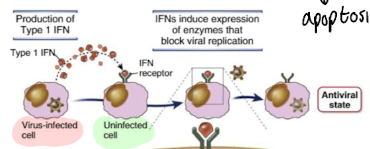
How are Type II IFN like IFN-ᵞ different to Type I IFNs?
Feature | Type I IFN (α/β) | Type II IFN (γ) |
|---|---|---|
Speed | Rapid, early innate | Slower, adaptive/activated |
Main producers | Infected cells, pDCs | Th1 & CD8+ cells, NK cells |
Main function | Antiviral response | Immune activation/regulation |
Key targets | All nucleated cells | Macrophages, T/NK cells |
MHC upregulation | ↑ MHC I | ↑↑ MHC II (and I) |
Pathogen type | Viruses | Intracellular pathogens (bacteria, protozoa, some viruses) |
Induction of ISGs | Strong | Weak/minimal |
What happens when Type I IFNs bind to IFNAR1/2 heterodimers?
Activates STAT proteins phosphorylation, leading to translocation of pSTATs to the nucleus and activation of gene expression such as antiviral proteins and immune response genes.
What are STAT proteins?
Signal Transducers and Activators of Transcription, which mediate cellular responses to various cytokines and growth factors.
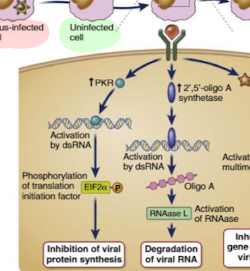
What are 2 key anti-viral mechanisms promoted by pSTATs and IRF9 association following Type I IFN activation?
PKR - dsRNA-activated Ser/Thr protein kinase : inhibits viral protein synthesis by phosphorylating a translation initiation factor
RNAse L - degrades viral RNA
How does increased MHC expression contribute to immunity against viruses?
Acts as a cell surface marker that strongly boosts antigen presentation for CD4+ T cells
Alerts T lymphocytes and NK cells to infected cells → apoptosis
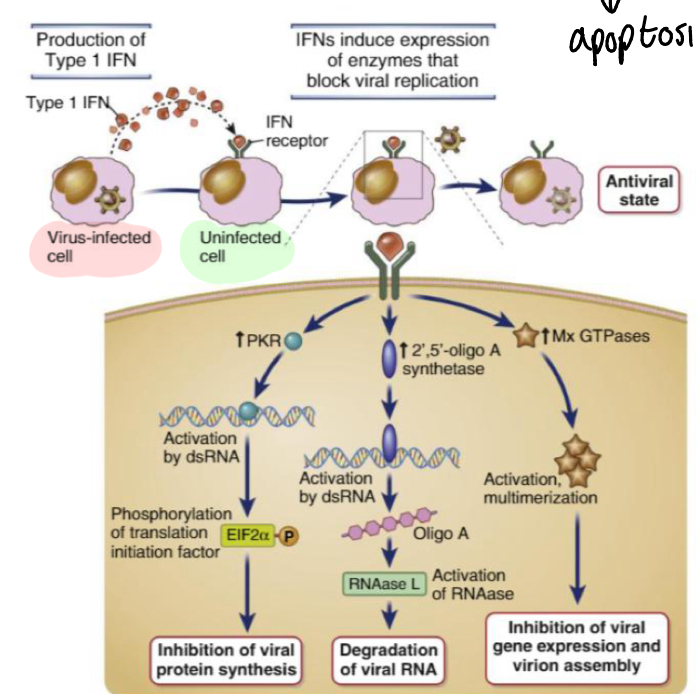
Besides activating anti-viral responses in neighbouring cells, what else do IFNs produced by infected cells do?
Autocrine prevention of replication
Alert NK cells and enhance their cytotoxic activity against infected cells.
What types of cells do Natural Killer (NK) cells recognize?
Cells infected by viruses and tumour cells.
How do NK cells amplify the immune response?
They release cytokines, including IFNs.
Infected cells lose expression of some receptors that _______ in ___ cells, while infection leads to expression of ________ that alert them
receptors that induce tolerance in NK cells, expression of receptors that alert them
this combined loss of tolerance signals and gain of alarm signals leads to NK cell activation
What substances do NK cells produce to destroy infected or tumoral cells?
Cytolytic substances such as gramzymes
5 Main roles of Type II IFN (IFN-γ)
1. Macrophage activation
Most powerful macrophage-activating cytokine.
Enhances phagocytosis, ROS production, and killing of intracellular pathogens (e.g., Mycobacteria).
2. Increase MHC II (and some MHC I)
Strongly boosts antigen presentation for CD4+ T cells.
3. Drives Th1 differentiation
Promotes cell-mediated immunity against intracellular pathogens (viruses, bacteria, protozoa).
4. Enhances cytotoxic T-cell responses
5. Immunomodulation
Skews immune system toward inflammation and cell-mediated immunity, rather than antiviral ISG responses
 Note
Note  Flashcards (45)