Formal Language - Text Types
 Studied by 0 people
 Call with Kai
 Learn
Learn Practice Test
 Spaced Repetition
 Match
Match Flashcards
 Knowt Play
1/8

There's no tags or description
Looks like no tags are added yet.
Name | Mastery | Learn | Test | Matching | Spaced | Call with Kai |
|---|
No study sessions yet.
9 Terms
Speeches
Syntax - parallelism, repetition, antithesis., interrogatives (often rhetorical)
Lexis - simple, monosyllabic (more forceful); hyperbole (emotive), figurative language, jargon
Phonological - rhythmic (carefully selected stress), intonation, alliteration and rhyme. Also careful use of prosodics. Also note the pauses - they are conscious, not non-fluency.
Lectures
Syntax - declaratives and imperatives
Lexis - jargon, proper nouns/proper noun phrases, talk about how the semantic field allows speakers to exploit covert prestige
Phonology - capture audience interest through variation of prosodics and patterning
Liturgy and Oaths (Pleading to god or religious customs)
Symbolism
Formulaic openings and closings
Subject specific
Archaisms are frequent
Vocatives (e.g O God)
Compound and complex sentence structures indicate a sense of balance and reason to the plea.
Archaism
An old word or phrase used in another era
e.g. “thy” or “thee”
Legal Documents
Audience of legal experts
Lexis - jargon, archaisms, abstract, precise and exact so that interpretation is consistent, avoid verbs, pronouns, a lot of adverbials
Syntax - declaratives, compound/complex sentence structures to show all relevant information, a sense of conditionality, causation, possibility (via complex) and balanced, fair and reasonable (compound); self-contained sentences.
Informational prose (informative writing - can have fictional elements in it - e.g. essay or editorial)
Academic writing
Lexis - impersonal, few pronouns, avoid emotional expressions, concise and abstract
Semantics - aim for objectivity
Syntax - agentless passive and nominalisation to focus on concepts and ideas, depersonalise the text
Discourse - linking words, adverbials, conjunctions for cohesion and coherence; logical ordering, formatting
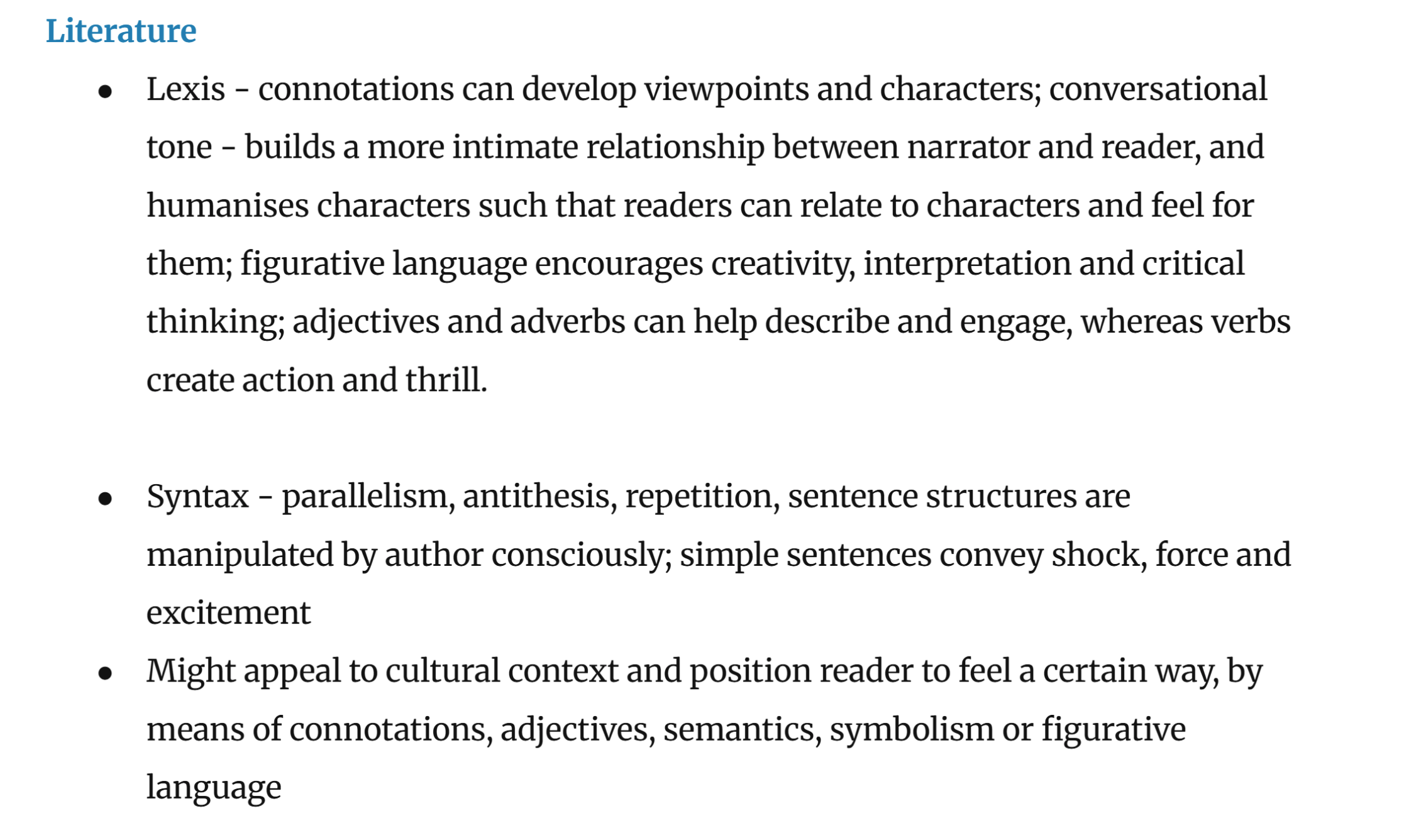
Literature (Poems, Novels)
Letter
Might be an apology, plea or informative letter.
Apologies - face needs, hedging, positive connotations, declaratives, attend to negative face needs.
Plea - hedged imperatives, emotive language, high modality modal verbs, jargon and expertise to make it more compelling
Informative - declaratives, clarity, reinforce authority.
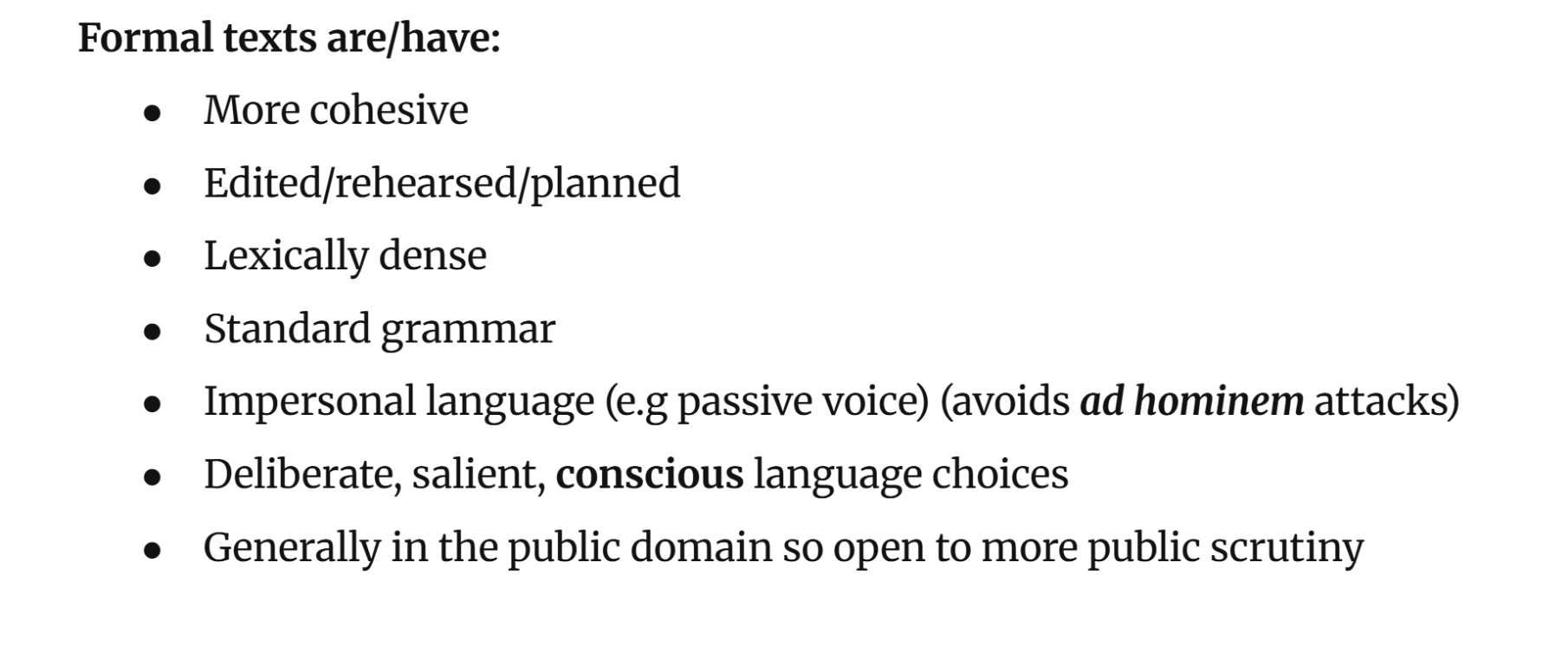
Features Of Formal Text
 Note
Note  Flashcards (87)