Infectious Diseases
 Studied by 0 people
 Call with Kai
 Learn
Learn Practice Test
 Spaced Repetition
 Match
Match Flashcards
 Knowt Play
1/53

There's no tags or description
Looks like no tags are added yet.
Name | Mastery | Learn | Test | Matching | Spaced | Call with Kai |
|---|
No study sessions yet.
54 Terms
What is the definition of diseases?
A diseases is a condition that causes the body to function less effectively and produce signs and symptoms
What is an infectious disease?
It can be spread from person to person via pathogens, making them transmissable
What are examples of infectious diseases?
Influenza, HIV, pneumococcal diseases
What is a non-infectious disease?
Diseases that are not caused by pathogen, is not transmissible
Can be inherited, malnourishment, environmental factors, lifestyle choices
What are examples of non-infectious diseases?
Excessive alcohol consumption: liver cirrhosis
Excessive consumption of polyunsaturated and trans fats: coronary heart disease
Cigarette smoking:
coronary heart disease and atherosclerosis
Sickle cell anemia
Type 2 diabetes
What are the three ways of spreading infectious diseases?
Through droplets in the air
By direct contact
By contaminated food/water
How are infectious diseases spread through droplets in the air?
Sneezes/coughs contain numerous tiny droplets that contain the pathogen
When people breathe in the droplets, they get infected
What are the three ways infectious diseases are spread through DIRECT CONTACT?
Exchange of bodily fluids (e.g. STIs)
Breastfeeding (Hepatitis B, Syphilis)
Skin to skin*
How do pathogens enter the bloodstream of an uninfected person?
Through contact with mucous membrane (lining of the eye, nose and mouth)
Through breaks in the skin and come in contact with the bloodstream
How are infectious diseases transmitted through contamination of food/water?
Can be contaminated by the pathogens that cause cholera *when the food is not prepared properly
What are the 4 ways to prevent contamination of food/water?
Practice hygienic food preparation
Have good personal hygiene
Maintain a clean water supply
Ensure proper sewage treatment
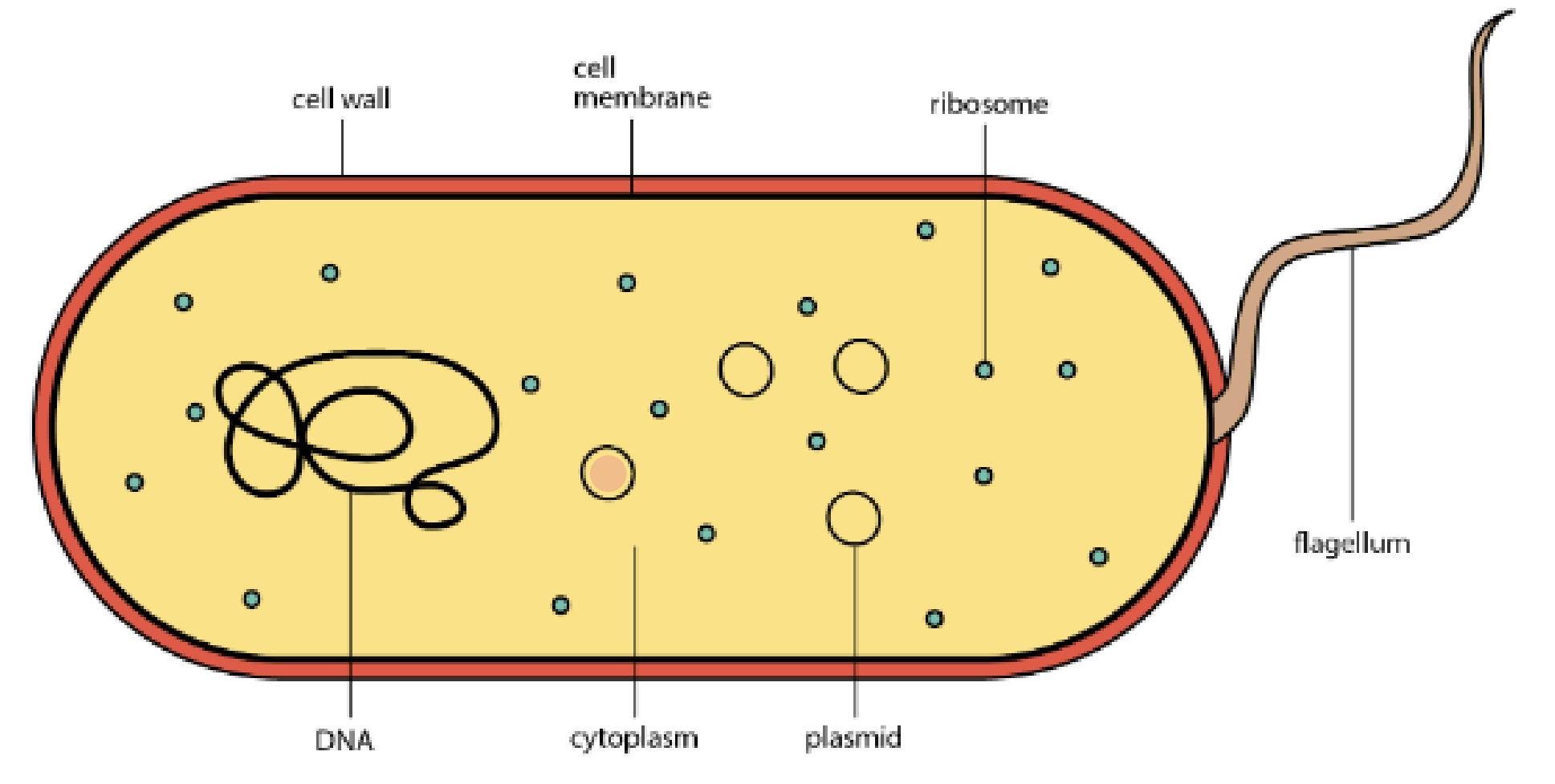
What are 7 structures of bacteria?
Cell membrane
Cytoplasm
Plasmids: small circular DNA structures
Cell wall
Ribosomes
DNA (not membrane bound)
Flagellum
Are all bacteria pathogenic?
Some bacteria are pathogenic, while others are non-pathogenic
What are the 2 structures of viruses?
Protein coat
Genetic material
What are the two possible types of genetic material found in viruses?
DNA or RNA
What are the 3 characteristics of viruses?
Does not have cellular structures
Does not grow, respire, excrete
Can only reproduce when it enters a living cell
How do viruses reproduce?
They reproduce only when they enter a living cell → the living cell acts as a HOST as it contains the necessary materials for reproduction like enzymes and organelles like ribosomes
What are the 5 differences between bacteria and virus?
Outer covering:
Bacteria → cell wall, Virus → Protein coat
Genetic material:
Bacteria → DNA, virus → DNA or RNA
Cell membrane:
Bacteria → present, virus → absent
Cytoplasm:
Bacteria → present, virus → absent
Ribosome:
Bacteria → present, virus → absent
What is influenza?
A diseases that attacks the respiratory system → can lead to complications like pneumonia (lung infections)
How does the influenza virus look like?
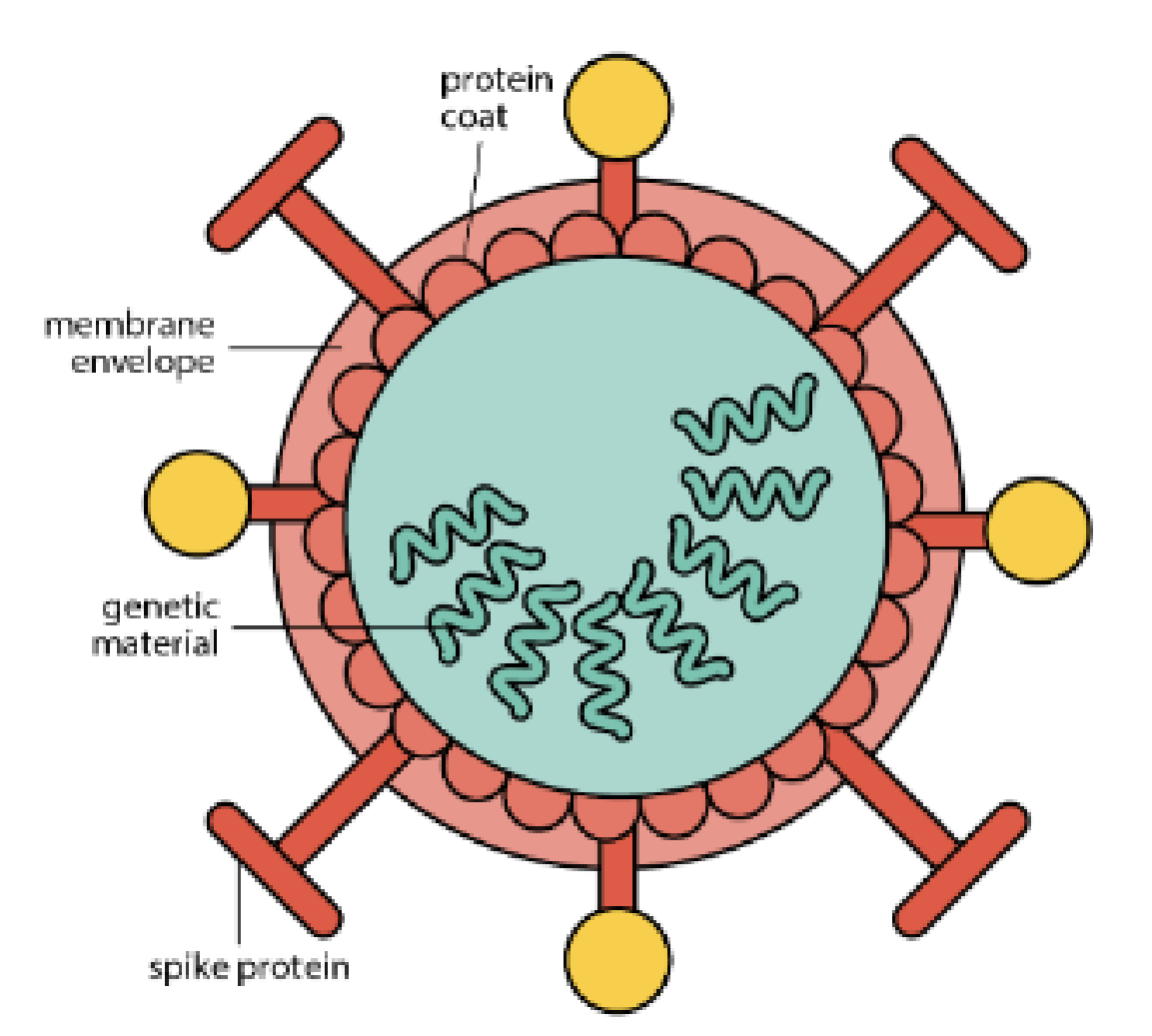
What causes influenza?
Influenza virus
How is the influenza virus transmissed?
droplets in the air containing the virus
touches an object containing the virus
contaminated surface containing the virus
… and then touches mouth, eyes, nose (mucous membrane)
What are the 6 signs and symptoms of influenza virus?
High fever
Headache
Stuffy nose
Cough
Sore throat
Muscle aches
What are 7 methods to reduce transmission of the influenza virus?
Influenza vaccination; annual vaccination recommended
Avoid close contact w infected people and vice versa
Cover mouth and nose with tissue when coughing/sneezing and dispose properly
Wear surgical mask when sick
Wash hands with soap and water, rub with disinfectant, hand sanitiser when in contact with contaminated surface
Avoid touching eyes, mouth, and nose to prevent contact with contaminated object
Antiviral drugs prescribed by doctor
What is the pneumococcal disease?
It is a major cause of death worldwide, and attacks different parts of the body
How does the pneumococcal affect the body?
middle ear infection
lung infection
pneumonia
inflammation of membrane of brain and spinal cord
What causes the pneumococcal disease?
Pneumococcus bacteria/ Streptococcus pneumoniae
How is pneumococcal diseases transmissed?
Respiratory droplets
What are the 6 signs and symptoms of pneumococcal disease?
fever
headache
vomiting
cough
chest pain
rapid breathing
What are 7 methods to reduce the transmission of pneumococcal disease?
Pneumococcal vaccination
Avoid close contact w infected people and vice versa
Cover mouth and nose with tissue when coughing/sneezing and dispose properly
Wear surgical mask when sick
Wash hands with soap and water, rub with disinfectant, hand sanitiser when in contact with contaminated surface
Avoid touching eyes, mouth, and nose to prevent contact with contaminated object
Antibiotics prescribed by doctor
What is a vaccine?
A vaccine contains an agent that resembles a pathogen and prevents infectious diseases by stimulating white blood cells to quickly produce antibodies when the pathogen invades
What is a vaccination?
The process of receiving a vaccine
What do antigens do?
Antigens are substances that trigger the production of antibodies
How do pathogens trigger the production of antibodies
Proteins on the surface of a pathogen (bacteria/virus) are antigens, which trigger the production of antibodies, hence, when they enter the bloodstream, they stimulate white blood cells to produce antibodies against them
How does a vaccine stimulate the white blood cells?
Vaccine contains an agent that resembles a pathogen, and enters the body, it stimulates the white blood cells to produce anti-bodies
How does the white blood cell help the vaccine?
White blood cell binds with the agent found in the vaccine
WBC is stimulated to divide
WBC produces antibodies
Antibodies destroy the agent in the vaccine
How do the WBC prevent future infections?
Some of the white blood cells that were stimulated remain in the bloodstream
When live pathogens enter the bloodstream, the WBC will recognise them and quickly produce the antibodies and destroy the pathogens before they infect cells
What are antibodies?
Proteins produced by the white blood cells to destroy a pathogen
What are the 5 characteristics of antibodies?
Specific in action
Destroy one type of pathogen (will be ineffective against another type of pathogen
tags a pathogen for destruction by WBC
Ineffective against viruses
Many antibodies are chemically modified to make them more effective in treating diseases
What are antibiotics?
Antibiotics are drugs used to treat bacterial infections made by microorganisms and used to kill/inhibit growth of bacteria
How do antibiotics work?
They work by interfering with the growth and metabolic activities of the bacteria
What are the 4 cell parts antibodies inhibit?
Cell wall
Cell membrane
Ribosomes
Cytoplasm
How do antibodies inhibit the synthesis of bacterial cell wall?
Some antibiotics prevent the synthesis of bacterial cell walls
When bacterial cell walls are weakened, water enters the cell by osmosis, the cell then expands, bursts and dies
How do antibodies inhibit cell membrane function?
Some antibiotics inhibits cell membrane function by breaking up the bacterial cell membrane
Without cell membrane, the bacterial cell is no longer protected from its environment as any substance can move into the bacterial cell
How do antibodies inhibit protein synthesis in ribosomes?
Some antibiotics bind to bacterial ribosomes, preventing the ribosomes from taking part in protein synthesis and thereby inhibiting growth → protein is needed for cell growth and repair of worn out cell
How do antibodies inhibit enzyme action in cytoplasm
Bacteria require a vitamin called folic acid for growth.
Some antibiotics inhibit the enzyme needed for the synthesis of folic acid → inhibits growth of bacteria
Why can antibiotics kill bacteria and not viruses?
They act on bacterial cell walls, which viruses lack
They break up cell membranes, which viruses lack
They act on ribosomes, inhibiting protein synthesis and growth, viruses lack ribosomes and cannot grow
How does antibiotic resistance occur?
In a population of bacterial cells, some are more sensitive to a certain antibody
When the antibody is taken, bacterial cells that are more sensitive are killed off but bacterial cells that are less sensitive are not easily killed and may survive
If the prescribed course of antibiotic is not completed, the less sensitive bacterial cells that survive will multiply and increase in numbers → antibiotic resistance
What does it mean by a bacteria is more sensitive to an antibody than another bacteria?
It means that that bacteria can be killed easier by that antibody in comparison to another bacteria
What happens if the prescribed course of antibiotic is taken?
There is a higher chance that all bacterial cells are killed
What is the after-effect of antibiotic resistance?
The subsequent generations of the bacterial cells will become increasingly less sensitive to the antibiotic
Eventually, the population of bacterial cells become resistant to antibiotic A
What is the disadvantages of antibiotic resistance?
Antibiotic will not be able to kill the antibiotic-resistant bacterial cells
Other types of antibiotics will be required to treat the bacterial infection
What are superbugs?
Bacteria that are resistant to medicines like antibiotics
What are 3 ways to reduce antibiotic resistance?
Not misusing/overusing antibiotics
Completing the full course of antibiotics prescribed by doctors → ensures all bacteria is killed
Using antibiotics only when necessary
 Note
Note  Flashcards (23)