combinatorial, discrete probability
 Studied by 0 people
 Call Kai
 Learn
Learn Practice Test
 Spaced Repetition
 Match
Match Flashcards
 Knowt Play
1/12

There's no tags or description
Looks like no tags are added yet.
Name | Mastery | Learn | Test | Matching | Spaced | Call with Kai |
|---|
No analytics yet
Send a link to your students to track their progress
13 Terms
disjoint
no elements in common
A AND B = empty
sum rule
if A AND B are disjoint
size of A U B = size of A + size of B
inclusion exclusion principle

product rule
for a sequence of k tasks where theres n1 ways for k1, n2 for k2, the whole sequence of k tasks is done in this many ways

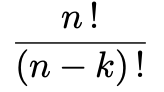
order matters, no repetition
AB, AC, BA, BC, CA, CB
n is no of options, k is the size of subset/selection
special case if n = k, then k!
order doesn’t matter, repetition not allowed
AB, AC, BC
n choose k
order matters, repetition allowed
AA, AB, AC, BA, BB, BC, CA, CB, CC
n^k
always n ways to select through k set
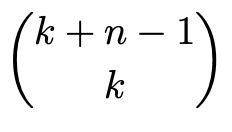
order doesn’t matter, repetition allowed
AA, AB, AC, BB, BC, CC
probability distribution
likeliness of each outcome
all between 0 and 1
add up to 1
uniform distribution is when all outcomes are equally likely
probability of union of 2 events E1 and E2

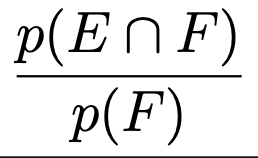
conditional probability
independence

bayes theorum
for questions that feel like probability tree or give relevant information

 Note
Note  Flashcards (73)