1.6 Plasma Membrane
 Note
Note Call Kai
 Learn
Learn Practice Test
 Spaced Repetition
 Match
Match Flashcards
 Knowt Play
1/10

Name | Mastery | Learn | Test | Matching | Spaced | Call with Kai | Chat |
|---|
No analytics yet
Send a link to your students to track their progress
11 Terms
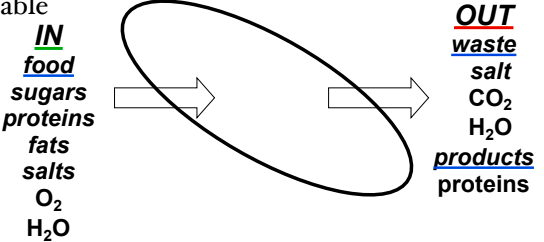
Why Do Cells Need a Membrane?
Separate interior from exterior - protection, support
Very thin boundary
Allows some materials to cross more easily - selectively permeable
What is it Made of?: Phospholipids*
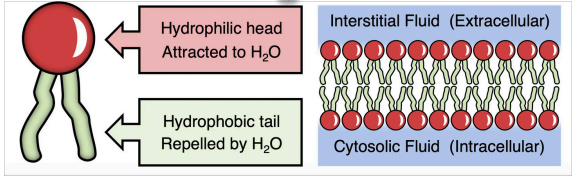
Spontaneously arrange into bilayer (two parallel layers)
Amphipathic due to lipophilic and hydrophilic regions
Bilayer held together by weal hydrophobic interactions between tails
What is it Made of?: Proteins (Pt. 1)*
Proteins may be permanently or temporarily attached
Diverse in structure, position, and function
Functions include: junctions, enzymes, transport, recognition, anchorage, and transduction
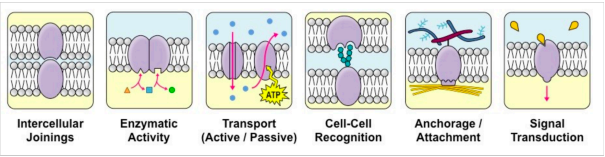
What is it Made of?: Proteins (the two types)*
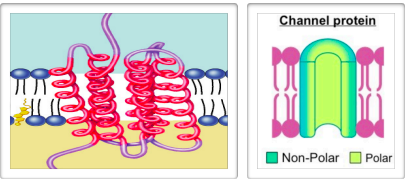
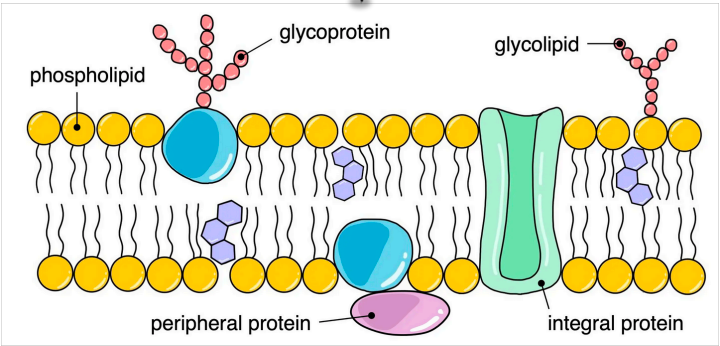
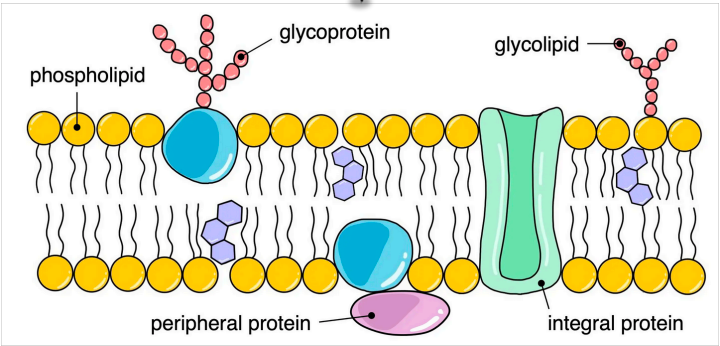
Integral Proteins – permanently attached to membrane and are typically transmembrane (span across bilayer)
Peripheral Proteins – temporally attached to noncovalent interactions and associate with one surface
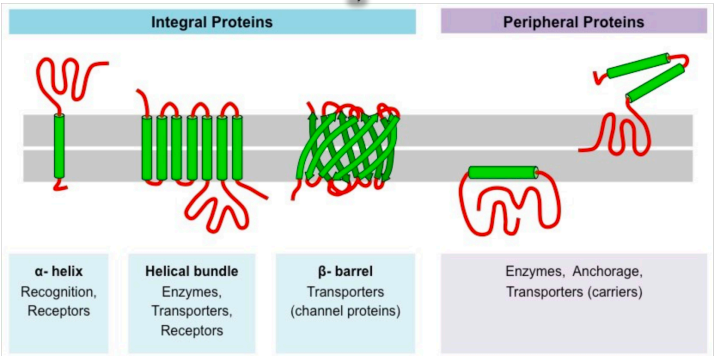
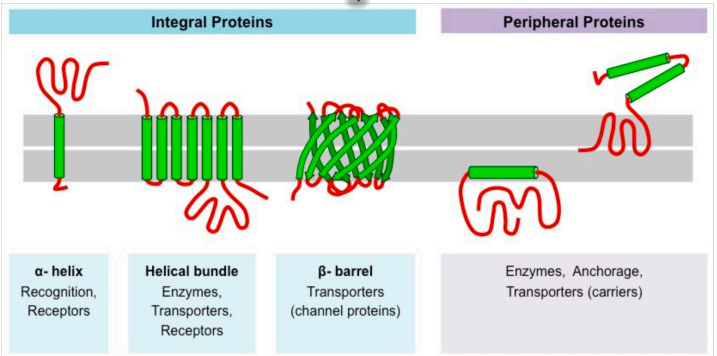
What is it Made of?: Proteins (location)*
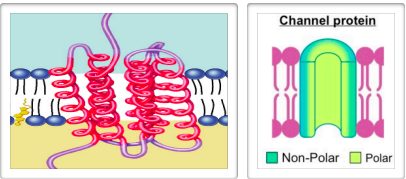
Non-polar amino acids are located within membrane
Anchors protein into membrane
Polar amino acids located on outer surface of membrane
Extend into extracellular fluid & cytosol
What is it Made of?: Carbohydrates*
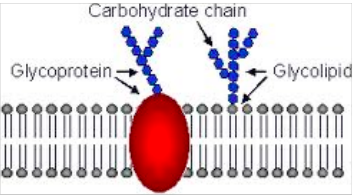
Glycolipid
lipid with a carbohydrate chain attached
help cell to recognize other cells of body
Glycoprotein
protein with carbohydrate chain attached
help in cell to cell communication and transport
What is it Made of?: Cholesterol*
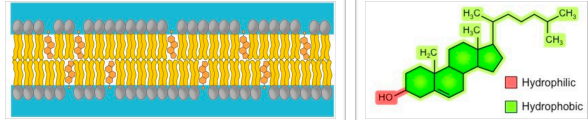
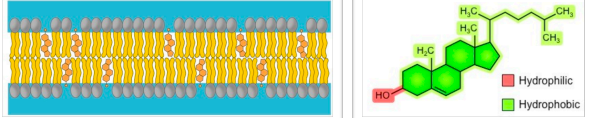
Amphipathic molecule found in animal membranes
Immobilizes outer surface - reducing fluidity
Makes less permeable to small water-soluble molecules
Separates phospholipid tails - prevents crystallization
Tell me about the Fluid-Mosaic Model
also called the Singer-Nicolson Model
Membranes are fluid - not fixed in position (can adopt
amorphous shapes)
Fluid - phospholipids can move
Mosaic - embedded with proteins
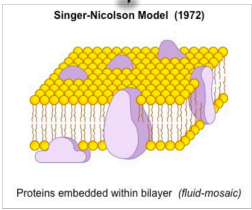
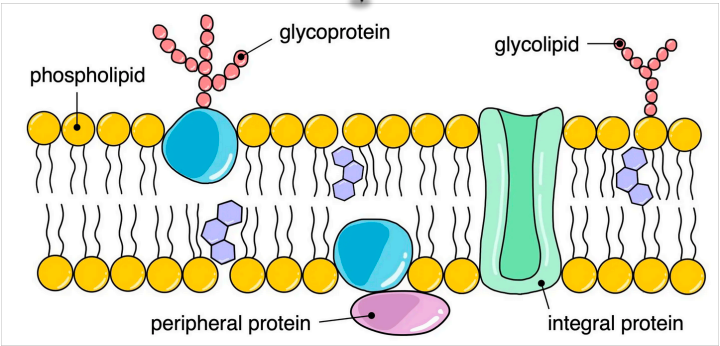
Diagram of Plasma Membrane*
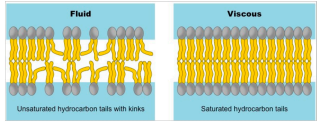
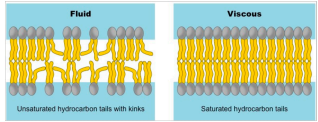
Tell me about Fluidity
Fluidity increases with temperature and shorter fatty acid tails - changes to kinetic energy and decreased viscosity
Fluidity increases with double bonds - harder to pack
At high temps cholesterol stabilizes membrane, at low temps it prevents clustering of phospholipids
Tell me about Davson-Danielli Model
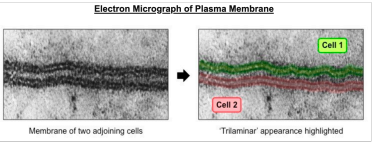
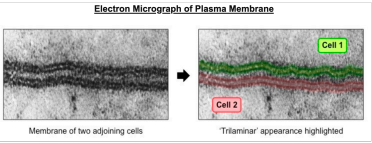
Lipo-protein sandwich’, lipid layer sandwiched between two protein layers - trilaminar appearance
Falsification of this model led to Singer-Nicolson model
Proteins are embedded within lipid bilayer rather than existing as separate layer