NTRN 201 | Ch. 12 - Food and Water Safety, Food Technology
 Call Kai
 Learn
Learn Practice Test
 Spaced Repetition
 Match
Match Flashcards
 Knowt Play
1/56

Earn XP
Description and Tags
LO 12.1 Describe microbial foodborne illnesses and practices that can prevent them. • LO 12.2 Identify the categories of foods that most often cause foodborne illnesses. • LO 12.3 Compare potential advantages and drawbacks of organic and conventional foods. • LO 12.4 Compare the safety of drinking water from different sources. • LO 12.5 Describe the uses and safety characteristics of some common food additives. • LO 12.6 Summarize the advantages and disadvantages of producing foods through bioengineering
Name | Mastery | Learn | Test | Matching | Spaced | Call with Kai |
|---|
No analytics yet
Send a link to your students to track their progress
57 Terms
MICROBES + FOOD SAFETY
Who ensures our food supply is safe?
Health and safety agencies
monitor and regulate food safety standards to protect the public
conduct inspections and enforce regulations to prevent foodborne illnesses
Ex: Center for Disease Control and Prevention (CDC), Environmental Protection Agency (EPA), Food and Agriculture Organization (FAO), Food and Drug Administration (FDA), US Department of Agriculture (USDA), World Health Organization (WHO)
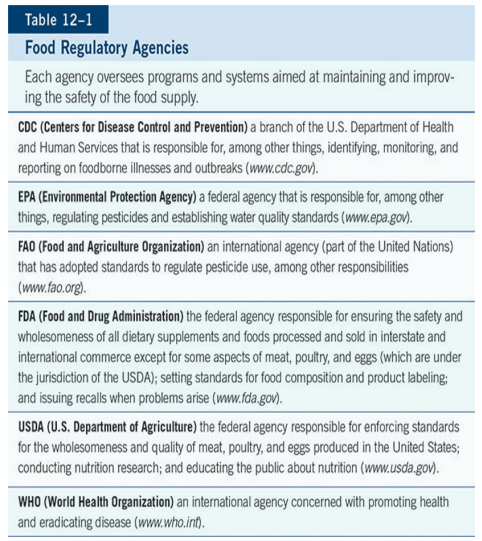
FDA areas of concern
microbial foodborne illness
natural toxins in foods
residues in food (environmental contaminants, pesticide residues, + animal drugs)
nutrients in food
intentional approved food additives
genetically engineered foods
foodborne illness
caused by microorganisms (microbes + pathogens)
caused by infection (Salmonella bacteria or hepatitis virus)
caused by enterotoxins or neurotoxins
life-threatening for certain people
organisms responsible for foodborne infections
Campylobacter, Clostridium perfringens, Escherichia coli (E. coli), Listeria, Norovirus, Salmonella, Toxoplasma
organisms responsible for food borne intoxications
Clostridium botulinum, Staphyloccus aureus
most frequent food sources of foodborne illnesses
raw/undercooked meat/poultry, unpasteurized milk, contaminated water, raw fruits and vegetables, person-to-person contact, raw foods in general, improperly refrigerated stuff
main categories
protein foods (ground meat, stuffed poultry, raw + undercooked eggs, seafood, raw milk products)
most common onset/general symptoms
diarrhea, vomiting/nausea, abdominal pain, fever, headache, muscle pain
prevention methods
cooking foods thoroughly, using sanitary food-handling methods, using pasteurized milk, use treated/boiled/bottled water, use proper canning methods
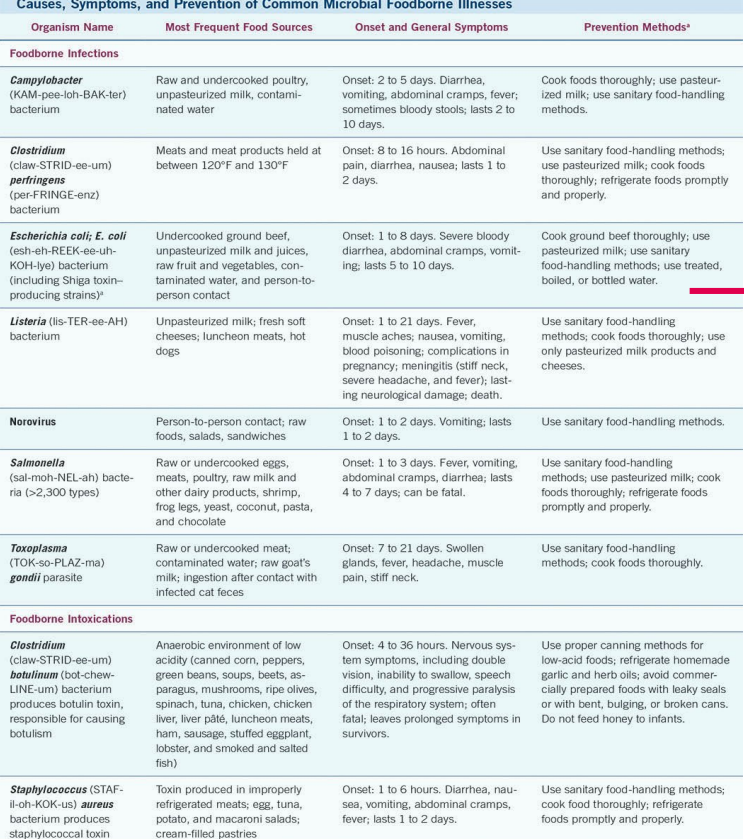
table
table
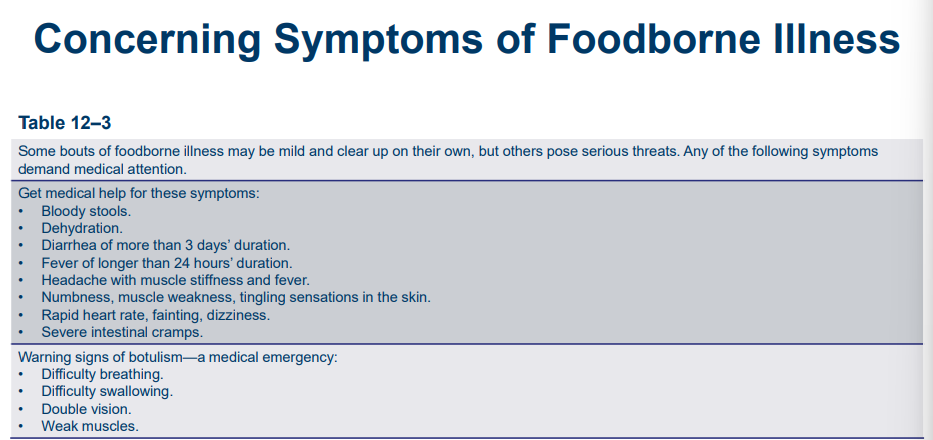
food safety from farm to plate (process)
farm
(workers must use safe methods of growing/harvesting'/sorting etc. food to minimize contamination hazards)
processing
(follow FDA guides for contamination, cleanliness, + education/training of works; must monitor for safety at critical control pts)
transportation
(containers + vehicles transportating food must be clean; cold food must be kept cold at all times)
retail
grocery store + restaurant employees must follow FDA food code on preventing foodborne illnesses, establishments must pass local health inspections + train staff in sanitation
plate
consumers learn + use sound food safety principles + be mindful of foodborne illness
food safety from farm to plate (notes)
how outbreaks occur (contamination in farm to plate chain)
food safety modernization act (food safety system shifted from responding to preventing outbreaks)
food industry controls (inspections + Hazard Analysis of Critical Control Point (HACCP))
consumer safety at the grocery store (know what packaging dates mean)
sell by
AKA pull date, specifies food shelf life, food after this date may still be safe for consumption if it has been handled + stored properly
best if used by
AKA freshness date or quality assurance date, specifies the last date the food will be of the highest quality, food after this date will hv diminishing quality
expiration date
the last day the food should be consumed (except eggs —> last day eggs may be sold as “fresh eggs”)
pack date
the day the food was packaged or processed
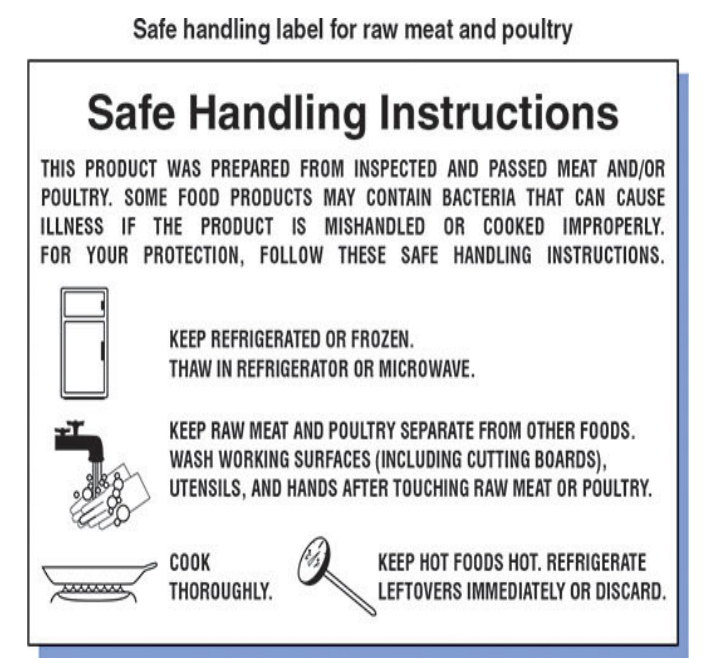
safe food practices for individuals
food provides ideal conditions (nutrients, moisture, warmth 40°F to 140°F)
4 core practices to defeat bacteria (clean, separate, chill, cook)
clean
keep hands, utensils, + surfaces clean w/ soap + warm water
separate
keep raw foods separated from ready-to-eat foods, avoid cross-contamination
ex: raw eggs, meat, poultry from other food
cook
use proper temps to kill microbes + keep hot foods hot (hold at 140°F or higher)
chill
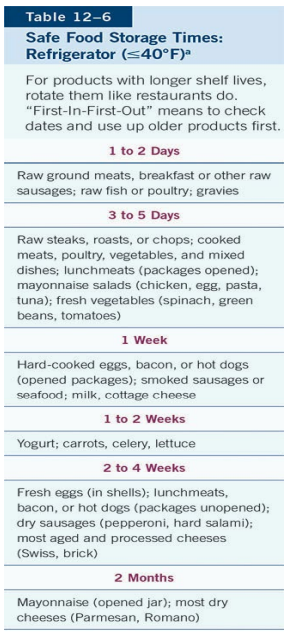
refrigerate/freeze food promptly + keep cold foods cold (40°F or below)
protein foods
likely to cause foodborne illness
ground meats - more processing, more opportunities to be contaminated
stuffed poultry - stuffed turkey (making it even bigger)
raw/undercooked eggs
seafood - official advice is to not eat raw seafood
raw milk products
raw seafood myths
if raw seafood was eaten in the past without problems, it is safe to do today
drinking alcohol with raw seafood will kill the germs
putting hot sauce on raw seafood will kill the germs
raw seafood truths
each harvest has separate risks, seafood is increasingly contaminated
alcohol cannot make contaminated raw seafood safe
hot sauce has no effect on microbes in seafood
raw produce and other foods
likely to cause foodborne illness
raw produce - due to contamination at the farm level (wash to prevent, even if dont eat skin/peel)
unpasteurized juices - fresh juices
sprouts - wash them, careful about pack date
imported foods - different countries have different safety regulations
honey - botulism (dont give to anyone under 1)
picnics and lunch bags - likely to land in temperature danger zone
take-out foods and leftovers - likely to land in temperature danger zone
advances in microbial food safety
irradiation and modified atmosphere packaging
irradiation benefits
control of foodborne illnesses
preservation
control of insects
delay of sprouting and ripening
sterilization
irradiation concerns
nutritional loss
the formation of new chemical compounds
environmental risks
modified atmosphere packaging benefits
inhibits growth of aerobic microbes
prevents discoloration
prevents spoilage of fats
slows ripening of produce
natural toxins
herbs
cabbage family
foods with cyanogens
seafood red tide toxin
herbs
Belladonna and hemlock are infamous poisonous herbs, but sassafras is also toxic; it contains the carcinogen and liver toxin safrole, which is so potent that it is banned from use in foods and beverages
cabbage family
Raw cabbage, turnips, mustard greens, and radishes all contain small quantities of harmful goitrogens, compounds that can interfere with thyroid hormone production and when eaten in excess, enlarge the thyroid gland
foods with cyanogens
Cyanogens, precursors to the deadly poison cyanide, are found in bitter varieties of cassava, a root vegetable staple for many people. Most cassava is low in cyanogens. Apricot and cherry pits present the cyanogen amygdalin, a fake cancer cure often passed off as a vitamin. a This poison kills cancer cells but only at doses that can kill the person, too. Other fruit pits contain lower concentrations
seafood red tide toxin
Seafood may occasionally become contaminated with the so-called red tide toxin from algae blooms. Eating the contaminated seafood can cause paralysis.
pesticides benefits
protecting crops and controlling disease vectors
pesticides risks
residues left on produce, can negatively impact the health of vulnerable individuals
pesticides regulation
reference dose
natural pesticides
often made from household items
ways to reduce pesticide residue exposure
Trim the fat from meat and remove the skin from poultry and fish; discard fats and oils in broths and pan drippings.
Select fruit and vegetables with intact skins.
Wash fresh produce in running water. a Use a soft brush, and rinse thoroughly.
Use a knife to peel an orange or grapefruit; do not bite into the peel.
Discard the outer leaves of leafy vegetables such as cabbage and lettuce.
Peel waxed fruit and vegetables; waxes don’t wash off and can seal in pesticide residues.
Peel vegetables such as carrots and fruit such as apples when it seems necessary.
Choose organically grown foods, which generally contain fewer pesticides.
animal drugs
antibiotics, bovine growth hormone (BGH), arsenic
environmental contaminants
bioaccumulation and toxicity
heavy metals (mercury, PCBs and other chemicals)
Discuss mercury levels in seafood and why it is important to minimize your consumption of mercury.
Mercury escapes from many industries, power plants, and natural
sources into the Earth’s waterways, where bacteria in the water convert
it into a highly toxic form, methylmercury. Methylmercury then
concentrates in the flesh of large predatory species of fish. Cooking
and processing do not diminish mercury in seafood. Mercury damages
living tissues and the developing brain, and pregnant women, lactating
women, and children are the most vulnerable to mercury toxicity.
Currently, for most people, the benefits of eating safer varieties of
seafood far outweigh the risks. Small, younger fish tend to have lower
mercury levels. Large fish have the highest concentrations of mercury
due to bioaccumulation. Tilefish, swordfish, king mackerel, and shark
tend to have the highest mercury levels
water safety and sources
only 1% drinking water is potable (fit for human consumption), comes from surface or groundwater
tap water safety: chlorination
bottled water: not safer/healthier, microplastics
food-safety myths
five-second rule
if it tastes and smells ok, safe to eat
we have always handled our food this way so it must be safe
i sampled it a couple hours ago and didnt get sick, so its safe to eat
food-safety truth
food dropped is contaminated the moment it lands (on microbe-laden hard surface)
most microbial contamination is undetectable by human senses
past generations did not recognize causes of illness
illnesses often take half a day or longer to develop
regulation and usage of food additives
FDA requirements – manufacturer must prove additive is effective, additive measured in final product
Generally Recognized as Safe (GRAS) List
Margin of safety
risks and benefits
food additives
antimicrobial agents (preservatives)
antioxidants (preservatives)
artificial colors
artificial flavors, flavor enhancers
bleaching agents
chelating agents (preservatives)
nutrient additives
stabilizing and thickening agents
antimicrobial agents
Prevent food spoilage by mold or bacterial growth
Ex: Acetic acid (vinegar), benzoic acid, nitrates and nitrites, propionic acid, salt, sugar, sorbic acid
antioxidants
prevent oxidative changes and delay rancidity of fats; prevent browning of fruit and vegetable products
Ex: BHA, BHT, propyl gallate, sulfites, vitamin C, vitamin E
artificial colors
Add color to foods.
Ex: Certified food colors such as dyes from vegetables (beet juice or beta-carotene) or synthetic dyes (tartrazine and others)
artificial flavors, flavor enhancers
Add flavors; boost natural flavors of foods
Ex: Amyl acetate (artificial banana flavor), non- nutritive sweeteners, MSG (monosodium glutamate), salt, spices, sugars
bleaching agents
Whiten foods such as flour or cheese.
Ex: peroxides
chelating agents
Prevent discoloration, off flavors, and rancidity
Ex: Citric acid, malic acid, tartaric acid (cream of tartar)
nutrient additives
Improve nutritional value.
Ex: Vitamins and minerals.
stabilizing and thickening illnesses
Maintain emulsions, foams, or suspensions or lend the desired thick consistency to foods
Ex: Dextrins (short glucose chains), pectin, starch, or gums such as agar, carrageenan, guar, and locust bean.
bioengineered foods
most people consume foods that are products of bioenginnering
recombinant DNA technology
selective breeding
positives for GMOs
golden rice
mass production of insulin and rennin
greater crop yields
faster growing fish
GMO concerns
overdoses of nutrients or phytochemicals
accidental ingestion of drugs
pesticide residues
environmental effects (outcrossing, wildlife)
ethical arguments

