CS 182
 Studied by 0 people
 Call with Kai
 Learn
Learn Practice Test
 Spaced Repetition
 Match
Match Flashcards
 Knowt Play
1/125

There's no tags or description
Looks like no tags are added yet.
Name | Mastery | Learn | Test | Matching | Spaced | Call with Kai |
|---|
No analytics yet
Send a link to your students to track their progress
126 Terms
Discrete math
Study of math structures that correspond to natural numbers
Graph
Finite set of nodes paired by edges
Undirected graph
Uses unordered pairs
Directed graph
Uses ordered pairs
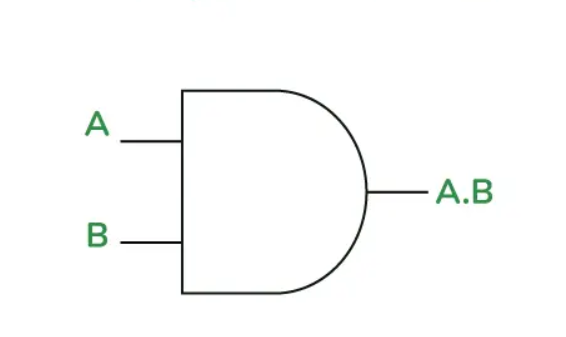
Conjunction
AND
^
Inverse Conjunction
NAND
-^
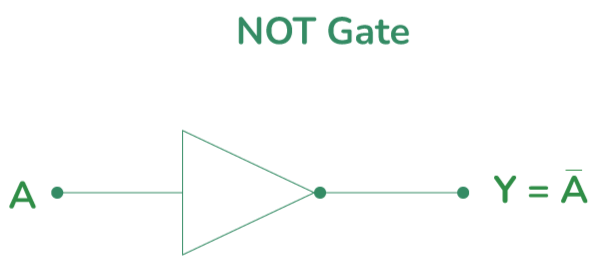
Negation
NOT
-A
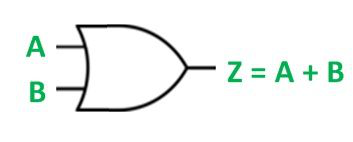
Disjunction
OR
v
Inverse Disjunction
NOR
-v
XNOR
⊙
XOR
⊕
Implication
IMPLIES
⇒
True, except when true implies false
Not commutative
Anti-implication
NIMPLY
⇏
Proposition
A statement that is either always true or always false
Standard proposition variables
p
q
r
Logical connective
An operation that gives a binary output based on two propositions
Biconditional
⇔
True if both propositions are of the same validity
Equal to p→q ^ q→p
Converse
p→q
q→p
Inverse
p→q
-p→-q
Contrapositive
p→q
-q→-p
Converse inverse
Relation between implication and contrapositive
Implication and contrapositive are equivalent
Truth table
Table containing all permutations of propositions and their connective outputs
Proof by contradiction
If the negation of a truth leads to a contradiction, the original proposition must have been true
Tautology
Statement that is always true
Contradiction
Statement that is always false
Equivalent Propositions
Logically Equivalent
Propositions have the same truth value in all cases
Biconditional is true
Implication To Or Identity
p→q = -p v q
Logical Identity Laws
p ^ T = p
p v F = p
Logical Domination Laws
p v T = T
p ^ F = F
Logical Idempotent Laws
p v p = p
p ^ p = p
Logical Negation Laws
p v -p = T
p ^ -p = F
Logical Commutative Laws
p v q = q v p
p ^ q = q ^ p
Logical Associative Laws
p ^ q ^ r
p v q v r
These can be evaluated in any order
Logical Distributive Laws
p v (q ^ r) = (p v q) ^ (p v r)
p ^ (q v r) = (p ^ q) v (p ^ r)
Logical Absorption Laws
p v (p ^ q) = p
p ^ (p v q) = p
Logical DeMorgan’s Laws
-(p ^ q) = -p v -q
-(p v q) = -p ^ -q
Satisfiable
Proposition is true for some case
Propositional Functions
Generalization of propositions
Include all cases for a proposition
∀
Universal quantifier
True for all x in U
∃
Existential quantifier
True for some x in U
∈
Restricted to
Element of
Priority between connectives and predicate logic
Predicate logic takes precedent over connectives
Predicate Logic Equalities
-∃xJ(x) = ∀x(-J(x))
If the proposition is not satisfied for some x, the proposition is false for all x
-AxJ(x) = ∃x(-J(x))
If the proposition is not satisfied for all x, the proposition is false for some x
Communitive properties of AND and OR
AND and OR commute with themselves but not with each other
Distributive properties of ∀ and ∃
Cannot be distributed over logical connectives
Set
Unordered collection of unique elements
Element
Object in a set
N (Z >= 0)
Natural Numbers
Z
Integers
Z+ (Z > 0)
Positive Integers
R
Reals
R+ (R > 0)
Positive Reals
Q
Rational Numbers
C
Complex Numbers
Set equality
Sets have the same elements
Repetition doesn’t matter
U (Set)
Universal set
Set of all elements within the context
∅
Empty set
Set with no elements
∅ ≠ {∅}
Empty set is not equal to a set with an empty set in it
An empty set counts as an element
Interval notation
[a, b] = {x | a <= x <= b}
Parentheses: Exclusive
Brackets: Inclusive
⊆
Subset
A set containing some elements of another set
Subset equality
⊆ = ∀x(x ∈ A → x ∈ B)
Tautologies of subsets
S ∈ S
∅ ∈ S
⊂
Proper subset
A subset of a set which is not equal to the original set
Proper subset equality
⊂ = ∀x(x ∈ A → x ∈ B) ^ ∃x(x ∈ B ^ x ∉ A)
| |
Cardinality
Number of elements in a set
Finite set
Cardinality is a non-negative integer
Cardinality equality
Two cardinalities are equal if every element in each set can be mapped together algorithmically
Power set
The set of all subsets of a set
Power set cardinality
2n, where n is the original cardinality
Cartesian product
A x B = {(a, b) | a ∈ A ^ b ∈ B}
Uses an ordered pair
Set of all ordered combinations of elements from A and B
A ∪ B
{x | x ∈ A ^ x ∈ B}
Union
Set containing all elements of both sets
A ∩ B
{x | x ∈ A v x ∈ B}
Intersection
Set containing elements in common
A - B
{x | x ∈ A v x ∉ B}
Difference
Set of elements in A that are not in B
A ∩ -B
Principal of inclusion-exclusion
|A ∪ B| = |A| + |B| - |A ∩ B|
Set Identity Laws
A ∩ U = A
A ∪ ∅ = A
Set Domination Laws
A ∪ U = U
A ∩ ∅ = ∅
Set Idempotent Laws
A ∪ A = A
A ∩ A = A
Set Complementation Law
—A = A
Set Commutative Laws
Unions and intersections commute with themselves but not each other
Set Associative Laws
A ∪ B ∪ C
A ∩ B ∩ C
Both can be evaluated in any order
Set Distributive Laws
A ∪ (B ∩ C) = (A ∪ B) ∩ (A ∪ C)
A ∩ (B ∪ C) = (A ∩ B) ∪ (A ∩ C)
Set DeMorgan’s Laws
-(A ∩ B) = -A ∪ -B
-(A ∪ B) = -A ∩ -B
Set Absorption Laws
A ∪ (A ∩ B) = A
A ∩ (A ∪ B) = A
Set Complement Laws
A ∪ -A = U
A ∩ -A = ∅
Function
A→B
Assigns each element of a set to one element of another set
Domain
The set of elements in the input set
Codomain
The set of elements in the output set
Range
The set of all elements that are images
Image
f(a) = b
The result of an element after a function
Preimage
f(a) = b
The input element
Function equivalence
Domains, codomains, and mapping are the same
Stirling’s Formula
n! ≈ √(2πn)(n/e)n
Injection
Function that is one-to-one
If f(a) = b, f(b) = a
If f(a) = f(b), a = b
Surjection
A function where all codomain elements have a preimage
Bijection
An function that is both an injection and surjection
⌊x⌋
floor(x)
Rounds down to the greatest integer less than or equal to x
⌈x⌉
ceil(x)
Rounds up to the least integer greater than or equal to x
Inverse function
f-1(y) = x where f(x) = y
Only exists on bijections
“Squeeze Theorem“ Proof Strategy
If a <= b, and b <= a, a = b
Relation
Association between elements of two sets
More general than functions
 Note
Note  Flashcards (81)