Research Design
 Studied by 2 people
 Call Kai
 Learn
Learn Practice Test
 Spaced Repetition
 Match
Match Flashcards
 Knowt Play
1/122

Earn XP
Description and Tags
A broad structure that guides th collection and analysis of data- involves figuring out what you want to accomplish in the study (causality, changes in phenomena. )
Name | Mastery | Learn | Test | Matching | Spaced | Call with Kai |
|---|
No analytics yet
Send a link to your students to track their progress
123 Terms
Nomothetic explanations must satisfy 3 criterias:
Correlation
Time order
Non-Spuriousness
Correlation
The proposed cause and effect mustt occur together and be observable
Time Order
The cause must come before the effect
Non-spuriousness
Alternative explanations for a correlation must be ruled out.
“spurious” means false or illegitimate
Experimental Desgin
True experiments are often rare in sociology.
Experiments involve a systematic comparison of what happens between 2 sets of participants (treatment vs control group)
They are also good at establishing causation or internal validity
Manipulation
An experiment manipulates an independent variable (cause) to determine its influence on the dependent variable (effect).
Often, the independent variable is manipulated while the dependent variable is then observed and measured.
Problems with Manipulation
Problem: Many variables of concern to researchers cannot be manipulated.
Ethical Issues: You can’t do anything inhumane
Another Issue:
Lack of simulation: Many phenomena of interest are complex and long-term, which cannot be simulated in experiments (gender roles, political preferences)
Not in depth- When causal variables are identified, the perceptions of participants are usually ignored
Laboratory vs Field Experiments: The former takes place in artificial settings whereas the latter occurs in real-life surroundings (classrooms, factories)
Classical Experimental Design
Rosenthal Jabobson (1968) tried to determine teacher expectations about academic performance - they used a classical experimental design.
The researchers labelled some students as “sputters” (those likely to have significant academic growth). However, they lied to the teachers about who was a spurt. Eventually, the students whom the teachers thought were spurters did do better.
The experiment exhibited most features of a classical experimental design - The students were randomly assigned to 2 groups, there was manipulation on the experimental group and the other group got no treatment (control group).
Made sure that the dependent variable (performance) was measured before manipulation to ensure the 2 groups are equal.
Notation used for classical experimental design
Obs: An observation made of the dependent variable
Exp: The experimental treatment (independent variable)
No Exp: Refers to the absence of an experimental treatment (control group)
T: The timing of the observations made in relation to the dependent variable
The Laboratory Experiment
One main advantage of lab over field research is greater control of the environment, which enhances the ability to establish nomothetic causation, ex, a study where women were told to perform worse on a test than men (they did) vs when told it was comparing Canadians vs Americans (no difference)
Quasi - Experiments
Help study real-world programs when true experiments aren’t possible
No random Assignment.
These have some features of the experimental model, but lack some features that help establish causation
There are several types of these experiments
Compare “Before” and “After” groups when randomization isn’t possible.
Natural Experiments
Experimental-like conditions are produced by naturally occurring phenomena or changes brought about by people not doing research.
(earthquake example)
Cross Sectional Design
“snapshot” study → Data collected at one point in time.
No before-and-after study,
No manipulation of the independent variable
Used to examine variation across multiple cases (people, families, nations, etc.)
Commonly use questionnaires and structured interviews.
Larger samples are preferred.
Ambiguity of Casual Influence
Term by Blaxter (1990) - refers to uncertainty about which variable causes which.
Cross-sectional studies show association only, not direction of causation.
Replicability (Cross-sectional Research: Key Evaluation.)
High reliability if the researcher clearly outlines:
Sampling procedures (how respondents are chosen)
Data collection methods (e.g., questionnaire, structured interviews)
Data analysis steps
Because methods are standardized and can be repeated, others can replicate the study.
External Validity (Generalizability) (Cross-sectional Research: Key Evaluation.)
Strong external Validity when the sample is random, allowing genralization to the larger population
Weaker external validity when non-random sampling is used - results may not represent everyone
Cross-sectional studies.
Are replicable and often externally valid (with random samples
Have limited causal inference ability.
They are often used because many important variables cannot be manipulated
Allow for causation causal reasoning whne variables have an assumed time order (e.g. age → income)
Longitudinal Design (s)
examines the same cases or groups over time - for example
Time 1 (T1), Time 2 (T2) , Time 3 (T3), etc)
No manipulation of independent variables (unlike experiments)
Allows researchers to track change over time and determine the time order of variables.
Helps to identify whether changes in one variable precede changes in another (supports casual inference)
Useful for studying social change, development and longterm trends.
Types of Logitudinal Designs:
Panel Study
Cohort Study
Panel Study
The same individuals or groups are studied repeatedly over time
Must address entries and exits (e.g. Marriage, moving out, death)
Cohort Study
Follows different individuals who share a common experience (e.g, birth year, graduation year)
They don’t track the same people each time, but compare similar groups.
Case Study Design
Involves a detailed and intensive analysis of a single case. The goal is to gain a deep understanding of that case’s features, context, and dynamics. The case itself is the object of interest, not just a source of data for testing general theories.
When equalization the approach is typically?
Inductive (theory comes from the data)
When quanititative, the appraoch is often?
Deductive - Theory guides data collection and hypothesis testing.
TCPS2
Canada’s Ethical Framework
Ensures that human dignity is fundamental in research.
Have 3 Core Principles
Respect for Persons
Concerns for Welfare
Justice
Respect for Persons
Treats people as autonomous individuals, not as objects
Requires free, informed, and ongoing consent
Participants must:
Know what the study is about
Understand risks and benefits
Be able to withdraw at any time with no penalty
Extra protection for those unable to consent (children, cognitive impairment → Use guardians)
Challenges:
Full Disclosure is sometimes impossible (e,g. experiments —> risk of influencing behaviour)
In ethnography, it’s impossible to get consent from every person in public spaces.
Concern for Welfare
All aspects of well well-being of a person/group/community
Welfare includes physical, mental, emotional, economic, spiritual, and social well-being
Research must:
Minimize harm
Maximize Benefits
Balance risks vs. Benefits.
First, do no harm -→ Welfare takes priority over gaining knowledge.
Justice:
Treat people fairly and equitably
No group should
Experience unfair risk
Be excluded from the benefits of research
Avoid exploitation of marginalized groups.
REB (Research Ethics Boards
Must approve all research involving humans BEFORE it starts
Review, approve, request changes, or reject studies
Require annual reports for long term studies
Must avoid conflicts of interest (e.g. Financial stake
Apply TCPS2 Guidlines
Qualitative research often struggles with REB approval
It’s less structured, hard to control who's being observed. (ethnography)
General Ethical Principals
Voluntary Participation
Informed consent
No harm to participants
Anonymity and Confidentiality
No or Minimal Deception
Problems with Over or Under Informing Participants
Too much detail may lead to biased behaviour
Too little violates respect for persons
Anonymity in Sensitive Research - Research Method?
Randomized Response Technique
Used when asking about illegal/embarrassing behaviour (e.g., drug use)
Procedure:
Participant flips a coin in private.
If heads → must answer “yes” regardless of truth
If tails → answer truthfully
The researcher only sees yes/no, not the coin outcome.
Protects:
Participant anonymity
A researcher is less at risk of being forced to testify
Covert Research
Research where people are not told they’re being studied.
Main Steps of Quantitative Research
Theory
Hypothesis
Research Design (experiment, survey, cross-sectional, etc.)
Operationalization → turning concepts into measurable indicators
Select research site
Ethics review
Select participants (sampling)
Collect data (survey, experiment, structured observation)
Process data (coding, entering data)
Analyze data (statistics)
Interpret findings
Write report
The Hairy Rat Only Shaves Every Select Crevice Properly And In Wrath
Likert Scales
Used for attitudes
Features:
Statements (not questions)
5-7 point scale (Strongly agree → Strongly Disagree
Coding Data
Used when answers are unstructured (open-ended responses, documents)
Read all data, identify themes
Create Categories
Assign numbers to categories
Re-read and code consistently.
Principles of Coding
Categories cannot overlap
Must be exhaustive ( have “Other”)
Must have clear rules and examples.
Reliability
consistency of a measure (does it give similar results under the same conditions)
Cronbach’s Alpha (a)
A Statistic from 0 → 1
Higher = better internal reliability
Common rule:
Around 0.8+ = good (some accept ~ 0.7, exploratory, sometimes lower)
If alpha is low → items might be measuring different
Split half Method
Split the items into two halves (e.g., odd vs even questions)
Correlate the total score of half 1 with half 2
High correlation = good internal consistency
Measurment Validity
Validity: are you actually measuring the concept you claim to measure
If it’s not reliable, it cannot be valid
Face Validity
Does the measure look like it measures the concept
Very basic/intuitive check
Often judged by experts or the researcher themselves
Face Validity
Assesses whether the measures seem to be measuring the intended concept at first glance
Often judged intuitively by experts or the researcher
A job satisfaction questionnaire appears to evaluate job happiness based on it’s questions
Concurrent Validity
Compares the measure to another realted outcome assessed at the same time to check for agreement
A new job satisfaction scale is evaluated by checking if individuals with high satisfaction scores also show lower absenteeism rates. If the patterns align with expectations, it indicates good concurrent validity.
Construct Validity
Determines if the measure behaves as predicted by theory and is related to other variables consistently
The theory states that routine jobs lead to lower job satisfaction. If a job satisfaction measure shows lower scores for those in routine jobs, it supports construct validity. If expected relationships are not found, it raises questions about the measure’s accuracy, the theory's validity, or the reasoning connecting them.
Convergent Validity
Assesses whether the measure aligns with another measure of the same concept using a different method
Comparing self-reported time management by managers with direct observations of their activities, Agreement the two indicates convergent validity, discrepancies suggest one or both measures might be flawed.
Reliability vs Validity (quick rule)
A measure can be:
Reliable but not valid (consistently wrong)
So: no reliability = no validity
Main Goals of Quantitative Research
Measurement
Establishing Casuality (Internal Validity)
Generalization (External Validity)
Replication
Critisism of Quantitative Reseach
Treats people like objects/nature
False sense of precision (the numbers, people interpret things differently)
Artificial instruments and disconnection from real life (unnatural situations)
Focus on Variables, not lived processes
Explains findings without participants’ perspectives
Objectivist view of reality
Measurement Variation
Measured variation = True Variation + Error Variation
Goal = minimize error to increase validity
Measurement variation is the total amount of differences you see in your data - the final numbers you collect. It includes both the real differences between people (true variation) and the mistakes or noise in measurement (error variation).
Personal Factual Question in Surveys
Age, Income, Marital Status
Behaviour frequency (church attendance, moving-going)
Factual About an Entity/Event Question in Surveys
Asking what someone witnessed
Problem: people are not accurate observers
Attitude Question in Surveys
Often measured using Likert scales
Strongly Agree → Strongly Disagree
Belief Questions in Surveys
Example: “It is up to the individual to decide right/wrong”
Knowledge Questions in Surveys
Test knowledge on a topic (e.g., historical facts)
Questions about others Survey questions
Second-hand reports are often inaccurate
Used when:
checking validity of someone’s report
Person cannot self-report
3 Golden rules for designing research questions
Keep research questions in mind
Be specific
Put yourself in the respondent’s shoes
Question Order - Why it matters
Question order can change responses (context effects)
Example:
Crime questions before rating police officers → might make people rate police differently
Response set
When people answer based on a pattern, not rel attitudes
Vignette Questions
A short story/hypothetical scenario describing a situation.
Respondents are asked: What should they do? What would you think?
Computer- Assisted Interviewing (CAPI and CATI)
CAPI: Computer-Assisted Personal Interviewing (face-to-face with laptop/tablet)
CATI: Computer-Assisted Telephone Interviewing.
Rapport
A positive and harmonious relationship between individuals, characterized by mutual respect.
Promotes a productive interview/survey
Promoting
Last resort only
The interviewer suggests an answer
There is a loss of validity
Objectivism
the idea that there is a reality out there regardless
Positivism
Reality is what we percieve it to be
Quasi Experiment
No random assignment
Has before and after comparison
Assess the effectiveness of internetion
Uses pre-existing, naturally occurring groups
Example: School Program Comparison
Cross-Sectional
No random assignment (data at one point)
Done in a single moment (data collection
Example: Mental Health Survey
Longitudinal Study
Same Participants over time
Data is collected in multiple moments
Tracks changes over time
Example Birth Cohort Study.
Two kinds: Cohort and Panel Study
Cohort Study
Form of Longitudinal study
Group of individuals with similar characteristics
Involves long-term observation of a group of participants by the researcher
Usually, the researcher has to maintain contact with the cohort members
Focuses on shared experiences. (all smokers, all nurses)
Panel Study
A longitudinal study
The same individuals or groups are studied repeatedly over time.
Quasi Experiments Example:
Research designs that evaluate the effect of an intervention or treatment without random assignment to groups. Participants are assigned based on predefined criteria.
EXAMPLE:
University Degree → higher incomes
It’s unethical to hold people back for 4 years
Another way is to compare people who already have degrees vs who don’t, This way you don’t manipulate the independent variable
3 Criteria of nomothetic causation:
Correlation
Time Order
Non-spurious
2 Types of correlation:
Positive vs Negative
Positive correlation
If one variable is increased, the other increases; if one decreases, the other decreases.
Example: Watching violent movies causes people to be more violent
Negative Correlation
Exists if higher scores on one variable are found with Lowe scoring on the other
As one goes up (increases), the other goes down (decreases)
Example: the correlation between hours studied and the # of F’s a person receives.
Correlation coefficients:
The most commonly used correlation coeffciant is pearson’s r
Pearson’s R
the range of pearson’s r is -1 to +1
Positive correlations have a value of 0, but the closer to 1, the more perfect.
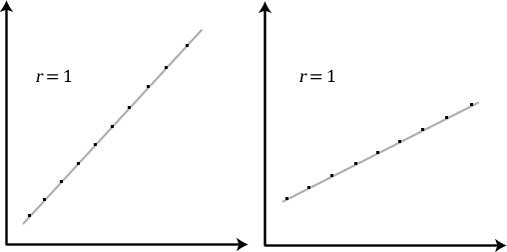
Pearson’s r=+1
Perfect correlation
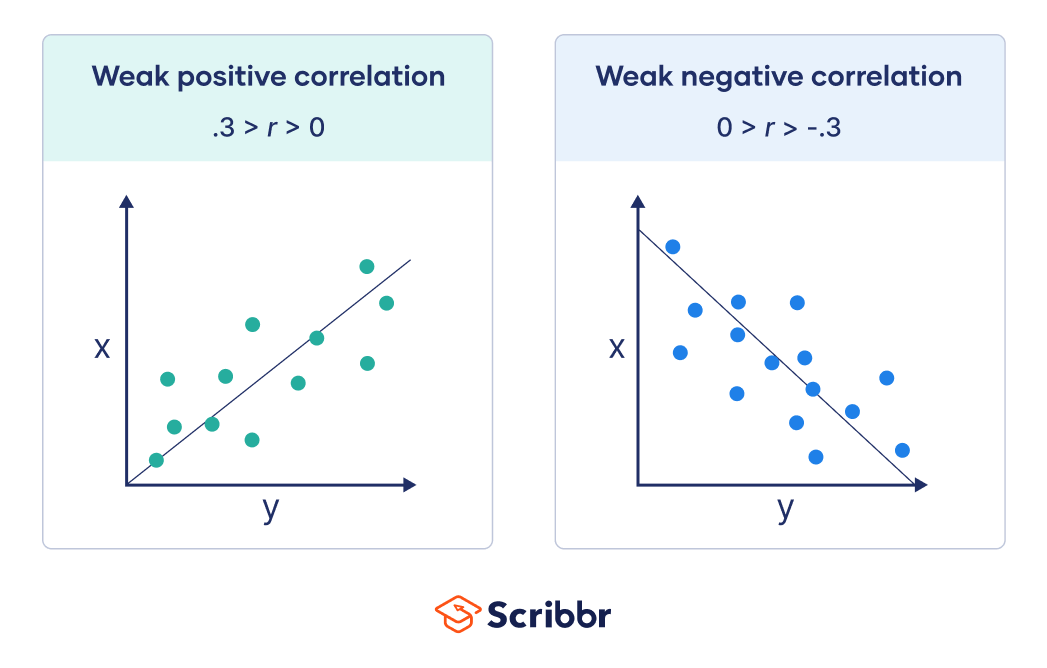
Pearson’s r = 0.5
It’s correlated positively but not perfectly
Example: SAT SCORES
Person''s r = 0.0
No Correlation
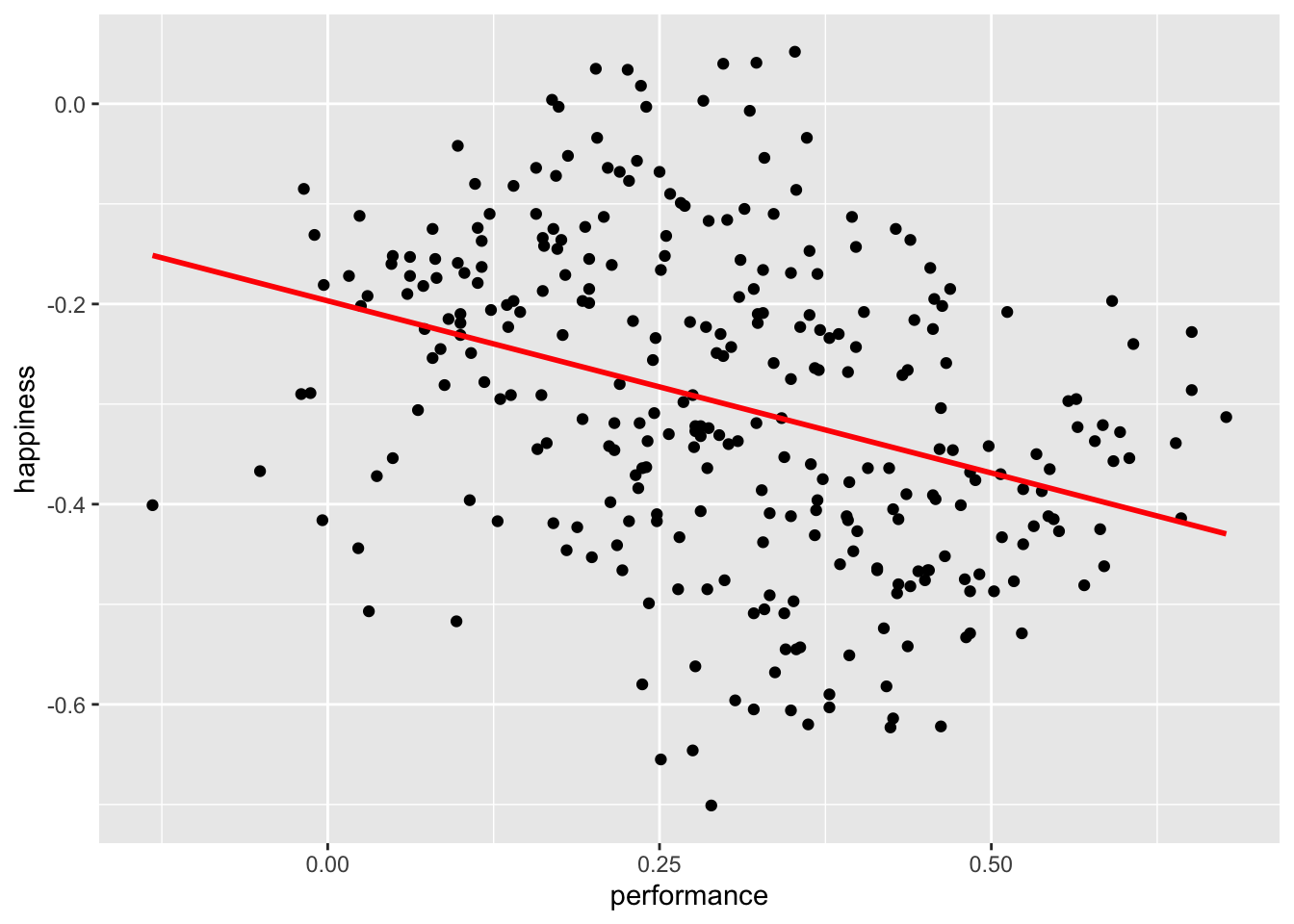
Perfect Negative Correlation
r= -1
E.g. Possiblilty to concentrate vs Sleep deprivation
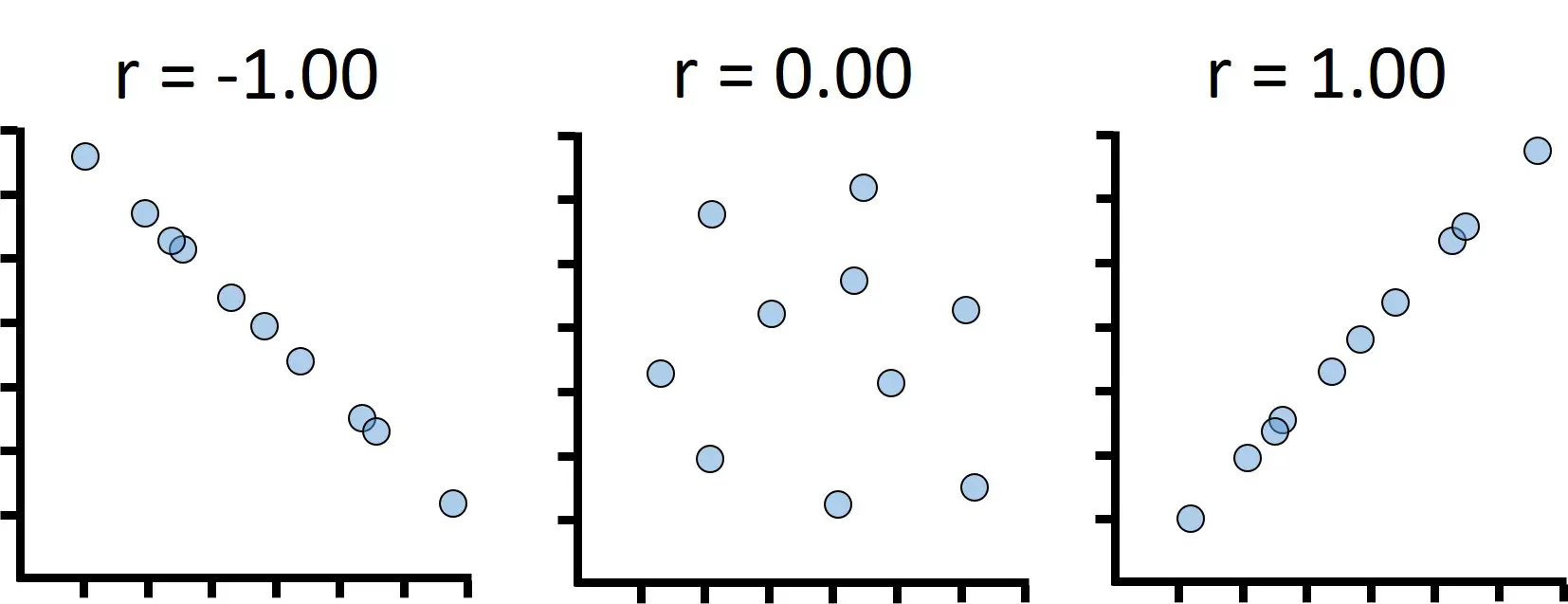
A correlation of -.5
Negative but not perfect
Time order
The cause has to come before the supposed effect
Example: Smoking causing cancer
Fallacy
If something is fallacious, it means that it’s raw and incorrect, so a fallacy is something that’s not true. (invalid argument)
Post hoc:
Means after this
Ergo
means therefore
Propter Hoc
means because of this.
Non - spuriousness
Spurious means false or illegitimate
Example: ice cream and air conditioning sales.
The relation between those is spurious
If two variables are correlated but not causally related, the relationship is spurious.
For it to be non-spurious it has to cause the other not just be correlated)
Antecedent
means it happens before, before in time
How do we test for spuriousness?
We control the third factor.
For example, the shoe size = reading ability.
We would hold the age constant.
(Only look at 10-year-olds and see if the correlation still exists.
Independent Variable
The proposed cause
Dependent Variable
The proposed cause
Unit of analysis:
is the entity that the researcher is studying,
Ecological Fallacy:
If the unit of analysis of the data we have is not the same as the unit of analysis of the conclusion that’s an ecological fallacy
An error in reasoning that may occur if the unit of analysis of the data is not the same as the unit of analysis of the conclusions
Example: Suppose a study finds that cities with higher average incomes have fewer people living in poverty. If someone concludes that all individuals in wealthy cities are not poor, that's an ecological fallacy. There could still be many poor individuals living in those cities, despite the high average income.
Research Ethics:
What scientific knowledge did this study produce
Can the knowledge generated by this study be used to explain real life situations?
Was this study ethical
General Ethical Principals:
Voluntary Participation
Informed Consent
No Harm to participants
Anonymity and Confidentiality
No or Minimal Deception
Voluntary Participation
Participants should be able to leave the study at any time.
No threats or blackmail to participate
Informed Consent
Before people consent to the study they need to be informed about the risks involved with the study and a basic idea of what the study is about.
No Harm to participants
People should not be harmed by their participation in the study.
Sometimes it might be necessary to inflict mild harm for the betterment of humanity.
Anonyminity and Confidentiality
Needed to precent the harm that could arise if private information becomes public
 Note
Note  Flashcards (99)