15 - Shock
 Call Kai
 Learn
Learn Practice Test
 Spaced Repetition
 Match
Match Flashcards
 Knowt Play
1/41

There's no tags or description
Looks like no tags are added yet.
Name | Mastery | Learn | Test | Matching | Spaced | Call with Kai |
|---|
No analytics yet
Send a link to your students to track their progress
42 Terms
Circulatory Shock
Generalized hypoperfusion that fails to deliver sufficient O2 to tissues
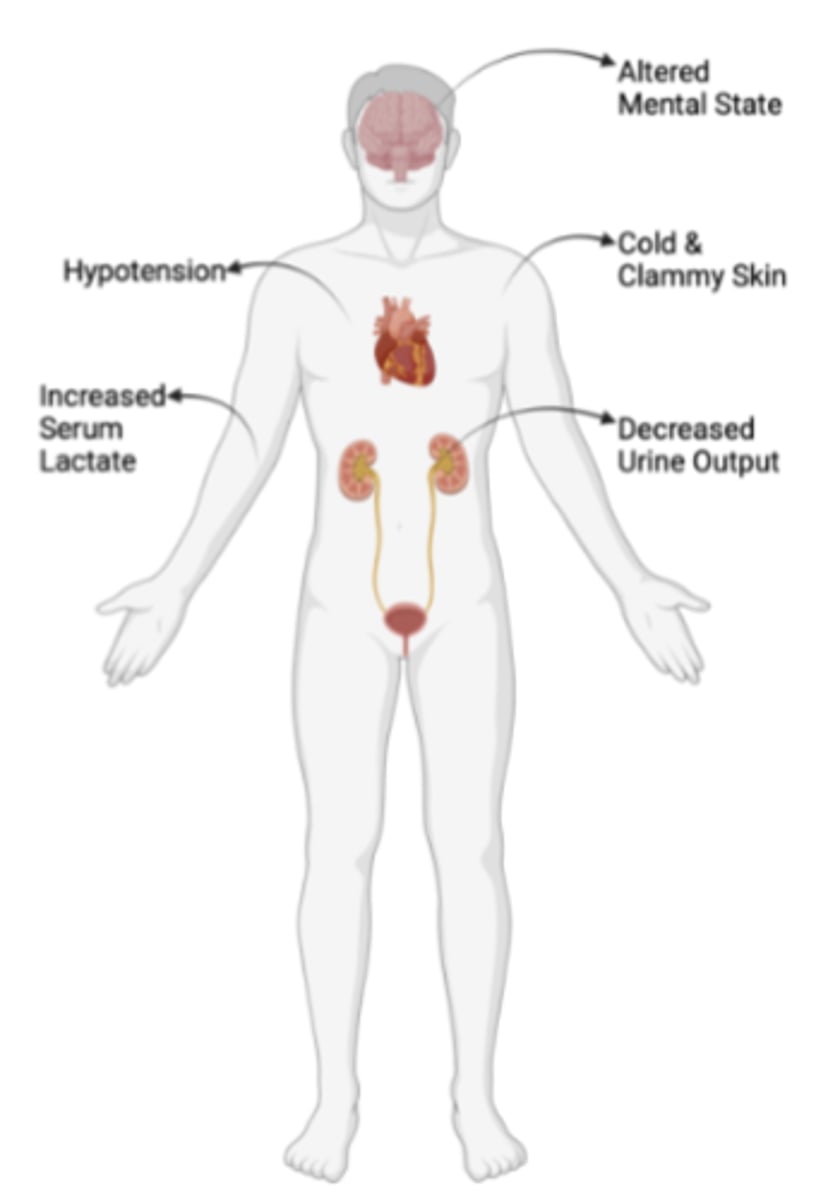
Circulatory Shock Diagnosis
- MAP: <70 mmHg
- Cold and Clammy
- Decreased Urination
- Elevated Lactate levels
What are the 4 types of Shock?
- Hypovolemic
- Cardiogenic
- Obstructive
- Distributive
Hypovolemic Shock
Loss of Blood Volume
Hypovolemic Shock can be caused by ____ or ____.
hemorrhaging/dehydration
Symptoms of Hypovolemic Shock
- Increased Respiration
- Increased HR
- Low Temp.
- Low BP
- Cool Skin
Cardiogenic Shock
Inadequate functioning of the Heart
Causes of Cardiogenic Shock
Anything that interferes with Heart Function
ie. Myocardial Infarction or Arrythmias
Cardiogenic Shock has similar symptoms to Hypovolemic Shock, but is characterized by ____.
Chest Pain
Obstructive Shock
Impaired Cardiac filling via physical obstruction
What are the two most common causes of Obstructive Shock?
- Cardiac Tamponade
- Tension Pneumothorax
Cardiac Tamponade
Accumulation of fluid in the Pericardium, decreasing ventricular filling
Obstructive Shock has similar symptoms to Hypovolemic Shock, but is characterized by ____ and ____.
distension of Jugular Veins/weak Radial Pulse
Distributive Shock
Abnormal distribution of Blood Volume due to widespread peripheral vasodilation
What is the most prevalent form of Shock?
Distributive
What are the three types of Distributive Shock?
- Anaphylactic
- Septic
- Neurogenic
Anaphylactic Shock
Drastic Histamine release that causes widespread vasodilation
Typically severe allergy
Anaphylactic Shock has similar symptoms to Hypovolemic Shock, but is characterized by ____ and ____.
Airway Narrowing/Facial Edema
Septic Shock
Bacterial endotoxins and Cytokine Storm cause widespread vasodilation
Septic Shock has similar symptoms to Hypovolemic Shock, but is characterized by ____ and ____.
Fever/Warm Skin
Who is at increased risk of Septic Shock?
- Immunocompromised Patients
- Burn Patients
- GI Injury Patients
- Meningitis Patients
Neurogenic Shock
Loss of sympathetic ability to vasoconstrict in the periphery due to a traumatic injury in the CNS
Neurogenic Shock has similar symptoms to Hypovolemic Shock, but is characterized by ____.
Warm Skin
Lack of SNS Vasoconstriction
What are the 4 stages of Shock?
- Initial
- Compensatory
- Decompensatory
- Refractory
Initial Stage of Shock
Reduction in perfusion decreases O2 delivery; Metabolic requirements of cells are not met
In the Initial Stage of Shock, the body switches from ____ metabolism to ____ metabolism.
Aerobic/Anaerobic
Hence, Lactate accumulation
Compensatory Stage of Shock
Reversible Cellular Injury
In the Compensatory Stage of Shock, the SNS is activated to release ____ and increase ____.
Catecholamines/Cardiac Contractility
The body attempts to regain control during the Compensatory Stage of Shock by increasing ____ release as well.
Aldosterone
RAAS - Increased Blood Volume, Peripheral Vasoconstriction
What reflex causes the body to respond to Shock?
The Baroreceptor Reflex
Chemoreceptors within the periphery (Carotid Sinus & Aortic Arch) sense ____, ____, and decreased ____ during Shock.
[CO2]/[H+]/[O2]
Peripheral Chemoreceptors signal to the Medulla to increase ____ and ____.
Respiration/CO
Central Chemoreceptors sense decreased ____ and signal to the Medulla to increase Respiration and CO.
pH
What happens to the Capillary Beds during the Compensatory Stage?
Hydrostatic Pressure within the Capillaries decreases; Filtration is decreased in an attempt to increase Blood Volume
Decompensatory Stage of Shock
Progressive Cellular Injury marked by...
- Electrolyte Imbalance
- Metabolic Acidosis
- Respiratory Acidosis
- Hypotension
- Noticeable Symptoms like Cool and Clammy Skin
Acidosis
pH below 7.35
What 3 effects does Acidosis have on the body during Shock?
- Reduced sensitivity to circulating Catecholamines (Decreased SVR)
- Depressed Myocardial Function and impaired responsiveness to SNS (Decreased CO)
- Relaxation of Arterioles (Capillary Damage)
In the Decompensatory Stage of Shock, the SNS and RAAS have been stimulating vasoconstriction for a prolonged amount of time. What happens to the body during prolonged vasoconstriction?
- Disruption of Intestinal Barrier
- Systemic Inflammation due to Bacterial products and endotoxins
- Decreased Renal Blood Flow
Decreased circulating volume leads to increased ____ within the Capillaries.
Blood Viscosity
Increases risk of Clot formation and Damage
Blood Flow to the ____ and ____ is decreased during the Compensatory Stage of Shock.
Brain/Heart
Reduced function of Control Centers (SNS and Reflexes)
Refractory Stage of Shock
Irreversible Cellular Injury (Organ Failure & Death)
During the Refractory Stage of Shock, organ damage has occurred ____.
everywhere

