Academic Decathlon 25-26: All Selected Works
 Studied by 1 person
 Call Kai
 Learn
Learn Practice Test
 Spaced Repetition
 Match
Match Flashcards
 Knowt Play
1/17

There's no tags or description
Looks like no tags are added yet.
Name | Mastery | Learn | Test | Matching | Spaced |
|---|
No study sessions yet.
18 Terms
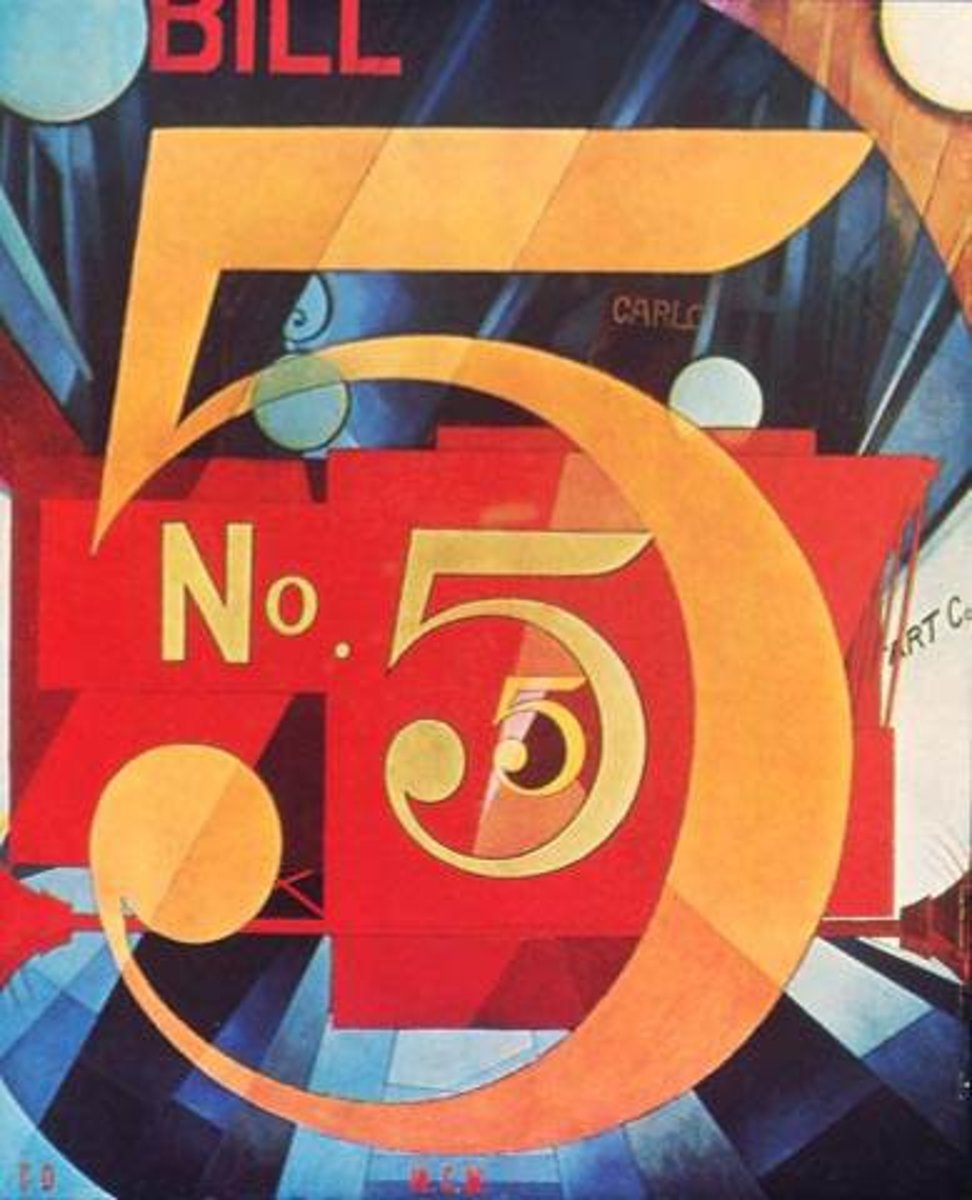
I Saw the Figure 5 in Gold, 1928
Charles Demuth, geometric abstraction, inspired by Cubists, portrait of William Carlos Williams, uses red/gold/shades of gray
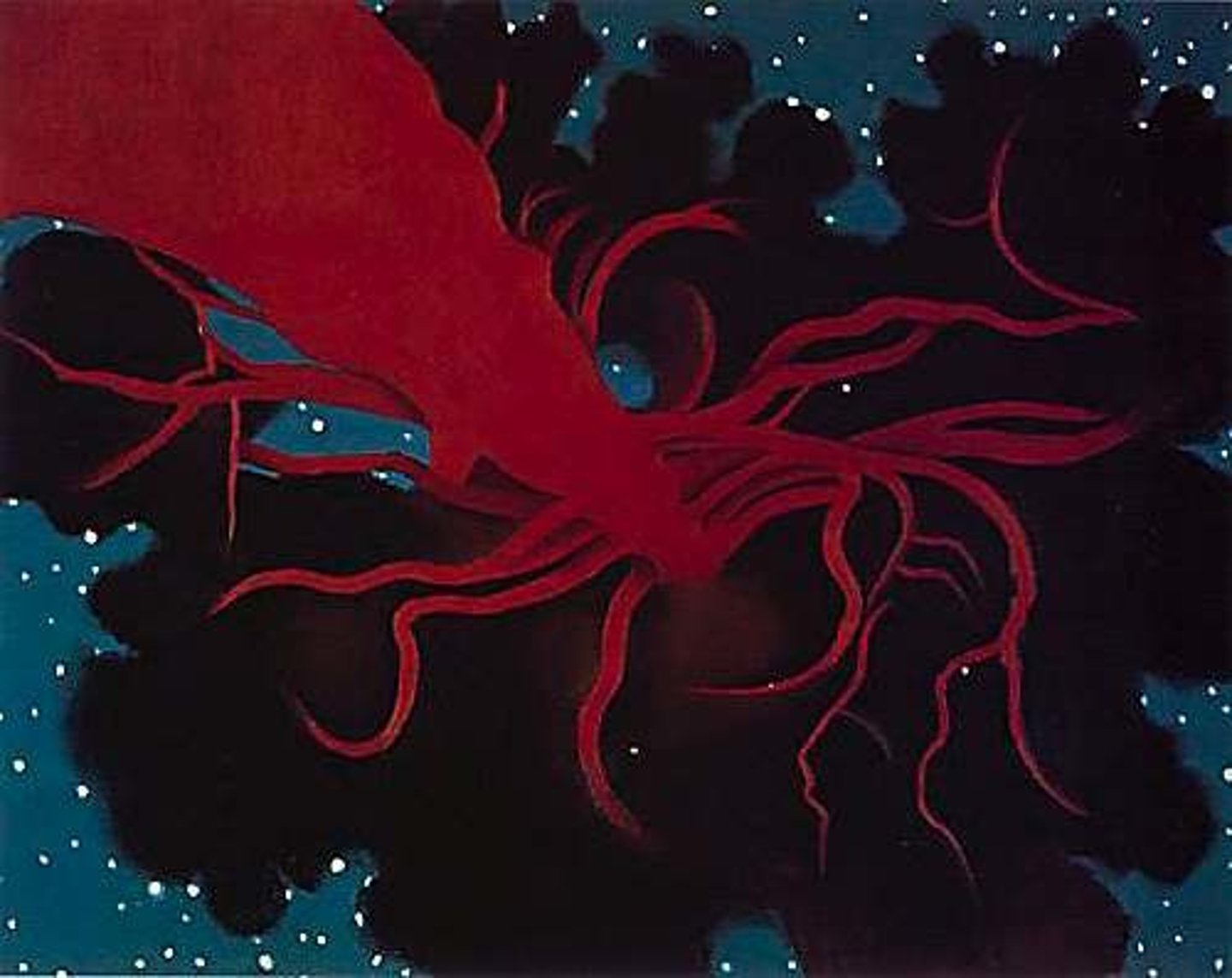
The Lawrence Tree, 1929
Georgia O'Keefe, uses biomorphic abstraction, inspired by Kandinsky, was youngest member of Stieglitz circle, married Stieglitz, best known for floral imagery, based in New Mexico, uses 3 colors, upside down.
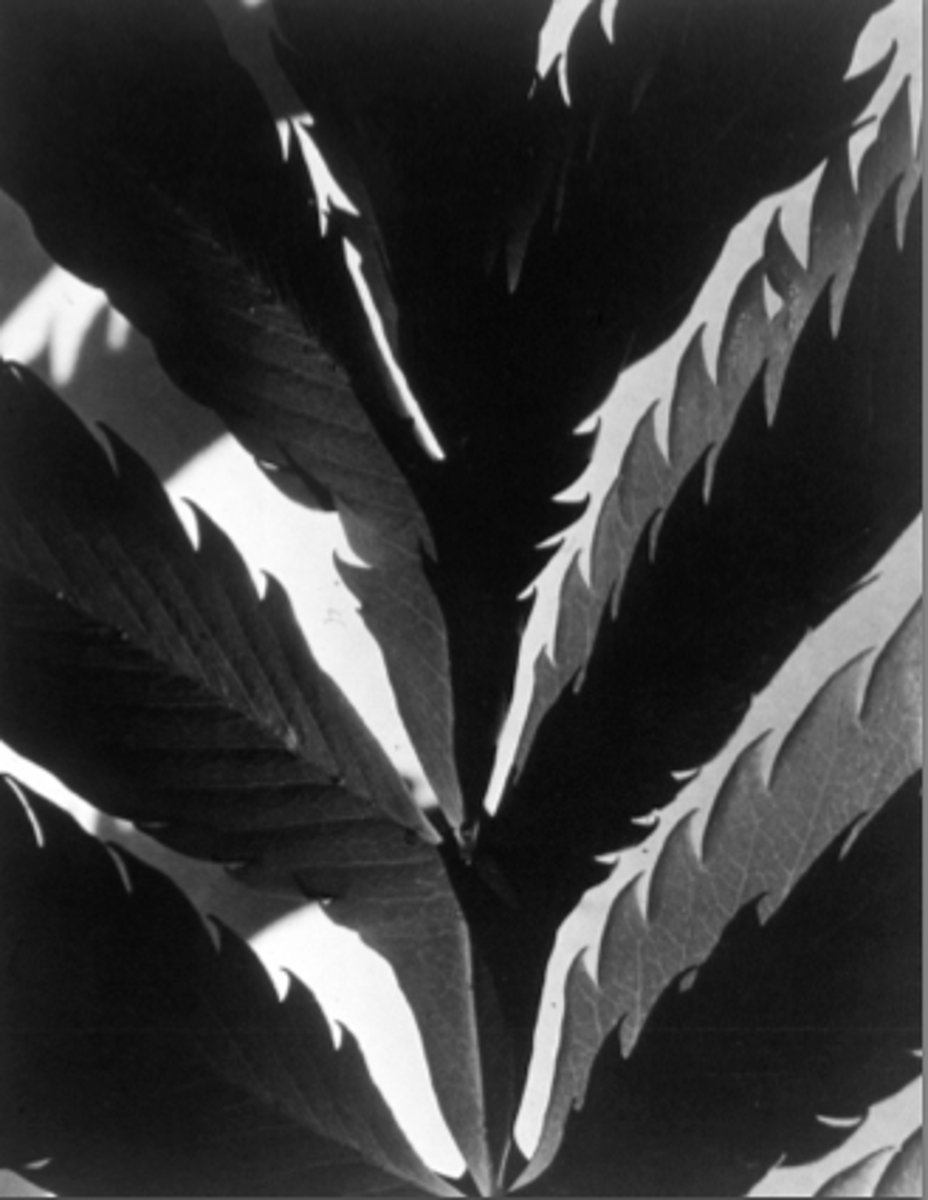
Leaf Pattern, pre-1929
Imogen Cunningham, early photographs were dreamy with friends posed, moved away from Pictoralist styles later and into botanical photographs, moved towards New Objectivity, exhibited with Group f/64, later shifted to portraits and magazine photography
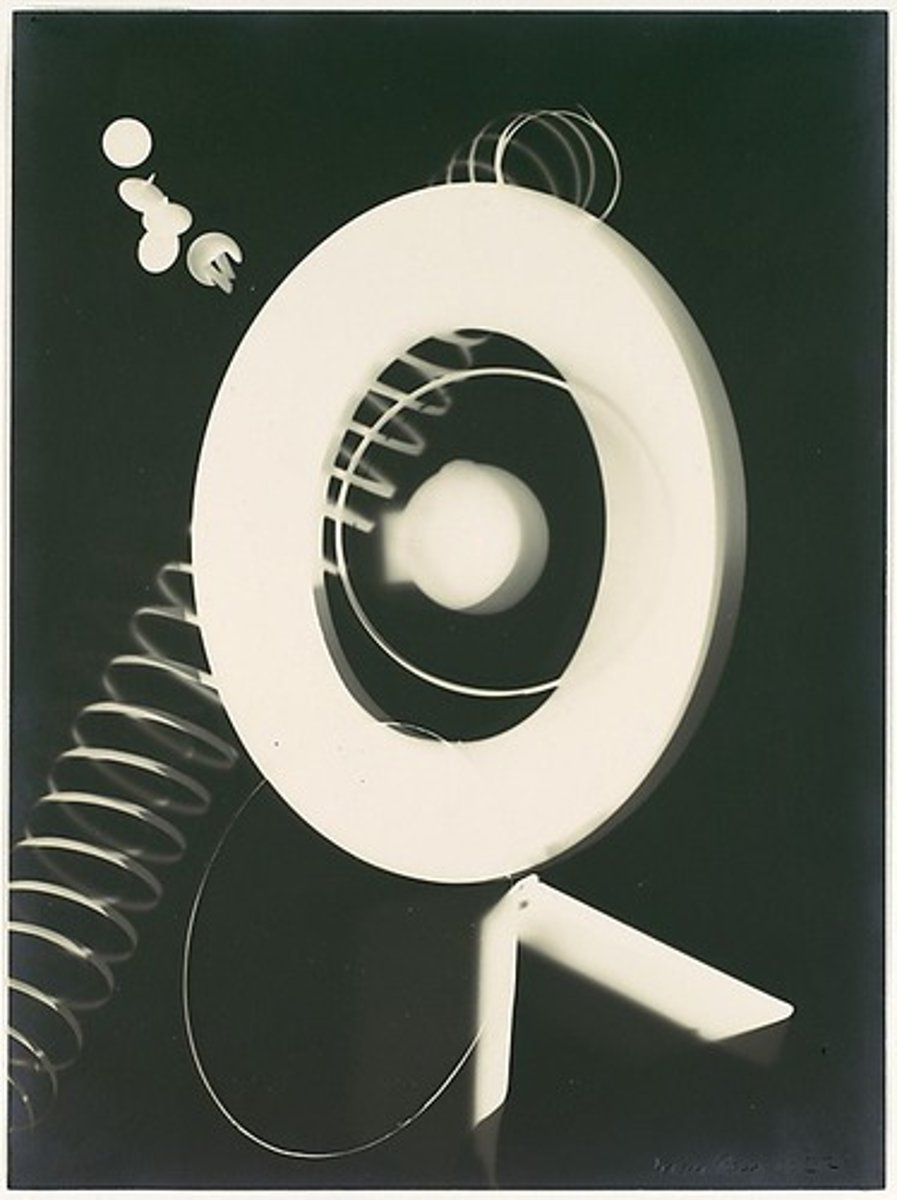
Rayograph, 1922
Man Ray, used Surrealism and automatism, briefly exposed film to light (known as solarization), used technique, resulting photographs were known as rayographs, photogram
Chrysler Building, 1928-1930
Moved away from historical styles to streamline, was briefly tallest building in the world, skyscrapers were new American building because of zoning, in Art Deco, very opulent and rich, shiny.

Woman on Sofa, circa 1922-2927
Guy Pene du Bois, born in America, mainly based in Paris, visual harmony in tones of red, wears flapper dress, arms relaxed, portrays New Woman, flappers were emancipated young women, around time of suffragete, feminine boldness
Spring Sale at Bendel's, 1921
Florine Stettheimer, Spent most of childhood in Europe, was not formally trained, some works were unsettling or considered vulgar, painting based on frenzy of seasonal shopping at Henri Bendel's, ready made clothes, portrays high and popular culture, mostly warm colors. Older woman in orange references portrait of Prince Khurram, woman in black lingerie ref. The Adoration of the Golden Calf

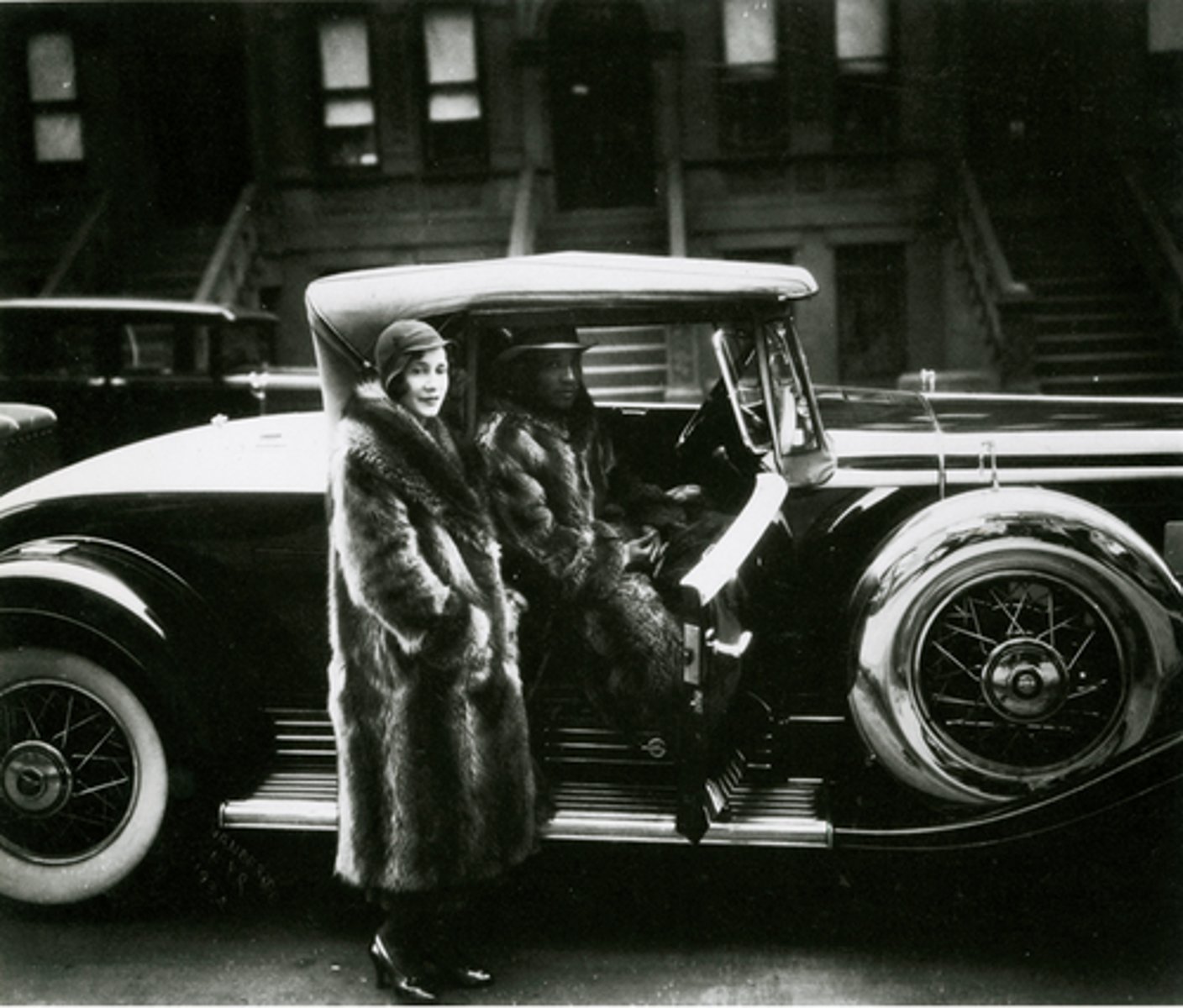
Couple, Harlem, 1932
James Van Der Zee, mostly photographic portraits, many wedding pictures or pics of celebrities, connects important cultural events, great migration, civil rights, posed people to portray charisma and success, in photograph, couple wearing fur coats and in front of rare cadillac
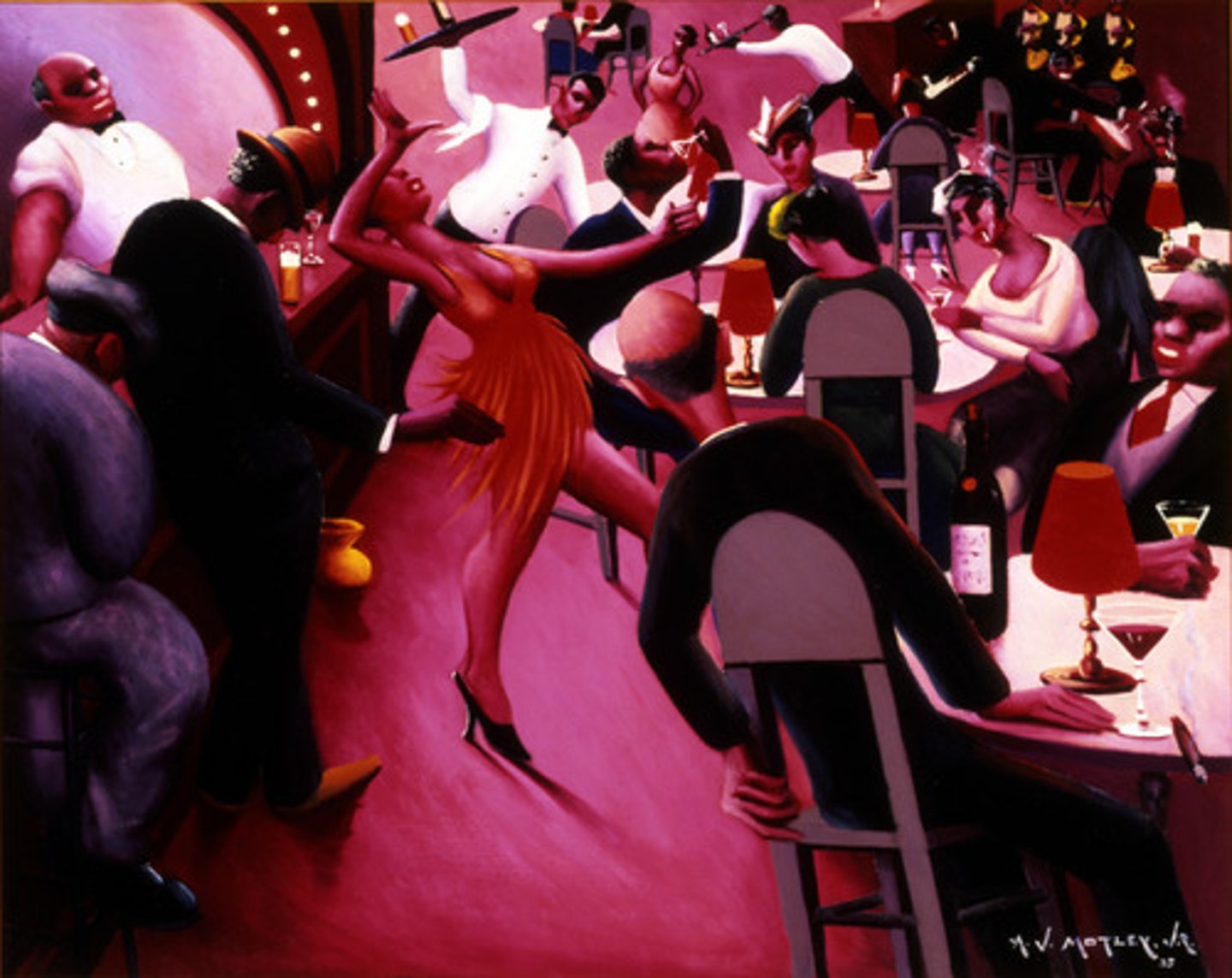
Saturday Night, 1935
Archibald Motley, Jr., studied at Art Institute of Chicago, preferred traditional style, focused on light-skinned mixed women, was interested in colorism, went to Paris and changed style, lots of red against brown, black, gray, composition is balanced, references jazz, nightclubs, cafes, goal of his work was to explore black history.
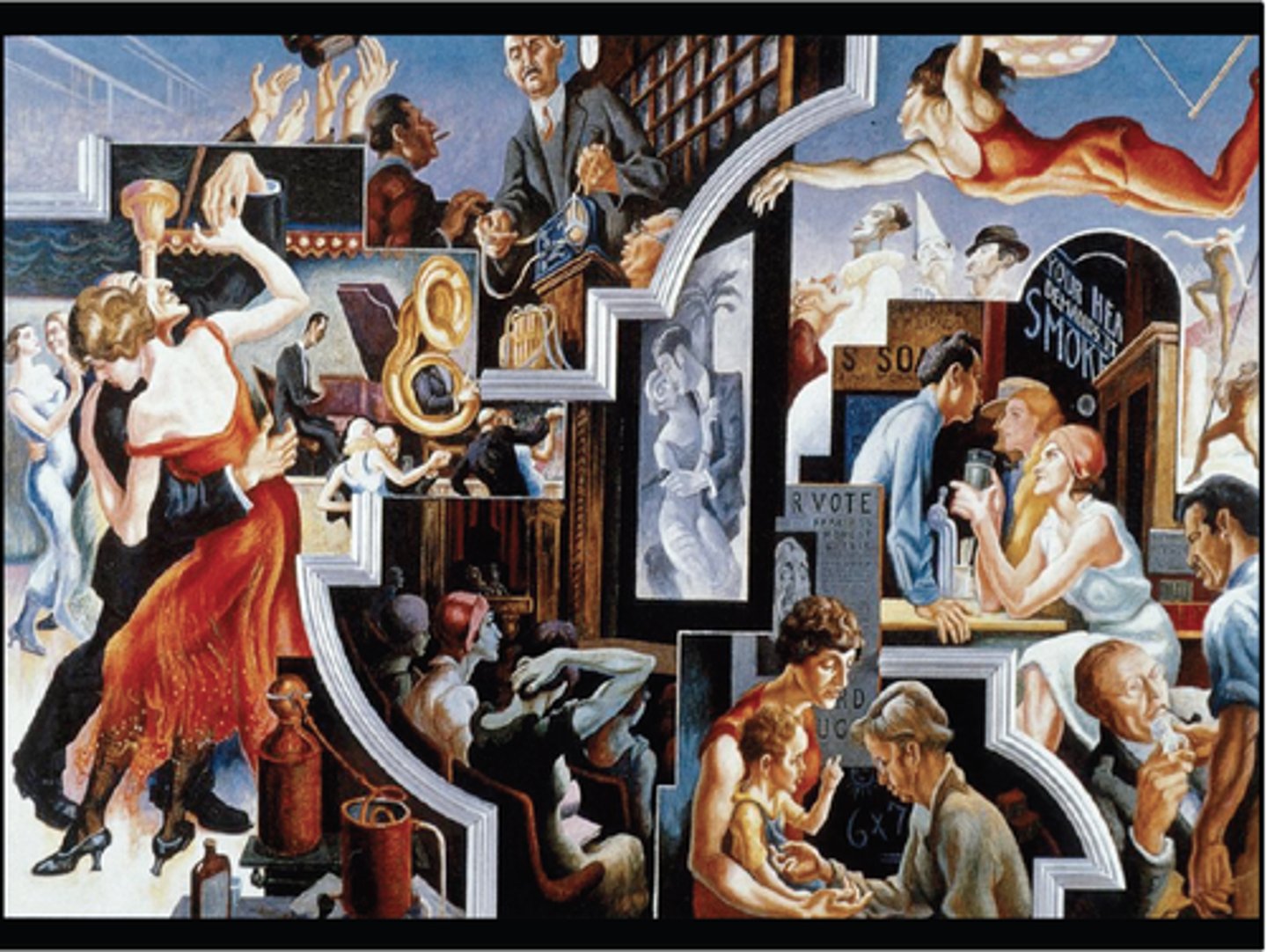
America Today: City Activities with Dance Hall, 1930-31
Thomas Hart Benton, worked as a set designer and painter, part of 10-panel series, dramatic representation of Prohibition era, was paid in the dozens of eggs needed for tempera paint, busy energy and hectic scenes part of style, represents speakeasies, and soda fountains and cultural things of the time, illegal liquor
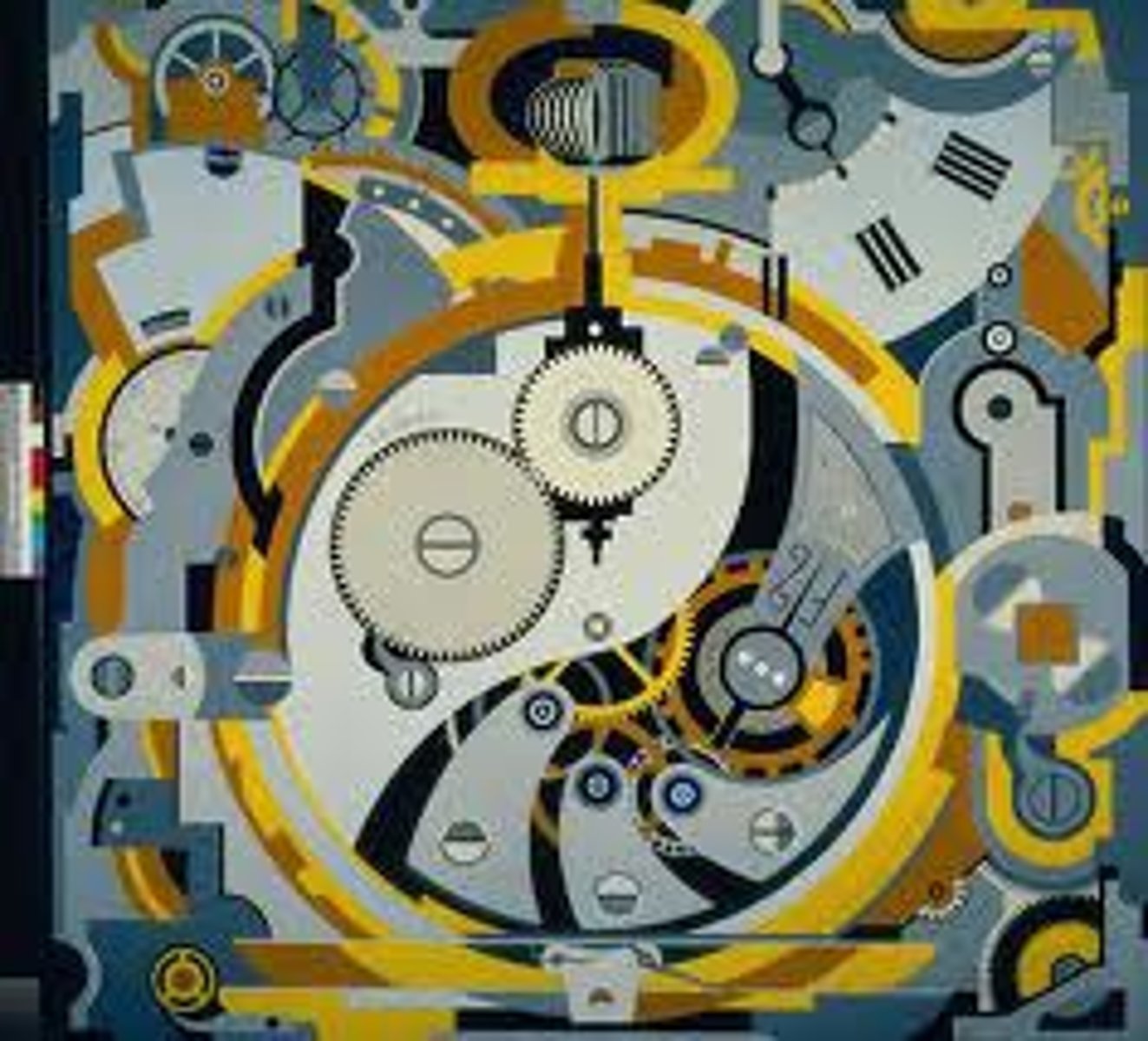
Watch, 1925
Gerald Murphy, owned a leather store, painted about 16 paintings total, greatest influence was Leger who painted in Purism, love of technology, many paintings reference consumer goods/machines, 6.5 ft square
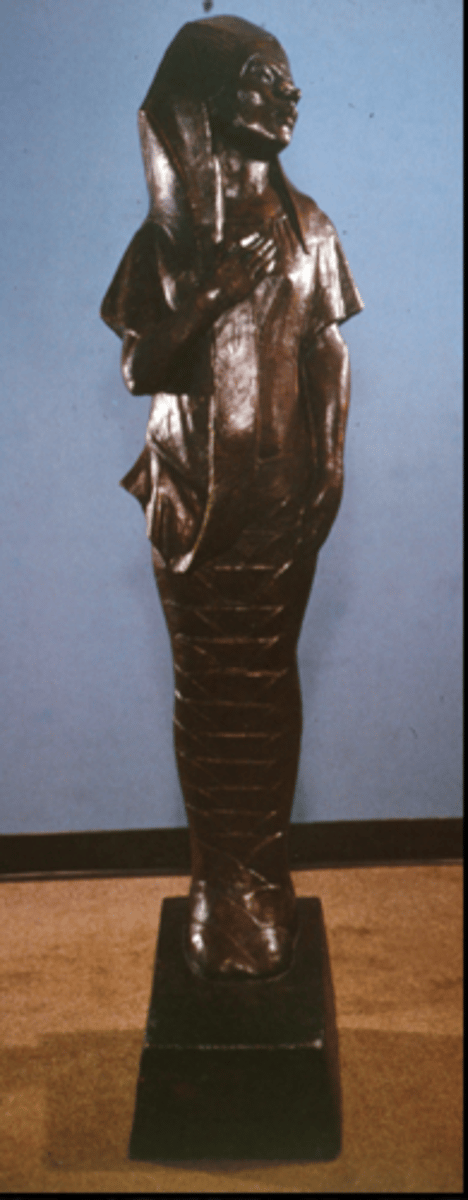
Ethiopia Awakening, 1921
Meta Warrick Fuller, one of most important Black sculptors during 1920's, relates to Black modernism, Pan-Africanism, artists became interested in Black cultural items, 67 inches tall, made of bronze but painted black, work was commissioned by poet, the clothing and posture contribute to meaning, Egypt and Ethiopia often overlapped
Boy Stealing Fruit, 1923
Yasuo Kuniyoshi, typical example of his work, spatial relations are off, has unified color palette, inspired by American folk art, Kuniyoshi collected folk art, form of artistic primitivism, incorporated many influences and references into painting. Reference to scarcity of fruit in Japan, folk tales, american self-taught painting, identity as American was questioned

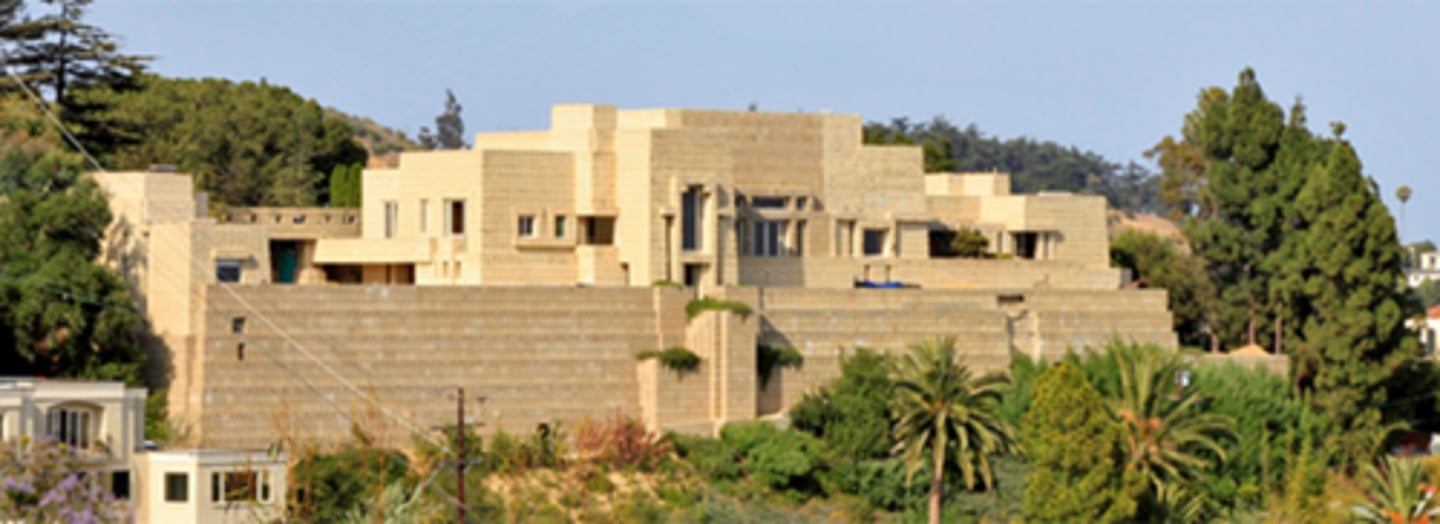
Ennis House, 1923-1924
Frank Lloyd Wright. Probably most famous American architect, started in early skyscrapers, opened own architecture practice, uses modern materials with inspiration/references of ancient pyramids/jungles. Invented textile blocks, hollow rods, connected with steel rods, geometrically organized, used over 27K textile blocks, terraces and balconies, Romanza, Incan architecture,
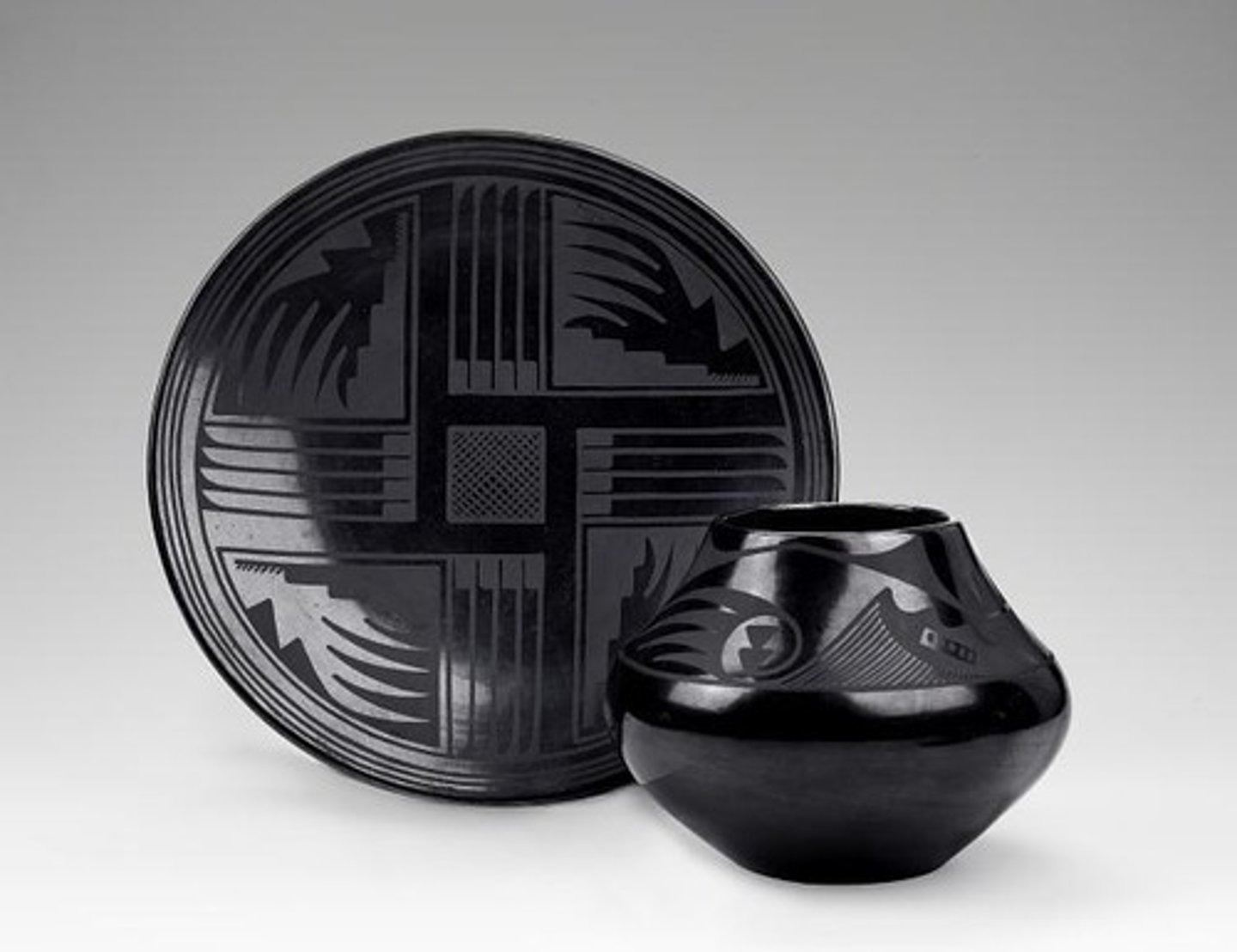
Bowl and Plate
Maria and Julian Martinez, tribal members of San Ildefonso Pueblo, Tewa, Maria shaped and fired the clay and Julian painted 2D designs, best known for black on black ware, before was colorful with off-white backgrounds and designs in black/reddish-brown, Maria coated them in slip before firing, shiny stuff, reframed art vs. craft, signed pots
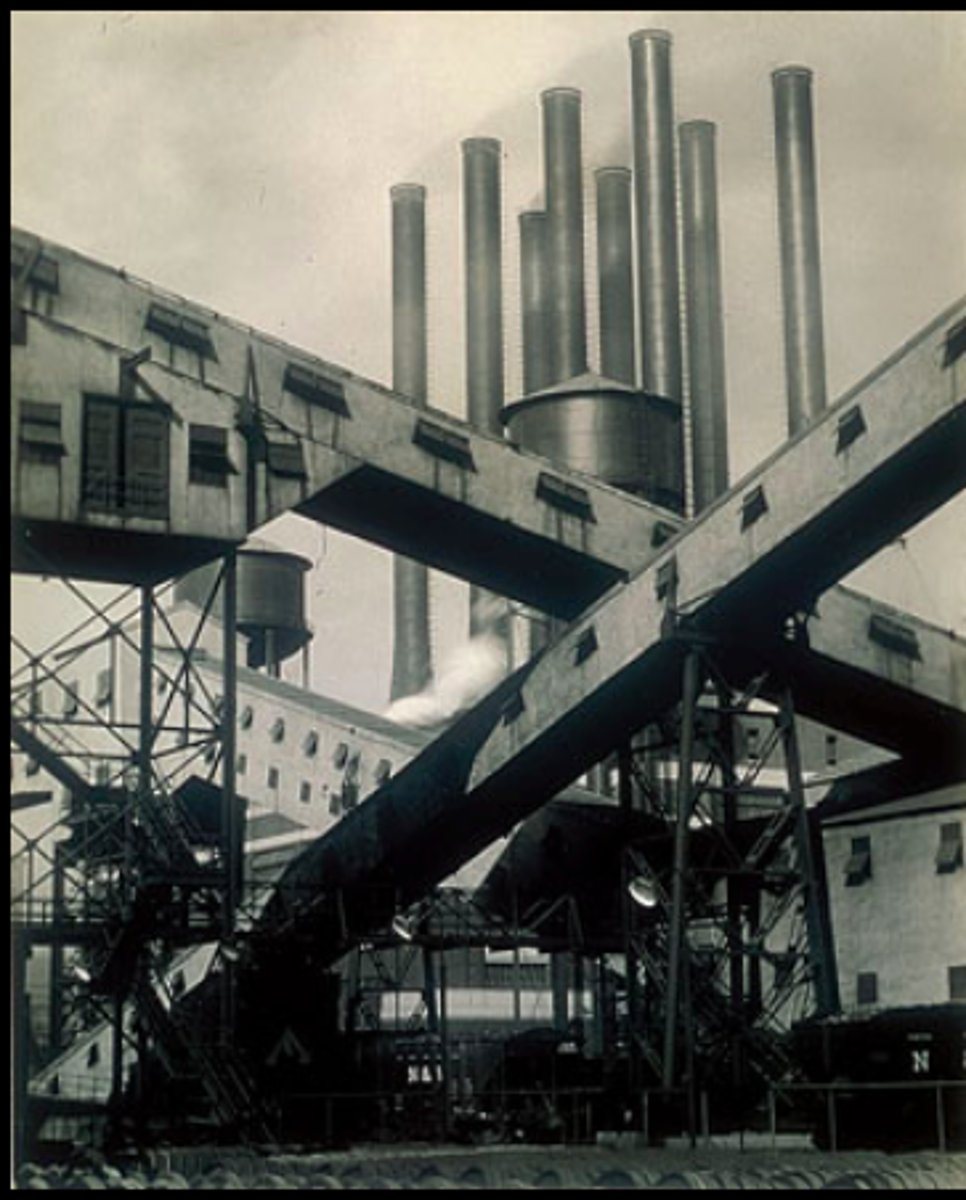
Criss-Crossed Conveyors, 1927
Charles Sheeler, taught himself photography, did a silent movie collab, experimented with geometric abstraction, represented Ford automotive plant, high contrast, angles create a cross, stress complexity and interconnectedness, portrayed Fordism system of making cars, around time of labor revolutions and car prices, no photographs show people, American history
Hands Resting on a Tool, 1927
Tina Modotti, worked in a textile factory - may have inspired future works, became interested in politics, learned photography from Weston, made political statements with photos, selected work shows agricultural laborer probably campesino, briefly pausing, poltiical issue: Mexican Revolution and Mexican laborers, Indigeneous, Modotti was arrested after assassination atttempt

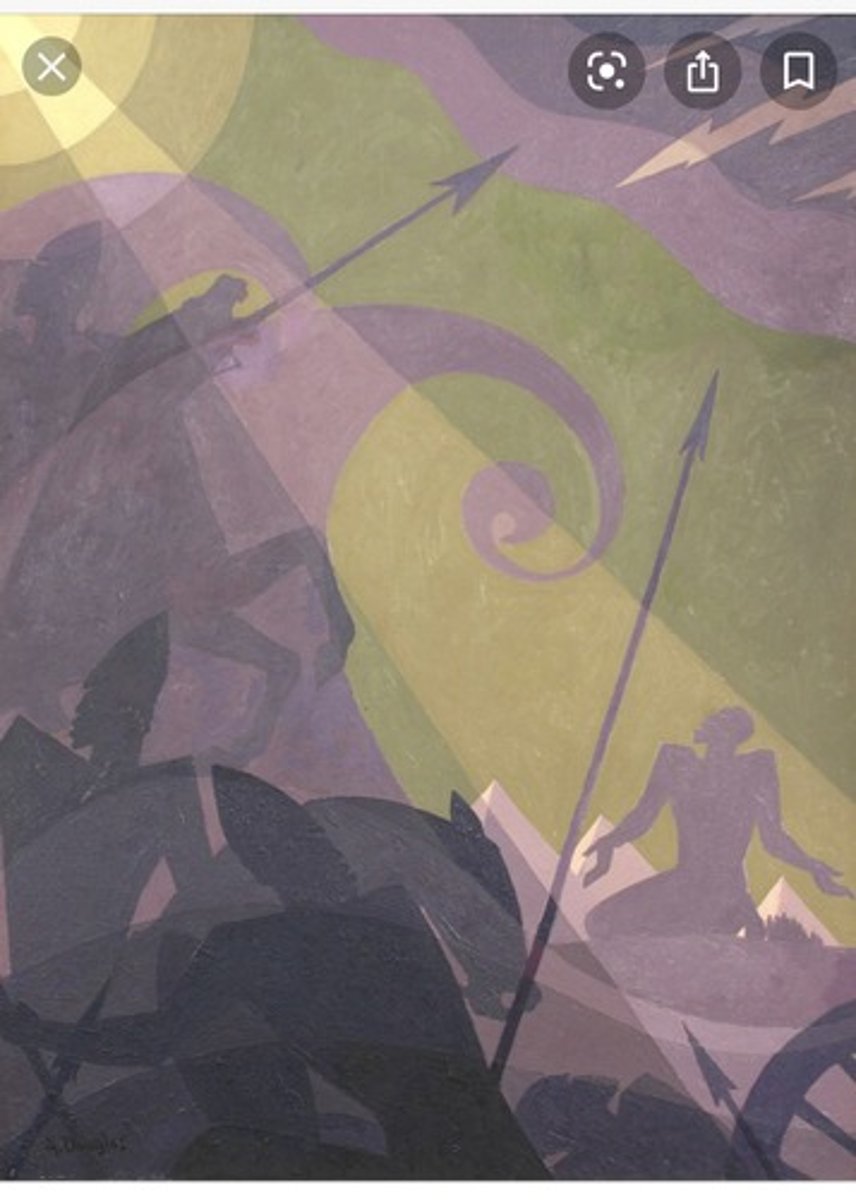
Let My People Go, circa 1935-1939
Aaron Douglas, painting biblical inspiration, hints at danger while also hope, led Harlem Renaissance, early work was very political, best known for big murals that show continuity, empowerment, and resilience. Style encompasses art deco, geometric, symbolism. Painting is 1/8 series, purple and mustard yellow, focal point is male kneeling, right is uncluttered and left is darker, based on black and white drawings to go wtih spiritual poem, anti-lynching art, references Black Christian traditions
 Note
Note  Flashcards (118)