Chapter 9: Sensory Systems - Taste & Smell
 Call Kai
 Learn
Learn Practice Test
 Spaced Repetition
 Match
Match Flashcards
 Knowt Play
1/24

There's no tags or description
Looks like no tags are added yet.
Name | Mastery | Learn | Test | Matching | Spaced | Call with Kai |
|---|
No analytics yet
Send a link to your students to track their progress
25 Terms
Taste
The ability to sense these tastes is determined genetically, but how we perceive these taste is culturally/environmentally determined
Tongue
The organ that houses papilla
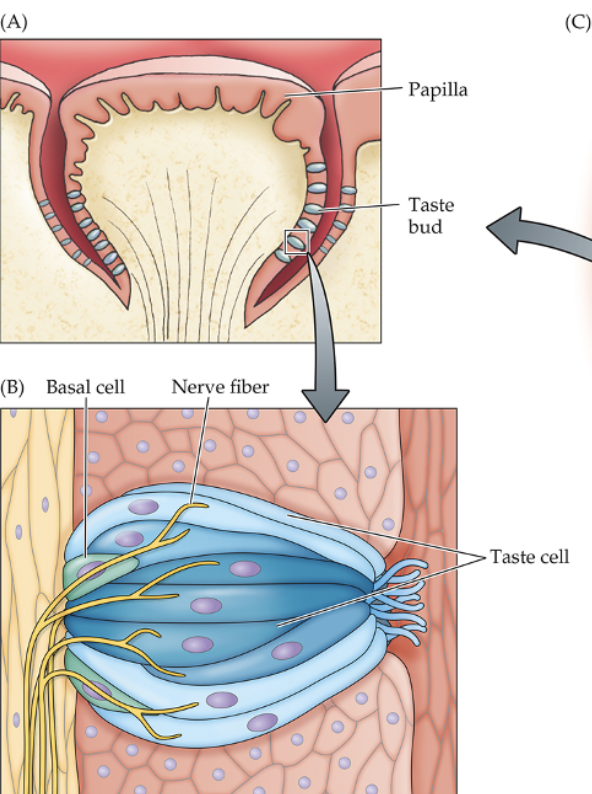
Papilla
“Bumps” on our tongue that act to increase the total surface area of the tongue
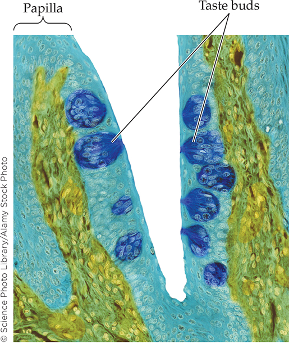
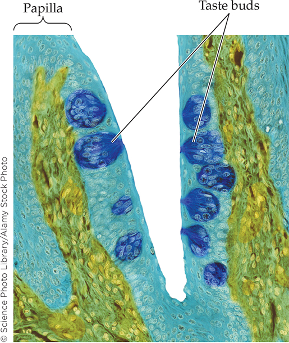
Taste Buds
Housed by papilla, a cluster of 50-150 taste receptor cells
Taste Pore
On the surface of a taste bud, an opening where taste cells extend the process of cilia that detect tastants
Sensing Taste Selectivity
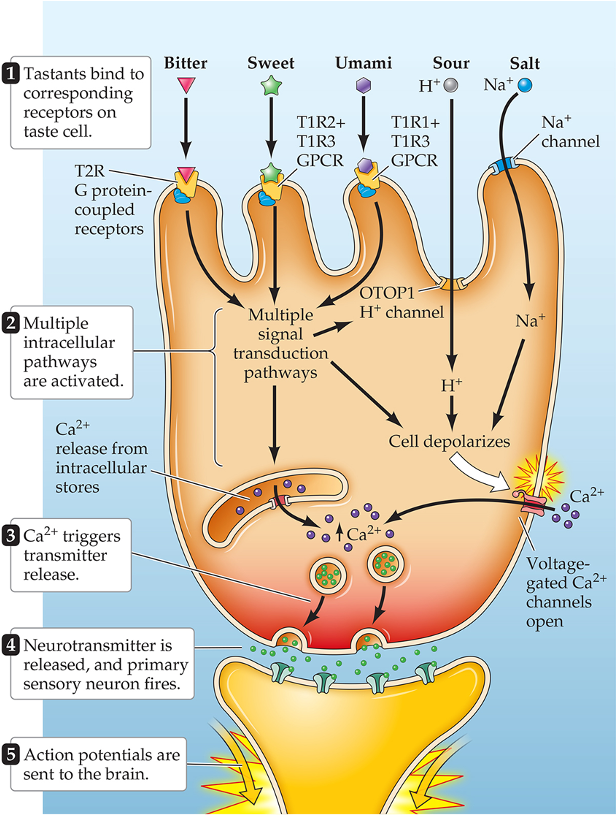
Each taste cell is sensitive to a single taste ➡ Each selectively express certain receptors for distinct chemicals
Distinct Processes in the Taste Cell
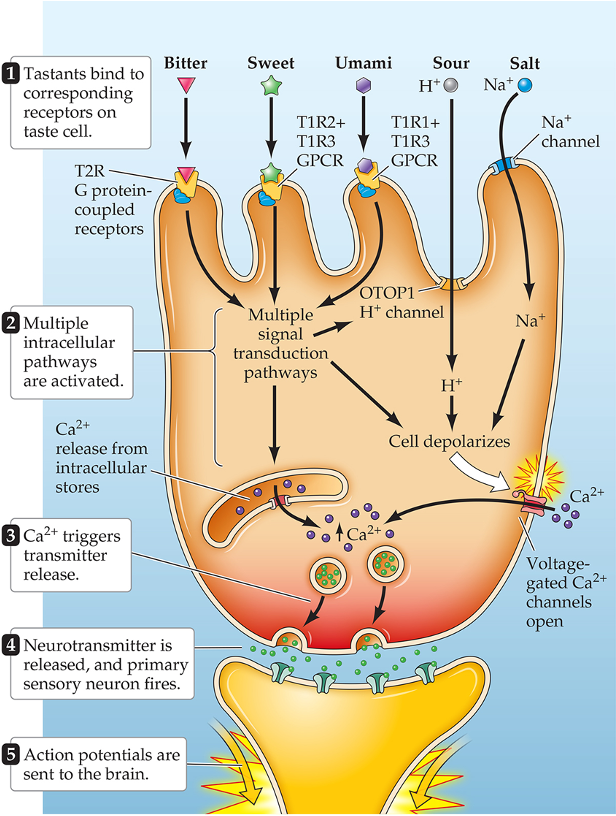
Bitter, Sweet, and Umami all act through metabotropic receptors
Salty and Sour act through ionotropic receptors
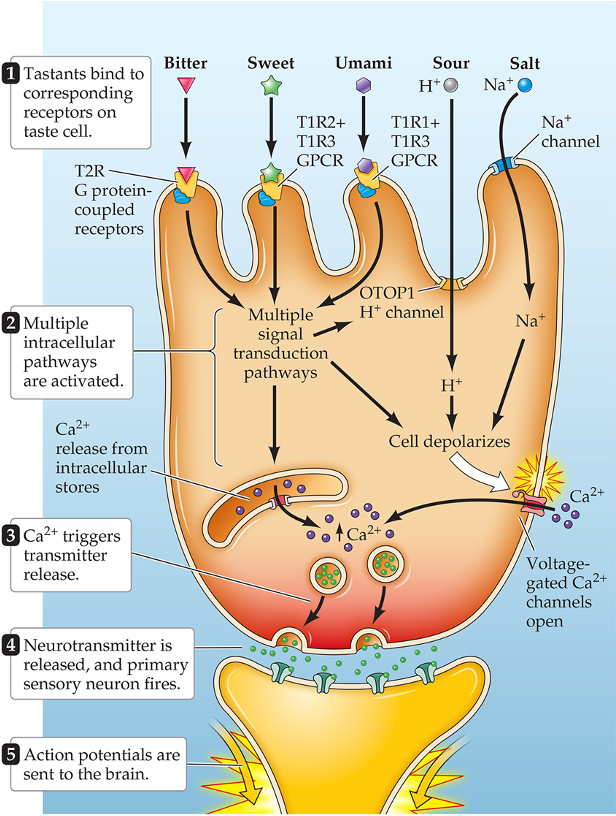
Salty
Sensed primarily by detecting sodium (Na+) ions through sodium channels;
Can be both appetitive and aversive
Sour
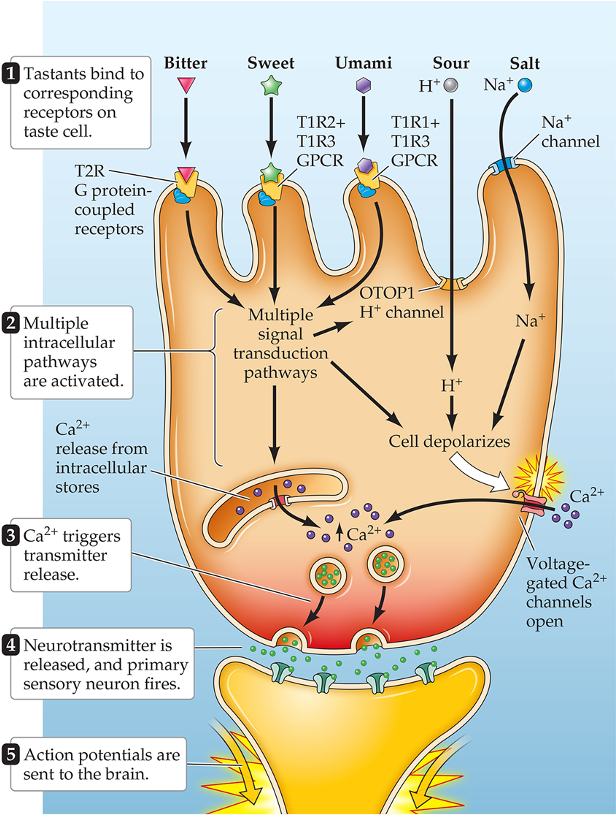
Driven by acid sensing ➡ Acids all release protons (H+);
Sour-sensing taste cells express an extremely selective ion channel, causing a rush of protons into the cell when detected
Necessary for detecting carbonation
Necessary for regulating thirst-driven water consumption
Bitter
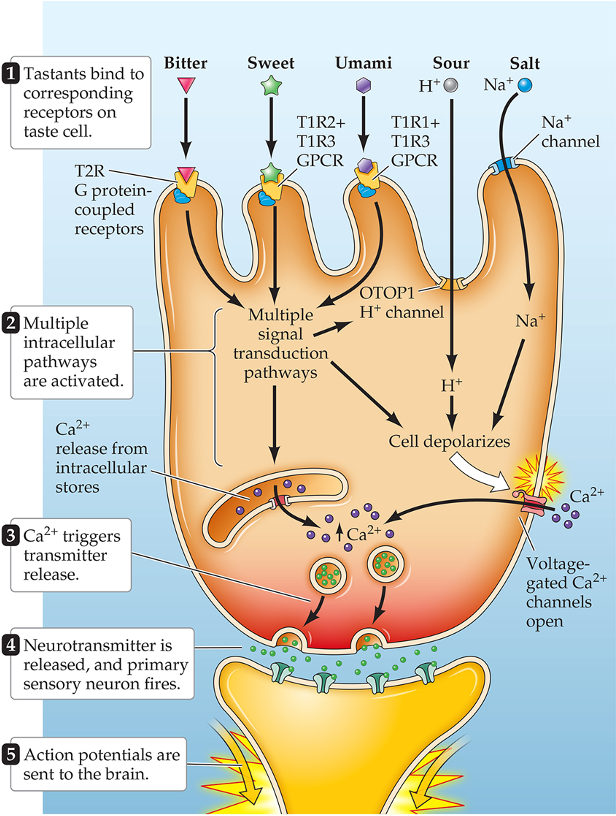
Thought to have evolved to sense toxic substances;
The T2R family of receptors are necessary for bitter taste
Every bitter taste cell seems to express most or all bitter receptors, suggesting broad tuning
Sweet
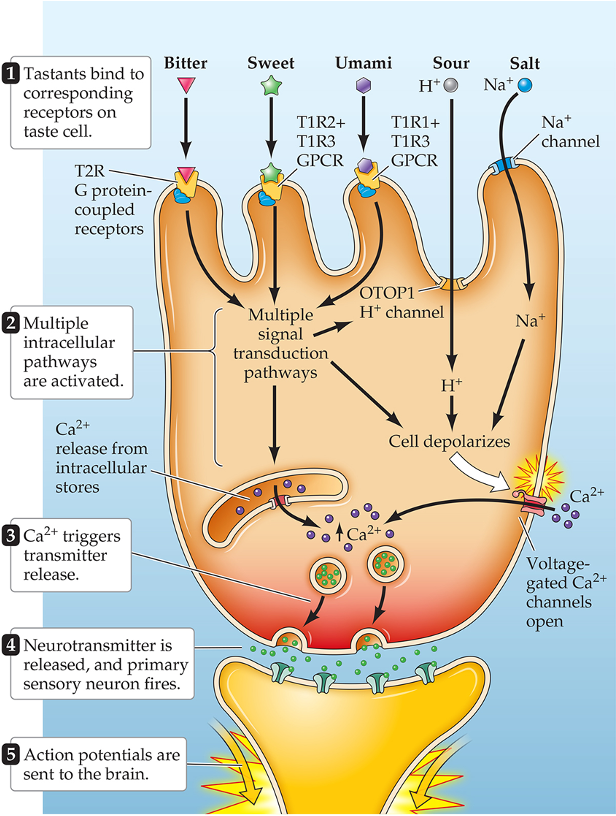
Sensed by heteromers of metabotropic receptors in the T1R family;
Combination of T1R2 and T1R3 make sweet taste possible
We sense different sweets by their different interactions with these receptor complexes
Umami
Sensed by heteromers of metabotropic receptors in the T1R family;
The combination of T1R1 and T1R3 make savory possible
Umami is possibly also sensed by a metabotropic receptor for glutamate
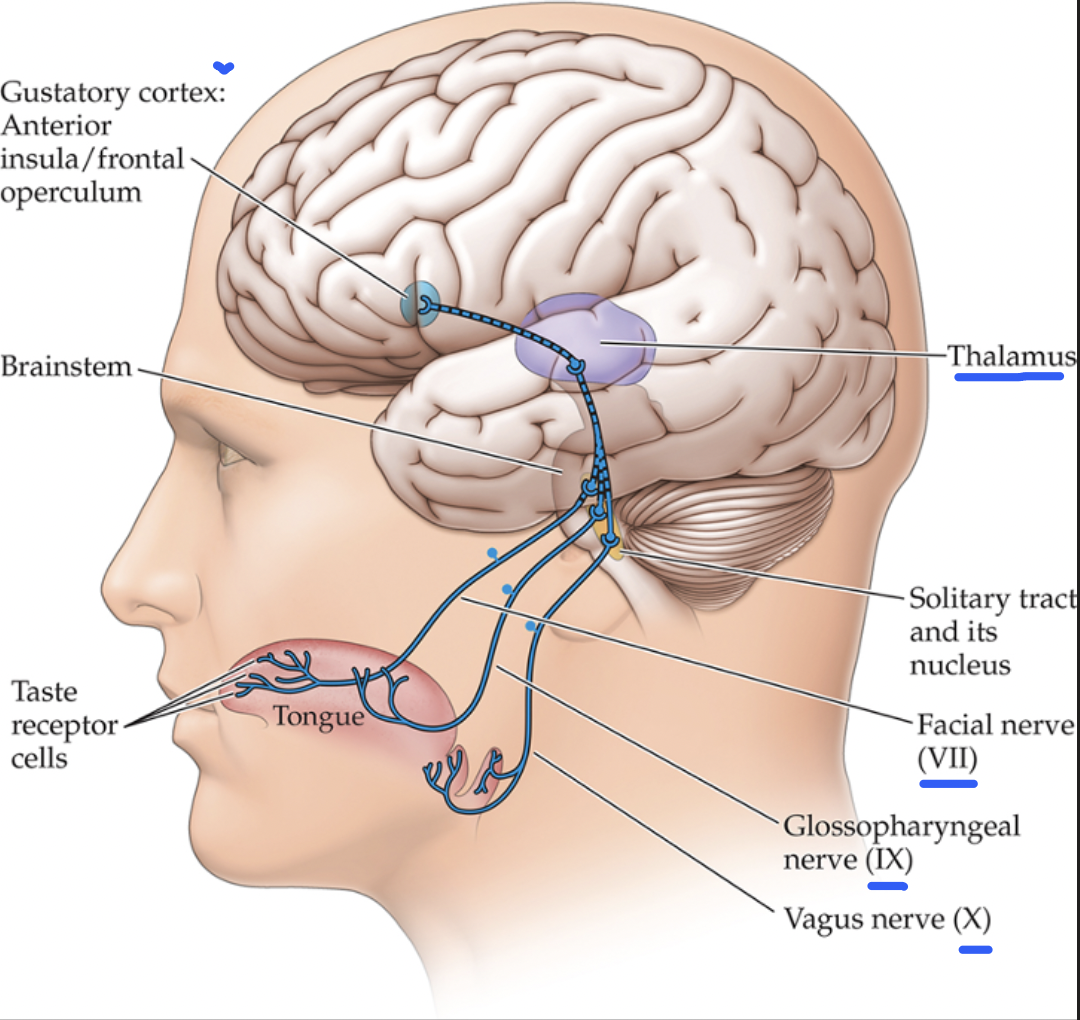
Gustatory System
Taste cells transmit information through 3 cranial nerves which travel directly to the brainstem
The brainstem then sends information to the gustatory thalamus, to the gustatory cortex which lives in the insula
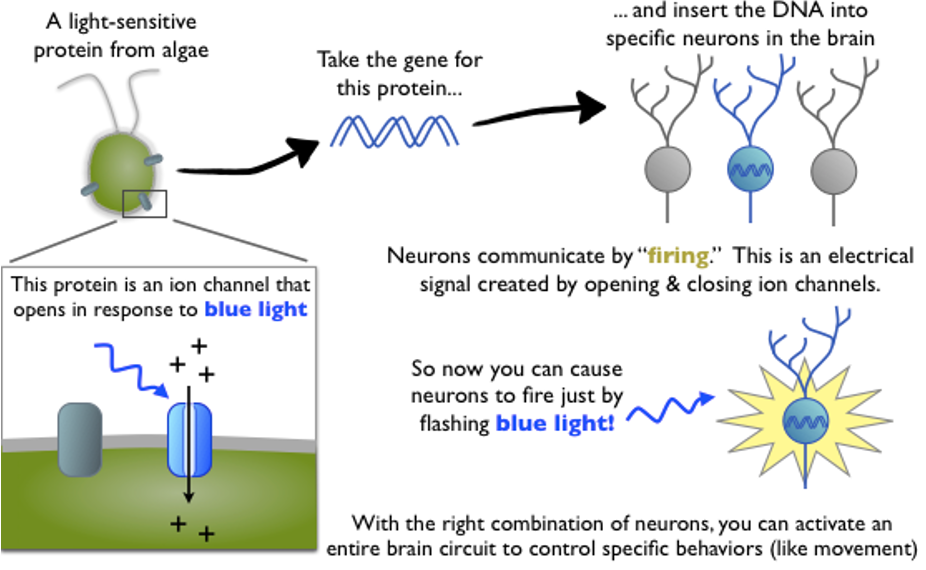
Optogenetics
A technique that allows researchers to use light to directly control the activity of different neurons in the brain
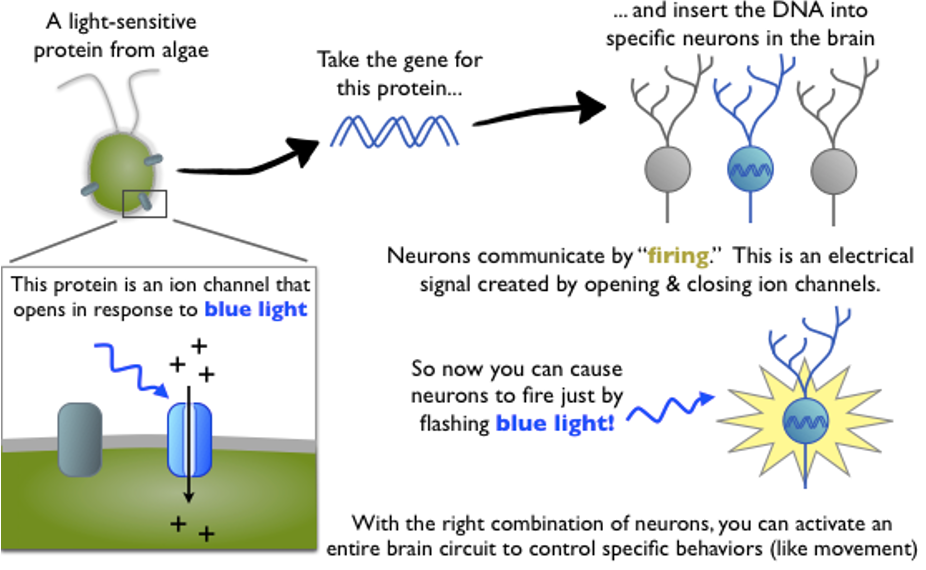
Channelrhodopsin
A family of light-gated cation channels found in green algae
Olfaction
The ability to sense smell is absolutely essential for survival
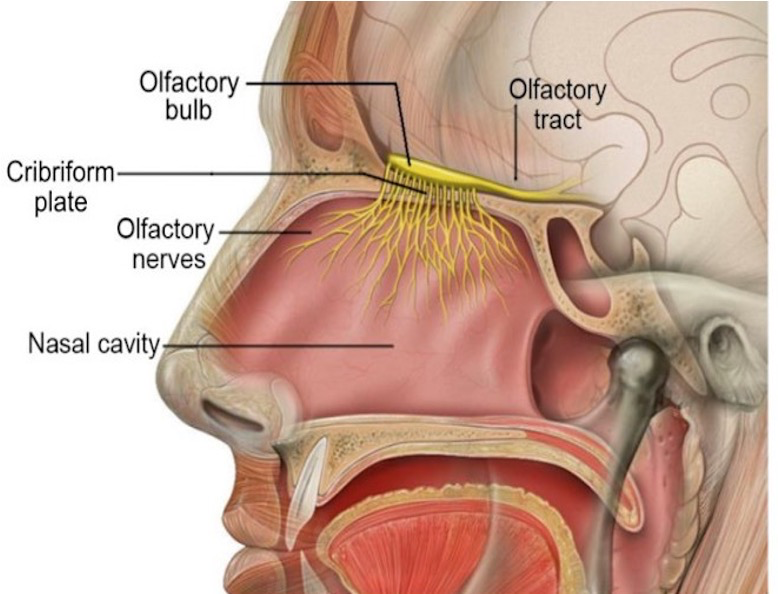
Olfactory Epithelium
A sheet of sensory receptor cells that lines the most dorsal aspects of the nasal cavity;
Houses three cells that it make up:
Basal Cells
Supporting Cells
~6 million Olfactory Receptor Neurons
Olfactory Receptor Cells
Each olfactory receptor extends a long process into the epithelium that terminates in a cilia that sits in the mucosal surface
On the other end, the cell sends a long axon that joins up with other olfactory axons to make the olfactory nerve (cranial nerve 1)
Olfactory Signal Transduction
Odorants enter the nasal cavity during inhalation
The volatile compounds in the air are dissolved into the fluids of the mucosal layer to interact with the receptors on the olfactory receptor neurons
Odorant receptors are a huge family of metabotropic GPCRs (G-coupled protein receptors) with a specific classification of Golf
Humans have genes that code for over 1000 olfactory receptors, but only 400 are functional
Functional Olfactory Receptors
Even with only 400 functional receptors, we can perceive over 10,000 different odors ➡ We do so by population coding: summing the activity of many olfactory receptors
Rodent Olfactory System
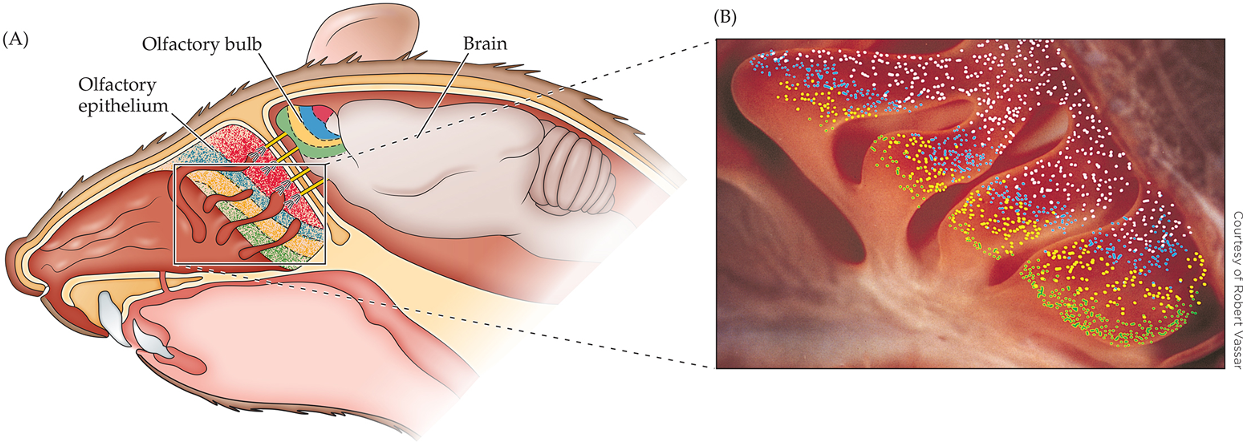
Rodents have 1000 olfactory receptors divided into 4 different families ➡ These four families exhibit spatial segregation in the olfactory epithelium and in the olfactory bulb
Pheromones
A volatile chemical or odor signal emitted by an animal
Vomeronasal Organ (VNO)
Special olfactory organs that sense pheromones;
Most mammals, amphibians, and reptiles have a VNO
Phermones are sensed by V1R and V2R receptors
VNO Projection
The VNO projects to the accessory olfactory bulb, which projects directly to the medial amygdala
Human Olfactory System
Following processing in the olfactory bulb, smell information is sent directly to the entorhinal cortex amygdala, and pyriform cortex (only sense that doesn’t first go to the thalamus)
This rapid connection from smell to amygdala and entorhinal cortex is maybe why smell is so strongly connected to memory

