Lecture 16-17: Manufacturing Engineering Processes
 Call Kai
 Learn
Learn Practice Test
 Spaced Repetition
 Match
Match Flashcards
 Knowt Play
1/23

Earn XP
Description and Tags
A set of vocabulary flashcards based on the lecture on manufacturing engineering processes, focusing on deformation processes and hot-working methods.
Name | Mastery | Learn | Test | Matching | Spaced | Call with Kai |
|---|
No analytics yet
Send a link to your students to track their progress
24 Terms
Deformation Processes
Processes that exploit plasticity to shape materials without cutting, resulting in little to no waste since material is moved. No need to handle molten material, solidification. High force and expensive machinery/tooling. Almost all metal products undergo metal deformation
Hot-Working Processes
Plastic deformation of metals at temperatures above their recrystallization temperature.
Recrystallization Temperature
The minimum temperature at which metal begins to undergo recrystallization during hot working.
Forging
A manufacturing process that shapes metal by applying compressive forces, typically using dies.
Extrusion
metal is compressed and forced to flow through a die (toothpaste), more shapes produced than rolling, dies cheap, easy conversion, but cross section needs to be uniform for entire length.
Rolling
A metal forming process where the material is passed through rollers to achieve desired thickness.
Open-die Forging
A forging process that allows unrestrained flow of material, suitable for large products. cheap, big size products, slow not for large scale, simple shapes, further machining, operator skill based
Closed-die Forging
A forging process with shaped dies that control material flow, producing complex shapes. metal flows and completely fills die, less machining, expensive, and small to medium
Hydrostatic Extrusion
An extrusion method where high-pressure fluid surrounds the workpiece to facilitate the process.High efficiency, temps are limited bc of fluid
Strength and Ductility
Material properties that can be enhanced through hot working processes.
Die Friction
The friction between the die and the material being extruded, which must be minimized.
Plasticity
The ability of a material to undergo permanent deformation without breaking.
hot working examples
Includes rolling, extrusion, and forging.
hot working temp
Temp is higher than 0.6 times melting point.
cold working processes
includes squeezing through rolling, extrusion, cold forging, bending, shearing, and drawing.
cold working temp
temp lower than 0.3 times the melting point
max temp determined by
excess oxidation, grain growth, etc
recrystallization
decrease in strength, increase in ductility, decrease in rate of strain hardening
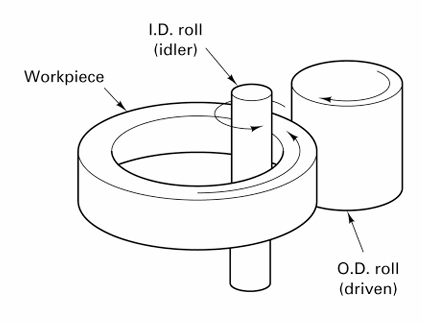
ring rolling
produces seamless rings, high pressure applications
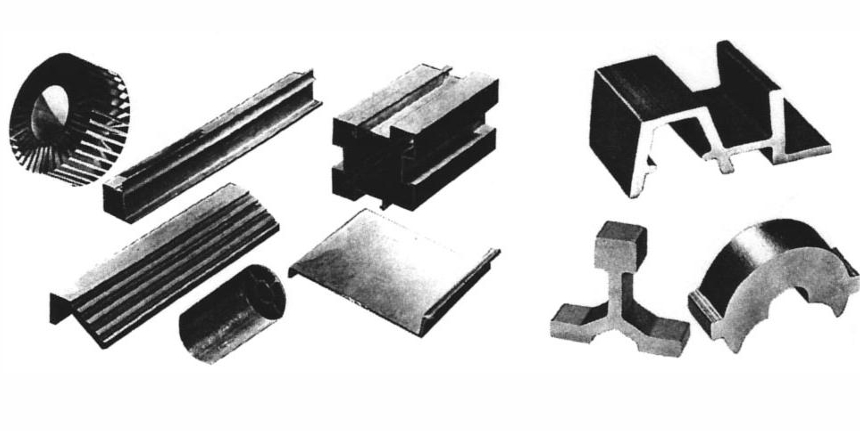
extrusion shapes
direct extrusion
solid ram through stationary die, lots of friction
indirect extrusion
hollow ram through stationery confined billet, least friction
mandrels
produce hollow shapes or ones with multiple longitudinal cavities good for support
roll forging/swaging
external hammering to reduce diameter

