Class 9- Lipids pt.2
 Studied by 0 people
 Call Kai
 Learn
Learn Practice Test
 Spaced Repetition
 Match
Match Flashcards
 Knowt Play
1/36

Earn XP
Description and Tags
sandy phillips
Name | Mastery | Learn | Test | Matching | Spaced | Call with Kai |
|---|
No analytics yet
Send a link to your students to track their progress
37 Terms
what are the three xxx responsible for lipid digestion? how does main one work
what are the three LIPASES:
lingual lipase
gastric lipase
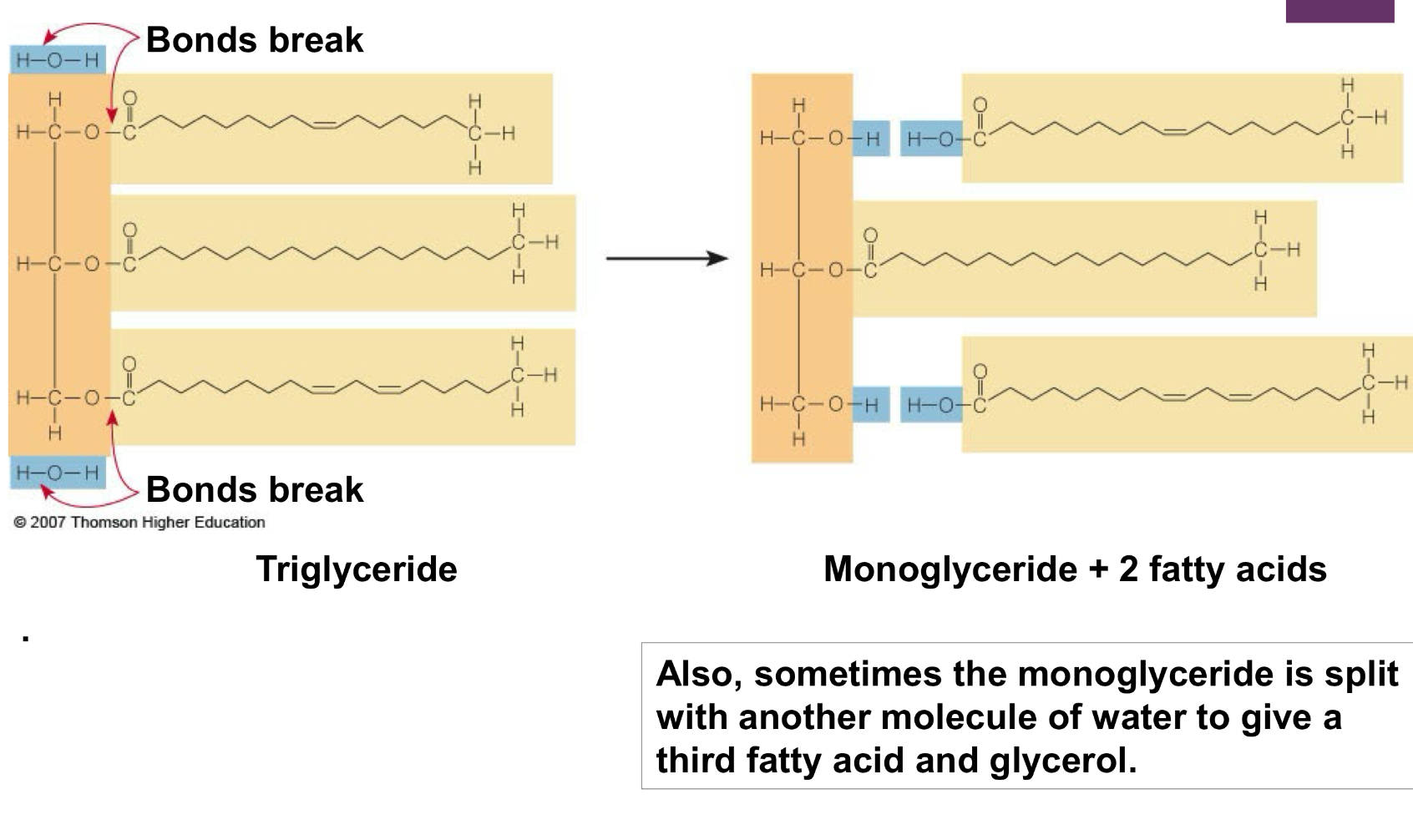
pancreatic lipase - MAIN: breaks down each triglyceride into 2 free FA and a monoglyceride, sometimes this monoglyceride is split
w another h2o to give a
third FA and glycerol.
where does most of lipid digestion occur?
small intestine
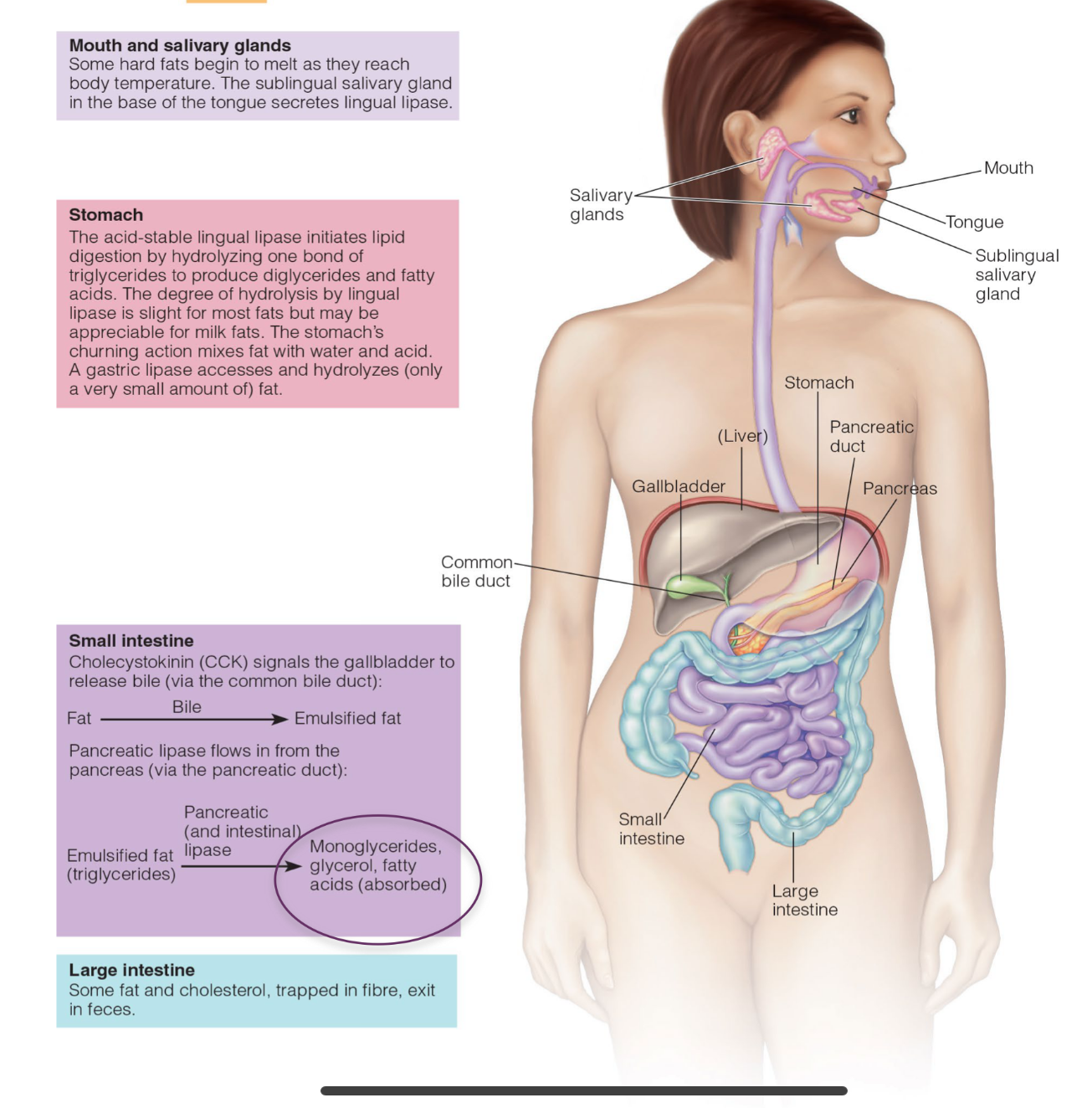
general step of lipid digestion:
mouth: lingual lipase is there for babies for breast milk
stomach: slight digestion thanks to gastric lipase
small intestine: bile will emulsify fat, then pancreatic lipase splits up fat
what is bile made of? where is it made, where is it stored
made up of:
bile acids,
cholesterol,
phospholipids,
bile pigment: bilirubin and biliverdin
electrolytes
h20
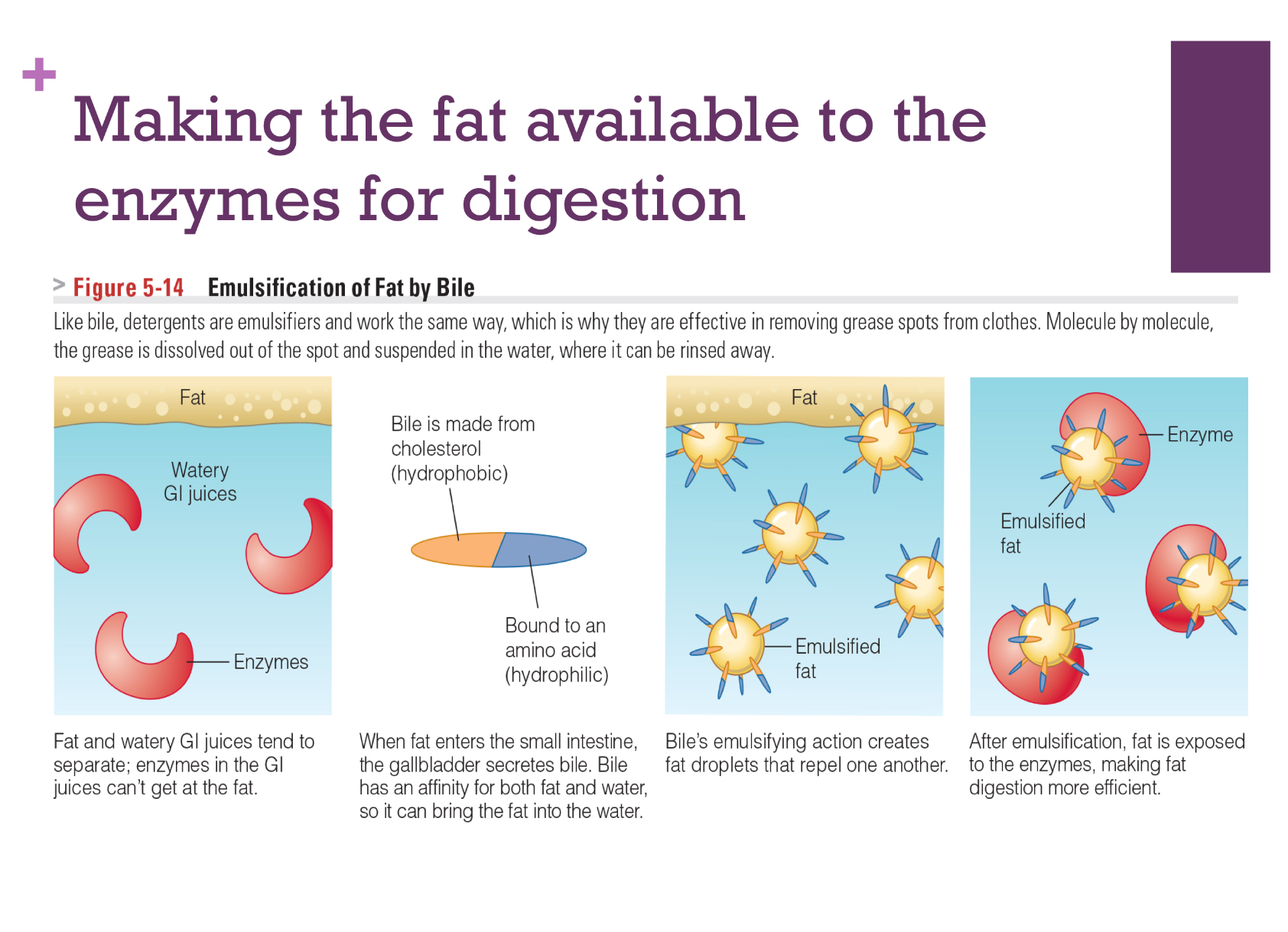
made in the liver, then either stored in the gallbladder or released directly from the liver into the small intestine
how does bile aid digestion
bile has hydrophobic and hydrophilic regions, has affinity for fat&h20
it acts as emulsifier and creates fat droplets that repel e/o
once in this emulsified/droplet form, fat is exposed to enzyme to be digested
what is enterohepatic circulation? what would trap the bile?
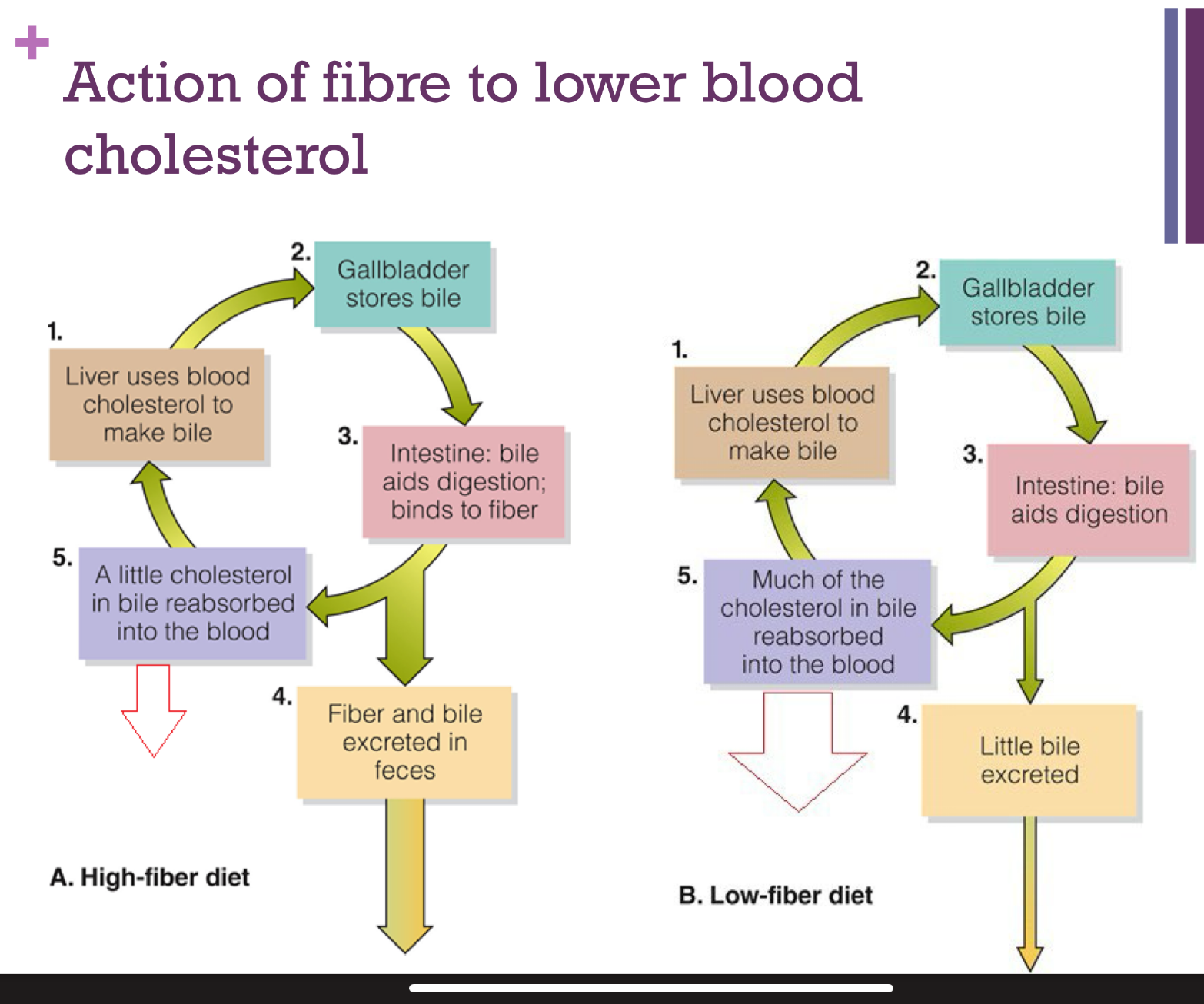
cycle of how bile released is often reabsorbed, and sent back to liver
soluble fibre can trap bile, so then bile sis excreted by poop
what happens for fat digestion in the stomach? which enzyme is involved?
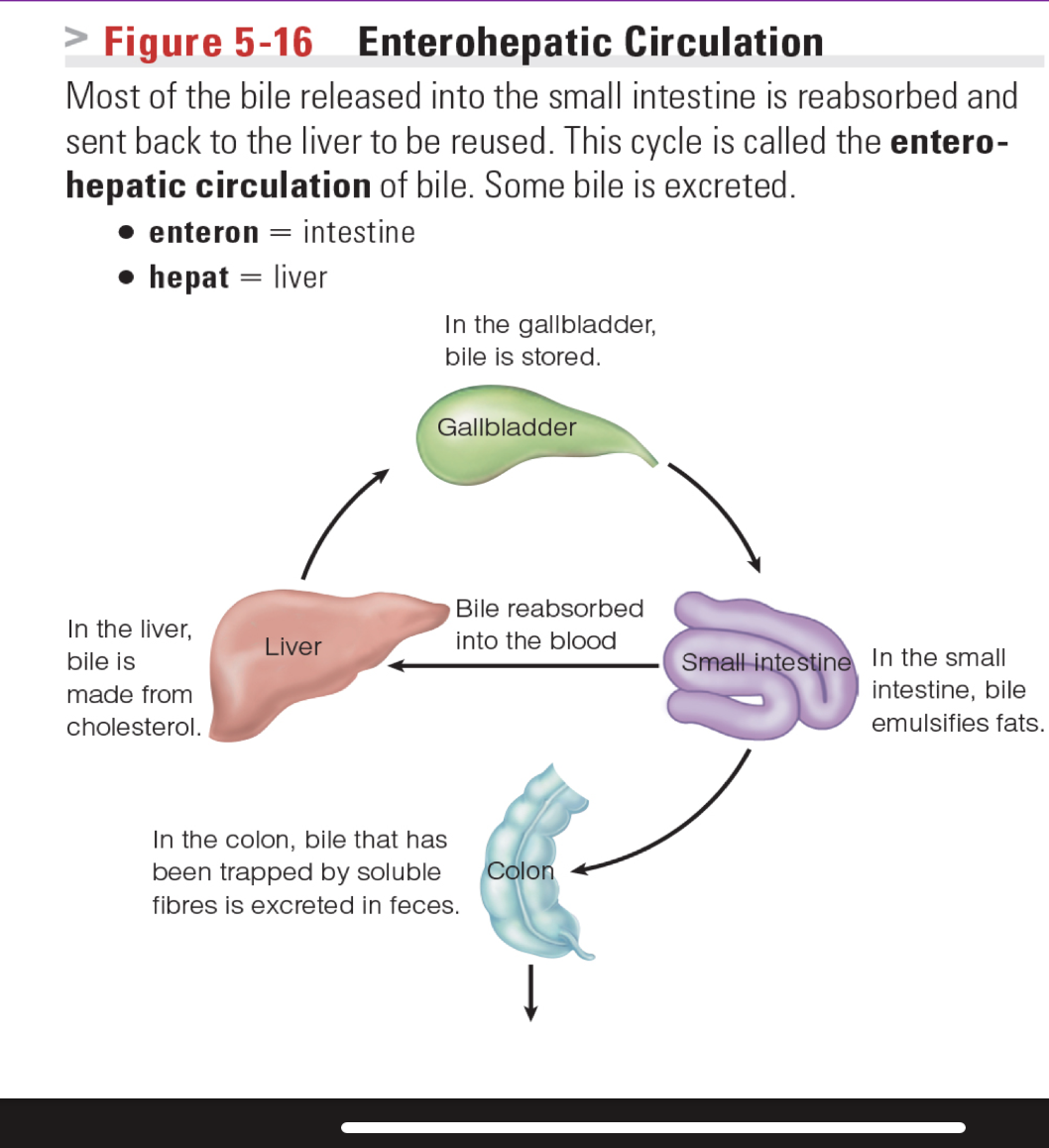
The acid-stable lingual lipase initiates lipid digestion by:
hydrolyzing one bond of triglycerides to produce diglycerides and FA. The degree of hydrolysis by lingual lipase is slight for most fats but may be appreciable for milk fats.
The stomach's churning action mixes fat with water and acid.
A gastric lipase accesses and hydrolyzes (only a very small amount of) fat.
what happens for fat digestion in the small intestine? which enzyme is involved?
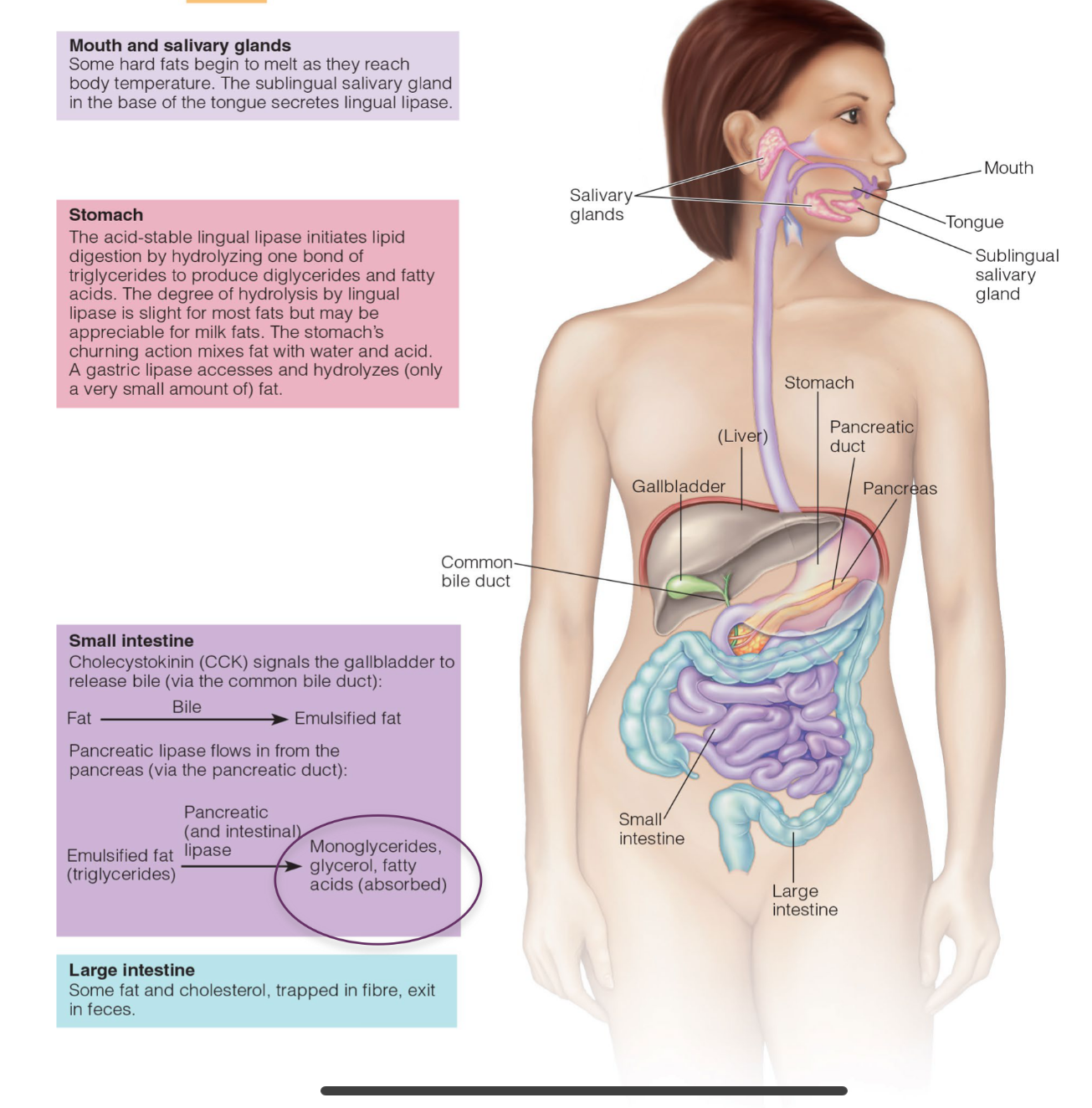
cholecytun CCK signals gallbladder to release bile via bile duct
fat+bile=emulsified fat
pancreatic lipase flows from pancreas via pancreatic duct
emulsified fat+pancreatic&intestinal lipases= monoglycerides, glycerol, FA
when a lipid is digested, what enters bloodstream directly?
glycerol +small lipids (SCFAs+ medium chain FA)
what happens to monoglycerides + long chain FA once broken down?
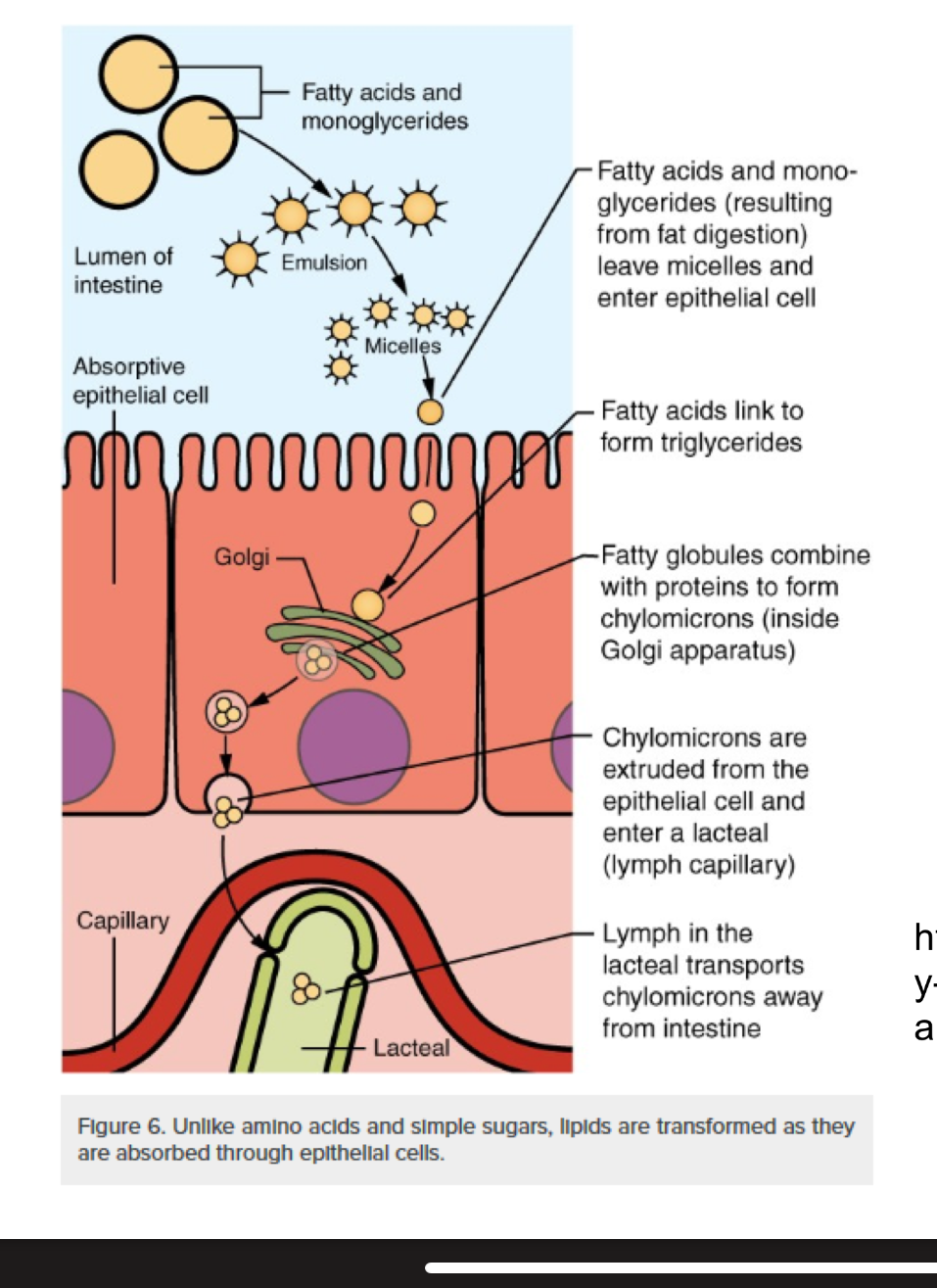
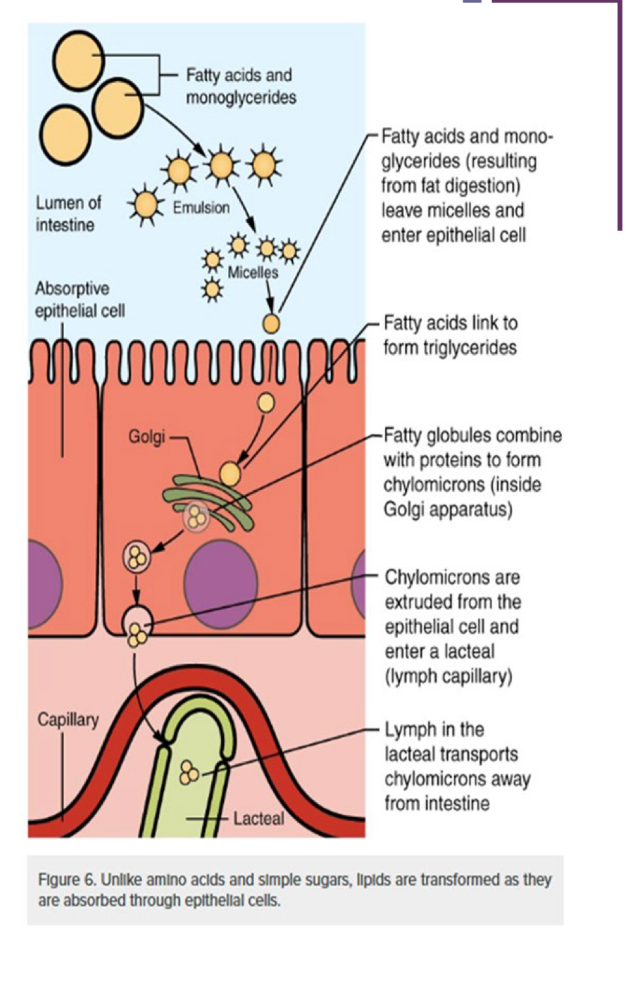
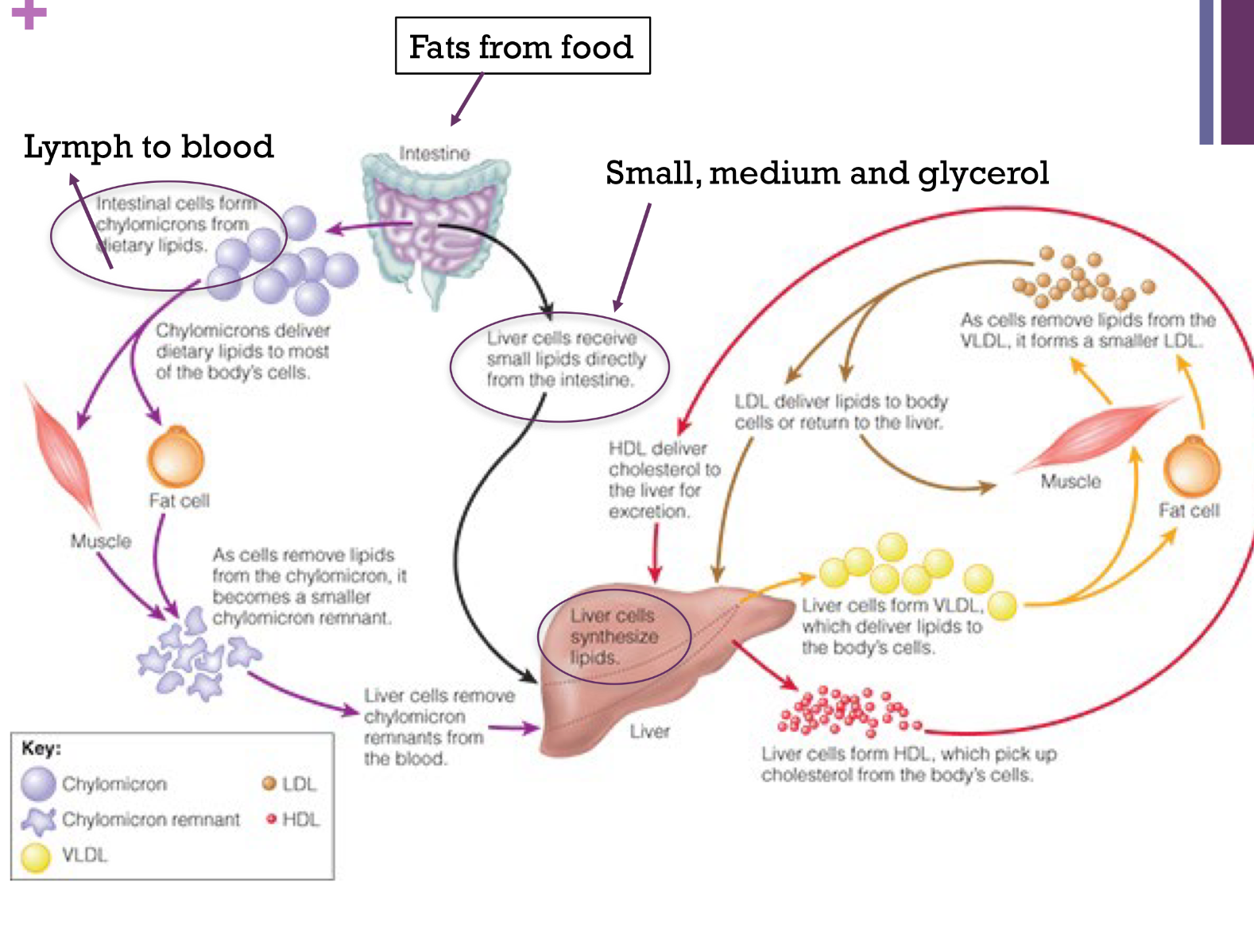
monoglycerides + long chain FA will make chylomicrons that travel through lymph and enter blood stream
what are chylomicrons? how are they formed?
chylomicrons= a type of lipoprotein that travel in the lymph vessels to the bloodstream.
formed by : lining cells on small intestine convert monoglycerides and long-chain fatty acids
on back into triglycerides and combine them with protein
what is a micelle in digestion
Bile salts envelope the long fatty
acids and monoglycerides to form
micelles
the micelle fats can travel through the
watery environment due to process
of emulsion
how do chylomicrons get into circulatory system
Chylomicrons enter the large
pores of lacteals.
lacteals come together to form
the lymphatic vessels.
lymphatic system transports to
the circulatory system.
what do lipoproteins do?
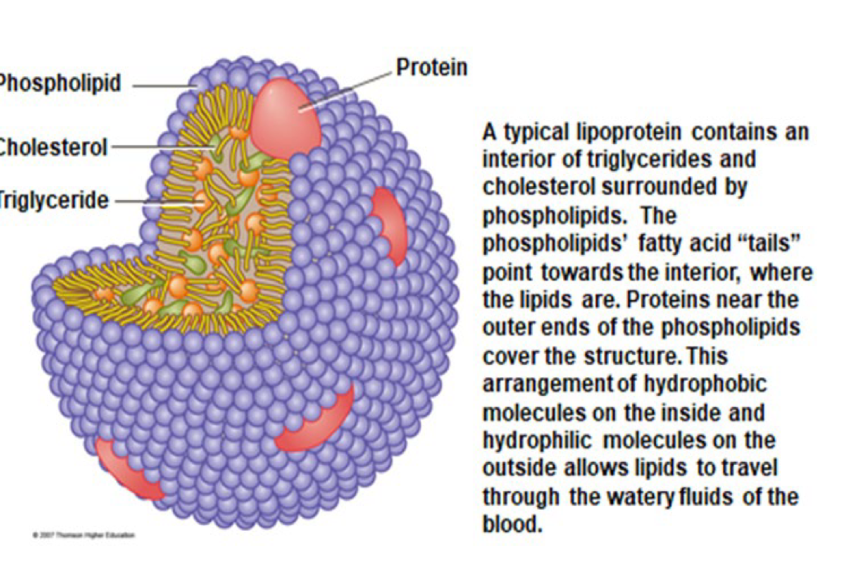
they transport fat
the body extracts what is needed form fats
unused fat are picked up by liver, liver dismantles remnants to reuse these parts
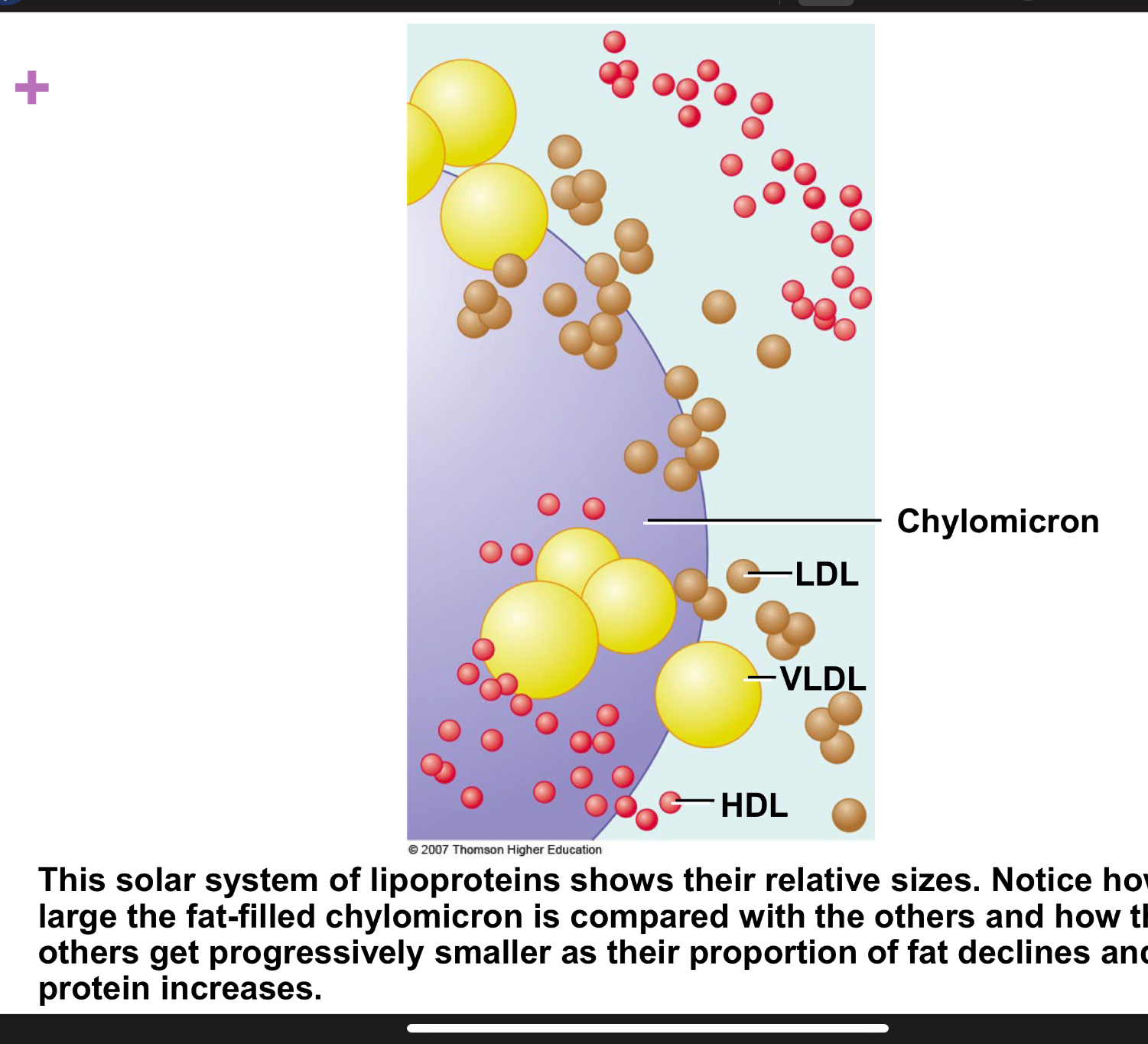
what are the types of lipoproteins? which has highest proportion of fat to protein?
chylomicrons
Very-low-density proteins VLDL
low-density proteins LDL
High-density lipoproteins HDL
(deacr. order of fat content)
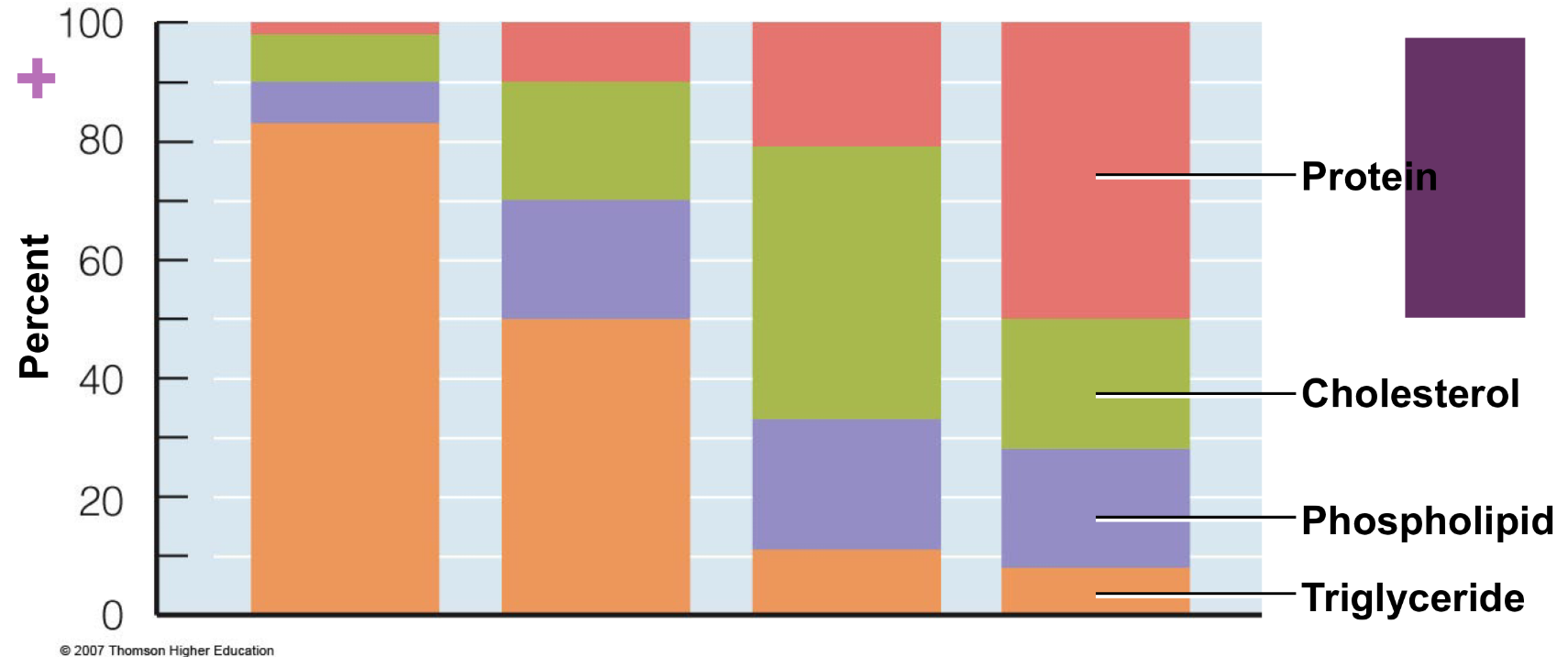
chylomicrons are composed of
Chylomicrons contain so little protein and so much triglyceride
they are the lowest in density for lipoproteins
VLDL ar composed of
Very-low-density lipoproteins (VLDL) are half triglycerides, accounting for their very low density.
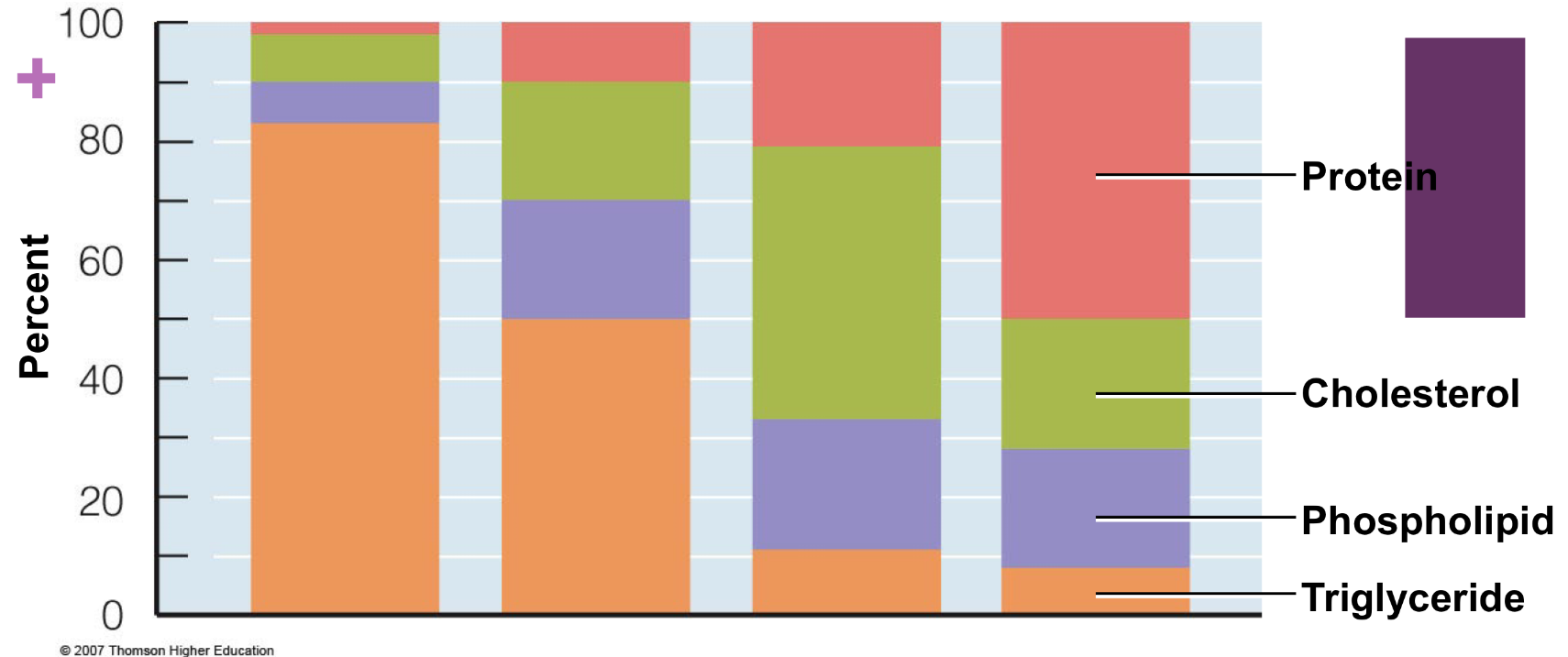
LDL are composed of:
Low-density lipoproteins (LDL) are half cholesterol
this cholesterol accounts for their implication in heart disease.
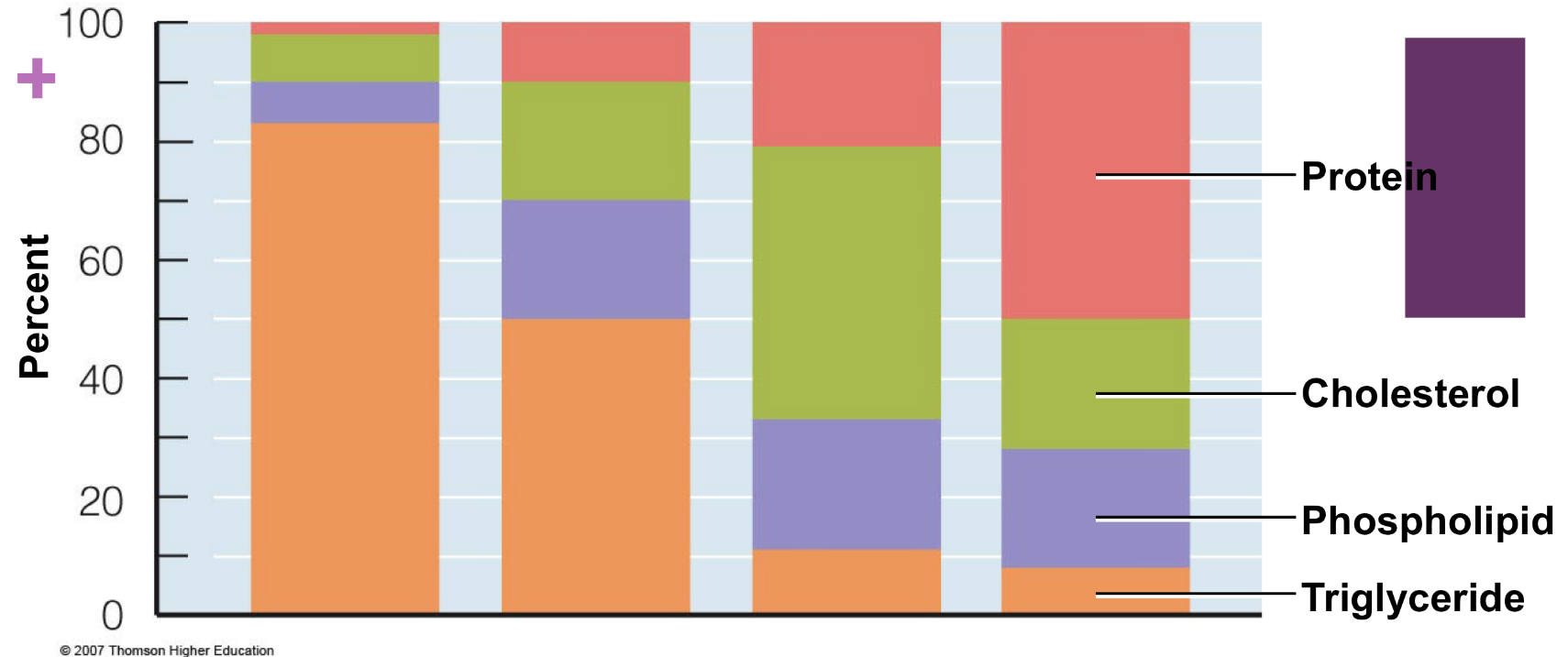
HDL are composed of
High-density lipoproteins (HDL) are half protein, accounting for their high density.
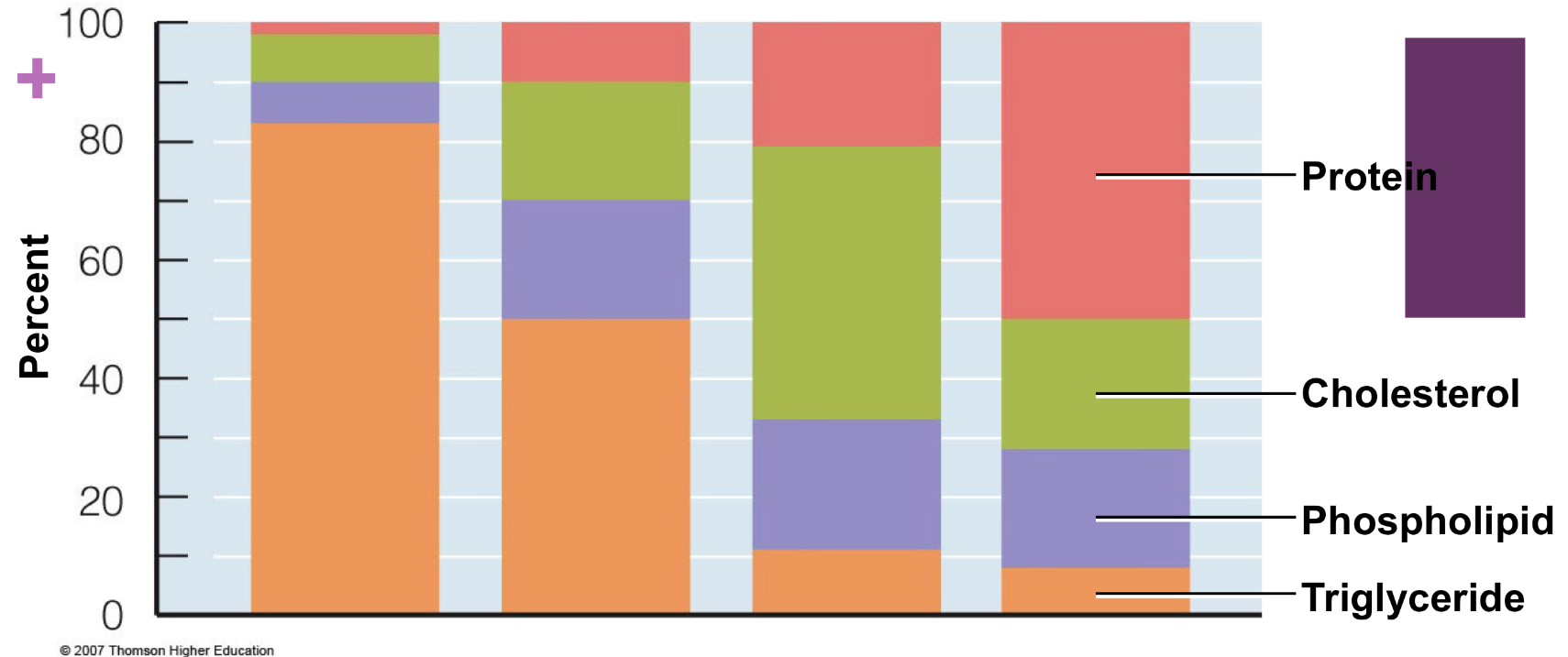
how do VLDL, LDL, and HDL differ in transport functions?
•VLDL=carry triglycerides and other lipids made in the liver to the body cells for their use.
•LDL= transport cholesterol and other lipids to the tissues. LDL are made from VLDL after they have donated many of their triglycerides to body cells.
•HDL =important for carrying
cholesterol AWAT from body cells to the liver for
disposal
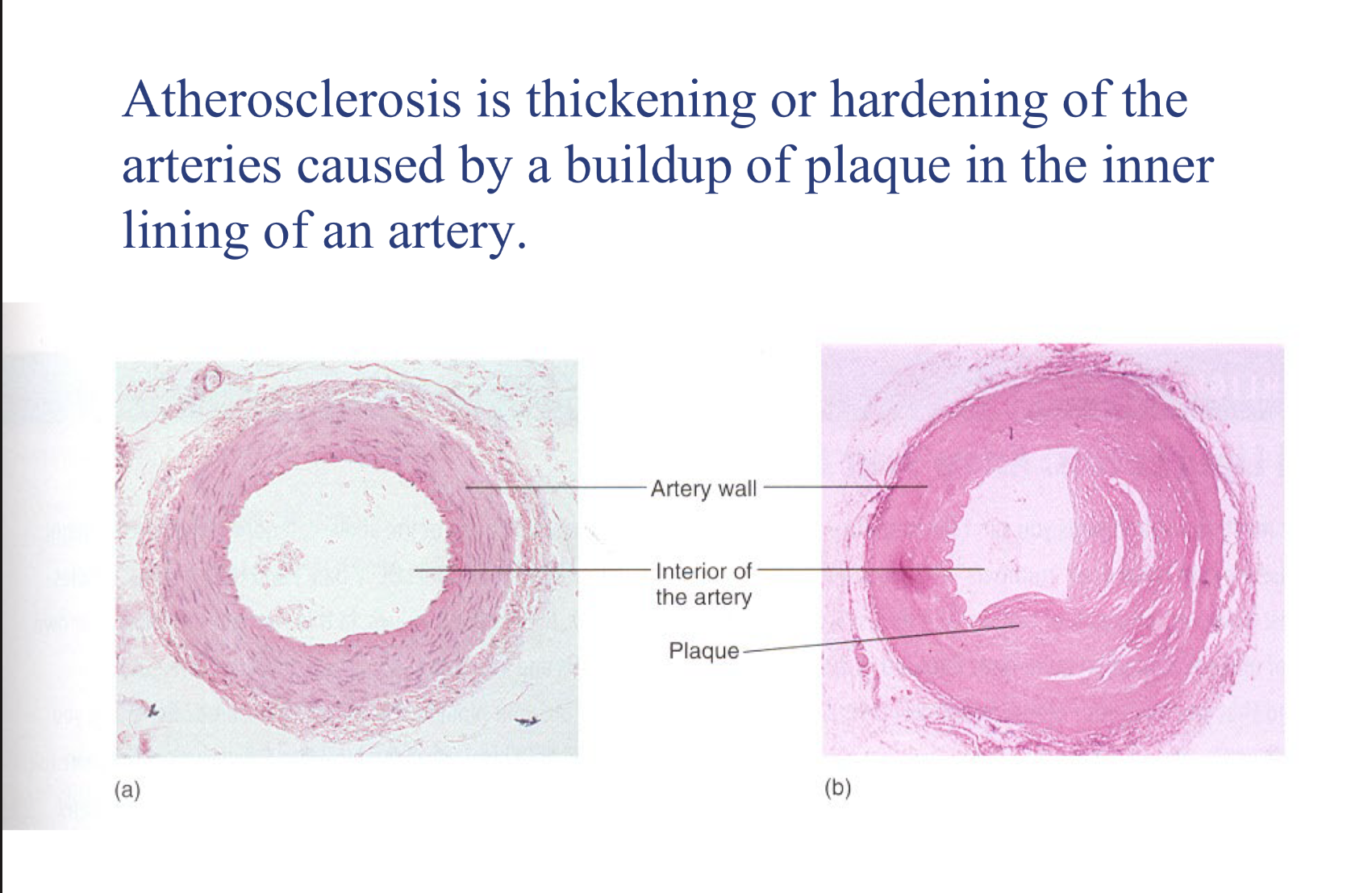
what is atherosclerosis? 3 stages
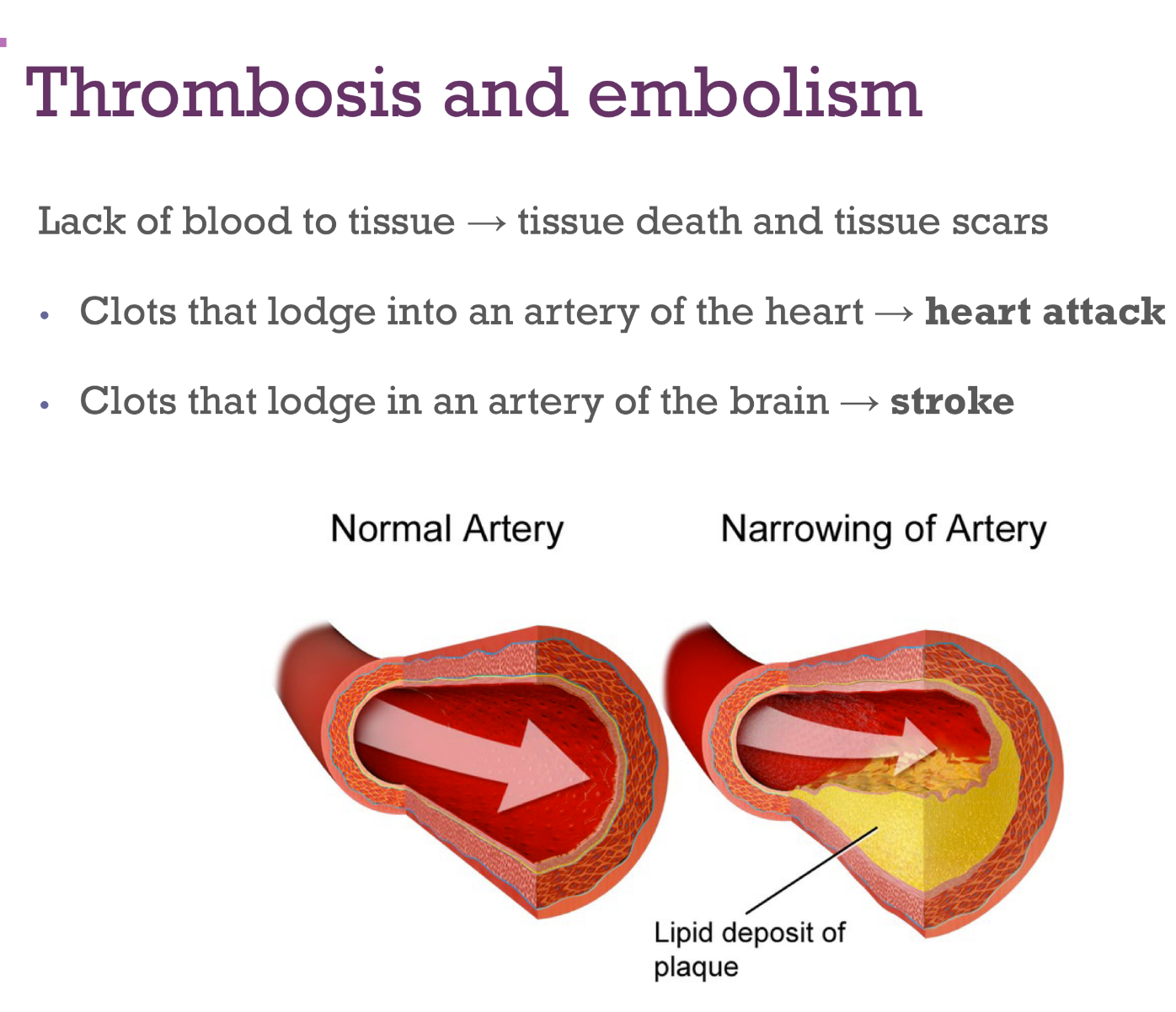
when ‘bad cholesterol’ accumulate sin artery walls, leads to build up of plaque
the fatty streak
fibrous plaque
complete lesion and calcification
what is thrombosis
when clot grows so large it fully obstructs blood vessel
1)arterial thrombosis(clot in an artery)
2)venous thrombosis (clot in a vein),
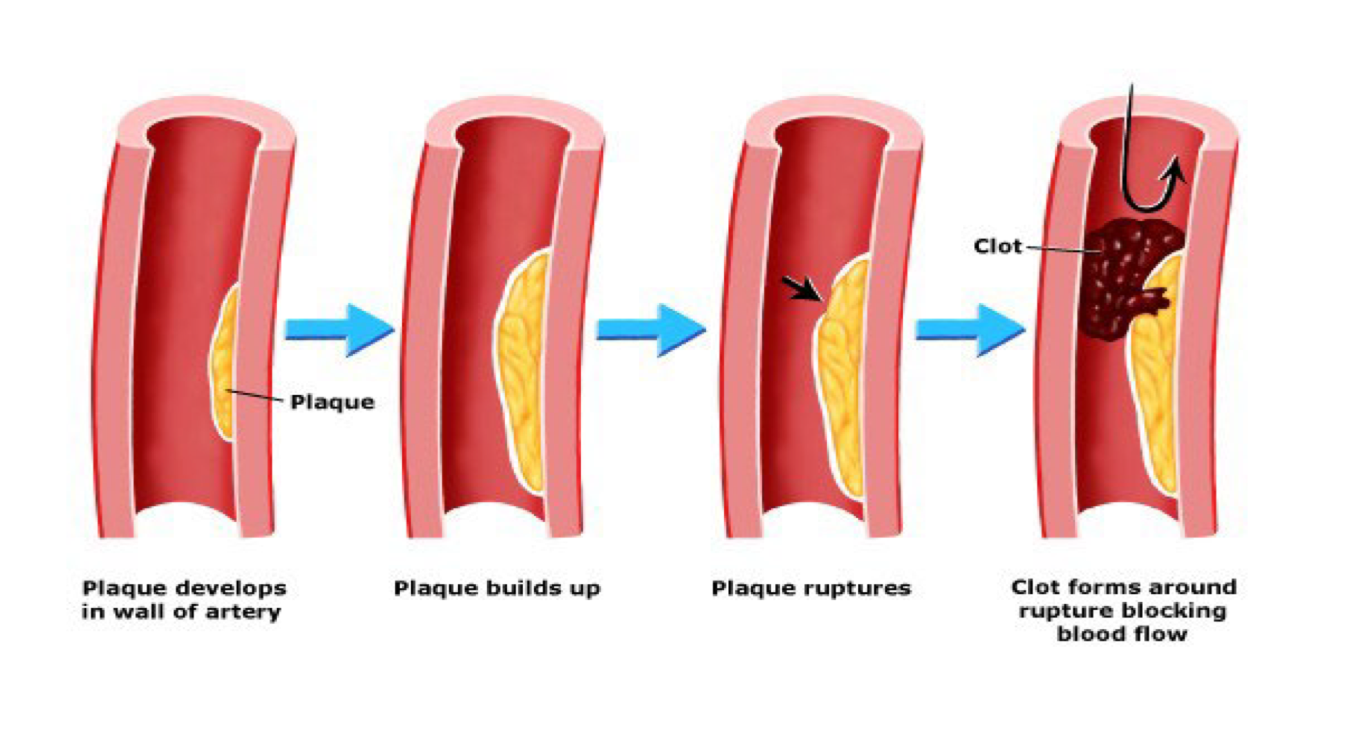
what is embolus
when a blood clot breaks loose, it travels along circulatory system until reaching an artery
heart attack vs stroke
where does cholesterol come from?
- body naturally makes cholesterol in your
liver, making ~800–1500 mg/day vs 200-300
from food in diet of meat eaters.
Cholesterol can also come from foods you eat.
This is called “dietary cholesterol” and is found in
animal foods like meat, poultry, milk products,
eggs, fish and seafood.
why is liver important ?
essential for building cell membranes
producing steroid hormones (like estrogen and
testosterone),
synthesizing vitamin D,
creating bile acids that aid in fat digestion and
nutrient absorption
how is total cholesterol calculated?
Your total cholesterol is a combined measure of:
HDL cholesterol: Known as "good" cholesterol.
LDL cholesterol: Known as "bad" cholesterol.
20% of your triglyceride level: the fat in your blood.
how can you lower cholesterol lvls
Exercise regularly. Regular exercise can lower triglycerides + boost "good" cholesterol.
Avoid sugar and refined carbohydrates. Simple
carbohydrates in excess can increase triglycerides.
loseweight and reduce your waist circumference.
Choose healthier fats.
Limit or avoid alcohol.
how does low vs high fibre diet effect blood cholesterol?
what are phytosterols= sterols/stanols?
Phytosterols (fi-TAH-ster-ols) are natural products from plants
structure similar to cholesterol , serve as structural component to plant
offered as dietary supplements
what are adipokines?
cell-signaling proteins secreted by adipose tissue that has been related to a low-grade state of inflammation and different pathologies
ex= leptin
how does ingested fat go to body fat?
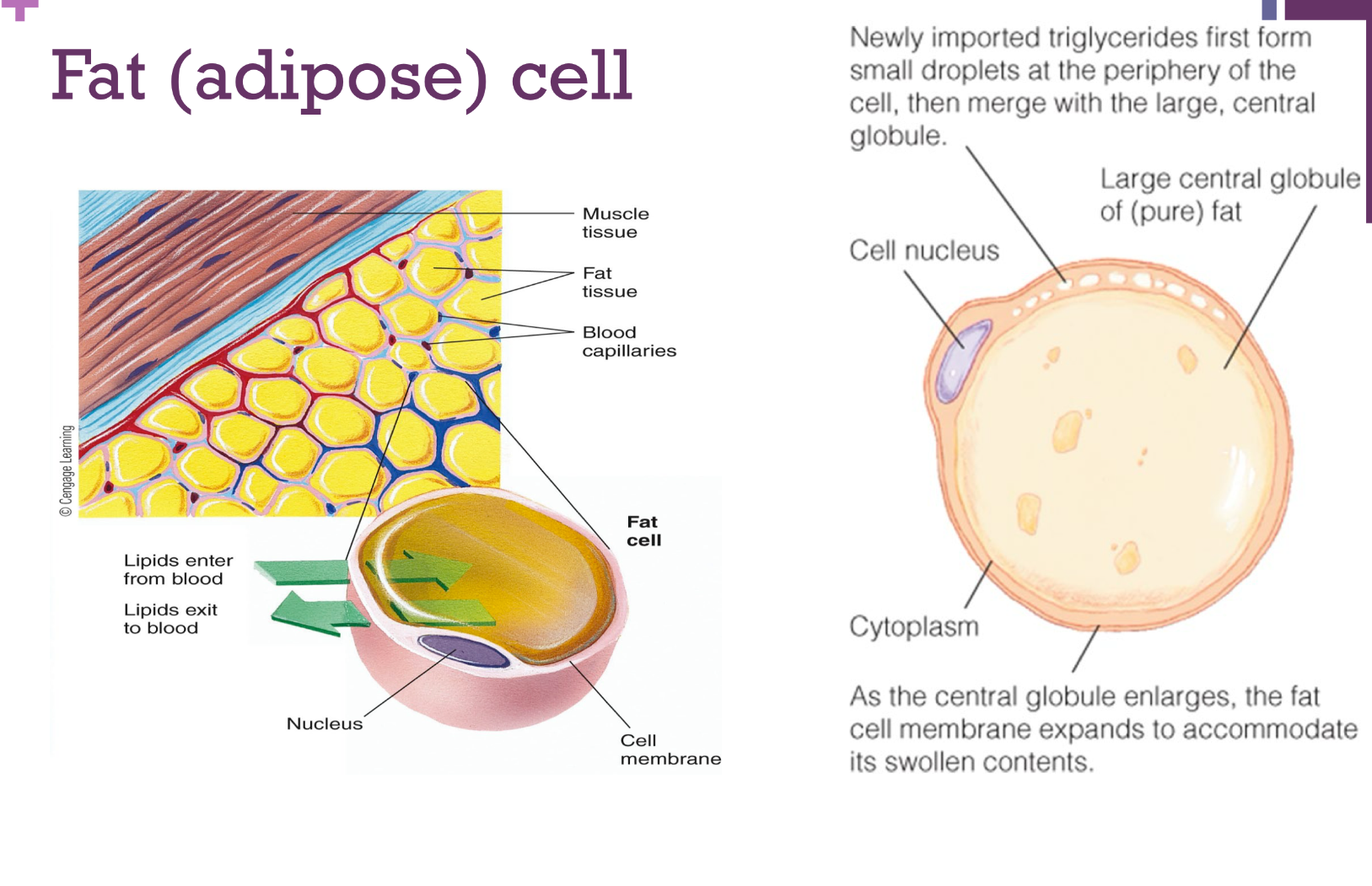
first is hydrolysis of TG
then lipoprotein lipase hydrolyzes TG from lipoproteins, releasing FA’s that can enter fat cells for storage (reassembled into TG)
how is body fat used for energy?
Fat supplies 60% of the body’s ongoing energy needs during rest and also light-intensity activity
Hormone-sensitive lipase:
Enzyme inside fat cells that responds to hormones like epinephrine and glucagon which indicate a need for fuel.
Dismantles the stored TG and releases glycerol and FA’s into blood when needed/signaled to
what are steps of lipolysis?
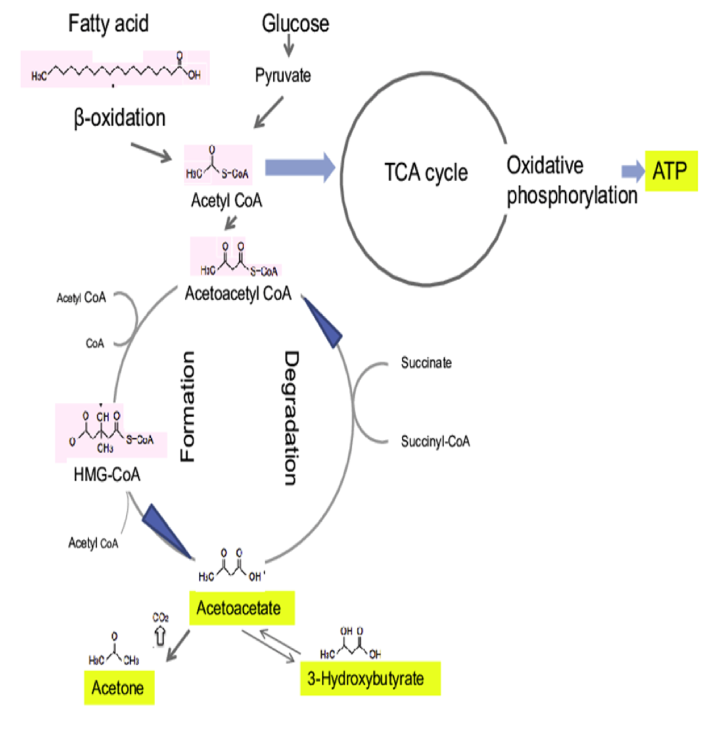
1. Lipases break down stored TG’s into FA’s and glycerol.
2. FA’s are transported through the bloodstream to muscles and other cells requiring energy.
3. Inside the mitochondria the FA’s
undergo beta-oxidation. This process breaks down the fatty acids into two-carbon units, forming acetyl-CoA.
4.Acetyl-CoA enters the Krebs cycle, also known as the citric acid cycle—> produces ATP
5. Waste Products : The final byproducts of this process are carbon dioxide & water, which are then released from the body.
what are situations when lipolysis could be induced?
i) During increased demand through
long-lasting and lower intensity
exercise
ii) During starvation or decreasing
intake of food energy
iii) Under fasting conditions and/or
inadequate carbohydrate, fats may
also be broken down to produce
ketone bodies—> brain
can use for fuel when glucose is
limited
what is lipogenesis?
when liver breaks down glucose and puts them back tg to store as fat

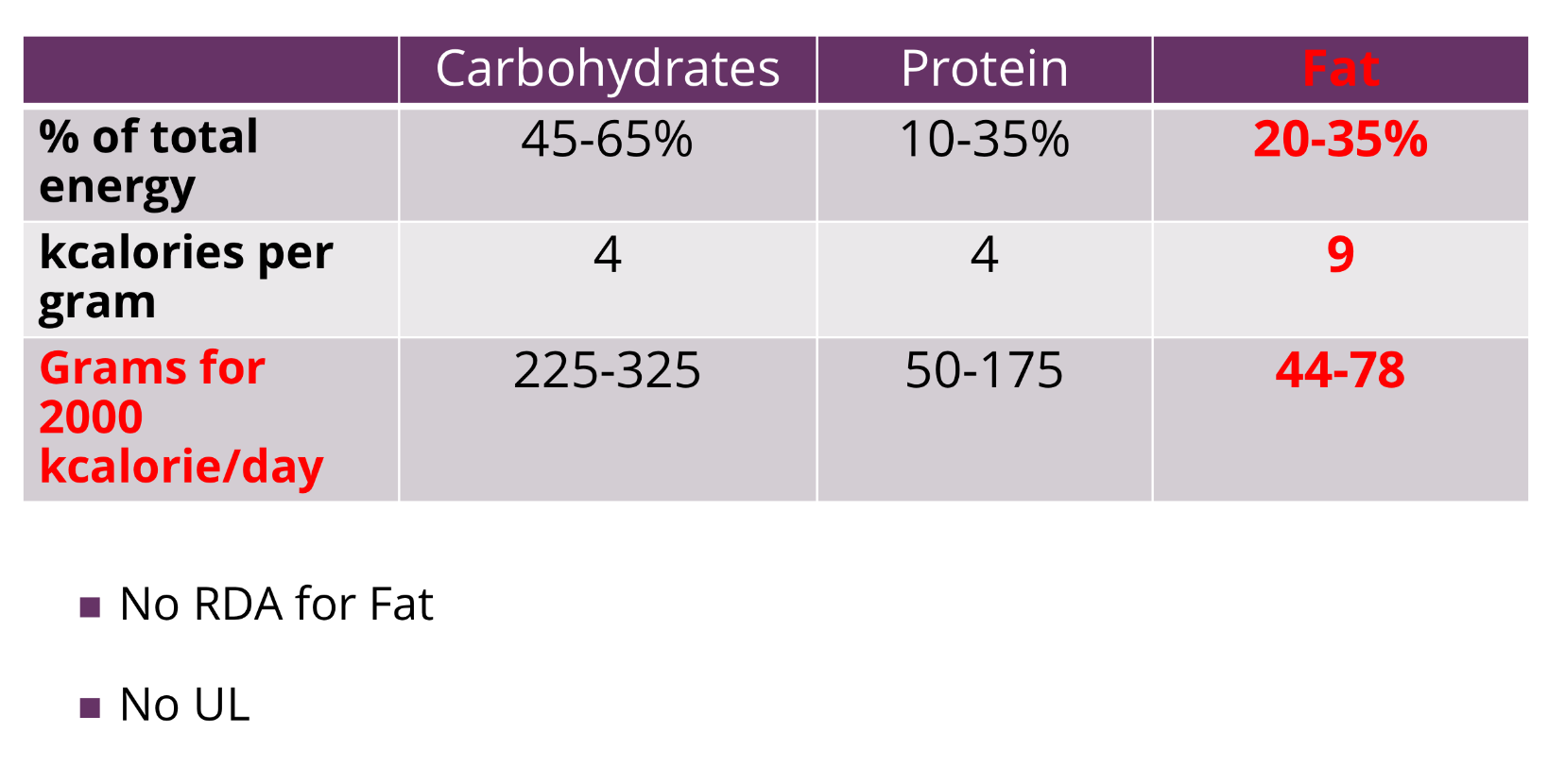
what are DRI for fat intake , grams and % of total cals
44-78g per 2000cal or 20-35% of total energy - there is no RDA or UL
 Note
Note  Flashcards (32)