BIO 205 Dr Raymond Viruses and Prions
 Call Kai
 Learn
Learn Practice Test
 Spaced Repetition
 Match
Match Flashcards
 Knowt Play
1/45

There's no tags or description
Looks like no tags are added yet.
Name | Mastery | Learn | Test | Matching | Spaced | Call with Kai |
|---|
No analytics yet
Send a link to your students to track their progress
46 Terms
Virus
small, obligate, intercellular parasite
nucleic acid and capsid
What are the 2 components of a virus
nucleic acid
viral genome of single or double stranded DNA or RNA
capsid
protein coat that surrounds and protects the viral nucleic acid
viral envelope
additional outer layer surrounding the capsid that only some animal viruses have
host cell membrane
what are viral envelopes made of
immune system does not recognize the virus as foreign
what is the advantage of a viral envelope
the spikes allow it to attach to and penetrate the host cell easier
what are the advantages of a virus with spikes
helical, polyhedral, complex
what are the 3 morphologies (shapes) of viruses
complex
Is this virus helical, polyhedral or complex
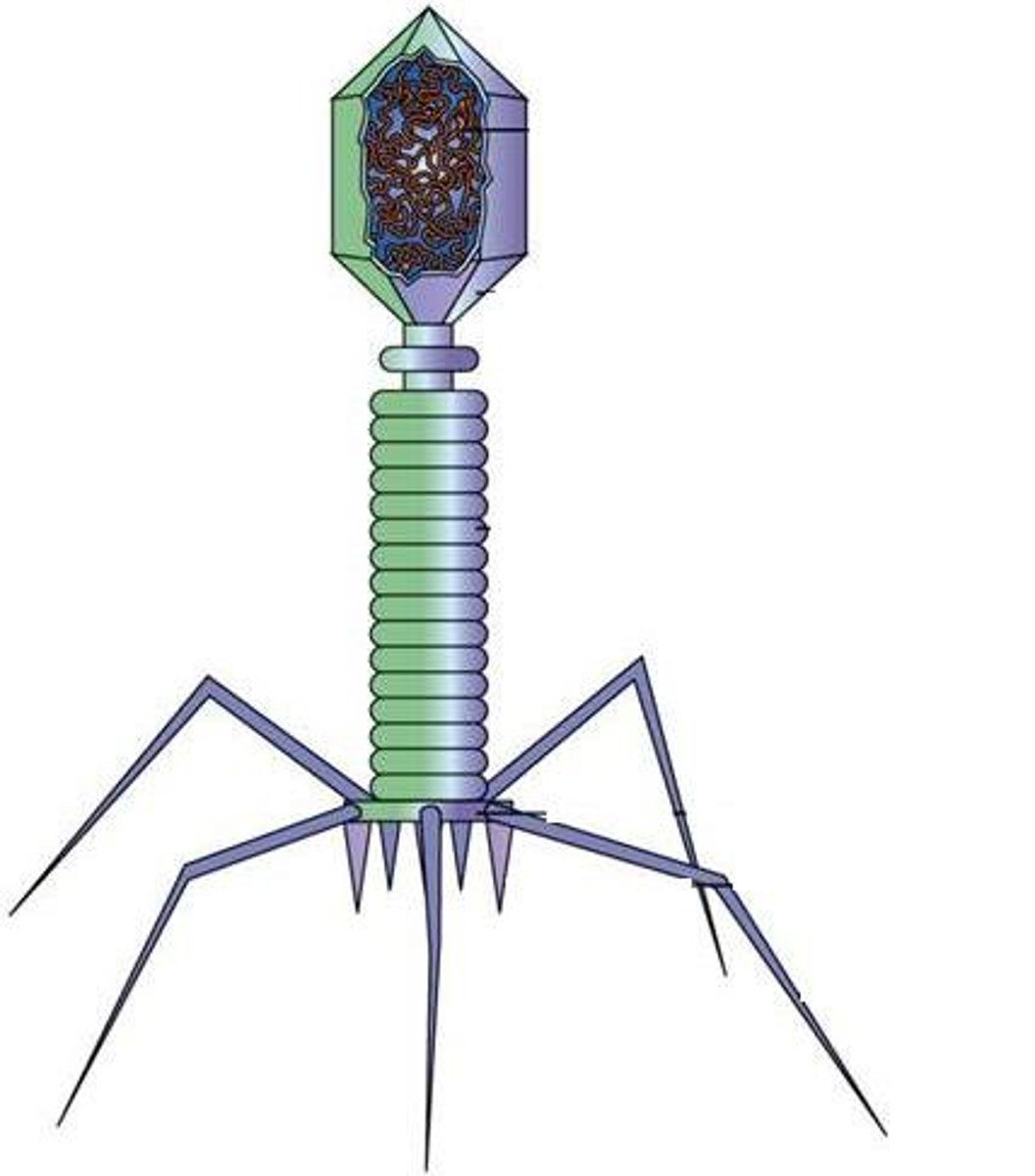
spiral
What shape are helical viruses
round
What shape are polyhedral viruses
the capsid
what determines the shape of a virus
viral replication
viruses copying themselves using the host cell machinery
block entry of the virus, block synthesis of nucleic acid, prevent assembly of progeny, prevent release of progeny
What are the ways antiviral drugs can inhibit viral replication
attachment, entry, synthesis, assembly, release
What are the stages of lytic viral replication
T4 bacteriophage binds to an E coli B receptor site
what happens in the attachment phase of lytic replication
T4 lysozyme enzyme weakens the membrane of E coli B and injects its nucleic acid into the E coli
what happens in the entry phase of lytic replication
T4 enzymes degrade E coli B DNA and use its host cell machinery to create nucleic acid and capsids
what happens in the synthesis phase of lytic replication
T4 nucleic acid is inserted into the capsules producing progeny
what happens in the assembly phase of lytic replication
lysozyme weakens the E coli cell envelope, the E coli lyses and viral progeny are released.
what happens in the release phase of lytic replication
attachment, entry, insertion, replication, induction, synthesis, assembly, release
what are the stages of lysogenic replication
Lambda bacteriophage binds to an E coli X receptor site
What happens in the attachment phase of lysogenic replication
Lambda lysozyme enzyme weakens the membrane of E coli X and injects its nucleic acid into the E coli
What happens in the entry phase of lysogenic replication
Lambda nucleic acid inserts itself into E coli x chromosomes and is replicated along with E coli X DNA
What happens in the insertion/replication phases of lysogenic replication
Lambda DNA is excised from E coli X chromosome
What happens in the induction phase of lysogenic replication
Lambda enzymes degrade E coli X DNA and use its host cell machinery to create nucleic acid and capsids
What happens in the synthesis phase of lysogenic replication
Lambda X nucleic acid is inserted into the capsules producing progeny
What happens in the assembly phase of lysogenic replication
lysozyme weakens the E coli X cell envelope, the E coli lyses and viral progeny are released.
What happens in the release phase of lysogenic replication
attachment, entry, synthesis, assembly and release
What are the stages of animal virus replication
animal virus binds to the host cell receptor
What happens in the attachment phase of animal virus replication
animal virus uses host cell machinery to make nucleic acid and capsids
What happens in the synthesis phase of animal virus replication
animal virus inserts nucleic acid into capsids to make progeny viruses
What happens in the assembly phase of animal virus replication
the virus exits the host cell via exocytosis grabbing a piece of host cell membrane on the way which becomes the viral envelope
What happens in the release phase of an enveloped animal virus
the virus bursts the host cell and exits via exocytosis
What happens in the release phase of a non enveloped animal virus
direct penetration, membrane fusion, endocytosis
what are the 3 methods in which viruses can enter animal cells
direct penentration
animal cell entry by which some non enveloped viruses bind to an animal cell receptor and inject their nucleic acid into the host cell (capsule remains outside)
membrane fusion
animal cell entry by which some enveloped viruses fuse their viral envelope with the animal host cell envelope and the entire virus (capsid and nucleic acid) enters the cell
endocytosis
animal cell entry by which some enveloped and non enveloped viruses bind to a receptor on the animal host cell and the entire virus (capsid and nucleic acid) is taken into the host cell
latency
The ability of a pathogenic virus to lie dormant within a cell
age, stress, weakened immune system, secondary infections, UV light exposure
what are examples of things that can cause reactivation of a latent virus
viruses insert their DNA into human DNA and alter the genes/proteins related to cell division.
how do viruses contribute to cancer
oncogene
Gene that can transform a normal cell into a cancer cell making it unable to control cell division
prion
proteinaceous infectious particle that goes to the brain and denatures its proteins
Mad cow, kuru, scrapie, fatal familial insomnia
what are some diseases caused by prions?
incinerate it to denature its protein
What is the only way to destroy a prion

