Chapter 27: Prokaryotes II
 Studied by 0 people
 Call with Kai
 Learn
Learn Practice Test
 Spaced Repetition
 Match
Match Flashcards
 Knowt Play
1/34

There's no tags or description
Looks like no tags are added yet.
Name | Mastery | Learn | Test | Matching | Spaced | Call with Kai |
|---|
No analytics yet
Send a link to your students to track their progress
35 Terms
Obligate aerobe
MUST have O2 for cellular respiration and can’t grow without oxygen
Obligate anaerobe
O2 is LETHAL
live exclusively by fermentation
Facultative anaerobe
Can use O2 if present, but can also carry out anaerobic respiration with no O2
prefer to use O2
most dangerous because these organisms can adapt to several environments
Microaerophile
Only likes a small amount of O2
Aerotolerant anaerobes
Don’t use oxygen for metabolism, but can survive in its presence
tolerant of O2
Lungs
have a high amount of oxygen
Blood
have a moderate amount of oxygen
Muscles during exercise
have a low amount of oxygen (gets used during exercise)
Intestines and wounds
have a very low amount of oxygen
E.coli, Staphylococcus, Salmonella, Streptococcus are some of the most common human pathogens. Why?
They are examples of facultative anaerobes and can adapt to environments inside and outside the body
Nitrogen fixation
N2 (atmospheric nitrogen) -→ ammonia
transformation is conducted by bacteria
How to prokaryotes drive global cycles?
Recycle carbon
Fix and cycle nitrogen
Metabolize sulfur to fuel ecosystem
Why are prokaryotes considered a mosaic?
Because significant portions of their genes are imported from other species
makes it difficult to determine phylogenetic relationships
Proteobacteria
Gram-negative (pink)
includes photoautotrophs, chemoautrotrophs, and heterotrophs
E. Coli is what kind of bacteria?
Proteobacteria
Neisseria gonorrhoeae
Proteobacteria
causes gonorrhea
Vibrio cholerae
Proteobacteria
Causes cholera → bacterial disease causing severe diarrhea and dehydration
spread in water
Helicobacter pylori
Proteobacteria
Causes stomach ulcers
Barry Marshall proved this by drinking the pathogen
Streptococcus
Gram positive
strep throat, scarlet fever, rheumatic fever
spread by respiratory droplets
common in schools/dorms
Staphylococcus aureus
Gram positive
skin infections, pneumonia (very dangerous in hospitals and gyms )
MRSA: antibiotic resistant strain due to mutations
Bacillus anthracis
Gram positive
Causes anthrax (disease of livestock and humans)
Forms resistant spores in soil
Bioterrorism case: 2001 anthrax letters
Spirochetes
Helical gram-negative heterotrophs
spiral through their environments by rotating internal, flagellum-like filaments
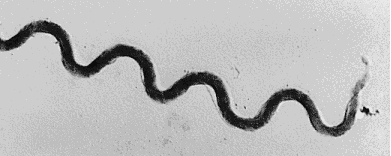
Treponema pallidum
Syphilis
Pathogenic spirochete
Sexually transmitted
Borrelia burgdorferi
Lyme disease
Pathogenic spirochete
Archaea
Prokaryotes that can thrive in environments that are too extreme for other organisms
Can live in ‘moderate’ environments too
Extremophiles
Lovers of extreme conditions
subdivided into halophiles and thermophiles
Extreme halophiles
Live and thrive in highly saline environments
some require environments saltier than seawater
Halobacterium
Halophile
functions improve in extreme salty environments, but cant function if salinity drops below 9%
Extreme thermophiles
Thrive in very hot environments
Methanogens
Archaea
release methane
obligate anaerobes (poisoned by oxygen)
live where oxygen has been consumed by other organisms
Decomposers
Chemoheterotrophic prokaryotes that break down dead organisms and waste products
unlock supplies of carbon, nitrogen, and other elements
cycle starts again
Symbiosis
“Living together”
Two species live close contact with each other
Mutualism
Both species (host and symbiont) benefit
Commensalism
One benefits while the other is not harmed or helped
Ex: Fish protected by the shark
Parasitism
One (parasite) harms their host
pathogens
parasites don’t want to kill their host because they want their nutrients
 Note
Note  Flashcards (20)