Operative One -- Dental Composite/Class Ionomer (RMGI) Sandwich Technique: Feitosa
 Call Kai
 Learn
Learn Practice Test
 Spaced Repetition
 Match
Match Flashcards
 Knowt Play
1/30

There's no tags or description
Looks like no tags are added yet.
Name | Mastery | Learn | Test | Matching | Spaced | Call with Kai |
|---|
No analytics yet
Send a link to your students to track their progress
31 Terms
Review Pulp Protection: Selective to firm dentin + liner =
Indirect pulp capping
Review Pulp Protection: Selective to soft dentin + Theracal/Liner =
Incomplete caries removal
Review Pulp Protection: Tertiary Dentin =
Dentin Bridge (direct pulp capping)
Review Pulp Protection: Secondary Dentin =
Physiological Dentin (slow production)
Sandwich technique definition
Layers of GI (conventional or resin modified) between dentin and permanent restorative material (resin-based composite)
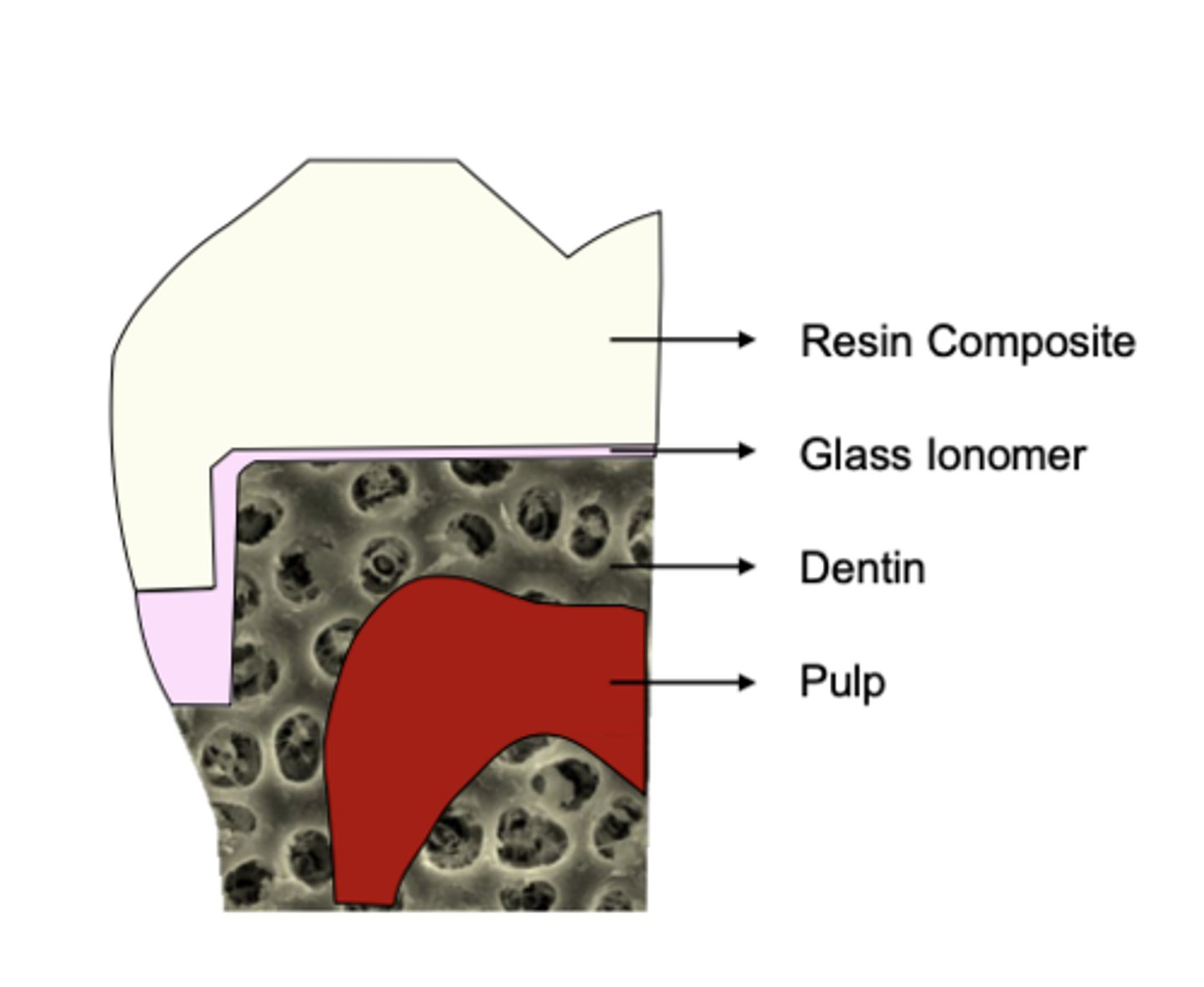
GI and RMGI biocompatibility
Dentin replacement - GI has similar thermal conductivity and coefficient of thermal expansion
Fluoride release helps avoiding recurrent caries
Chemical bonding to dentin + Higher biocompatibility
Glass ionomer is less sensitive to saliva/blood contamination than RBC
Two types of sandwich technique
Close
Open
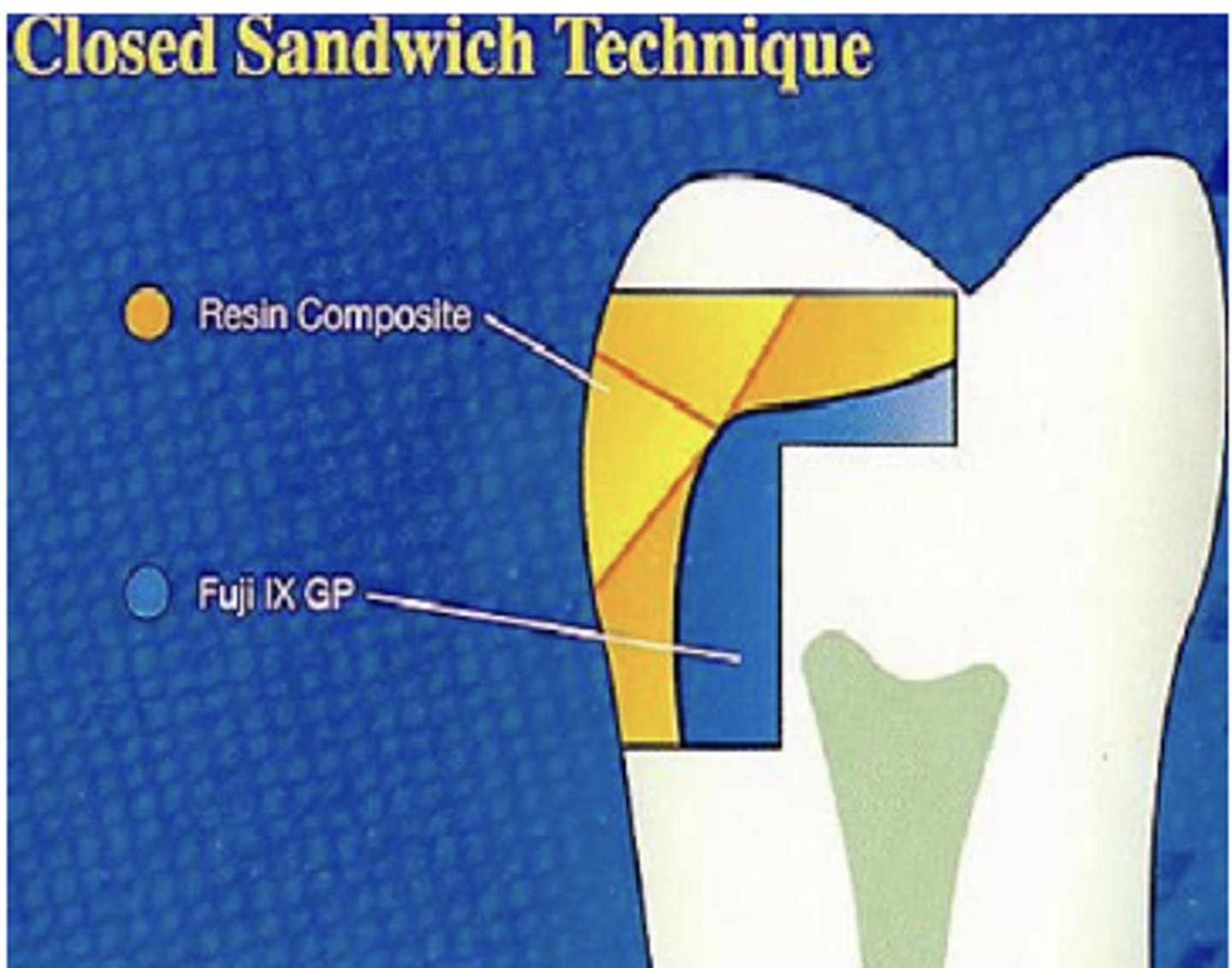
Close Sandwich Technique (IMAGE)
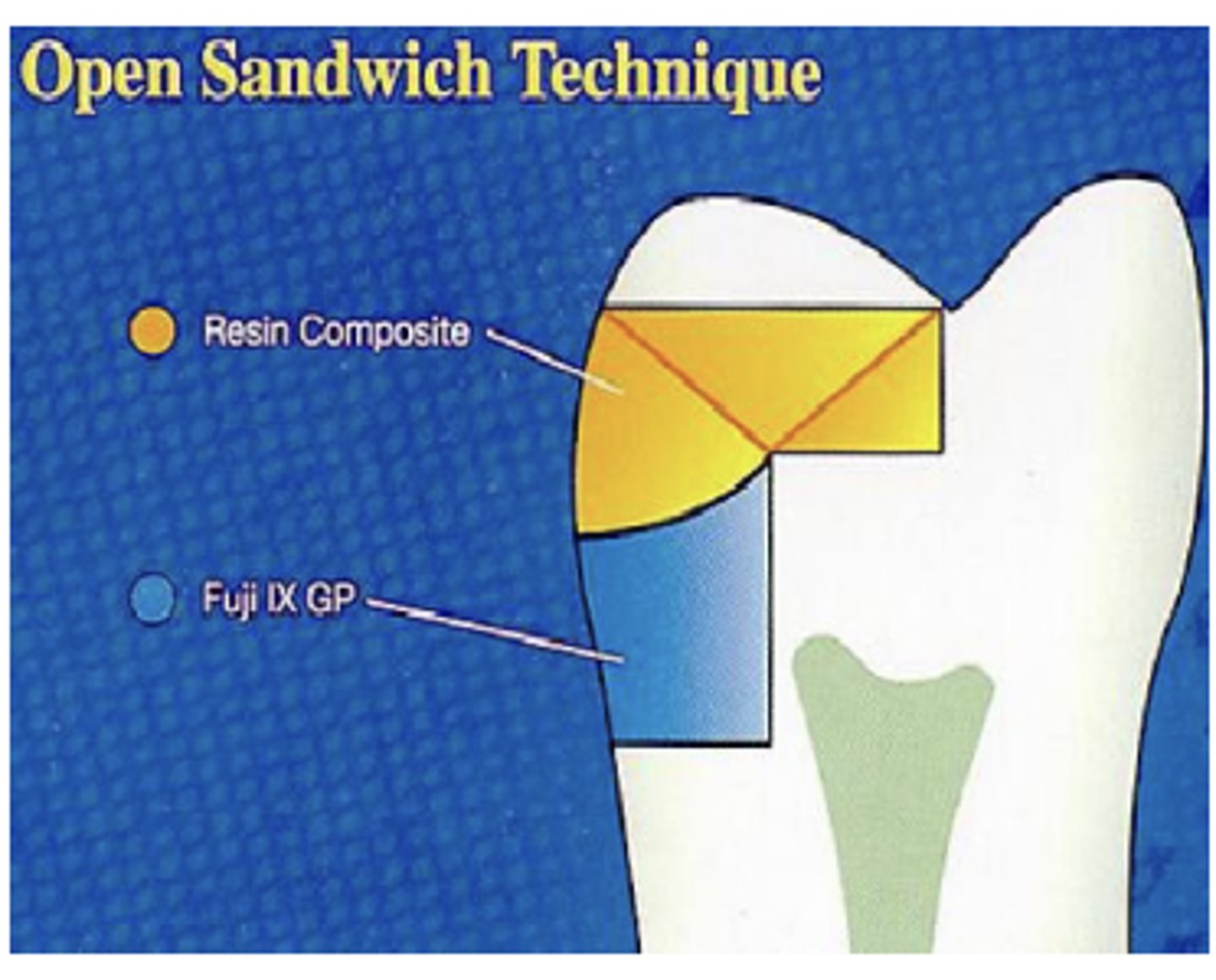
Open Sandwich Technique (IMAGE)
Close sandwich technique: Laying of
Two directly placed materials one covering the other
Close sandwich technique: Dentin is covered by a base of
GI or RMGI
Close sandwich technique: GI or RMGI is completely covered by
the overlaying restoration
Close sandwich technique: The base is placed
internally and completely surrounded with a second material
Close sandwich technique: What aspect of the glass ionomer is exposed to the saliva
none
Indications for a close sandwich technique
Pulp protection
- Selective caries removal
- Preparation extends very close to the pulp
- Fluoride release promotes affected dentin
Remaining enamel at the gingival margin
Close Sandwich Technique Steps
Preparation = complete tooth preparation
Rinse and dry = Rinse and dry, don't desiccate, leave dentin moist
Apply GI/RMGI = Place GI/RMGI over pulpal and/or axial wall
Check margins = Be sure not to place GI over any margins or on enamel
Etch and rinse = Phosphoric acid etch and rinse
Prime = Prime remaining exposed dentin and GI
Final restoration = Place adhesive then RBC resin composite, or other permanent restorative
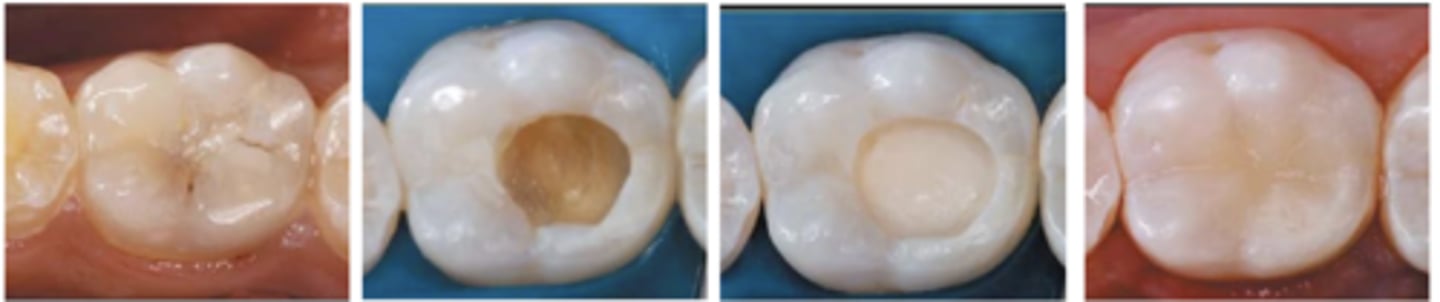
Clinical case: closed sandwich technique image
Open Sandwich technique: Layering of two directly placed materials where
both are exposed to saliva
Open Sandwich technique other terminology
bonded base technique
Open Sandwich technique: Indications
Restoration of deep cervical lesions with dentin or cementum margins (severely damaged teeth with no enamel on the cervical margins)
Need material that contains fluoride to reduce potential recurrent caries (high risk patients)
The selective material for the open sandwich technique is RMGI
WHY RMGI
Superior Mechanical proterties than GI
Can be contoured and polished very similar to resin based composite
Stronger in acidic environment
Conventional GI have poor maintenance of anatomical form
Conventional GI suffers rapid surface degradation
Conventional GI doesn't present optimal esthetics
Open Sandwich technique Step
Preparation = complete tooth
Rinse and dry = rinse and dry, don't desiccate, leave dentin moist
Apply RMGI = Place RMGI over cervical and/or axial
Light cure = Light cure your RMGI
Etch and rinse = Selectively etch and rinse
Prime = primer then adhesive - light cure
Final restoration = place RBC resin composite to fill rest of prep
Clinical case open sandwich technique image
SUMMARY: Close Sandwich Technique -- Indications
Pulp protection (Enamel Margin)
SUMMARY: Close Sandwich Technique -- Contact with saliva?
No
Closed to the oral environment
SUMMARY: Close Sandwich Technique -- Surfaces
Axial and pulpal walls
SUMMARY: Close Sandwich Technique -- Material
Conventional GI RMGI
SUMMARY: Open Sandwich Technique -- Indications
Deep cervical lesions with dentin or cementum margins
High-caries risk pt
SUMMARY: Open Sandwich Technique -- Contact with saliva
Yes open to the oral environment
SUMMARY: Open Sandwich Technique -- Surfaces
Any (except surfaces under occlusal forces)
SUMMARY: Open Sandwich Technique -- Material
RMGI

