Nervous System: Structure, Function, and Cell Types
 Call Kai
 Learn
Learn Practice Test
 Spaced Repetition
 Match
Match Flashcards
 Knowt Play
1/25

There's no tags or description
Looks like no tags are added yet.
Name | Mastery | Learn | Test | Matching | Spaced | Call with Kai |
|---|
No analytics yet
Send a link to your students to track their progress
26 Terms
What two systems help maintain homeostasis in the body?
The nervous system and the endocrine system.
What is neurology?
The study of the normal functioning and disorders of the nervous system.
What are the three basic functions of the nervous system?
Sensing changes, interpreting and remembering those changes, and reacting to those changes.
What is the primary function of sensory (afferent) neurons?
To sense changes in the internal and external environment through sensory receptors.
What role do association or interneurons play in the nervous system?
They analyze sensory information, store aspects, and make decisions regarding appropriate behaviors.
What is the function of motor (efferent) neurons?
To respond to stimuli by initiating action.
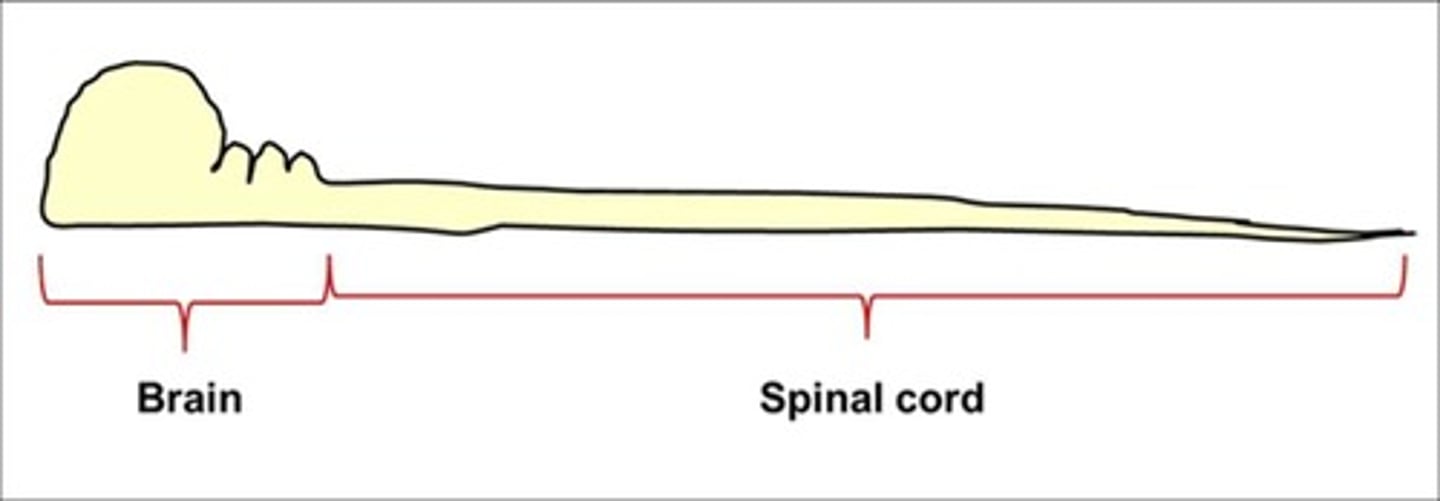
What does the central nervous system (CNS) consist of?
The brain and spinal cord.
What is the peripheral nervous system (PNS)?
Cranial and spinal nerves that contain both sensory and motor fibers, connecting the CNS to muscles, glands, and sensory receptors.
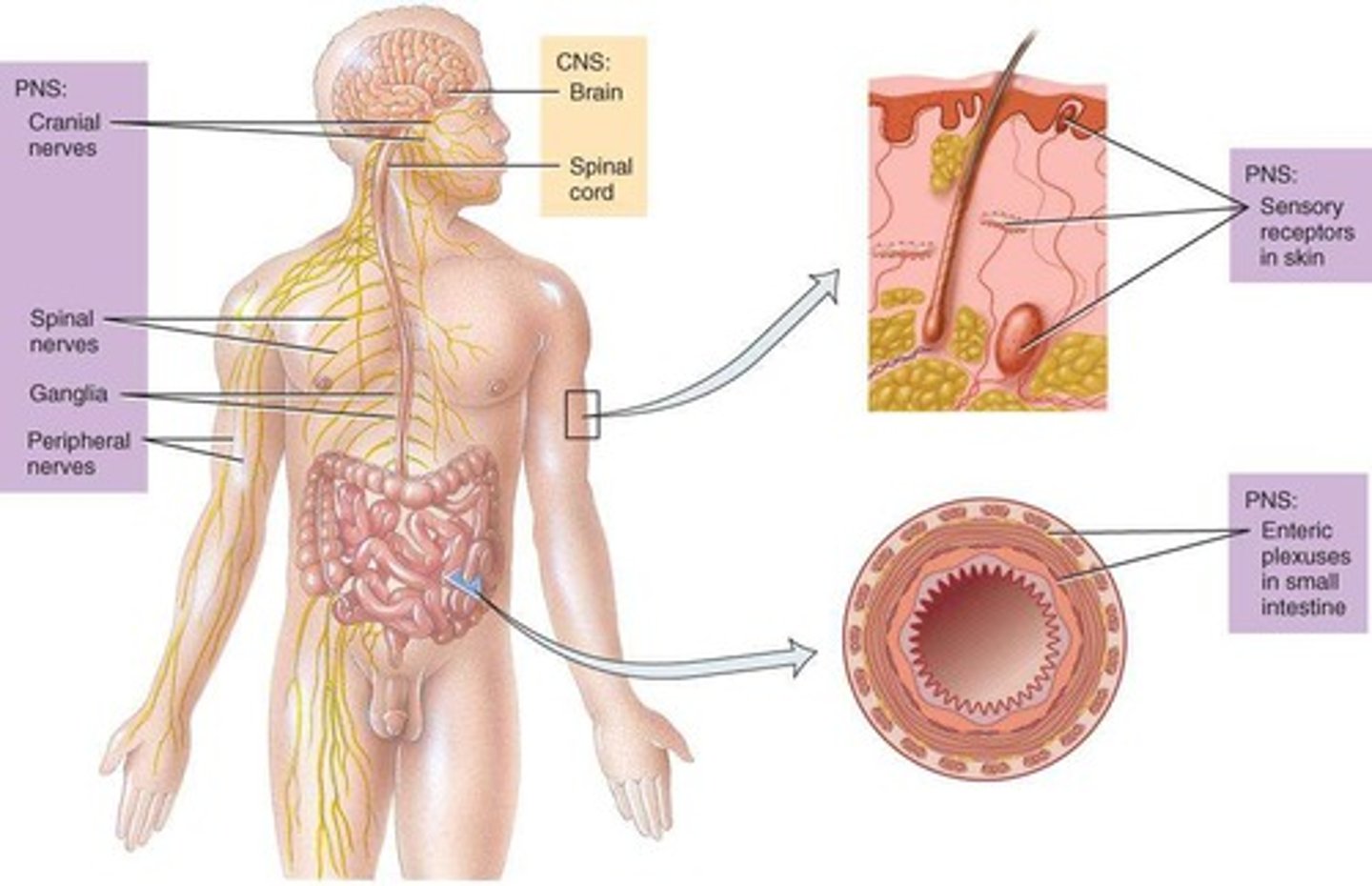
What are the subdivisions of the peripheral nervous system?
Somatic nervous system (SNS) and autonomic nervous system (ANS).
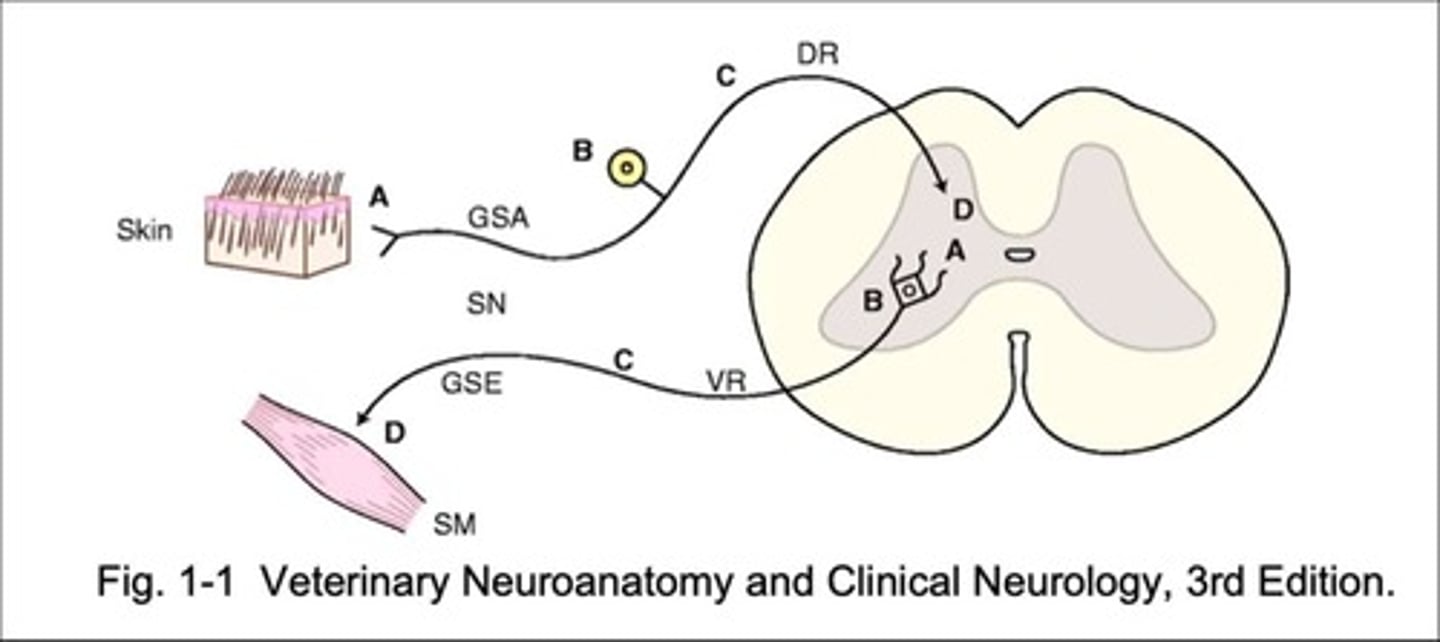
What does the somatic nervous system (SNS) control?
Afferent neurons from sensory receptors to the CNS and efferent neurons to skeletal muscle tissue.
What are the two divisions of the autonomic nervous system (ANS)?
Sympathetic division and parasympathetic division.
What is the enteric nervous system (ENS)?
Neurons in enteric plexuses that regulate the digestive system.
What are neuroglial cells?
Support cells in the nervous system that are smaller and more numerous than neurons.
What is the primary function of neurons?
To transmit information from one part of the body to another.
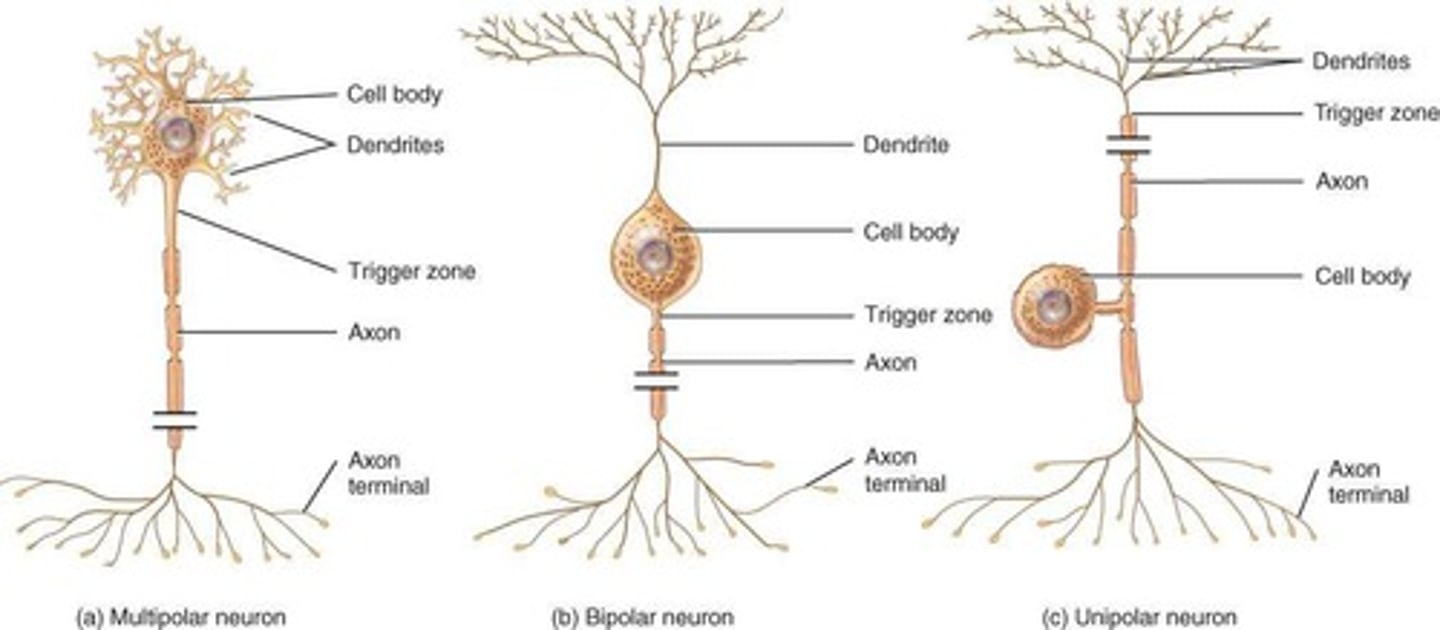
What is the structure of a neuron?
It consists of a cell body, dendrites, and an axon.
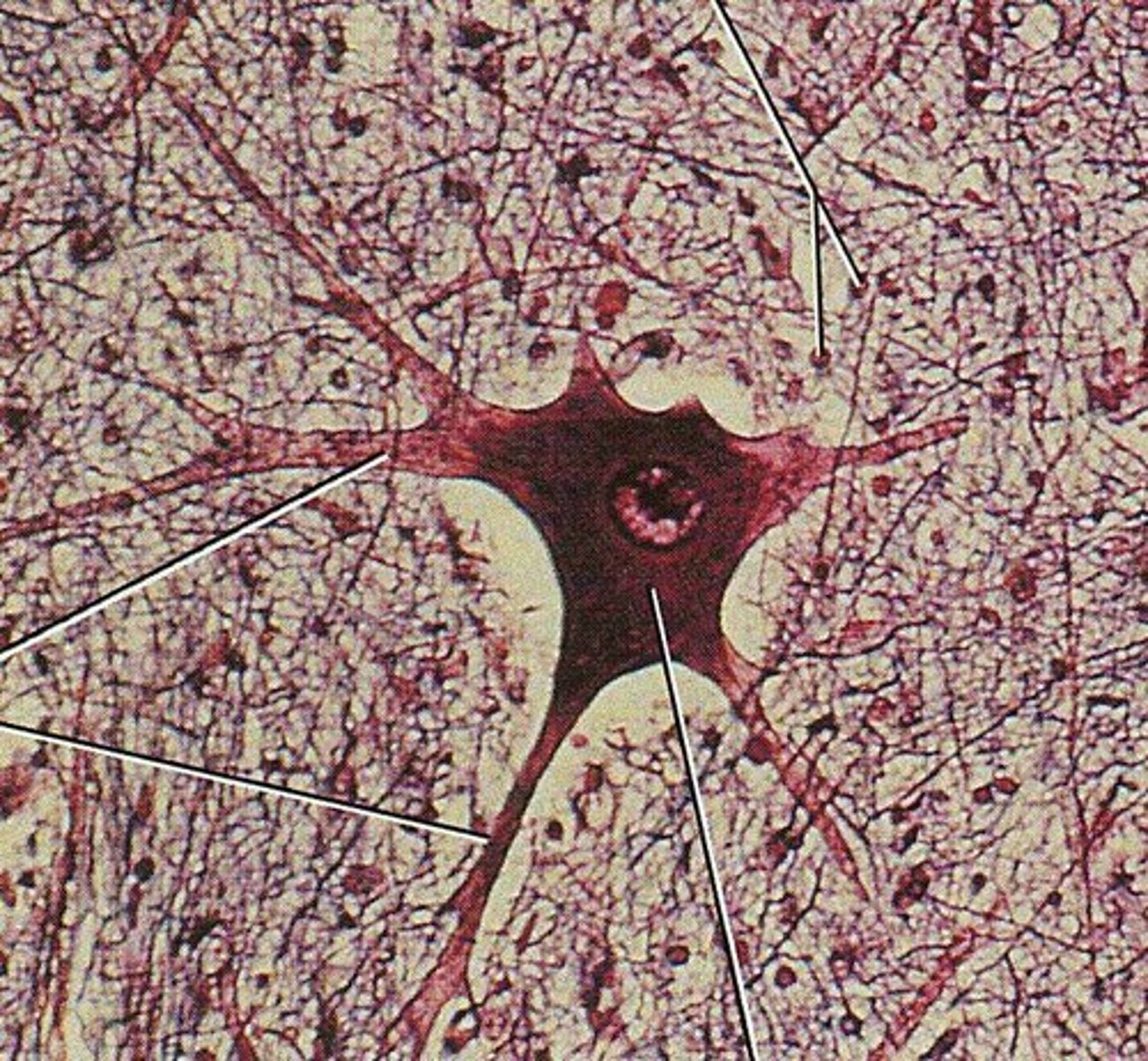
What is the role of dendrites in a neuron?
To conduct impulses towards the cell body.
What is the axon's function?
To conduct impulses away from the cell body.
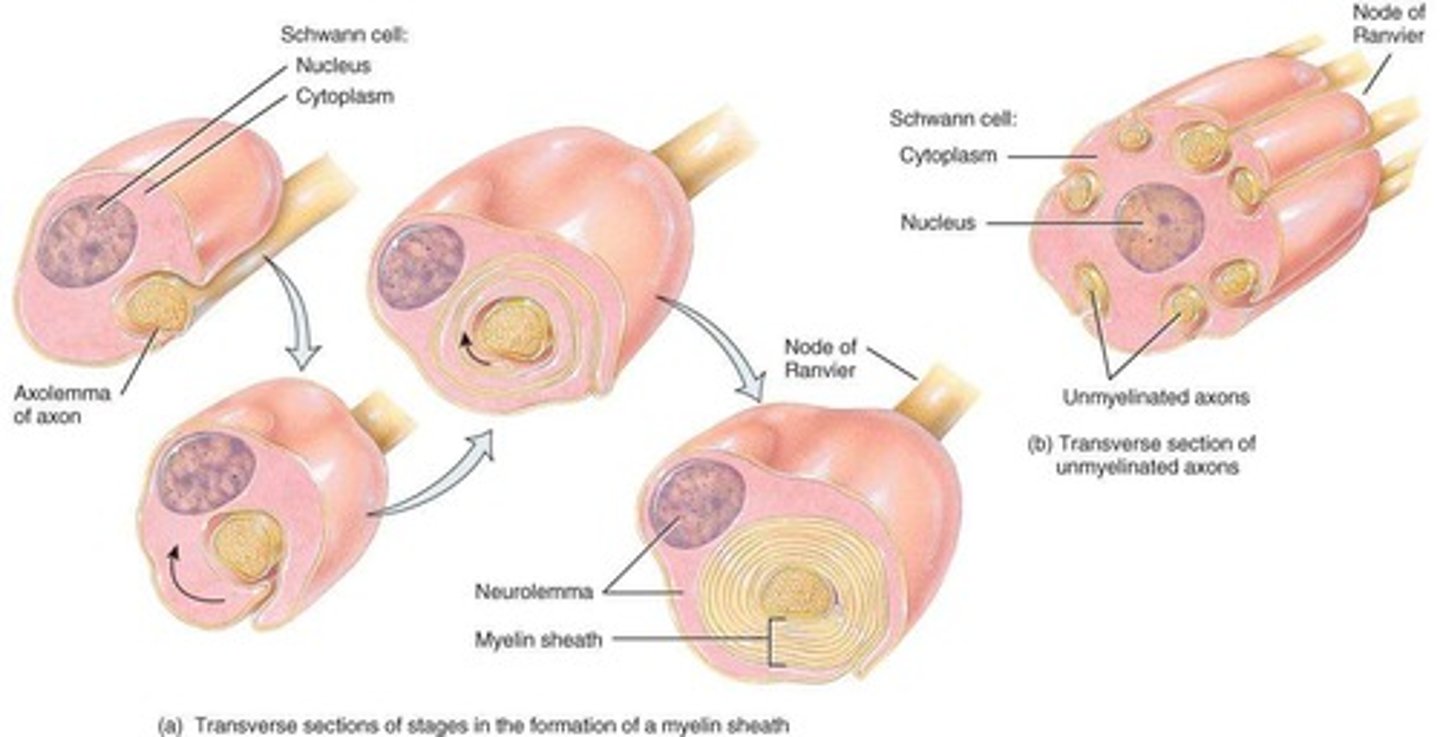
What is the myelin sheath?
A multilayered lipid and protein covering that surrounds the axons of most neurons, increasing the speed of nerve impulse conduction.
What are the two types of axonal transport?
Slow transport (one direction, away from cell body) and fast transport (moves organelles and materials in either direction).
What are the three functional classifications of neurons?
Sensory (afferent) neurons, motor (efferent) neurons, and interneurons.
What is the function of the enteric motor neurons?
To govern contraction of GI tract organs and activity of GI tract endocrine cells.
What are gliomas?
Tumors that result from rapid mitosis of neuroglia.
What is the significance of the axon hillock?
It is the point where the axon arises and where impulses are initiated.
What are synaptic end bulbs?
Swollen tips of axon terminals that contain vesicles filled with neurotransmitters.
What is the role of sensory receptors?
To monitor changes in the internal or external environment.
What is the difference between multipolar, bipolar, and unipolar neurons?
Multipolar neurons have several dendrites and one axon, bipolar neurons have one main dendrite and one axon, and unipolar neurons have one process only.