nurs 210: chapter 20 & 21 - lympathic system & lymphoid organs & tissues
 Call Kai
 Learn
Learn Practice Test
 Spaced Repetition
 Match
Match Flashcards
 Knowt Play
1/63

There's no tags or description
Looks like no tags are added yet.
Name | Mastery | Learn | Test | Matching | Spaced | Call with Kai |
|---|
No analytics yet
Send a link to your students to track their progress
64 Terms
nonspecific resistance (innate immunity)
present at birthday ad includes defense mechanisms that provide general protection against invasion by wide range of pathogens
immunity (adaptive immunity)
involves activation of specific lymphocytes that combat a particular pathogen or other foreign substance
lymphatic system
body system that carries out immune responses
components of lymphatic system
consists of several structures and organs that contain lymphatic tissue, bone marrow, a fluid called lymph that flows within lymphatic vessel
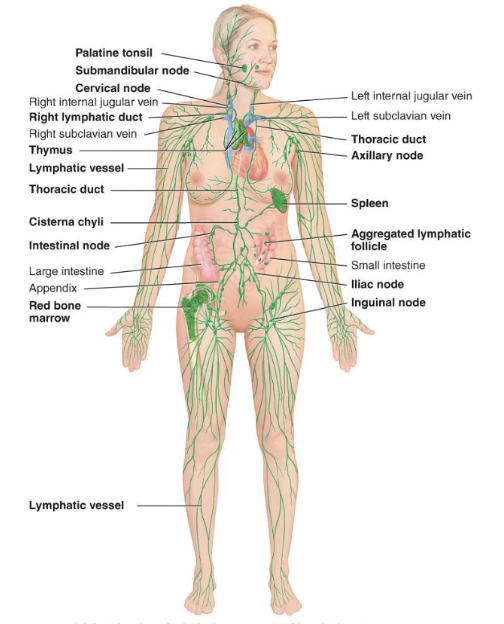
lymphatic system functions:
to drain interstitial fluid, transport dietary fats, carry out immune response
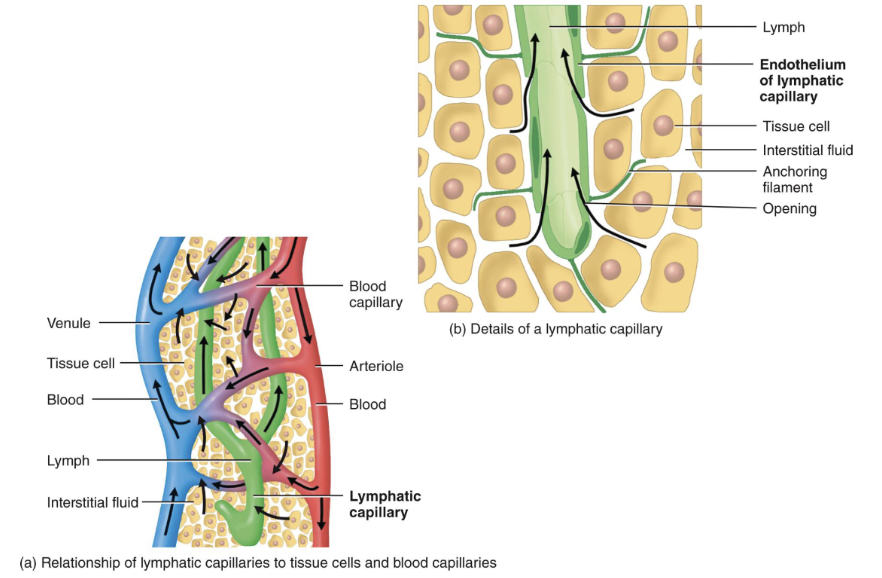
lymphatic vessels
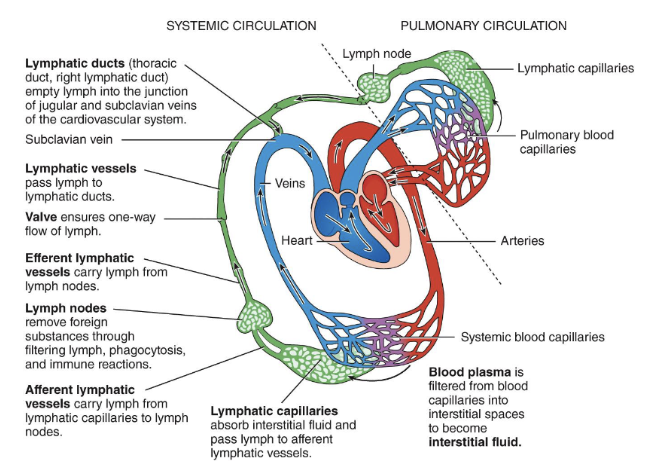
begin as lymphatic capillaries, which are closed on one end; lymphatic capillaries are located between cells of many tissues, merge to form lymphatic vessels, which have thin walls and many valves
picture of lymphatic capillaries
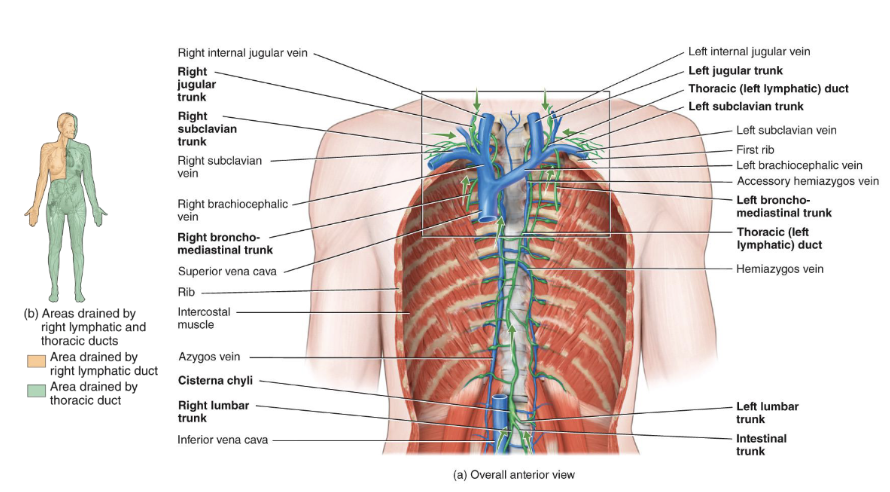
from the lymphatic vessels, lymph passes through:
the lymph nodes and then into lymph trunks; the lymph trunks then merge to form either the thoracic duct or the right lymphatic duct
thoracic duct drains:
lymph from both lower limbs, abdomen, left side of chest, left arm, left side of head and neck
right side of upper body is drained by:
right lymphatic duct
picture of routes of drainage
formation and flow of lymph
interstitial fluid → lymph capillaries → lymph vessels → lymph trunks → lymph ducts → subclavian veins
primary lymphatic organs are:
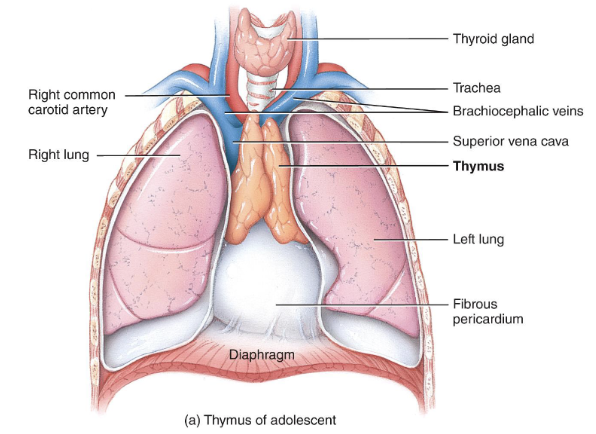
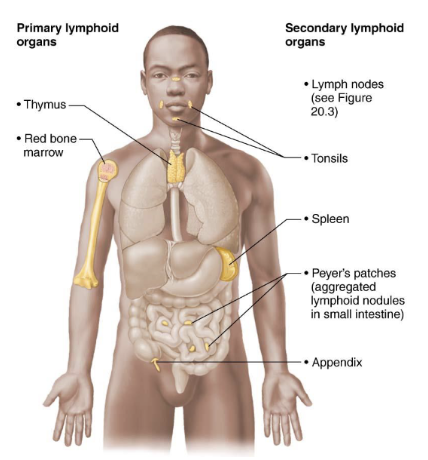
organs where immune cells become immunocompetent; red bone marrow, thymus
secondary lymphatic organs and tissues include:
lymph nodes, spleen, lymphatic nodules
lymph nodes
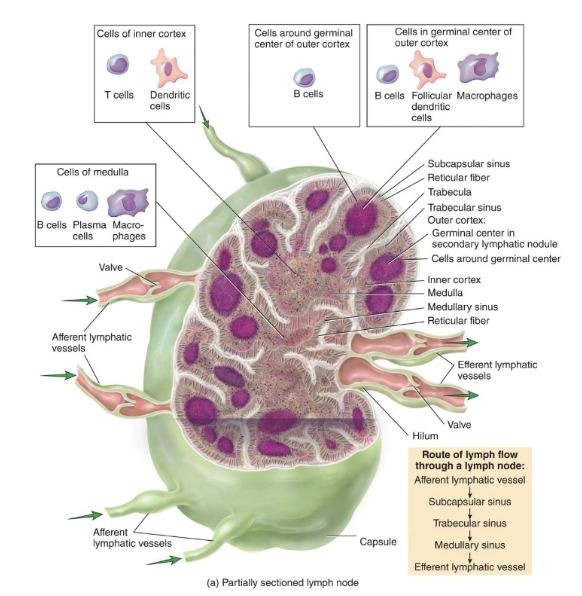
principal secondary lymphoid organs of body, hundreds of nodes are found throughout body
two main functions of lymph nodes
cleansing the lymph, immune system activation
cleansing the lymph
act as lymph “filters”; phagocytes remove and destroy microorganisms and debris that enter lymph, prevent unwanted substances from being delivered to blood
immune system activation
site for lymphocytes to become activated and mount an attack against antigens
lymph nodes
spleen
a blood-rich organ about size of fist, located in left side of abdominal cavity, below stomach; largest lymphoid organ
function of spleen
site of lymphocyte proliferation and immune surveillance and response, cleanses blood of aged blood cells and platelets; macrophages remove debris
spleen has a thin capsule, so dircet blow or severe infection may cause:
it to rupture, spilling blood into peritoneal cavity
picture of spleen
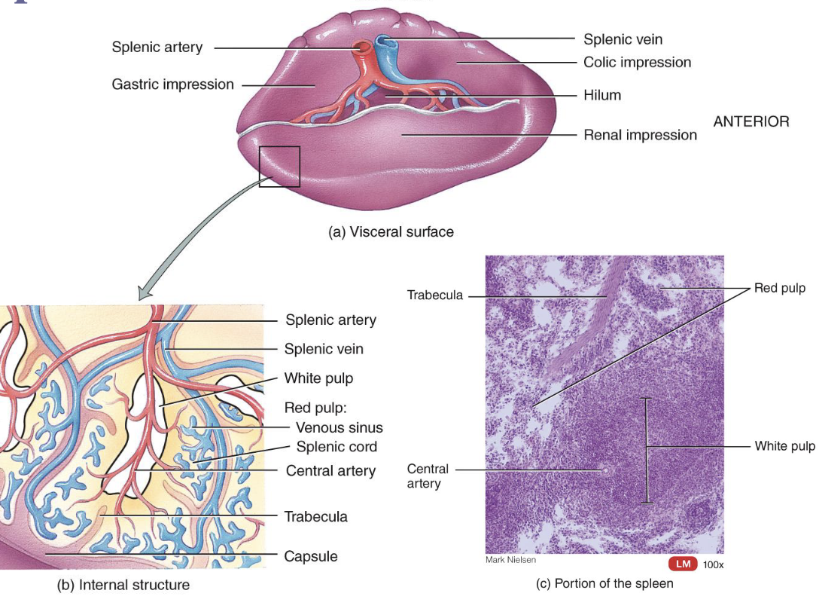
lymphatic nodules are:
masses of lymphatic tissue that are not surrounded by a capsule
lymphatic nodules are scarttered throughout:
the lamina propria of mucous membranes linign the gastrointestinal, urinary, and reproductive tracts and respiratory airways
lymphatic nodules in these areas are also referred to:
as mucosa-associated lymphatic tissue (MALT); tonsils, peyer’s patches, appendix
innate immunity
a wide variety of body responses that serve to protect against invasion of a wide variety of pathogens and their toxins; it’s present at birth and has two lines of defense
two lines of defense for innate immunity
skin and mucous membranes (first line), internal defenses (second line)
skin and mucous membranes defenses
mechanical defenses, chemical defenses
mechanical defenses for skin and mucous membranes
skin mucous membranes, tears, saliva, mucus, cilia, epiglottis, urine flow, defecating, vomiting
chemical defenses for skin and mucous membranes
sebum, lysozyme, gastric juice
internal defenses
antimicrobial proteins, phagocytes, nautral killer cells, inflammation, fever
picture of internal defenses: phagocytes, inflammation
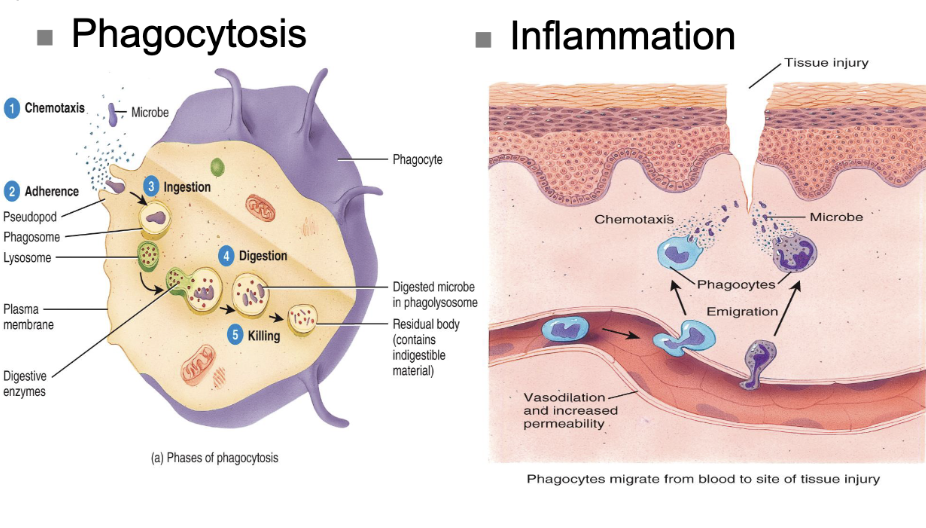
adaptive immunity
the body’s ability to defend itself against specific invading agents; antigens are substances recognized as foreign that provoke immune responses
adaptive memory is the third line of defense, which has both:
specificity and memory
adaptive community is divided into two types:
cell-mediated: T-lymphocyte activation; antibody-mediated: B-lymphocyte activation
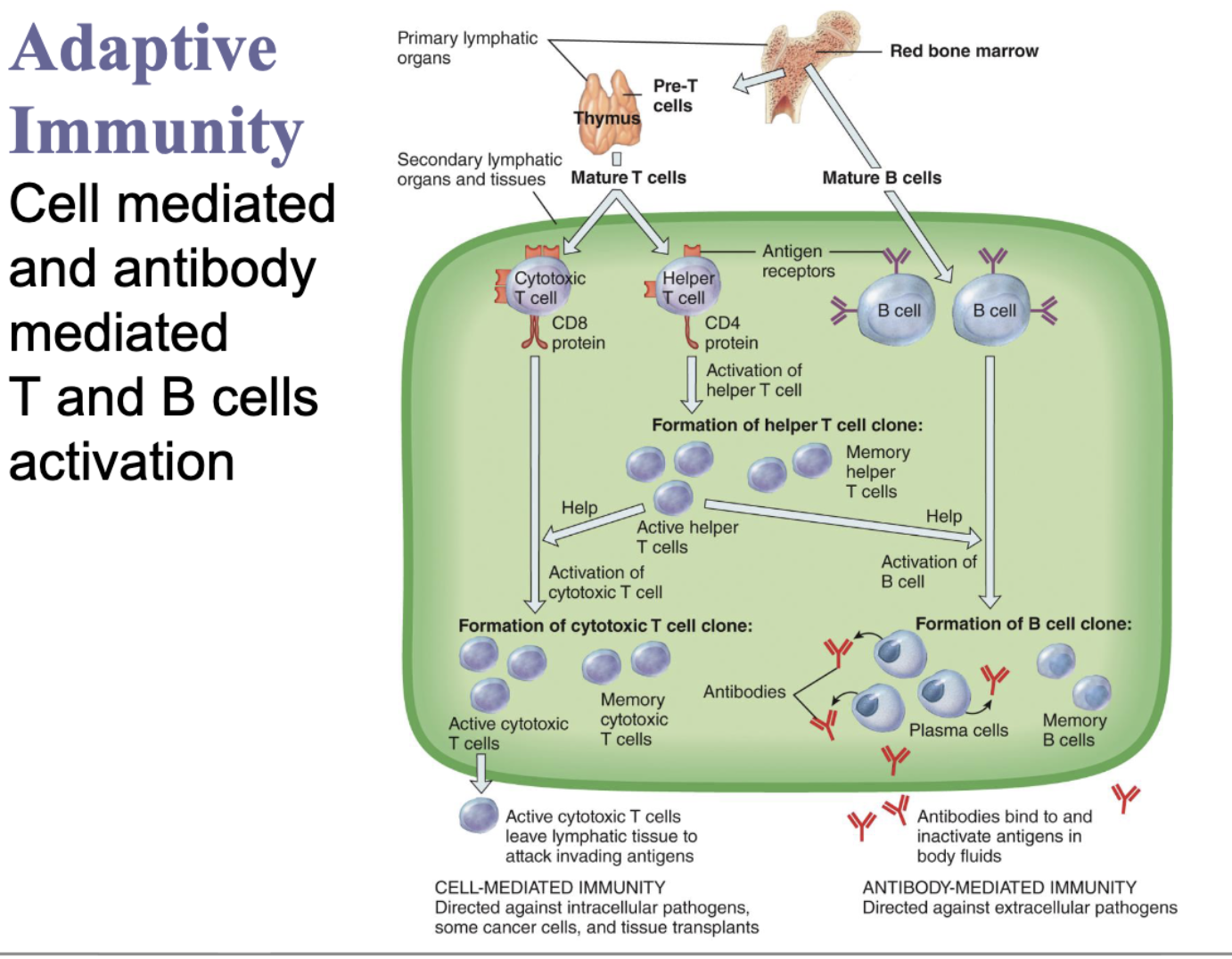
B cells (lymphocyte)
mature in bone marrow
T cells (lymphocyte)
mature in thymus
types of T cells
helper T cells (CD4), cytotoxic T cells (CD8), memory T cells
helper T cells (CD4)
activate other immune cells (CD8 and B cells)
cytotoxic T cells (CD8)
kill infected or abnormal cells (cell-mediated immunity)
B cells multiply to form:
plasma cells produce antibodies: bind and neutralize pathogens (antibody-mediated immunity); memory B cells
antigen
substance that triggers an immune response in body
reactivity
ability of an antigen to bind to specific immune molecules
immunogenicity
ability of an antigen to trigger an immune responses
just certain small parts of a large antigen molecule act as:
triggers for immune responses; small parts are called epitopes
antibodies (immunoglobulins) produced by:
plasma cells (B cells become plasma cells) to identify and neutralize foreign antigens
IgG
most common in blood, produced during secondary immune responses
IgM
first to increase, produced during the primary immune responses
IgA
present in secretions (tears, saliva, breast milk)
IgE
responsible for allergic response
IgD
binds to activate B cells
picture of table classes of immunoglobulins
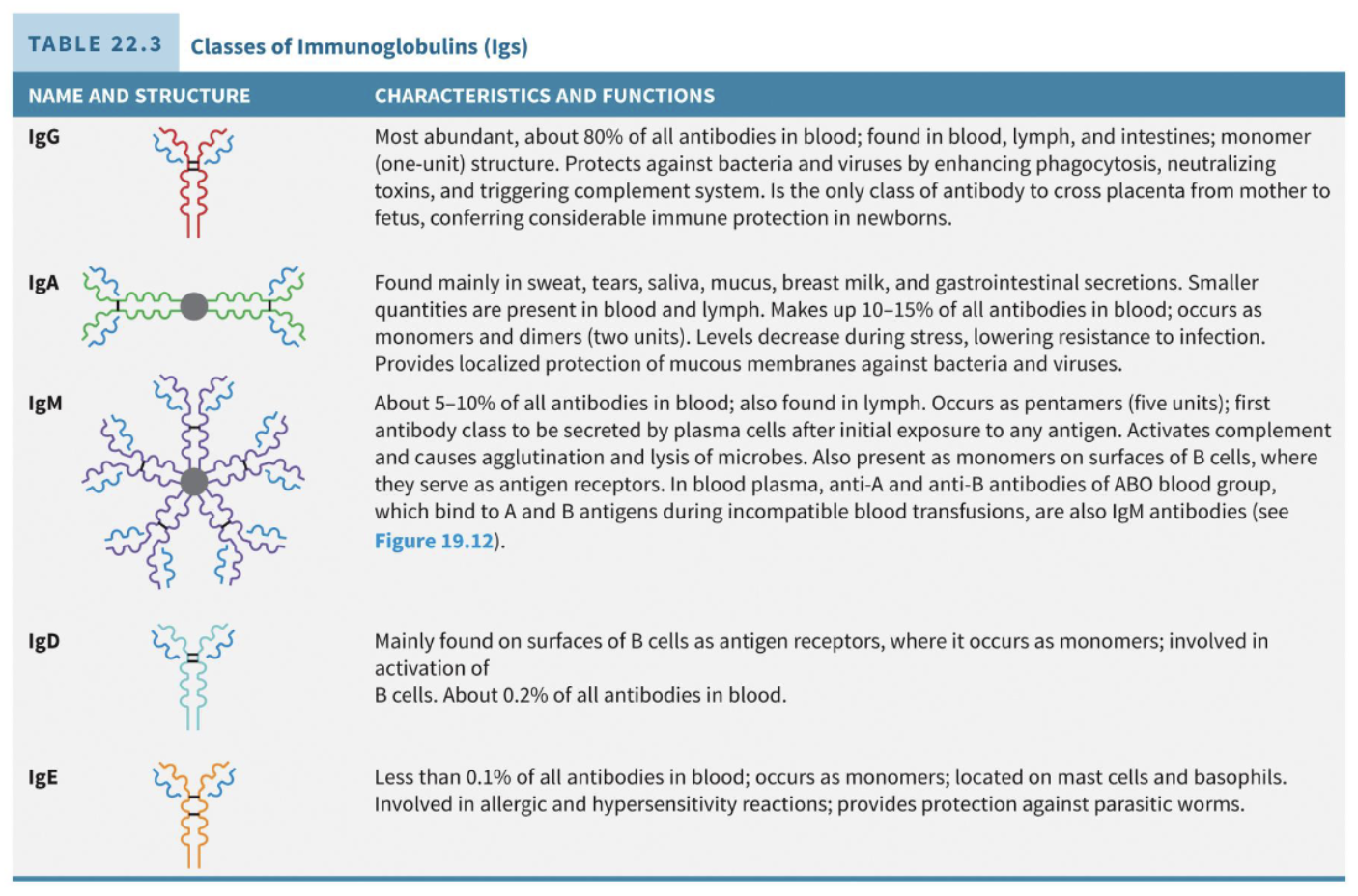
antibodies
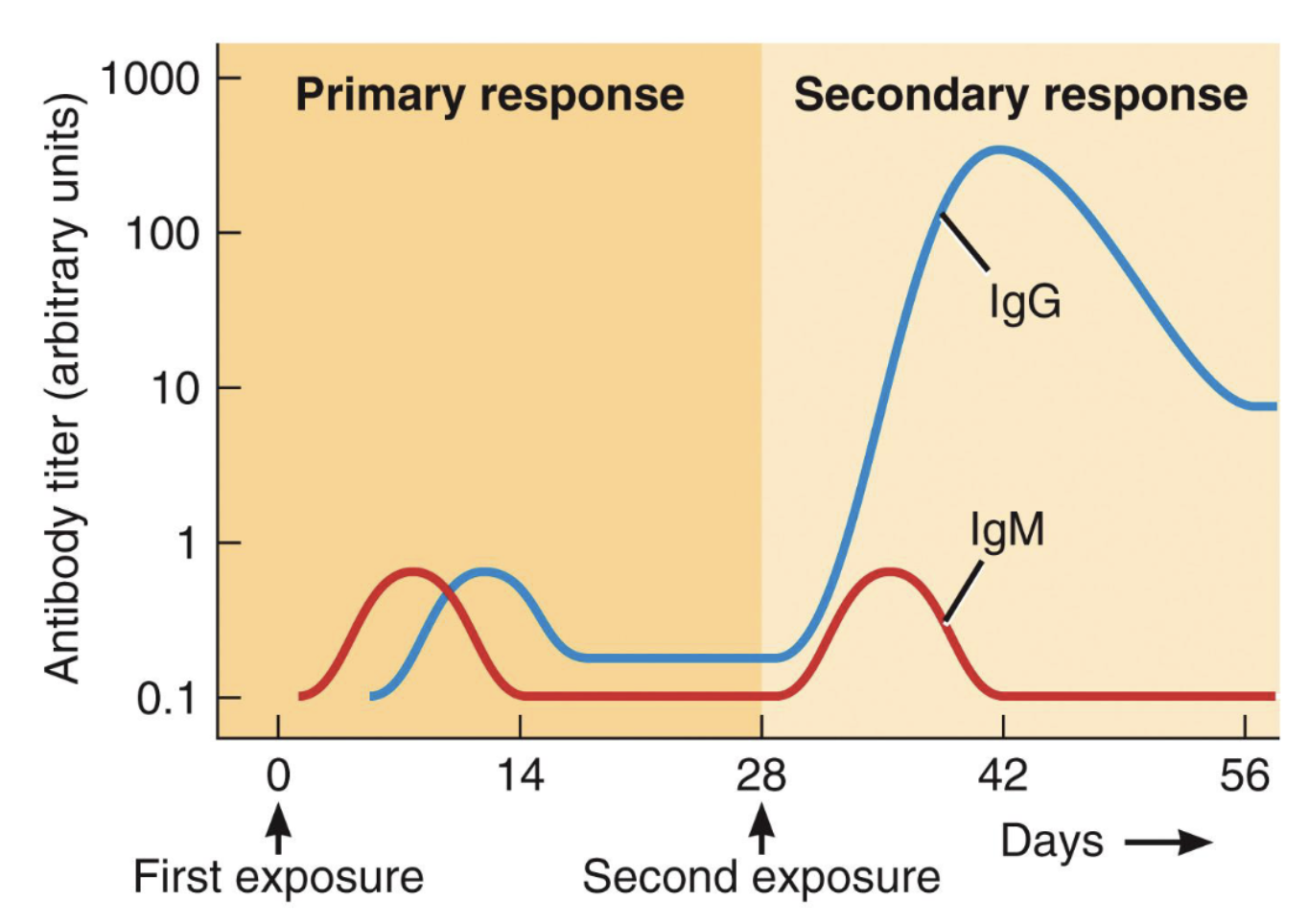
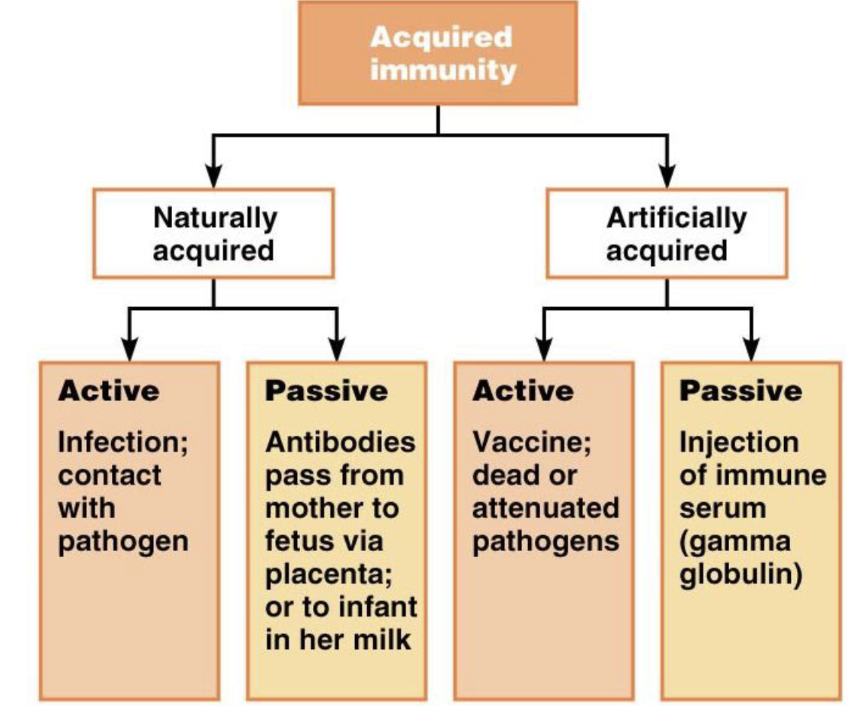
adaptive immunity can be classified based on:
how it is acquired into four types: natural, artificial, active, passive
natural, adaptive (acquired) immunity
stimulated by an environment or a mother
artificial, adaptive (acquired) immunity
stimulated by a medical intervention
active, adaptive (acquired) immunity
person produces own antibodies; delayed protection that is permanent
passive, adaptive (acquired) immunity
person receives antibodies from outside source; instant protection that is temporary
natural active immunity
direct exposure to a pathogen stimulates immune system (B cells) to produce antibodies: strong primary immune response
natural passive immunity
baby receives antibodies through placenta or breast milk (protected for about 6-8 months after birth)
artificial active immunity
occur when vaccine is given, which stimulates B cells to produce antibodies
artificial passive immunity
ready antibodies are given; short term protection lasts until antibodies break down
picture of acquired immunity breakdown