Renaissance Art History Final
 Studied by 1 person
 Call Kai
 Learn
Learn Practice Test
 Spaced Repetition
 Match
Match Flashcards
 Knowt Play
1/49

There's no tags or description
Looks like no tags are added yet.
Name | Mastery | Learn | Test | Matching | Spaced | Call with Kai |
|---|
No analytics yet
Send a link to your students to track their progress
50 Terms
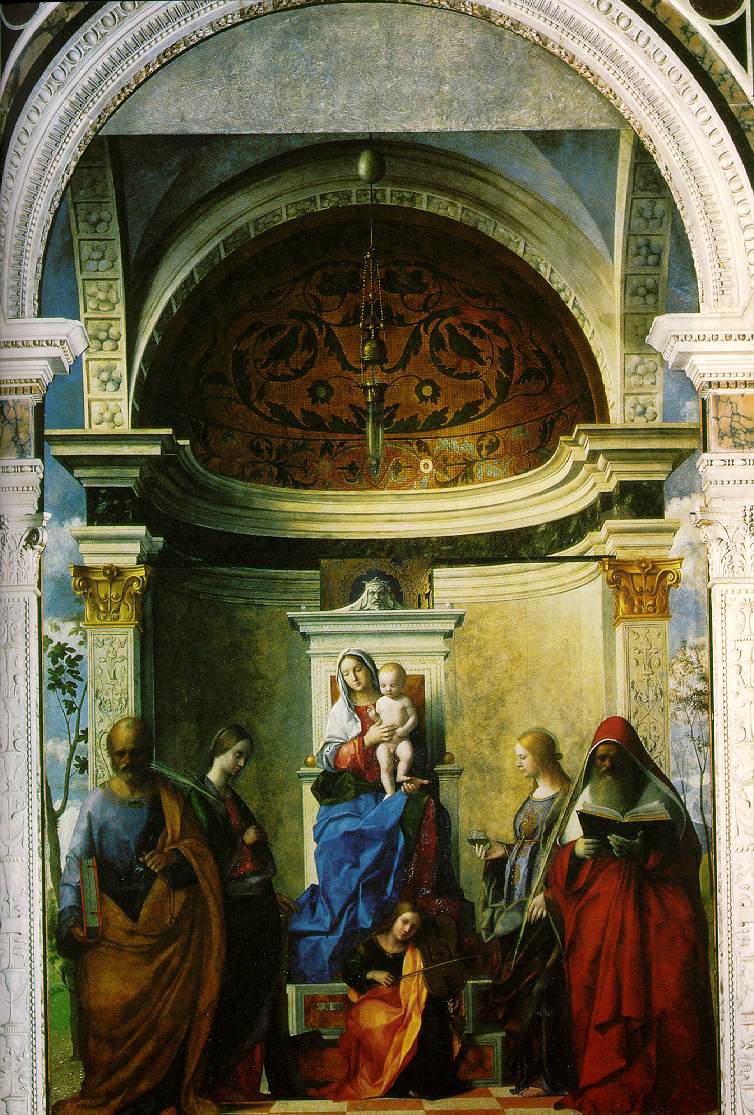
NAME - TITLE - DATE - MEDIUM - LOCATION
Giovanni Bellini - Madonna and Child with Saints (San Zaccaria Altarpiece) - 1505 - Oil on wood transferred to canvas - San Zaccaria, Venice.
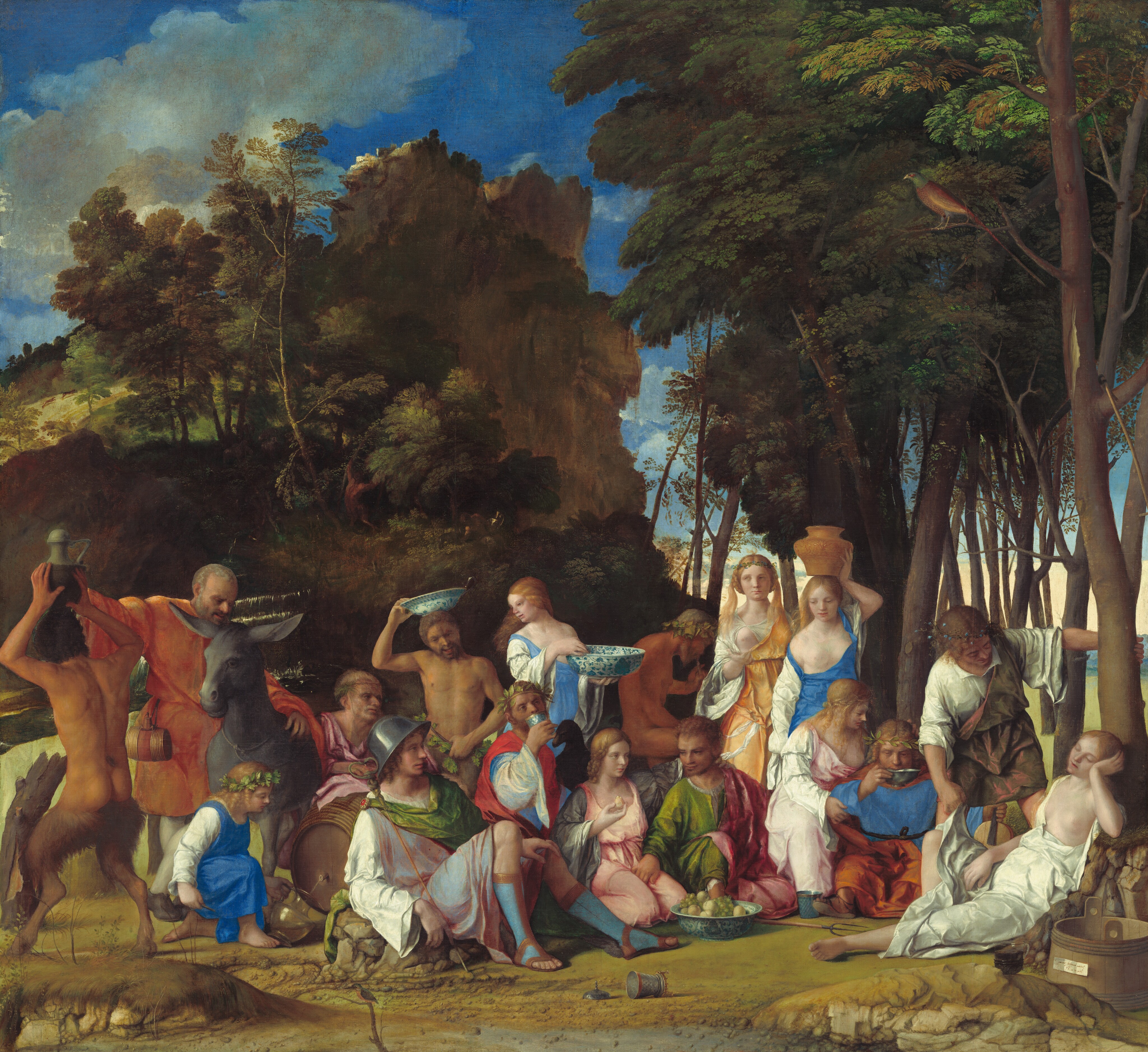
NAME - TITLE - DATE - MEDIUM - LOCATION
Giovanni Bellini - Feast of the Gods - 1529 - Oil on canvas - Ferrara, Italy
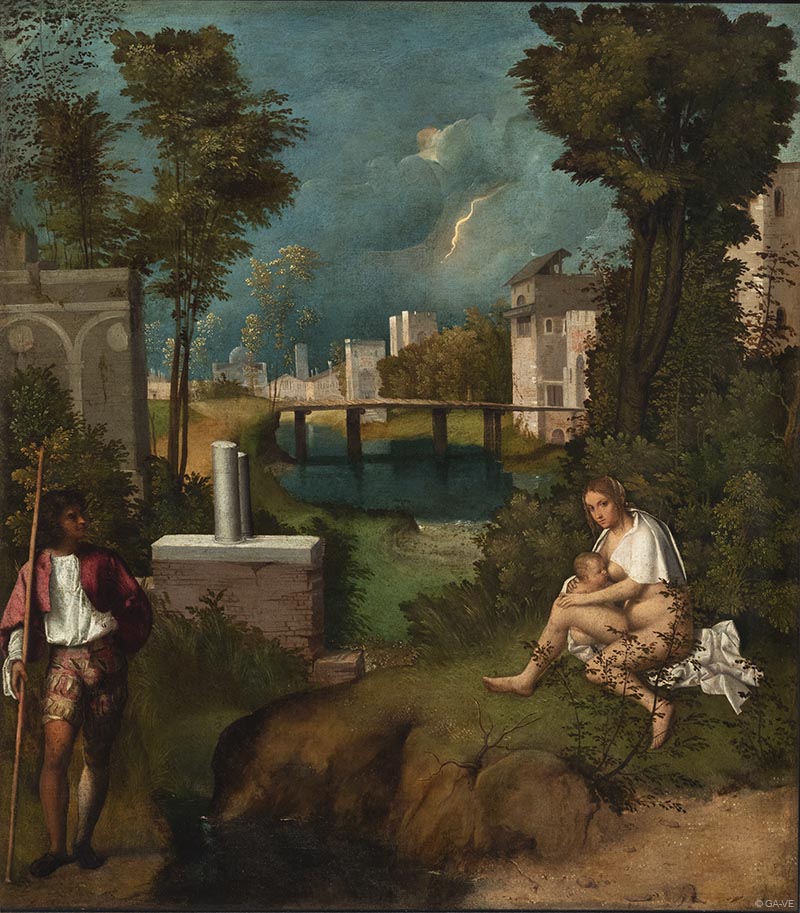
NAME - TITLE - DATE - MEDIUM - LOCATION
Giorgione da Castelfranco - The Tempest -1509–1510 - Oil on canvas - Venice, Italy
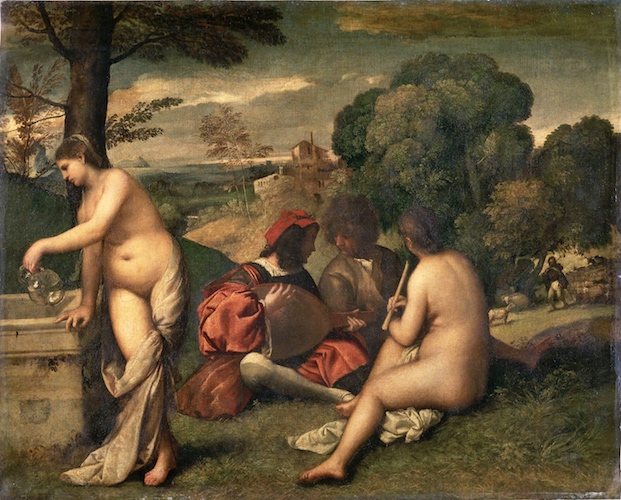
NAME - TITLE - DATE - MEDIUM - LOCATION
Titian - Pastoral Concert - 1508–1511 - Oil on canvas - Louvre, Paris.
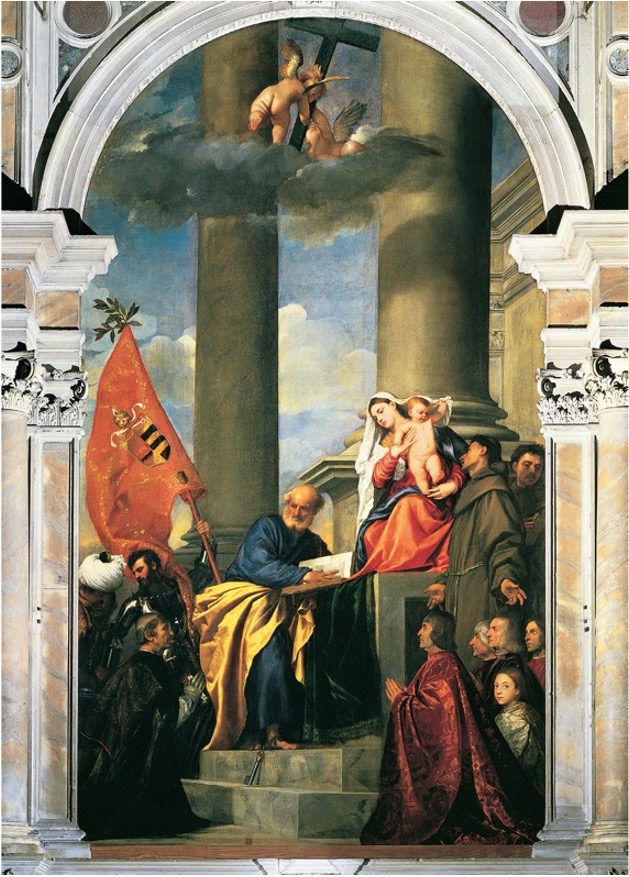
Titian - Pesaro Madonna - 1519–1526 - Oil on canvas - Santa Maria Gloriosa dei Frari, Venice, Italy.
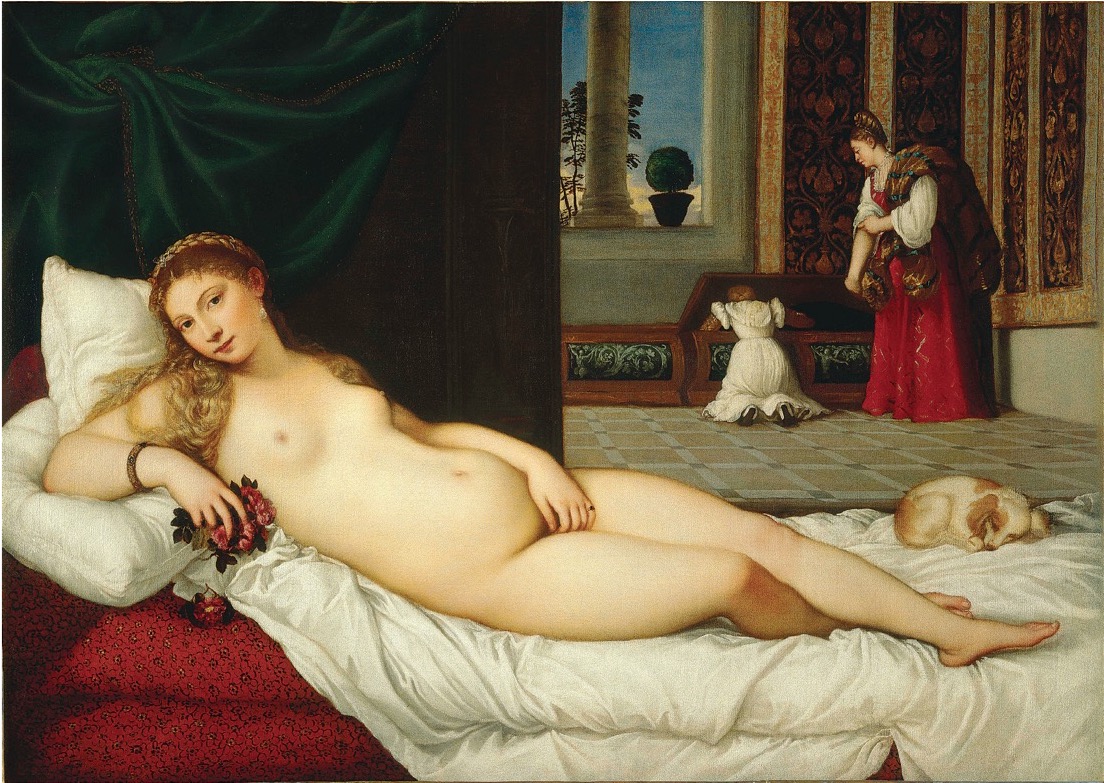
NAME - TITLE - DATE - MEDIUM - LOCATION
Titian - Venus of Urbino - 1536–1538 - Oil on canvas - Florence, Italy
What statue does Venus of Urbino resemble?
Dione and reclining Aphrodite (438BCE - 432BCE), from the east pediment of the Parthenon
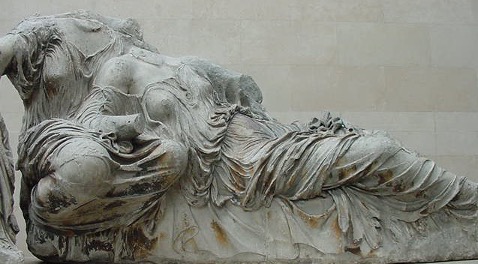
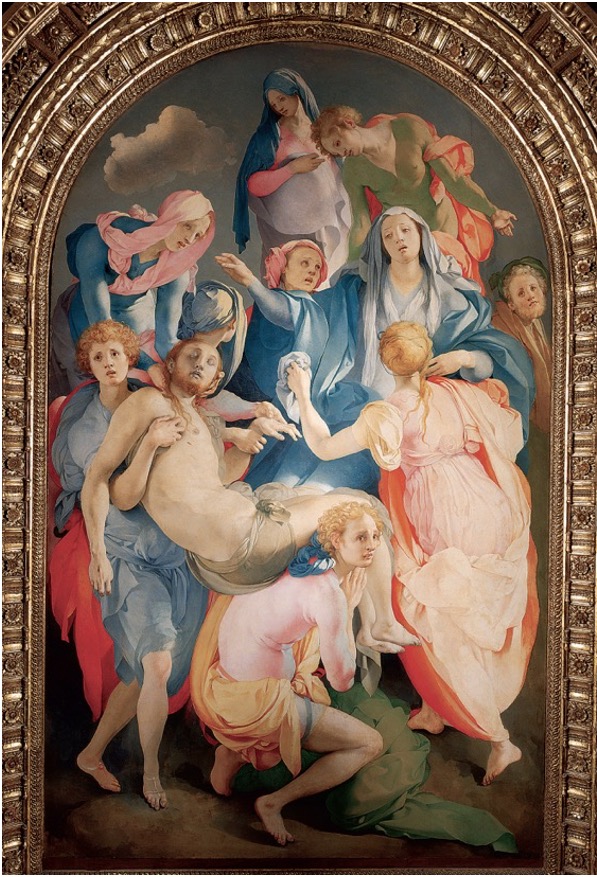
NAME - TITLE - DATE - MEDIUM - LOCATION
Jacopo da Pontormo — Entombment of Christ — 1525-1528 — Oil on Wood — Florence, Italy
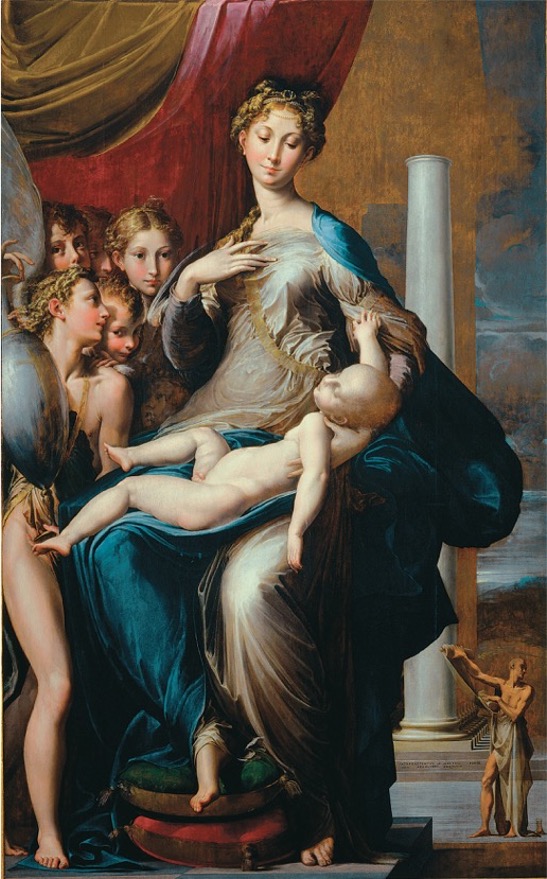
NAME - TITLE - DATE - MEDIUM - LOCATION
Parmigianino — Madonna with the Long Neck, — 1534-1540 — Oil on Wood — Parma, Italy
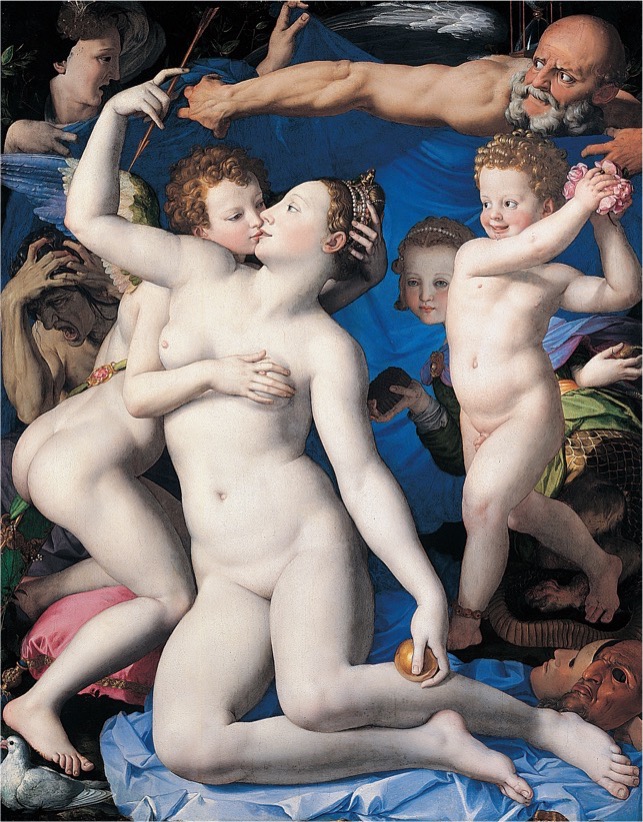
NAME - TITLE - DATE - MEDIUM - LOCATION
Bronzino — Venus, Cupid, Folly, and Time — 1546. Oil on wood — Italy
What was Mannerism known for?
proportions?
Details?
What did they focus the most on?
Style/Colors?
mannerist artists are known for going too farr with this work:
Disregarded porportion—non realistic/elongation of figures
disregarded details
exclusively focused on style instead of substance
over dramatized/theatrical/artificial/taky style and too many colors
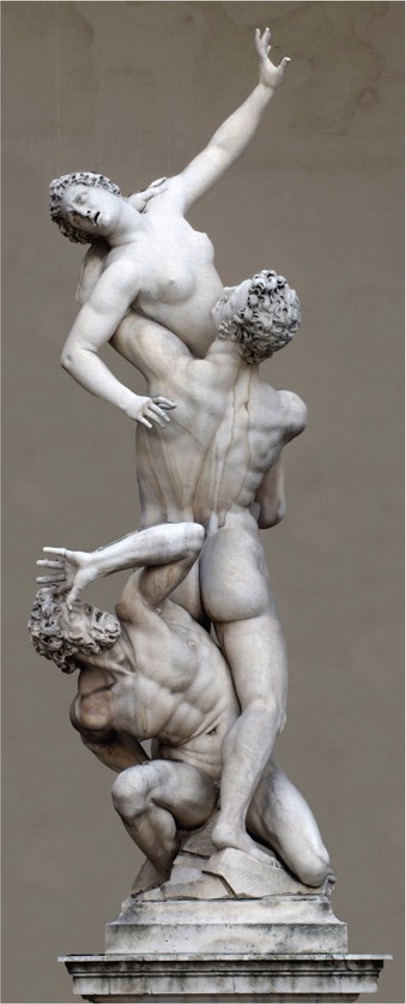
NAME - TITLE - DATE - MEDIUM - LOCATION - SIGNIFICANCE
Giambologna — Abduction of the Sabine Women —1579-1583 — Marble — Florence, Italy
The statue changes dramatically depending on the viewpoint - meant to be looked at from all angles: strong influence on later (17th cent) Italian Baroque sculpture.
High Renaissance and Mannerism in Northern Europe and Spain - TIME PERIOD
16th Century
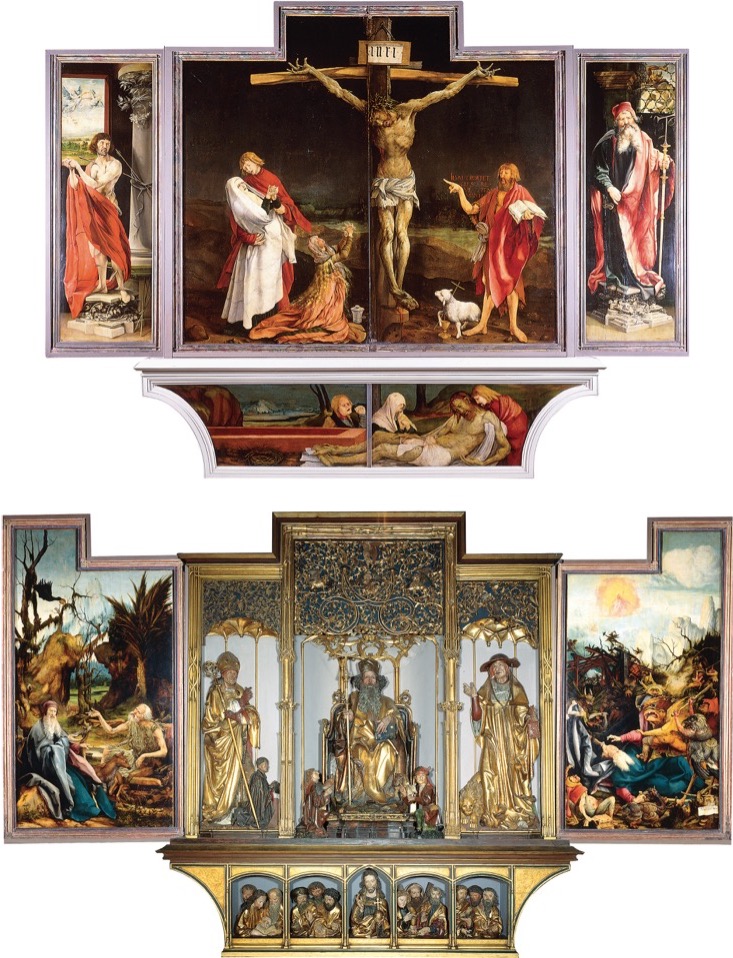
NAME - TITLE - DATE - MEDIUM - LOCATION
1) What hospital was this located in?
Matthias Grünewald — Isenheim Altarpiece — 1512-1525 — Oil on Wood — Isenheim, France
1) Located from the Chapel of the Hospital of Saint Anthony in Isenheim, France
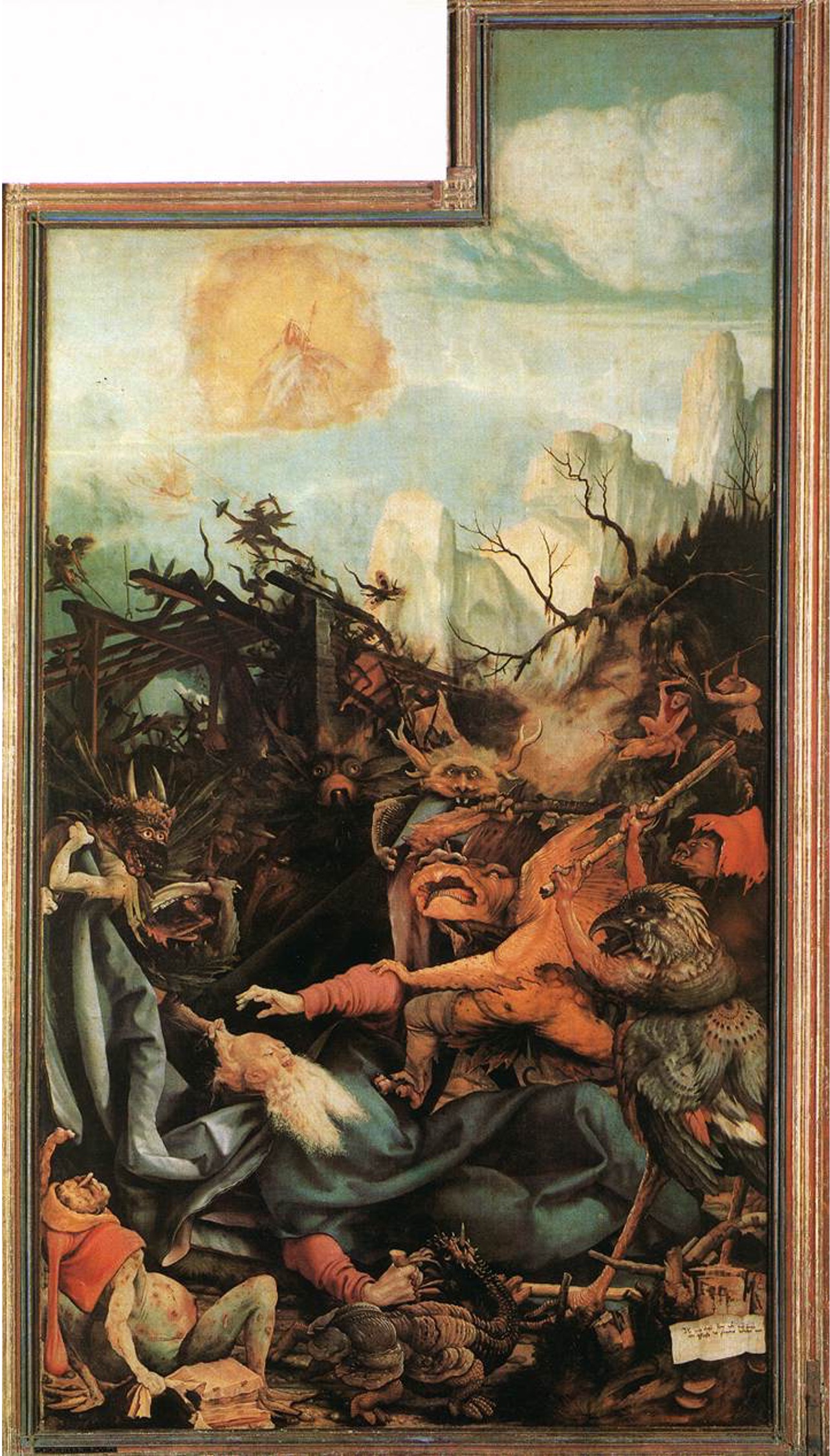
NAME - TITLE - DATE - MEDIUM - LOCATION
1) What are the five temptations and what are they doing to St Anthony
2) What disease is this altarpiece symbolizing?
Matthias Grünewald — Temptation of Saint Anthony, from Isenheim Altarpiece OPEN PANEL — 1512-1525 — Oil on Wood — Isenheim, France
1) Five temptations embodied in the form of monsters assaulting Saint Anthony.
lack of faith
despair
impatience
spiritual pride,
avarice
3) Ergotism
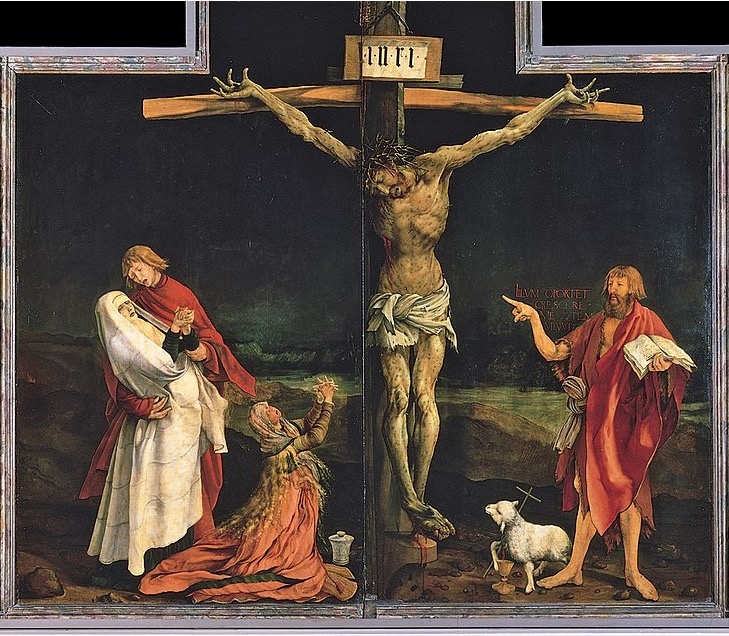
NAME - TITLE - DATE - MEDIUM - LOCATION
1) What is the symbolism of the spots on Christ?
2) What does john the Baptist say?
3) What does the size of the figures mean?
Matthias Grünewald — Isenheim Altarpiece (closed) — 1512-1516 — Oil on Wood — Chapel of the Hospital of Saint Anthony in Isenheim, France
1) Christ has the same Ergotism spots which symbolize empathy
2) “He must increase, I must decrease” —> Christ’s influence will increase.
3) Christ’s size represents the central importance.
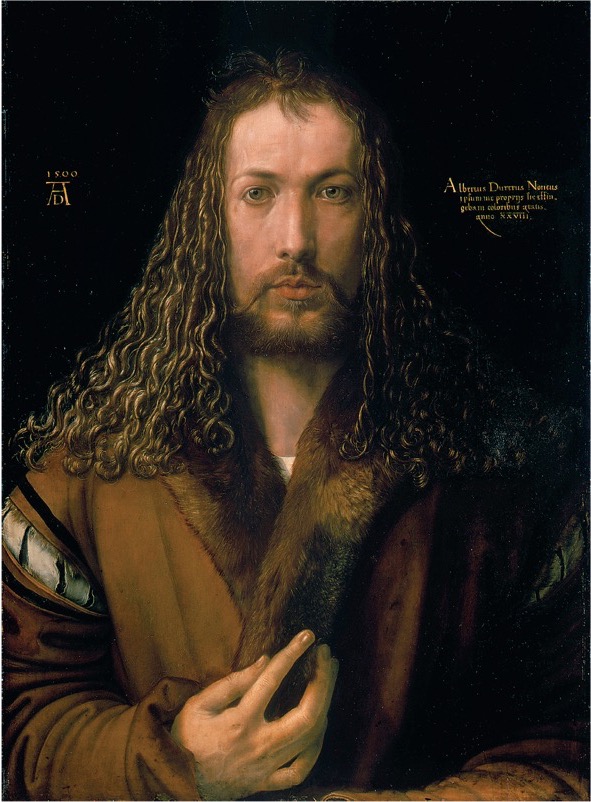
NAME - TITLE - DATE - MEDIUM - LOCATION
1) Significance of the artist’s self portrait
2) Who does the main figure resemble?
3) What does the colors represent
Albrecht Dürer — Self-Portrait —1500 — Oil on wood — Munich.
1) More than worthy to become the subject of his own art → Reflects the BIRTH of an Artist’s SELF CONSCIOUSNESS + AWARENESS
2) The self portrait is displayed almost godly, his fingers are the same pose in the shape of Jesus Christ
3) His most realistic depiction of when he was 28
WHO IS THIS ARTIST:
successful engraver and highly skilled painter.
multifaceted research interests recall those of Leonardo.
The most “Italian” of the Northern artists of the time:
ALBRECHT DURER
Dürer was interested in the classical ideas of the Italian Renaissance and travelled extensively in Italy to study Italian Renaissance art
(2 important trips: 1494–1495, 1505–1507).
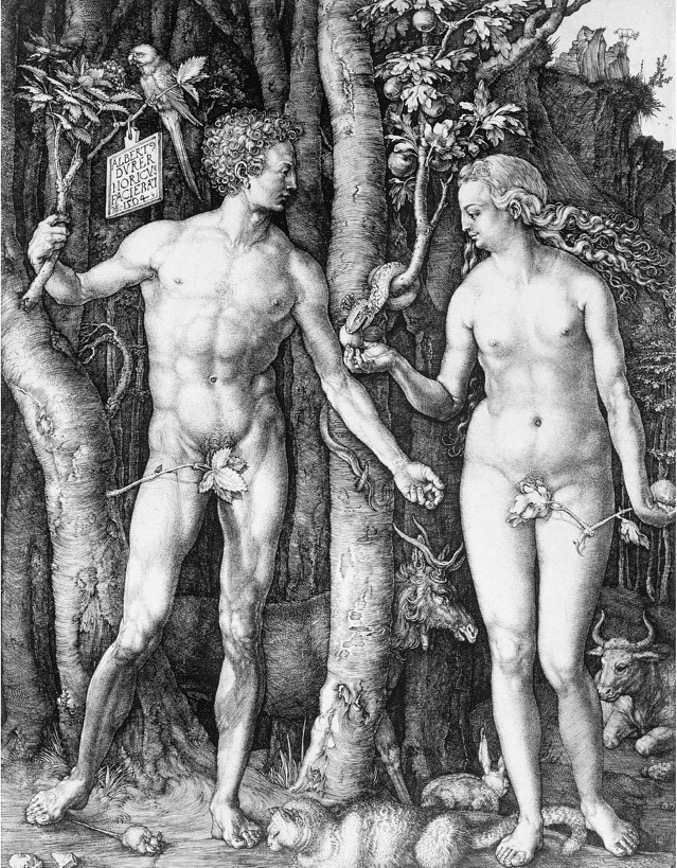
NAME - TITLE - DATE - MEDIUM - LOCATION
1) What theory is experimented here?
2) What type of sculpture does the figures look like?
3) What two styles does this balance?
4) What does the parrot represent?
5) What do the animals represent?
Albrecht Dürer — Fall of Man (Adam and Eve) — 1504 — Engraving — Northern Europe
1) Vitruvian Theory → theory of human proportions
2) Resembles the rendering of ancient Greek/Roman sculptures
3) Classical Antiquity with the figures and Northern naturalism from the nature of the background
4) "Ave (Maria)“ during the Annunciation.
5) The Theory of the four humors of the human body.
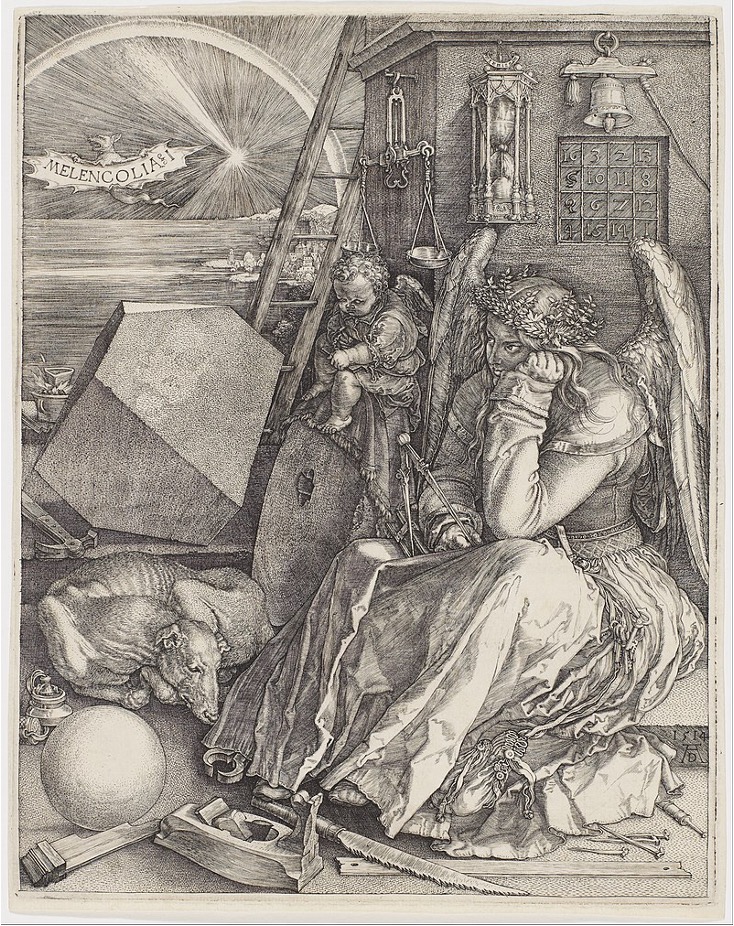
NAME - TITLE - DATE - MEDIUM - LOCATION
1) this represents one of the temperments from the FOUR HUMORS. Which one?
2) There are three types of ___, the first one is ___
3) What does the hour glass represent
Albrecht Dürer — Melencolia I — 1514 —Engraving — Northern Europe
1) Melancholy
2) There are three types of Melancholy, the first one is Artistic Melancholy
3) Time is running out with the hour glass
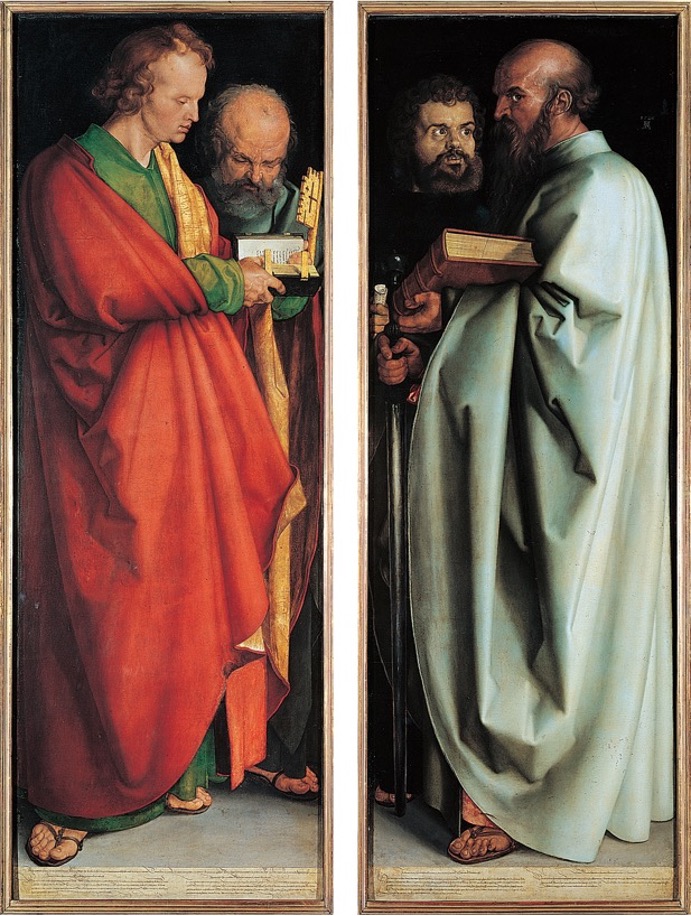
NAME - TITLE - DATE - MEDIUM - LOCATION
1) How does this painting represent the artist becoming a follower
2) Why did the artist receive no commission to create this work?
Albrecht Dürer — Four Apostles, from the city hall — 1526 — Oil on Wood — Nuremberg, Germany, Munich.
1) The Albrecht Durer became a follower of Martin Luther
2) The painting was a personal project created in support of the Protestant Reformation, which discouraged religious art. As a result, he created the work on his own volition and later donated it to the city of Nuremberg, as commissioning sacred art was not common in Protestant churches.
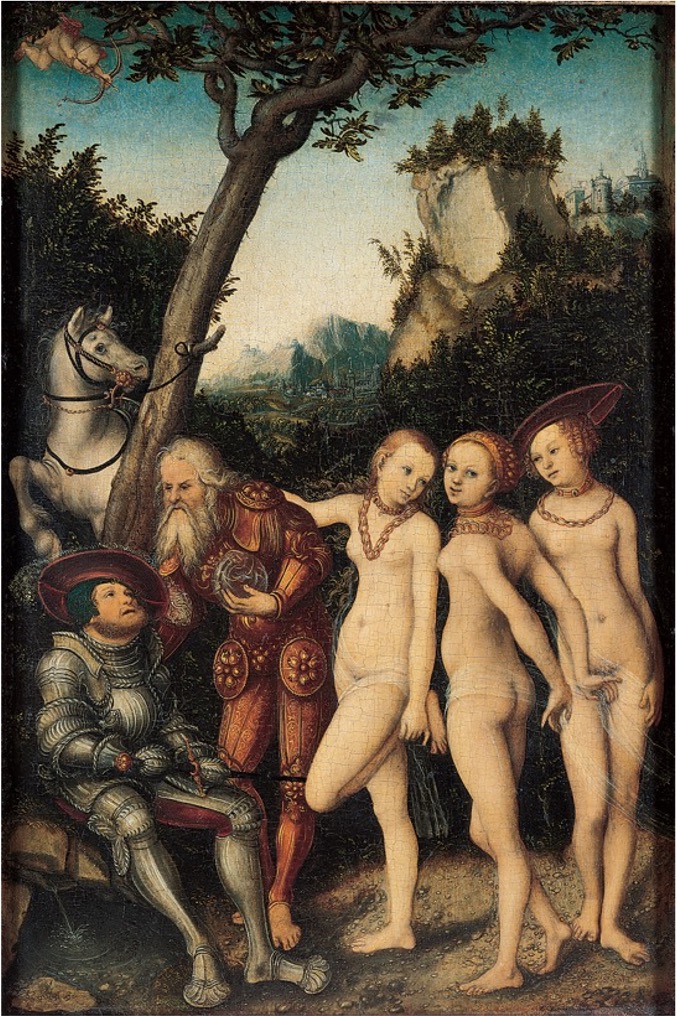
NAME - TITLE - DATE - MEDIUM - LOCATION
1) What did the artist associate with?
2) What does this painting show?
Lucas Cranach the Elder — Judgment of Paris — 1530 — Oil on wood — Staatliche Kunsthalle, Karlsruhe.
1) Lucas Cranach the Elder mostly associated with the Protestant Reformation
2) Judgment of Paris: competition between Juno (Hera), Minerva (Athena), Venus (Aphrodite). Venus won by offering Paris the most beautiful woman in the world (Helen), beginning the Trojan War.
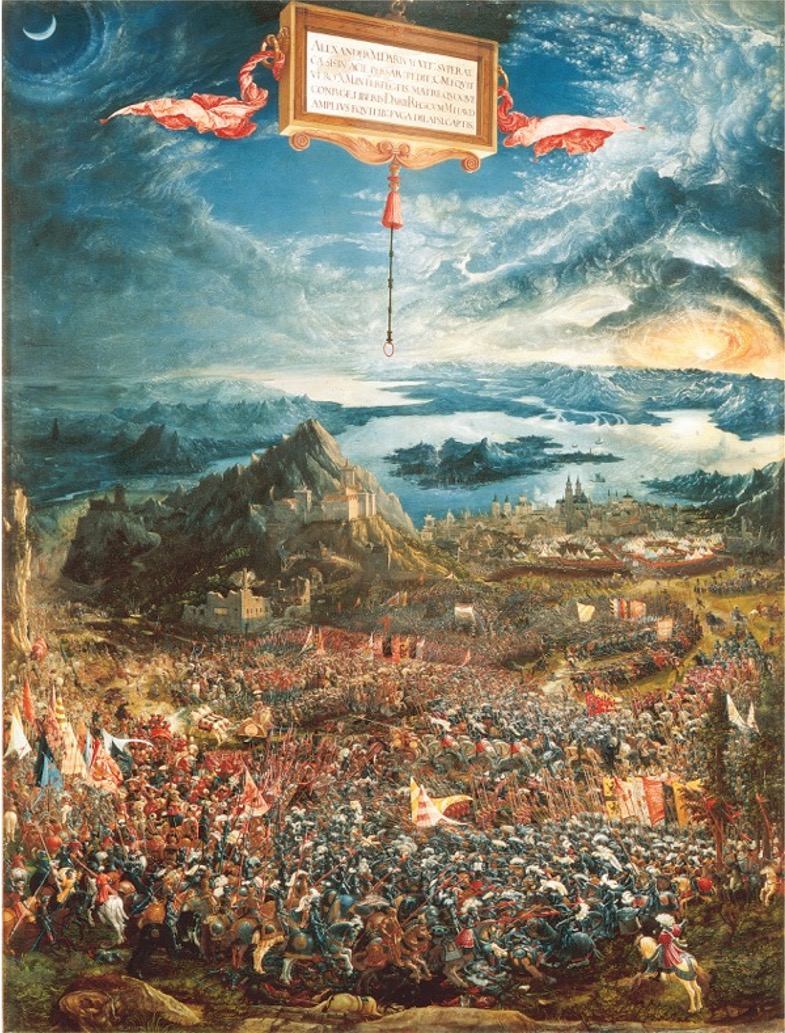
NAME - TITLE - DATE - MEDIUM - LOCATION
1) Who commissioned it and why?
2) What does the painting depict?
3) What does this highlight the importance of?
Albrecht Altdorfer — Battle of Issus — 1529 — Oil on wood — Alte Pinakothek, Munich.
1) Commissioned by Wilhelm IV, Duke of Bavaria, to commemorate the start of his campaign against the Ottomans.
2) The painting depicts Alexander’s defeat of the Persians at the battle of Issus in 333 BCE (attempt to connect contemporary European conflicts with the Ottomans with Alexander’s wars against the Persians).
3) Highlights the importance of Landscape of the Mediterranean world
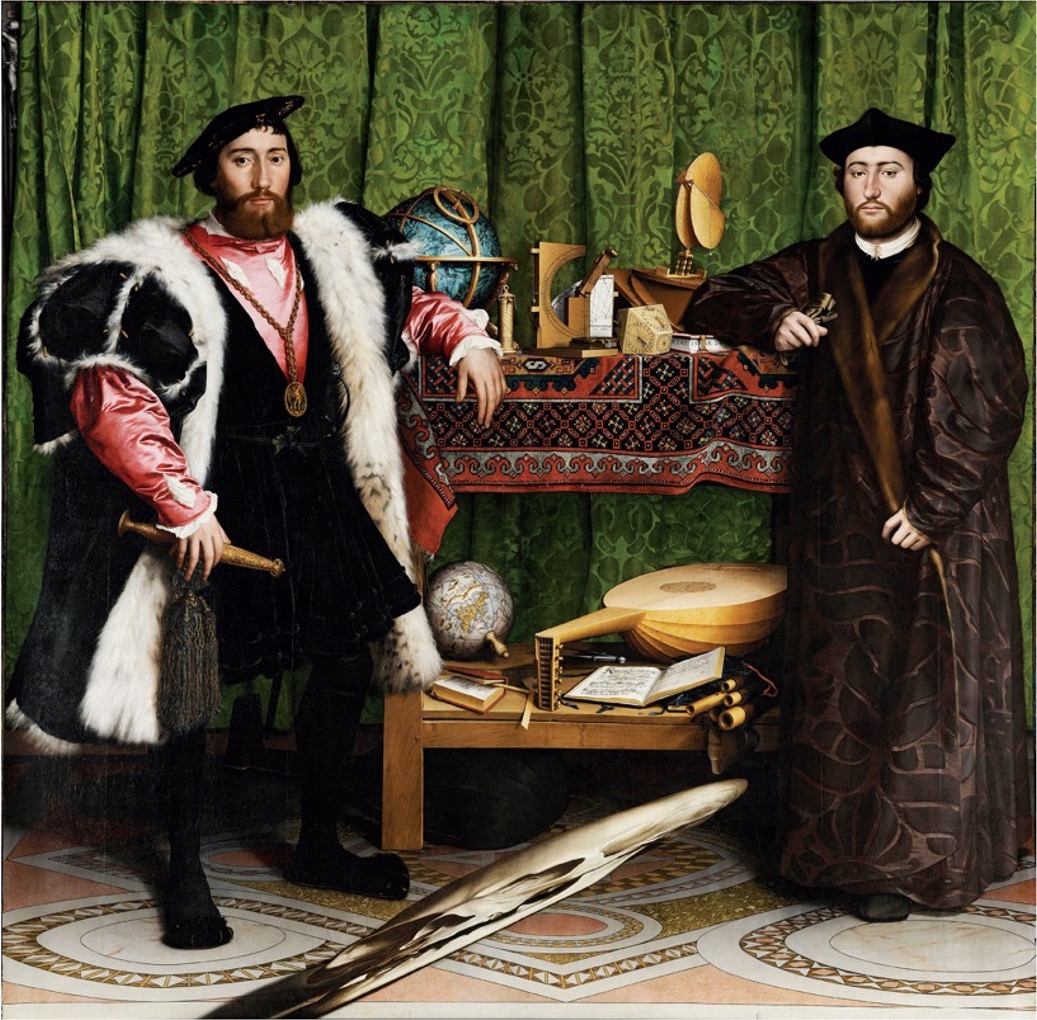
NAME - TITLE - DATE - MEDIUM - LOCATION
1) Who is this a portrait of?
2) What does the top shelf represent?
3) What does the bottom shelf represent?
4) What do the objects as a whole represent?
5) What is the diagonal thing at the bottom?
Hans Holbein the Younger — The French Ambassadors —1533 — Oil and tempera on wood — London
1) Portrait of the French ambassadors to England, Jean de Dinteville (1504–1557) and Georges de Selve (1509–1542).
2) The bottom shelf contains objects which relate to the earth (lute, hymn book, globe)
3) while the upper shelf contains objects associated with the sky (celestial globe, sundial etc):
4) Associated with the earth (bottom) and sky (top) Surrounded by objects reflective of their worldliness and their interests in the arts, math, and science.
5) A skull that represents momento mori
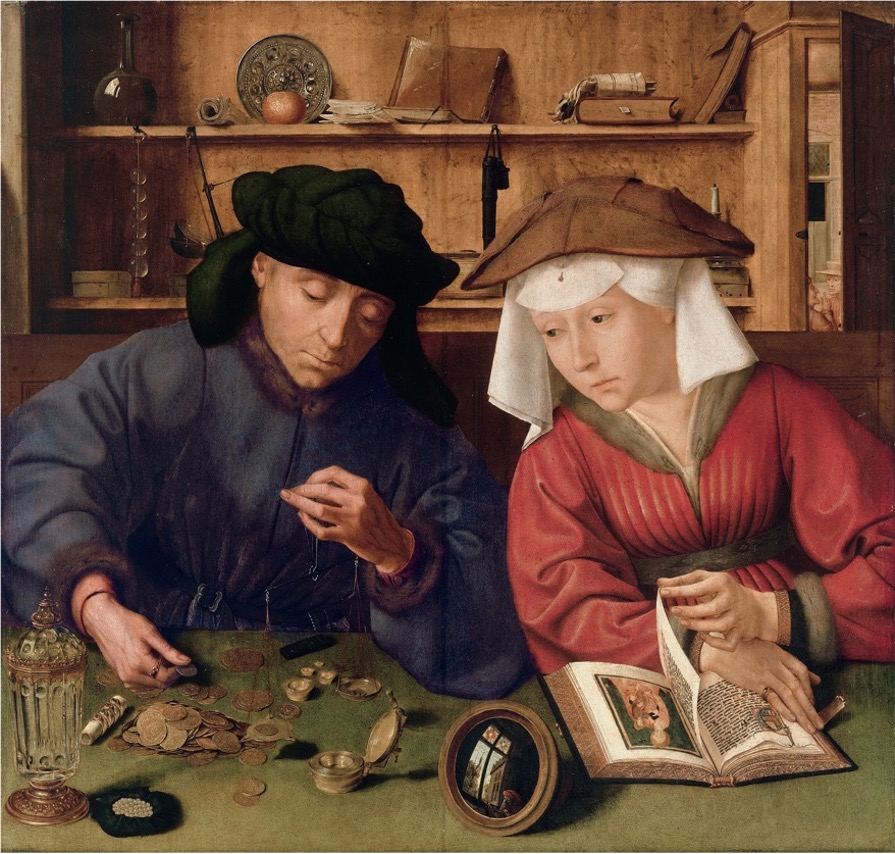
NAME - TITLE - DATE - MEDIUM - LOCATION
1) first level of analysis
2) second level of analysis:
Quinten Massys — Money-Changer and His Wife — 1514 — Oil on wood — Musée du Louvre, Paris.
1) secular scene: portrayal of commercial activity (Antwerp was a highly advanced commercial economy
2) moral metaphor: the wife of the moneylender is more preoccupied observing her husband handling the coins than reading her prayer book.
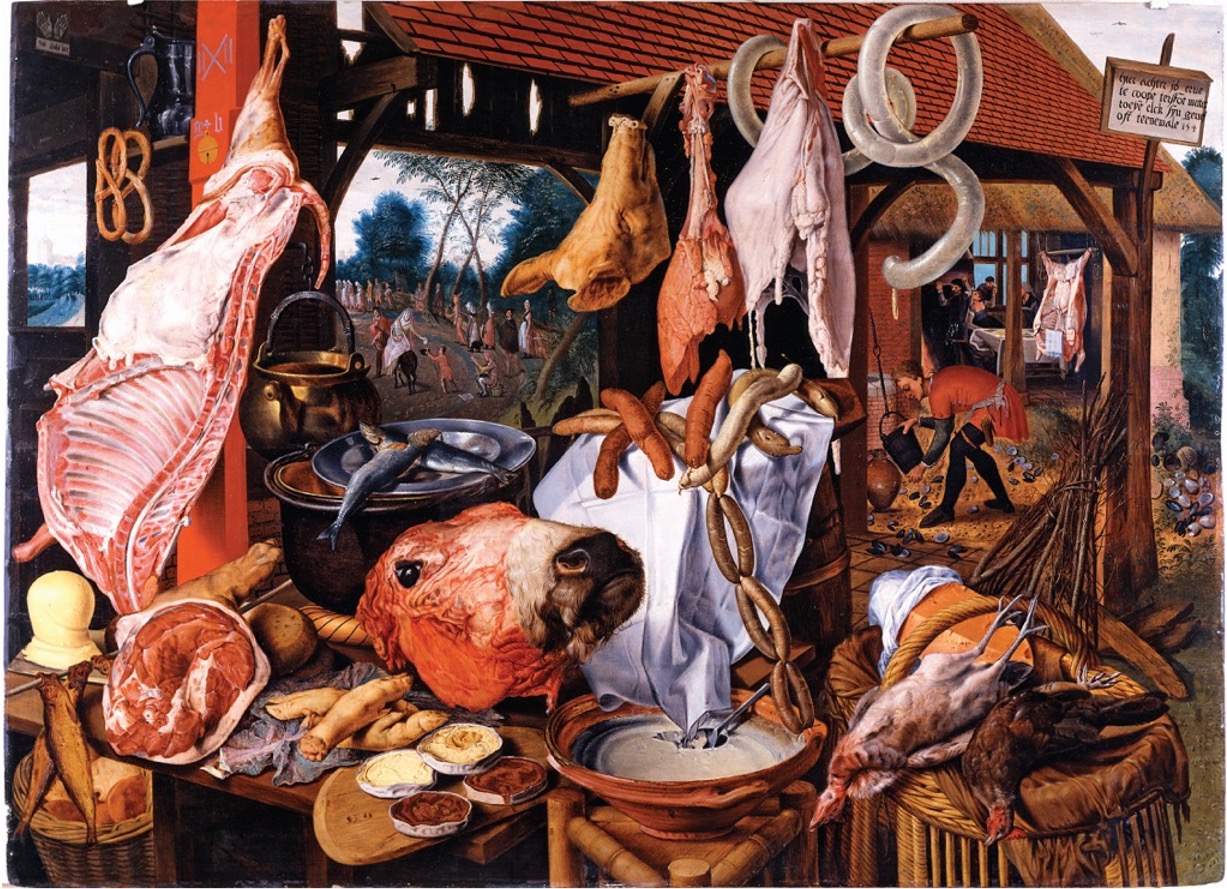
NAME - TITLE - DATE - MEDIUM - LOCATION
1) Type of painting
2) What does it represent?
Pieter Aertsen — Butcher’s Stall —1551 — Oil on wood — Uppsala University Art Collection, Uppsala.
1) Foreground is a stillife scene of meat
2)Scene with moralizing and religious messages.
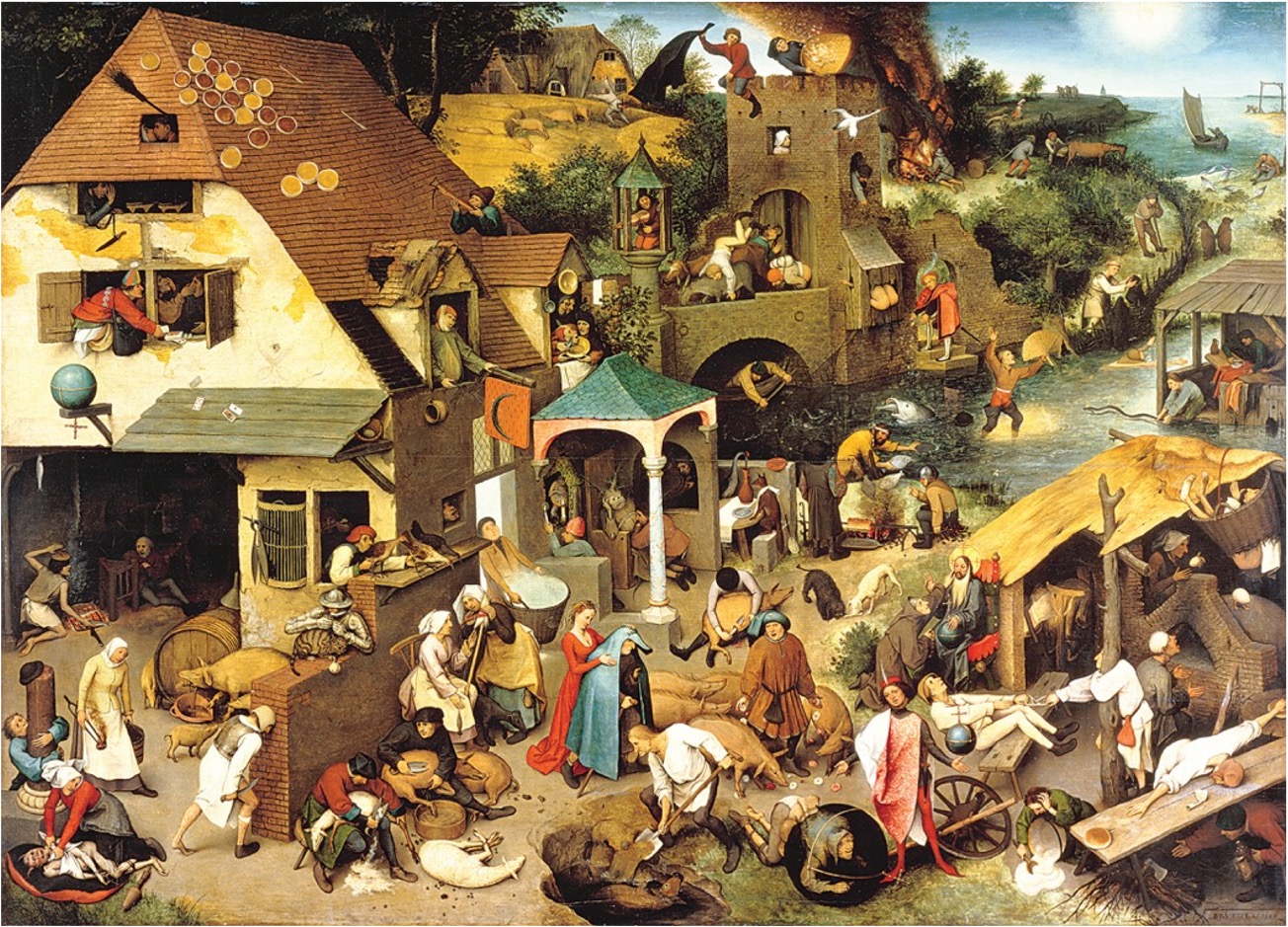
NAME - TITLE - DATE - MEDIUM - LOCATION
1) What is the scene representing?
Pieter Bruegel the Elder — Netherlandish Proverbs — 1559 — Oil on wood — Berlin.
1) Illustrates more than a hundred proverbs in the painting.
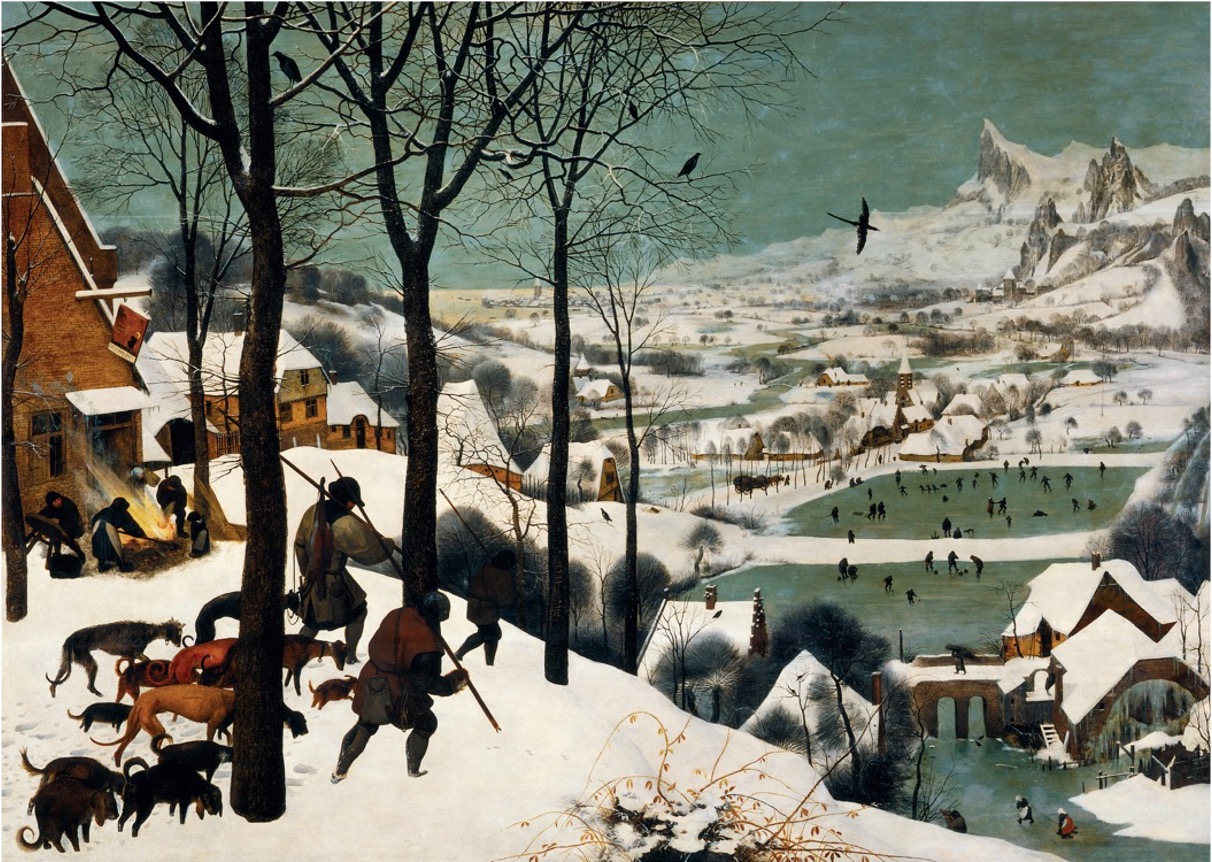
NAME - TITLE - DATE - MEDIUM - LOCATION
1) What does the painting represent?
Pieter Bruegel the Elder — Hunters in the Snow —1565 — Oil on wood — Vienna.
1) Visual representation of winter months (possibly one or two, not the entire season).
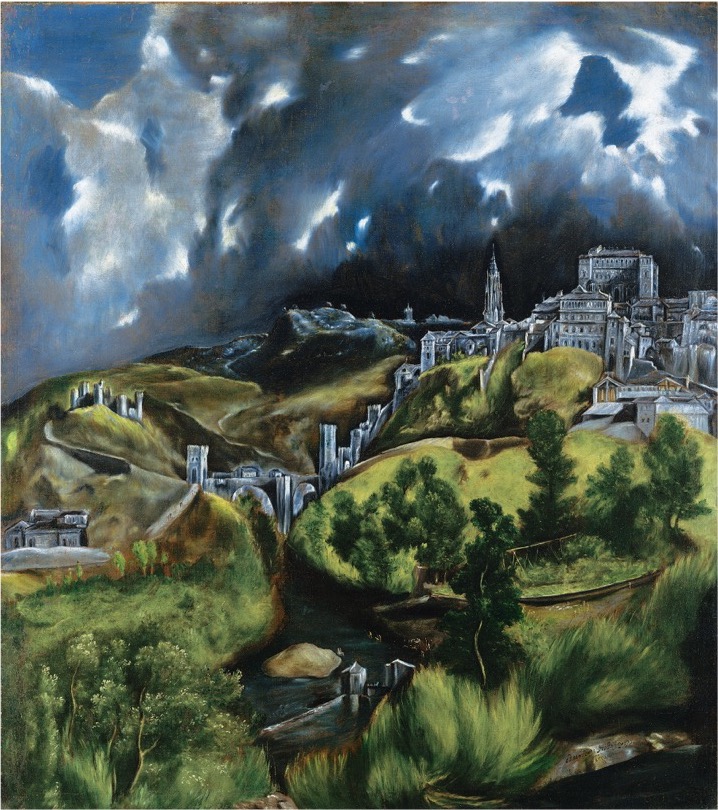
NAME - TITLE - DATE - MEDIUM - LOCATION
1) What does his work resemble?
El Greco — View of Toledo — 1610 — Oil on canvas — Spain
1) El Greco’s work resembles a mixture between Byzantine art and Italian Mannerism. It exhibits a very “Venetian” intensity of colour.
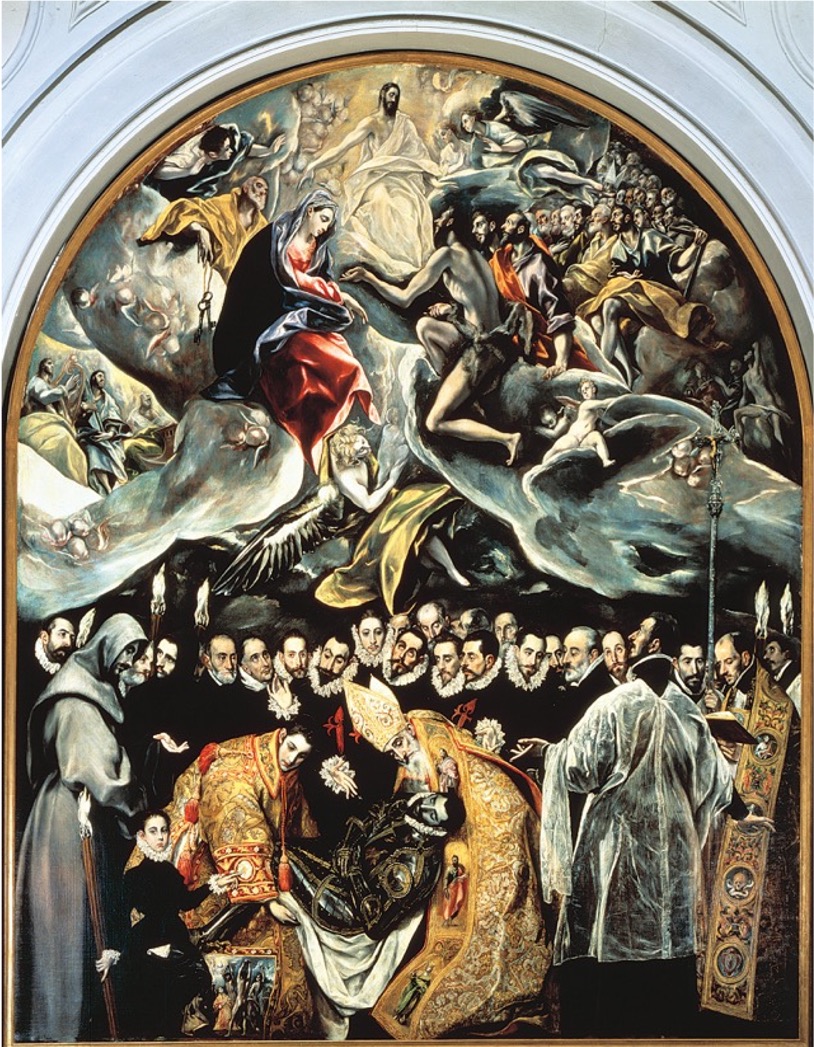
NAME - TITLE - DATE - MEDIUM - LOCATION
1) What is the painting a distinction of?
El Greco, Burial of the Count of Orgaz — 1586 — Oil on canvas — SPAIN Santo Tomé, Toledo.
1) Visual distinction of the earthly and the heavenly (however, the light illuminating the scene is coming from above)
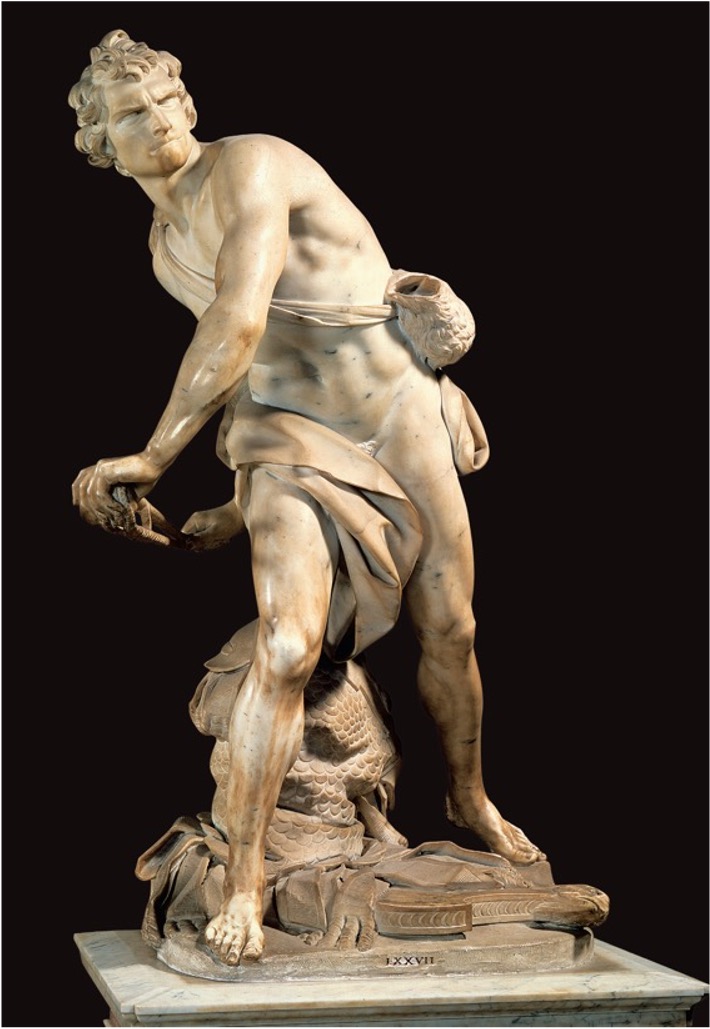
NAME - TITLE - DATE - MEDIUM - LOCATION
1) What moment is represented in the figure?
2) What makes him different from the other statues similar to him?
Gian Lorenzo Bernini — David — 1623 — Marble — Rome, Italy
1) David is represented during combat with strong facial expressions
2) He doesn’t have the normal “contraposto” that the other Davids have
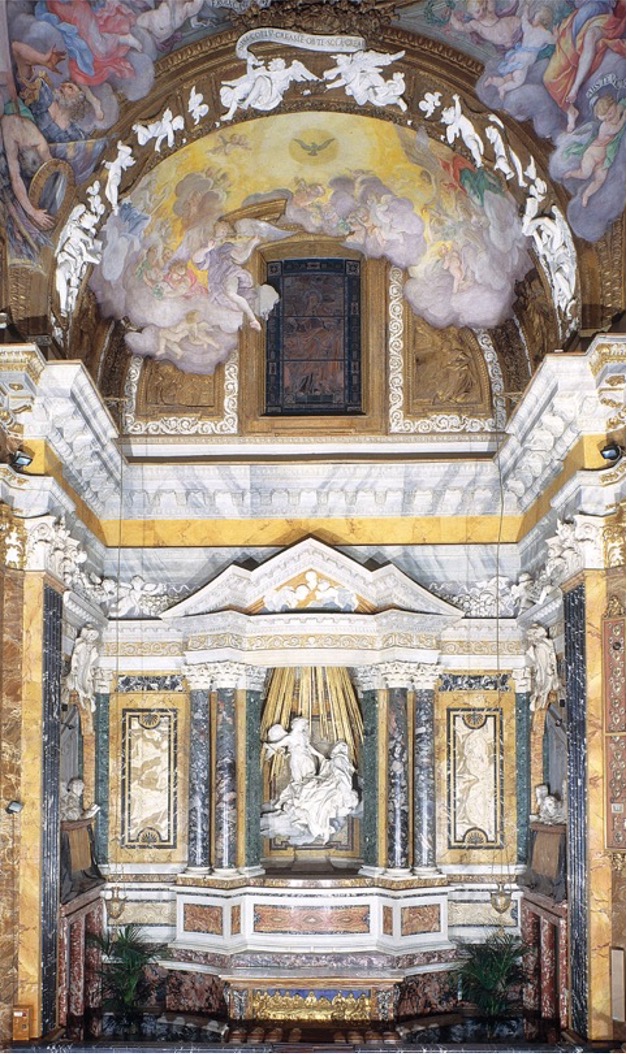
What chapel is this?
What is this wall/statue almost displayed as
Commission for Cornaro chapel of Santa Maria della Vittoria.
Heavenly drama depicted like a theater scene
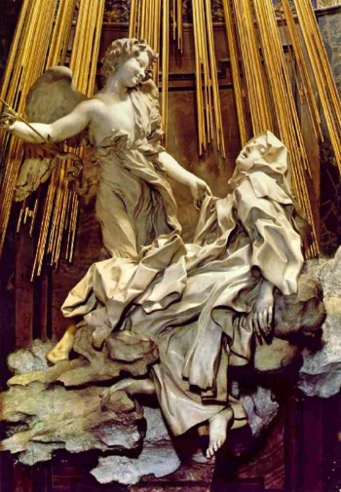
NAME - TITLE - DATE - MEDIUM - LOCATION
Gian Lorenzo Bernini — Ecstasy of Saint Teresa — 1847-1652 — Marble — Cornaro chapel, Santa Maria della Vittoria, Rome, Italy.
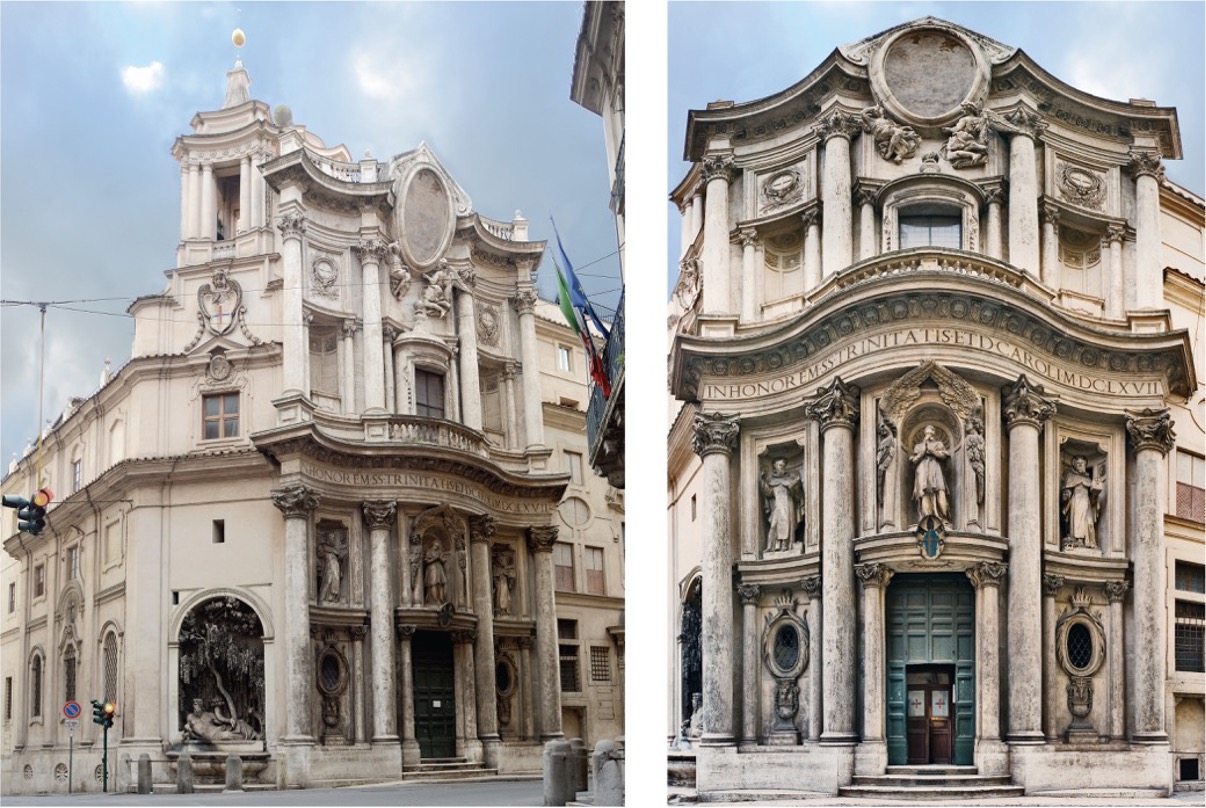
What chapel is this and who designed it?
San Carlo alle Quattro Fontane by Francesco Borromini
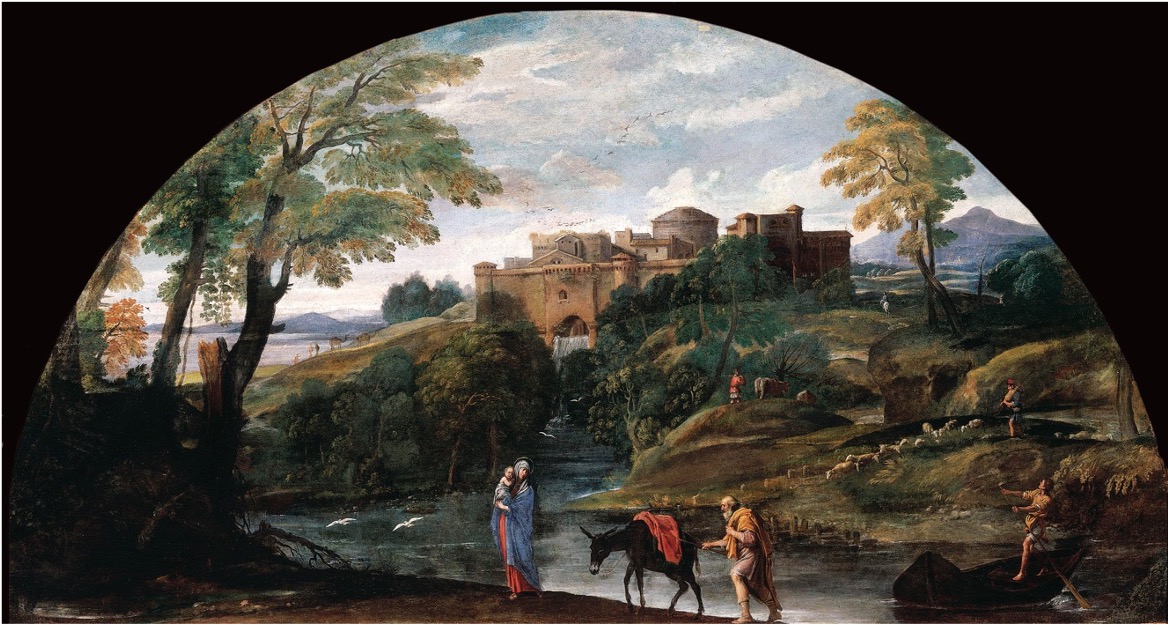
NAME - TITLE - DATE - MEDIUM - LOCATION
Annibale Carracci — Flight into Egypt — 1603/1604 — Oil on canvas — Rome
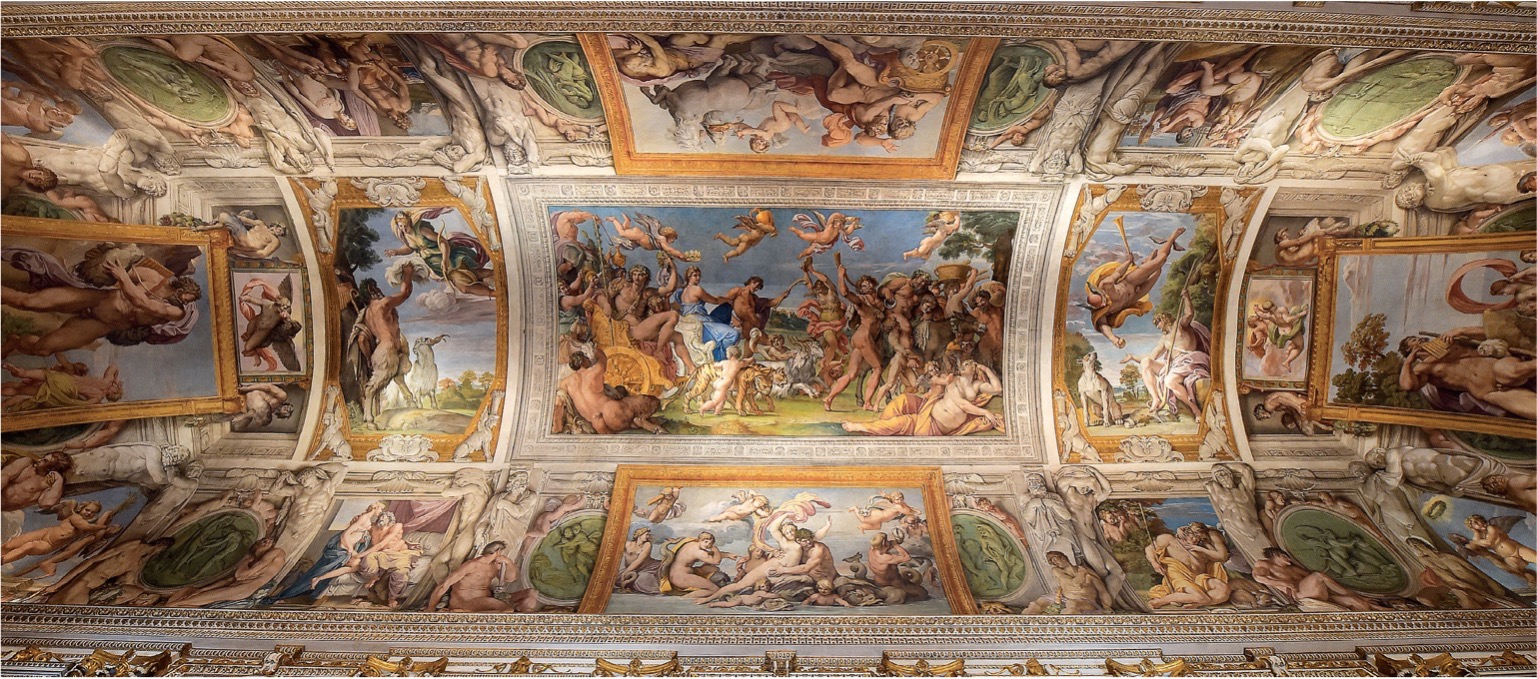
NAME - TITLE - DATE - MEDIUM - LOCATION
Annibale Carracci — Loves of the Gods — 1597-1601 — ceiling frescoes in the gallery, Palazzo Farnese — Rome, Italy
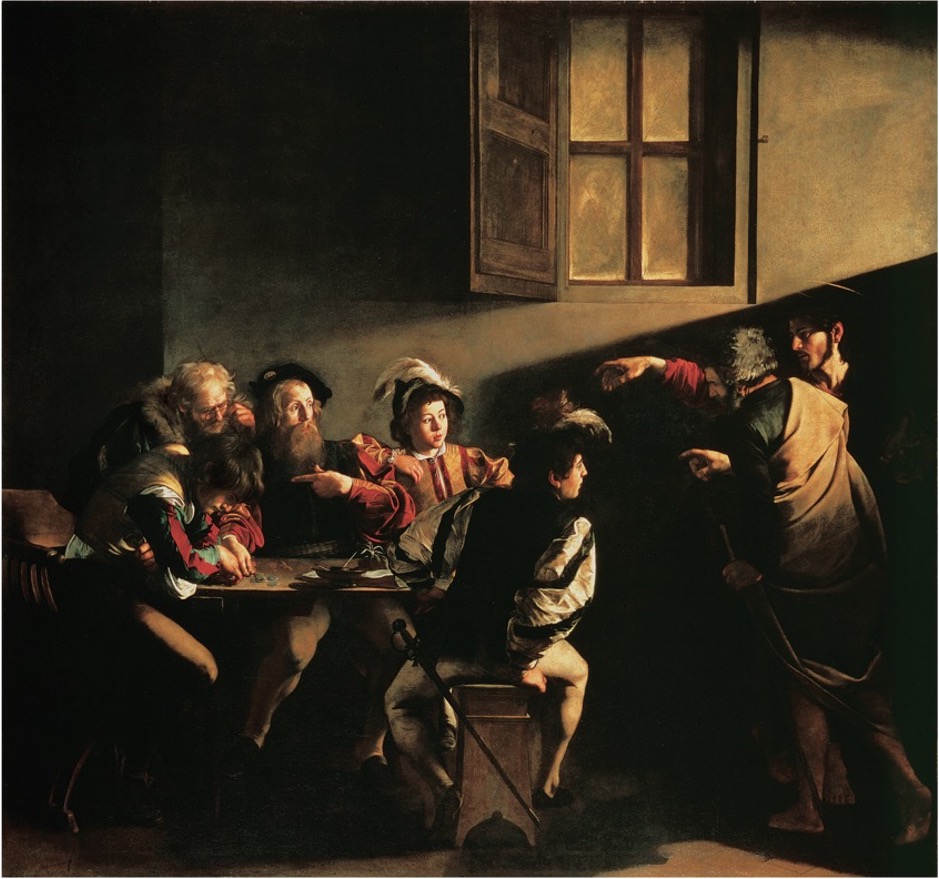
NAME - TITLE - DATE - MEDIUM - LOCATION
Caravaggio — Calling of Saint Matthew — 1597-1601 — Oil on canvas — Contarelli chapel, San Luigi dei Francesi, Rome.
1) Caravaggio’s naturalism: representation of sacred subjects as human dramas, taking place in easily recognizable contemporary human contexts (unidealized figures, commonplace settings).
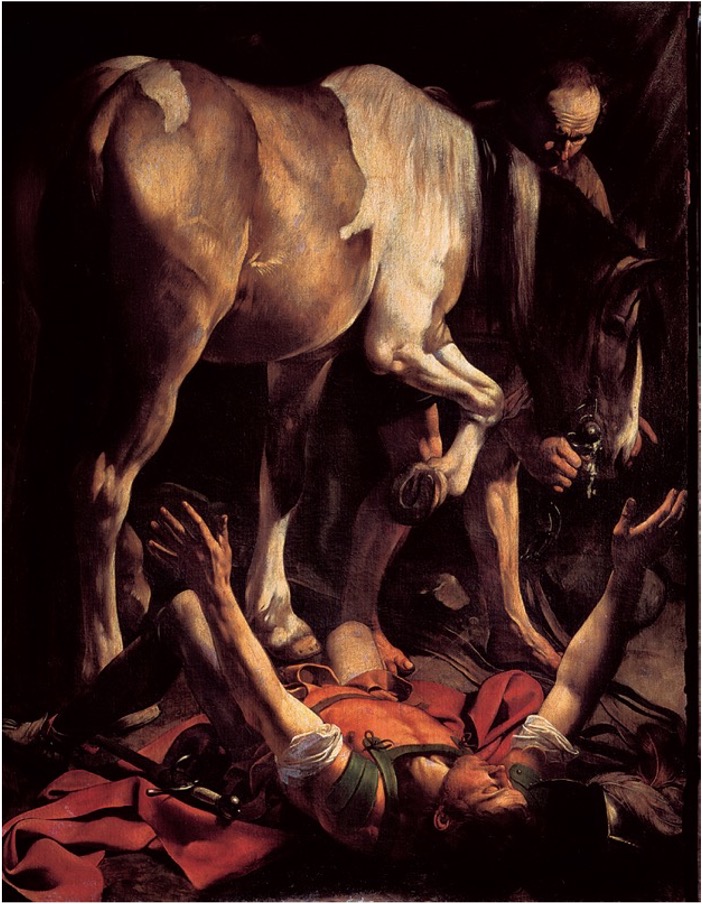
NAME - TITLE - DATE - MEDIUM - LOCATION
1) What elemnt is used here? What’s it called?
Caravaggio — Conversion of Saint Paul — 1601 — Oil on canvas — Cerasi chapel, Santa Maria del Popolo, Rome.
1) Tenebrism: term coined after Caravaggio’s extensive use of very dark backgrounds (tenebroso = dark in Latin)
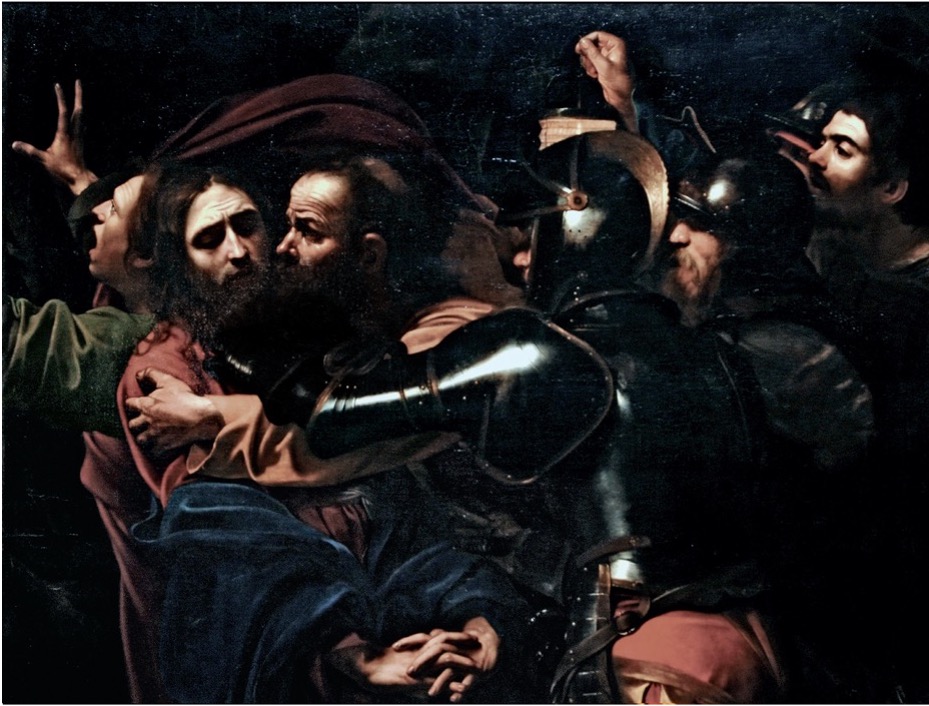
NAME - TITLE - DATE - MEDIUM - LOCATION
1) What is the significance of this painting?
Caravaggio — The Taking of Christ, from the Palazzo Mattei — 1602 — Oil on canvas — Rome, Italy
1) It’s cropped format
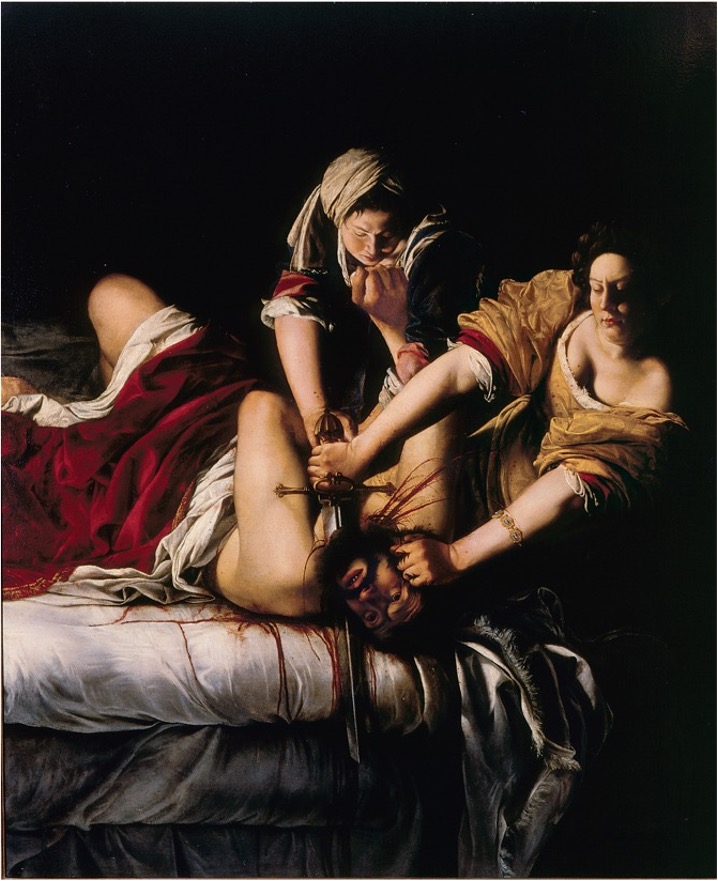
NAME - TITLE - DATE - MEDIUM - LOCATION
1) What art piece is it’s inspiration ?
Artemisia Gentileschi — Judith Slaying Holofernes, — 1614-1620 — Oil on canvas — Florence.
1) Caravaggio’s Judith Beheading Holofernes (1600)
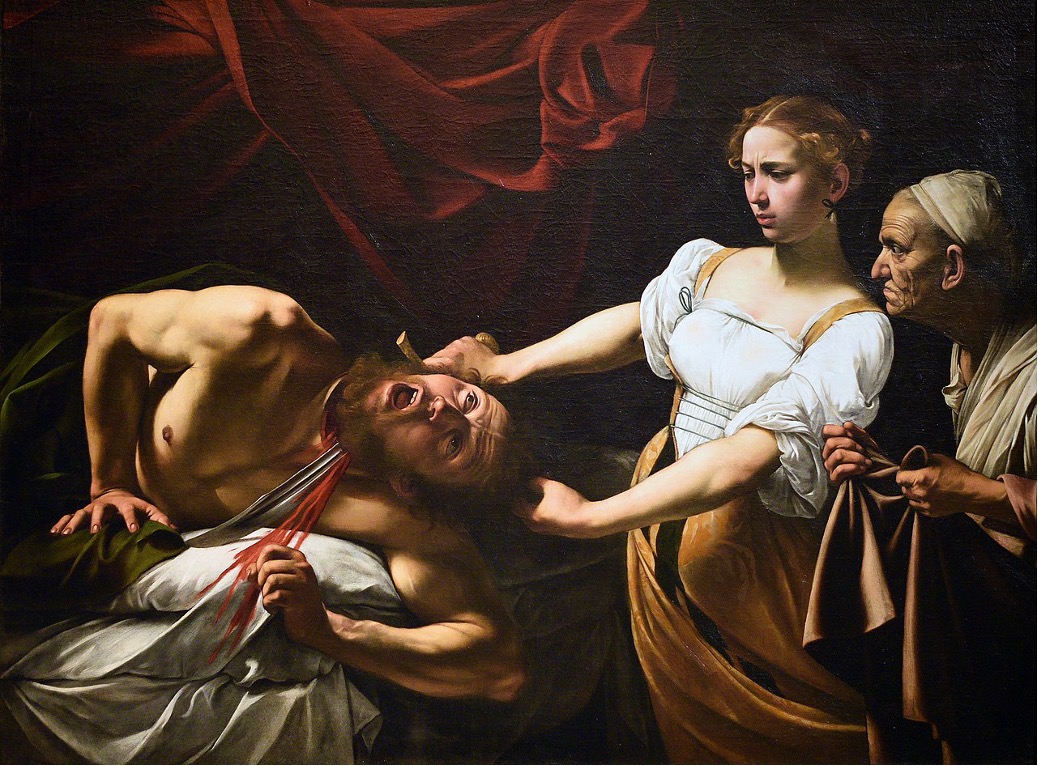
NAME - TITLE - DATE - MEDIUM - LOCATION
1) Who was inspired by this piece?
Caravaggio — Judith Beheading Holofernes —1600
1) Artemisia Gentileschi, Judith Slaying Holofernes, 1614-1620, Oil on canvas — Florence.
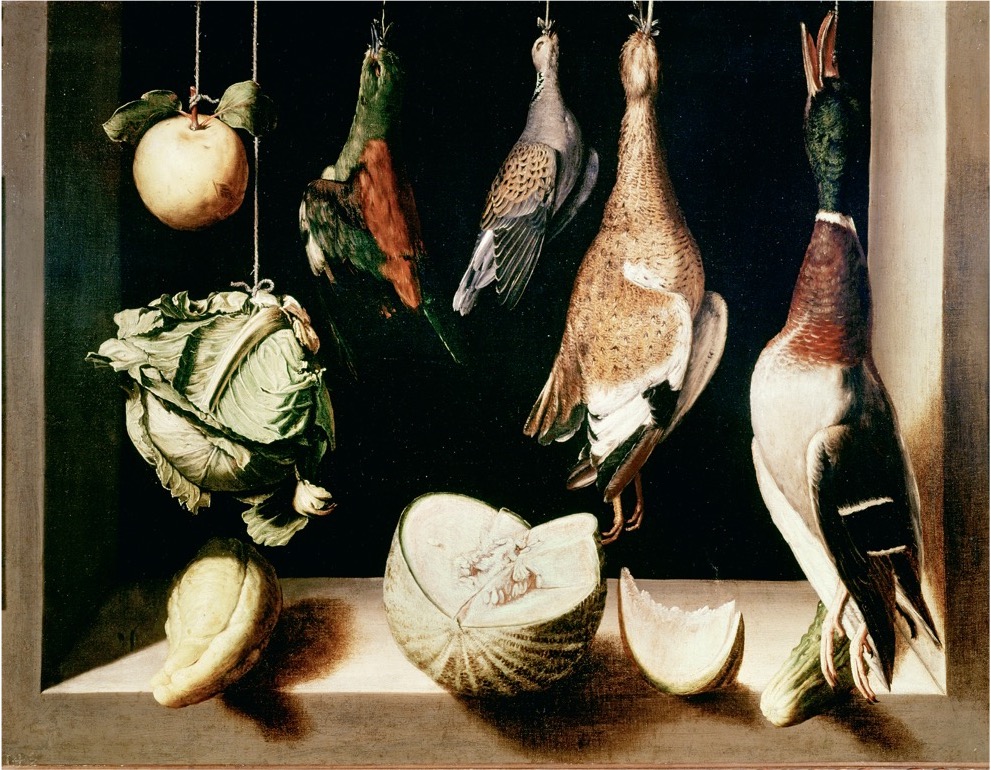
NAME - TITLE - DATE - MEDIUM - LOCATION
Juan Sánchez Cotán — Still Life with Game Fowl — 1600–1603 — Oil on canvas
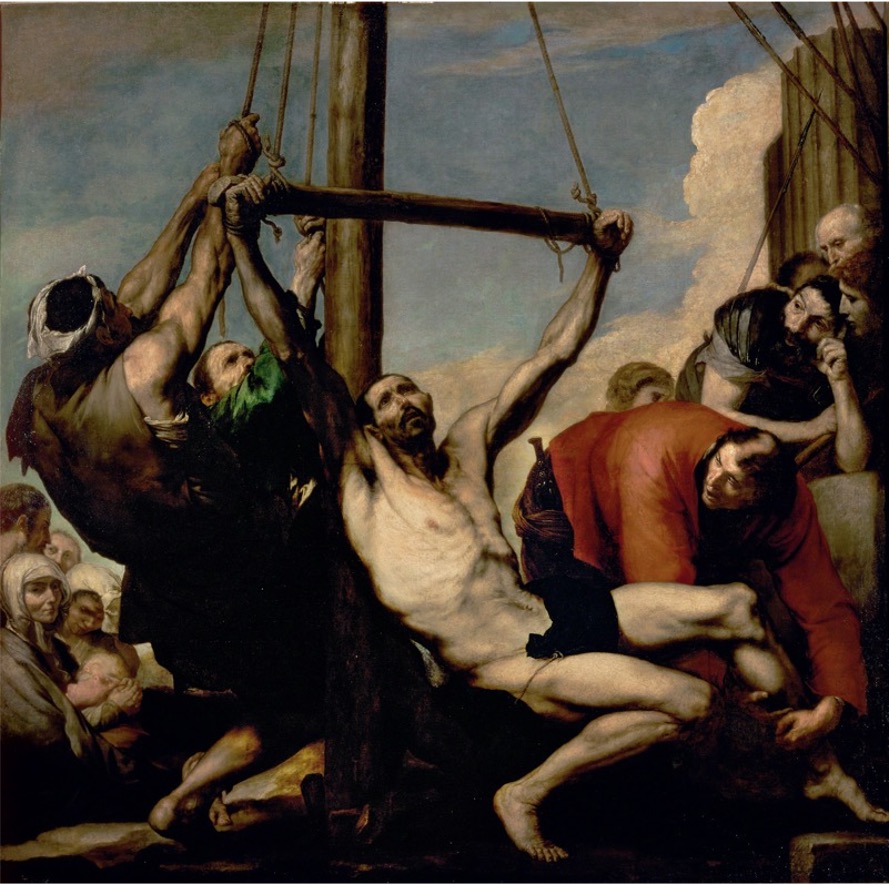
NAME - TITLE - DATE - MEDIUM - LOCATION
1) What three ways did scenes of death show great appeal in Spain?
José de Ribera — Martyrdom of Saint Philip — 1639 — Oil on canvas — Madrid.
1)Devoutly Catholic.
2)Counter-Reformation context.
3)Allowed artists to render extreme emotion.
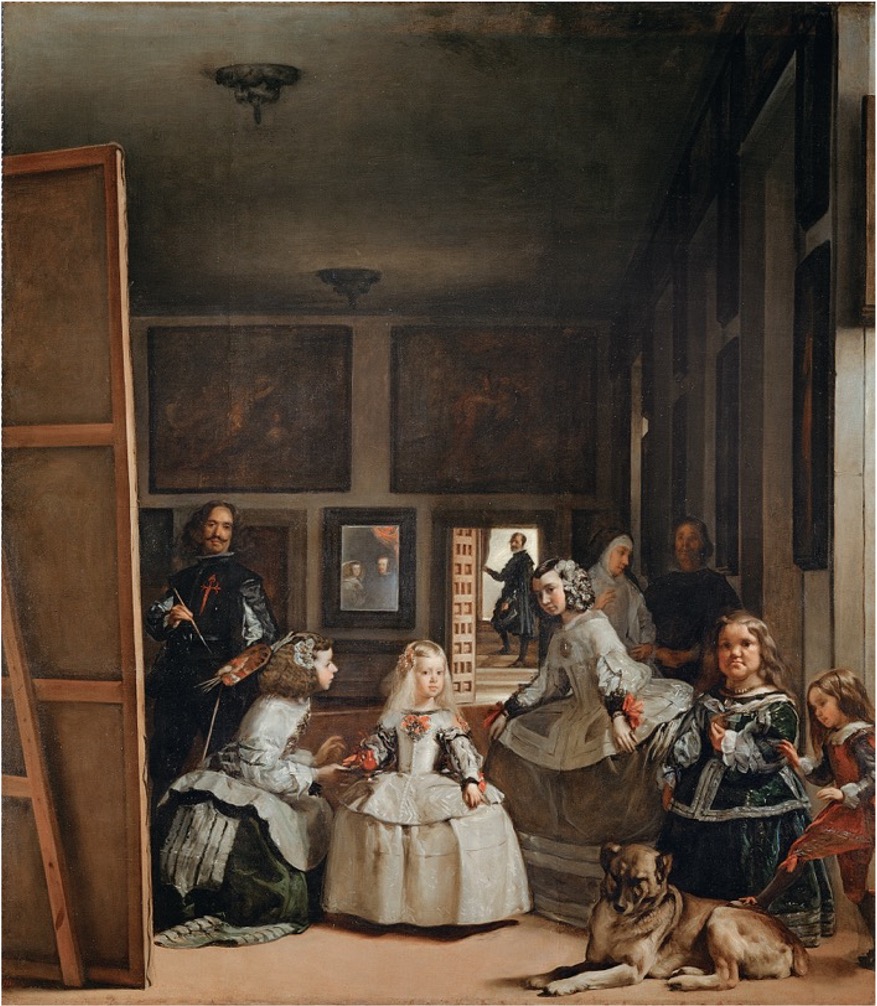
NAME - TITLE - DATE - MEDIUM - LOCATION
1) Which king did this artist work for a lot?
2) What is the deeper significance of this painting?
Diego Velázquez — Las Meninas (The Maids of Honor) — 1656 — Oil on canvas — Museo del Prado, Madrid.
1) Diego Velázquez (1599 – 1660) was known for his works for King Philip IV
2) Extreme optical and narrative complexity with various layers of reality co-existing
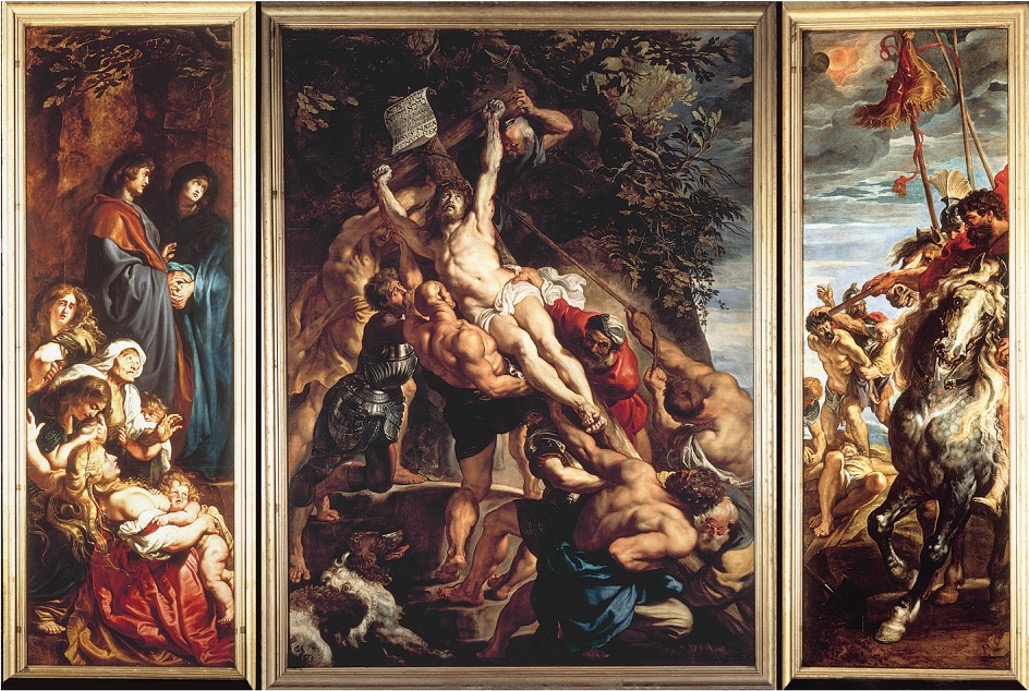
NAME - TITLE - DATE - MEDIUM - LOCATION
Peter Paul Rubens, Elevation of the Cross, from Saint Walburga, Antwerp, 1610. Oil on wood, center panel 15' 1 7/8" x 11' 1 1/2", each wing 15' 1 7/8" x 4' 11". Antwerp Cathedral, Antwerp.
NAME - TITLE - DATE - MEDIUM - LOCATION
Peter Paul Rubens, Consequences of War, 1638–1639. Oil on canvas, 6' 9" x 11' 3 7/8". Galleria Palatina, Palazzo Pitti, Florence.
NAME - TITLE - DATE - MEDIUM - LOCATION
Clara Peeters, Still Life with Flowers, Goblet, Dried Fruit, and Pretzels, 1611. Oil on panel, 1' 7 3/4" x 2' 1 1/4". Museo del Prado, Madrid.
NAME - TITLE - DATE - MEDIUM - LOCATION
NAME - TITLE - DATE - MEDIUM - LOCATION
NAME - TITLE - DATE - MEDIUM - LOCATION
 Note
Note  Flashcards (20)