commercial cells
 Call Kai
 Learn
Learn Practice Test
 Spaced Repetition
 Match
Match Flashcards
 Knowt Play
1/17

Earn XP
Description and Tags
overall eqns given for completeness but can be deduced
Name | Mastery | Learn | Test | Matching | Spaced | Call with Kai |
|---|
No analytics yet
Send a link to your students to track their progress
18 Terms
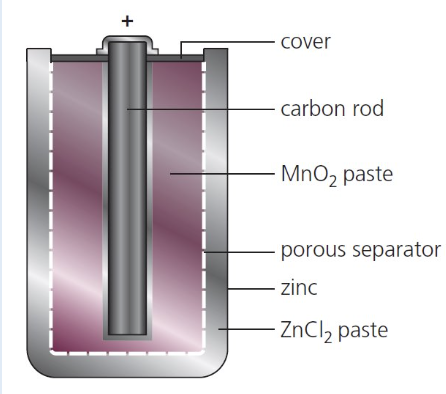
give the features of non rechargeable cells and explain why they are necessary:
porous separator - allows ions to move/flow/transfer
carbon rod - made from graphite to allow e- to flow
zinc - container for cell (gets used up)
give an example of a non rechargeable cell:
either:
alkaline battery
dry cell
suggest why a non rechargeable cell often leaks after being used for a long time (1)
Zn oxidised

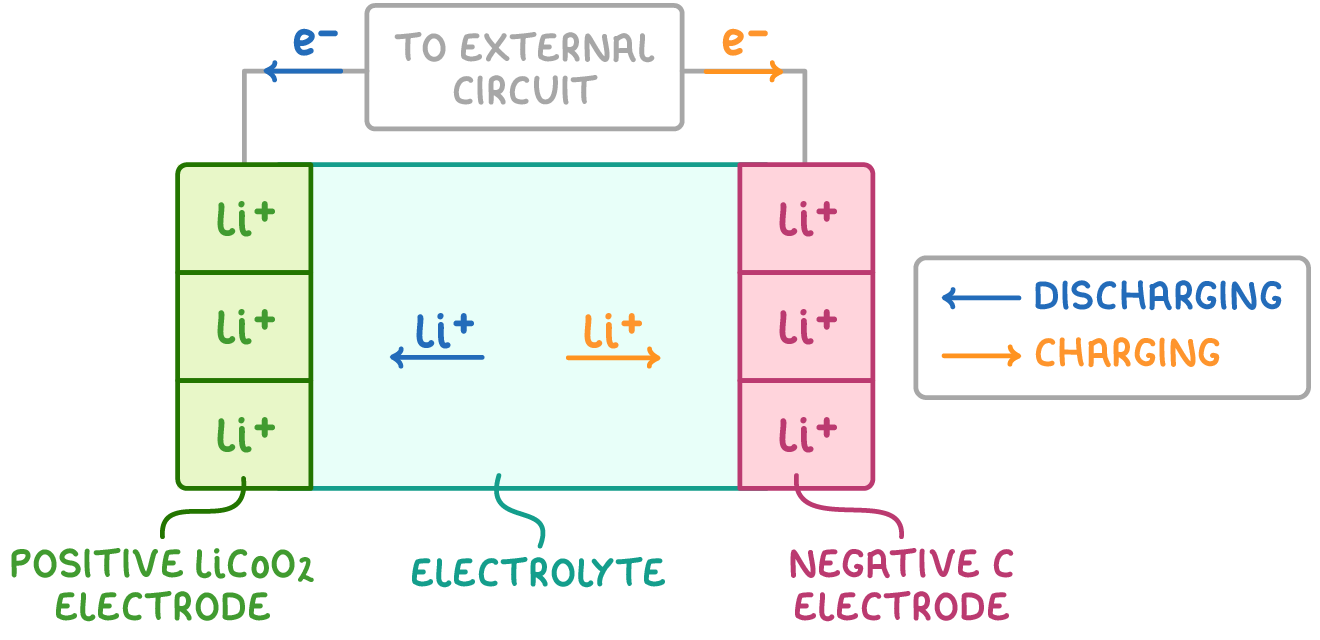
give an example of a rechargeable cell and give the 2 ½ eqns associated w/ it:
lithium ion:
Li+ + CoO2 + e- ⇌ LiCoO2 (+ve electrode)
Li+ + e- ⇌ Li (-ve electrode)
give the overall eqn for the reaction that occurs in a lithium-ion cell:
Li + CoO2 ⇌ LiCoO2
for a rechargeable reaction, what do the different directions of the reaction apply to?
forward reaction = discharge (being used)
backward reaction = recharge (being charged)
give the 3 types of cell:
non rechargeable (irreversible)
rechargeable (reversible)
fuel cells
describe how an alkaline hydrogen-oxygen fuel cell works:
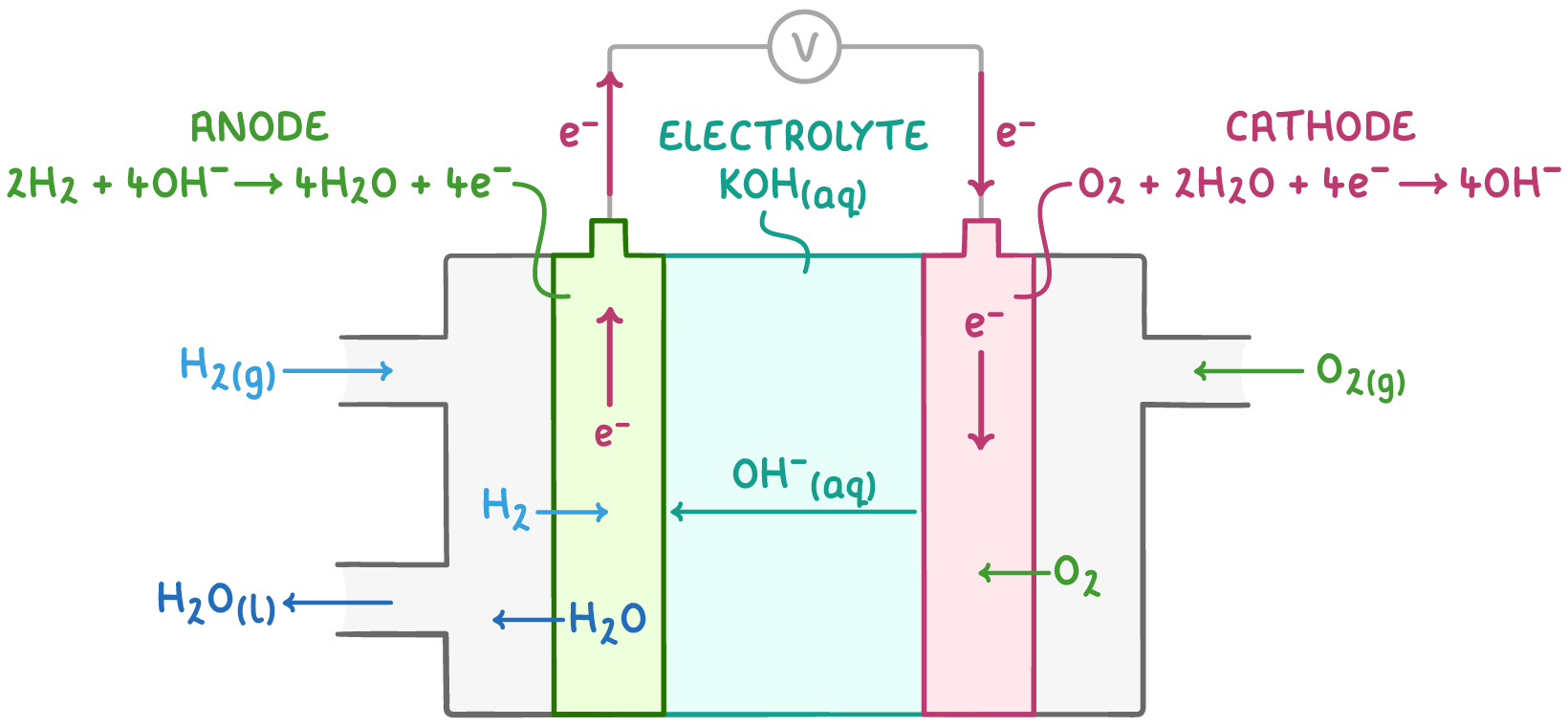
H2 and O2 gases are supplied to separate platinum-containing electrodes
an anion-exchange membrane separates the electrodes, allowing passage of anions (OH-) and water but not the gaseous reactants
the electrolyte is an aq KOH soln
e- flow from the -ve electrode through an external circuit to the +ve electrode, while OH- ions migrate through the anion-exchange membrane towards the -ve electrode
give the eqn for the reaction at the -ve electrode of an alkaline hydrogen-oxygen fuel cell:
H2 (g) + 2OH- (aq) → 2H2O (l) + 2e-
give the eqn for the reaction at the +ve electrode of an alkaline hydrogen-oxygen fuel cell:
O2 (g) + 2H2O (l) + 4e- → 4OH- (aq)
give the overall eqn for the reaction that occurs in an alkaline hydrogen-oxygen fuel cell:
2H2 + O2 → H2O
give a benefit of using non-rechargeable cells:
cheap
give a drawback of using non-rechargeable cells:
difficult to dispose of/waste issues
give 3 benefits of using rechargeable cells:
less waste as metal compounds reused
cheaper in the long run
lower environmental impact
give 2 drawbacks of using rechargeable cells:
need E source to recharge
some waste at end of useful life
give 3 benefits of using hydrogen fuel cells:
converts more of the available E from combustion of H2 into KE of car
no pollutants (CO2, SO2 etc.) as only waste product is H2O
efficient
no need to recharge
give 4 drawbacks of using hydrogen fuel cells:
need constant fuel supply
H2 is flammable and explosive
high cost
difficult to source H2 (usually made using fossil fuels)
suggest why the recharging of a lithium cell may lead to the release of CO2 into the atmosphere (1)
electricity from recharging the cell may come from power stations burning fossil fuel
Explore top notes

Explore top flashcards
