Bio132: 18.4-5: Genomes and Their Evolution
 Call Kai
 Learn
Learn Practice Test
 Spaced Repetition
 Match
Match Flashcards
 Knowt Play
1/51

There's no tags or description
Looks like no tags are added yet.
Name | Mastery | Learn | Test | Matching | Spaced | Call with Kai |
|---|
No analytics yet
Send a link to your students to track their progress
52 Terms
Multicellular eukaryotes have much _______ and many ______
Noncoding DNA; multigene families
Duplication, rearrangement, and mutation of DNA contribute to ______
Genome evolution
.Comparing genome sequences provides ______ and development
Clues to evolution
What are some examples of DNA sequences and processes that contribute to genome variation and evolution?
Transposable elements, repetitive DNA sequences, pseudogenes, deletions, and duplications.
The bulk of most eukaryotic genomes encodes ______nor functional RNAs:
Neither proteins, 98.5%
About a quarter of the human genome codes for _____ and _______.
Introns, gene‐related regulatory sequences
Define Introns
A part of the DNA sequence spliced out of before translation into protein.
Intergenic DNA is…
Noncoding DNA found between genes
Define Psuedogenes
Former genes that have accumulated mutations and are now nonfunctional
Define Repetitive DNA
Present DNA in multiple copies in the genome
About three-fourths of repetitive DNA is made up of _______ and sequences related to them
Transposable elements
Define Transposons
A mobile DNA segment
The first evidence for _______ came from geneticist Barbara McClintock’s breeding experiments with Indian corn (1940-50)
Mobile DNA segments
McClintock identified changes in the color of corn kernels that made sense only if…
Some genetic elements move from other genome locations into the genes for kernel color
These _____ move from one site to another in a cell’s DNA; they are present in both prokaryotes and eukaryotes
Transposable elements
What are transposons, and how do they move?
Transposons are eukaryotic transposable elements that move by a “cut” or “copy-and-paste” method, sometimes leaving a copy behind.
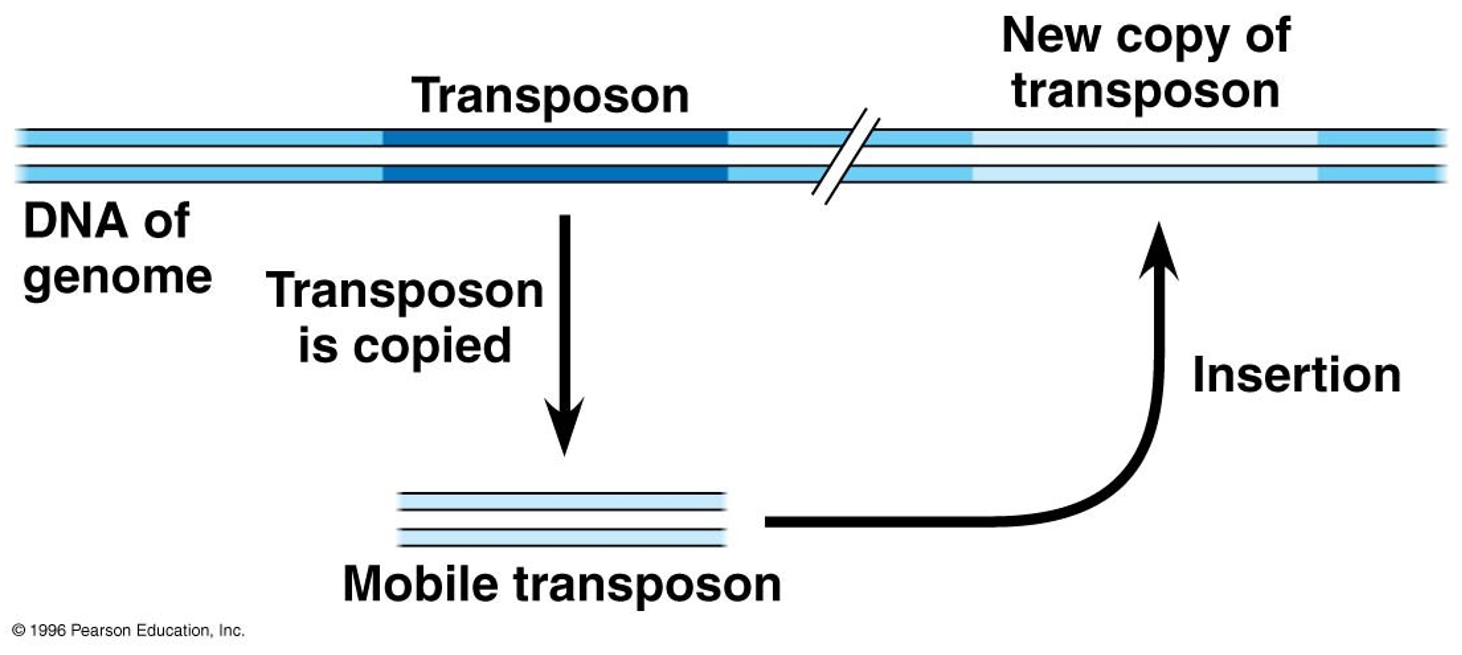
What is an example of a Trasnposon?
Alu elements.
What are retrotransposons, and how do they move?
Retrotransposons are eukaryotic transposable elements that move using an RNA intermediate and always leave a copy behind.
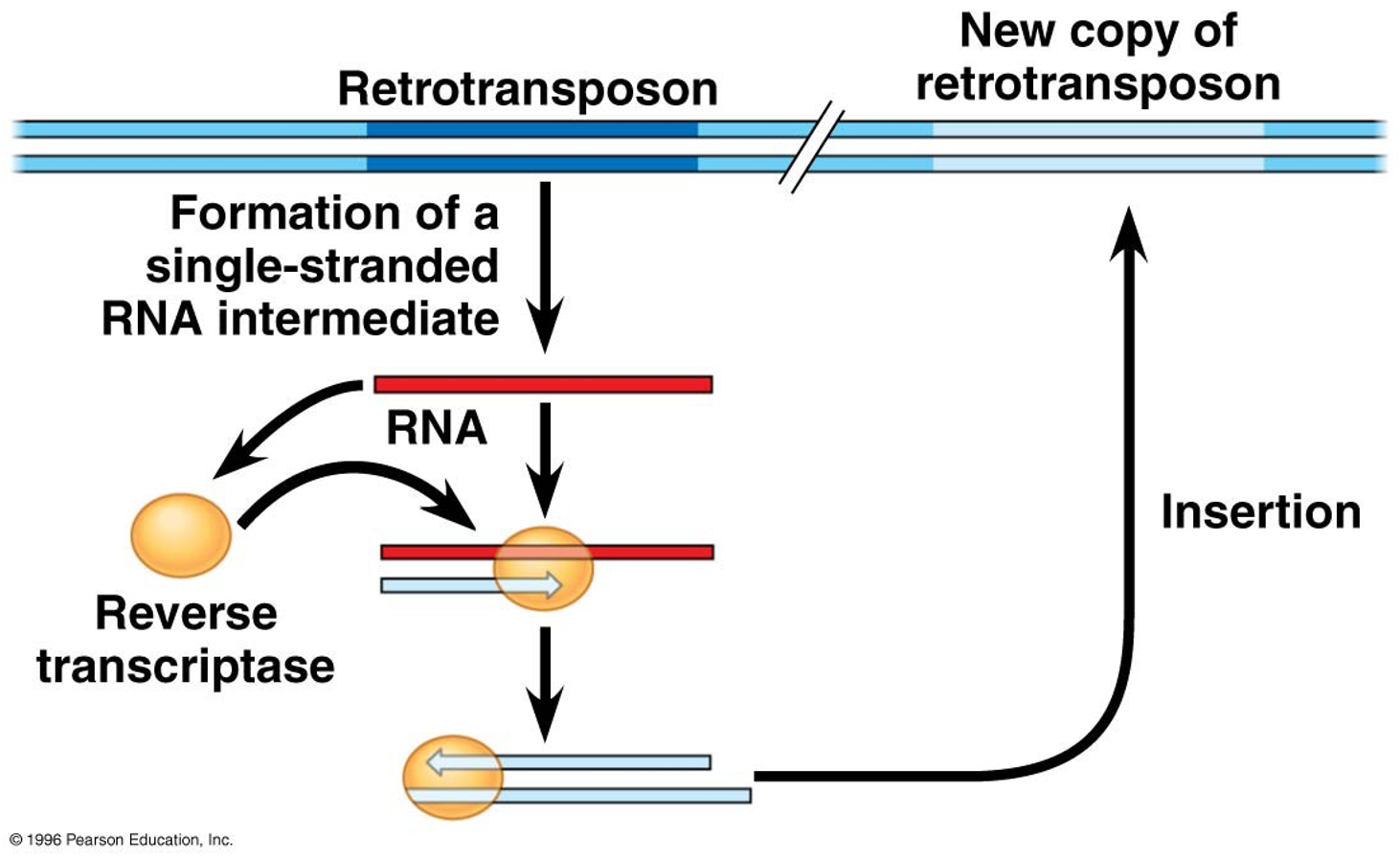
What is an example of a retrotransposon?
L1 sequences.
About 14% of the human genome consists of repetitive DNA resulting from errors during ______ or_______.
Replication, recombination
About a third of replicated DNA of the human genome consists of duplication of _____from one location to another
Long sequences of DNA
Simple sequence DNA contains many copies of tandemly repeated ______
Short sequences
A series of repeating units of 2 to 5 nucleotides is called a ______.
Short tandem repeat (STR).
The repeat number for STRs can vary among sites (within a genome) or _____.
Individuals
STR diversity can be used to identify a unique set of genetic markers for _______, called their ______.
Each individual, genetic profile
Forensic scientists can use STR analysis on DNA samples to …
Identify victims of crime or natural disasters
Many eukaryotic genes are present in one copy per ______ of ______.
Haploid set, chromosomes
What are multigene families?
Collections of identical or very similar genes.
Some multigene families consist of _______ DNA sequences, usually _____, such as those that code for rRNA products
Identical, clustered tandemly
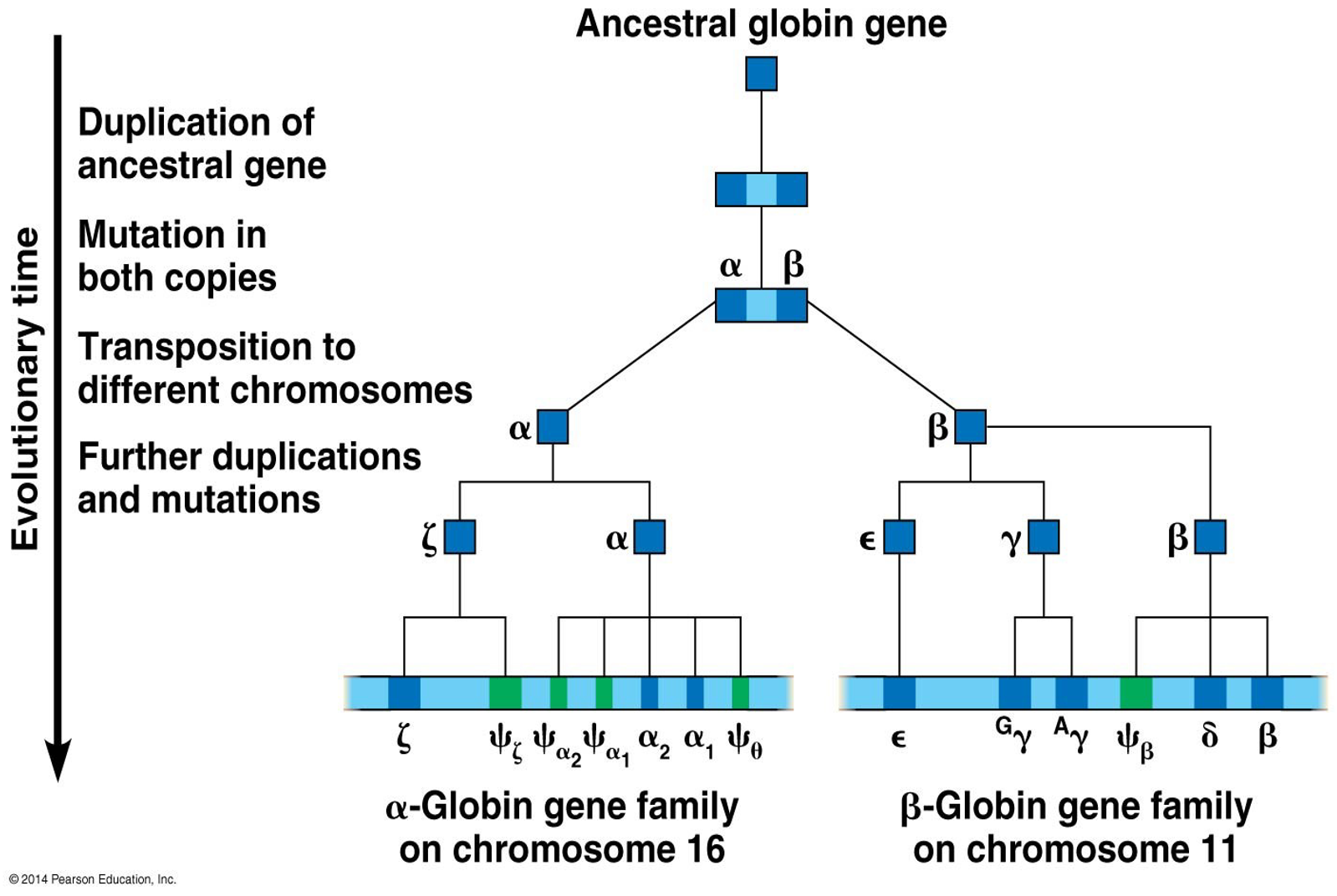
The classic examples of multigene families of_______ are two related families of genes that encode globins
Nonidentical genes
What example shows a multigene family of nonidentical genes?
Two related families of genes that encode globins.
α-globins and β-globins are polypeptides of hemoglobin and are coded by genes on _______ and are expressed at ________ in development
Different human chromosomes, different times
How did the genes encoding the various globin proteins evolve?
They evolved from one common ancestral globin gene that duplicated and diverged about 450–500 million years ago.
Accidents in meiosis can lead to one or more extra sets of _______, a condition known as polyploidy
Chromosomes
In which organisms is polyploidy rare, and in which is it common?
Polyploidy is rare in animals but common in plants.
What can happen to genes in extra chromosome sets over time?
They can diverge by accumulating mutations, and these variations may persist if the organism survives and reproduces.
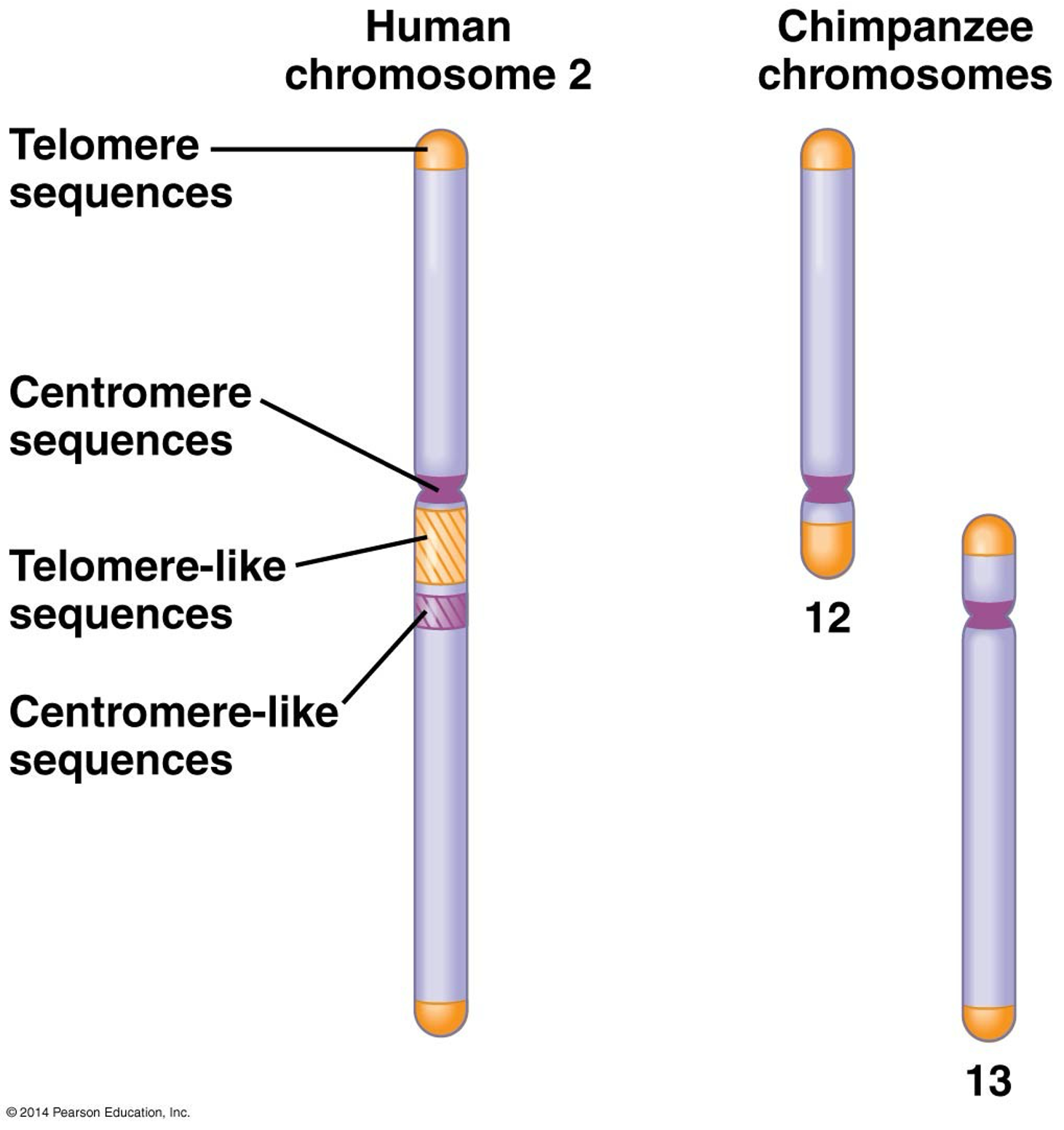
Humans have _____ of chromosomes, while chimpanzees have ______.
23 pairs, 24 pairs
What chromosomal change occurred in the human lineage after diverging from chimpanzees?
Two ancestral chromosomes fused in the human line after humans and chimpanzees diverged from a common ancestor.
Unequal crossing over during prophase I of meiosis can result in…
One chromosome with a deletion and another with a duplication of a particular region.
How can transposable elements contribute to chromosomal rearrangements?
They can provide sites for crossover between nonsister chromatids.
What can happen to duplicated genes over evolutionary time?
They can diverge so much that the proteins they encode have very different functions.
What are examples of duplicated genes that have diverged in function?
The lysozyme and α-lactalbumin genes.
What are the functions of lysozyme and α-lactalbumin?
Lysozyme is an enzyme that protects against bacterial infection. α-lactalbumin is a nonenzymatic protein involved in milk production in mammals.
Proteins often consist of discrete structural and functional regions called ______, often encoded by different exons
Domains
What can result from errors in meiosis involving homologous chromosomes?
An exon can be duplicated on one chromosome and deleted from the homologous chromosome.
Some protein‐coding genes have multiple copies of related exons, which presumably arose by _______ and _______.
Duplication, divergence
What are exons?
Exons are the coding regions of a gene that are transcribed into RNA and remain in the mature mRNA after splicing. They are translated into protein.
What is exon shuffling?
Exon shuffling is the occasional mixing and matching of different exons within a gene or between two different genes.
What can result from exon shuffling?
It can lead to new proteins with novel combinations of functions.
How can multiple copies of similar transposable elements affect chromosomes?
They may facilitate recombination, or crossing over, between different chromosomes.
What can happen if a transposable element is inserted within a protein-coding sequence?
It may block protein production.
What can happen if a transposable element is inserted within a regulatory sequence?
It may increase or decrease protein production.

