[PART 2] Population Ecology Population Characteristics, Dynamics, Growth, and Life History
 Call Kai
 Learn
Learn Practice Test
 Spaced Repetition
 Match
Match Flashcards
 Knowt Play
1/80

There's no tags or description
Looks like no tags are added yet.
Name | Mastery | Learn | Test | Matching | Spaced | Call with Kai |
|---|
No analytics yet
Send a link to your students to track their progress
81 Terms
Distribution
What is the distribution pattern of the population
_________________ - spacing of individuals in a population
- reflects the characteristics of the species or its environment; resource availability
Patterns of Population Distribution
CLUMPED - resources are patchy
RANDOM - unpredictable distribution no strong interaction
UNIFORM - evenly spaced, reflects competition
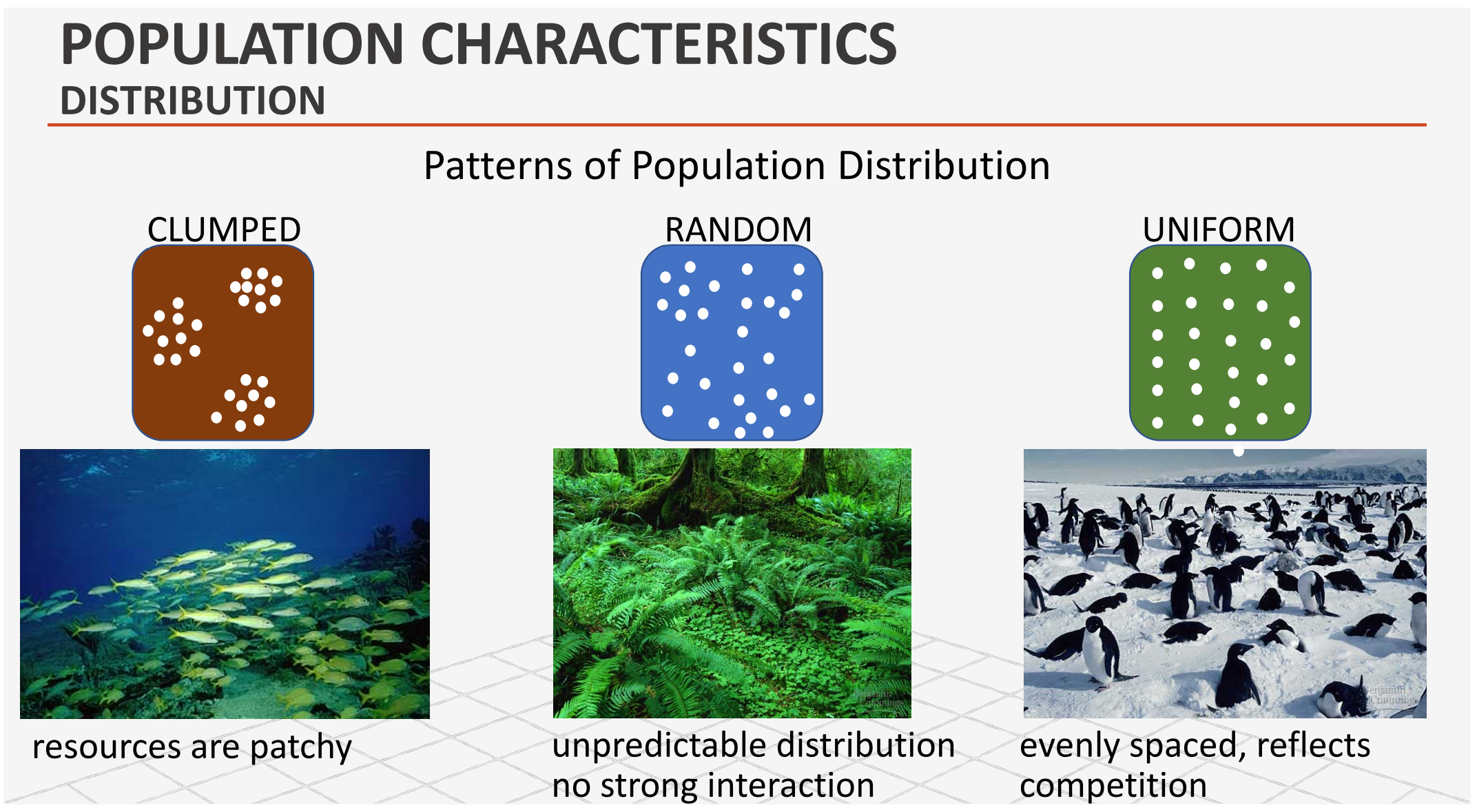
Patterns of Population Distribution
______________ - resources are patchy
______________ - unpredictable distribution no strong interaction
______________ - evenly spaced, reflects competition
Population growth
DEMOGRAPHY
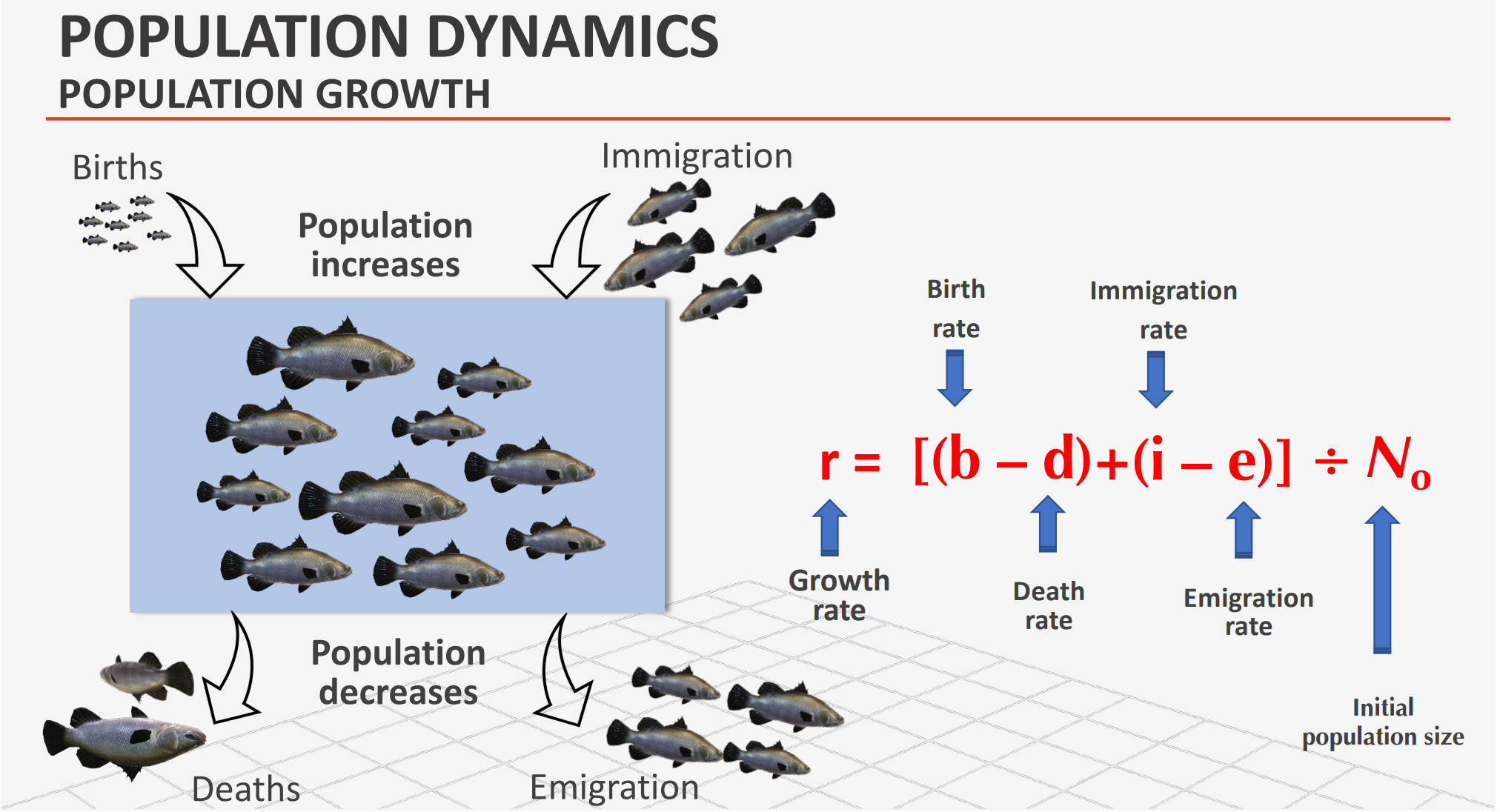
__________________ - is the increase in number of individuals
______________ - statistical study of population changes over time
birth
death
immigration
emigration
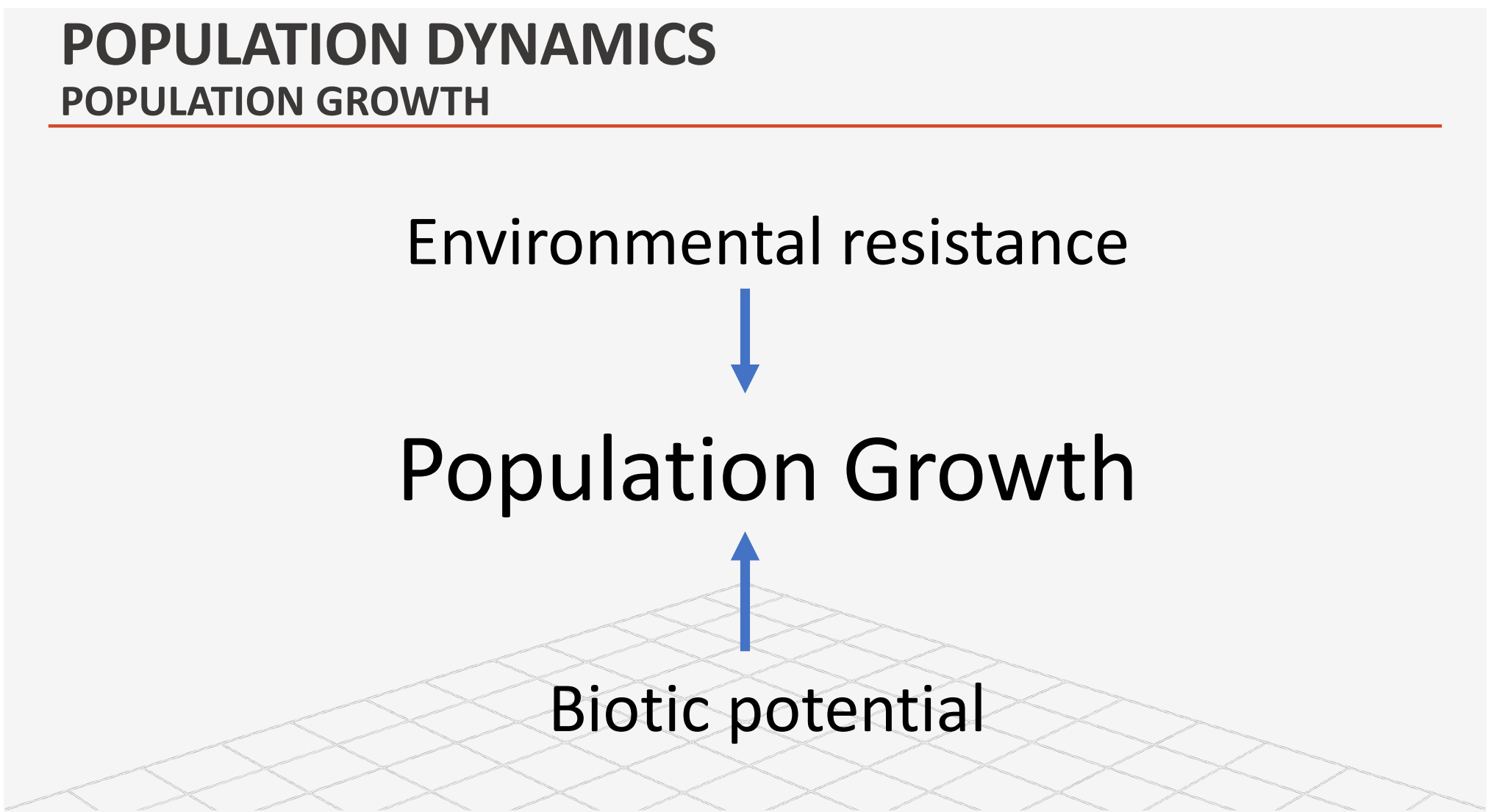
What is the formula for growth rate (r)?
BIOTIC POTENTIAL
It is the maximum growth rate, which a population could achieve in unlimited environment
BIOTIC POTENTIAL
_________________ - the capacity of a species to reproduce under ideal environmental conditions (sufficient food supply, no predators, and absence of disease)
BIOTIC POTENTIAL
___________________ - determined by the quantity of offspring produced, the frequency with which they reproduce, and size of each offspring
varies depending on the species
age
frequency
number of offspring
BIOTIC POTENTIAL is determined by:
typical reproductive _____
general ____________ of reproductively available time or cycle
_______________ after birth that lives to their respective reproductive age
offspring; once
pregnancies; lifetime
BIOTIC POTENTIAL is determined by:
total number of ____________ that are born at _______
total number of ____________ in the entire _________ of an organism
Exponential growth
exponentially
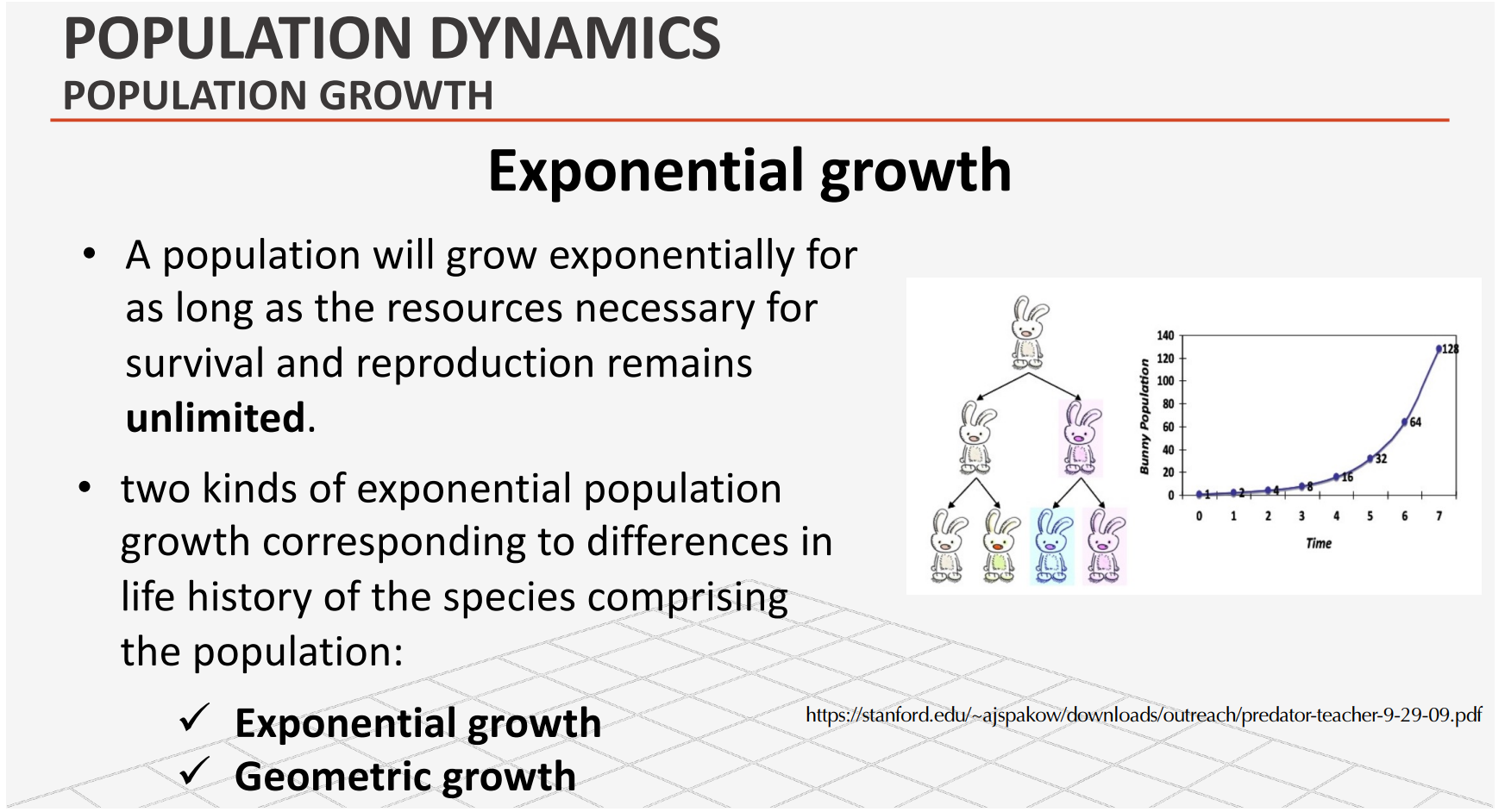
A population will grow _____________ for as long as the resources necessary for survival and reproduction remains unlimited.
Type of Exponential Population Growth
_______________
organisms of a species reproduce at a constant rate
population starts with slow growth and then into steep, rapid growth with no limit
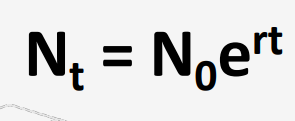
Nt = N0ert
Type of Exponential Population Growth
What is the formula for population size within an exponential pop. growth?
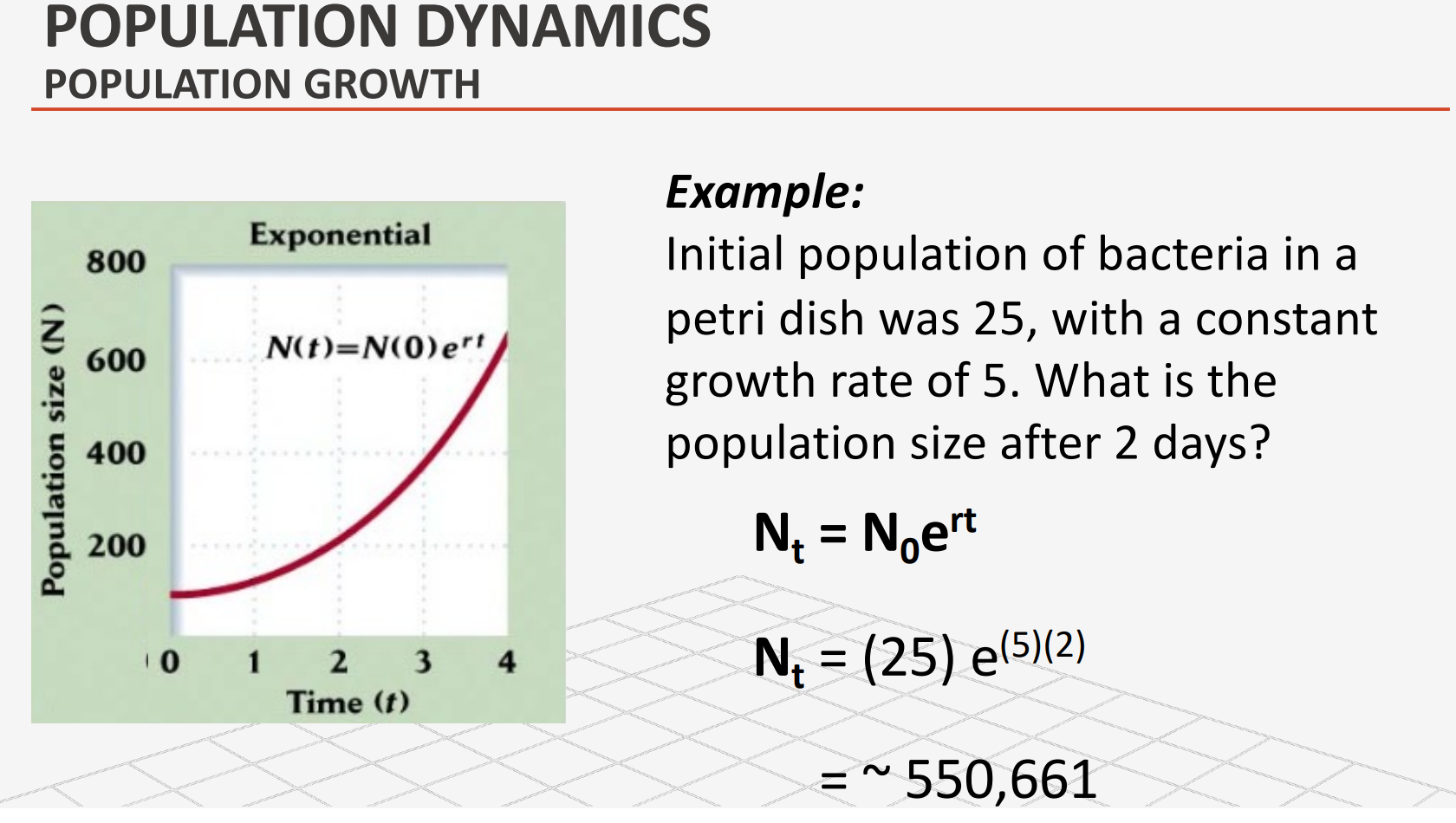
Type of Exponential Population Growth - Exponential growth
Example: Initial population of bacteria in a petri dish was 25, with a constant growth rate of 5. What is the population size after 2 days?
Geometric growth
Type of Exponential Population Growth
Individuals are added to the population in pulses
Geometric growth
Type of Exponential Population Growth
Exhibited by species that follow a breeding season such that growth peaks and then decline till the next season (e.g., birds, insects)
Type of Exponential Population Growth - Geometric growth
What is the formula for the growth rate with a geometric growth pop.
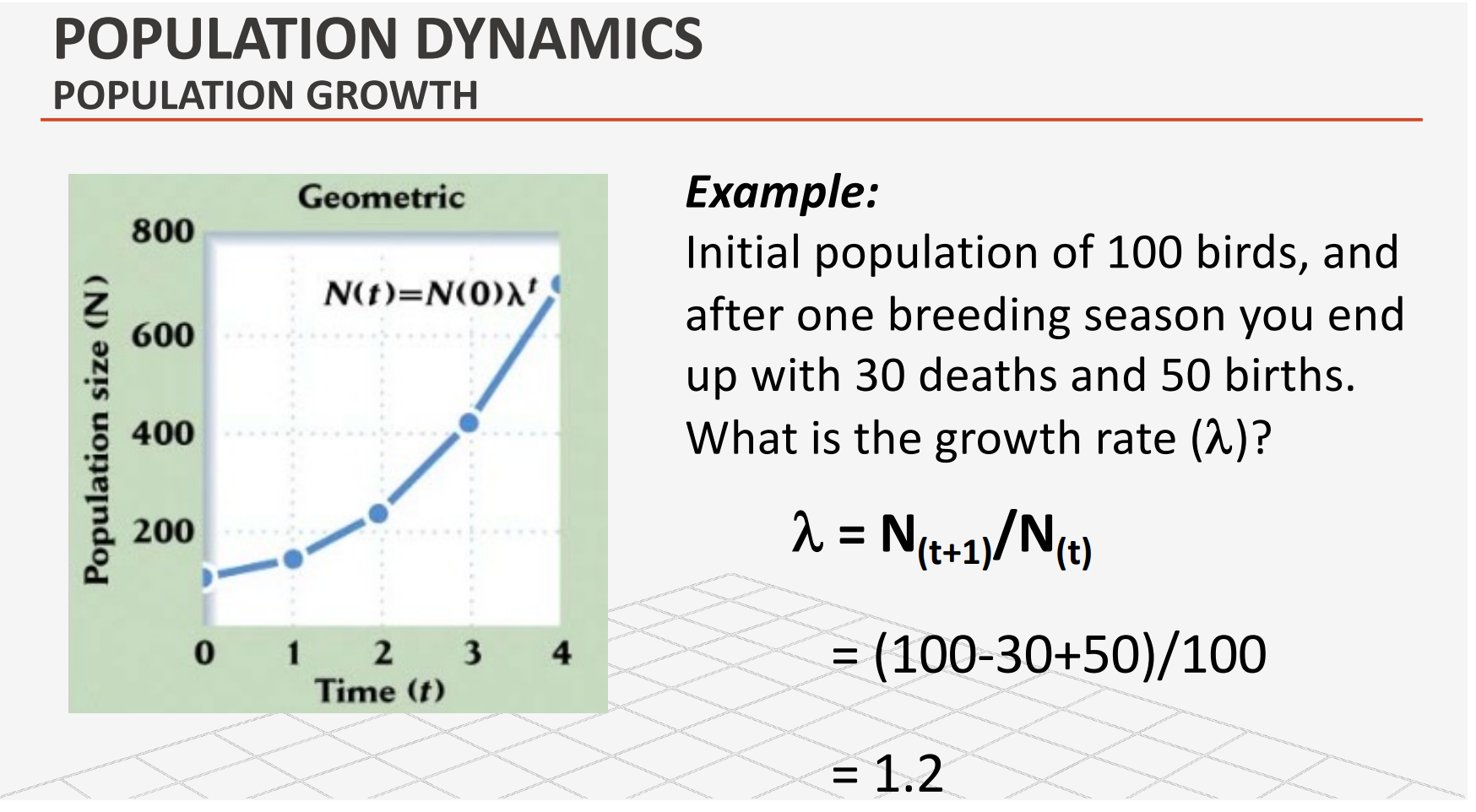
Type of Exponential Population Growth - Geometric growth
Example: Initial population of 100 birds, and after one breeding season you end up with 30 deaths and 50 births. What is the growth rate (λ)?
ENVIRONMENTAL RESISTANCE
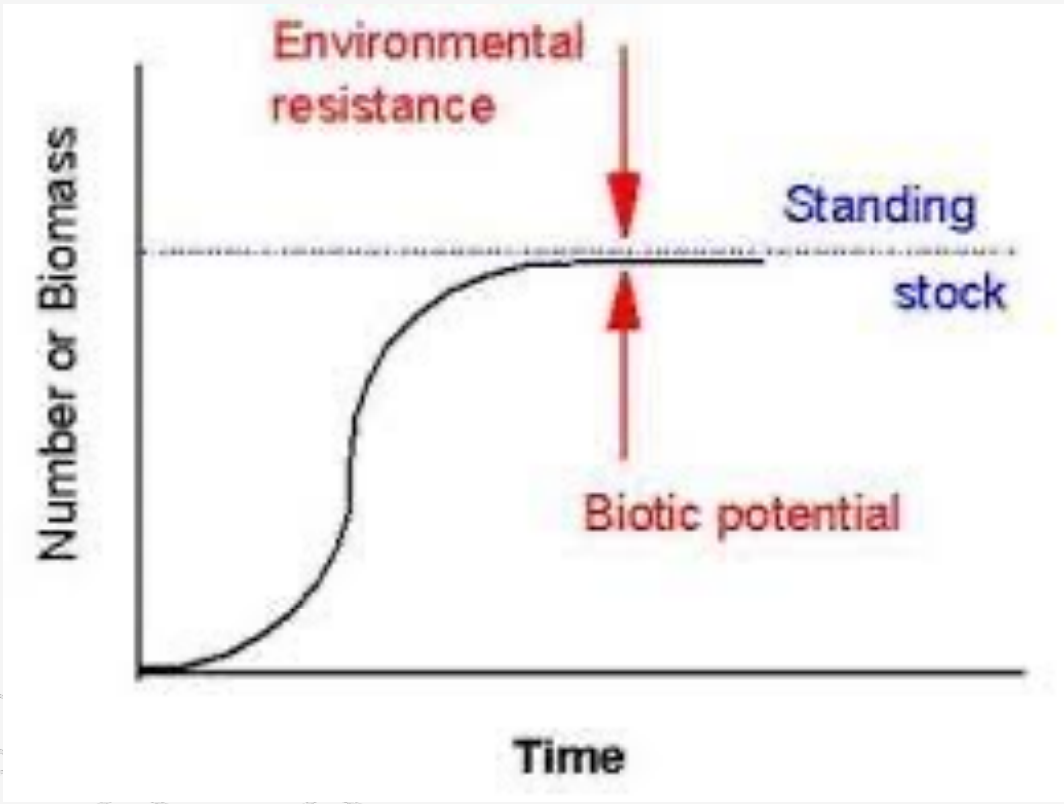
any condition/factor that inhibits the increase in population size
ENVIRONMENTAL RESISTANCE
is the environmental pressure which limit a population’s inherent capacity for growth
may be abiotic or biotic
ENVIRONMENTAL RESISTANCE
generally measured as the difference between the biotic potential of a population and the actual rate of increase as observed under laboratory or field conditions
Density-dependent
Limiting factors (population regulation) - Density-dependent or Density-independent?
resource availability (food, water, space/shelter)
Density-dependent
Limiting factors (population regulation) - Density-dependent or Density-independent?
accumulation of toxic wastes
Density-dependent
Limiting factors (population regulation) - Density-dependent or Density-independent?
diseases (infectious)
Density-dependent
Limiting factors (population regulation) - Density-dependent or Density-independent?
predation
Density-dependent
Limiting factors (population regulation) - Density-dependent or Density-independent?
competition
Density-independent
Limiting factors (population regulation) - Density-dependent or Density-independent?
severe storms and flooding
Density-independent
Limiting factors (population regulation) - Density-dependent or Density-independent?
sudden unpredictable severe cold spells
Density-independent
Limiting factors (population regulation) - Density-dependent or Density-independent?
earthquakes
Density-independent
Limiting factors (population regulation) - Density-dependent or Density-independent?
volcanic eruption
Density-independent
Limiting factors (population regulation) - Density-dependent or Density-independent?
fires
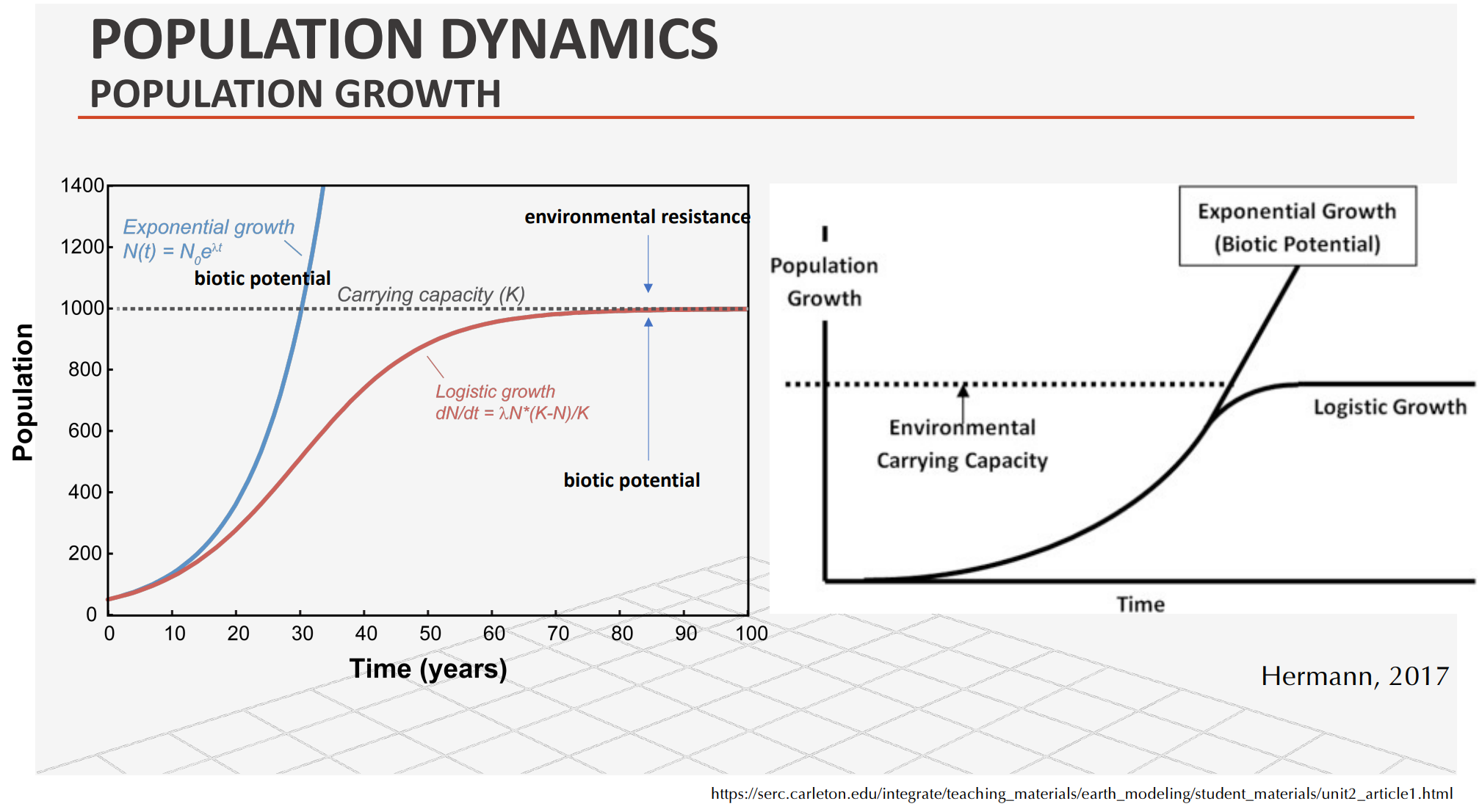
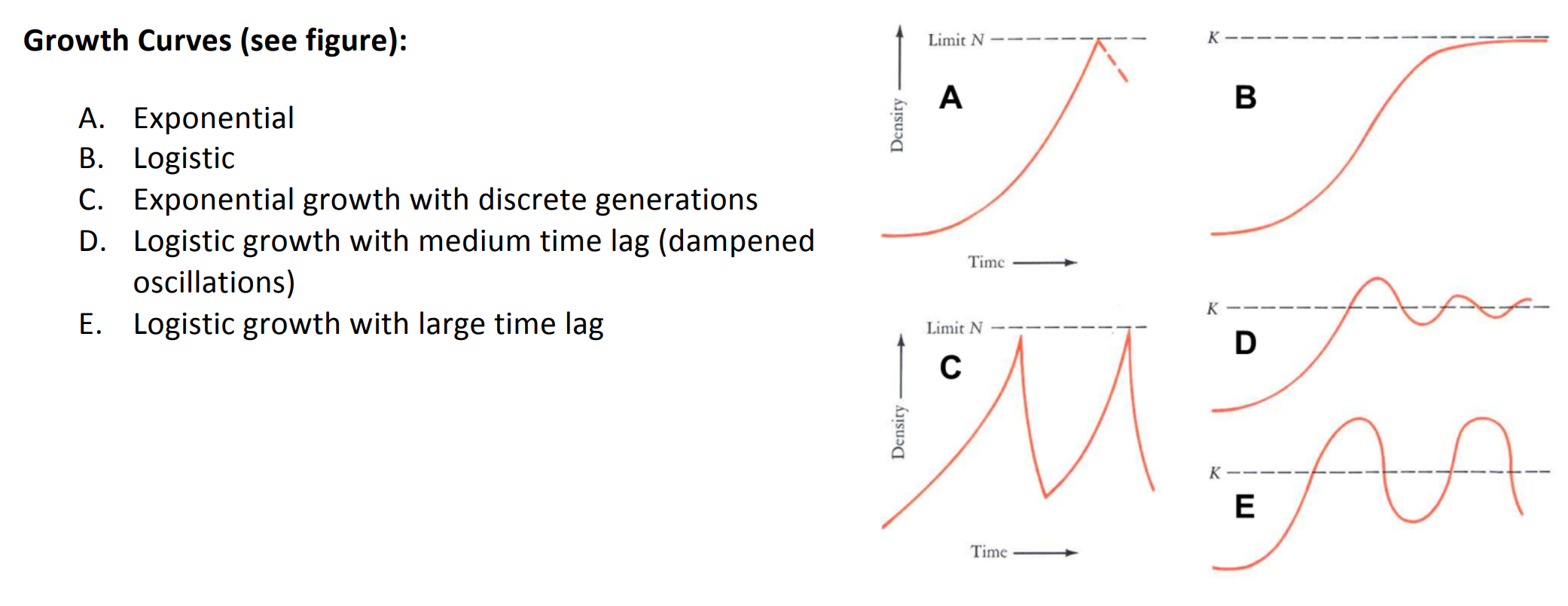
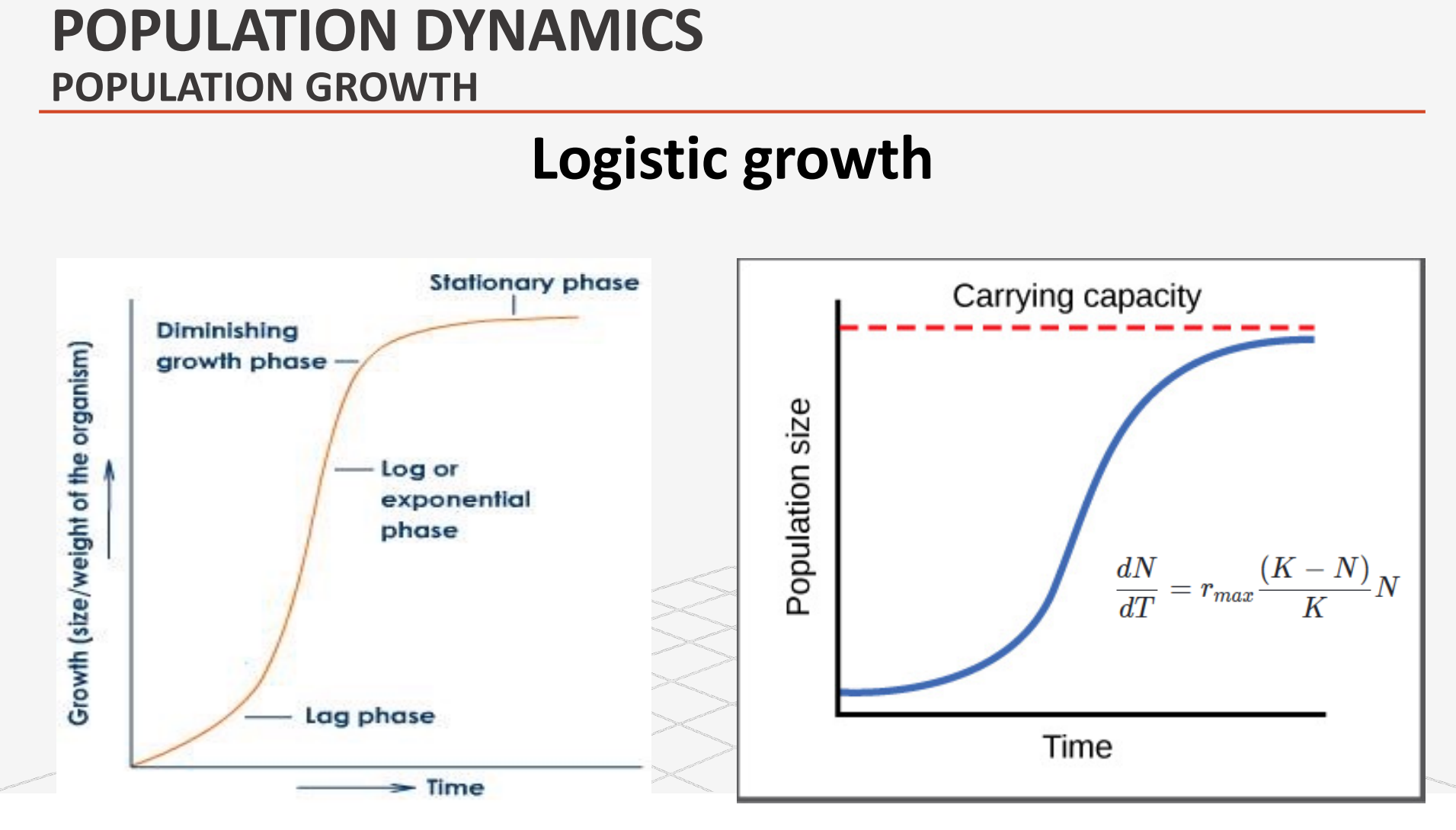
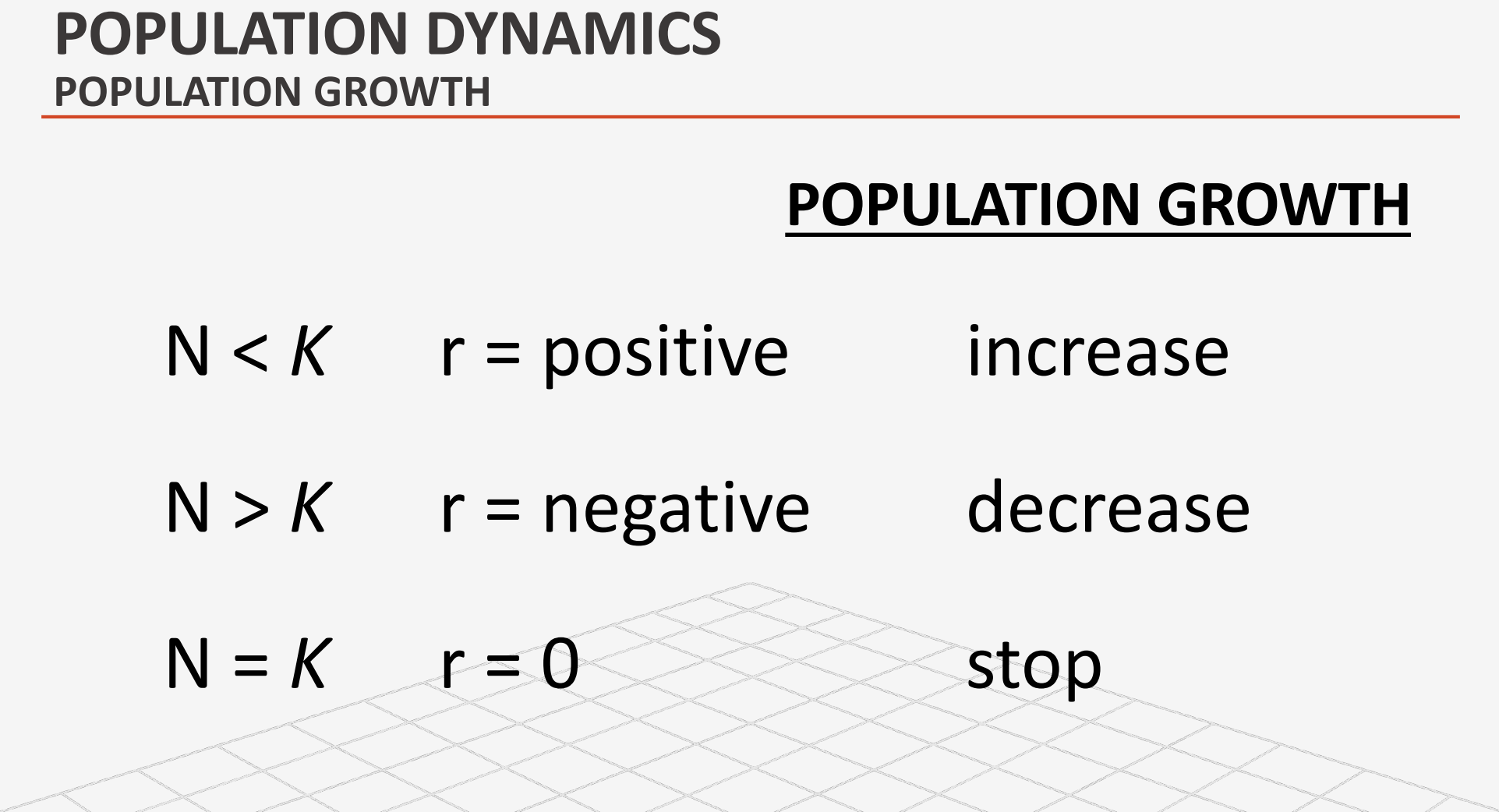
N < K - r = positive - pop. growth: increase
N > K - r = negative - pop. growth: decrease
N = K - r = 0 - pop. growth: stop
Life history
Growth potential of a population is related to the life history of the species
_________________ is the series of changes undergone by an organism during its lifetime; varies tremendously among species
Life history
_________________ patterns evolve by natural selection, and they represent an "optimization" of tradeoffs between growth, survival, and reproduction.
Fecundity (number of offsprings)
Relative size of offspring
Age at reproductive maturity
Parental care
High adult survival, late reproductive maturity, few large offsprings (e.g., mammals)
Low adult survival, early reproductive maturity, high reproductive effort (e.g., fish)
What are the factors or characteristics of life history strategies?
______________________
______________________
______________________
______________________
LIFE HISTORY (Reproductive) STRATEGIES → reproduction
_______ adult survival, _______ reproductive maturity, few _______ offsprings (e.g., mammals)
_______ adult survival, _______ reproductive maturity, _______ reproductive effort (e.g., fish)
r-selected (r - reproduction)
Characteristics of r-selected (r - reproduction) or K-selected (K – carrying capacity) strategies
Many small offsprings
Little or no parental care and protection of offsprings
Most offsprings die before reaching reproductive maturity
r-selected (r - reproduction)
Characteristics of r-selected (r - reproduction) or K-selected (K – carrying capacity) strategies
Small adults
Adapted to unstable climate & environmental conditions
High population growth rate
r-selected (r - reproduction)
Characteristics of r-selected (r - reproduction) or K-selected (K – carrying capacity) strategies
Population size fluctuates wildly above & below carrying capacity
Generalized niche
Low ability to compete
Early successional species
K-selected (K – carrying capacity)
Characteristics of r-selected (r - reproduction) or K-selected (K – carrying capacity) strategies
Few but large offsprings
Typically develops inside mother
Parental care or cooperative breeding/brooding and protection of offspring
K-selected (K – carrying capacity)
Characteristics of r-selected (r - reproduction) or K-selected (K – carrying capacity) strategies
Most offsprings survive to reproductive age
Larger adults
Lower population growth rate
Population size is fairly stable and usually close to carrying capacity
K-selected (K – carrying capacity)
Characteristics of r-selected (r - reproduction) or K-selected (K – carrying capacity) strategies
Common in fairly stable late successional environments where competition for resources is intense
Specialist niche
Highly able to compete
r - selection
Population attribute | r - selection or K - selection |
Intrinsic rate of increase, rmax | High |
Competitive ability | Not strongly favored |
Development | Rapid |
r - selection
Population attribute | r - selection or K - selection |
Reproductive maturity | Early |
Body size | small |
Reproductive events | Single, semelparity |
r - selection
Population attribute | r - selection or K - selection |
Offspring (fecundity) | Many, small |
Lifespan | Short |
Survivorship curve | Type III |
r - selection
Population attribute | r - selection or K - selection |
Description of population | ruderals (in plants) |
K - selection
Population attribute | r - selection or K - selection |
Intrinsic rate of increase, rmax | Low |
Competitive ability | Highly favored |
Development | Slow |
K - selection
Population attribute | r - selection or K - selection |
Reproductive maturity | Late |
Body size | Large |
Reproductive events | Repeated, iteroparity |
K - selection
Population attribute | r - selection or K - selection |
Offspring (fecundity) | Few, large |
Lifespan | Long |
Survivorship curve | Type I or II |
K - selection
Population attribute | r - selection or K - selection |
Description of population | stress-tolerant (in plants) |
Semelparous populations
Reproductive strategy - Semelparous or Iteroparous populations?
new generation is produced in a single reproductive event (or over a short interval)
Semelparous populations
Reproductive strategy - Semelparous or Iteroparous populations?
producing young with little or no parental care (e.g., salmon, insects)
Iteroparous population
Reproductive strategy - Semelparous or Iteroparous populations?
new generation is produced over a series of events throughout the reproductive span of the parent.
Iteroparous population
Reproductive strategy - Semelparous or Iteroparous populations?
Parents take care of the few young until they are capable of living on their own (e.g., mammals)
bigger; space
fewer
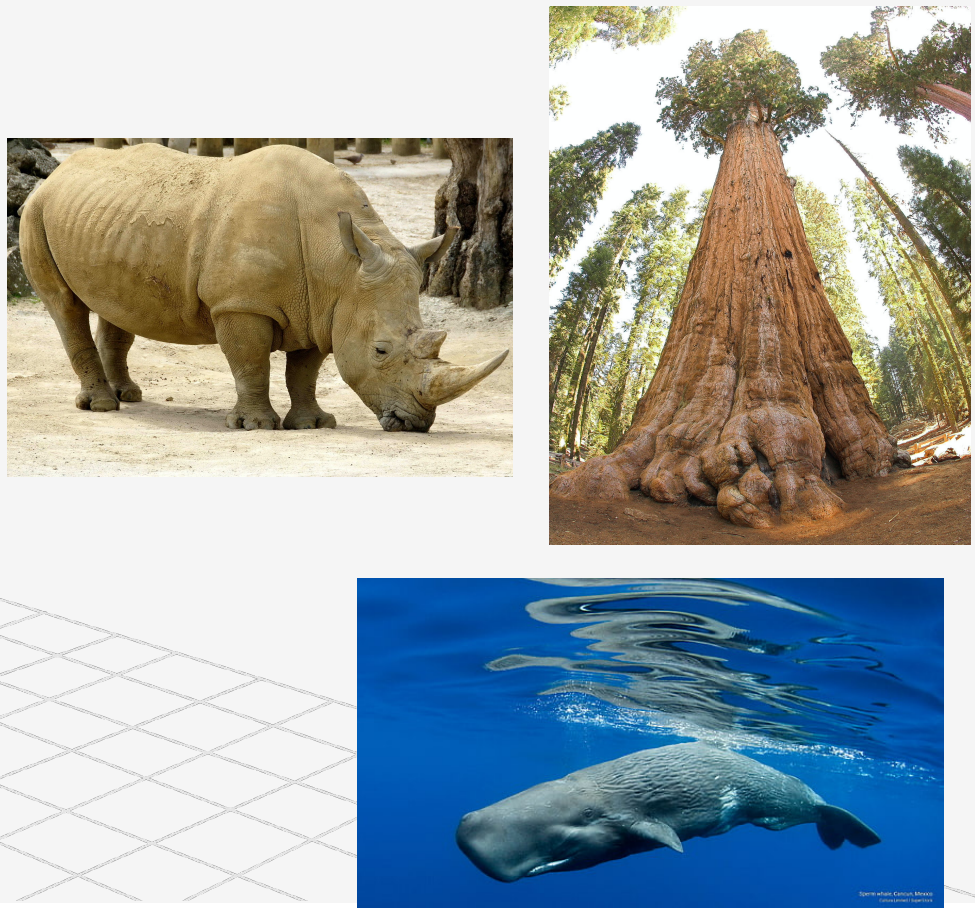
K-selected species are more prone to extinction because:
Tend to be __________, hence need more ________ to live in
Tend to have __________ offspring, so populations cannot recover as fast from disturbances such as hunting or fire
later; long
small; inbreeding
K-selected species are more prone to extinction because:
Breed at a ________ age → generation time to grow from small to larger population is ______
Population size often _________ → pose a high risk of _______________ among individuals
SURVIVORSHIP
vary from one species to another
dictated by the environment
recorded and analyzed using a life table
Life Table
_____________ - shows the survival rate (and mortality rate) of the different life stages or ages of individuals in a population; standardized presentation of age structure of a population
Dynamic/Cohort Life Table
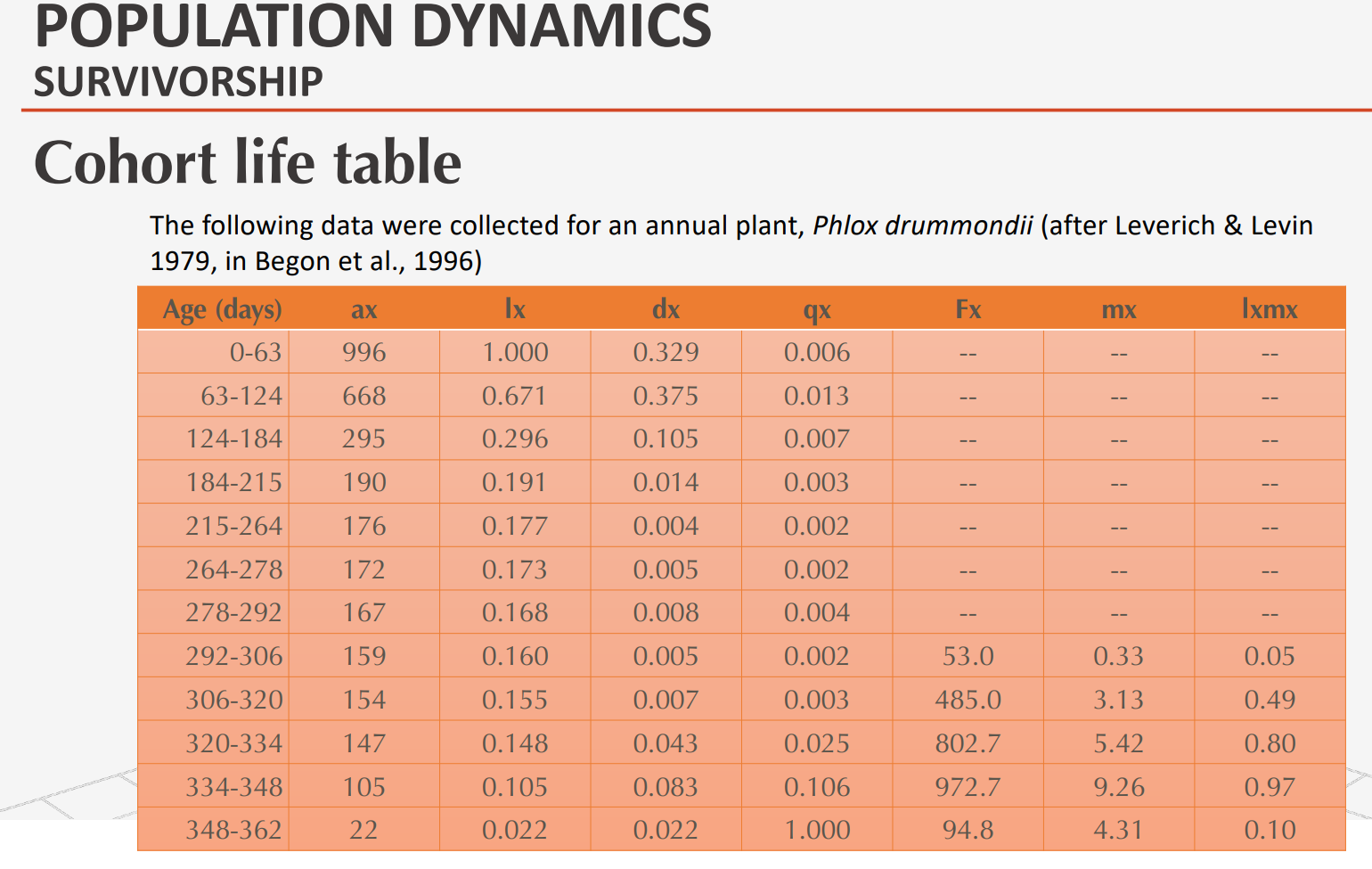
Which type of Life Table?
follows a cohort population until the last one dies
short-lived species
Dynamic/Cohort Life Table
Which type of Life Table?
used to determine age- or stage-specific fecundity and mortality rates, survivorship, and basic reproductive rates
enables an analysis of their annual variation
Cohort
Life Table
___________ – group of individuals born at the same time of over a short period
Static life table
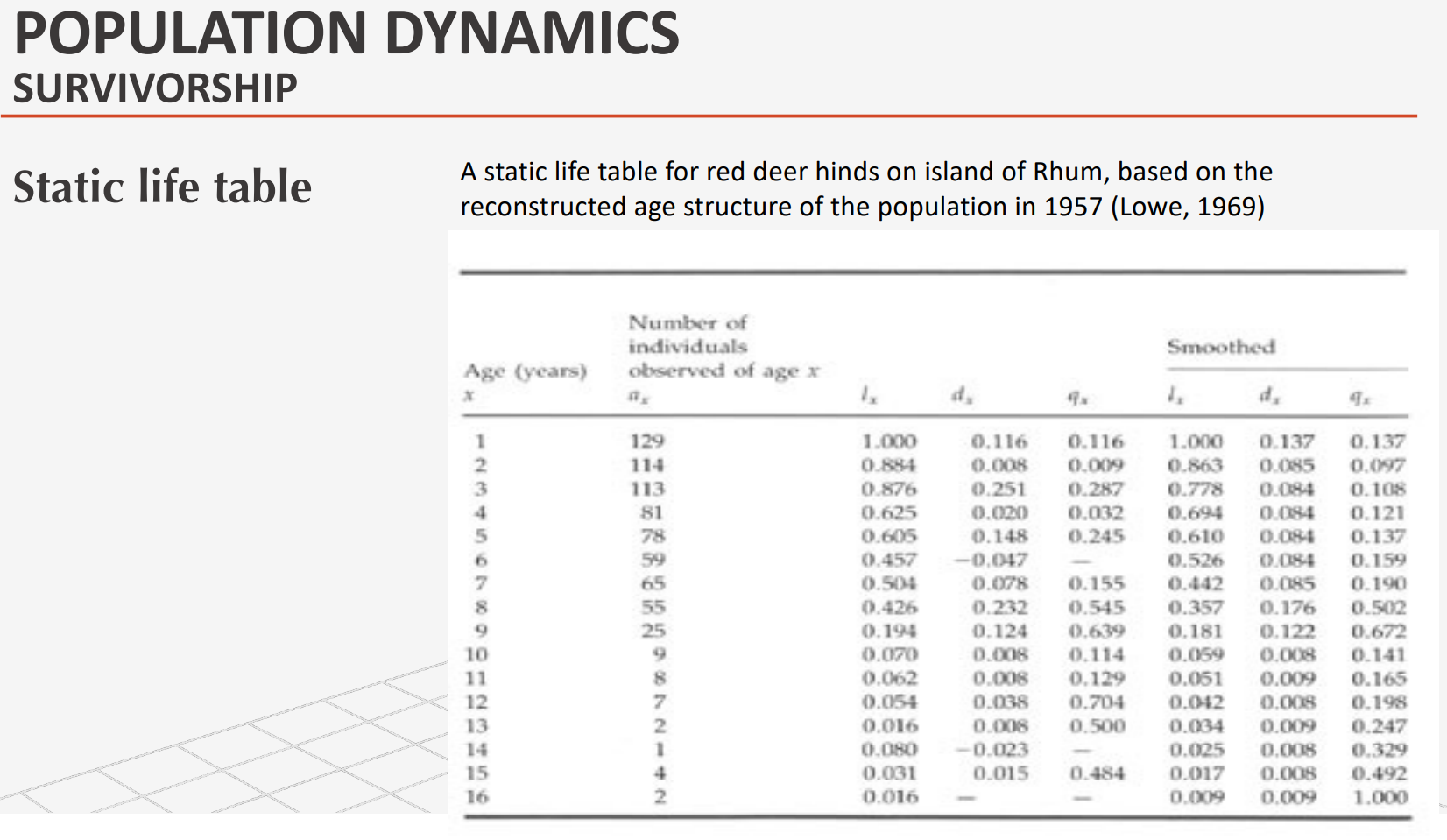
Which type of Life Table?
Studies survivorship of long-lived organisms
Follows fate of members of a population at a given time
Static life table
Which type of Life Table?
Individuals of the group sampled are of different ages
Snapshot of survival taken within a population during a short interval of time
Type I
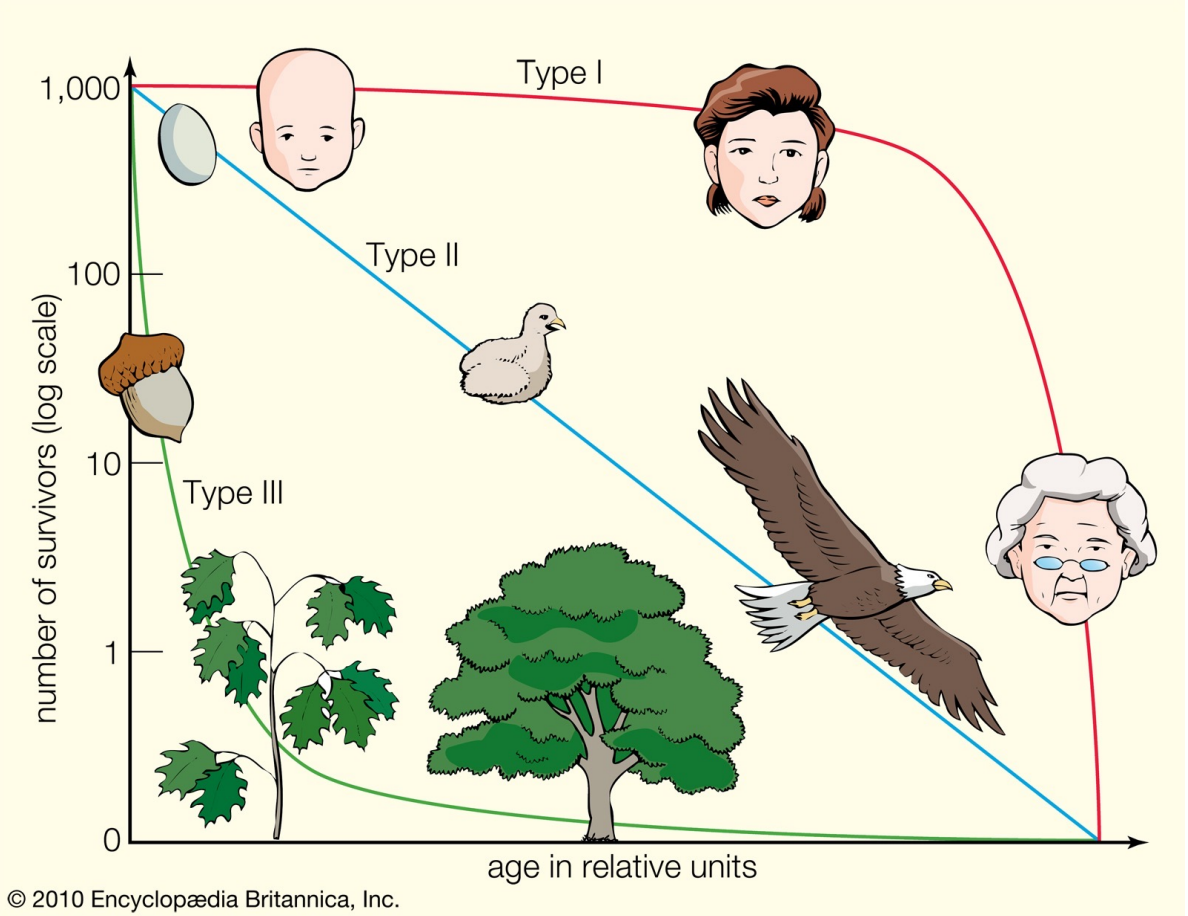
Which type of Survivorship curve?
high survivorship of young, death mostly occurs at maturity;
Type I
Which type of Survivorship curve?
low number of offspring but parental care increases survivorship of young; e.g. large mammals
Type II
Which type of Survivorship curve?
relatively even deaths at all stages of life;
Type II
Which type of Survivorship curve?
few offspring; provide significant parental care; e.g. many bird species
Type III
Which type of Survivorship curve?
High mortality at young age, mortality decreases as individuals mature.
Type III
Which type of Survivorship curve?
Little parental care but compensated by producing numerous offspring at a time. e.g. most insects and marine fishes
AGE (or AGE-SEX) STRUCTURE
shows the proportion of individuals belonging to different age group
can reveal population’s growth trends
AGE (or AGE-SEX) STRUCTURE
used to predict if a population will grow or shrink
applicable only to iteroparous organisms, not to semelparous organisms
Expanding population
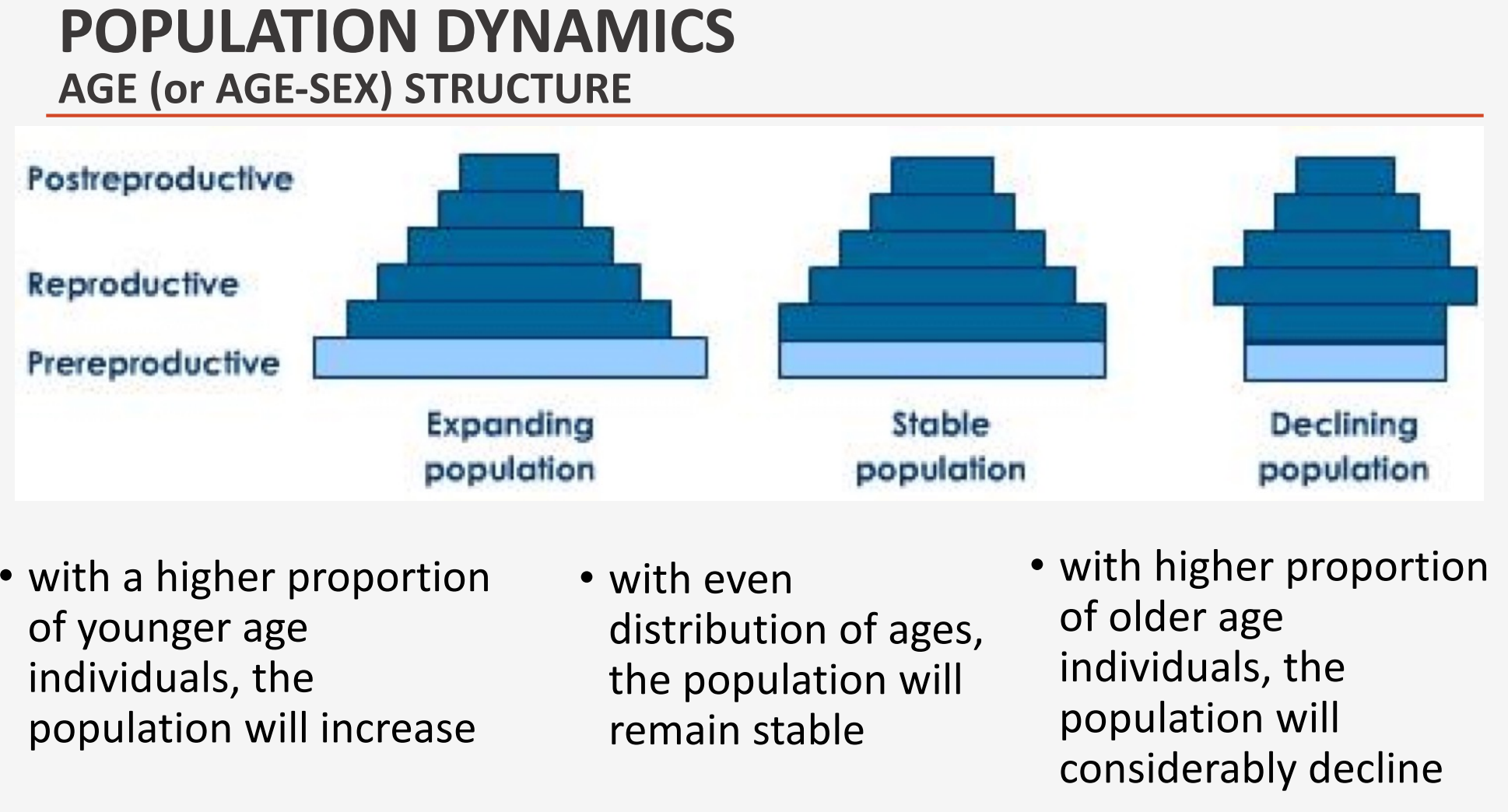
Which type of population based on AGE (or AGE-SEX) STRUCTURE?
with a higher proportion of younger age individuals, the population will increase
Stable population
Which type of population based on AGE (or AGE-SEX) STRUCTURE?
with even distribution of ages, the population will remain stable
Declining population
Which type of population based on AGE (or AGE-SEX) STRUCTURE?
with higher proportion of older age individuals, the population will considerably decline
DISPERSAL
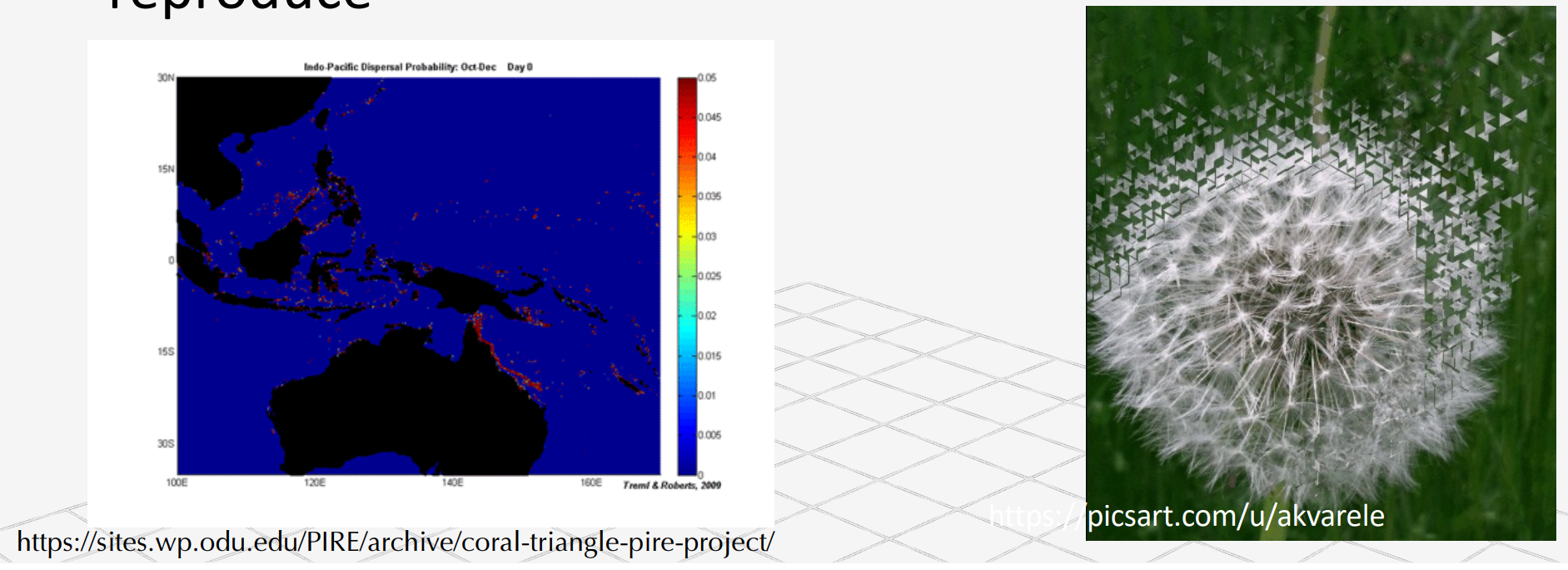
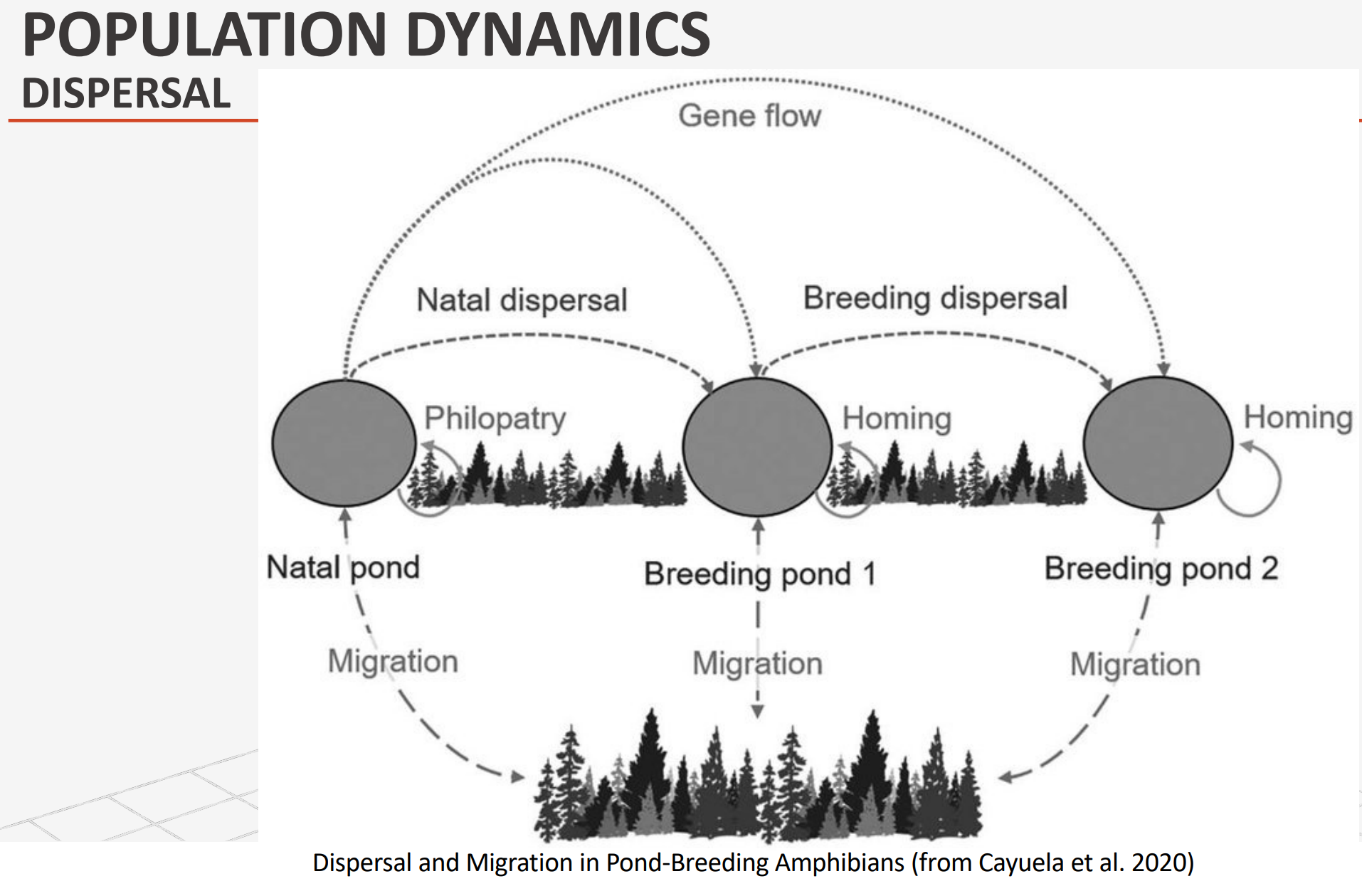
______________ - movement of an individual or multiple individuals away from the population in which they were born to another location, or population, where they will settle and reproduce
Gamete
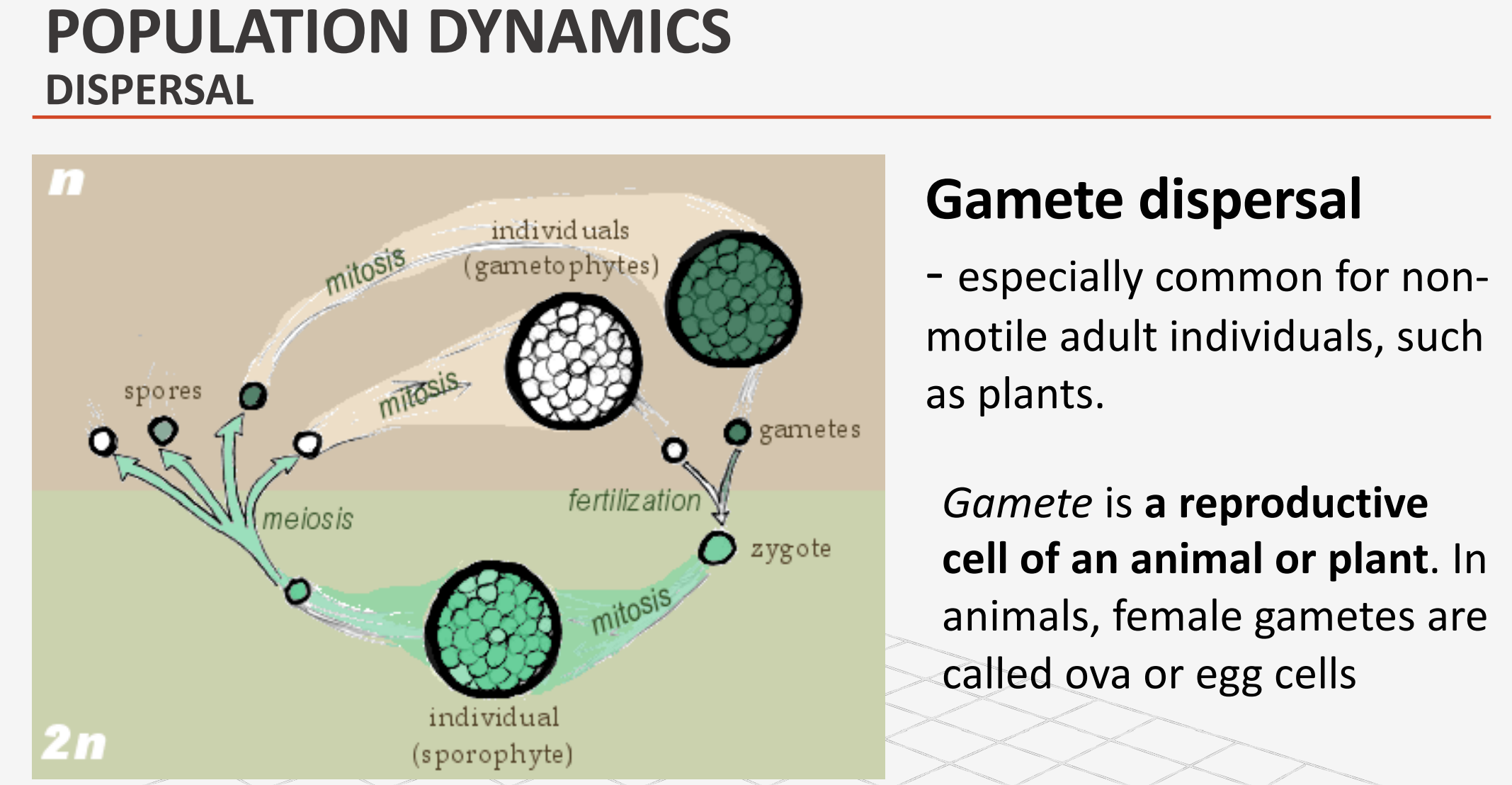
__________ dispersal - especially common for nonmotile adult individuals, such as plants.
Active Dispersal
Which type of dispersal?
Movement of an organism from one place to another place through its own ability
Without assistance
Common in adult and juvenile animals
Passive Dispersal
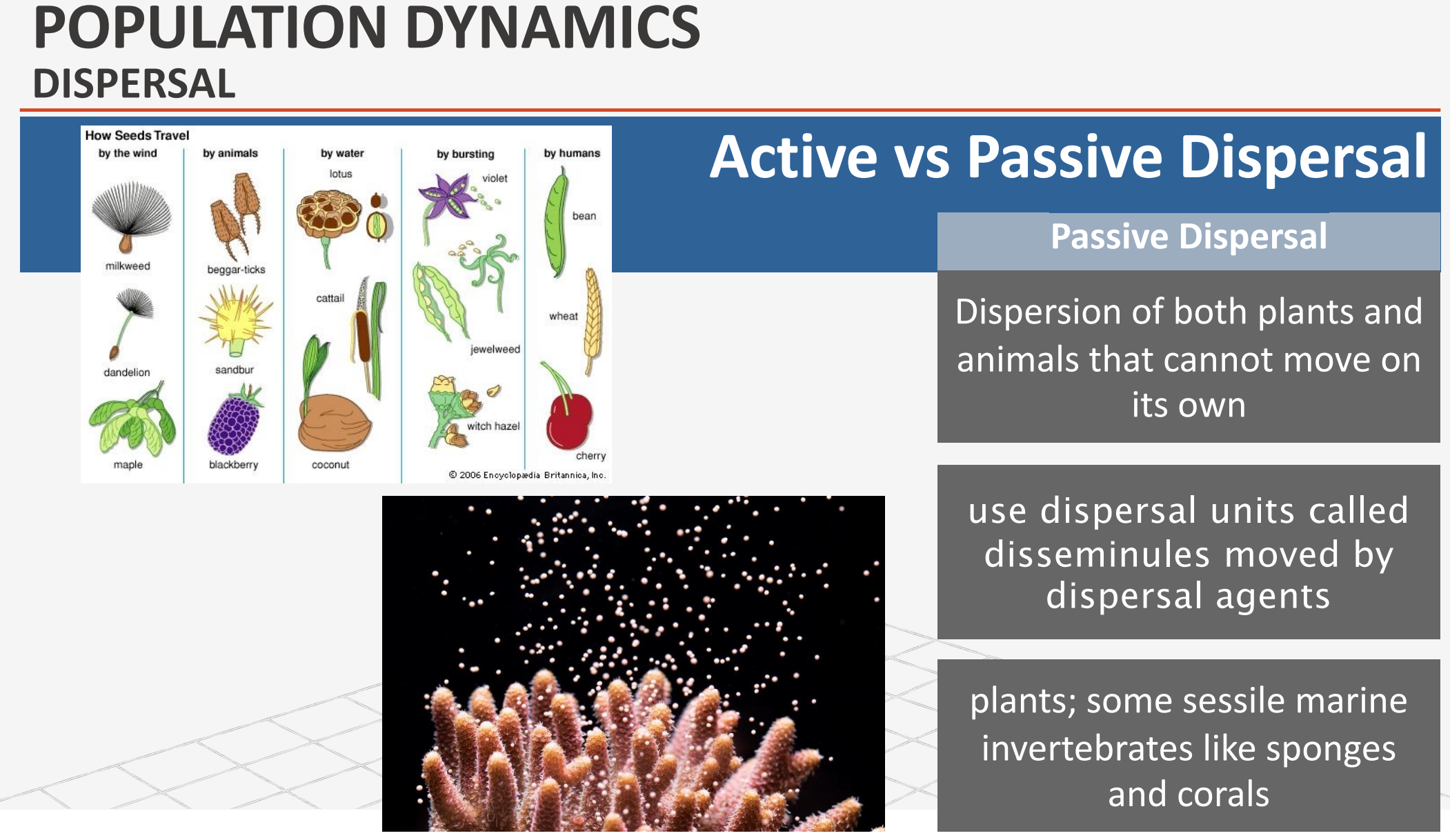
Which type of dispersal?
Dispersion of both plants and animals that cannot move on its own
plants; some sessile marine invertebrates like sponges and corals
Passive Dispersal
Which type of dispersal?
use dispersal units called disseminules moved by dispersal agents
Limits To Dispersal
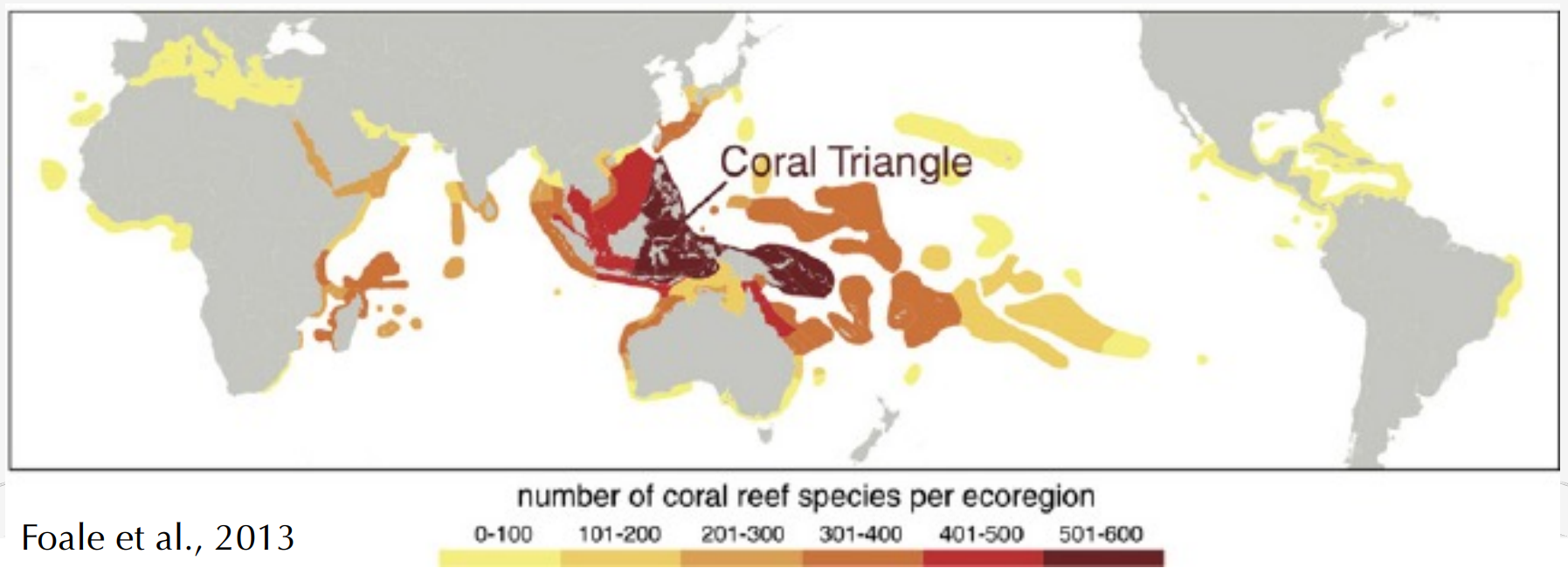
Environmental factors (e.g., temperature)
physical barriers (e.g., mountains, rivers, lakes, oceans etc.)
Anthropogenic barriers (e.g., roads, farming, river dams)
Limits To Dispersal
_____________________
_____________________
_____________________
Ecological corridors
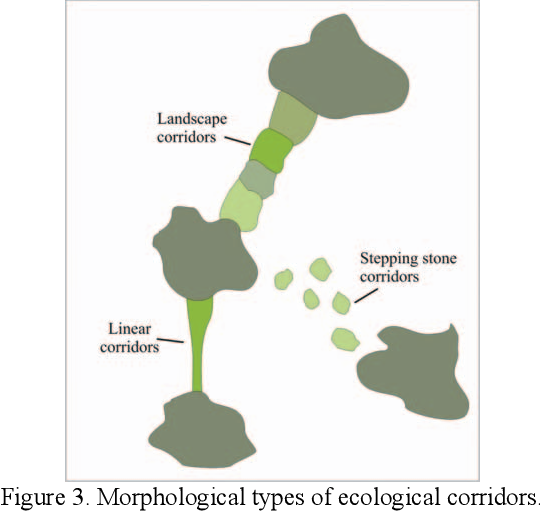
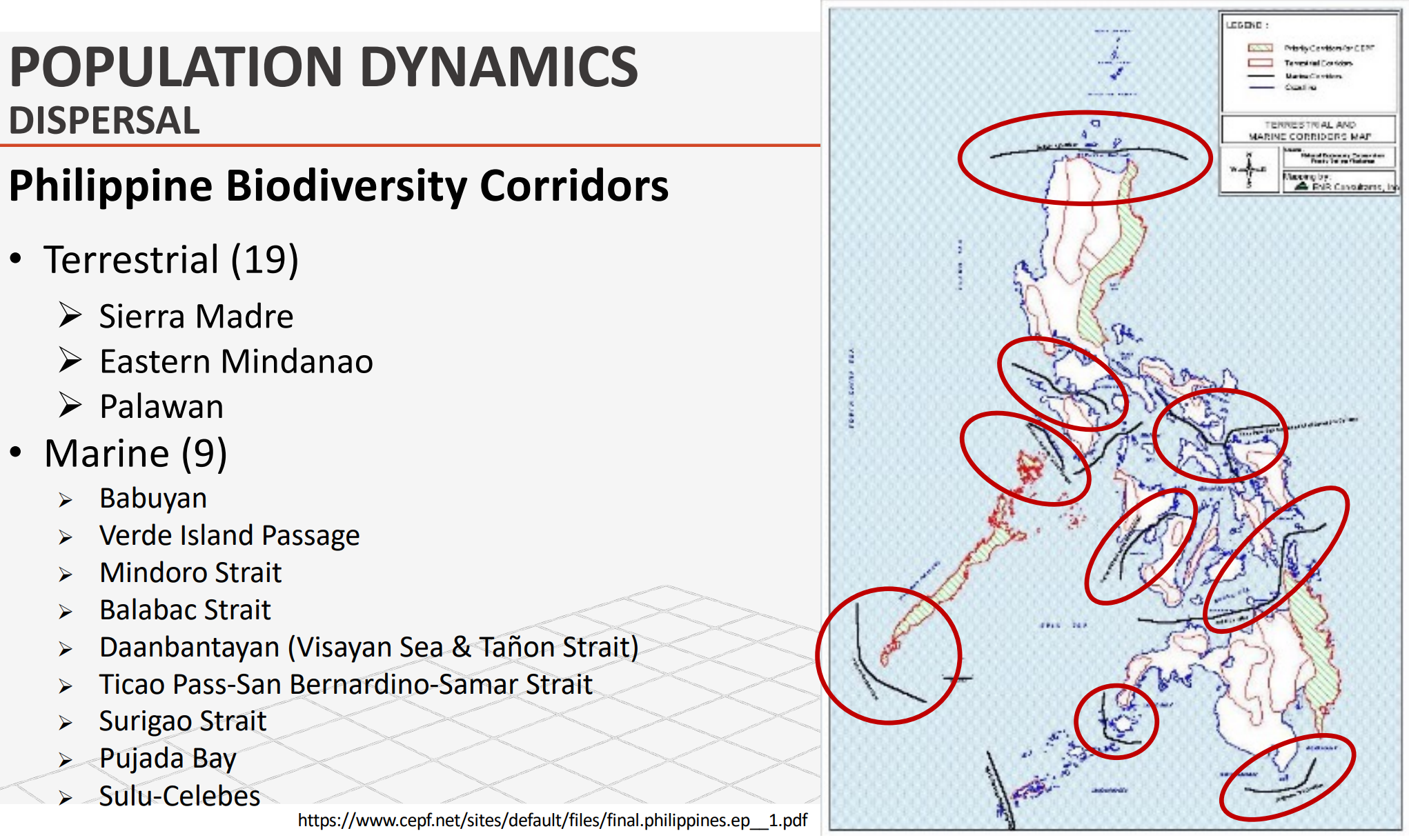
biological or physical strips connecting areas and allowing movement of species
facilitate dispersal and reduce risk of extinction of species

