Experimental Psychology Quiz #2
 Call Kai
 Learn
Learn Practice Test
 Spaced Repetition
 Match
Match Flashcards
 Knowt Play
1/25

There's no tags or description
Looks like no tags are added yet.
Name | Mastery | Learn | Test | Matching | Spaced | Call with Kai |
|---|
No analytics yet
Send a link to your students to track their progress
26 Terms
Sample
Any group from which information is obtained
Generalizability
The extent to which the sample represents the population (2 types)
Population Generalizability
the degree to which a sample represents the population of interest
Ecological Generalizability
the extent to which the results of a study can be generalized to conditions or settings other than those that prevailed in the study
Random sampling
a method of selecting participants from a population by chance so that biases do not alter the sample
Nonrandom sampling
a method in which each member of the population does not have an equal chance of being selected
What matters most for external validity?
sampling technique, not sample size, determines external validity
Reliability
the degree to which the particular way researchers measure a given variable is likely to yield consistent results (internal consistency)
What 2 factors determine Cronbach’s alpha?
number of items—as number increases, Cronbach’s alpha increases
average item intercorrelation—as the average item intercorrelation increases, Cronbach’s alpha increases
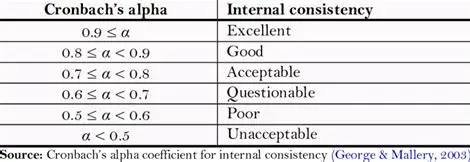
Ratings of Cronbach’s alpha
Validity
a study measures what it claims to measure
Reliability vs. Validity
A scale CAN be reliable but not valid; it CANNOT be an unreliable scale and be valid!
i. Reliability is a necessary precondition for validity
ii. Validity is NOT a necessary precondition for reliability
4 big types of validity
Construct, External, Statistical, Internal
Construct Validity
how well the variables in a study are measured or manipulated; the extent to which the variables in a study are a good approximation of the conceptual variables
External Validity
the extent to which the results of a study generalize to some larger population, as well as to other times or situations
Statistical Validity
how well the numbers support the claim
Internal Validity
In a relationship between one variable (A) and another variable (B), the extent to which A, rather than some other variable (C), is responsible for changes in B
5 types of Construct Validity
Face, content, criterion, convergent, discriminant
Face Validity
it looks like what you want it to measure
Content Validity
the measure contains all the parts that your theory says it should contain
Criterion Validity
your measure is correlated with a relevant behavioral outcome
Convergent Validity
your self-report measure is more strongly associated with self-report measures of similar constructs
Discriminant Validity
your self-report measure is less strongly associated with self-report measures of dissimilar constructs
Type of instruments
norm-referenced, criterion-referenced
Norm-referenced Instrument
Based on some index of test-takers’ scores; typically expressed as percentiles
Criterion-referenced instrument
scores compared to a desired level of aptitude; example—solved at least 75% of the assigned problems

