Vision and The Eye: Terms
 Call Kai
 Learn
Learn Practice Test
 Spaced Repetition
 Match
Match Flashcards
 Knowt Play
1/17

There's no tags or description
Looks like no tags are added yet.
Name | Mastery | Learn | Test | Matching | Spaced | Call with Kai |
|---|
No analytics yet
Send a link to your students to track their progress
18 Terms
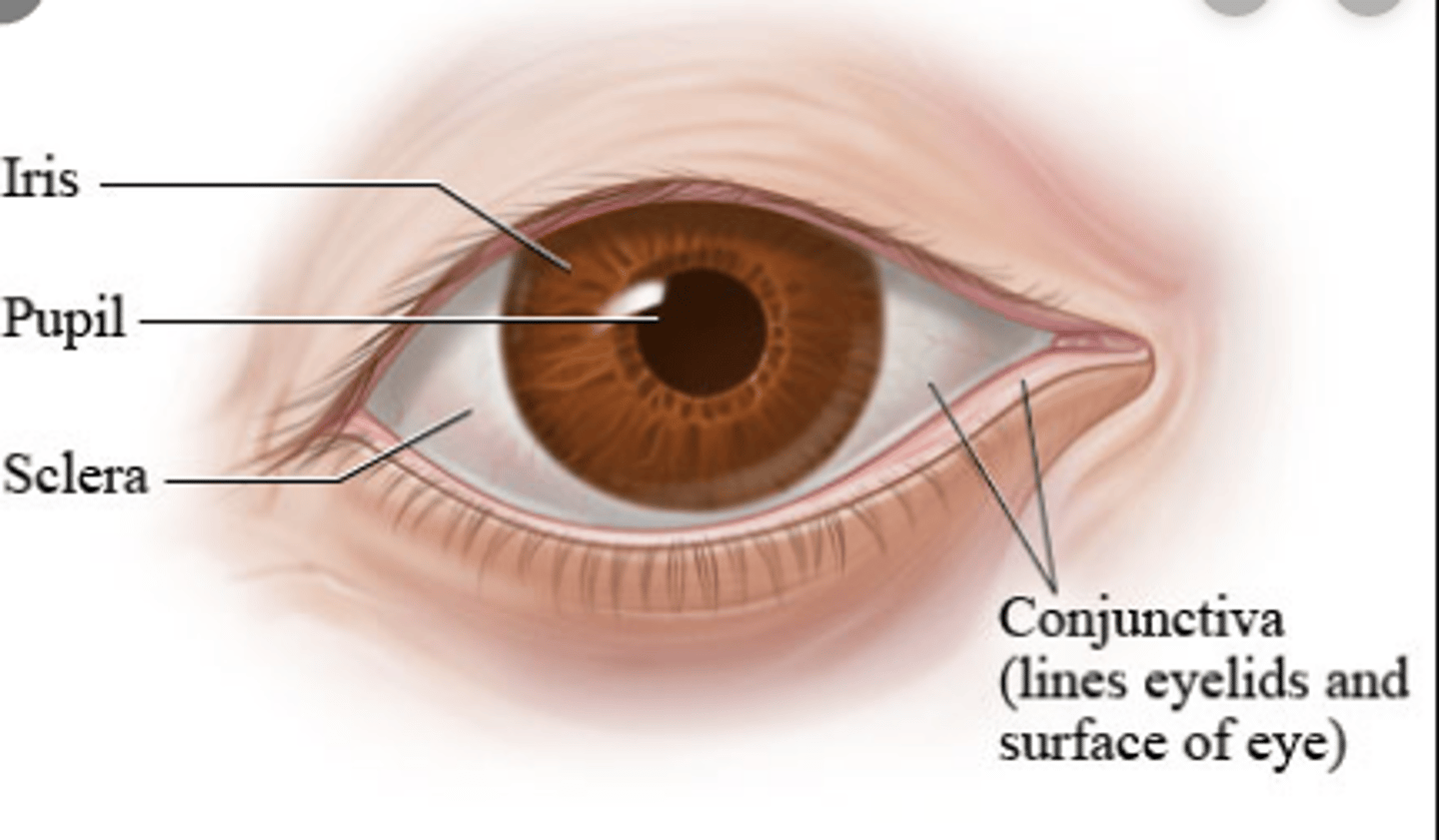
Cornea
Outer covering of the eye.
Sclera
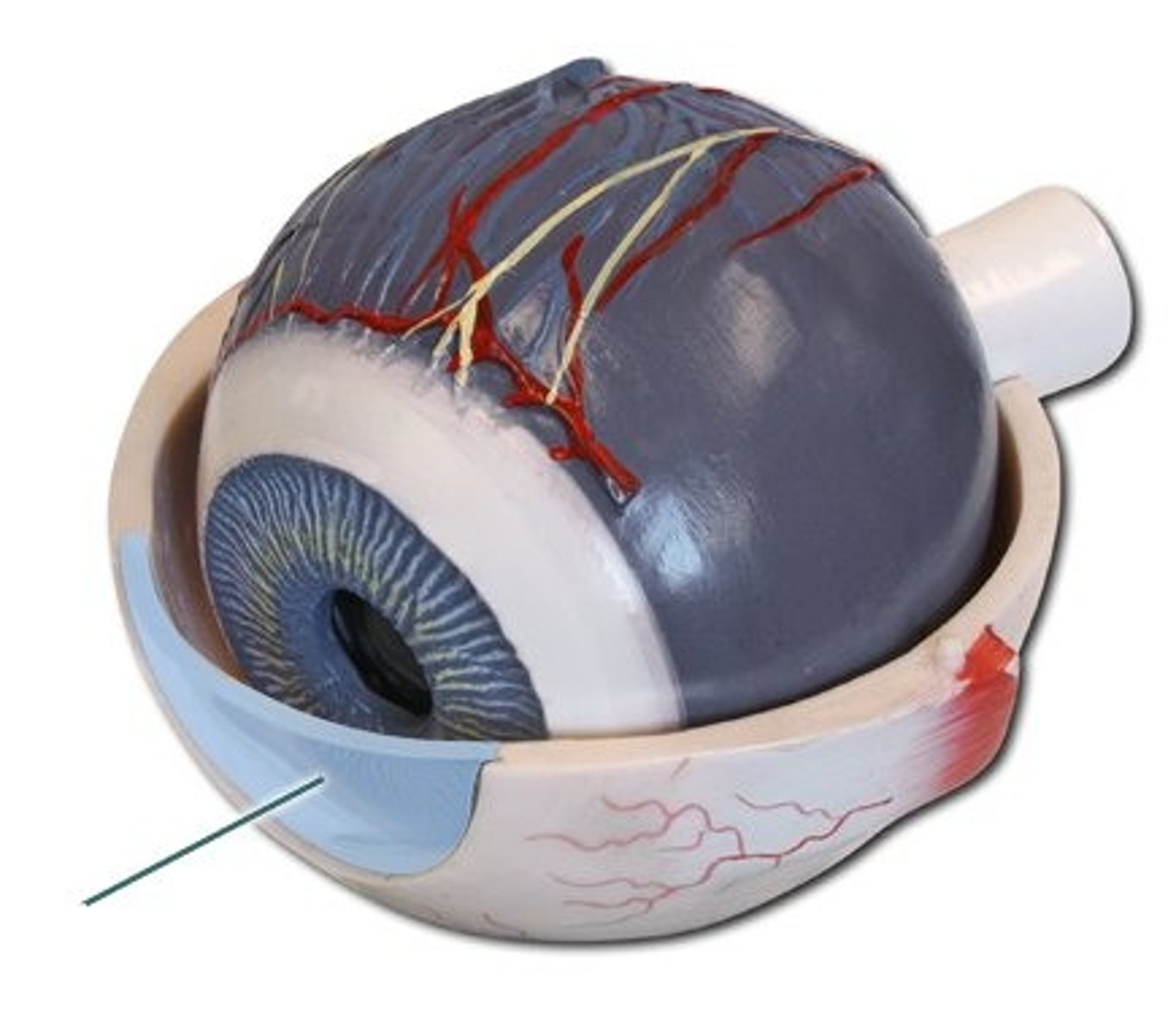
Commonly referred to as the "whites" of the eye. This is a smooth, white layer on the outside, but the inside is brown and contains grooves that help the tendons of the eye attach properly.
Pupil
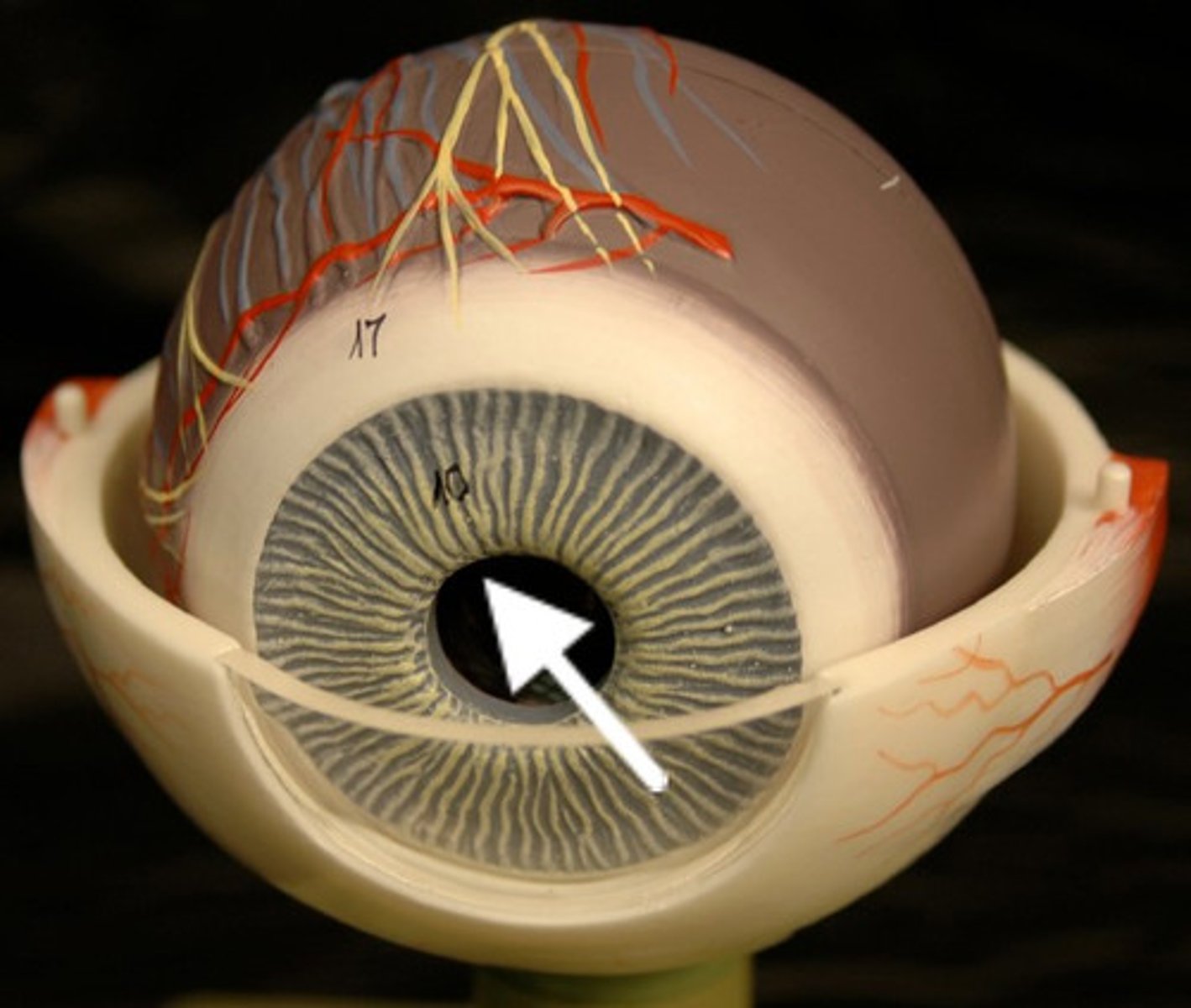
Appears as a black dot in the middle of the eye. This black area is actually a hole that takes in light.
Iris
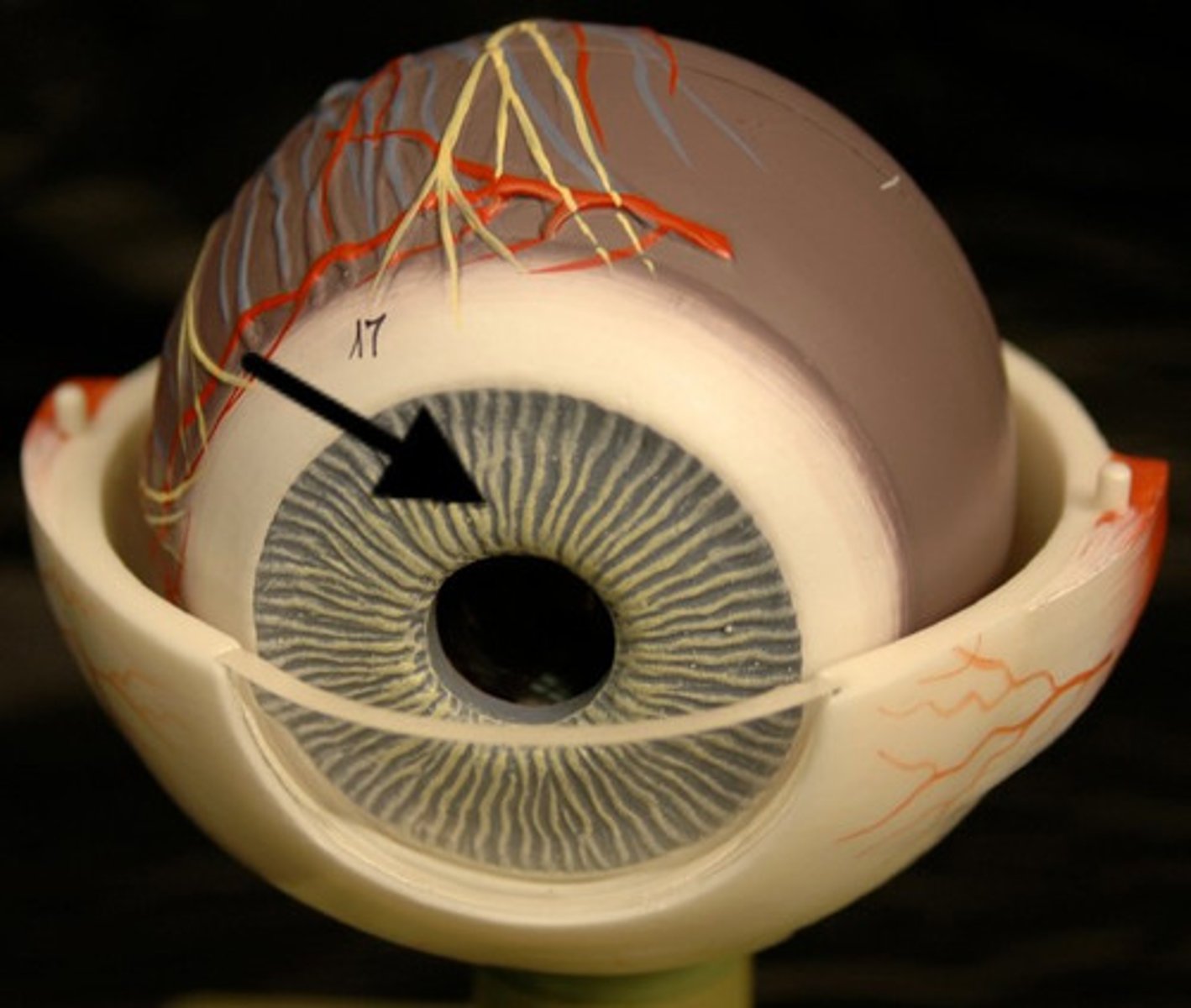
The area of the eye that contains the pigment which gives the eye its color. If it is too bright, the iris will shrink the pupil so that they eye can focus more effectively.
Conjunctiva
These are layers of mucus which help keep the outside of the eye moist.
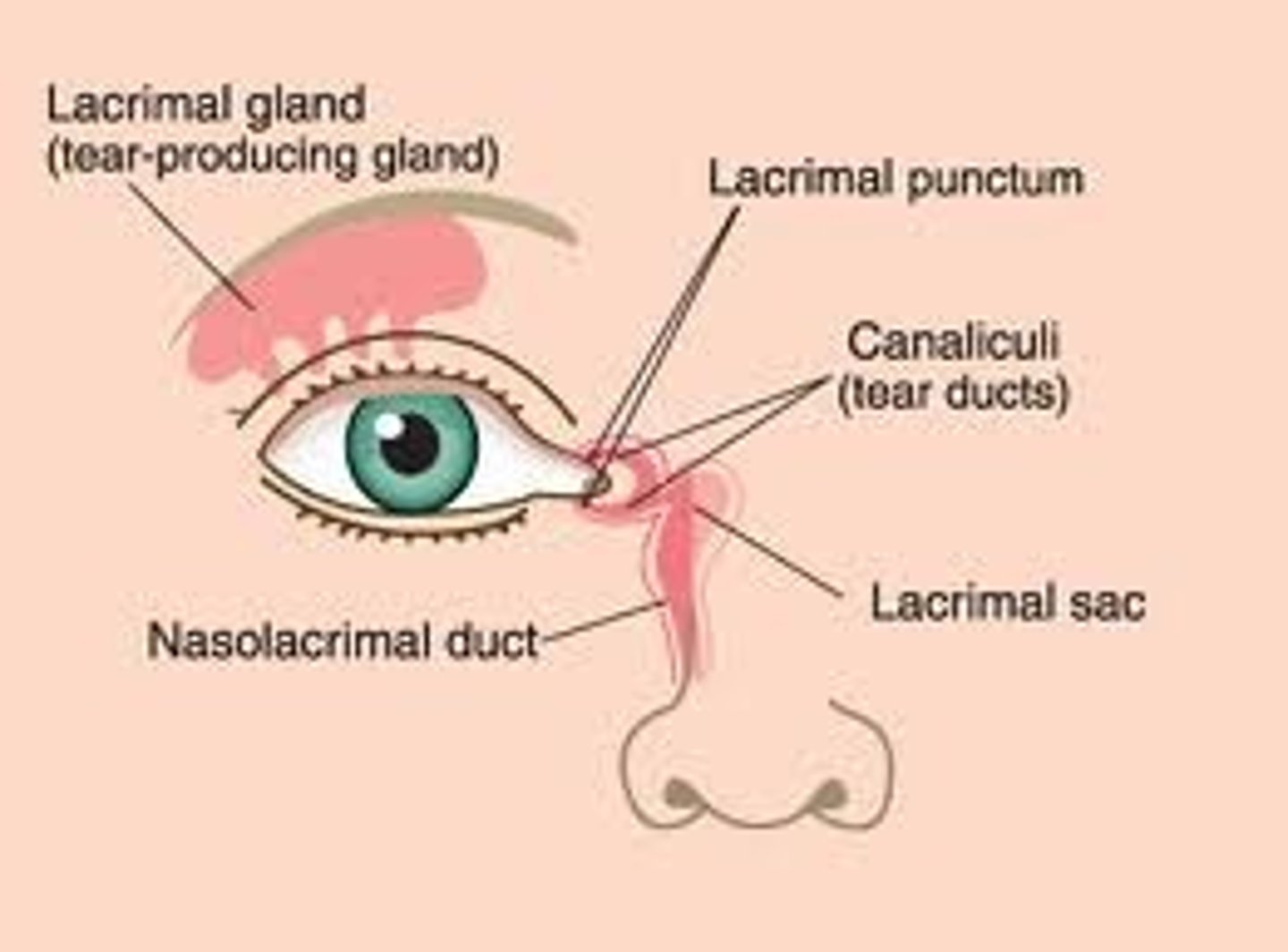
Lacrimal Glands
This gland is located on the outer corner of each eye. They produce tears which help moisten the eye when it becomes dry, and flush out particles which irritate the eye.
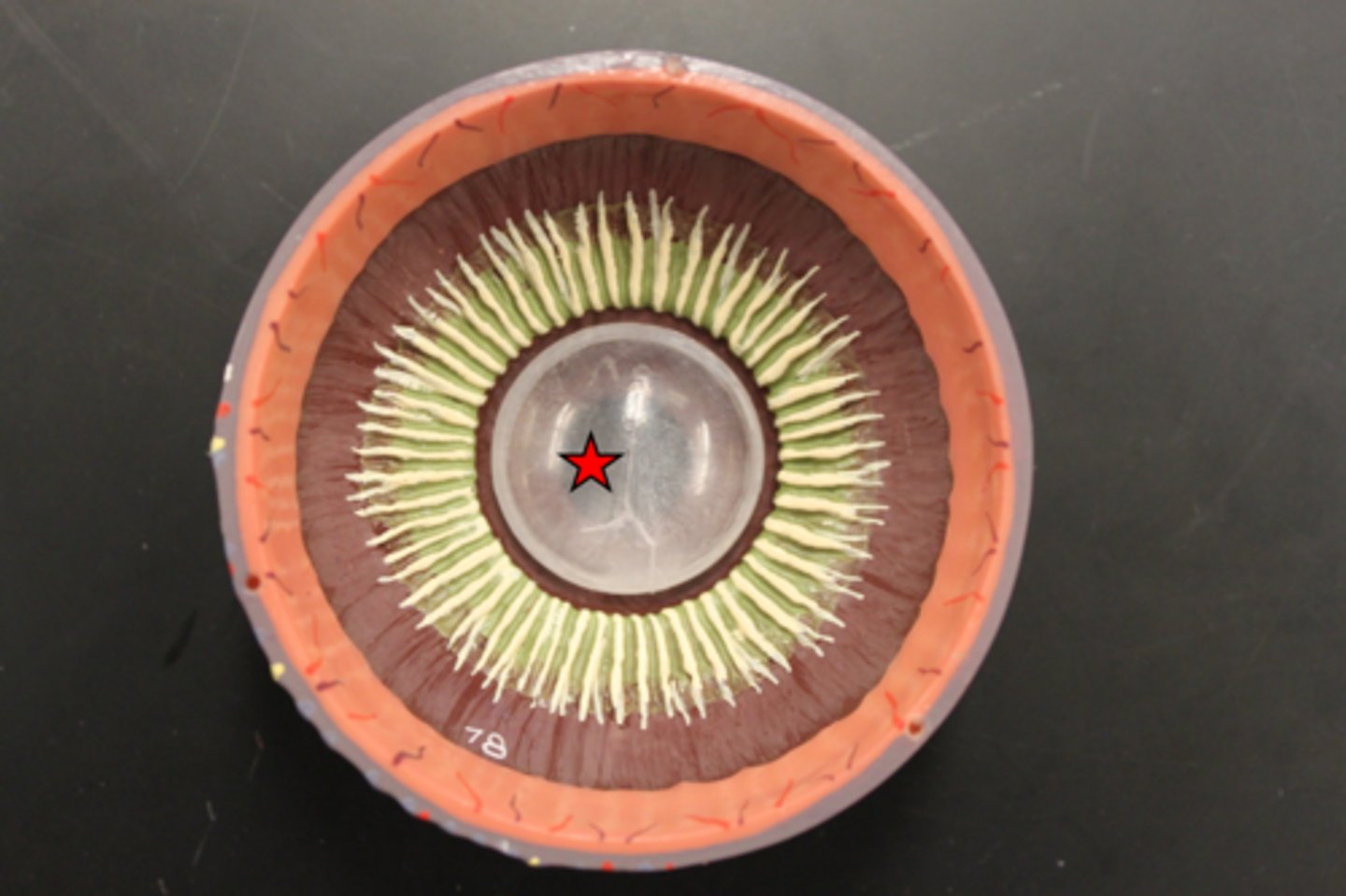
Lens
Sits directly behind the pupil. This is a clear layer that focuses the light the pupil takes in.
Retina
The light focuses by the lens will be transmitted here. This is made of rods and cones arranged in layers, which will transmit light into chemicals and electrical pulses.
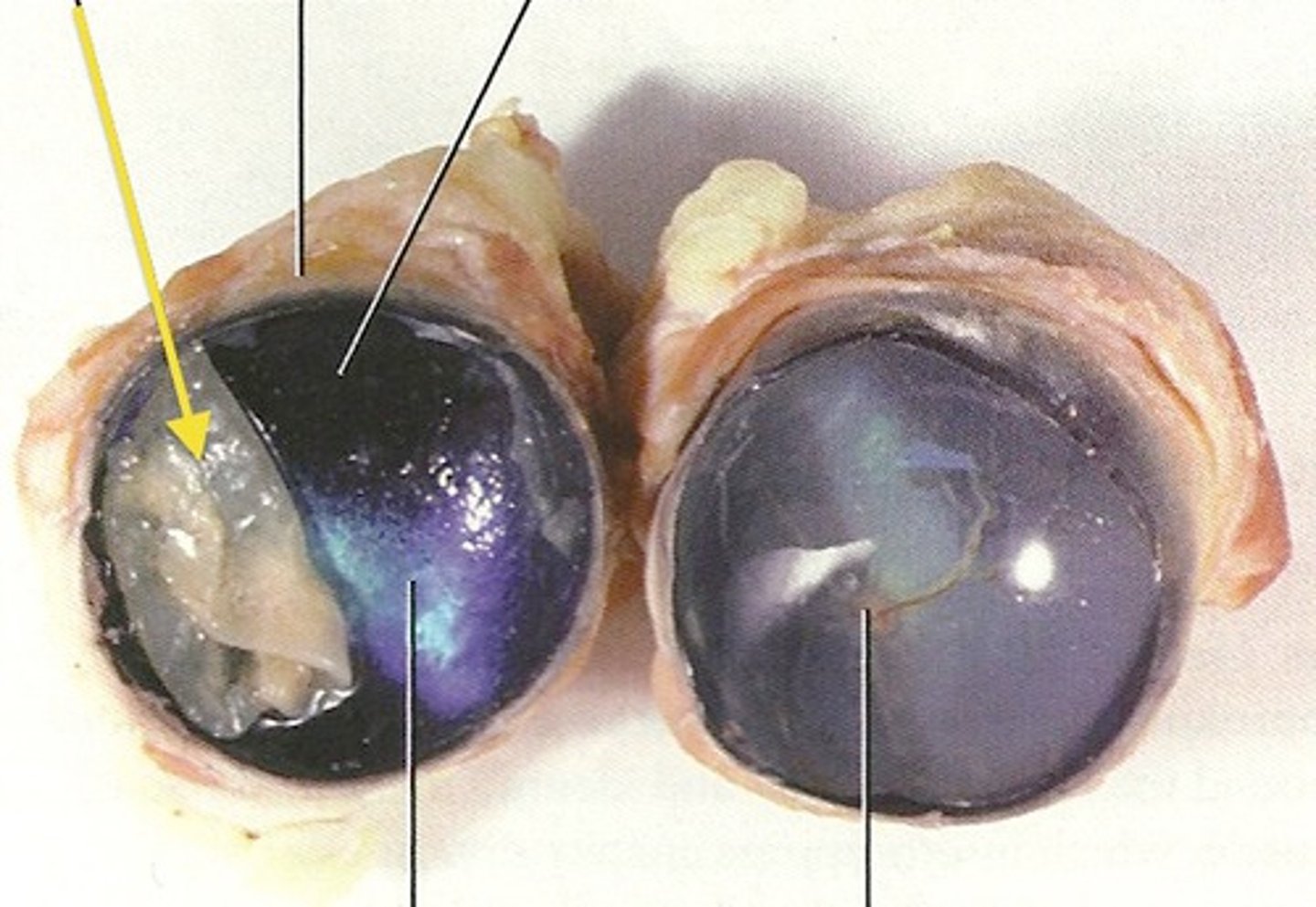
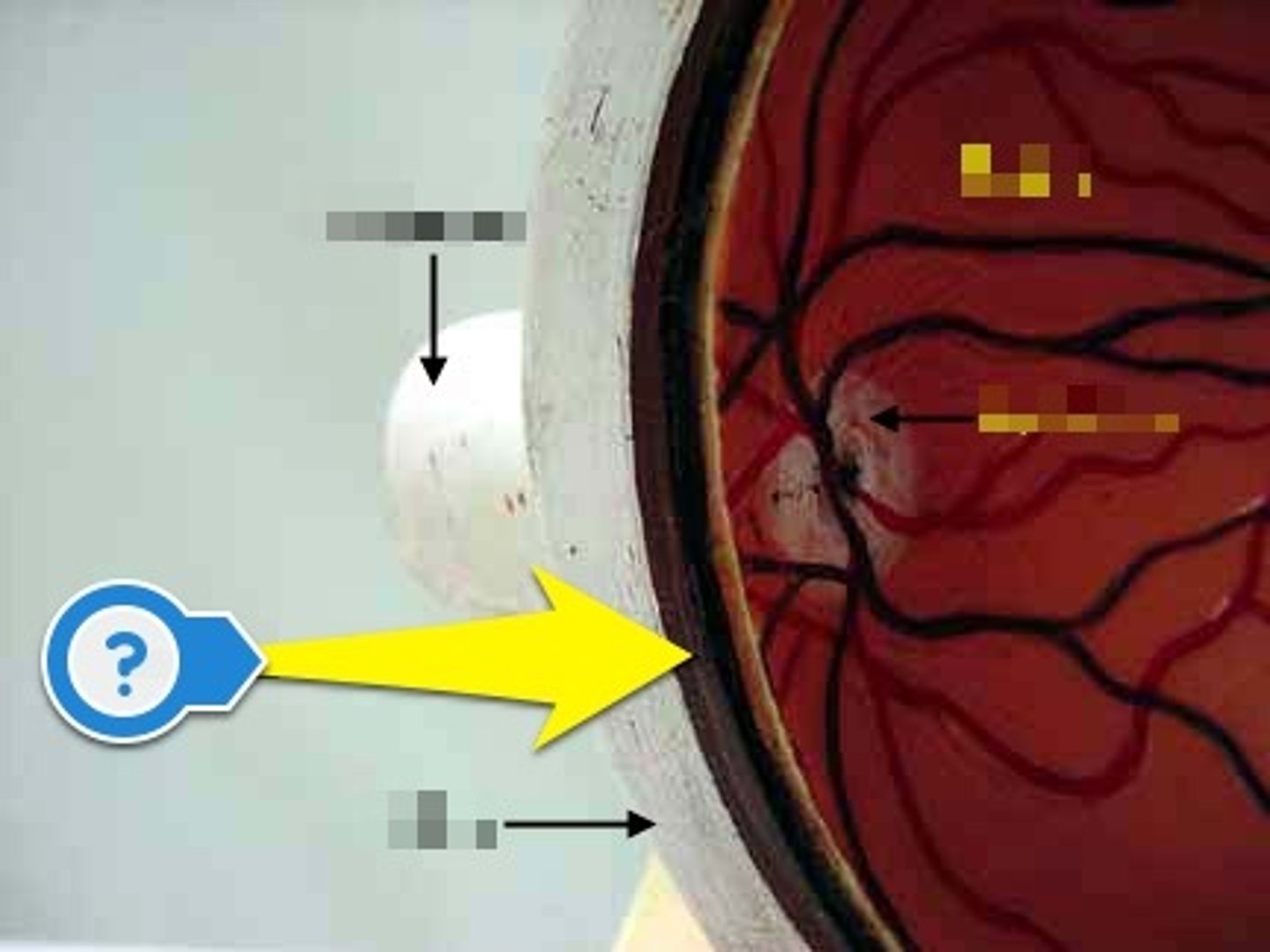
Choroid
Lays between the retina and the sclera, which provides blood supply to the eye. Just like any other portion of the body, the blood supply gives nutrition to the various parts of the eye.
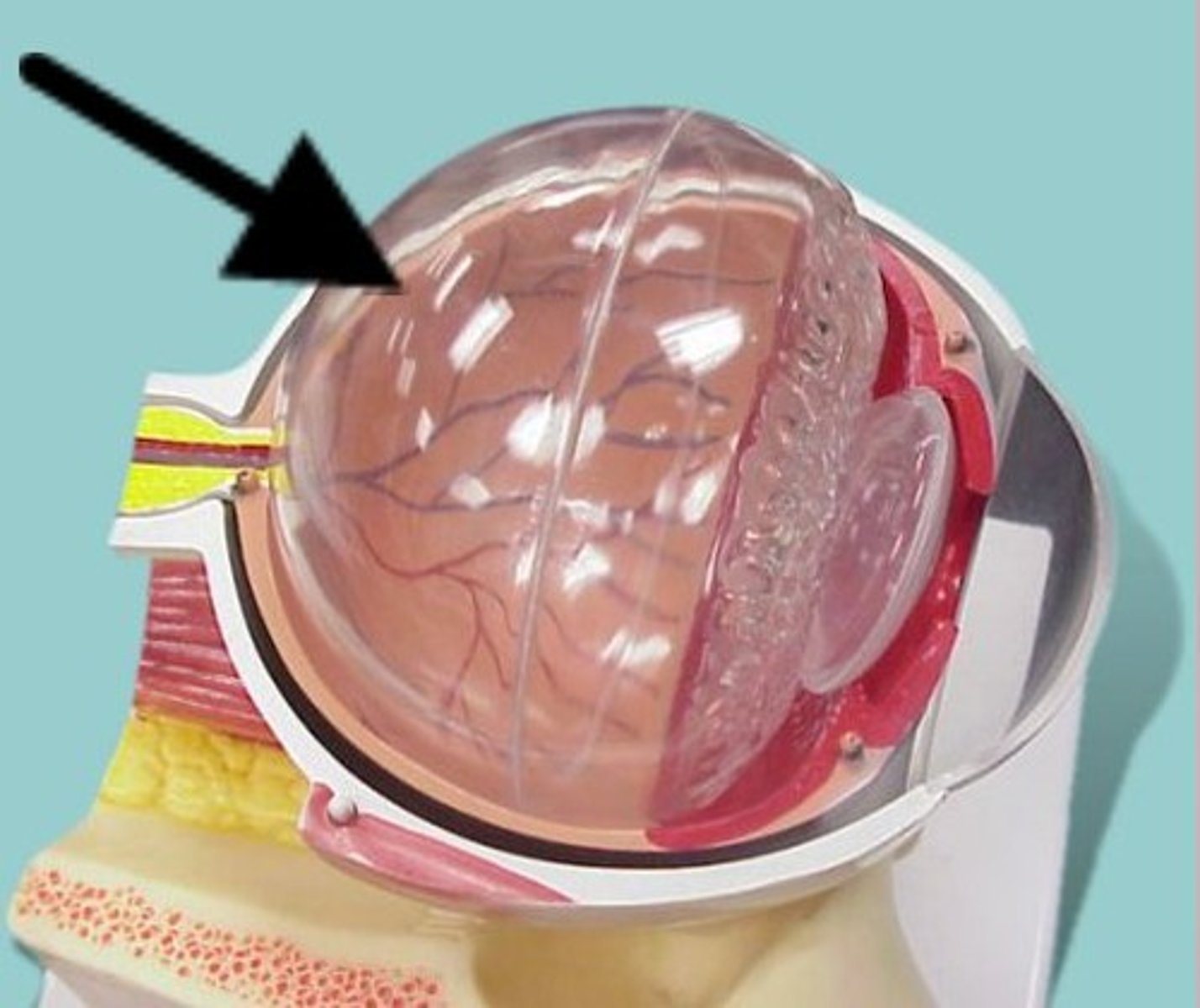
Vitreous Humor
A gel located in the back of the eye which helps it hold its shape.
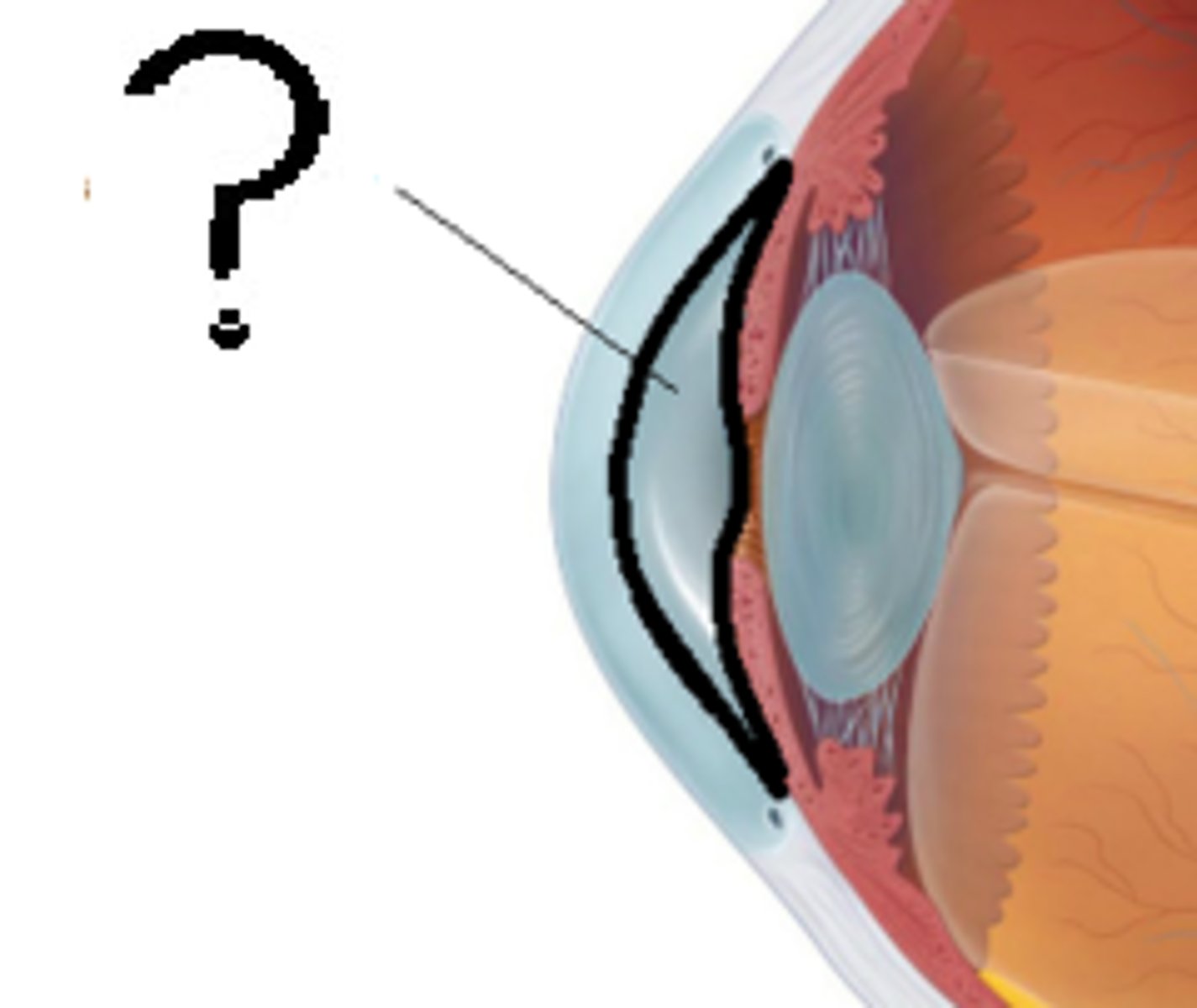
Aqueous Humor
A watery substance that fills the front of the eye. It allows the cornea to maintain its shape. If it is unhealthy, they can develop glaucoma.
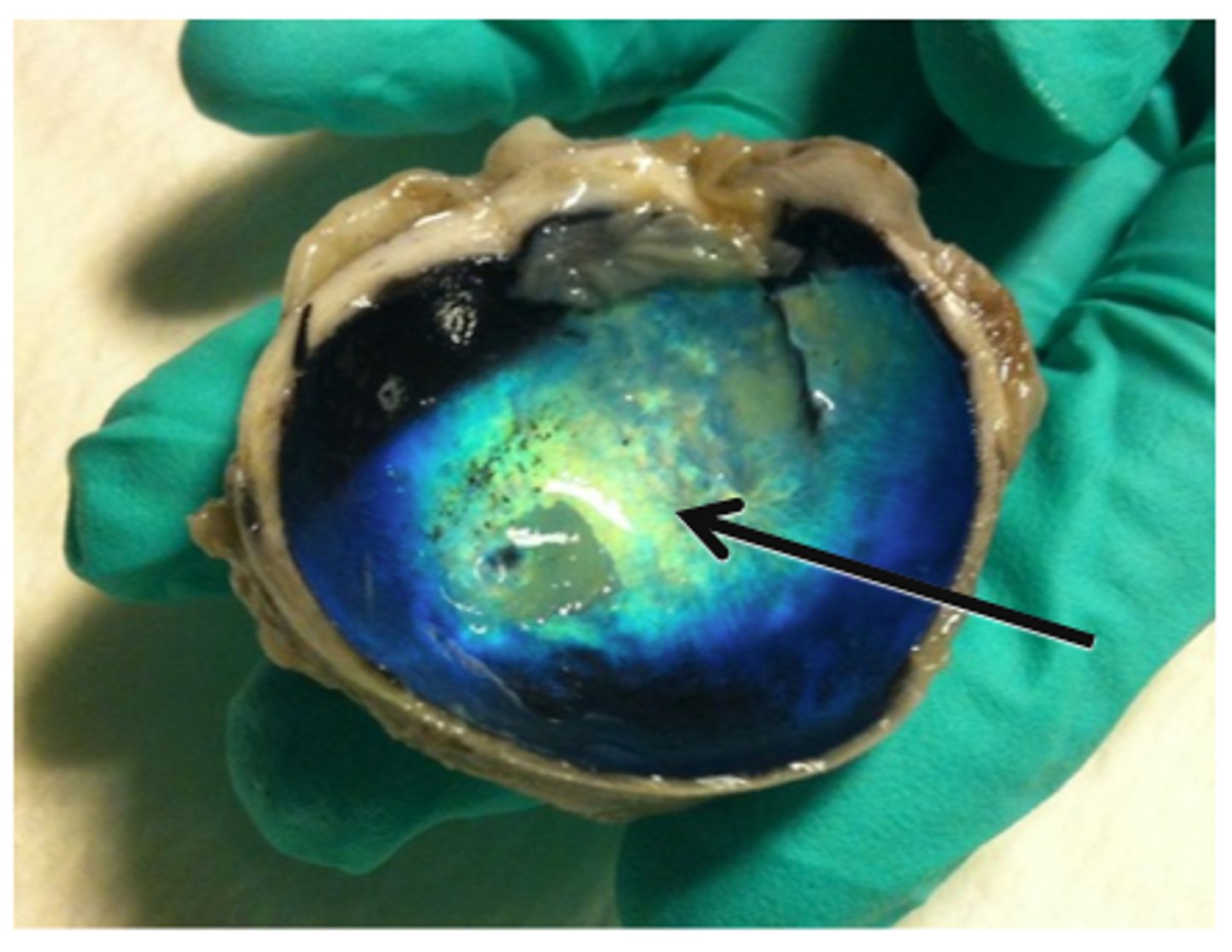
Tapetum
A biologic reflector system that is a common feature in the eyes of vertebrates.
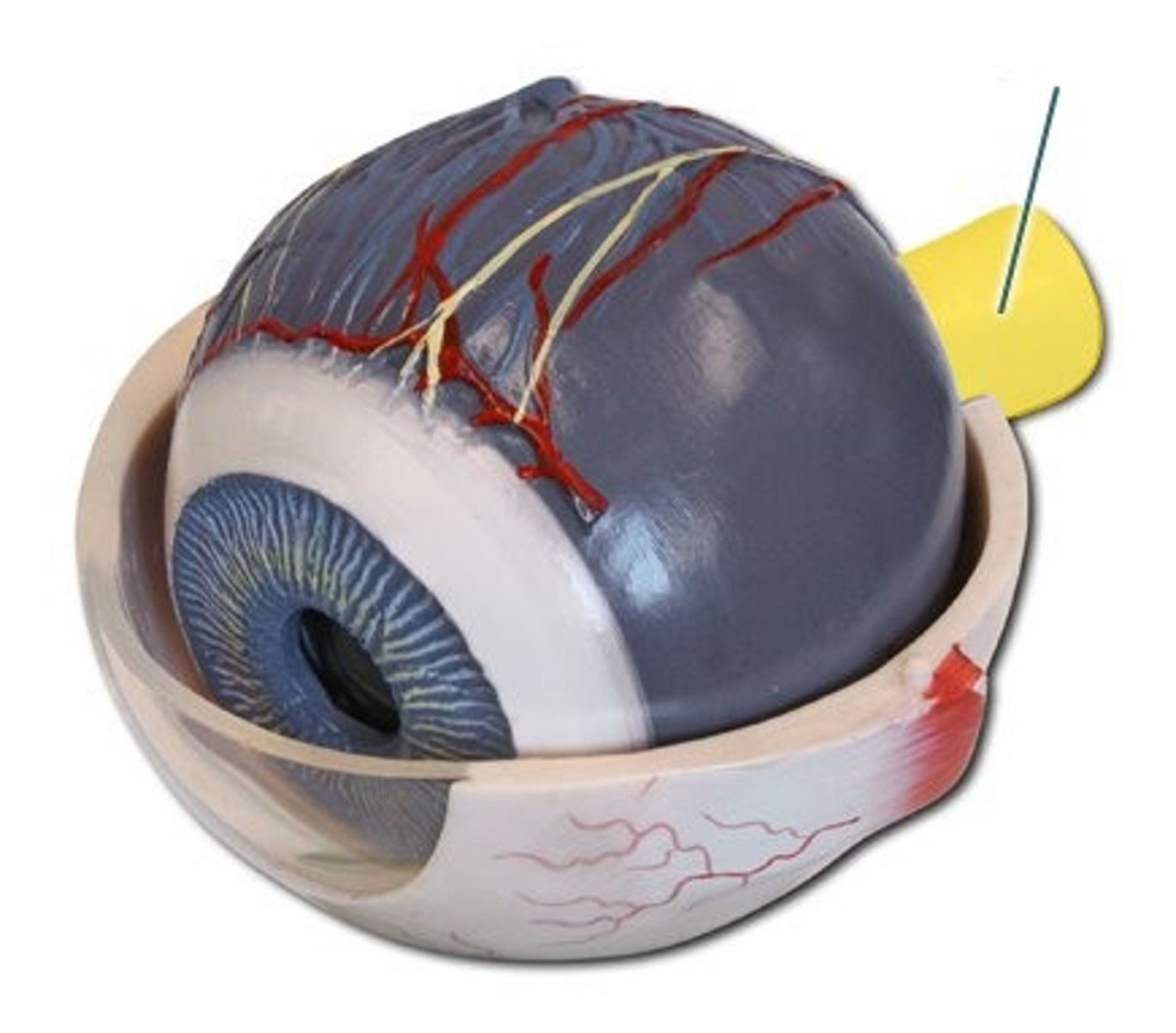
Optic Nerve
A pair of cranial nerves, transmitting impulses to the brain from the retina at the back of the eye.
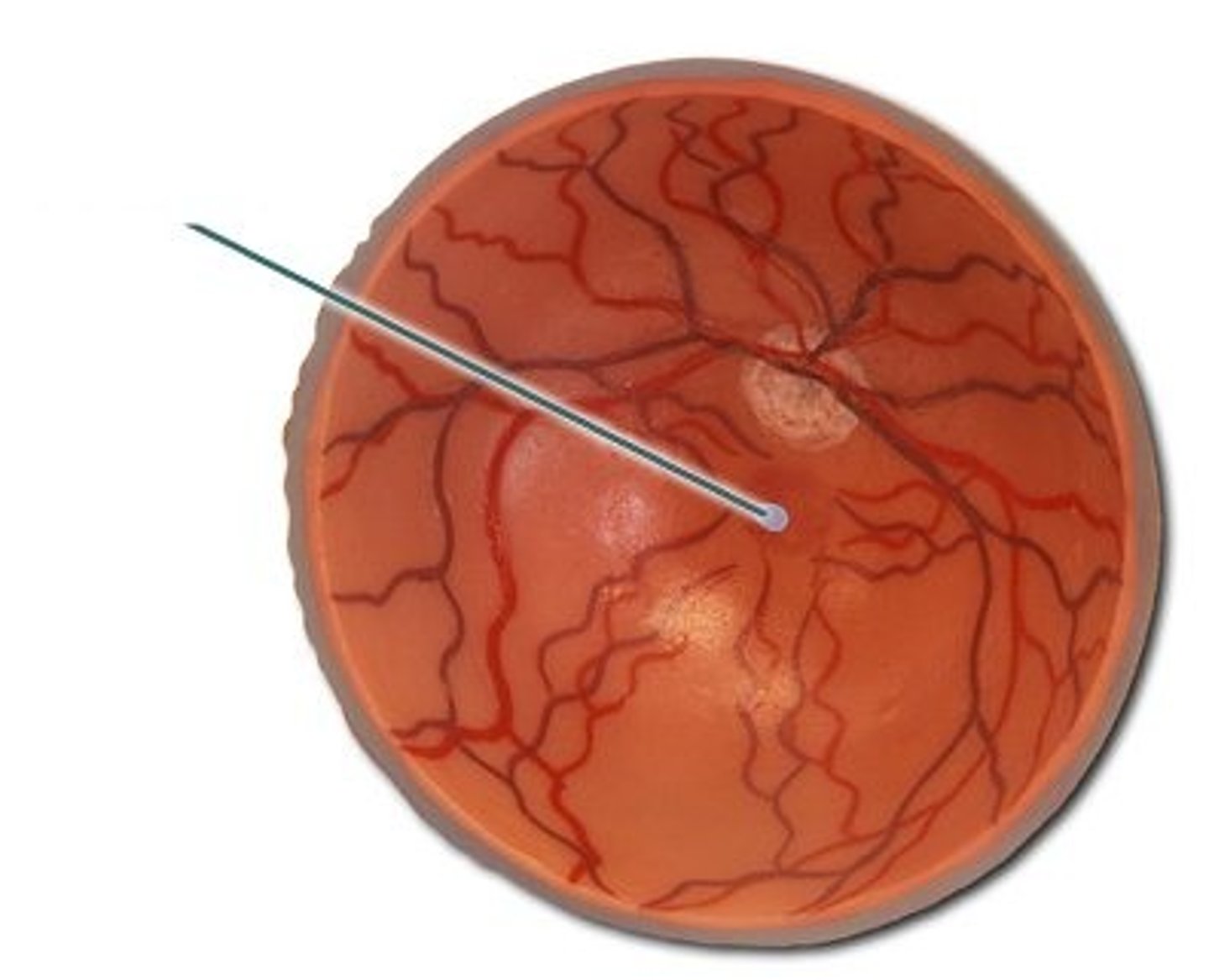
Fovea
A small depression in the retina of the eye where visual acuity is highest. The center of the field of vision is focused in this region, where retinal cones are particularly concentrated.
Rods
receptor cells that do not see color

Cones
Found in the retina; used to in the detection of color.

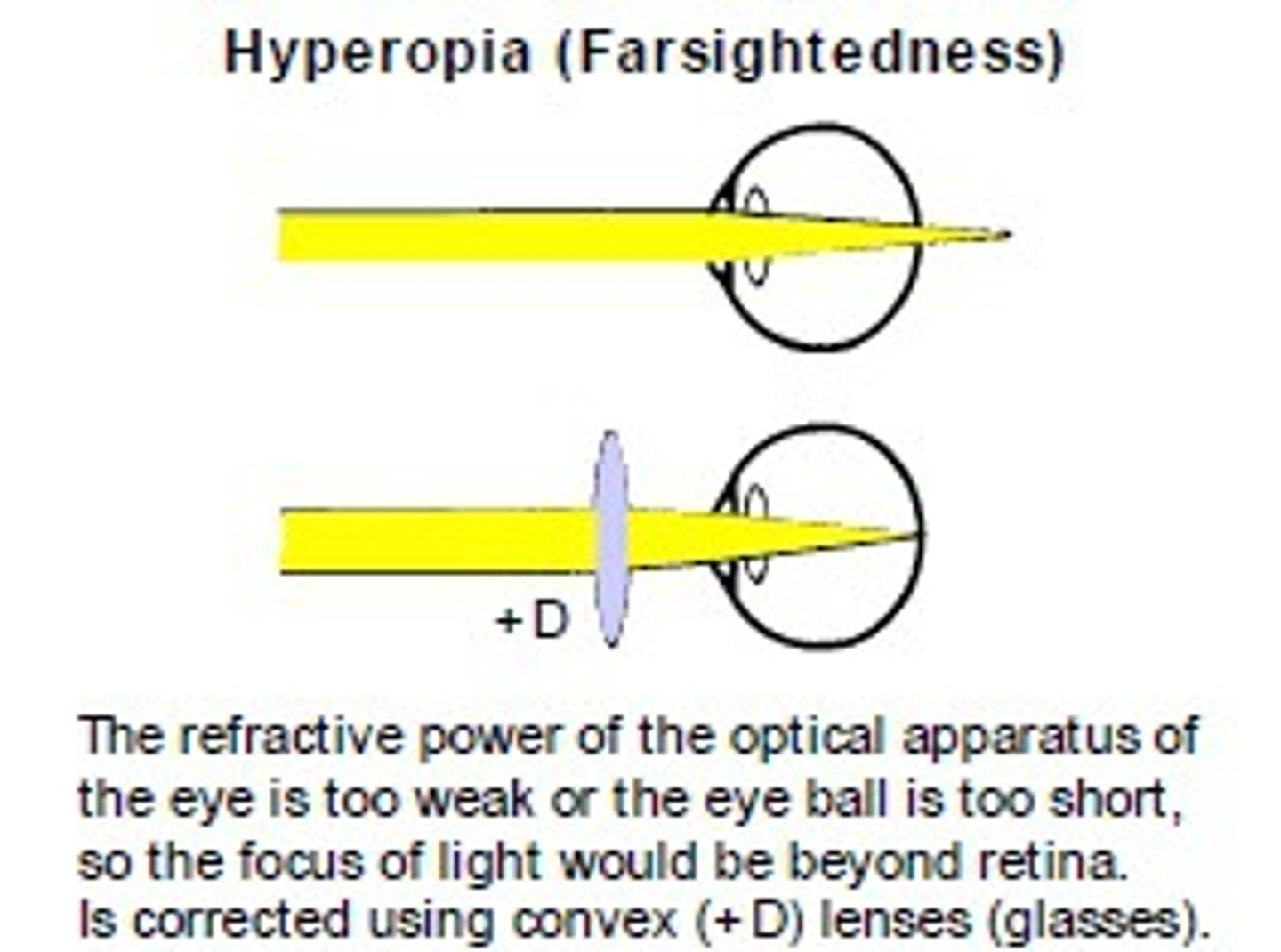
Hyperopia
Farsightedness; can't see close up well.
Myopia
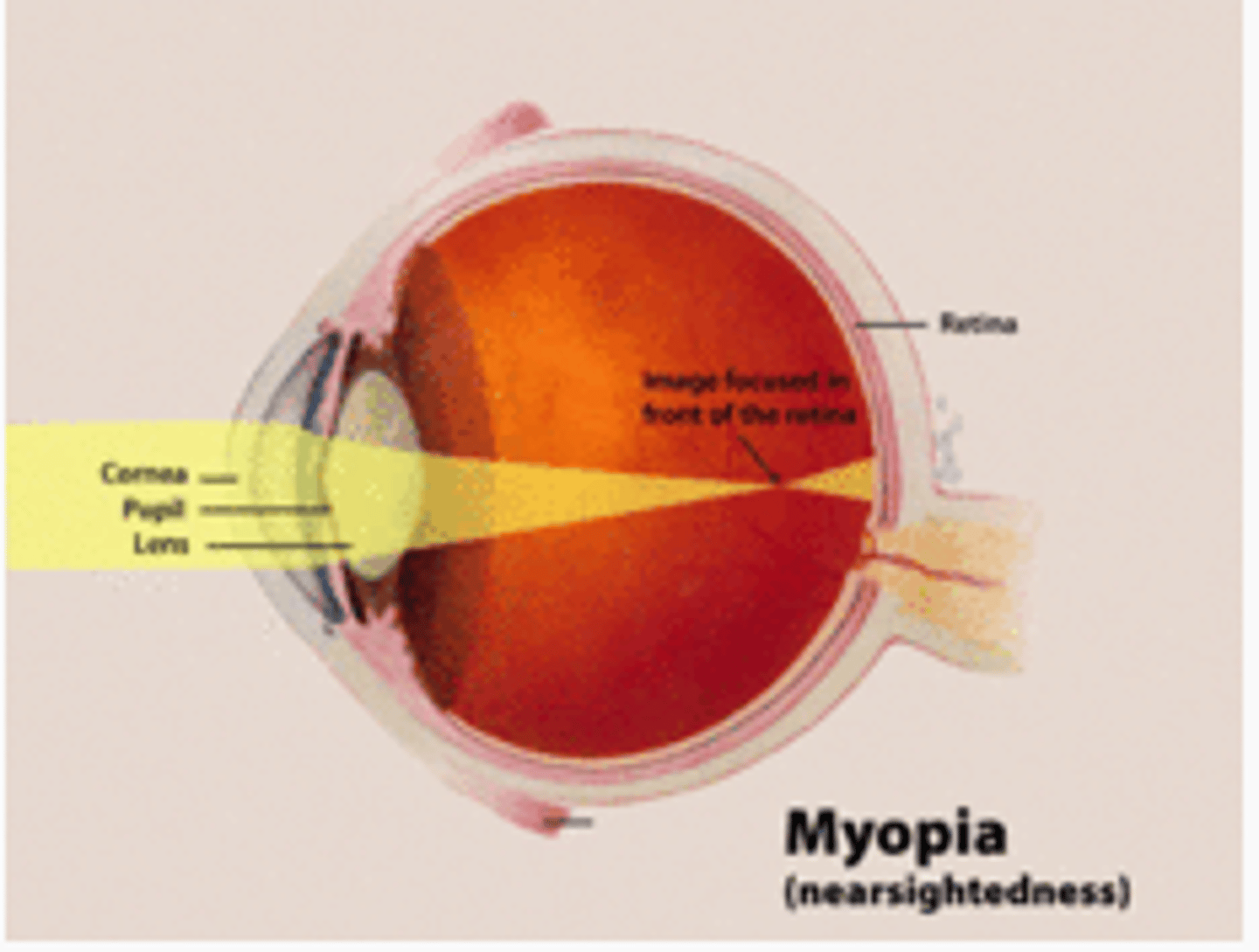
Nearsightedness; can't see distance well.