Mycenae - Homeric World
 Call Kai
 Learn
Learn Practice Test
 Spaced Repetition
 Match
Match Flashcards
 Knowt Play
1/38

Earn XP
Description and Tags
Name | Mastery | Learn | Test | Matching | Spaced | Call with Kai |
|---|
No analytics yet
Send a link to your students to track their progress
39 Terms
What is Mycenae?
- Mycenae is the legendary home of Agamemnon
- Mycenaean period named after the city
- Lagest of all Mycenaean sites
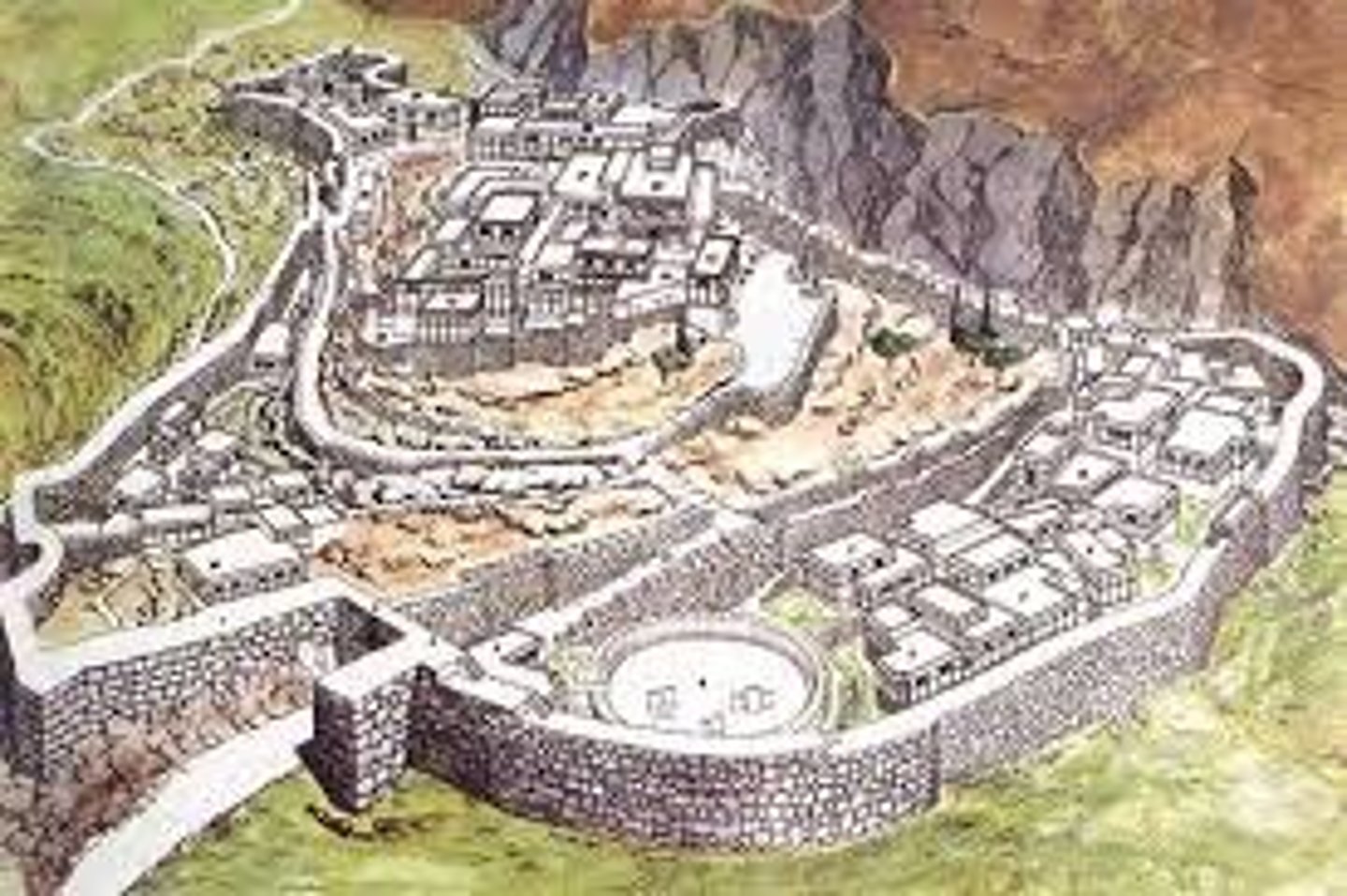
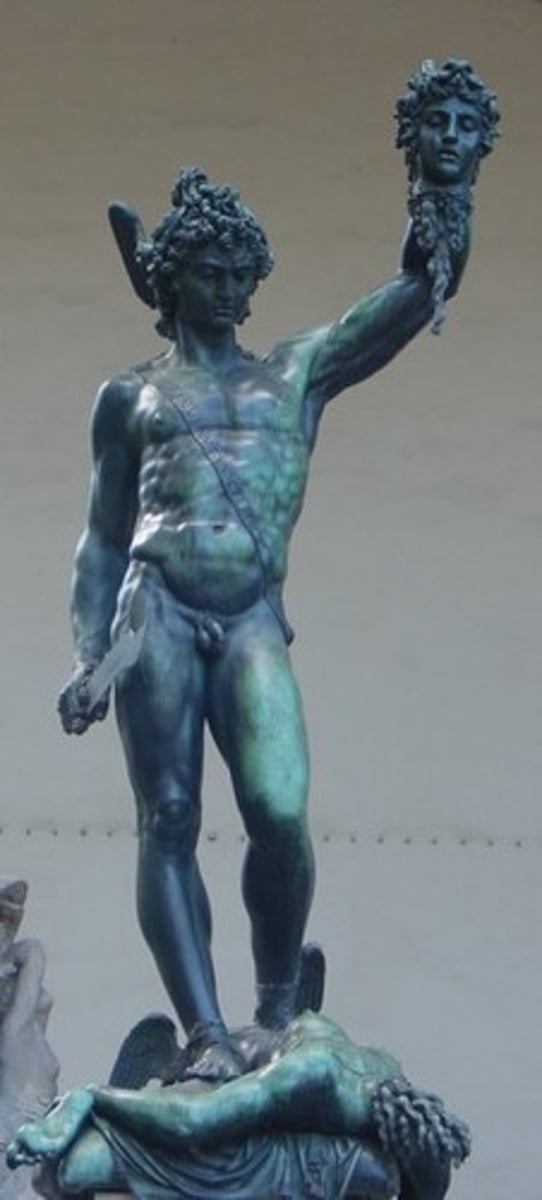
Who founded Mycenae ?
Perseus, with the help of the Cyclopes
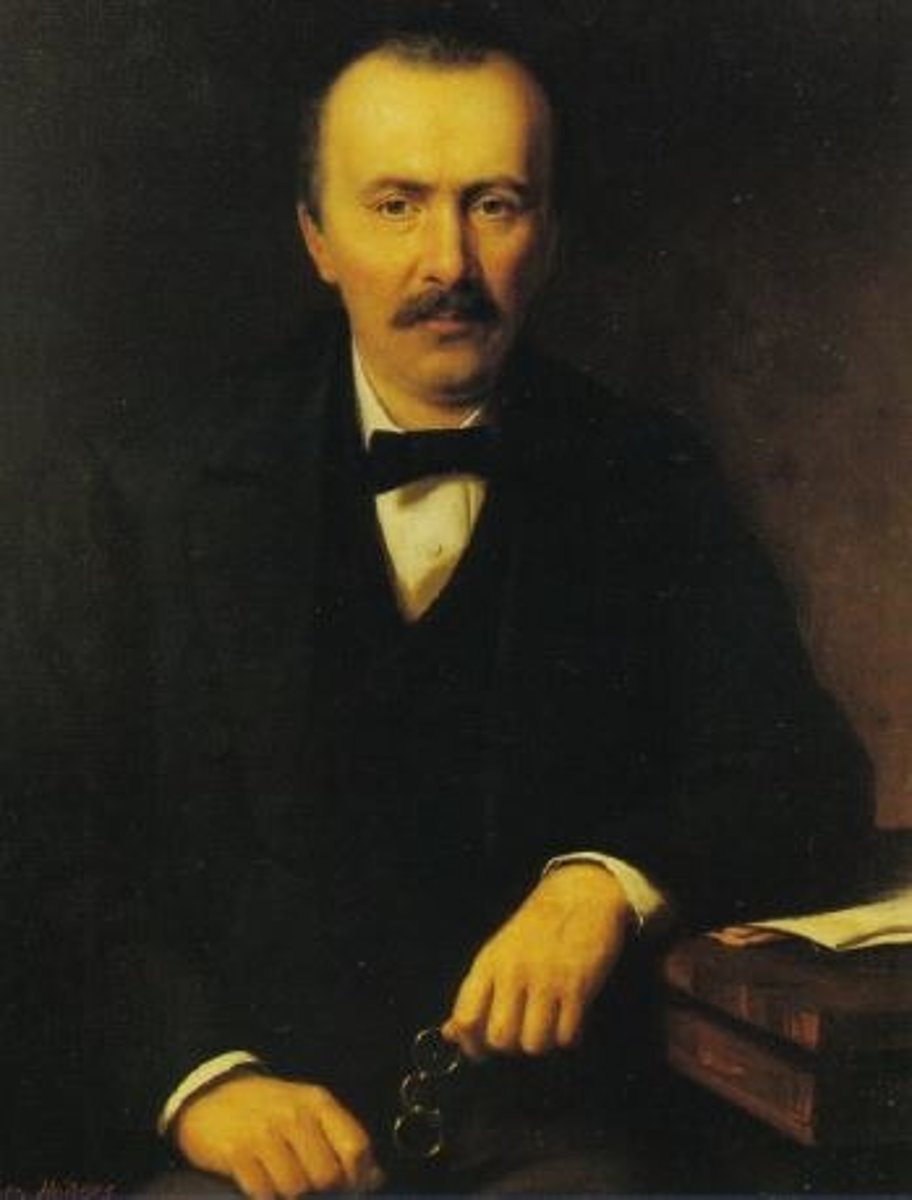
Who excavated Mycenae ?
It was Excavated by Heinrich Schliemann between 1876 and 1878
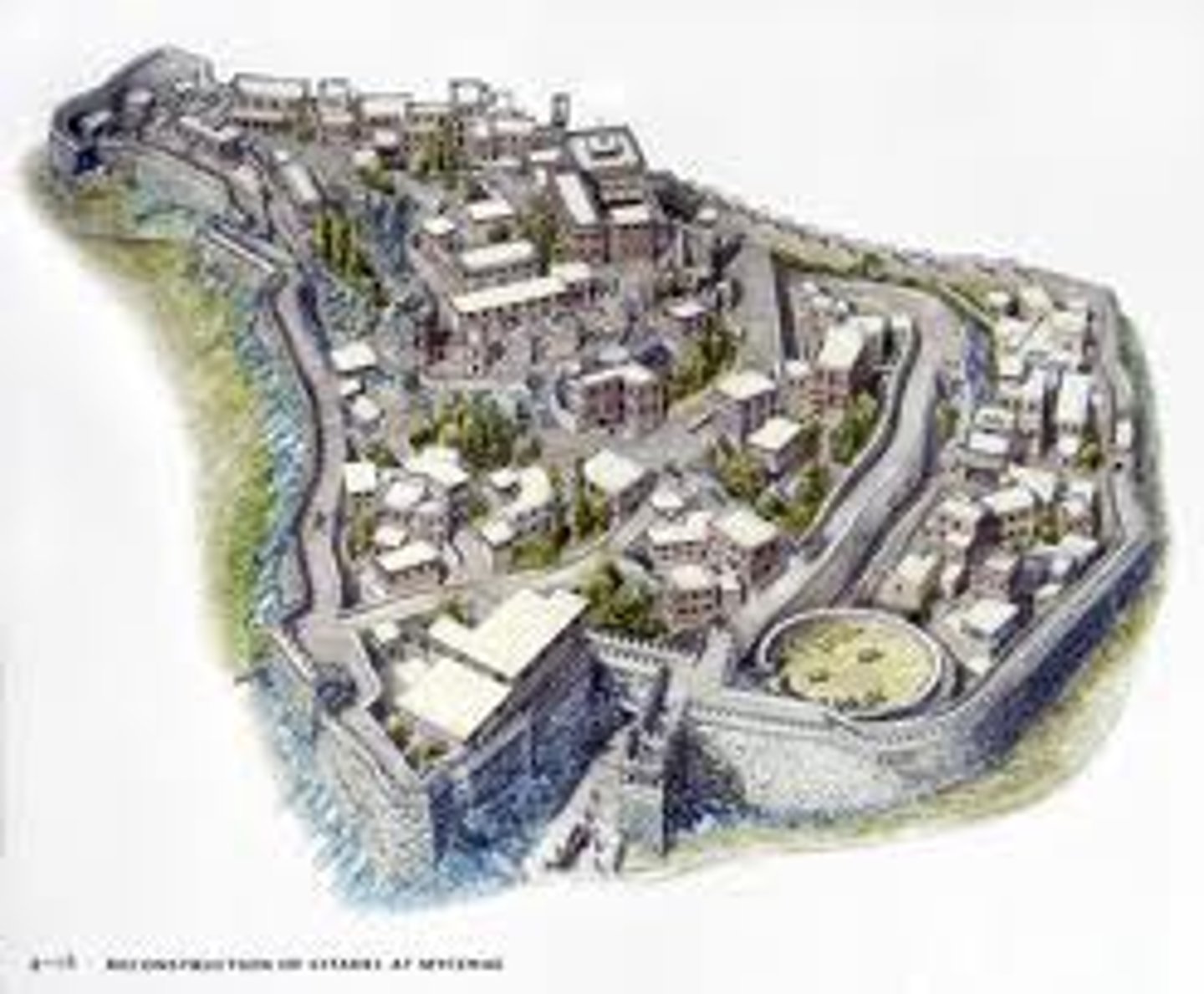
Key details of Mycenae
- Citadel = walled city
- Citadel is 50-60m above sea level on hill
- Hills to the North and South
- Ravine to North and east
- Spring 400m away feeds cistern
- Plains to the South
- Sea to the South
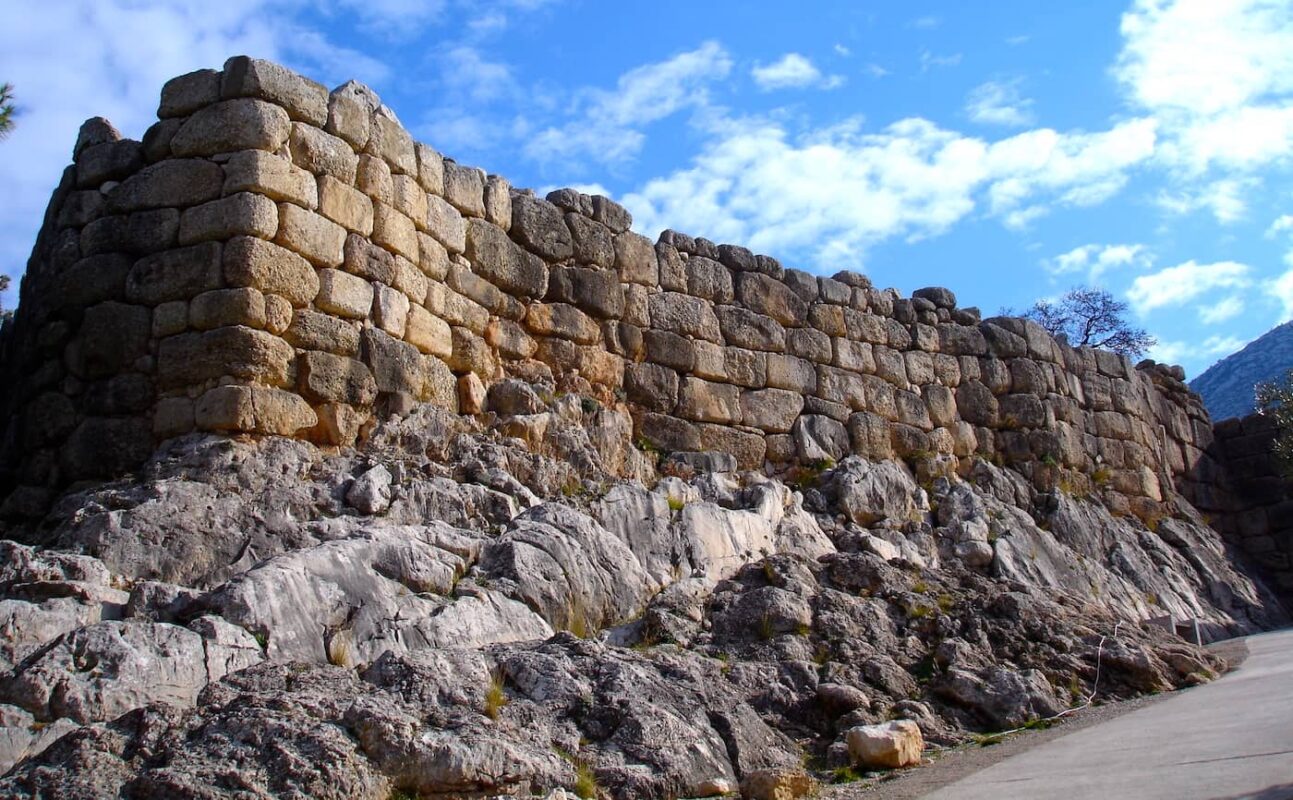
Advantages of the Cyclopean Walls
- Hard for attackers to break through or climb up but easy to defend from
- Provides higher ground = better vision
Details about the Cyclopean Walls
- Original wall built c.1350 BC around top of city
- Enlarged in c.1200 BC to form a citadel
- Widest section : 5.5m - 7.5m thick
- Tallest section believed to be 12m high
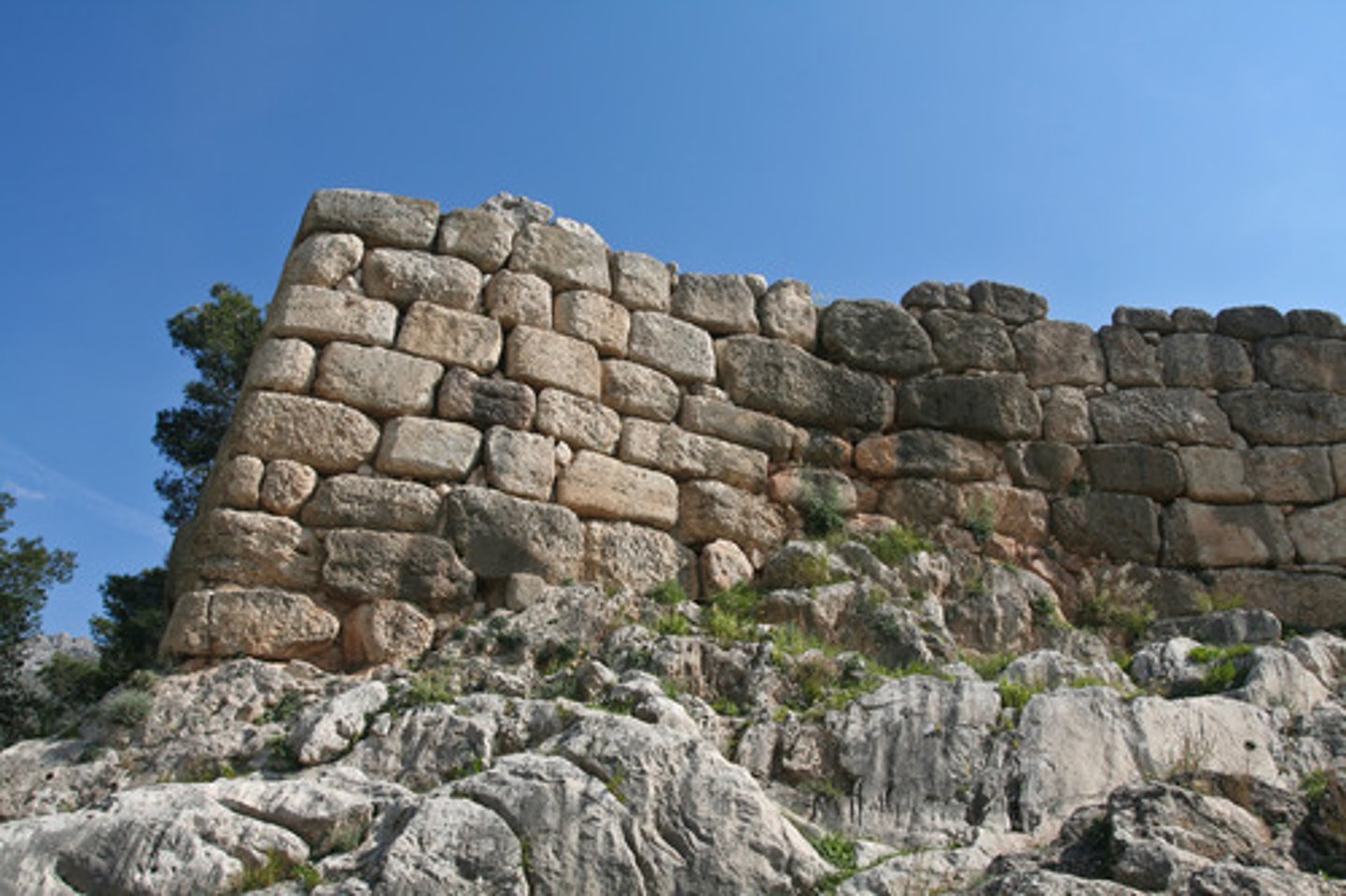
Construction of the walls
- Huge blocks of limestone from local area
- smaller pieces to fill in gaps between larger blocks
- inner core of earth and rubble
- stones were so big, it was thought to have been built by Cyclopes
- Slabs were probably moved on rollers or earth ramps
- Wall followed contour of the hill = easier to build.
Advantages of being on a steep hill
- Invading party will become extremely tired after going up hill therefore will be easier to fight off
- Difficult to bring a large army up a steep hill
- Easy to notice invaders early because of higher ground.
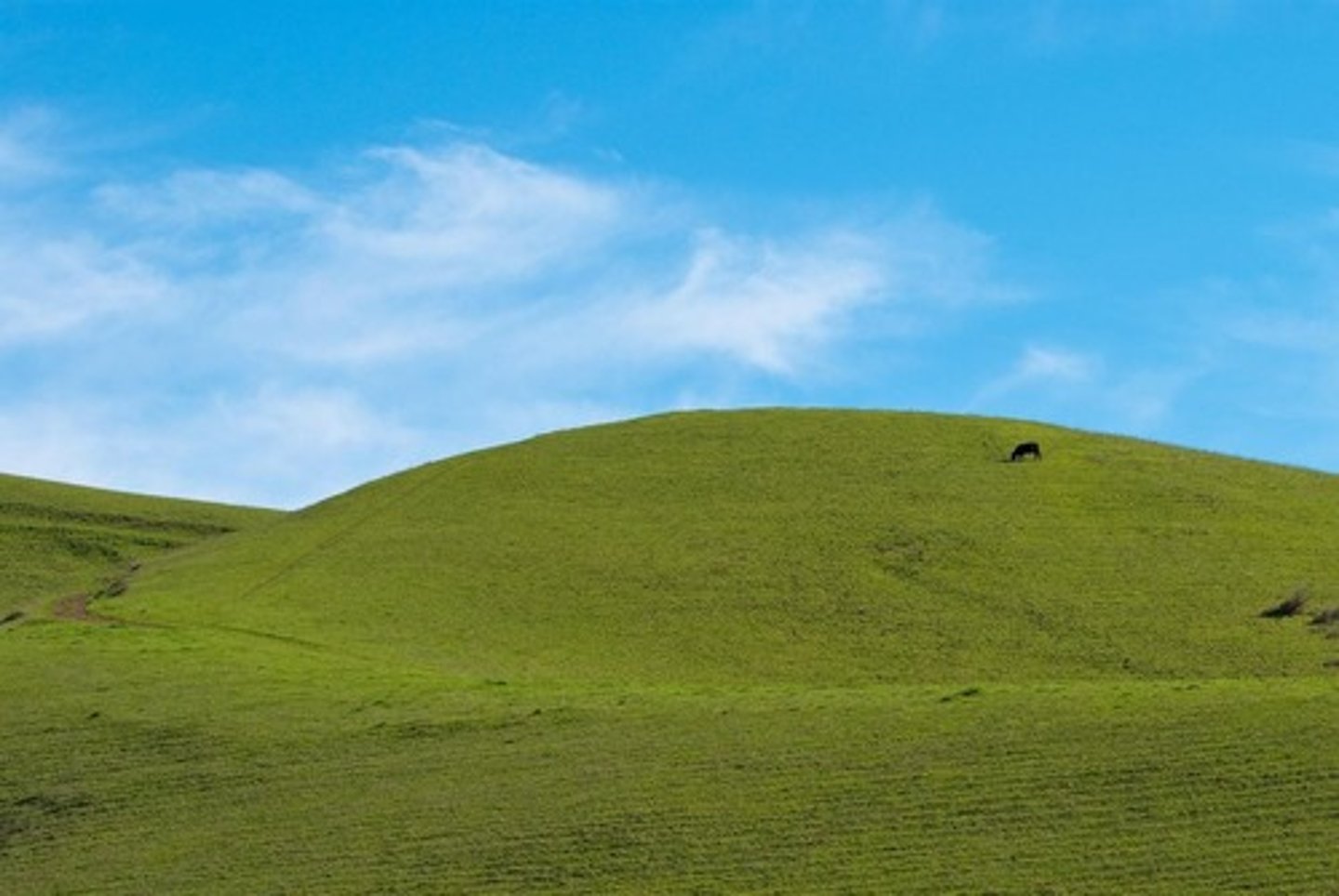
Advantages of hills to the north and to the south
- tiring for attacking armies to traverse, sometimes they won't even be able to go over.
- Delays attackers
- less defences needed in N+S, natural barriers are in place
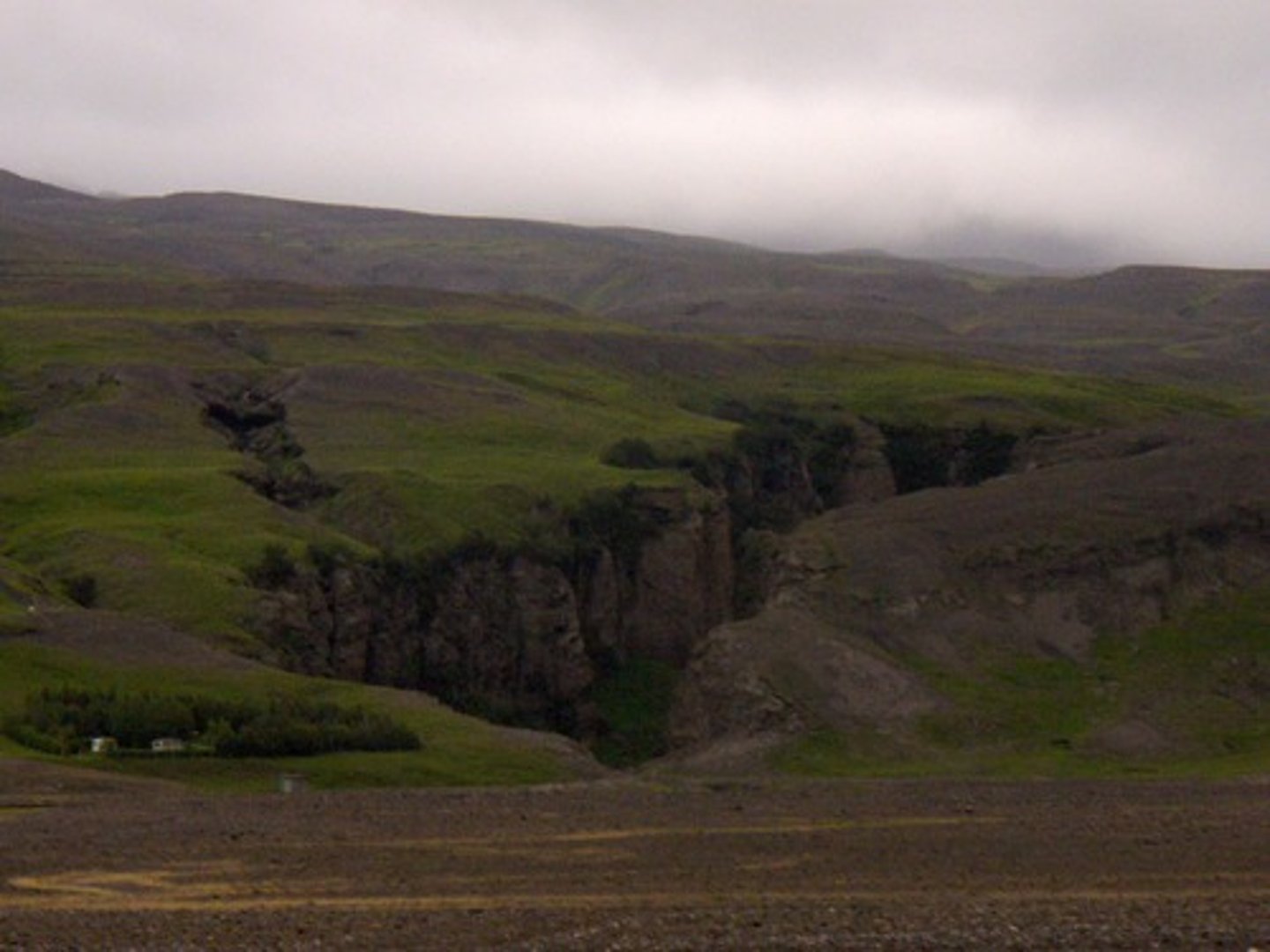
Advantages of ravine to the north and east
- Invading armies won't be able to get across the ravines
- Natural defence on N+E side
- Delay invaders as they will have to find another way to reach city
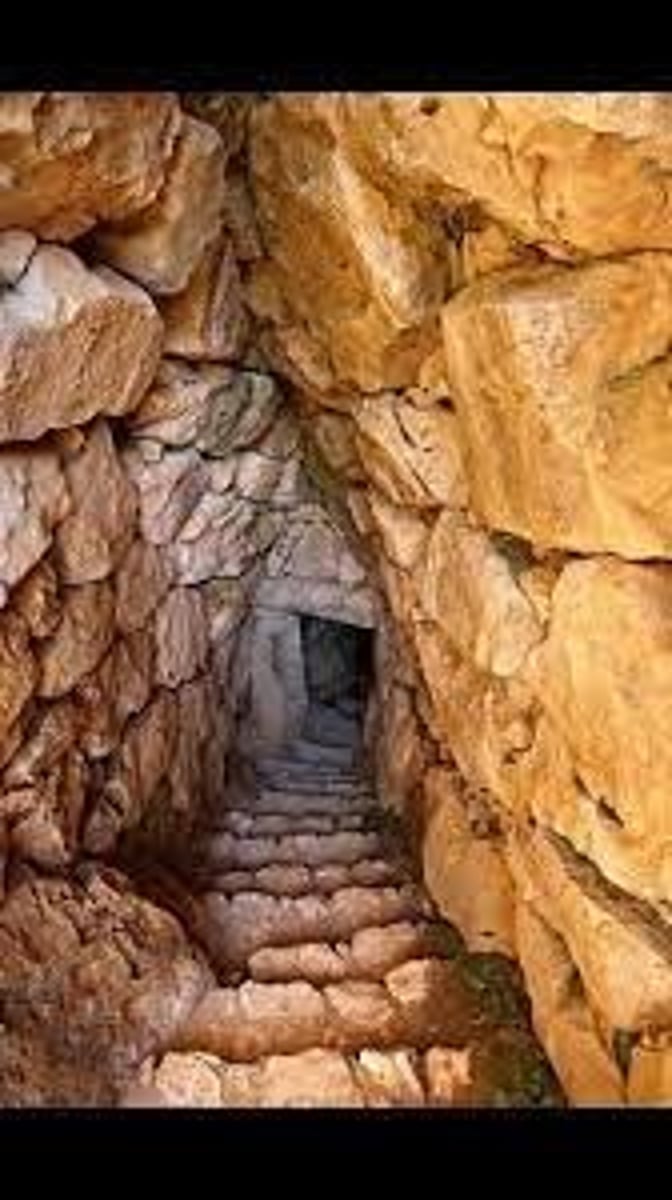
Advantages of Cistern
- 18m below ground = invaders won't know about it, no one can see it
- Clay pipes connect underground cistern to a natural water spring 400m away
- Gives city constant supply of fresh water - when under siege, people inside citadel can still get water from the cistern = good for keeping people alive
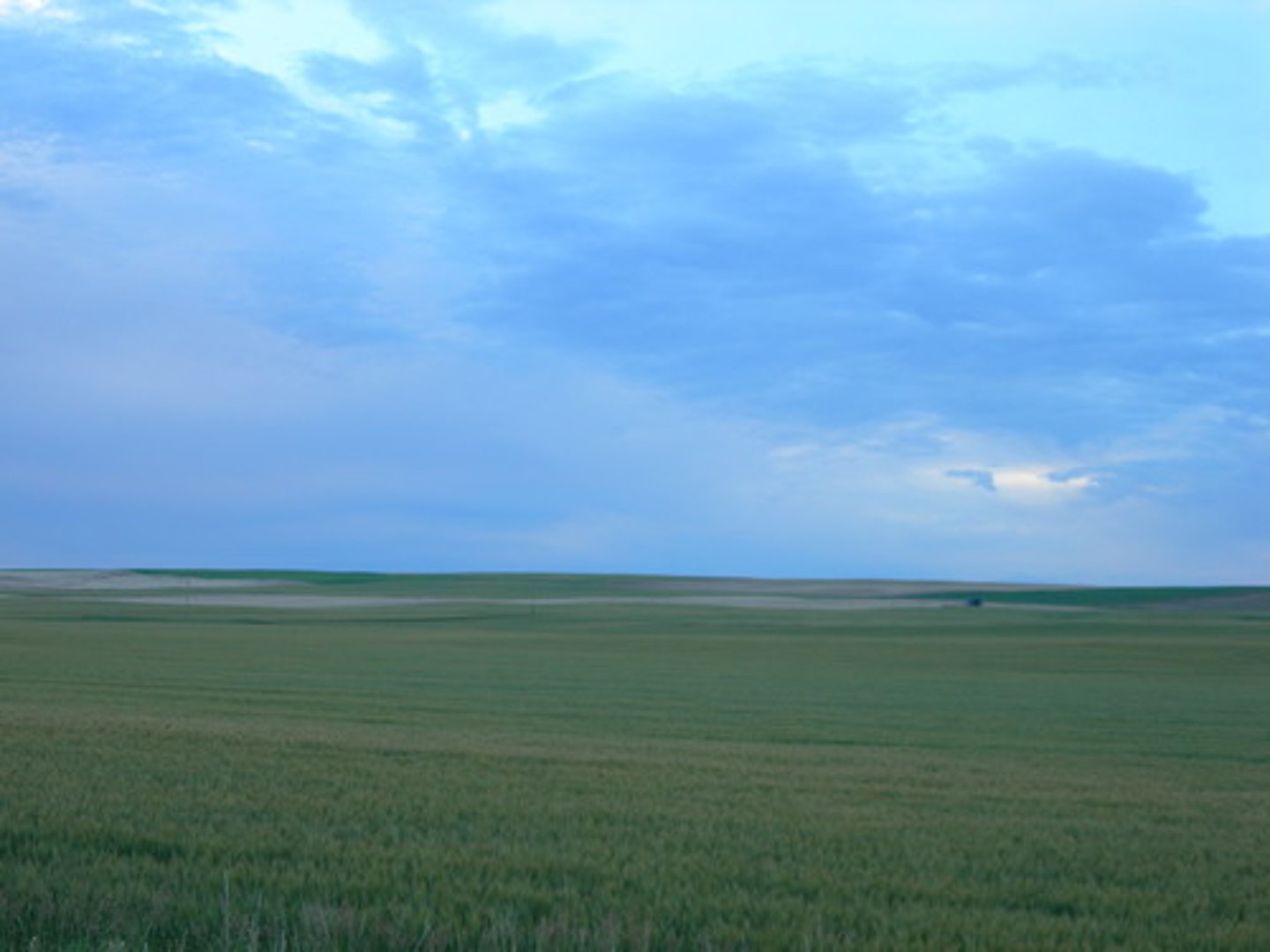
Advantages of plains
- Fertile farm land = good for farming
- easy access to food ( crops )
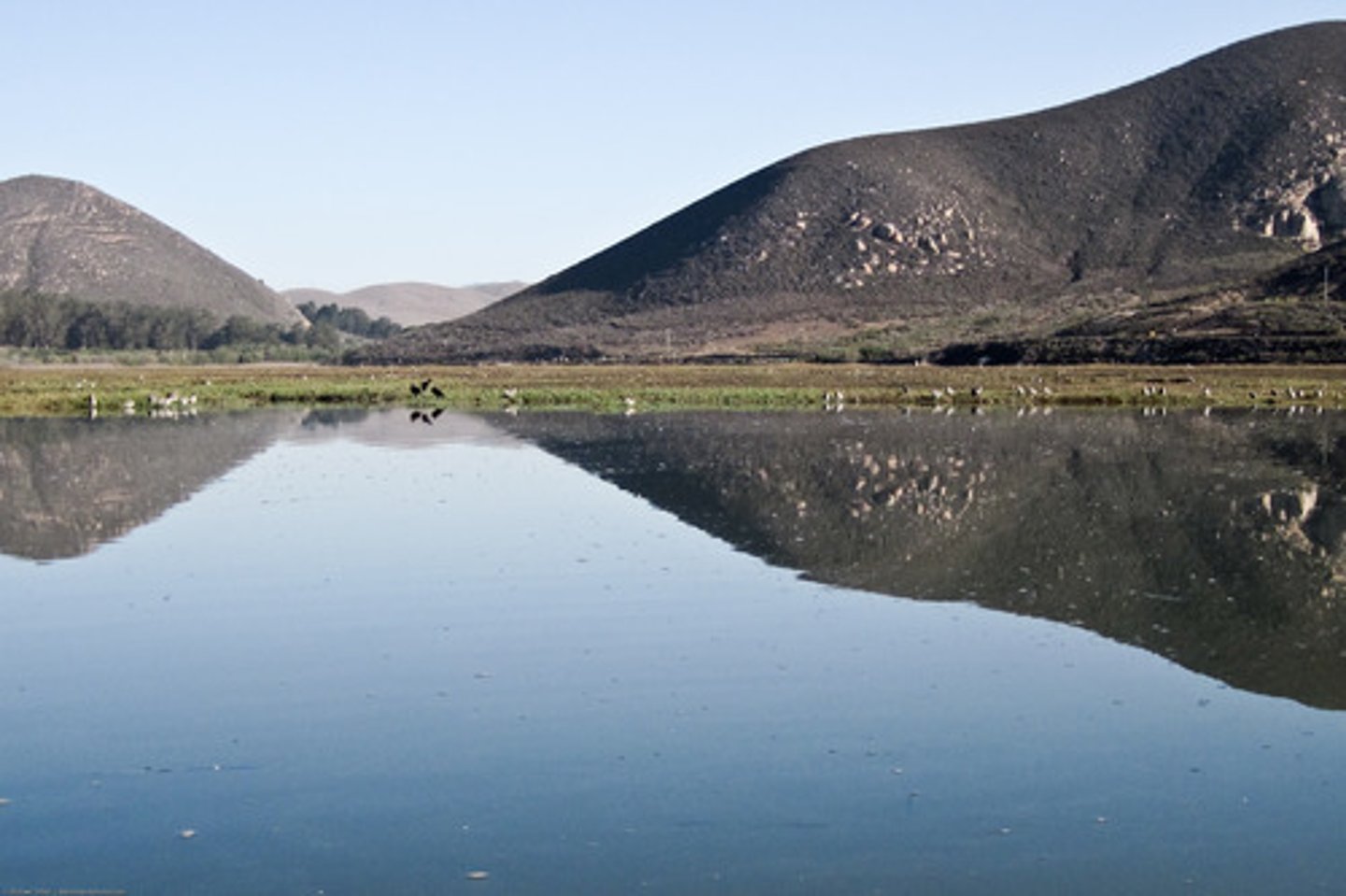
Advantages of having a view out to and easy access of the sea
- easy trade and transport
- easy to spot invading ships, vessels
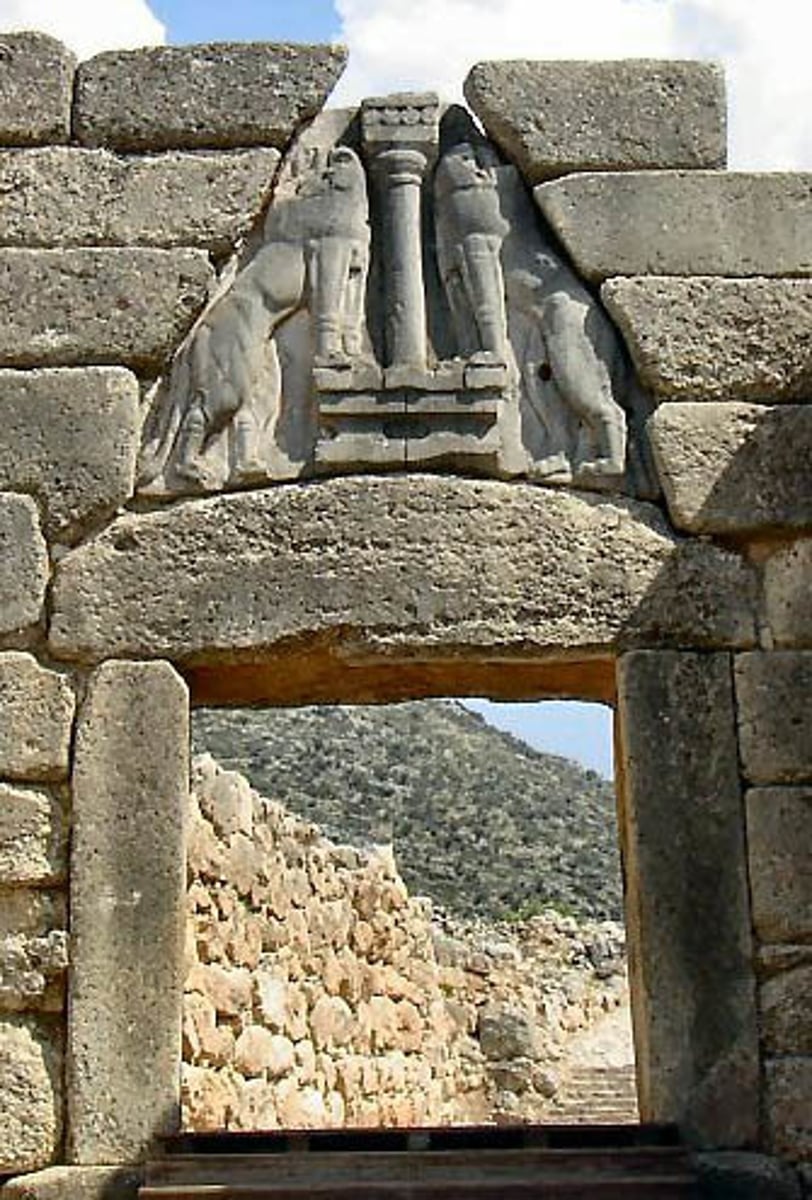
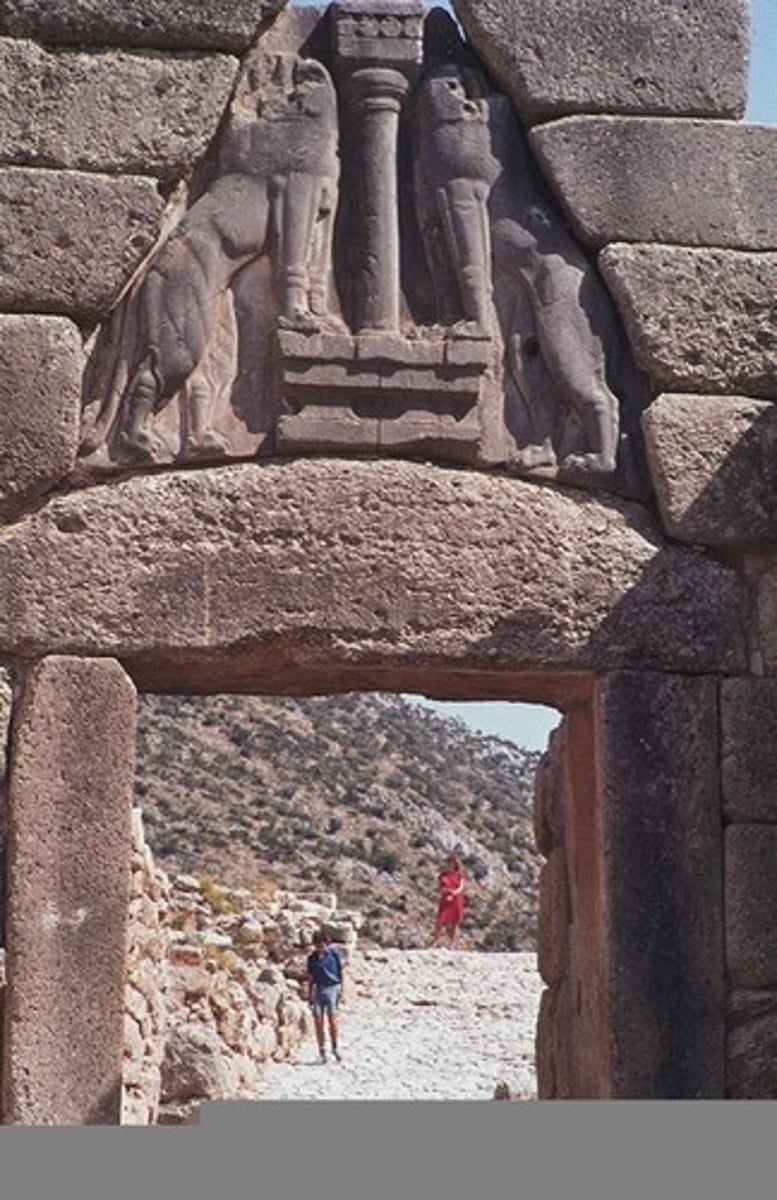
Lion Gate
- Corbel arch filled with limestone slab with carved relief
- Built C13th BC when the city was most powerful
- Approahced via an uphill path
- Surround of Lion Gate is 8.25m high
Only other exit is the Postern Gate at the back of the city. The Lion gate is the main way into the city
The gate part is made with post and lintel technique has :
- Lintel ( 20 tonnes )
- x2 door jambs
Construction of the Lion Gate
- It's one of the most impressive pieces of masonry in the Greek World.
- Areas surrounding the gate is not made of limestone but instead a different type of rock called conglomerate - very smooth and shiny, giving contrast to the surrounding limestone.
- The Lions are caved into limestone in relief.
Techniques used :
Post and Lintel : two posts and one lintel on top
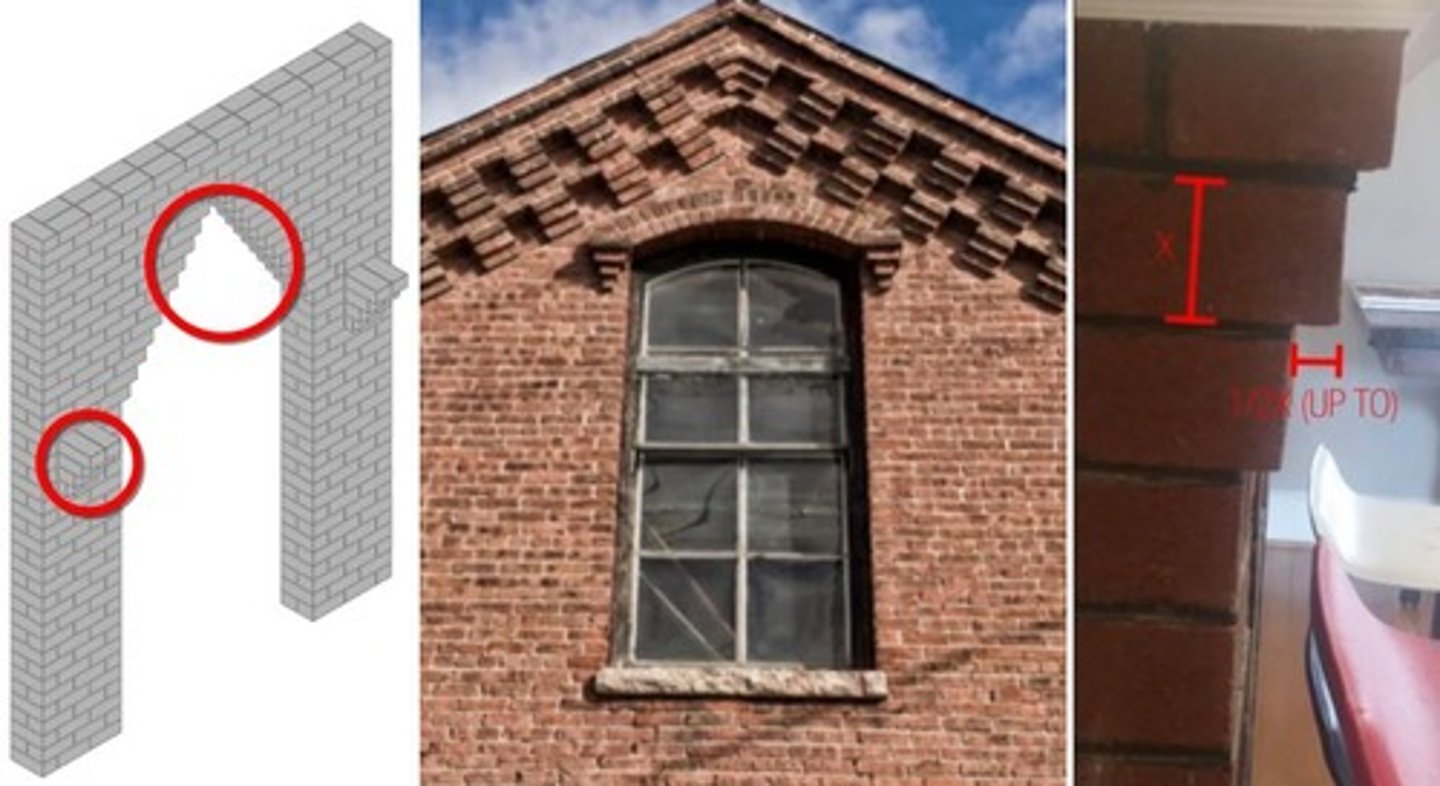
Corbelling : layering rocks from small to larger and larger so that the rocks hold each other up which create an arch.
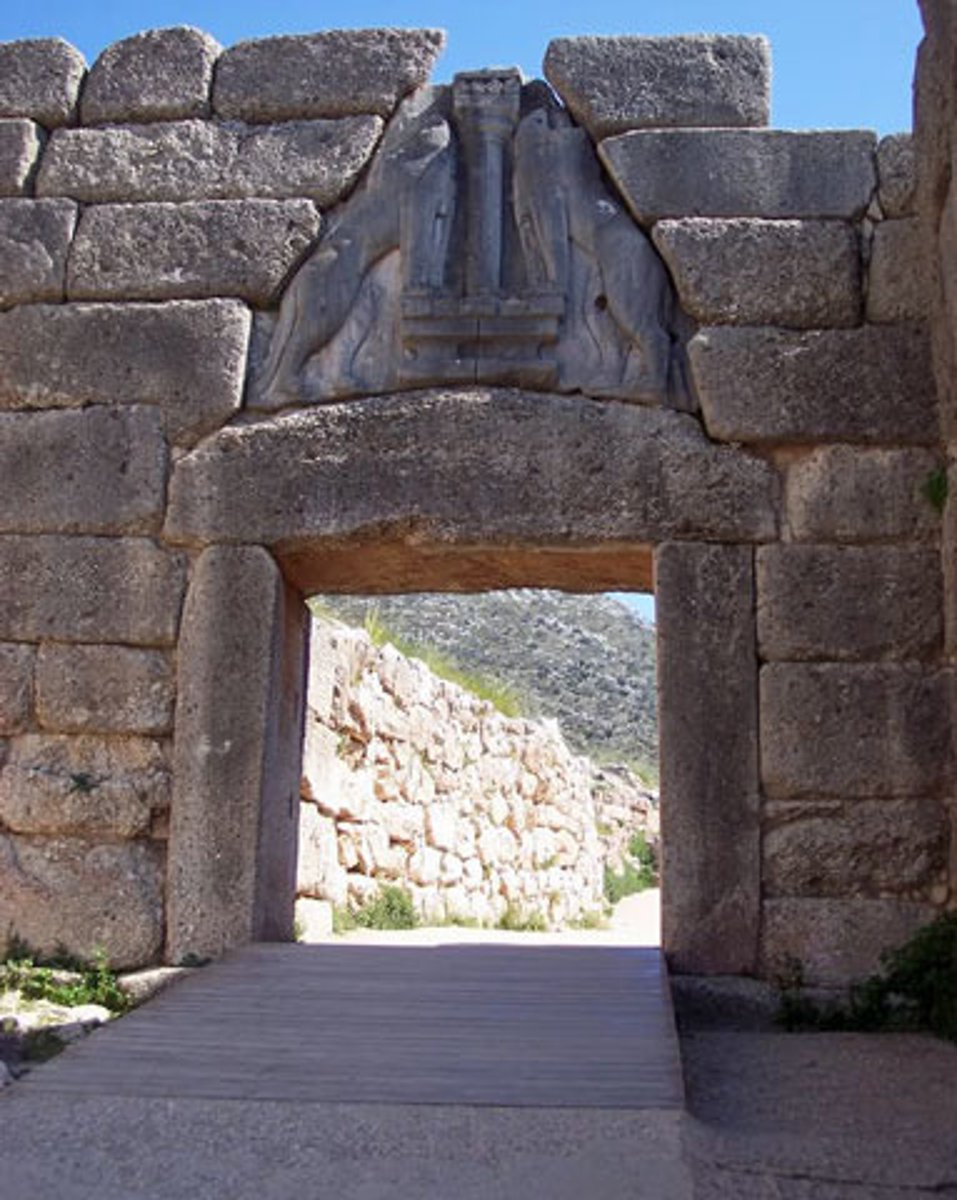
How does it work against intruders
- Make enemies feel very vulnerable
- Hard to enter with an army as the gate is only 3m sq
- There's a bastion on the right side of the gate, this would let people inside Mycenae to defend against attackers. It's also on the right side of the wall which means if you were to fire projectiles at the attacking army, more damage would be done as it would hit their spear holding hand ( right hand ) and not their left side ( shield holding hand )
- Make enemies intimidated by the sheer size of the gate
Features of the Lion Gate
- Lions have their paws on an altar while facing the front - solemn and majestic than outwardly fearsome—perhaps suggesting some sort of religious ties; gods support this city.
- Column and altar could represent the palace—physical and divine power
- Column is Minoan ( thicker at the top ) suggesting Minoan architecture has been used and Mycenaean art is being influenced by Minoan art.
What is the Bastion
- It is a structure projecting outward from the main wall
- Enemies wil be funneled up the ramp towards the gate, when they reach the gate they are attacked from both sides by soldiers stationed at the walls and the bastion.
- The soldiers on the right hand side are unprotected on their right side, therefore they are more vulnerable.
What is Corbelling really ?
Corbelling is a technique used to create a gap between two walls by placing increasingly large blocks of stone on top of each other, therefore creating a vaulted roof.
The Palace
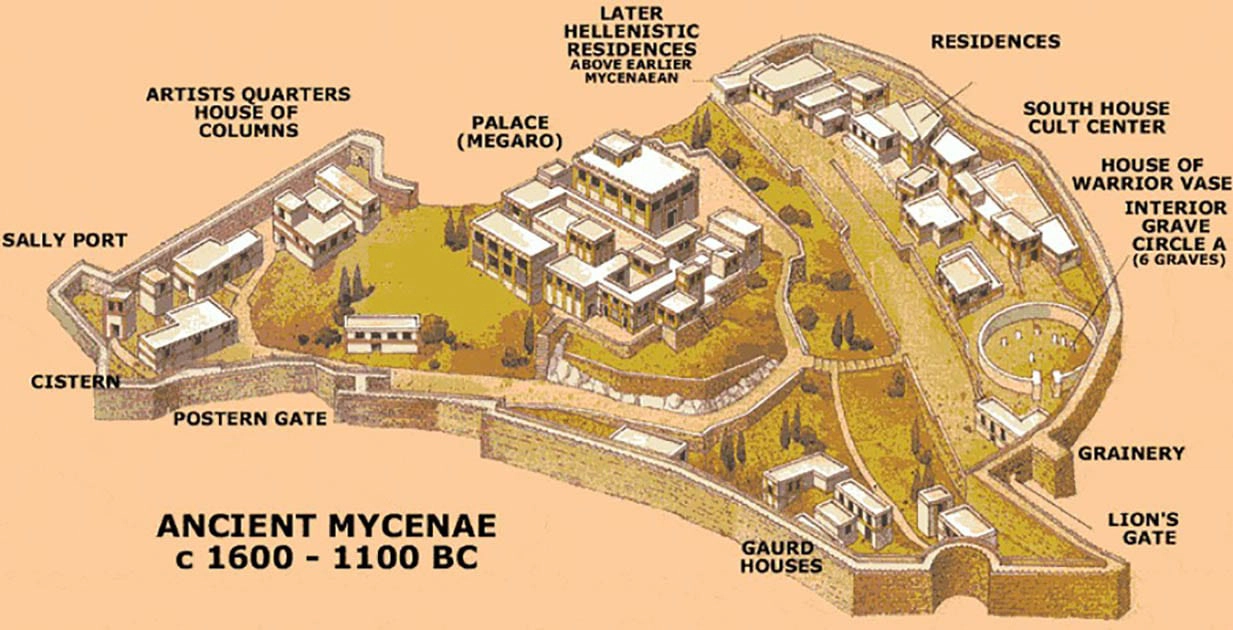
The Palace was on the acropolis ( highest point ) of the city - it contained rooms for the royal family and was at least 2 stories
- a temple was built next to the palace later, perhaps tying royalty to divinity.
- The palace contained many rooms e.g rooms for official documents, shrines, potteries, oil press rooms, armouries and storeroom for food.
The Megaron
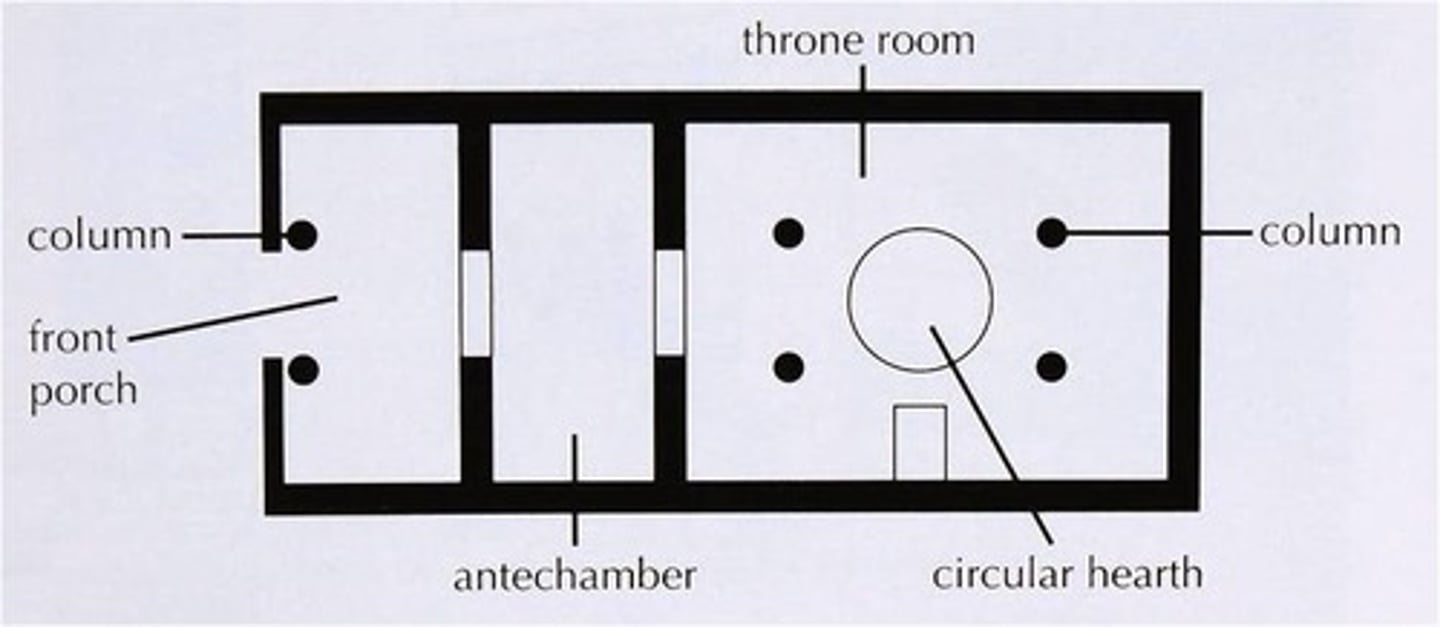
- There's an entrance port with two columns
- The next room is called the vestibule
- After the vestibule there's the hearth which was a stone area where a fire was lit for religous and cooking purposes.
- The four columns in the middle supported the roof so that there was a hole to allow smoke to escape.
What are Sally Ports
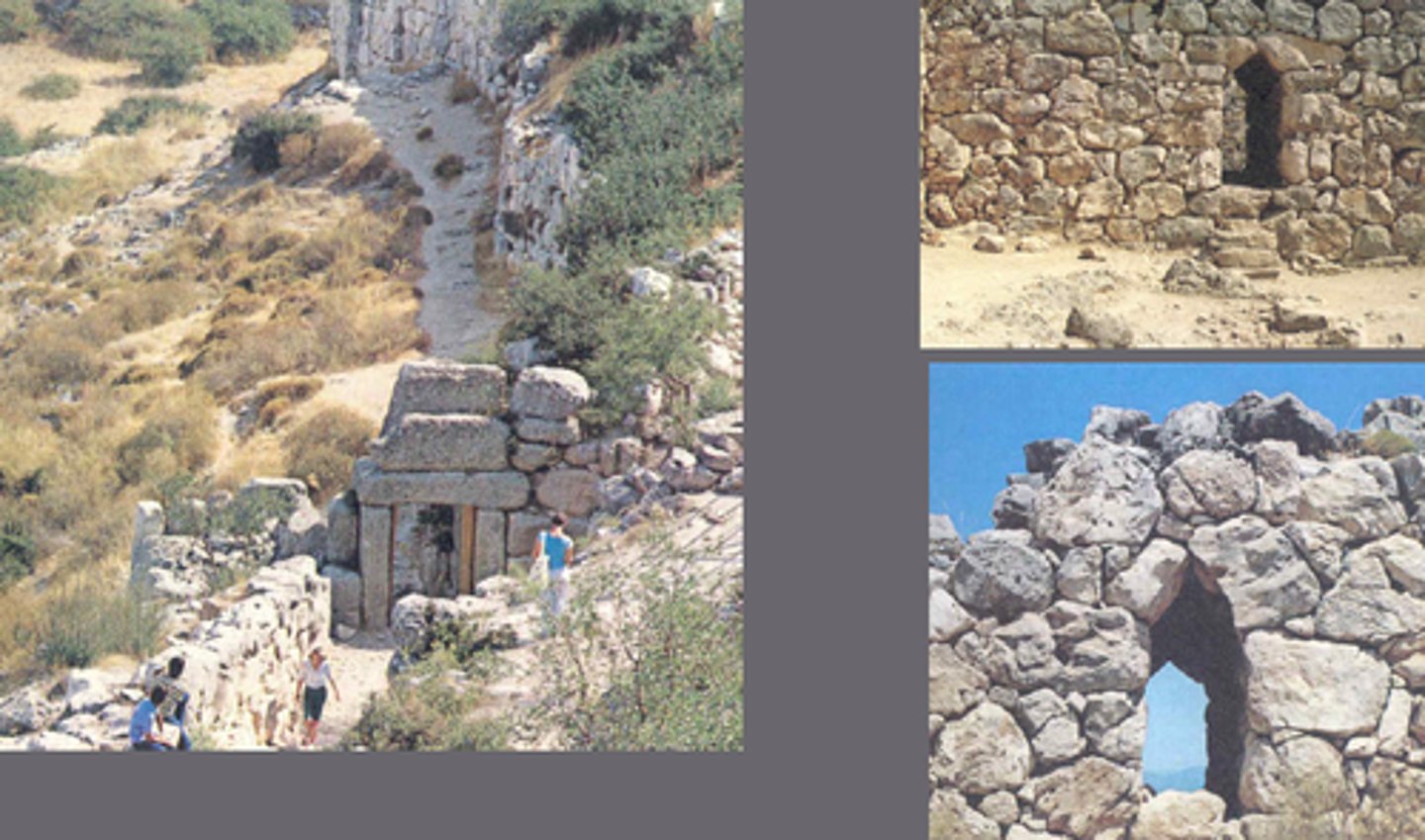
- A Sally Port is a gap on the outer walls where defenders could rush out to surprise attackers.
- Mycenae has 2 sally ports ; one to the north and one to the south.
- Sally ports were an important part of the defensive structure of the city.
- The south Sally port is visible from a distance and is only 2.5m wide - not very effective.
- The Sally ports are made from corbelling
Dating Mycenae
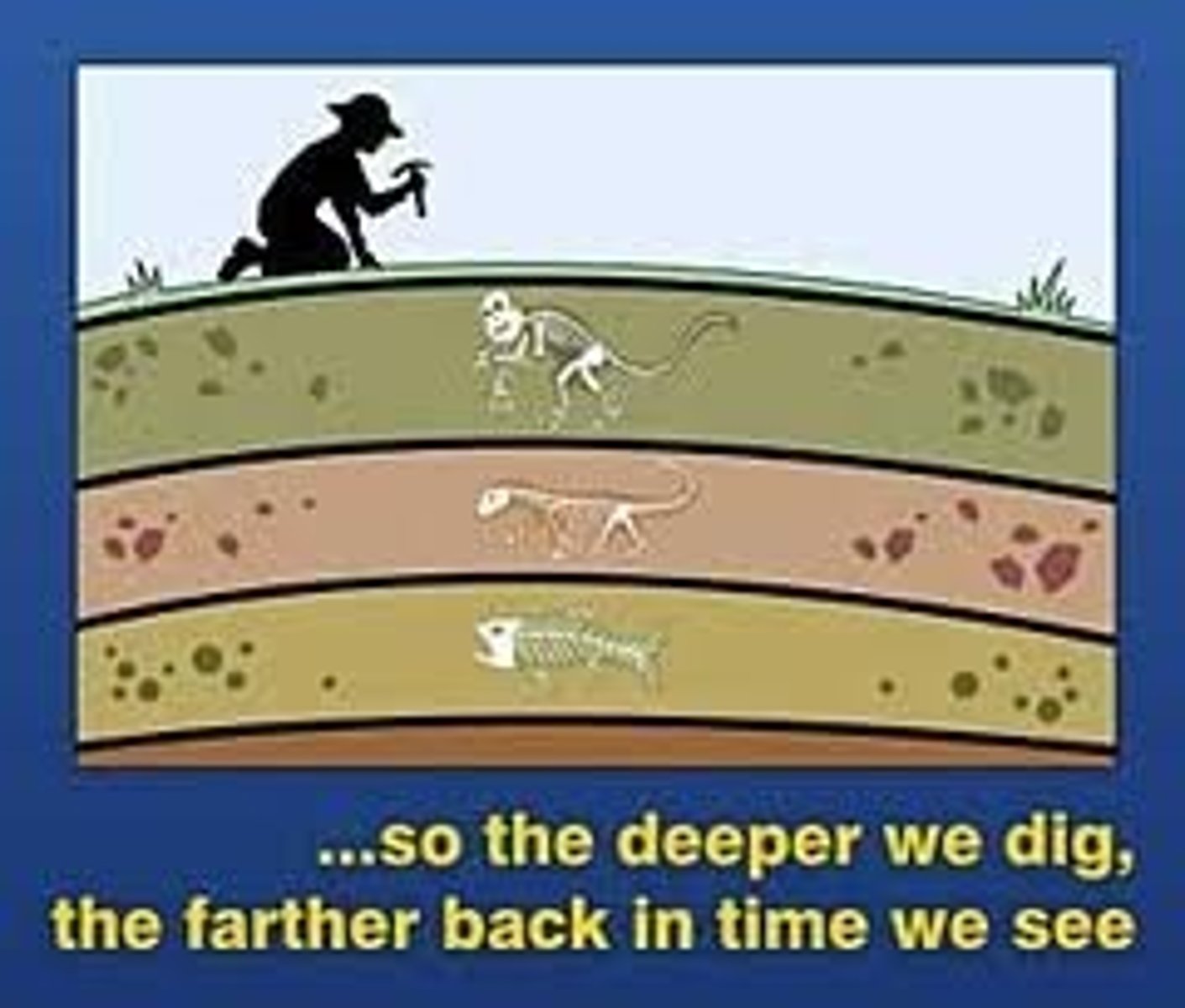
- difficult to date as it is so long ago that nothing can be precisely plotted in Greek history.
- No written records
- The Mycenaean Age overlapped with the Minoan Age ( 3500 BC - 1400 BC )
Ways to date Mycenae :
- Comparing pottery styles found with that in greece and Egypt ( where historical records were kept more accurately )
- Carbon dating wooden objects and timber
The Early Period ( 1600 - 1400 BC )
1675 BC
- First burials in Grave Circle B at Mycenae
1600 BC
- First burial in Grave Circle A at Mycenae
- Destruction of Akrotiri
The Palatial Period ( 1400 - 1250 BC )
1400 BC
- Start of major building at Mycenaean sites
- Treasury of Atreus built at Mycenae
- End of the Minoan Age
1375 BC
- Shipwreck of Ulu Burun
1350 BC
- Tombs of Clytemnestra and Aegisthus built at Mycenae
- Cyclopean Walls built at Mycenae
1300 BC
- Western Wall of Mycenae strengthened
- Eastern Gate and Palace at Mycenae built
The Later Period ( 1250 - 1150 BC )
1250 BC
- Lion Gate at Mycenae built
- Decline of major Mycenaean sites
1200 BC
- Damage to Mycenae by fire
1075 BC
- Final destruction at Mycenae by fire.
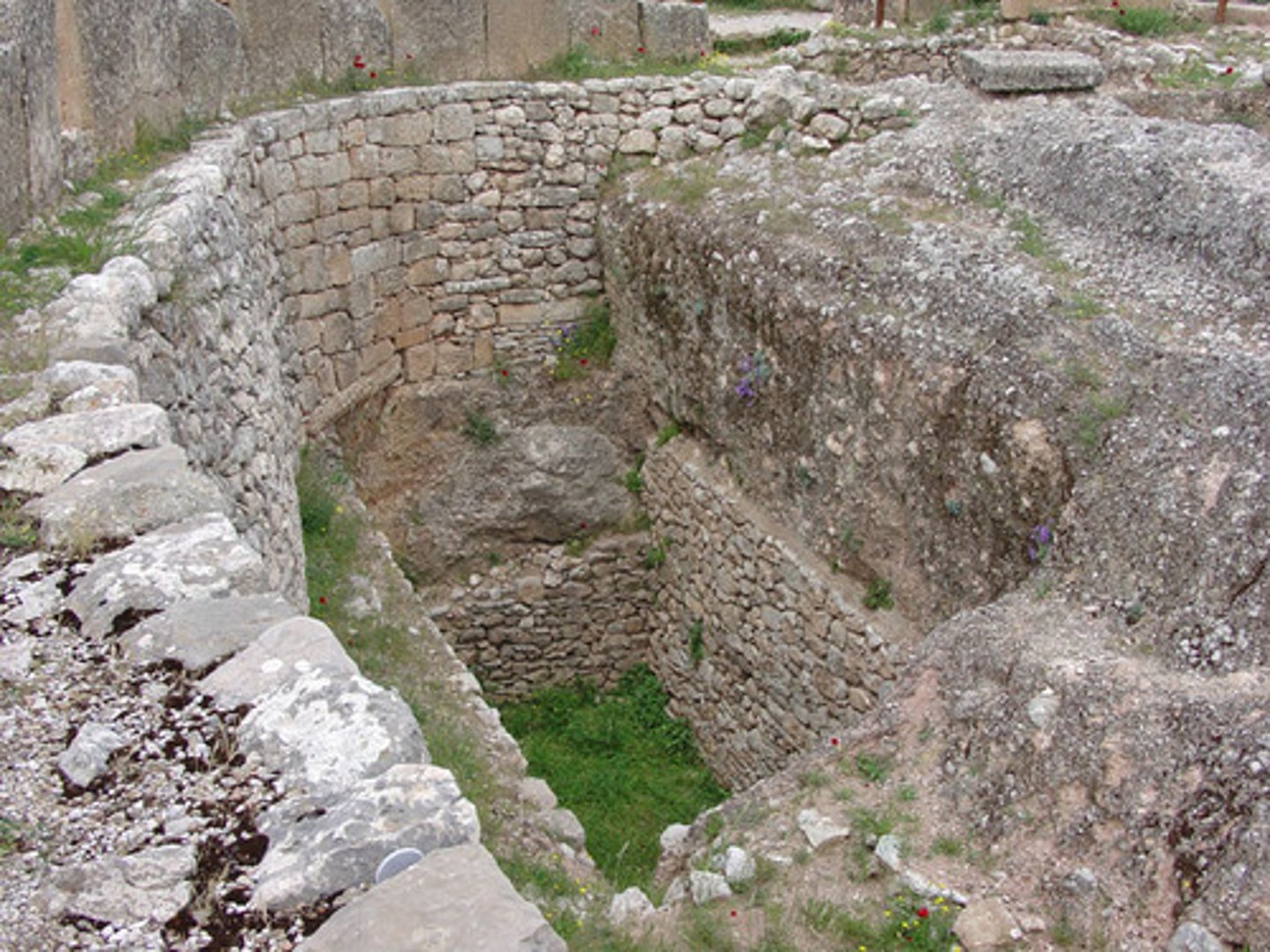
Shaft grave
A deep pit to put bodies into, it is 12m deep and each grave is marked by a stelai with men having carvings on them and women having a blank stelai. At the bottom of the pit, the body is put in a stone lined box with a stone slab covering the top of it, dirt is then put over the makeshift box.
- These shaft graves can be for the common people, politicians or high status people as it is quite difficult to dig this deep and requires a lot of effort.
Tholos tombs
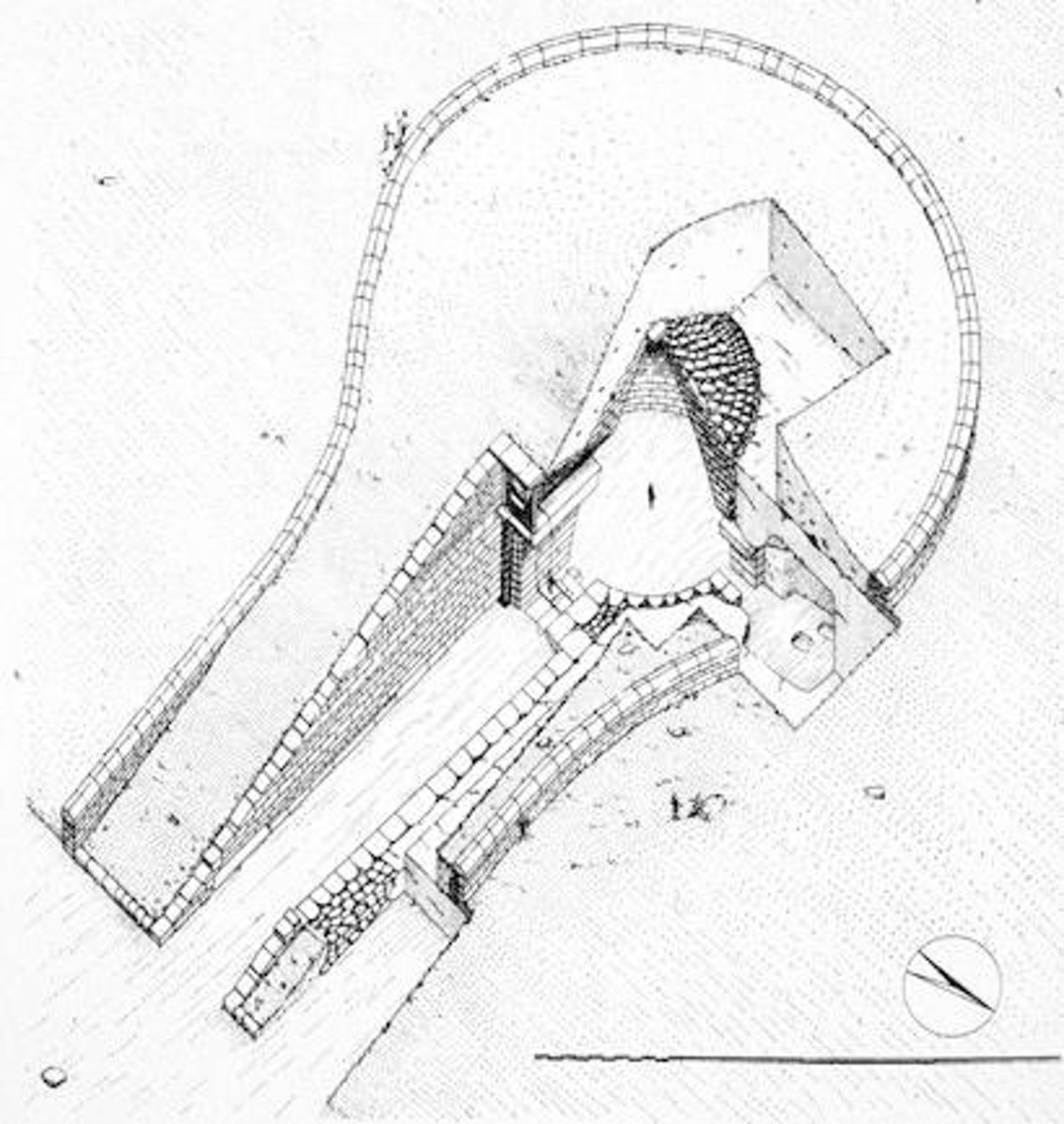
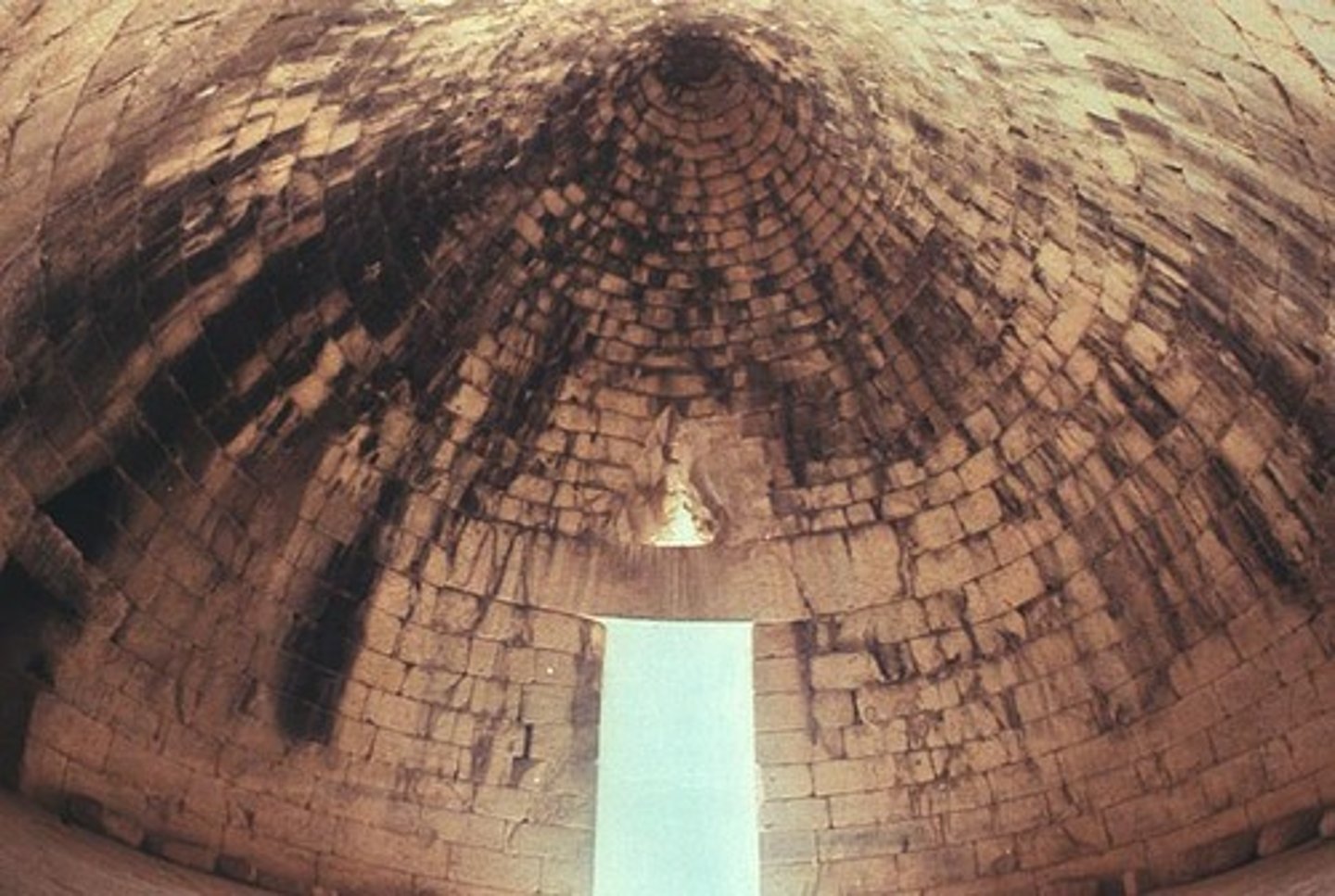
a beehive shaped tomb that is underground, the interior is quite spacious and hollow. It is assumed that members of the royal family would have been buried here because of it's elaborate design and detail.
Grave Circle B
- The oldest tombs are found here although Grave Circle B was found later than Grave Circle A.
- It's next to the Tomb of Clytemnestra and is outside of the citadel
- 24 shaft graves found here
- diameter of 28m with an enclosed stone wall
- Over half of the graves are thought to be royal because of what they contained.
- 35 bodies of men, women and children found
Men have carved stelai, women's ones are plain
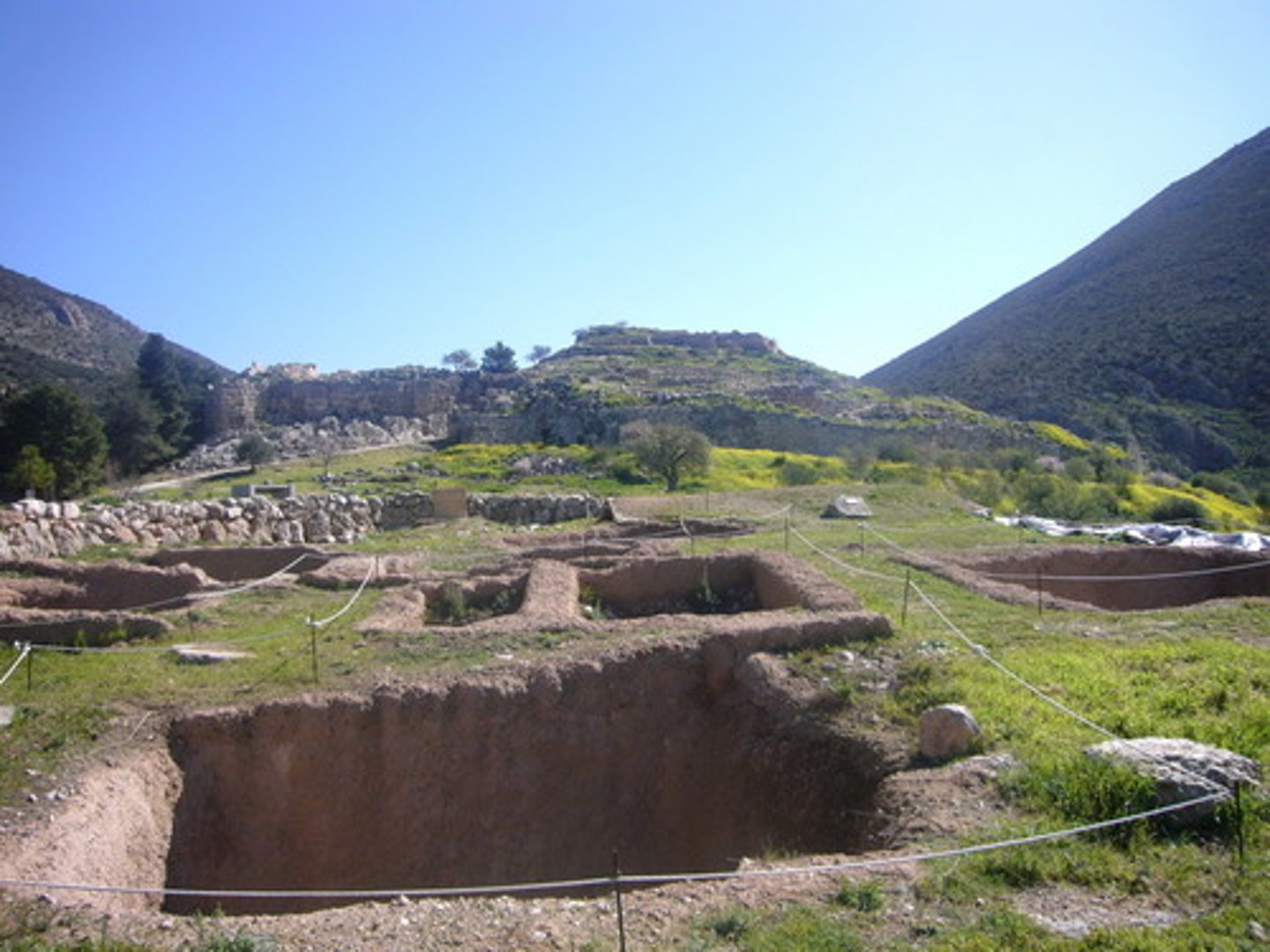
Grave circle A
- This is in the south west area of the city ( inside the citdael )
- 28m in diameter
- It's thought to be a royal burial site since the 16th Century BC as it has items similar to Egyptian objects at the time
-It was rebuilt with a new wall and the ground was raised when the Lion Gate was built.
- 6 shaft graves, with 9 women, 8 men and 2 children were buried.
- The shaft graves were deeper and larger than those of Grave Circle B
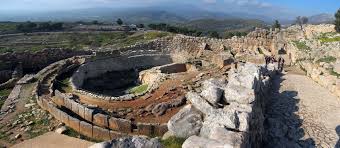
Tomb of Clytemnestra
- named after Clytemnestra, the wife of Agamemnon who killed him in the bath.
- Partially destroyed Grave Circle B when built, it's the most recent of Tholos tombs.
- No side chamber
- 13m diameter
- 13m high
- It has a flat roof
Robbed items from the tomb suggest a woman was buried there.
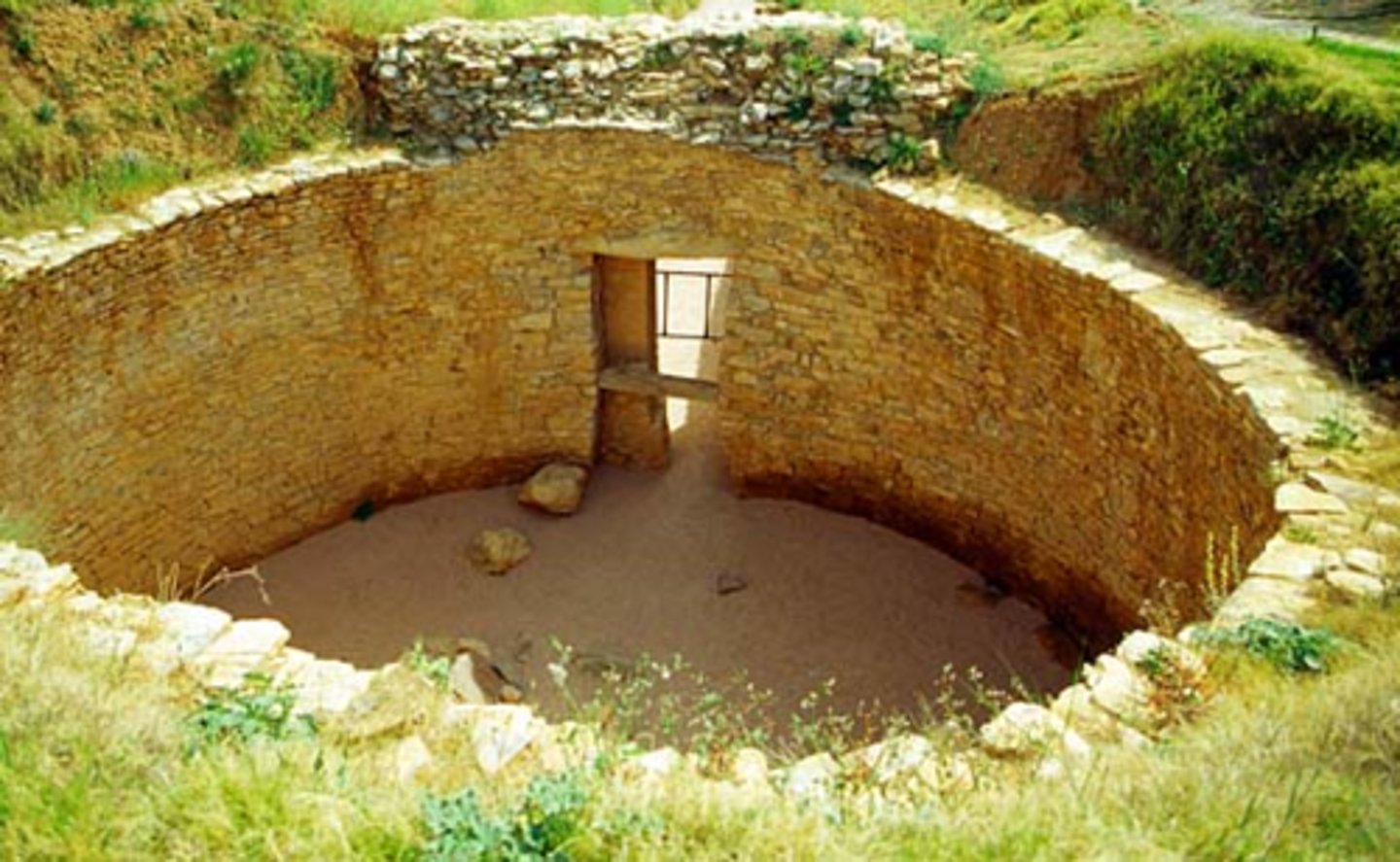
Tomb of Aegisthus
- 13m diameter 13m high
- alongside the tomb of Clytemnestra
- built 1350 bc
- Roof collapsed, leaving a giant hole on top
- Robbed prior to rediscovery in 1950s
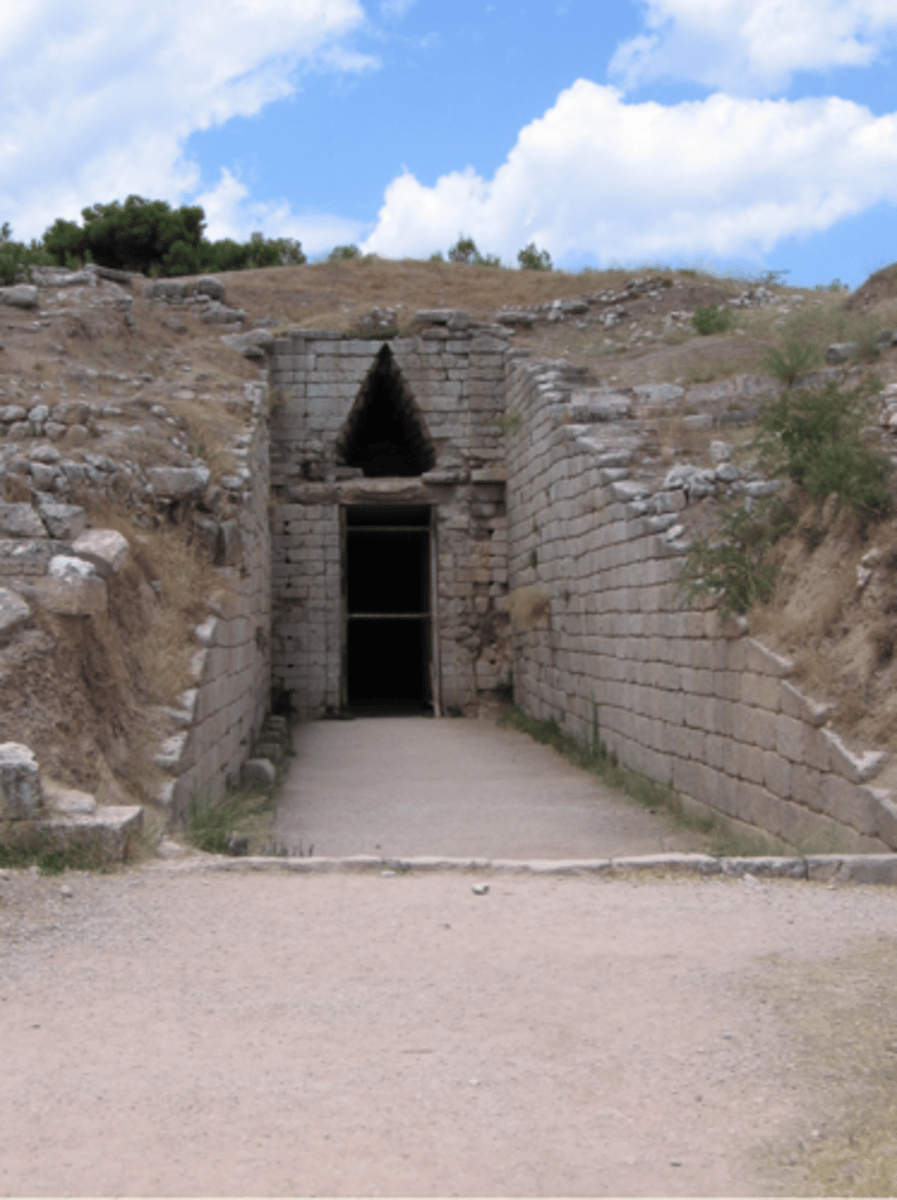
Treasury of Atreus, Mycenae
- Built c.14th century BC
- It's a tholos tomb
- 14m diameter
- 13.50m high roof
- The doorway to the tomb would have been highly decorated
- No objects were found during excavation as it was probably robbed in ancient times.
- dome, arched roof - corbelling
- has a side room
- Name after Agamemnon and Menelaus's father
- Pausanias wrote about the tomb's treasure - susceptible to robbery as it's known for it's riches and is open.
- Robbed prior to rediscovery
Items from Grave Circle A
- Gold death mask of Agamemnon and the other one
- Gold cup with repousse spirals
- Gold necklace
- Lion hunt dagger
- Amber bead necklace
- Gold pyxis
- Ostrich egg rhyton with dolphins applied to it
- Sword with handles of gold
- Gold octopus brooch
- Pottery, objects, other jewellery
Items found in Grave Circle B
- Rock crystal vessel with duck neck possibly from Crete
- Jewellry
- Swords
- Pottery
- Gold funeral masks
Items found in Graves in Mycenae 15 marker possibly : "The objects found within graves at Mycenae tells us more about Mycenaean life than the city and graves themselves" [15]
Hierarchy of graves/burial practises
Tholos tombs vs shaft graves (one person vs many/ skill and time)
Location of graves (tholos tombs outside - miasma, space, 13/4m diameter) vs shaft graves (grave circle A inside, B outside - city expanded, 28m diameter)
Wealth/ status
Lion hunt dagger (grave circle A)
Gold cups with repousse swirls (grave circle A)
14kg gold (grave circle A)
Artistic skill and craftmanship
Lion hunt dagger - inlay of different metals
Gold pyxis (Grave circle A) - repousse
Corbelling technique - tholos tomb of Clytaemnestra
Post and lintel technique - lion gate
City defences
Cyclopean walls (height...)
Lion gate (lintel over the gate is 20 tonnes)
Sally ports
Underground cistern
Bastion by lion gate
Egyptian-influence pottery
Trade
Rock crystal bowl of duck - from Crete
Ostrich eggs with dolphins - from Africa
Gold - all over Greece (not nearby)
Beliefs and Religion
Mask of Agamemnon (Grave circle A) - honouring the dead/beliefs in an afterlife
Lion gate (lions leaning on a column which is on top of an altar) - religious belief
6 marker structure
2xAO1 ( detailed factual knowledge )
2x AO2 ( explanation of why the fact is important )
8 marker structure
- 5 to 6 pee paragraphs
- use source
- Point, evidence, explanation
- Use own knowledge AO1 and explain your argument clearly AO2
- include the extent to which you agree with question or not.
15 marker structure
- State your opinion ( to what extent do you agree = partially, fully, strongly, somewhat, slightly etc )
- mention wide range of evidence
- include 6-8 thematic points
- use PEE structure
- clear structure
- Include conclusion, restate your arguments and summarise themes

