Bio Final
 Studied by 0 people
 Call Kai
 Learn
Learn Practice Test
 Spaced Repetition
 Match
Match Flashcards
 Knowt Play
1/204

There's no tags or description
Looks like no tags are added yet.
Name | Mastery | Learn | Test | Matching | Spaced | Call with Kai |
|---|
No analytics yet
Send a link to your students to track their progress
205 Terms
stimulus
produces change in variable
receptor
detects changes
Example of commensalism
Bison and birds, the bison kicks of insects and the birds eat them and have transport
barnacles and whales
Example of mutualism
Bees and flowers
some birds pick ticks off large mammals
Example of parasitism
Ticks and mammals
input
information sent along afferent pathway to control center
evolution
diversity of life evolved over time by process of mutation, selection, and genetic change
structure and function
basic units of structure define the function of all living things
information flow, exchange and storage
the growth and behavior of organisms are activated through the expression of genetic information in context
pathways and transformation of energy and matter
biological systems grow and change by processes based upon chemical transformation pathways and are governed by the laws of thermodynamics
systems
living systems are interconnected and interacting.
community
all the plants and animals in an area (not including abiotic factors)
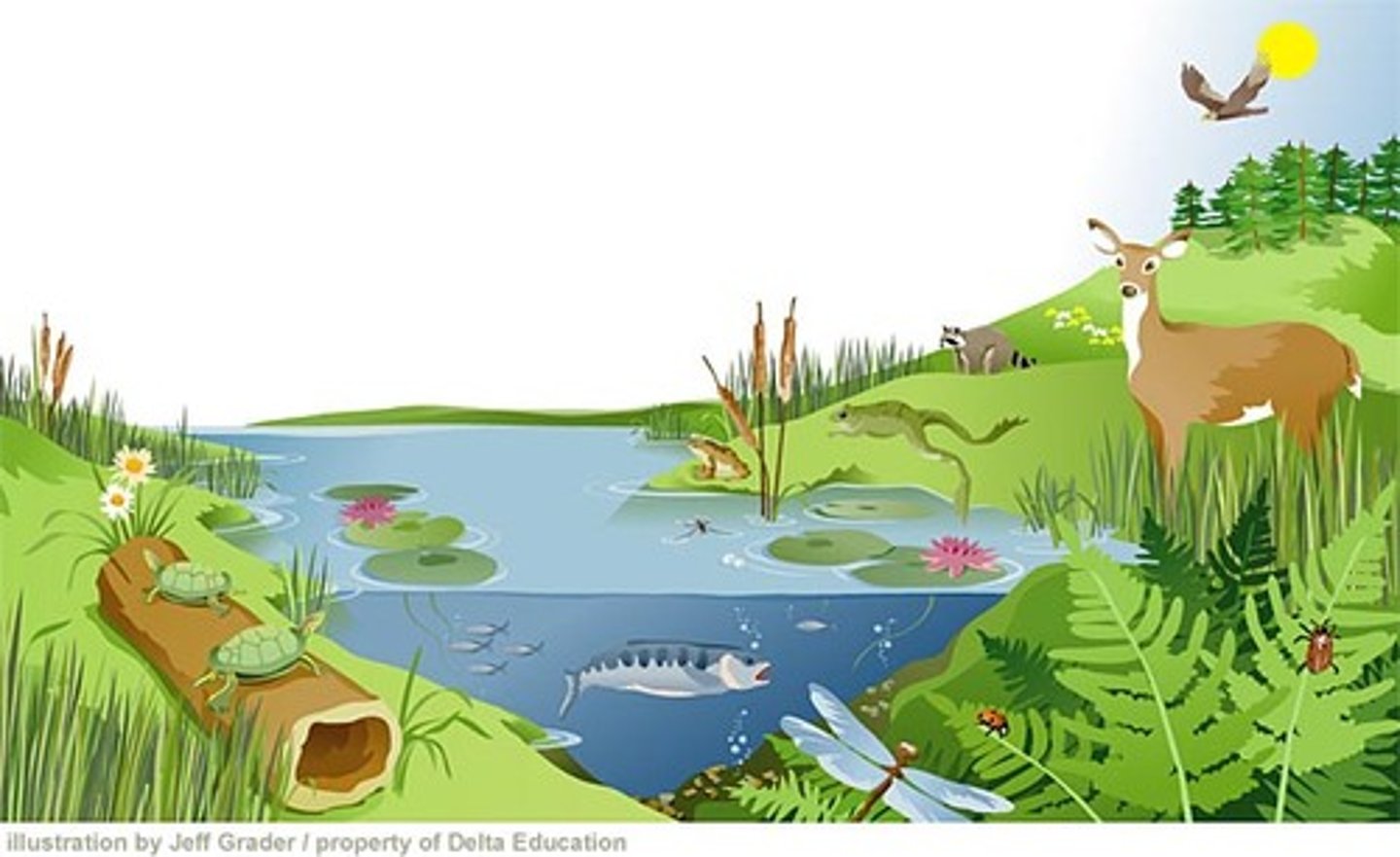
ecosystem
includes the abiotic and biotic factors in the area
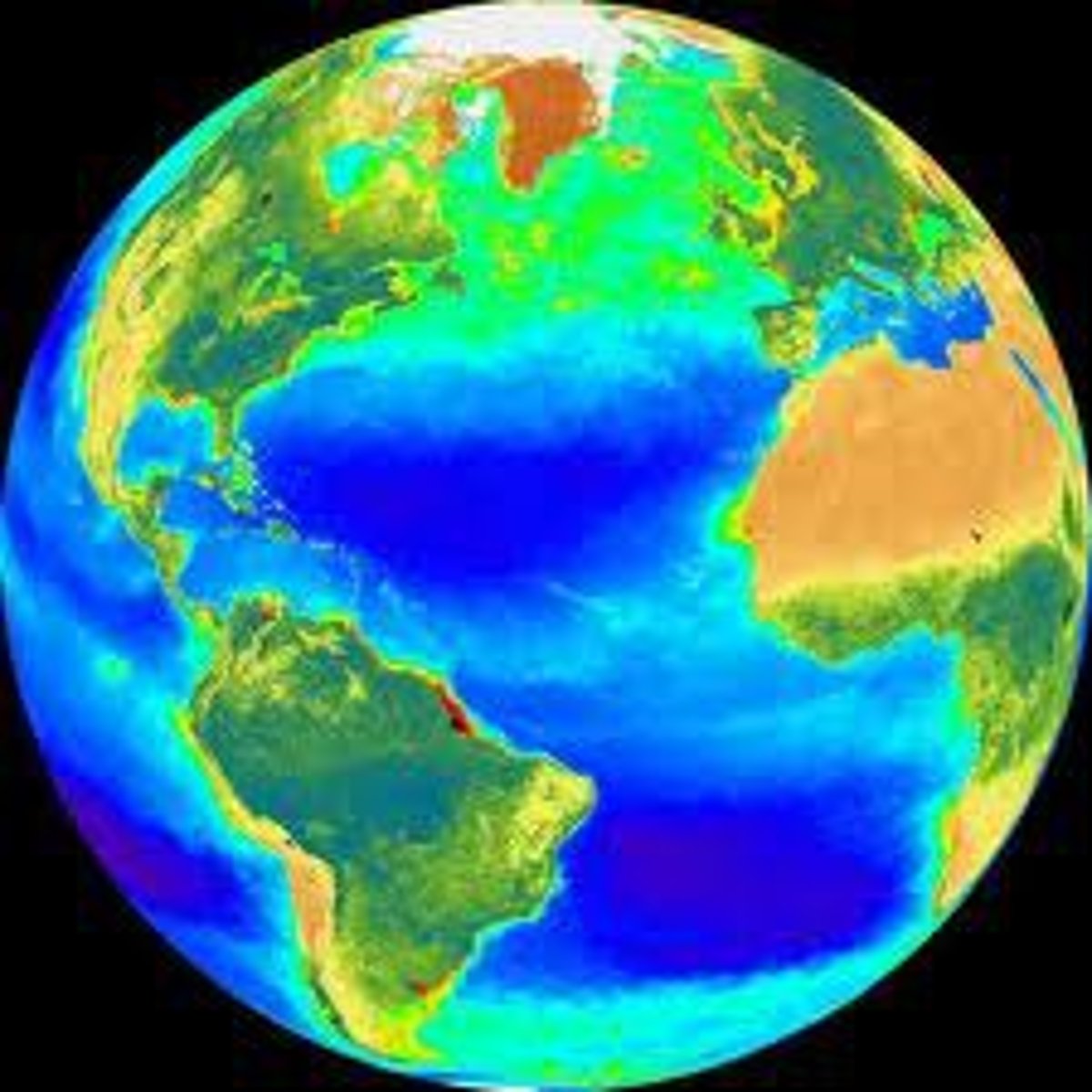
biosphere
encompases all of the ecosytems on earth
population
a group of the same species
characteristics of biotic things
maintain homeostasis, populations evolve, reproduce, excrete waste, genetic material, made of cells
what is a virus
abiotic, not made of cells, needs host to survive, reproduce not on own but hijack reproductive system of host, but has RNA and can evolve
sex reproduction and parasites
evolve to be ahead of parasites each generation
climate
long term, predictable, large geographical area (what you expect)
weather
temporary condition (what you get)
biome
A group of ecosystems that share similar climates and typical organisms (community of plants and animals in a given area)
temperate forest
Distinct seasons (we live in)
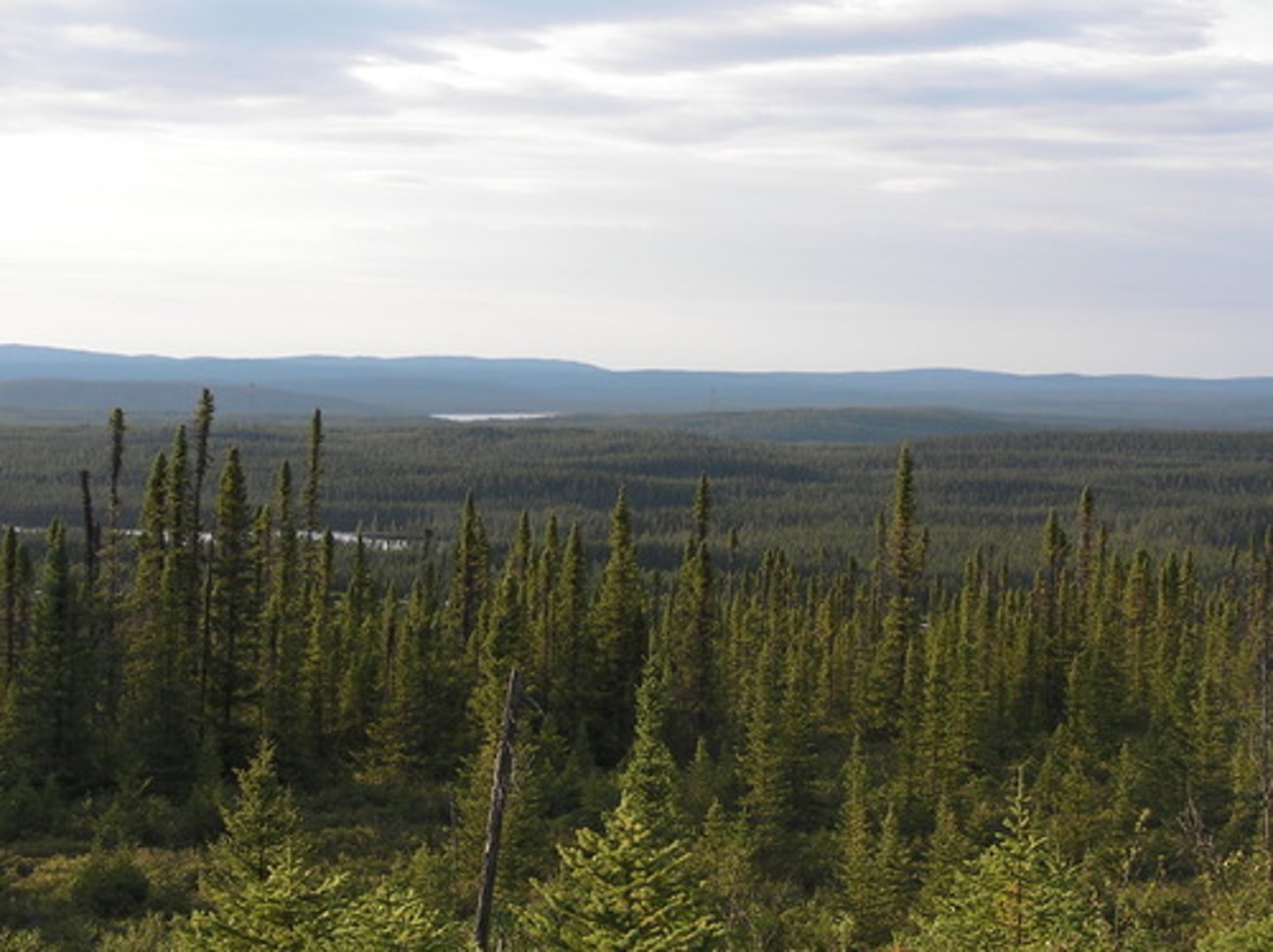
taiga/ boreal forest
conical trees, short growing seasons
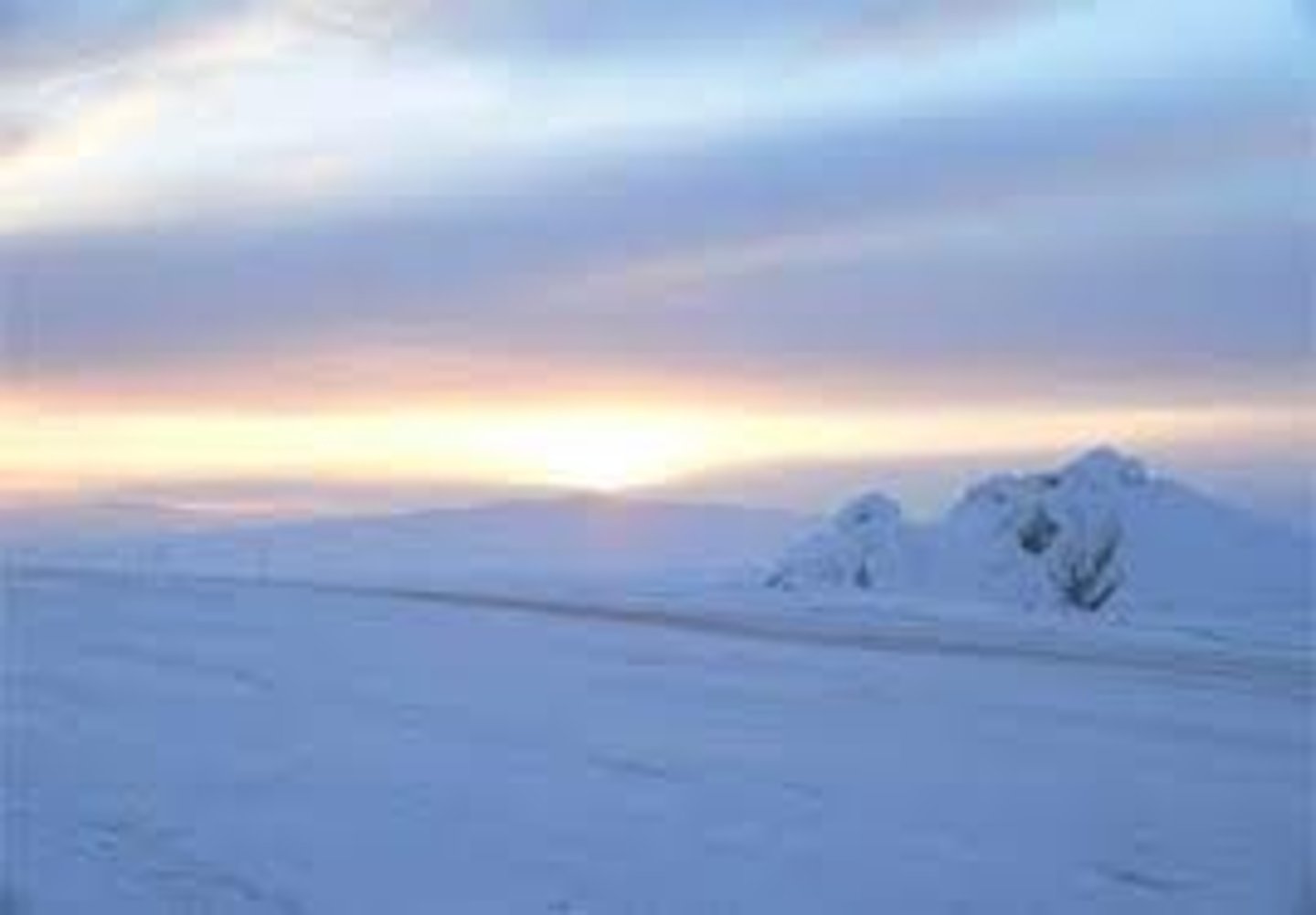
tundra
cold and dry, layer of permafrost
why are the poles warming more rapidly?
a positive feedback loop, as ice melts there is less ice to reflect sunlight and the ice continues to melt
is global warming equal?
no
effects of global warming
rising sea level, extreme weather, floods, drought, famine, extinctions, forest fires
what is the effect of global warming of thunderstorms
heat causes more instability, increase the frequency and intensity of storms since the clouds are very high in the atmosphere but the hotter they are the heavier and more powerful they are
how can ice provide evidence of the change in the climate
the air bubbles contain what was in the atmosphere at the time they formed
what is the equation of exponential population growth
dN/dt = rmaxN
what is the equation for logistic population growth
dN/dt = rmax N(K - N/K)
ecological factors that increase the rate of infection of lyme disease
increase in temperature, increase in in prey abundance (prey for mice), increase in vegetation, increased precipitation (for more vegetation)
ecological factors that decrease the rate of lyme disease
decrease in temperature, increase in predators (of mice and small mammals), decrease in vegetation, decrease precipitation
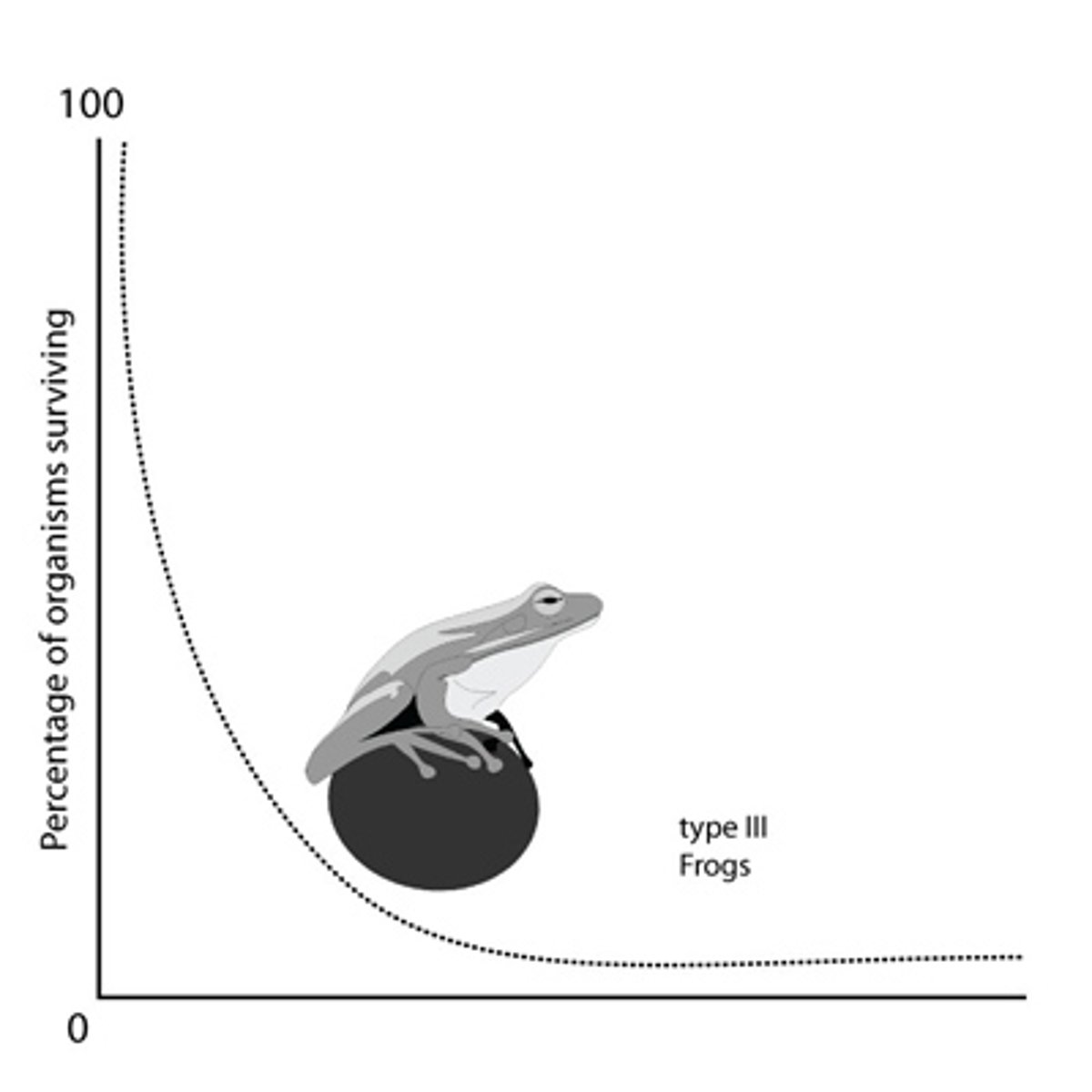
r-selected species
many offspring, little/no parental care, short life span, reproduce once, small animals like rats, insects, rabbits
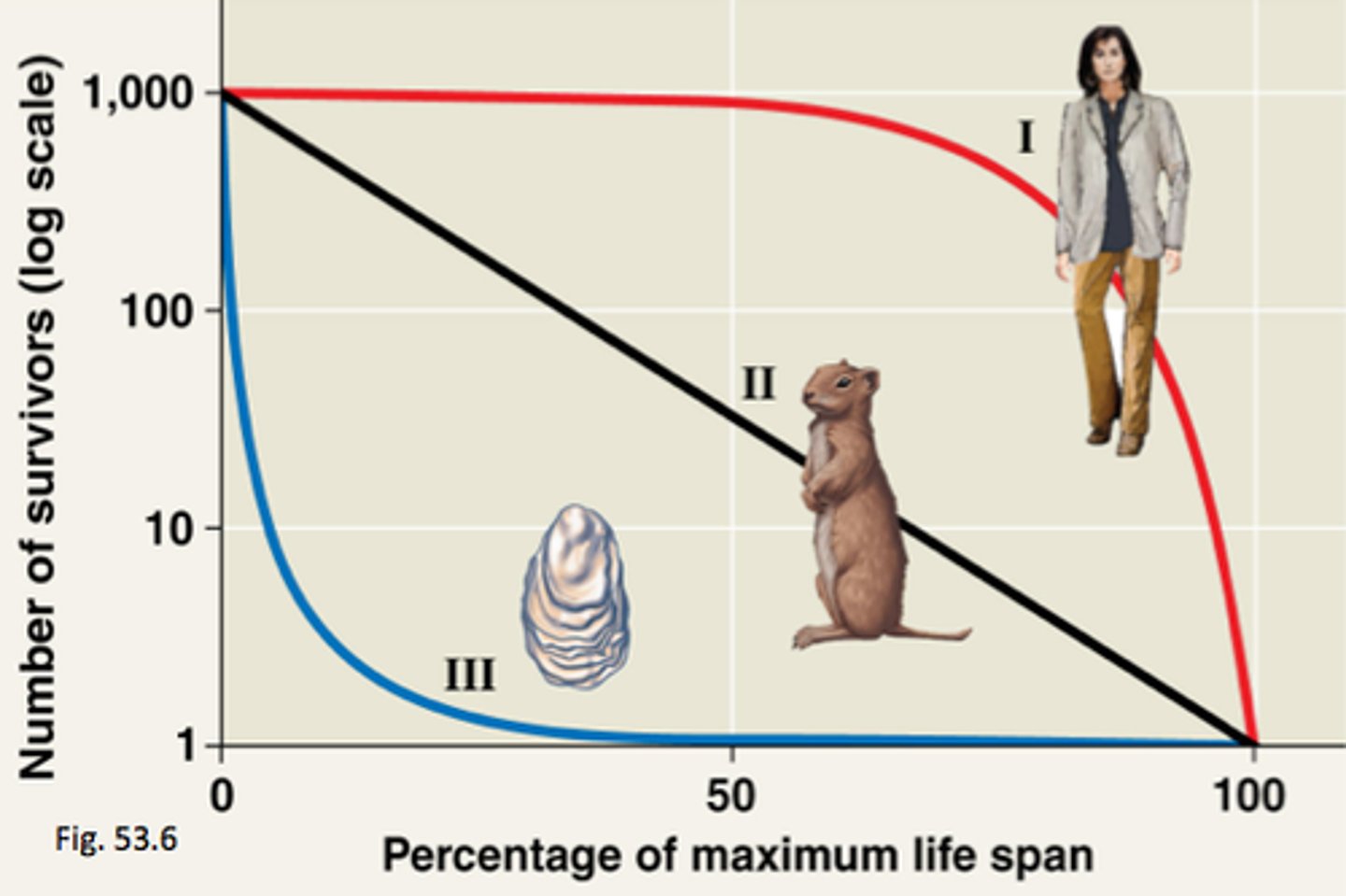
what is the survivorship of r- selected species?
type 3
K- selected species
fewer offspring, reproduce more than once, longer life span, larger like elephants (and humans)
what type of survivor ship curve are K- selected species?
type 1
afferent pathway
where the information is sent through to get to the control center (brain)
efferent pathway
flow from control center (brain) to effector
effector
gland/muscle that creates the response (trying to correct) (ex pituitary gland
give an example of positive feedback
in childbirth, the uterus contracts and sends info from the cervix from the brain, triggering the pituitary gland to release oxytocin to the blood stream which tells the uterus to contract more and theres more pressure on the cervix this process amplifies
symbiosis
close interactions between individuals of different species over an extended period of time which impact the abundance and distribution of the associating populations.
what does it mean if N>K
the population is shrinking, dN/dt is getting smaller, they are above carrying capacity, and death rates are greater than birth rates
what is dN/dt
the rate of change in a population
feedforward change
the body is anticipating a change in conditions and makes a proactive adjustment (change in set point)
example of a feedforward change
preparing for a race: heart rate increases, adrenaline is pumped
what does the body do when its cold
vasoconstriction and shiver
what does the body do when its hot
vasodilation and sweat
give examples of endotherms trying to cool down
elephants flap their large ears, rabbits release heat through ears, birds do the gular flutter where they rapidly vibrate their throats and below their beaks to cool down
Why are co2 levels lower in the summer (keeling curve)
More plants, more photosynthesis
How does the structure of bacteria borrelia help it
It’s spiral key structure allows it to burrow into cells
how do penguins (endotherm) hold heat
with layers of fat
what happens when an organism has a larger surface-area-to-volume (SA/V) ratio
they lose heat easier and gain heat easier (think of little kids getting cold hot/cold easier, they are smaller)
endotherm
an generate body temp from within (from metabolism)
higher metabolic rate
requires more calories
can lose body heat quickly
animals need to stay warm overnight so eat a lot
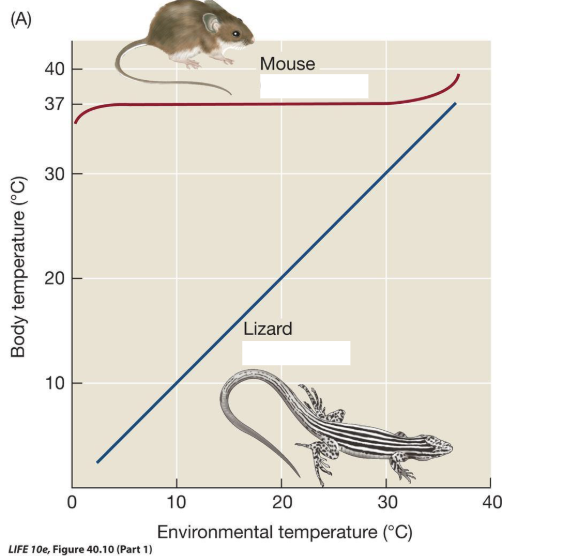
ectotherm
cant generate own heat, body temperature has a direct relationship with the environment
has to adjust behavior to maintain body temperature
snakes can go months without eating, dont need it
glycogen
storage form of glucose
glucagon
converts glycogen to glucose, released when glucose levels are low
insulin
tells body to convert glucose to glycogen
life history
pattern of an organism's survival and reproductive events throughout its lifetime
what are the 3 patterns of population distribution
uniform, random and clumped
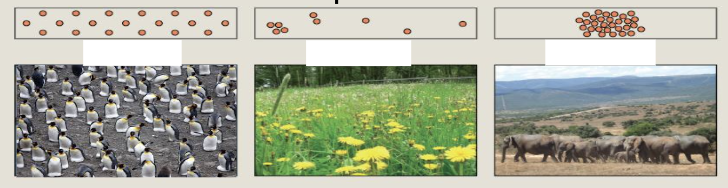
what drives patterns of population distribution
a mix of biotic factors (living things like food availability, competition, predation, and disease) and abiotic factors (non-living environmental conditions like climate, water, and shelter)
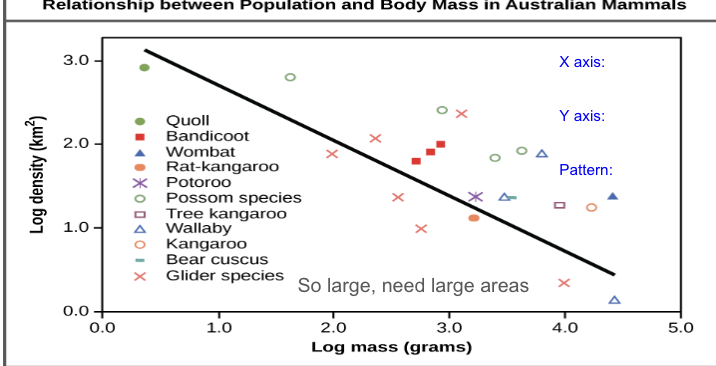
what is the relationship between population density and population size
the larger a species is, the smaller its population size is
inverse relationship
bigger animals need more space (thing elephants)
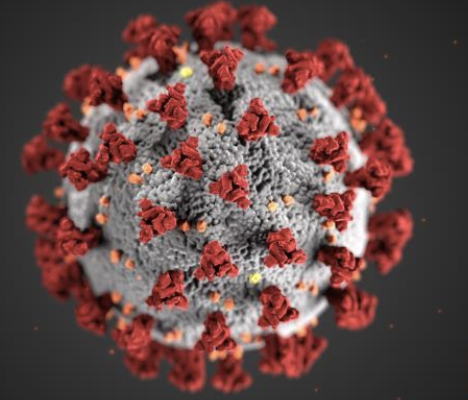
virus
Infectious obligate intracellular parasite compromising genetic material (DNA or RNA) surrounded by a protein coat
obligate
need, need to be associated with something to survive
intracellular
within the cell
structure of virus benefit
surface of virus is structured to interact with surface of human cell, (glycoprotein: protein with carbs on them_, interact with red blood cells causing them to clump
do viruses have vector?
they don’t have vectors since they are non-living, their vector are nonliving particles in the air or on surface (formite)
host
an organism that another organism uses to survive and reproduce
fomite
any nonliving particle that carries and transmits an infectious pathogen to another living organism
reservoir
habitat or organism, an infectious agent can live, often without causing harm to the reservoir host
why doesn’t a virus have a vector?
because a vector has to be living
can a virus reproduce on their own?
no they need a host to do so, they attack the hosts machinery
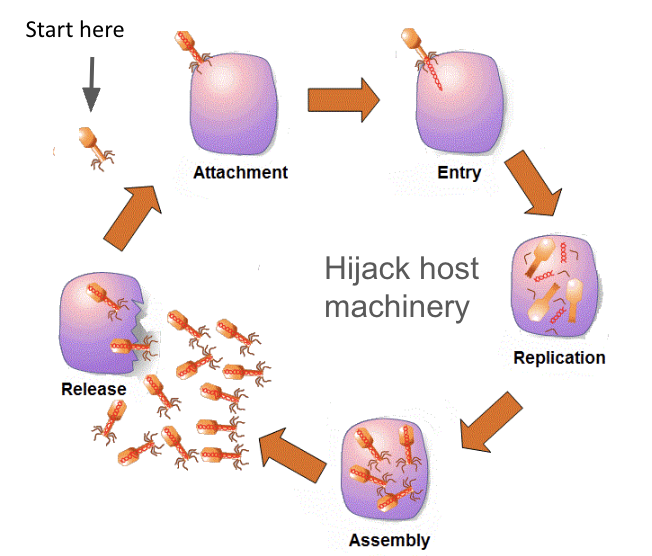
what is the order of a virus attack?
attachment, entry, replication, assembly and release
does a host cell help or harm the virus?
it helps the virus as each individual cell can release millions copies of the virus
what are the 5 things that makes something alive?
made of cells, reproduce, heritable traits, populations evolve, metabolism
do viruses die?
no
do viruses fit into a symbiosis model?
yes
pathogen
an organism that makes another organism sick - that creates a disease state (a state other than “normal”) in an organism
Fick’s Law of Diffusion
movement of particles from high to low concentration
Fick’s Law of Diffusion eqaution
Q = DA P1 - P2 / L
what is Q
the rate of diffusion between 2 points
D
diffusion coefficient, depends on gas and medium
P1 P2
partial pressure between point A and B, moves faster when there is a larger pressure difference
A
area which gas diffuses, more surface area, quicker diffusion (alveoli)
L
distance between 2 points, want to minimize (lung wall is thin)
what is the only thing you can change in the equation
P1 P2, which is why people use supplemental oxygen
are all viruses harmful
no they are used for vaccines and to attack bacteria
what are ways viruses are spreading
changing geographic distrubutions of hosts and vectors (form global warming, mosquitos), humans in close contact with animals
population genetics
change of alleles in a given population
gene
basic unit of heredity, bluepring of components of body like structures, proteins, and enzymes; a disctince sequence of nucleotides forming a seqeunce
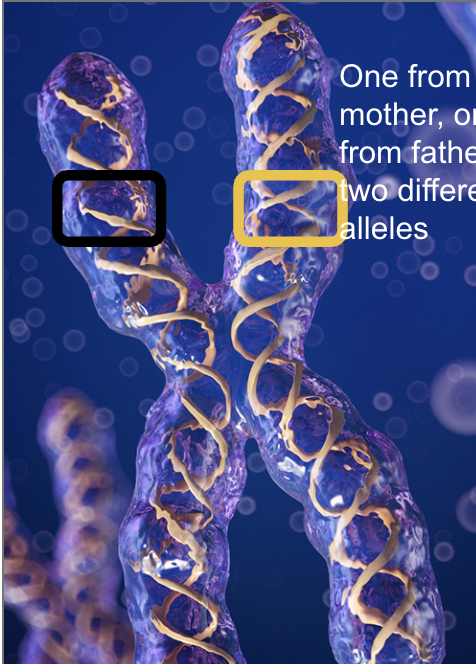
allele
varient of a gene, arose from mutation; different versions of a gene
mutation
there is no other way to create variation, natural selection acts on mutation but does not do it
allele frequency
phenotype
physical trait
genotype
genetic information that codes for a phenotype
why do indivisuals in a population have different phenotypes
because they have different varients of the same genes (they have different alleles)
what are the 4 ways allele frequencies change over time
mutation, gene flow, genetic drift, and natural selection
mutation
a change in DNA, ultimate source of new alleles and thus variatiom, random but the way natrual selection acts on it is not
examples of mutation
Sickle Cell Anemia
Painful, become numerous in certain parts of body often limbs
Mutations in beta globin gene
Huntington Disease
Mutations in Huntington gene
Stays in our genes because already reproduce by 40s
Cystic Fibrosis
Mutations in CFTR gene
cancer, series of mutation
gene flow
movement of alleles from one population to another, large or small scale
 Note
Note  Flashcards (33)