5 - Photosynthesis

0.0(0)
Studied by 0 people
call kaiCall Kai
learnLearn
examPractice Test
spaced repetitionSpaced Repetition
heart puzzleMatch
flashcardsFlashcards
GameKnowt Play
Card Sorting

1/9

encourage image

There's no tags or description

Looks like no tags are added yet.

Last updated 10:37 AM on 3/28/26
Name
Mastery
Learn
Test
Matching
Spaced
Call with Kai

No analytics yet

Send a link to your students to track their progress

10 Terms

1
New cards

Photosynthesis

  • What is the formula?

  • Plants’ version of using glucose in cellular respiration.

  • Photosynthesis

    • CO2 + water (with sunlight and chlorophyll) → glucose + O2

    • Plants’ version of using glucose in cellular respiration.

2
New cards

Leaf Structure

  • In plants, photosynthesis occurs in the mesophyll cells of the leaves. 

    • __^_ cells contain many ___.

  • Cuticle -

  • Stomata/stoma -

Leaf Structure

  • In plants, photosynthesis occurs in the mesophyll cells of the leaves. 

    • Mesophyll cells contain many chloroplasts.

  • Cuticle - provides leafs protective barrier

  • Stomata/stoma - allow oxygen, carbon dioxide, and water to pass in/out of the leaf, and prevent water loss
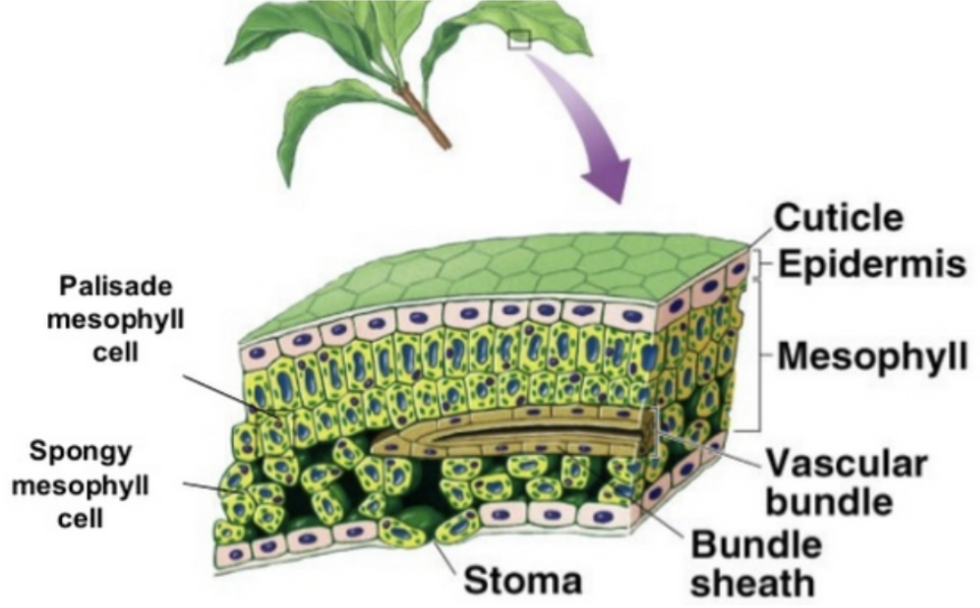
<p><span style="background-color: transparent;"><strong>Leaf Structure</strong></span></p><ul><li><p><span style="background-color: transparent;">In plants, photosynthesis occurs in the <strong>mesophyll</strong> cells of the leaves.&nbsp;</span></p><ul><li><p>Mesophyll cells contain many chloroplasts<span style="background-color: transparent;">.</span></p></li></ul></li><li><p><span style="background-color: transparent;"><strong>Cuticle</strong> - provides leafs protective barrier</span></p></li><li><p><span style="background-color: transparent;"><strong>Stomata/stoma</strong> - allow oxygen, carbon dioxide, and water to pass in/out of the leaf, and prevent water loss</span></p></li></ul><p></p>
3
New cards

Chloroplasts –

  • Thylakoids

  • Grana

  • Stroma

Chloroplasts – where photosynthesis occurs.

  • Thylakoids – the internal membranes in chloroplasts

    • Grana – Thylakoids stacked in columns

  • Stroma – the semi liquid substance that surrounds the thylakoids.
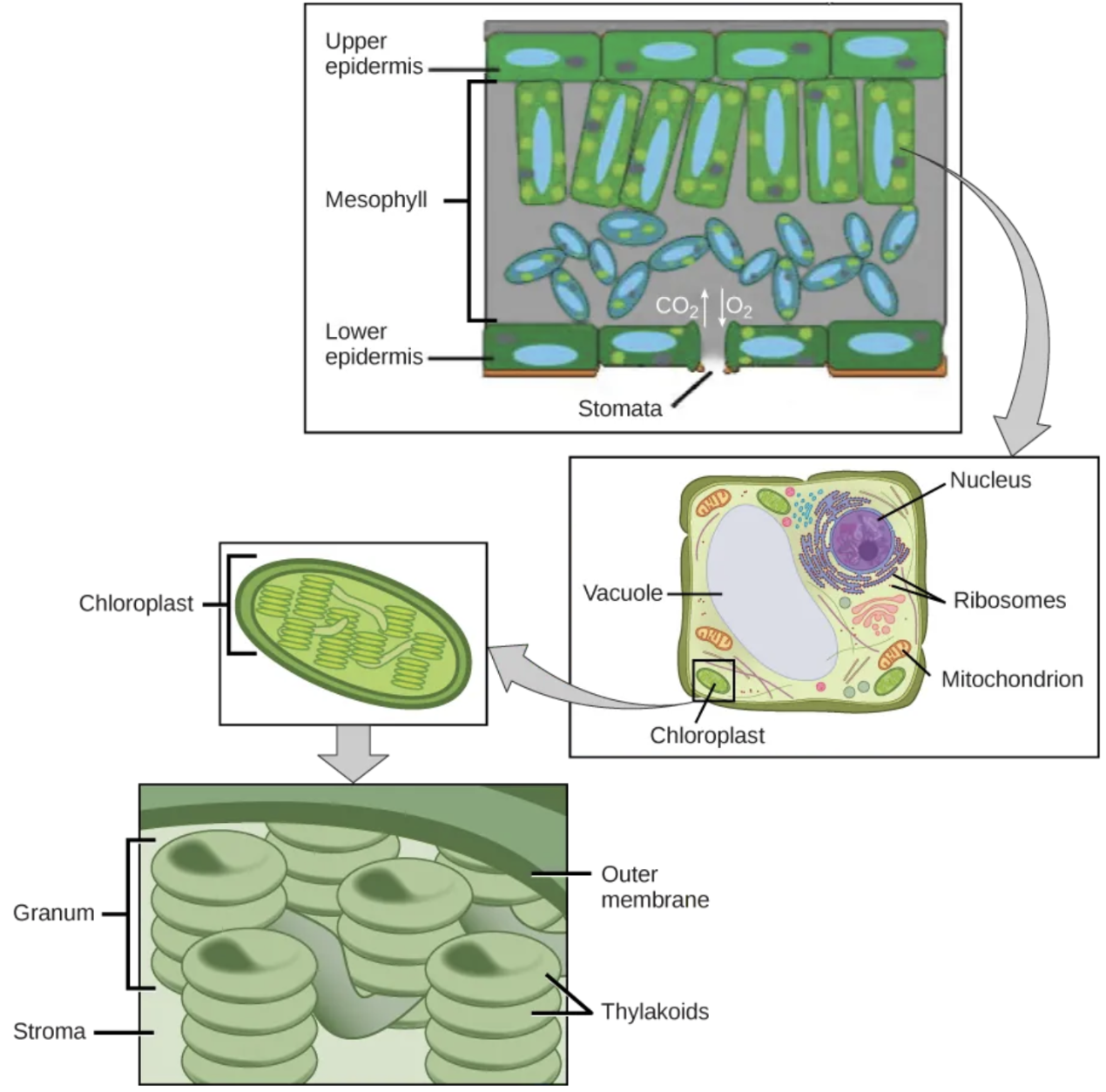
<p><span style="background-color: transparent;"><strong>Chloroplasts – </strong></span><span>where photosynthesis occurs</span><span style="background-color: transparent;">.</span></p><ul><li><p><span style="background-color: transparent;"><strong>Thylakoids</strong> – the internal membranes in chloroplasts</span></p><ul><li><p><span style="background-color: transparent;"><strong>Grana </strong>– Thylakoids stacked in columns</span></p></li></ul></li><li><p><span style="background-color: transparent;"><strong>Stroma</strong> – the semi liquid substance that surrounds the thylakoids.</span></p></li></ul><p></p>
4
New cards

Photosystem

  • The primary pigment in plants is _____.

    • — absorbs ____ light of the visible light.

  • Accessory pigments

    • These pigments give color to flowers, fruits, and vegetables.

Photosystem – a network of pigments (located in the thylakoid membrane) that, like antennas, capture sunlight energy.

  • The primary pigment in plants is chlorophyll.

    • Chlorophyll absorbs blue and red light of the visible light

    • Chlorophyll is green because green light is reflected, not absorbed.

  • Accessory pigments other pigments in plants that absorb other light levels that chlorophyll doesn’t

    • These pigments give color to flowers, fruits, and vegetables.

5
New cards

Light is comprised of packets of energy called _____

  • Electromagnetic Spectrum -

  • Human eyes only perceive photons of intermediate energy levels, known as ____.

Light is comprised of packets of energy called photons

  • Electromagnetic Spectrum - represents the range of energy levels

  • Human eyes only perceive photons of intermediate energy levels, known as “visible light”.
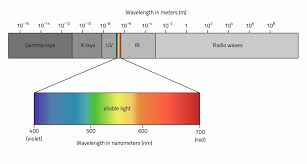
<p>Light is comprised of packets of energy called <strong><u>photons</u></strong></p><ul><li><p><span style="background-color: transparent;"><strong>Electromagnetic Spectrum </strong>- represents the range of energy levels </span></p></li><li><p><span style="background-color: transparent;">Human eyes only perceive photons of intermediate energy levels, known as “<strong>visible light</strong>”.</span></p></li></ul><p></p>
6
New cards

Three Stages of Photosynthesis

Three Stages of Photosynthesis

  1. Capturing sunlight energy.

  2. Using the captured energy to produce ATP + NADPH.

  3. Using the ATP + NADPH to make carbohydrates from CO2

7
New cards

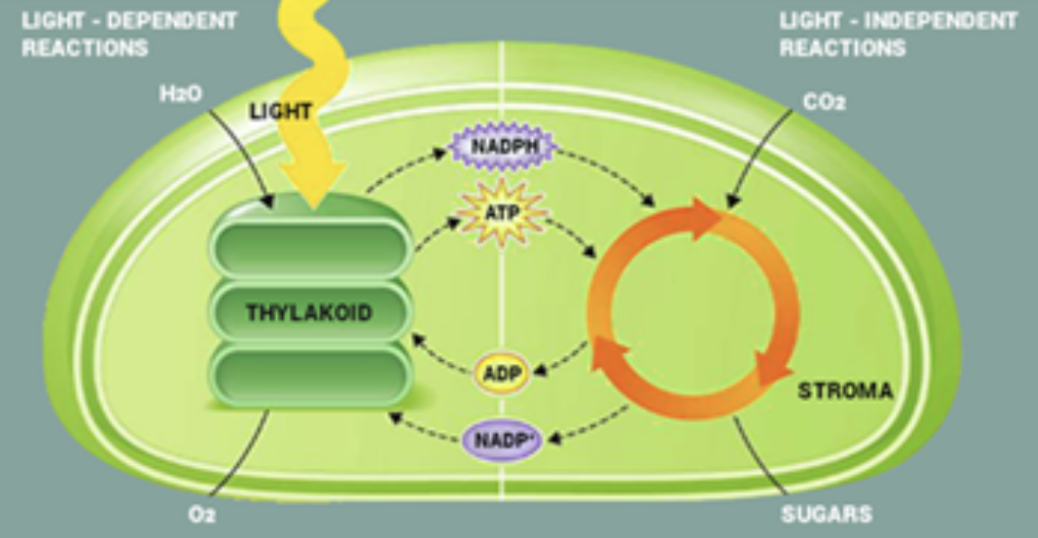
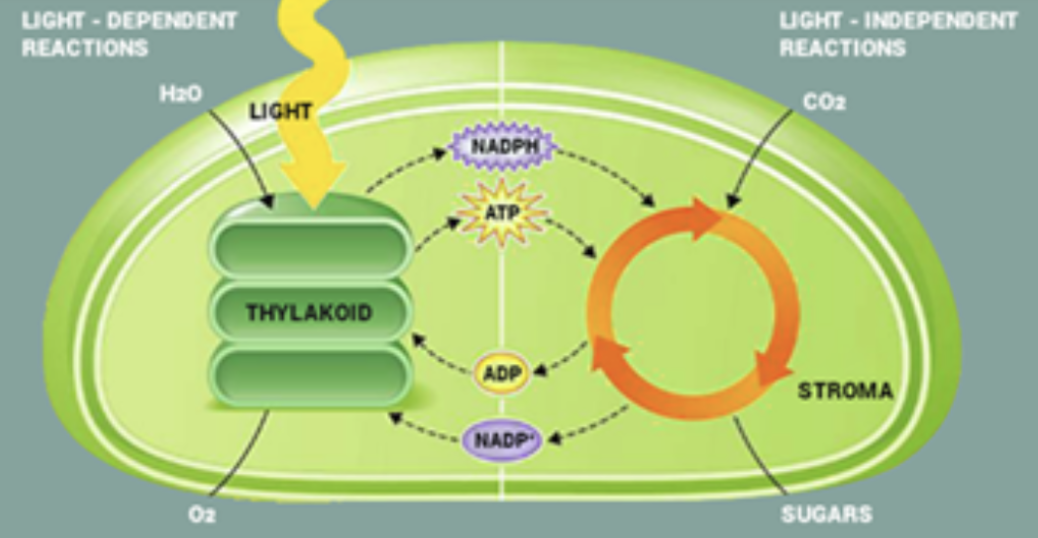
2 Types of Reactions

  • Light-dependent reactions ___

    • Includes the stages (1) ___ and (2) ____

  • Light-independent reactions ___

    • Known as the Calvin cycle

    • Includes the stage (3) ____

  • Light-dependent reactions take place only in the presence of light and produce ATP and NADPH.

    • Includes the stages (1) Capturing energy from sunlight and (2) Using the captured energy to produce ATP and NADPH.

  • Light-independent reactions do not need light to occur and use CO2 to make organic molecules (glucose).

    • Known as the Calvin cycle

    • Includes the stage (3) Using the ATP and NADPH to make carbohydrates from CO2 in the atmosphere.
<ul><li><p><span><strong>Light-dependent</strong> reactions take place only in the presence of light and produce ATP and NADPH.</span></p><ul><li><p><span style="background-color: transparent;">Includes the stages (1) Capturing energy from sunlight and (2) Using the captured energy to produce ATP and NADPH.</span></p></li></ul></li></ul><p></p><ul><li><p><span><strong>Light-independent</strong> reactions do not need light to occur and use CO<sub>2</sub> to make organic molecules (glucose).</span></p><ul><li><p><span style="background-color: transparent;">Known as the Calvin cycle</span></p></li><li><p><span style="background-color: transparent;">Includes the stage (3) Using the ATP and NADPH to make carbohydrates from CO<sub>2</sub> in the atmosphere.</span></p><p></p></li></ul></li></ul><p></p>
8
New cards

Light-Dependent Reactions

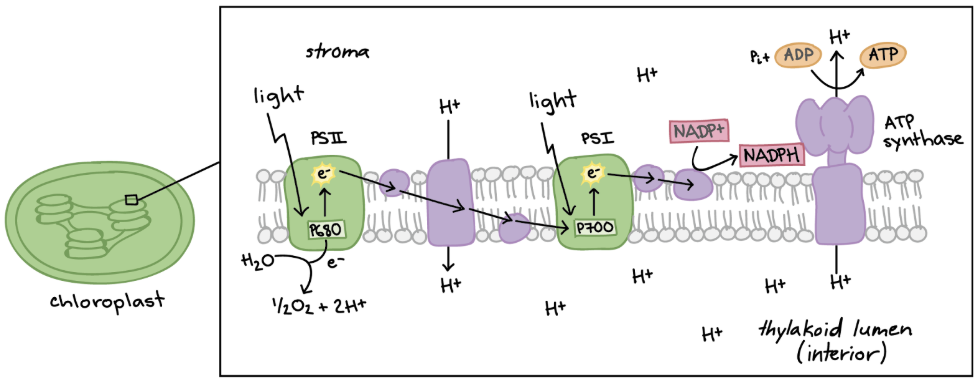
2 photosystems are used:

  • Photosystem II

  • Photosystem I

2 photosystems are used:

  • Photosystem II – Captures a photon of light and releases an electron to the Electron Transport Systemproduces ATP.

  • Photosystem I – Captures a photon and releases an electron to the ETS → produces NADPH.
<p><span style="background-color: transparent;">2 photosystems are used:</span></p><ul><li><p><span style="background-color: transparent;"><strong>Photosystem II </strong>– Captures a photon of light and releases an electron to the </span>Electron Transport System<span style="background-color: transparent;"> → </span>produces ATP<span style="background-color: transparent;">.</span></p></li><li><p><span style="background-color: transparent;"><strong>Photosystem I </strong>– Captures a photon and releases an electron to the ETS → </span>produces NADPH<span style="background-color: transparent;">.</span></p></li></ul><p></p>
9
New cards
<p><span style="background-color: transparent;"><strong><u>Light-Independent Reactions (Calvin Cycle)</u></strong></span></p><ul><li><p><span style="background-color: transparent;"><mark data-color="#fffe97" style="background-color: rgb(255, 254, 151); color: inherit;">Cells use the </mark><u><mark data-color="#fffe97" style="background-color: rgb(255, 254, 151); color: inherit;">_____</mark></u><mark data-color="#fffe97" style="background-color: rgb(255, 254, 151); color: inherit;"> to build </mark>organic molecules.</span></p></li></ul><p><span style="background-color: transparent;">&nbsp;</span></p><ul><li><p><span style="background-color: transparent;">The <strong>Calvin cycle</strong> reactions occur in 3 stages:&nbsp;</span></p></li></ul><ol><li><p><span style="background-color: transparent;">Carbon fixation&nbsp;– </span></p></li><li><p><span style="background-color: transparent;">Making sugars –&nbsp;</span></p></li><li><p><span style="background-color: transparent;">Reforming RuBP – </span></p></li></ol><p></p><p><span style="background-color: transparent;">The Calvin cycle must “turn” ____ in order to form a glucose molecule.</span></p><ul><li><p><span style="background-color: transparent; color: green;">The Calvin cycle recycles back their reactant (the products of the light-dependent reactions) to the ETS; returns ADP and NADP+ back to the ETS</span></p></li></ul><p></p>

Light-Independent Reactions (Calvin Cycle)

  • Cells use the _____ to build organic molecules.


  • The Calvin cycle reactions occur in 3 stages: 

  1. Carbon fixation –

  2. Making sugars – 

  3. Reforming RuBP –

The Calvin cycle must “turn” ____ in order to form a glucose molecule.

  • The Calvin cycle recycles back their reactant (the products of the light-dependent reactions) to the ETS; returns ADP and NADP+ back to the ETS

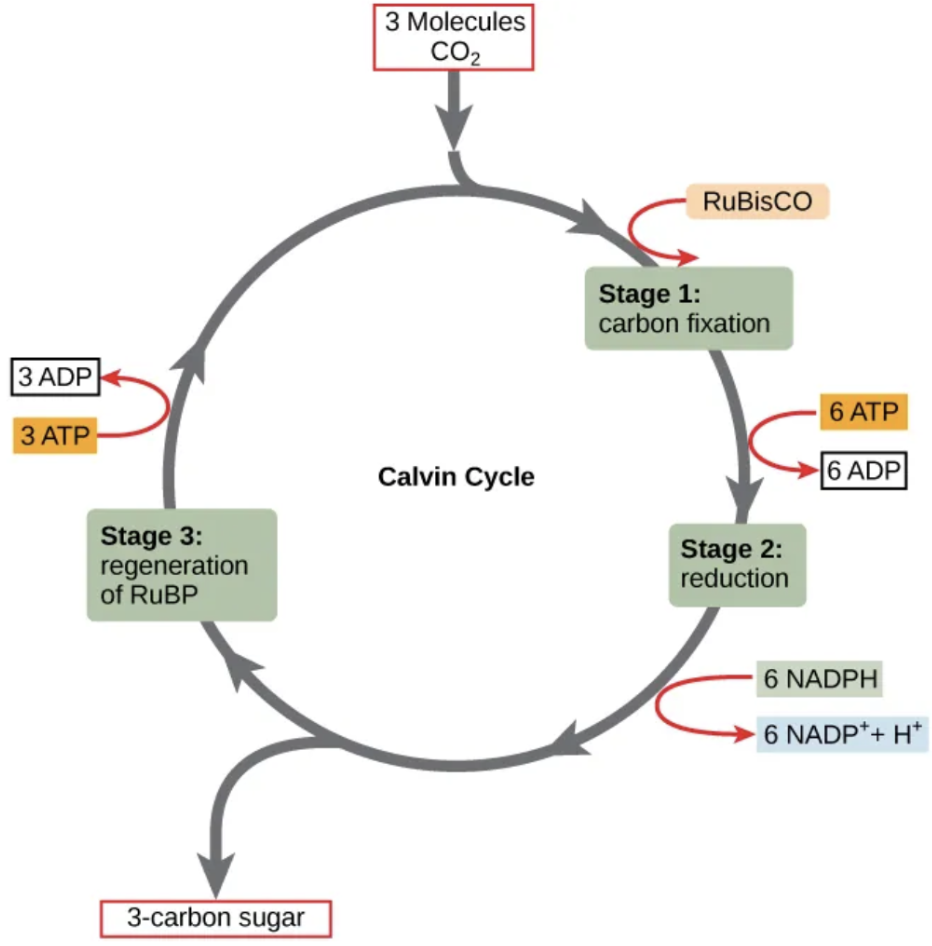
Cells use the products of the light-dependent reactions to build organic molecules.

The Calvin cycle reactions occur in 3 stages: 

  1. Carbon fixation – Carbon from CO2 is attached to an organic molecule, RuBP.

  2. Making sugars – The carbons goes through reactions to make sugars.

  3. Reforming RuBP – remaining molecules are used to reform RuBP (ready to start another round in the Calvin cycle). 

The Calvin cycle must “turn” 6x in order to form a glucose molecule.

  • The Calvin cycle also recycles their reactants to the light-dependent reactions; returns ADP and NADP+ back to the ETS
<p><span style="background-color: transparent;"><mark data-color="#fffe97" style="background-color: rgb(255, 254, 151); color: inherit;">Cells use the </mark><u><mark data-color="#fffe97" style="background-color: rgb(255, 254, 151); color: inherit;">products of the light-dependent reactions</mark></u><mark data-color="#fffe97" style="background-color: rgb(255, 254, 151); color: inherit;"> to build </mark>organic molecules.</span></p><p><span style="background-color: transparent;">The <strong>Calvin cycle</strong> reactions occur in 3 stages:&nbsp;</span></p><ol><li><p><span style="background-color: transparent;">Carbon fixation&nbsp;– Carbon from CO<sub>2</sub> is attached to an organic molecule, RuBP.</span></p></li><li><p><span style="background-color: transparent;">Making sugars –&nbsp;The carbons goes through reactions to make sugars.</span></p></li><li><p><span style="background-color: transparent;">Reforming RuBP – remaining molecules are used to reform RuBP (ready to start another round in the Calvin cycle).&nbsp;</span></p></li></ol><p></p><p><span style="background-color: transparent;">The Calvin cycle must “turn” 6x in order to form a glucose molecule.</span></p><ul><li><p><span style="background-color: transparent;">The Calvin cycle also recycles their reactants to the light-dependent reactions; returns ADP and NADP+ back to the ETS</span></p></li></ul><p></p>
10
New cards

Other Photosynthetic Pathways (to avoid reduction in photosynthesis)

Many plants have trouble carrying out C3 photosynthesis (where light dependent and light independent reactions are occurring in the same cell simultaneously) when its ____.

  • Plants close their stomata in order to ____.

    • Photorespiration ____.

C4 Photosynthesis

  • Occur in sugarcane, corn, many grasses

    • What does this pathway do?

      • Bundle-sheath cells trap CO2

CAM (crassulacean acid metabolism) Photosynthesis

  • Occurs in succulent (water-storing) plants, like cacti and pineapples.

  • C4 pathway at night (stomata opens to take in CO2) and the C3 pathway during the day.
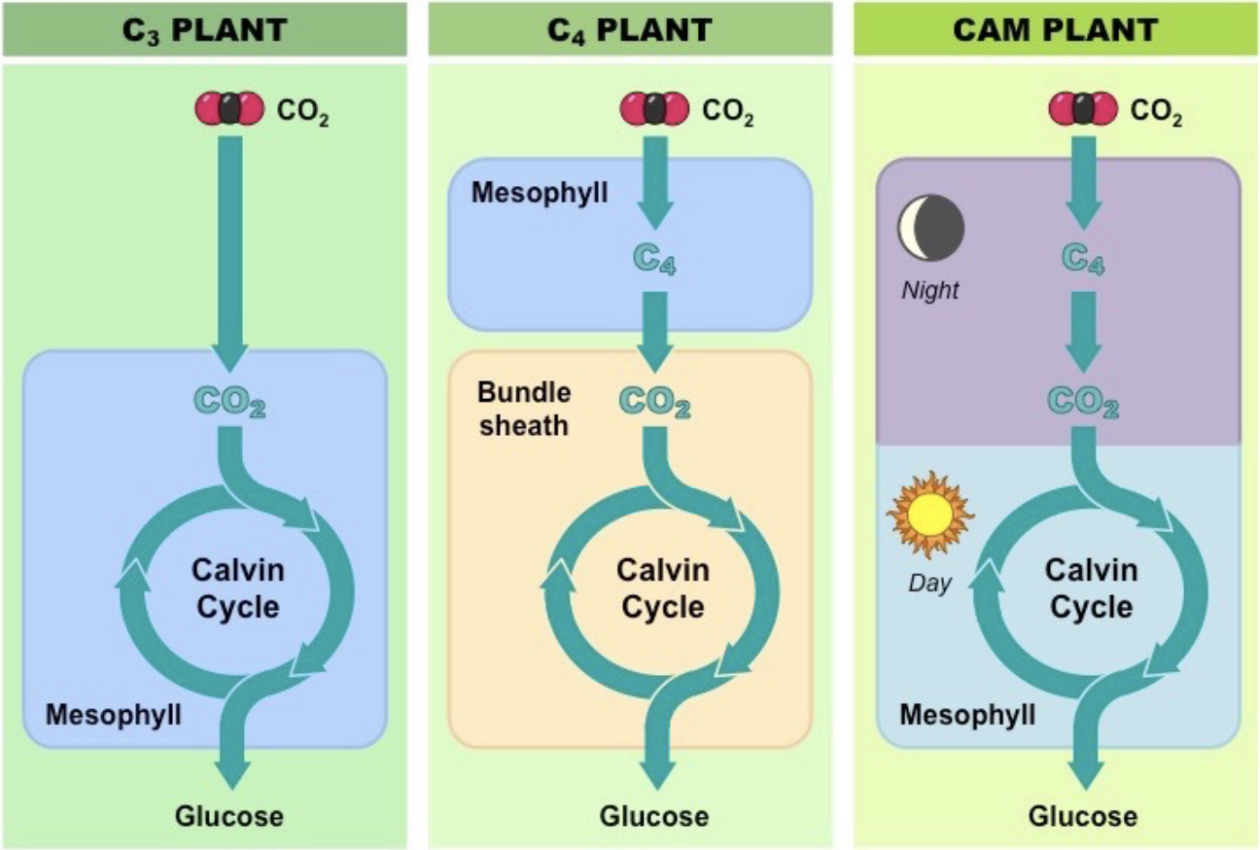
Many plants have trouble carrying out C3 photosynthesis (where light dependent and light independent reactions are occurring in the same cell simultaneously) when its hot.

  • Plants close their stomata in order to prevent water loss.

    • Photorespiration reduces photosynthesis because O₂ levels are built up, causing the enzyme rubisco to use oxygen instead of CO₂, decreasing sugar production.

C4 Photosynthesis

  • Occur in sugarcane, corn, many grasses

    • They fix carbon using different types of cells and reactions, so they don’t run out of CO2

      • Bundle-sheath cells trap CO2

CAM (crassulacean acid metabolism) Photosynthesis

  • Occurs in succulent (water-storing) plants, like cacti and pineapples.

  • C4 pathway at night (stomata opens to take in CO2) and the C3 pathway during the day.

<p><span style="background-color: transparent;">Many plants have trouble carrying out <strong>C3 photosynthesis</strong> (where light dependent and light independent reactions are occurring in the same cell simultaneously) when its </span><span style="background-color: transparent; color: rgb(244, 25, 25);">hot</span><span style="background-color: transparent;">.</span></p><ul><li><p><span style="background-color: transparent;">Plants close their <strong>stomata</strong> in order to prevent water loss.</span></p><ul><li><p><strong>Photorespiration</strong> reduces photosynthesis because O₂ levels are built up, causing the <span style="background-color: transparent;">enzyme <em>rubisco</em></span> to use oxygen instead of CO₂, decreasing sugar production.<br></p></li></ul></li></ul><p><span style="background-color: transparent;"><strong><u>C4 Photosynthesis</u></strong></span></p><ul><li><p><span style="background-color: transparent;">Occur in sugarcane, corn, many grasses</span></p><ul><li><p><span style="background-color: transparent; color: blue;">They fix carbon using different types of cells and reactions, so they don’t run out of CO<sub>2</sub> </span></p><ul><li><p><span style="background-color: transparent;"><strong>Bundle-sheath cells</strong> trap CO<sub>2 </sub></span></p></li></ul></li></ul></li></ul><p></p><p><span style="background-color: transparent;"><strong><u>CAM (crassulacean acid metabolism) Photosynthesis</u></strong></span></p><ul><li><p><span style="background-color: transparent;">Occurs in succulent (water-storing) plants, like cacti and pineapples.</span></p></li><li><p><span style="background-color: transparent; color: blue;">C4 pathway at night (stomata opens to take in CO<sub>2</sub>) and the C3 pathway during the day.</span></p></li></ul><p></p>

Explore top notes

note
Chapter 2 - The Role of Prices
Updated 1134d ago
0.0(0)
note
7.2 Transcription
Updated 1153d ago
0.0(0)
note
Unit 2
Updated 692d ago
0.0(0)
note
Untitled
Updated 1069d ago
0.0(0)
note
Unit One Booklet 4
Updated 514d ago
0.0(0)
note
UO6 and UO7
Updated 1028d ago
0.0(0)
note
Chapter 2 - The Role of Prices
Updated 1134d ago
0.0(0)
note
7.2 Transcription
Updated 1153d ago
0.0(0)
note
Unit 2
Updated 692d ago
0.0(0)
note
Untitled
Updated 1069d ago
0.0(0)
note
Unit One Booklet 4
Updated 514d ago
0.0(0)
note
UO6 and UO7
Updated 1028d ago
0.0(0)

Explore top flashcards

flashcards
periodic table 52 elements
52
Updated 919d ago
0.0(0)
flashcards
War horse ch.1-8
24
Updated 443d ago
0.0(0)
flashcards
Edexcel IGCSE History, USA
124
Updated 802d ago
0.0(0)
flashcards
theology final
100
Updated 299d ago
0.0(0)
flashcards
La Comida vocab, parte 2
33
Updated 213d ago
0.0(0)
flashcards
climate change
55
Updated 1211d ago
0.0(0)
flashcards
periodic table 52 elements
52
Updated 919d ago
0.0(0)
flashcards
War horse ch.1-8
24
Updated 443d ago
0.0(0)
flashcards
Edexcel IGCSE History, USA
124
Updated 802d ago
0.0(0)
flashcards
theology final
100
Updated 299d ago
0.0(0)
flashcards
La Comida vocab, parte 2
33
Updated 213d ago
0.0(0)
flashcards
climate change
55
Updated 1211d ago
0.0(0)