Italy: Notable Groups, Organizations, and Movements (inc. Notable Banking Families)
 Call Kai
 Learn
Learn Practice Test
 Spaced Repetition
 Match
Match Flashcards
 Knowt Play
1/21

There's no tags or description
Looks like no tags are added yet.
Name | Mastery | Learn | Test | Matching | Spaced | Call with Kai | Chat |
|---|
No analytics yet
Send a link to your students to track their progress
22 Terms
900s - 1810 - Bardi Family (All Facts)
Notable banking family in the Republic of Florence that started their namesake family banking super-company in the 1300s
Upon introducing gold currencies to Florence in the wake of the death of Holy Roman Emperor Frederick II, they flourished
They went bankrupt following their collapse to King Edward III of England repudiating his debts to them
They played a notable role in financing some of the early voyages of discovery to the Americas including those by Christopher Columbus and John Cabot

1000s - 1300s - Peruzzi Family (All Facts)
Notable banking family in the Republic of Florence
They went bankrupt in 1343 following their collapse to King Edward III of England repudiating his debts to them
1088 - University of Bologna (All Facts)
Established during the reign of Emperor Frederick Barbarossa of Holy Roman Italy
It secured its first privileges from the Holy Roman Empire in 1158
1099 - Pazzi Family (All Facts)
Italian Banking family in Florence and rival of the Medici Family
1100s - 1400 - Guelphs (All Facts)
Political faction in the Italian city-states of Central and Northern Italy during the Middle Ages (Italy) that can be distinguished from its counterpart and opposing faction in that its members supported the Papacy / Pope
Its rivalry with its opposing faction dominated political life across Italy at the time
It emerged out of the Concordant of Worms
They were based in the Republic of Florence
They were defeated by their opposing faction in the Battle of Montaperti
However, once supported by Pope Urban IV, they returned to power in Tuscany
They then defeated their opposing faction in the Battle of Benevento with the help of Charles of Anjou
By the 1300s, they split into two factions of their own - the extreme “Blacks” and the moderate “Whites” in the Republic of Florence
When Charles of Valois of France and his French troops arrived, called in by the pope, the leading “Whites” fled
1100s - 1400 - Ghibellines (All Facts)
Political faction in the Italian city-states of Central and Northern Italy during the Middle Ages (Italy) that can be distinguished from its counterpart and opposing faction in that its members supported the Holy Roman Empire / Holy Roman Emperor
Its rivalry with its opposing faction dominated political life across Italy at the time
It emerged out of the Concordant of Worms
They were based in the Republic of Siena
They defeated their opposing faction in the Battle of Montaperti
However, once opposed by Pope Urban IV, they lost power in Tuscany
They were defeated by their opposing faction, but were helped by King Manfred of Sicily, in the Battle of Benevento

1167 - 1250 - Lombard League (All Facts)
Alliance of cities that worked together to counter the attempts by the Holy Roman Emperors of the Hohenstaufen Dynasty to establish direct royal administrative control over the cities of the Kingdom of Italy (of the Holy Roman Empire) after many decades of de facto (albeit, not de jure) local self-governance
Alliance established in northern Italy in opposition to Holy Roman Emperor Frederick Barbarossa, especially after Milan was seized and destroyed by Barbarossa
Alliance which eventually grew to be supported by the papacy, first by Pope Alexander III
It founded a new town in Italy in honor of Pope Alexander III, Alessandria
Moreover, its location gave it command of the routes of western Lombardy within Italy
They eventually allied with Henry, the son and vice-regent of Frederick II of the Holy Roman Empire, in his revolt against his father, Holy Roman Emperor Frederick Barbarossa
They were initially defeated by Holy Roman Emperor Frederick Barbarossa and his forces
They eventually defeated Holy Roman Emperor Frederick Barbarossa and his forces in the Battle of Legnano
1222 - University of Padua (All Facts)
Established during the reign of Emperor Frederick II of Holy Roman Italy
1230 - 1743 - House of Medici (All Facts)
Political, Ecclesiastical, and Banking Dynasty of Italy (Florence)
Its bank was founded by Giovanni of the namesake, the father of Cosimo of the namesake, in 1397
By 1530, they were restored to power in Florence by Holy Roman imperial troops
1240 - University of Siena (All Facts)
Established during the reign of Emperor Frederick II of Holy Roman Italy
1300s - 1500s - Italian Renaissance (All Facts)
Movement in which the cities of northern Italy were not in competition only for wealth and power, but also in an artistical revival in which their richest families vied with one another as patrons of art and learning
Movement centered in (The Republic of) Florence, whose patron was the banker Cosimo de Medici
Art Movement characterized by
depicting themes and subjects associated with Humanism and the Classical Antiquities (Ancient Greece & Rome or Greco-Roman Mythology & Philosophy) for the first time in Art, and as exhibited by other fields of study and art during the namesake movement overall
an interest in the human experience and naturalistic depictions of subjects
In other words, religious & mythological figures in a earthly setting or with human form- rather than in heaven or in the sky; for the first time
a deeper understanding and appreciation for the human body and its potential (Anatomical Observation)
depiction of graceful, complex Movement
Linear Perspective / Mathematical Precision (Anatomical Proportion)
heavy use of Horizontal and Vertical Lines
Depth (or illusion of it with figures jumping out at the viewer and landscapes with less colors in the background)
Emotion, which is usually displayed among figures in their faces for the first time
figures being displayed from many different points of view for the first time
figures being interrelated in complex ways, including being depicted at different times while in the same location
Uninterrupted Contours that convey a Less-Guided Focus
works typically being presented as Fresco or Fresco Cycle Paintings, Altarpiece Paintings, Engravings, and Sculpture
in painting, figures appear to take up 3D space although it is in 2D plane for the first time
a variety of traits including subjects that are Distant, Calm, Immortal, Serene, and Stable
Movement of Artists Including:
1) Leonardo Da Vinci (Polymath)
2) Michelangelo (Painter, Sculptor)
3) Raphael (Painter)
4) Titian (Painter)
5) Donatello (Sculptor)
6) Masaccio (Painter)
7) Pietro Petrugino (Painter)
8) Sandro Botticelli (Painter)
9) Giotto (Painter)
10) Andrea Mantegna (Painter)
11) Pierro della Francesca (Painter)
12) Fra Angelico (Painter)
13) Fra Filippio Lippi (Painter)
1343 - University of Pisa (All Facts)
1400s - Florentine Platonic Academy (All Facts)
Academy which had no buildings or teachers but was formed around Italian Scholar and Priest Marsilio Ficino
It consisted of a small group of men with a common respect for Ficino, their teacher, and a common interest in Plato, the namesake school’s philosopher
It exercised a major influence over Italian philosophical thought and made a significant contribution to the intellectual humanism of the Italian Renaissance
1407 - 1805 - Bank of St. George (All Facts)
Private Banking Company formed by the Republic of Genoa
It was formed after Genoa realized it could not compete with Venice
It was founded to consolidate the public debt of Genoa, which had been escalating due to the war with Venice for trading and financial dominance in the War of Chioggia
1454 - 1494 - Italic League (All Facts)
Alliance made between the Papal States, the Republic of Venice, the Duchy of Milan, the Republic of Florence, and the Kingdom of Naples, following the Treaty of Lodi that lasted for forty years and ended once the Italic Wars began
Alliance formed due to the need to unify due to the pressures of the growing Habsburg and French Empires
Alliance which agreed to
recognize and maintain the position of the major states as they existed at that moment
protect each other against outside aggression
recognize that there were common interests between its members
recognize that “Italy” was a geographical entity, despite being divided by
trade rivalry (the most formidable barrier to further agreement between the Italian city-states)
countless dialects
the lack of a generally-accepted written Italian language, as most business by that time was still conducted in Latin
fierce loyalty to city-state rather than a non-existent Italian state
Alliance inspired by Medici diplomacy, it ensured the balance of power among the Italian city-states
1494 - Aldine Press (All Facts)
Publishing Company founded by Aldus Manutius famous for introducing italics into print
It published many classics of Italy during his age such as Baldassare Castiglione’s “The Book of the Courtier”
Condottiero (All Facts)
Term used to refer to an Italian military leader active during the Middle Ages and Renaissance
1524 - Theatines / Congregation of Clerics Regular (All Facts)
Catholic Order founded by Gian Pietro Carafa (the future Pope Paul IV) and Gaetano di Thiene (St. Cajetan)
Catholic Order whose work they did for the community changed many ideas within Catholicism
Catholic Orders whose members lives were made up of
poverty
celibacy
work in schools, hospitals, orphanages, and women’s hostels
Catholic Order whose puritanism bred a new kind of bishop to continue the reforms of its saintly founders
1535 - Angelines / Company of St. Ursula Order (All Facts)
Catholic Religious Order founded by St. Angela Merici, which worked to educate young girls
1551 - Pontifical Gregorian University (All Facts)
First Jesuit College established in Rome
Established by St. Ignatius Loyola
1563 - Academy of the Arts and Drawing / “Accademia delle Arti del Disegno” (All Facts)
Established by Cosimo de Medici
It was the first academy of art in Europe
Its members, who were governed by formal rules, were drawn mainly from the artists and sculptors already being commissioned by Cosimo de Medici
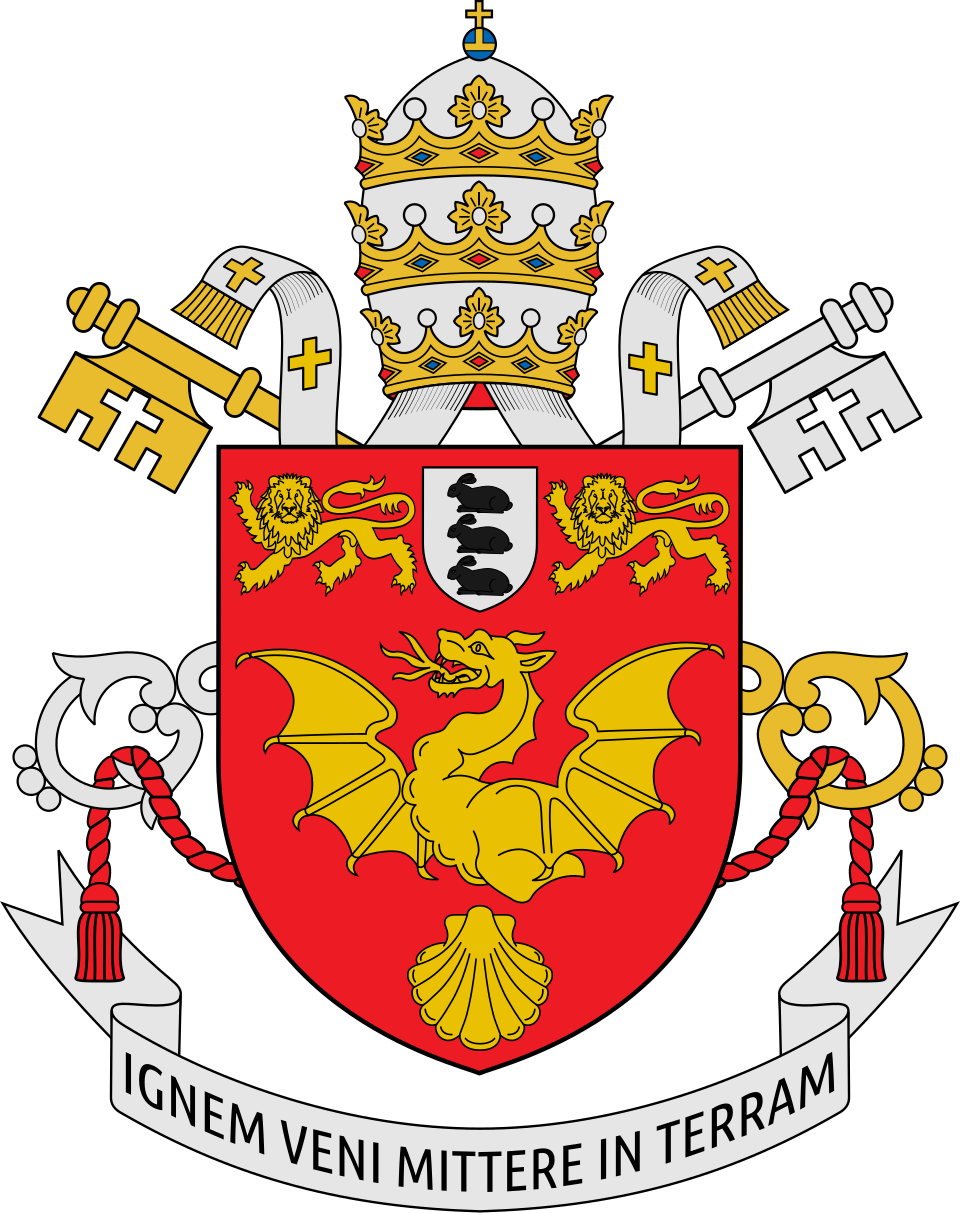
1579 - Venerable English College (All Facts)
English College in Rome established
for the education of
priests
English people who have remained faithful to the Catholic Church
due to the banning of seminaries in England under Queen Elizabeth