PMOC Lab Midterm Post Lab Synthesis of Ethyl Alcohol
 Call Kai
 Learn
Learn Practice Test
 Spaced Repetition
 Match
Match Flashcards
 Knowt Play
1/78

There's no tags or description
Looks like no tags are added yet.
Name | Mastery | Learn | Test | Matching | Spaced | Call with Kai |
|---|
No analytics yet
Send a link to your students to track their progress
79 Terms
Grain alcohol
Alcohol
Methylcarbinol
Drinking alcohol
Recreational Drink
Other names of Ethanol
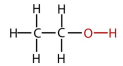
Structural Formula of Ethanol

Molecular Formula of Ethanol
Volatile
Flammable
Colorless liquid
BP: 78°C
Polar
Completely miscible with water and organic solvents and
is very hygroscopic.
Properties of Ethanol
Ethanol
The second simplest alcohol containing hydroxyl group in an aliphatic manner.
Methanol
Simplest alcohol
colorless, fruity-smelling organic compound
Organoleptically, Ethanol can be described as a
water and acetone
Ethanol is miscible in
benzene-containing compounds and hydrocarbons
Ethanol is immiscible to
Absolute alcohol
Denatured alcohol
Elixirs
Tinctures
COMMERCIALLY AVAILABLE/IMPORTANT ETHANOL
99% alcohol
Concentration of alcohol in Absolute Alcohol
Denatured Alcohol
Type of ethanol that is unfit for human use.
Alcohol added to denatured substance
Methanol and Benzene
Added to alcohol for it to be denatured
Denatured substances
Denatured Alcohol
Used as Fuel in alcohol lamps
Elixirs
“Sweetened” hydroalcoholic solution intended for oral use
5% - 40%
% of alcohol in Elixirs
Tinctures
Hydroalcoholic solution from vegetable materials
15% - 80%
% of alcohol in Tinctures
Ethanol
Alcohol is the alcohol present in: All table wines, Beers, Distilled liquors
10-13%
% of alcohol in all table wines
3-5%
% of alcohol in Beers
35-90%
% of alcohol in Distilled liquors
Multiply by 2 / Divide by 2
Conversion of alcohol percentage to proof strength and vice versa
Used in Gasohol
Widely used solvent for paint, varnish, and drugs
Used in the manufacture of ethanal, (i.e. acetaldehyde), and ethanoic acid, (acetic acid).
Used as the fluid in thermometers u Used in preserving biological specimens
Uses of Ethanol
Ethanol + Gasoline
Gasohol is a combination of
Produces fewer air pollutant
Why is gasohol preferred?
1 part Ethanol
9 parts Gasoline
Composition of Gasohol
BLOOD ALCOHOL CONCENTRATION (BAC)
Refers to the amount of alcohol present in the blood stream.
Blood alcohol content
the amount of alcohol present in 100 mL or its equivalent 1 dL of blood.
Breathalyzer Test
Measures the amount of alcohol in a person's breath to estimate their blood alcohol content (BAC).
Breathalyzer Test
measures alcohol in expired air by the color change that occurs when the bright yellow-orange oxidizing agent Potassium dichromate (K2CR2O7) is reduced to blue-green chromium (III)
>0.05%
the legal limit of BAC in the Philippines and other countries
0.08
BAC legally intoxicated
Verbose
Graded-dose response curve of Alcohol (dose vs intensity of the effect on one patient). Stage/dose where a patient is more talkative (madaldal)
Jocose
Graded-dose response curve of Alcohol (dose vs intensity of the effect on one patient). Dose characterized by playful and joking behavior
Bellicose
Graded-dose response curve of Alcohol (dose vs intensity of the effect on one patient). Dose characterized by aggressive and hostile behavior
Morose
Graded-dose response curve of Alcohol (dose vs intensity of the effect on one patient). Dose characterized by bad temper
Repose
Graded-dose response curve of Alcohol (dose vs intensity of the effect on one patient). Stage/Dose characterized by reset, sleep, or drowsiness
Comatose
Graded-dose response curve of Alcohol (dose vs intensity of the effect on one patient). Dose characterized by a coma or unconsciousness
Rigormatose
Graded-dose response curve of Alcohol (dose vs intensity of the effect on one patient). Dose characterized by muscle stiffening and death
Verbose → talkative
Jocose → playful
Bellicose → aggressive
Morose → bad temper
Repose → sleeping (madaldal)
Comatose → unconscious
Rigormatose → Death; muscle stiffening
Graded-dose response curve of Alcohol (dose vs intensity of the effect on one patient). Progression summary
GABA (Gamma-aminobutyric acid)
Major inhibitory receptor in the brain
GABA (Gamma-aminobutyric acid)
Receptor enhanced by Ethanol
Benzodiazepines
Barbiturates
Ethanol
Three GABA modulators
Between Alpha and Gamma receptor
Where Benzodiazepine binds to in GABA receptor
Between Alpha and Beta receptor
Where Barbiturates binds to in GABA receptor
Alpha receptor
Where Ethanol binds to in GABA receptor
A GABA-A modulator
CNS Depressant
Inhibits the production of vasopressin or anti-diuretic hormone
Blood vessels dilate → flushing
Antimicrobial/Antiseptic
Pharmacology of Ethanol
CNS depression
Euphoria
CNS effects of Ethanol
30-100 mg/dL
BAC of Apparent excitation and euphoria.
100 -200 mg/dL
BAC of Impaired motor function, impairment of memory, slurred speech, drowsiness.
200-300 mg/dL
BAC of Coma, respiratory and CV depuration
>500 mg/dL
BAC of Lethal, Respiratory failure, death
cutaneous and gastric vasodilation → flushing (BP not affected)
CVS effects of ethanol in small doses
tachycardia (mild rise in BP)
CVS effects of ethanol in Moderate doses
Myocardial depression, hypotension
CVS effects of ethanol in Large doses
vasodilation
The effects of ethanol in body temperature by producing a sense of warmth is due to
Stimulates acid secretion
The effects of ethanol in GIT
Diuresis
The effects of ethanol in Kidney
Wernicke-Korsakoff Syndrome
Vitamin B1 deficiency due to ethanol leads to
Wernicke Encephalopathy
Acute/Reversible stage of Wernicke-Korsakoff Syndrome
Take vit B1 (Thiamine)
Wernicke Encephalopathy treatment
Teratogenicity
Ethanol is classified as a teratogen, hence it should not be given to pregnant women as it may lead to Fetal Alcohol Syndrome
Carcinogenicity
The International Agency for Research on Cancer (IARC), part of the World Health Organization (WHO), has classified ethanol in alcoholic beverages as a Group 1 carcinogen
Fetal Alcohol Syndrome
This is as a result of a pregnant mother drinking alcohol
Group 1
Classification of ethanol in alcoholic beverages of IARC
Barbiturates
Benzodiazepines
Opioids
Phenothiazines
Antidepressants.
Ethanol can intensify the sedation caused by other central nervous system depressant drugs such as:
Fomepizole
Used for MeOH and EtOH glycol poisoning
Fomepizole
Inhibits Alcohol dehydrogenase
Disulfiram
Inhibits acetaldehyde dehydrogenase
Reaction of Ethene with Steam / Ethylene Hydration
Main method of Ethanol synthesis in the industry
C12H22O11
Sucrose chemical formula
Fermentation
Breakdown of sugar molecules in the absence of oxygen
Yeast (Saccharomyces cerevisiae; BN: Brewer’s Yeast)
catalyst of alcoholic fermentation
Invertase and Zymase
Enzyme in yeast
Invertase
Enzyme in yeast that can convert sucrose into glucose + Fructose
Zymase
Enzyme in yeast that can convert glucose into ethanol and CO2
Distillation
Method based on the difference in Boiling Point
Flammability Test
Ethanol burns with a pale blue, nonluminous flame to form carbon dioxide and steam.

