Transcultural Nursing for Finals
 Studied by 2 people
 Call Kai
 Learn
Learn Practice Test
 Spaced Repetition
 Match
Match Flashcards
 Knowt Play
1/64

There's no tags or description
Looks like no tags are added yet.
Name | Mastery | Learn | Test | Matching | Spaced | Call with Kai |
|---|
No analytics yet
Send a link to your students to track their progress
65 Terms
Emic
Knowledge learned inside own culture
Etic
Knowledge learned outside one’s culture
Cultural diversity
Quality of having many different cultures
Ethnocentrism
A person believes that their culture is better than everyone.
Cultural imposition
Attempting to impose own culture to another.
Stereotyping
Overgeneralized belief about a particular group and making assumptions.
Prejudice
A biased, preconceived opinion that is not based upon own experience.
Discrimination
Unjust, unfair, or biased treatment toward another.
Racism
Oppression against a particular race.
Culture Care Theory or Sunrise model
Theoretical framework for Transcultural Nursing
Giger and Davidhizar
Developed the Transcultural Assessment Model
Purnell
Developed the Model for Cultural Competence
Campinha-Bacote
Developed the Model for Cultural Competence in the Delivery of Healthcare Services (Awareness, Knowledge, Skills, Encounters)
Cultural Humility
A dynamic and lifelong process focusing upon oneself, self reflection, and personal critique.
NIH definition: “A lifelong process of self reflection and self critique whereby the individual not only learns about another’s culture, but starts with an examination of his/her own beliefs and cultural identities“
Cultural Assessment
Includes the collection of data about the client’s health state, concerns, and literacy.
Transcultural Nursing
Health care providers serve increasingly diverse populations.
Focuses on understanding cultural differences in health beliefs and practices.
Goal of Transcultural Nursing
To deliver culturally congruent, respectful, and effective care.
Dr. Madeleine Leininger
Transcultural Nursing is developed by _________in the 1950s.
Main definition of transcultural nursing
A comparative study of cultures to understand similarities and differences in health, illness, and care practices.
Emphasizes culturally based care that fits the patient’s values and lifestyle.
Leininger’s Sunrise Model
Central framework of transcultural nursing.
Technological factors
Religious and philosophical factors
Kinship and social factors
Cultural values and lifeways
Political, legal, and educational factors
Economic and environmental contexts
The Sunrise Model explains factors influencing health care beliefs and practices:
Culture care preservation/maintenance
Culture care accommodation/negotiation
Culture care repatterning/restructuring
The goal of the sunrise model is to provide culturally congruent nursing care through:
Culture care preservation/maintenance
Support and facilitate patient’s cultural practices that promote health.
Example: Allowing a patient to follow traditional dietary restrictions.
Culture care accommodation/negotiation
Adapt or negotiate care to satisfy both the patient’s cultural needs and medical requirements.
Example: Collaborating with traditional healers when appropriate.
Culture care repatterning/restructuring
Help clients modify cultural practices that are harmful to health while respecting their beliefs.
Example: Educating about safe alternatives to traditional healing methods.
Importance of Transcultural Nursing
Reduces cultural barriers and misunderstandings.
Promotes mutual respect and trust between nurses and patients.
Improves communication, compliance, and health outcomes.
Encourages holistic, patient-centered care.
Strategies for Implementation
Conduct cultural assessments during care planning.
Use interpreters or translated materials when needed.
Participate in cultural competence training.
Encourage teamwork among multicultural staff.
Respect cultural beliefs, values, and rituals.
Healthcare Delivery System
Healthcare systems today are increasingly multicultural
Healthcare workers and patients came from diverse cultural backgrounds
Diversity brings new perspectives but also unique challenges
Goal of the Healthcare Delivery System
To deliver equitable, culturally competent care to all.
Multicultural healthcare workforce
Composed of professionals from different ethic and cultural backgrounds.
Promotes diverse perspectives and inclusive problem-solving.
Encourages cultural awareness and better patient understanding.
Challenges of healthcare workforce
Language barriers, cultural misunderstandings, and differing beliefs.
Culturally diverse clients
Clients have varying health beliefs, traditions, and practices.
Respect for individual values, traditions, and preference builds trust.
Patient-centered care must be culturally sensitive.
Cultural competence in healthcare
Ability to interact effectively with people from different cultures.
Key components: cultural awareness, knowledge, skills, and encounters.
It leads to improved communication, trust, and health outcomes.
Enhanced patient satisfaction and safety
Stronger team collaboration
Reduction of health disparities
Creations of a compassionate, equitable health environment.
Benefits of multicultural health system
Racial and ethnic diversity
___________ in the healthcare workforce refers to the representation of individuals from various cultural, racial, and ethnic backgrounds within all areas of healthcare—nursing, medicine, allied health, administration, and support services. This diversity ensures equitable, culturally sensitive, and person-centered care.
Challenges to Achieving Diversity
Systemic racism and discrimination in admissions and employment.
Financial barriers to medical and nursing education.
Lack of mentorship for minority students.
Implicit biases affecting advancement and leadership opportunities.
Strategies to Increase Workforce Diversity
Scholarship and financial aid programs for underrepresented groups.
Anti-bias and inclusive admission procedures.
Workforce policies promoting equity and belonging.
Strengthening minority-serving institutions and community partnerships.
Culture, religion, family traditions, and lived experiences
Every patient carries personal views shaped by _____________________. These beliefs influence perceptions of health, illness, pain, healing, and death.
Beliefs About Illness Causes
Family Structure and Decision-Making
Views on Medical Interventions
Communication Styles
Examples of Cultural Beliefs Affecting Health Care
Biomedical
_______: germs, viruses, genetics.
Spiritual: punishment, imbalance between spiritual forces.
Naturalistic: hot-cold balance, environmental changes.
Matriarchal or egalitarian structures
Patriarchal families: father or eldest male decides.
___________________, mother decides.
Some cultures require extended family consultation.
Acceptance or refusal of blood transfusions, vaccines, or surgery.
Preferences for same-gender healthcare providers.
Examples of people’s views or beliefs on medical interventions
Direct vs. indirect communication.
Eye contact norms, touch preferences.
Communication styles
Cultural misunderstandings
This may lead to mistrust or treatment non-adherence.
Cultural respect
This leads to stronger therapeutic relationships.
Conduct cultural assessments (LEARN, FICA, Kleinman’s questions).
Avoid stereotyping—treat each client as unique.
Build rapport through active listening.
Incorporate cultural preferences when safe.
Approaches to Culturally Sensitive Care
LEARN
FICA
Kleinman’s questions
3 different cultural assessment tools
Listen Explain Acknowledge Recommend Negotiate
LEARN means?
Faith, Belief, Meaning
Importance and Influence
Community
Address/Action in Care/Assessment and Plan
FICA Spiritual History Assessment Tool means?
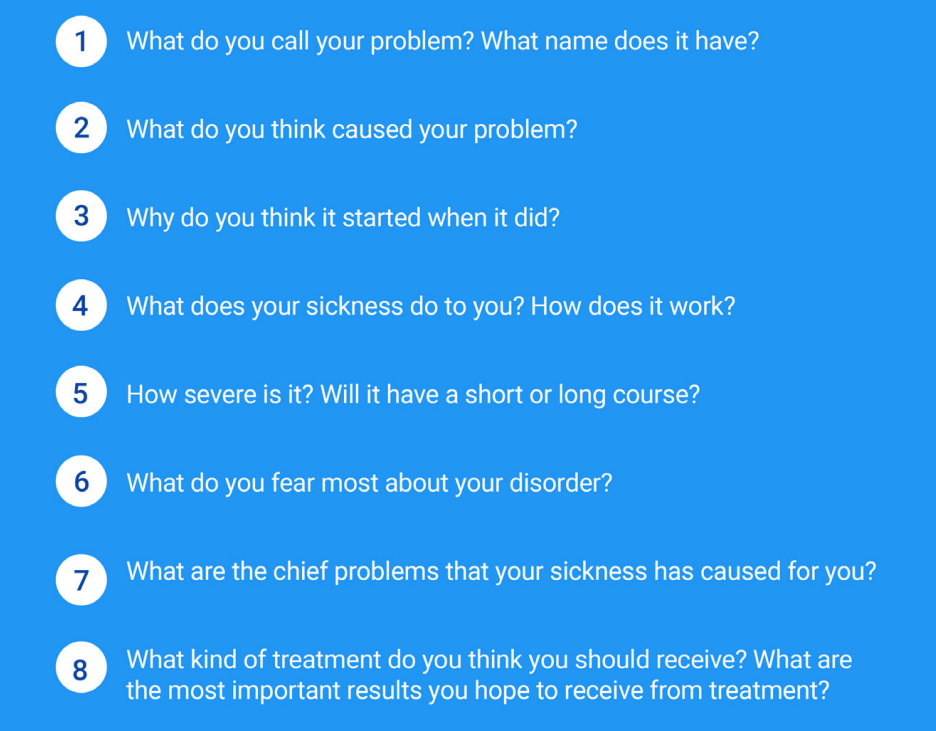
Kleinman’s questions
Arthur Kleinman’s Eight Questions
The explanatory model includes the client’s beliefs about their illness, the personal and social meaning they attach to their disorder, expectations about what will happen to them and what the provider will do, and their own therapeutic goals.
Recognize diversity
Respect differences
Review your responses
Three 3Rs of cultural competence
Cultural Competence
A set of behaviors, attitudes, and policies that enable professionals to work effectively in cross-cultural situations.
Linguistic competence
The ability of healthcare systems to communicate with individuals who have limited English proficiency, low literacy, or different language needs.
Culturally and Linguistically Appropriate Services
CLAS (_______) Standards
Provide qualified language assistance.
Offer translated materials.
Maintain organizational policies promoting cultural competence.
Purpose of Continuing Education (CE)
Multicultural populations evolve, and healthcare workers must continuously update skills to remain effective. CE equips providers to meet the changing needs of diverse communities.
Diversity, Equity, and Inclusion
DEI means?
Mandarin, Spanish, Filipino dialects
Basic medical language courses
Cultural Competency Training
Language Proficiency Development
Bias Recognition and Reduction
Simulation and Role-Play
Training on Emerging Global Health Trends
Elements of effective CE training
Body–Mind–Spirit
Health Traditions Model
Maintaining Health
Protecting Health
Restoring Health
This model (Body–Mind–Spirit) recognizes 3 aspects of health:
hilot, faith healers (albularyo), ventosa
Examples of Healing Traditions
Philippines: __________________
China: Traditional Chinese Medicine (TCM), qi-gong, cupping.
India: Ayurveda, yoga, meditation.
Indigenous cultures: shamans, rituals, herbal mixtures.
Families
____ often shape an individual’s health behaviors, beliefs, and healthcare decisions.
Home Remedies
Decision-Making Patterns
Caring Roles
Types of family health practices
Language Barriers
Prejudice & Discrimination
Limited Access to Culturally Sensitive Services
Mismatch Between Beliefs and Biomedicine
Health Inequities
Health Care Delivery and Issues in Multicultural Settings
 Note
Note  Flashcards (23)