VT 111 Lec 19 Female Reproductive System
 Studied by 2 people
 Call Kai
 Learn
Learn Practice Test
 Spaced Repetition
 Match
Match Flashcards
 Knowt Play
1/25

There's no tags or description
Looks like no tags are added yet.
Name | Mastery | Learn | Test | Matching | Spaced | Call with Kai |
|---|
No analytics yet
Send a link to your students to track their progress
26 Terms
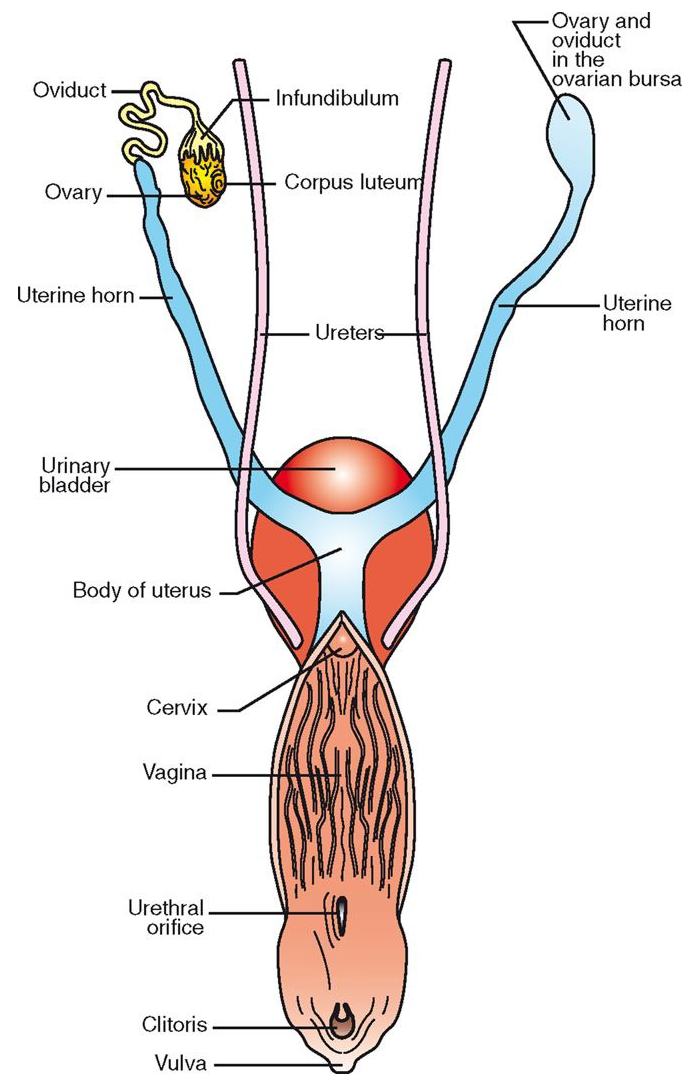
Female Reproductive System
more complex than male reproductive system
functions:
produces sex hormones
develops gametes
receives male gametes
furnishes a site for male gametes to fertilize the ovum
provides environment for embryo to grow and develop
carries embryo for entire pregnancy
pushes offspring out when fully developed
supply nutrients to newborn(s)
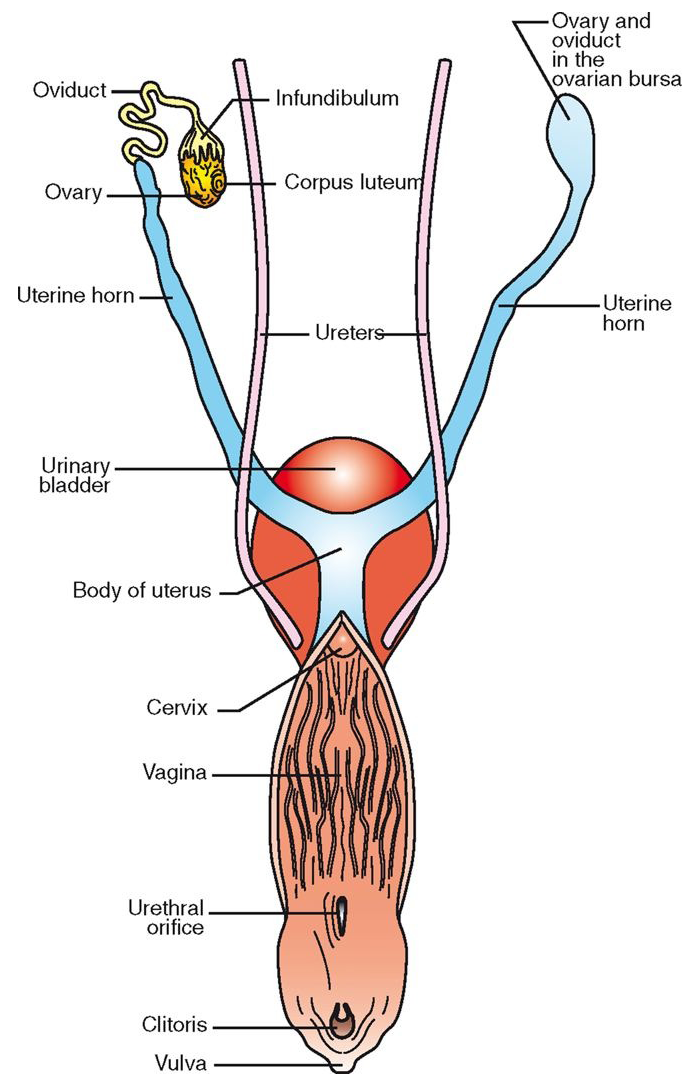
Female Reproductive System
ligaments
ovaries
oviducts
uterus
cervix
vagina
vulva
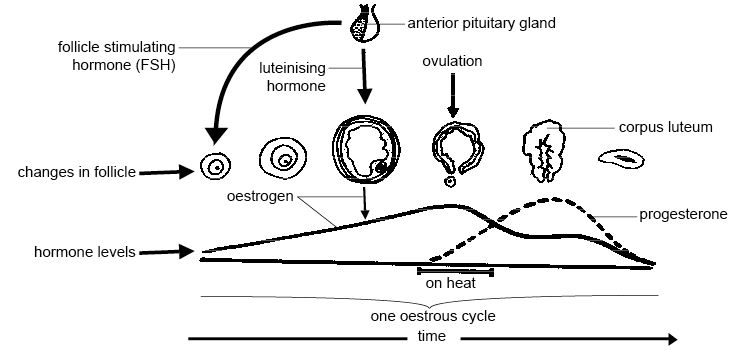
Ovarian Cycle
Development of ovum within follicle
Release of ovum from follicle – ovulation
Formation of corpus luteum (CL) produces progesterone
Degeneration of unripened follicles
Degeneration of corpus luteum
Follicle Development
Primary or primordial follicle
Immature gamete (oocyte - 1) surrounded by single layer of flat follicular cells
Female had thousands in ovaries
FSH released from anterior pituitary
A few of primordial follicles begin to develop
Now called growing follicle – cells multiply
As it grows, forms glycoprotein zona pellucida layer outside cell membrane
Follicular cells form around zona pellucida (2) – granulosa cells (3)
Produce estrogen
Granulosa cells multiply → follicle grows in size
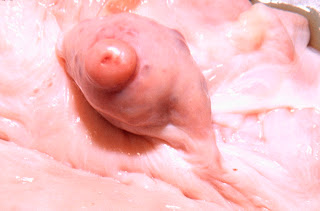
Follicle Development Continued…
Follicle continues to enlarge
Produces more estrogen
Fluid filled spaces form between granulosa cells
→ merge to form antrum (1)
Fluid filled space
At maximum size, called a mature follicle
AKA: Graafian follicle, vascular ovarian follicle
Ovulation (rupture of follicle) takes place due to
Rising levels of LH (with or without breeding) or
Breeding takes place
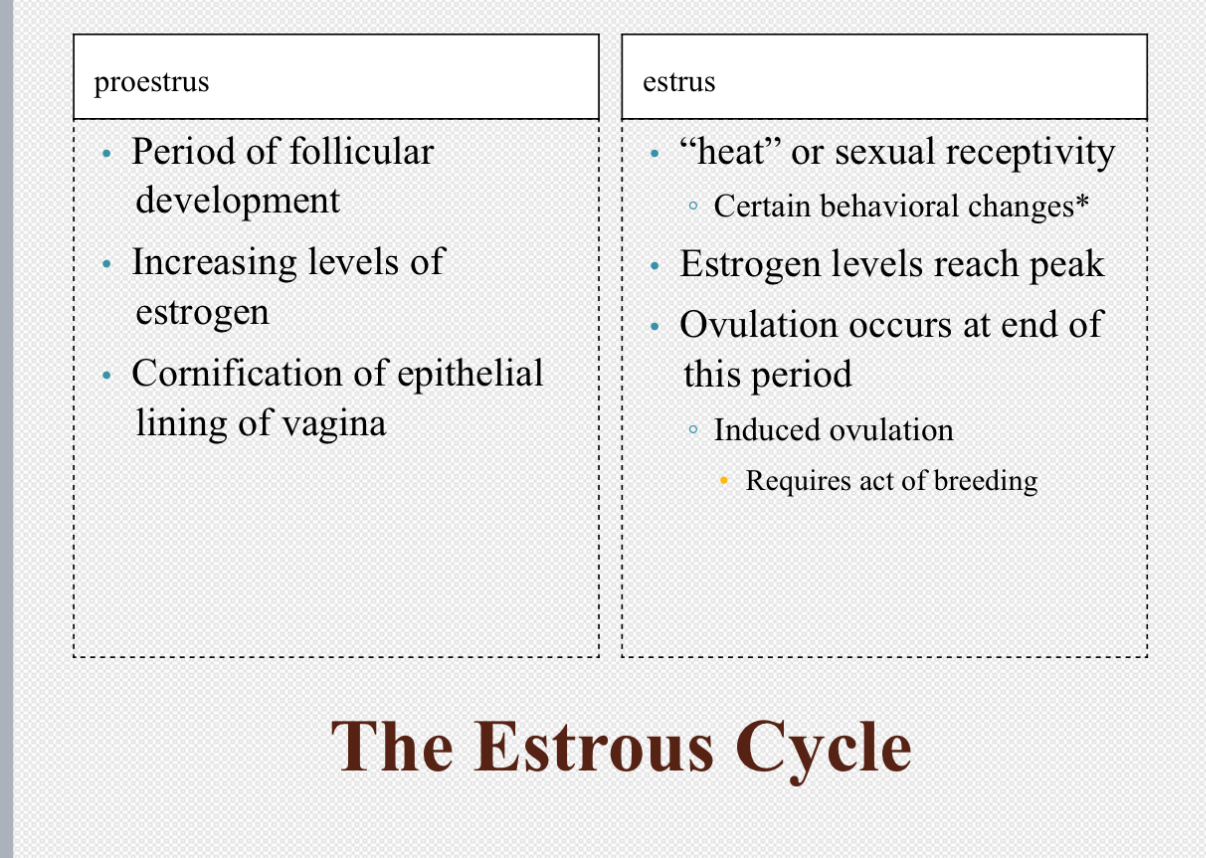
Induced ovulators (rabbits, cats, camelids)
Gamete released from follicle à now call ovum
Follicle Development Continued…
Ruptured follicle fills with blood
Corpus hemorrhagicum
Granulosa cells of corpus hemorrhagicummultiply
→ form corpus luteum (CL)
Formed under the influence of LH
Produces progestins
Primary one: progesterone
Maintains pregnancy if ovum is fertilized and implants
If no pregnancy, CL degenerates
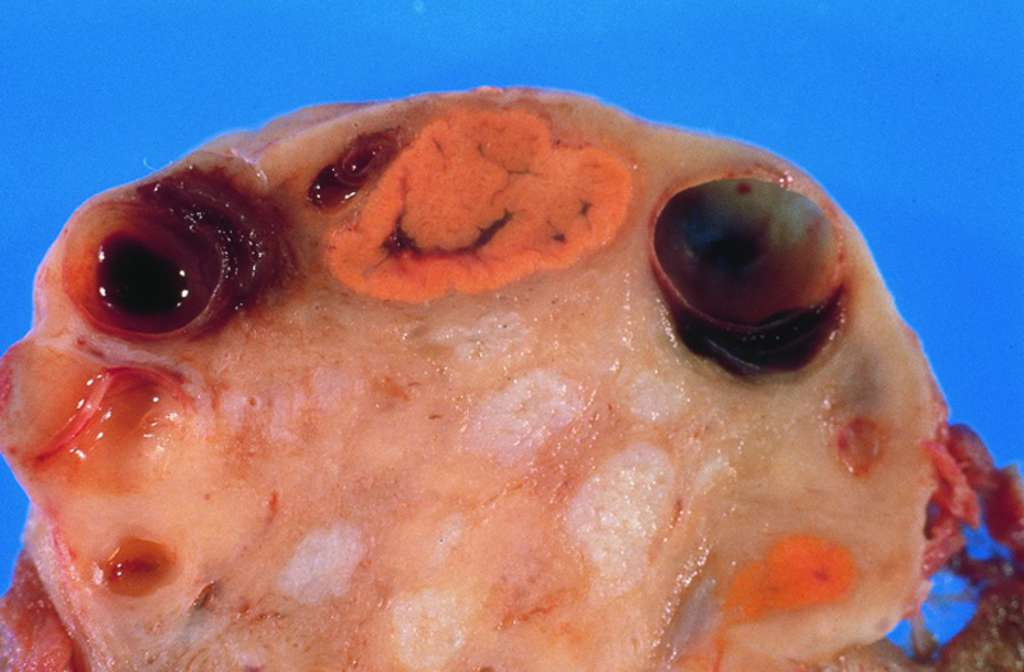
Ovulation
Whole: ovary
mature follicle ruptures
gamete released into oviduct – now called an ovum
empty follicle fills with blood to form corpus hemorrhagicum
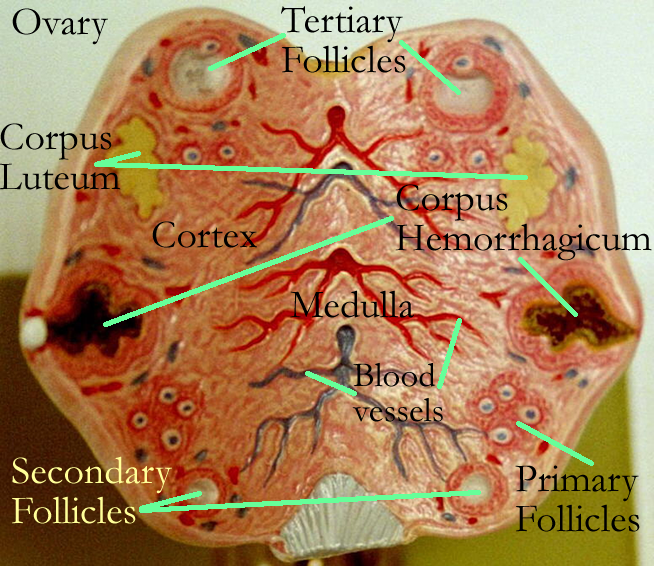
Corpus Luteum
formed from cells lining corpus hemorrhagicum
produces the progestins needed to maintain pregnancy if ovum is fertilized
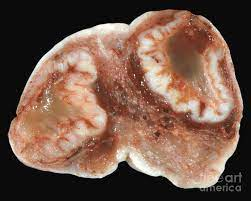
Progestins
Progestins produced by CL
Principle progestin – progesterone
“pregnancy-promoting steroid hormone”
Helps to prepare uterus to receive fertilized ovum (ova)
Necessary for pregnancy to be maintained
If no pregnancy, CL regresses and disappears
Ovulation
occurs spontaneously in most species
result of rising levels of LH
induced ovulators
ovulation occurs after breeding
cats, camels, rabbits, ferrets
Other factors?
Koala, alpaca
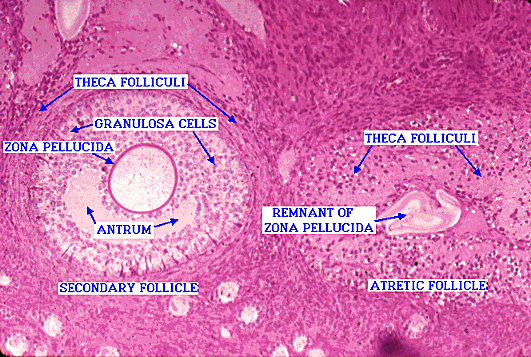
Follicular Atresia
not all follicles activated in a single ovarian cycle will fully develop and ovulate
follicles may degenerate at any stage of development
normal part of each ovarian cycle
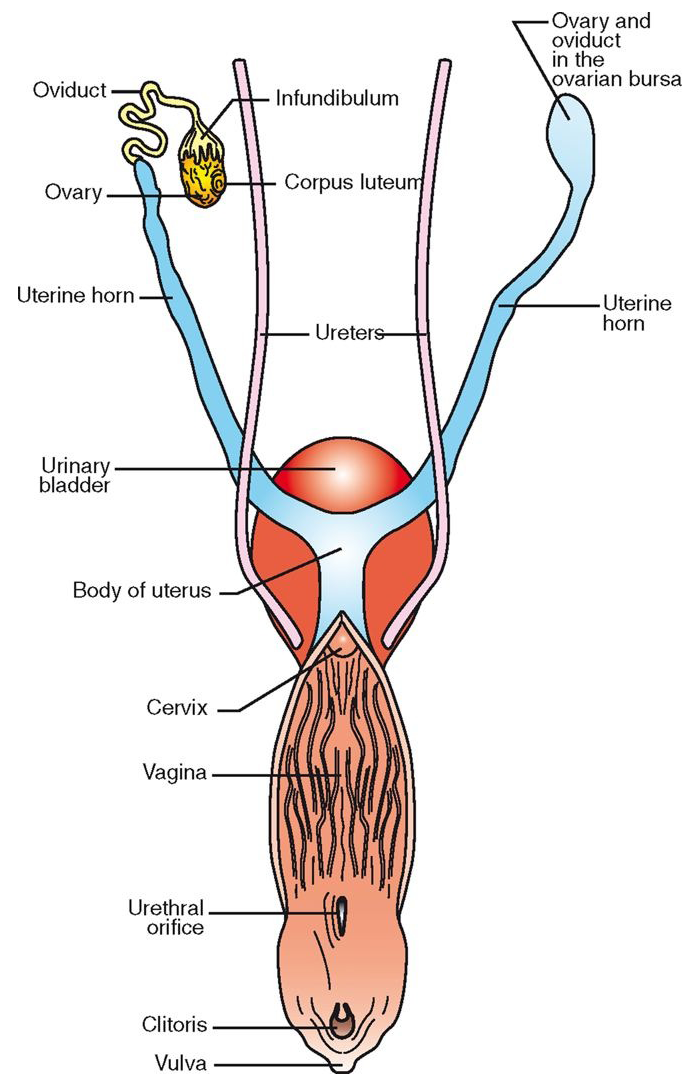
Oviducts = Fallopian Tubes = Uterine Tubes
Oviduct (animal) = fallopian tubes (human)
guide ova from ovary to uterus
serve as usual site for fertilization of ova by spermatozoa
extend from tips of uterine horns
fimbriae “catch” ova in infundibulum
walls composed of smooth muscle
lining cells have cilia
both work to move ovum to uterus
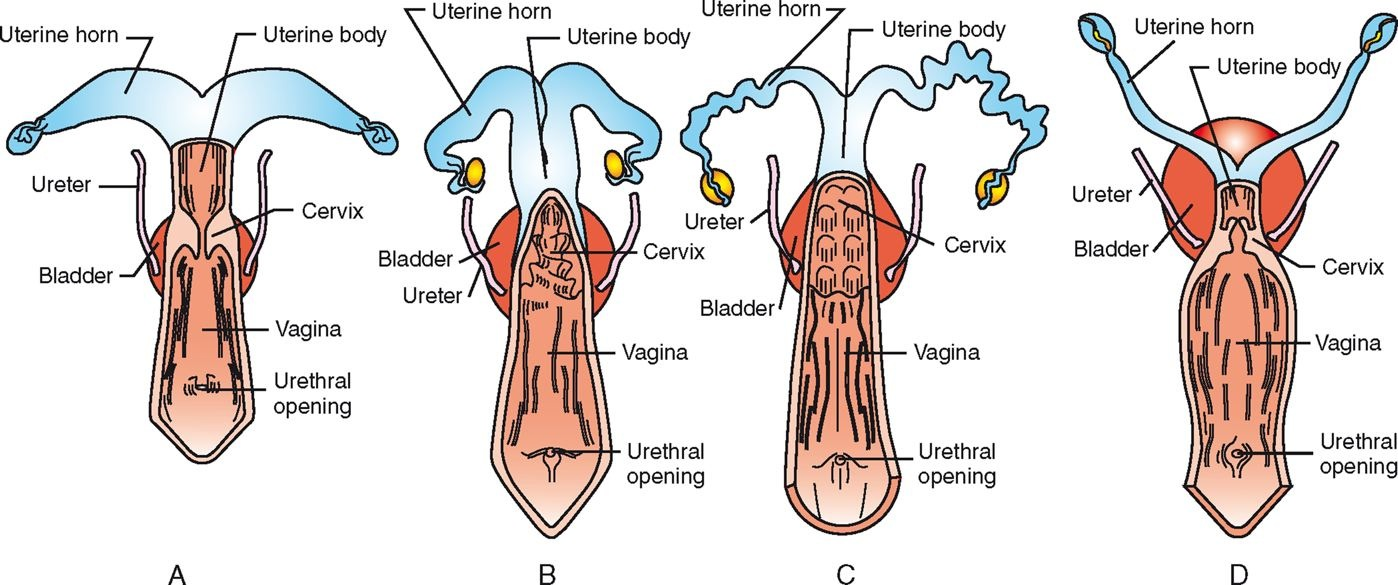
The Uterus
hollow muscular organ, usually Y-shaped
forms part of placenta
suspended from dorsal abdomen by mesometrium
3 layers:
endometrium
myometrium
perimetrium
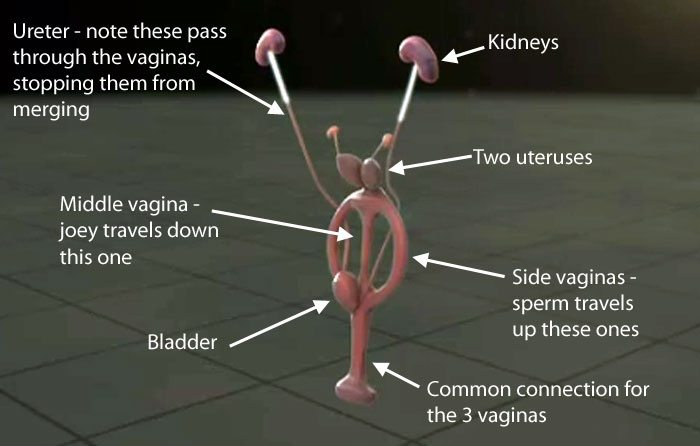
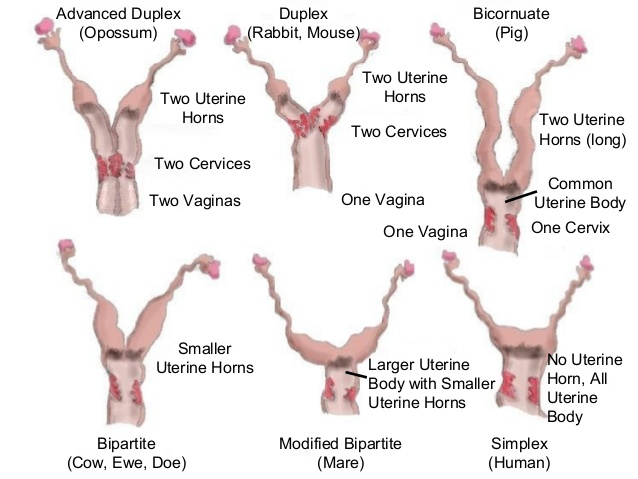
Species Variation
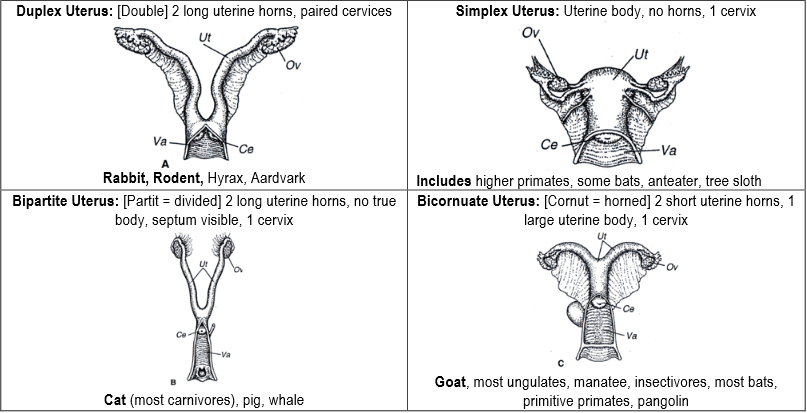
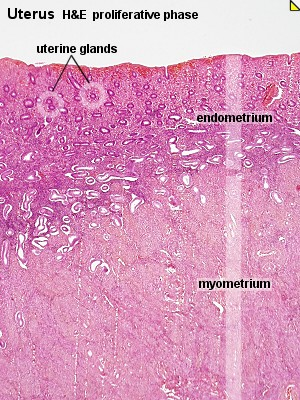
Uterus
Endometrium
Simple columnar epithelium
Simple tubular glands à secrete mucus
Myometrium – thickest layer
Layers of smooth muscle
Perimetrium
Covered by visceral layer of peritoneum
Implantation of fertilize ovum - zygote
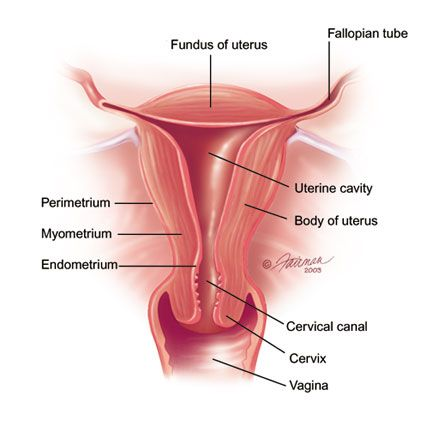
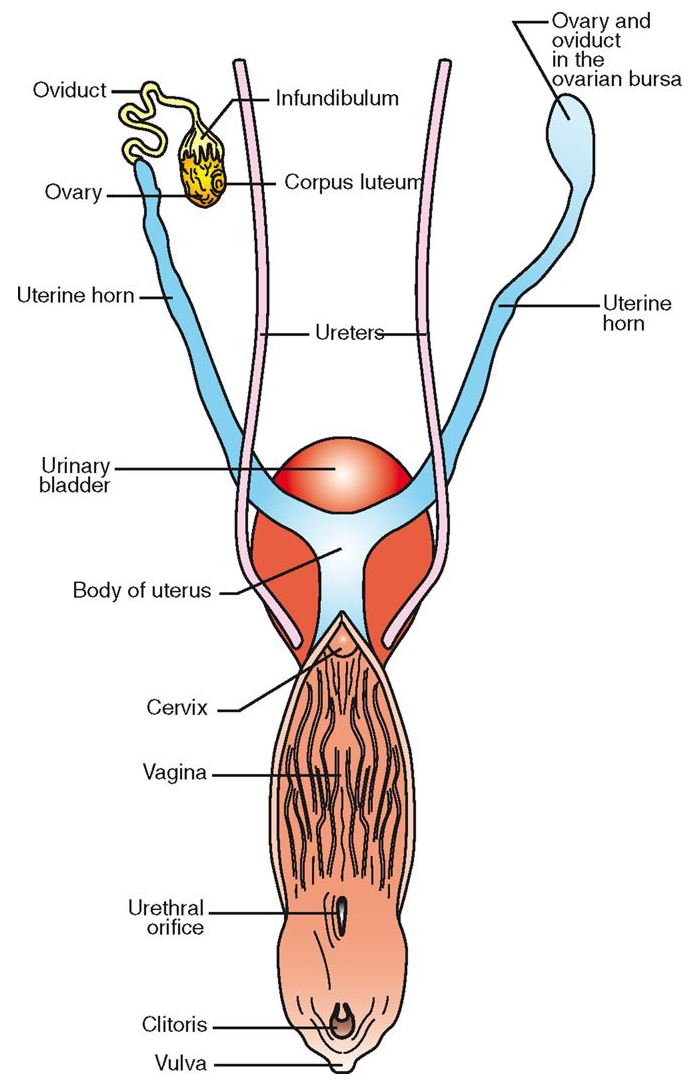
The Cervix
smooth muscle sphincter between body of the uterus and the vagina
normally tightly closed
except during estrus
“heat”
except during parturition
“birth”
Pressure of fetus against relaxed cervix causes it to dilate
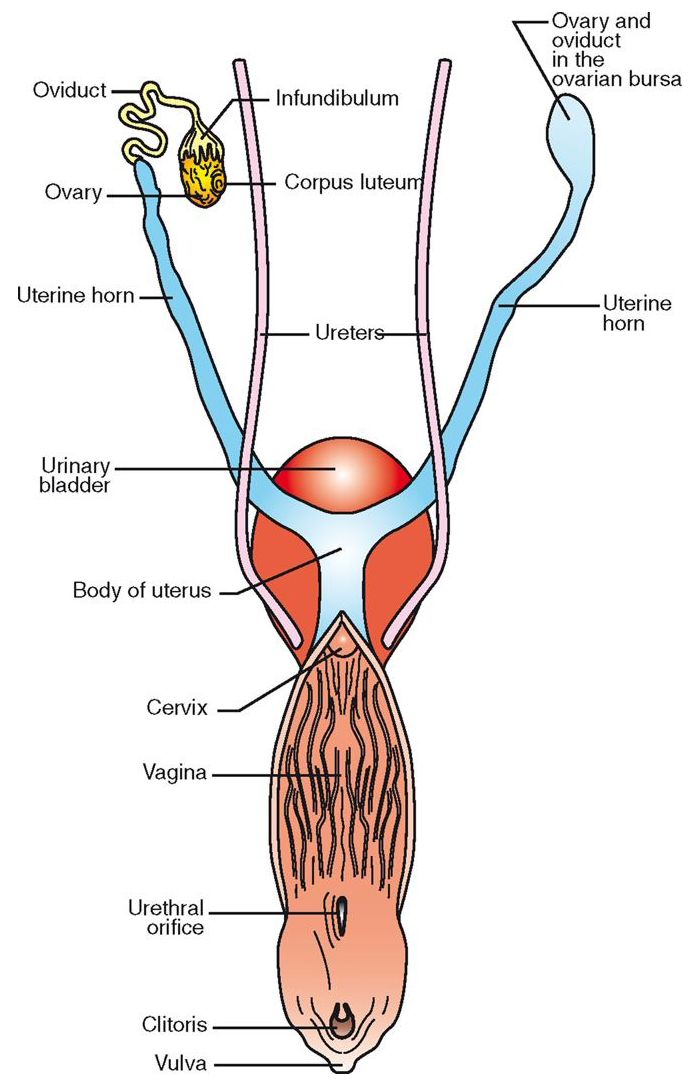
The Vagina and the Vulva
vagina
muscular tube that receives penis during breeding time
acts as birth canal at parturition
vulva
vestibule
space between labia and opening of vagina
urethra opens on floor of vestibule
clitoris
also on floor of vestibule
labia
external boundary of vagina
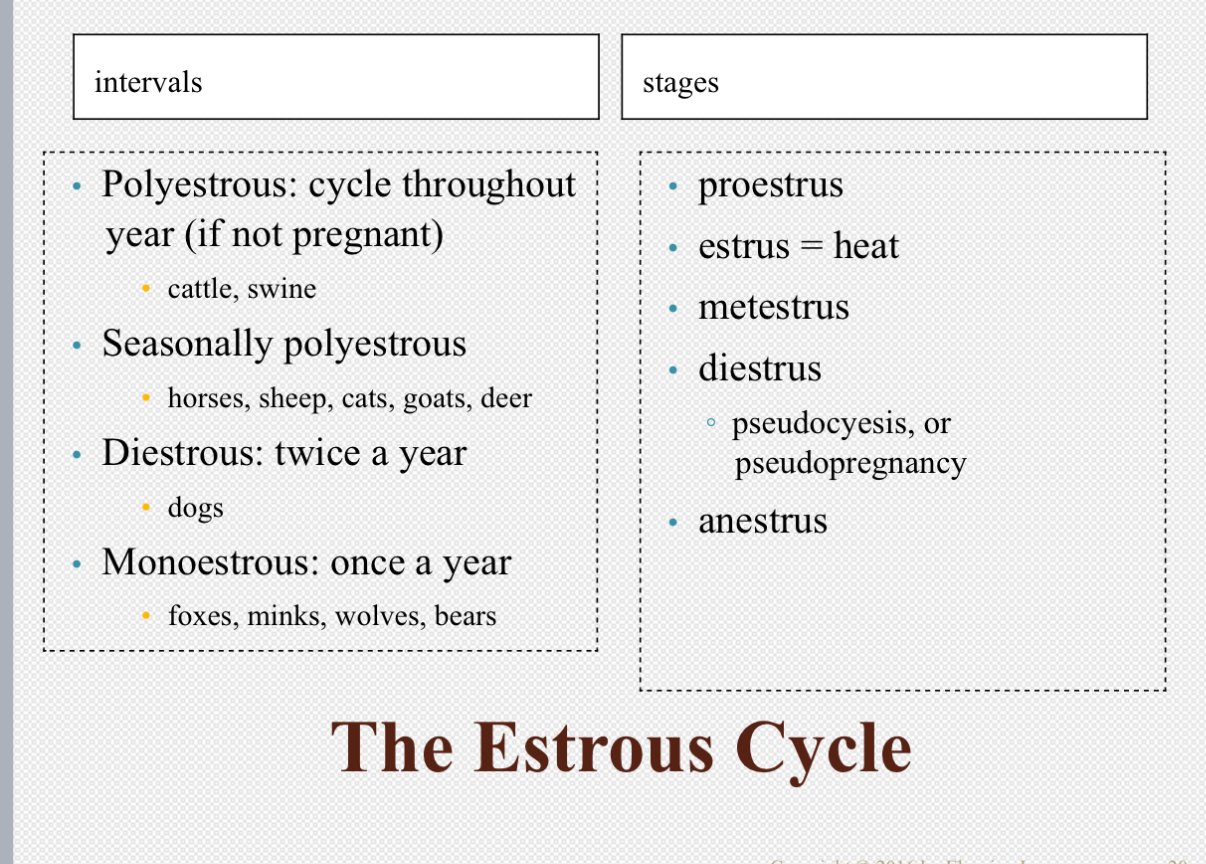
Estrous Cycle
Estrous cycle - entire reproductive cycle
the time from the beginning of one heat period to the beginning of the next
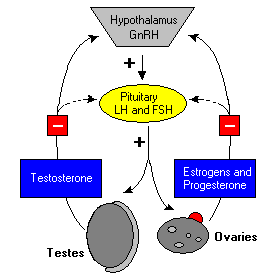
controlled by hormones FSH and LH
different animal species have different patterns of estrous cycles
Specific period in estrous cycle when breeding can take place
Estrus
Female is receptive to male
Highest chance or successful pregnancy
Intervals & Stages
Proestrous & Estrus
Metestrus & Diestrus
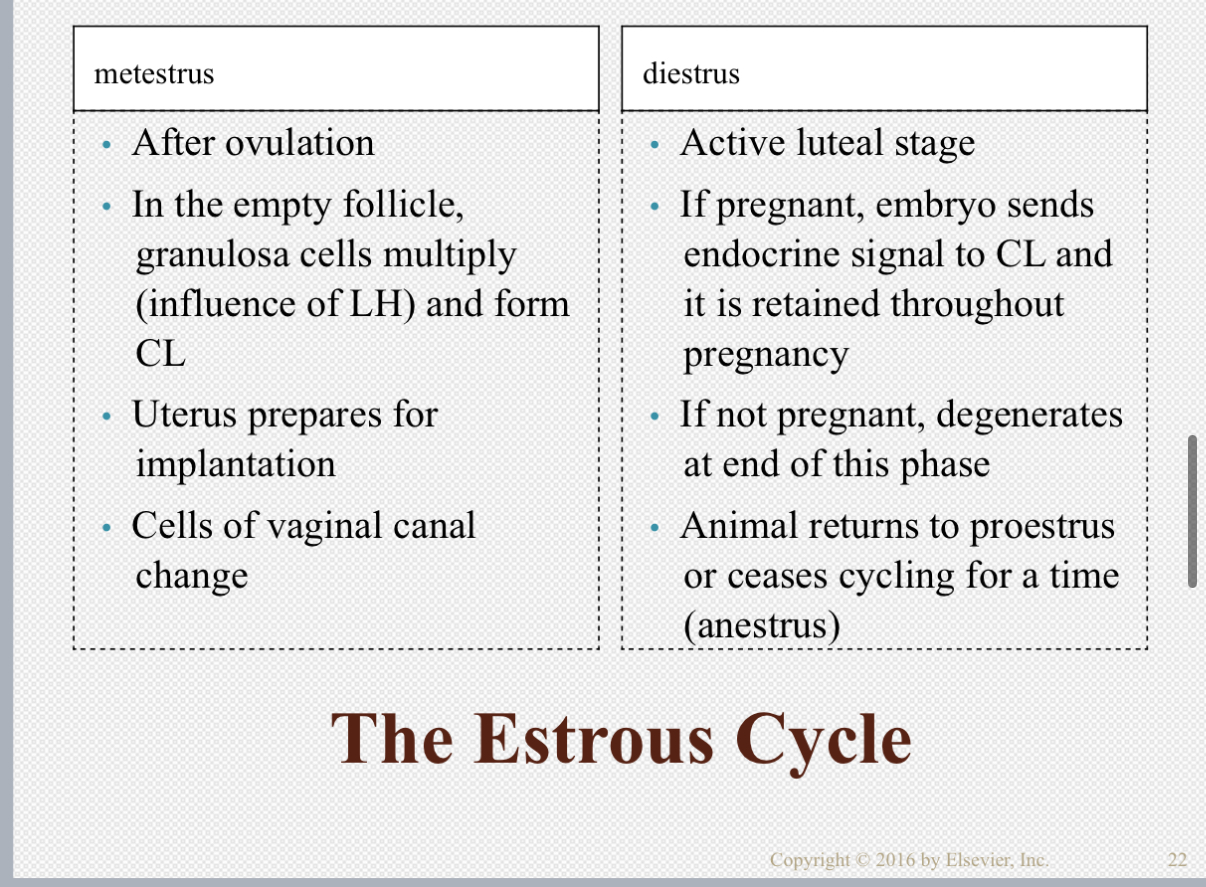
The Estrous Cycle Continued…
Pseudopregnancy – under influence of CL, animal may exhibit signs of active pregnancy (e.g. enlarged mammary glands)
Occurs more commonly in species with a prolonged diestrus
Usually resolves spontaneously
Anestrus
Period of temporary ovarian inactivity in seasonally polyestrous, diestrous and monoestrous species
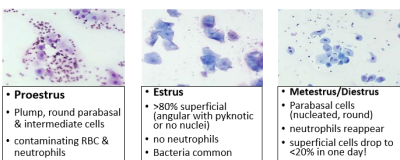
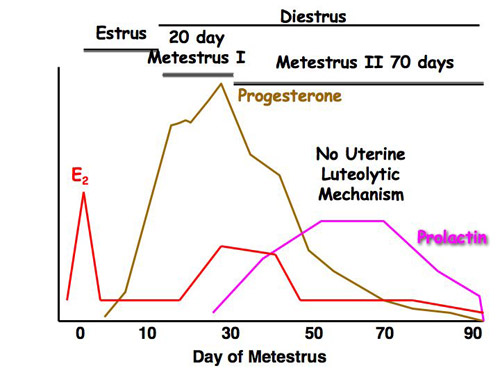
Cycle of the Dog
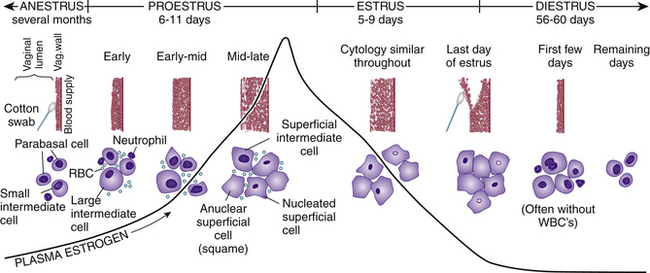
Vaginal cytology
Vaginal Cytology continued…
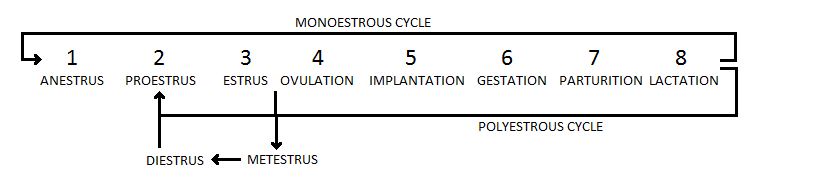
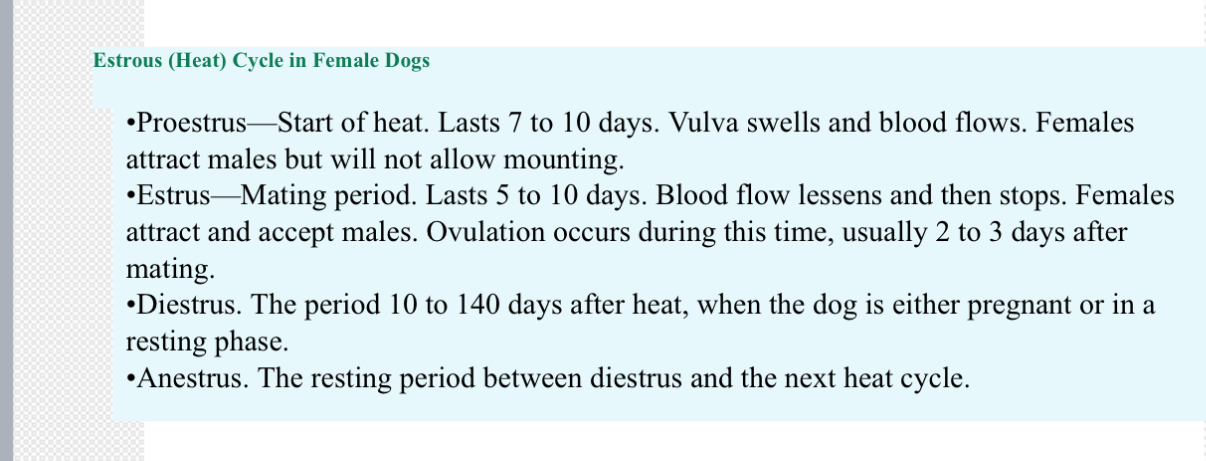
Estrous (Heat Cycle in Female Dogs
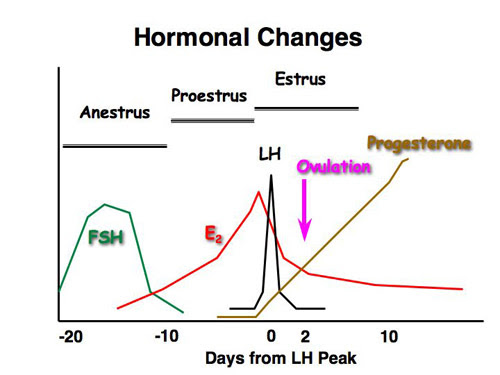
Hormonal Changes
Luteinizing hormone :
anterior pituitary (LH)
Follicle stimulating hormone:
anterior pituitary (FSH)
Progesterone:
Corpus luteum (CL)
 Note
Note  Flashcards (919)