Seismic Data - Science 9th period
 Studied by 0 people
 Call Kai
 Learn
Learn Practice Test
 Spaced Repetition
 Match
Match Flashcards
 Knowt Play
1/19

There's no tags or description
Looks like no tags are added yet.
Name | Mastery | Learn | Test | Matching | Spaced | Call with Kai |
|---|
No analytics yet
Send a link to your students to track their progress
20 Terms
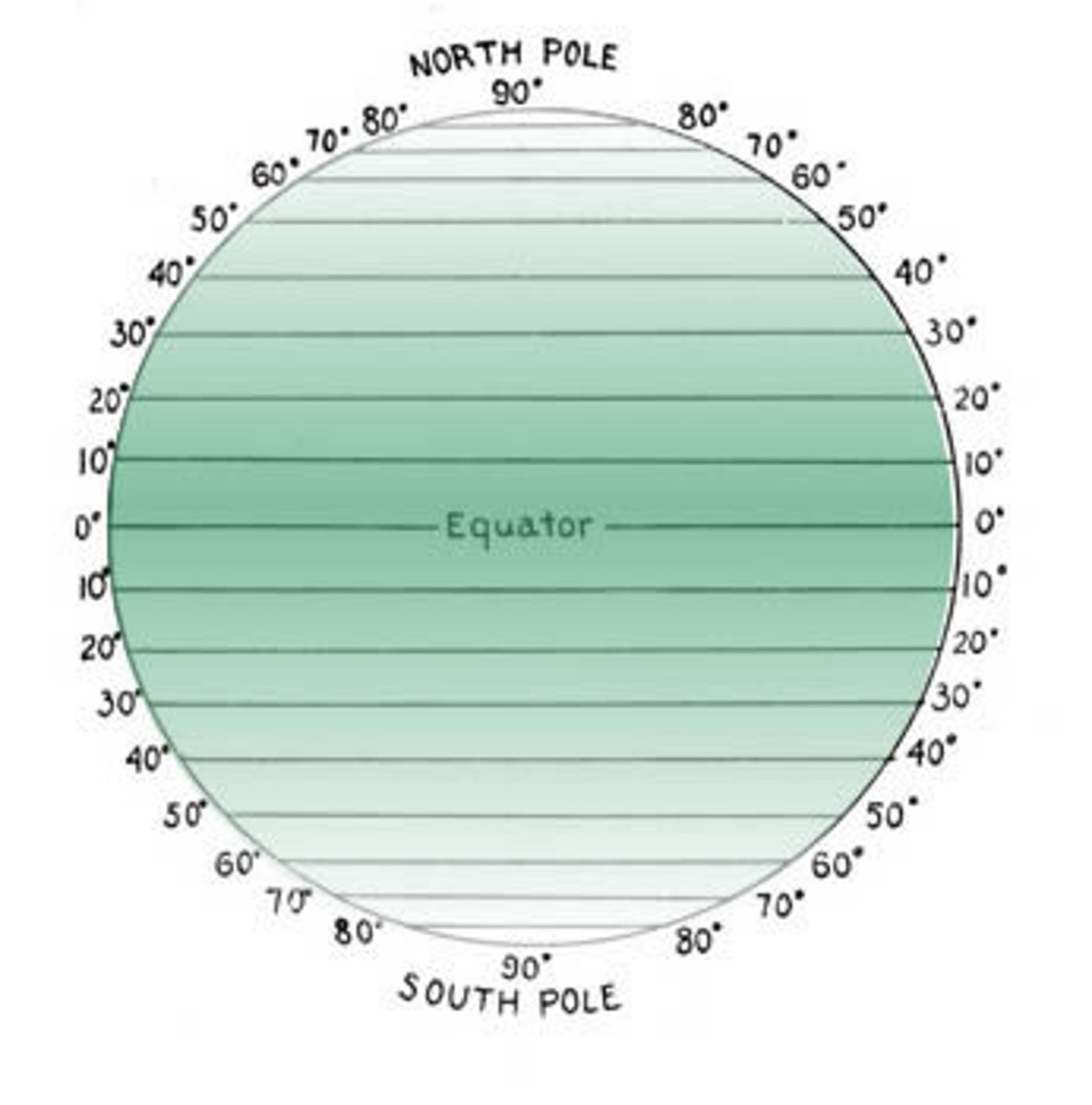
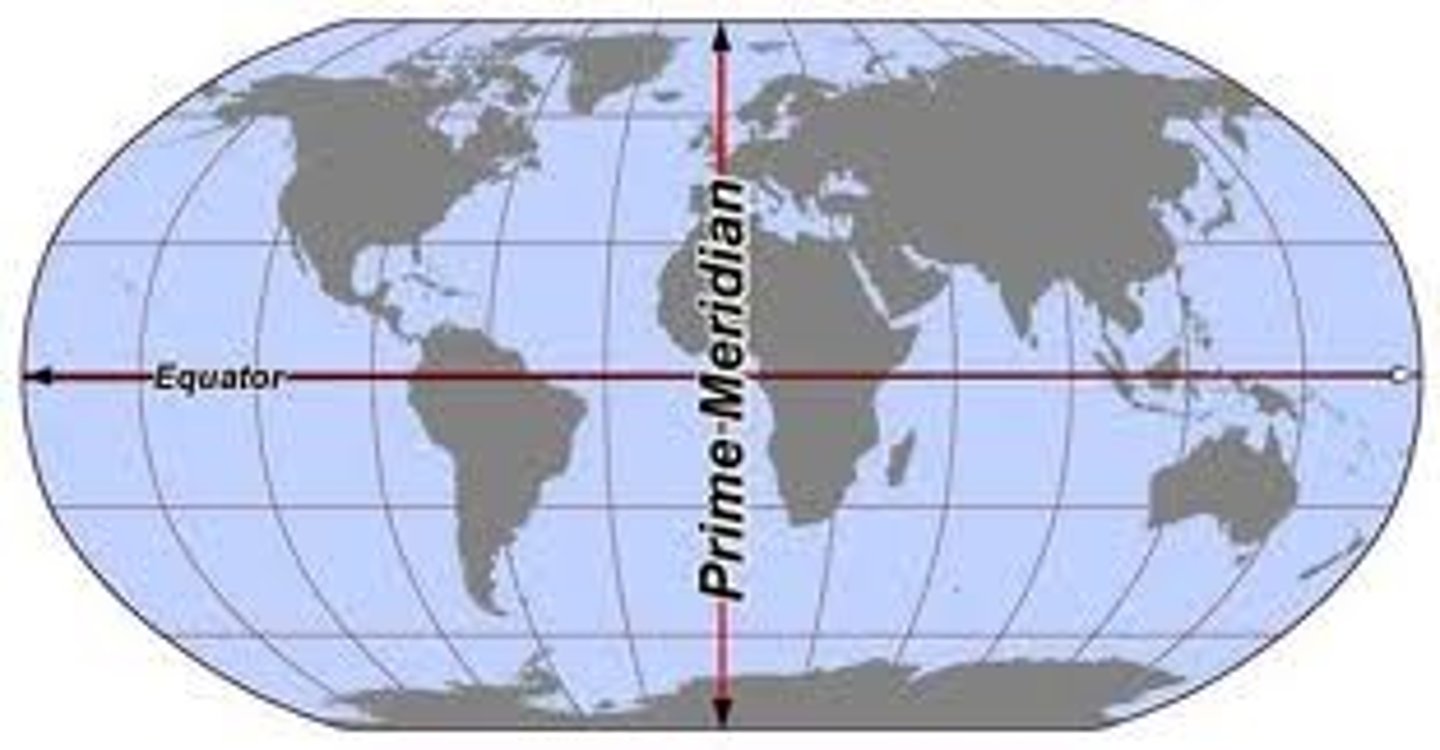
Latitude
distance north or south of the Equator, measured in degrees
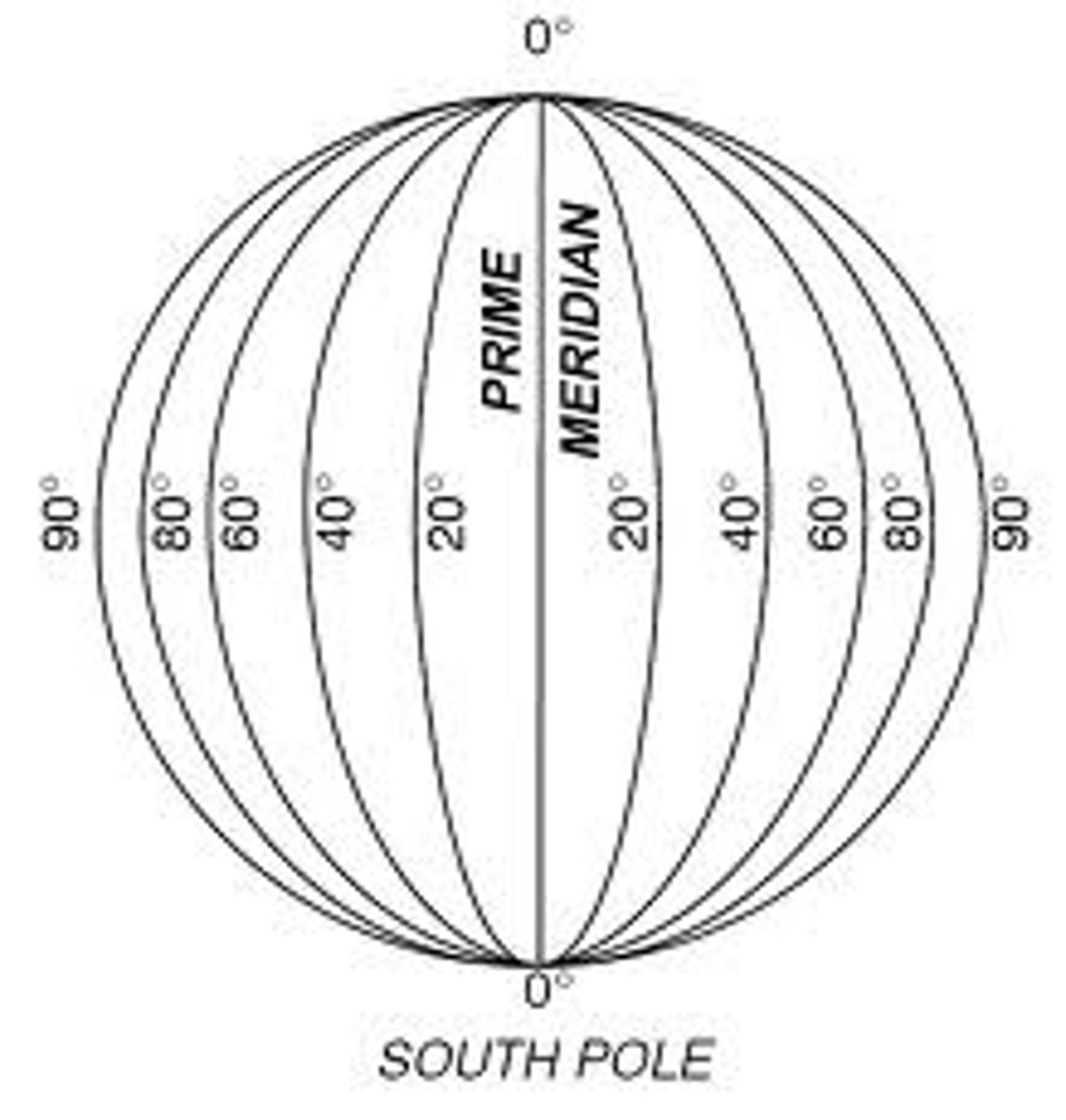
Longitude
Distance east or west of the prime meridian, measured in degrees
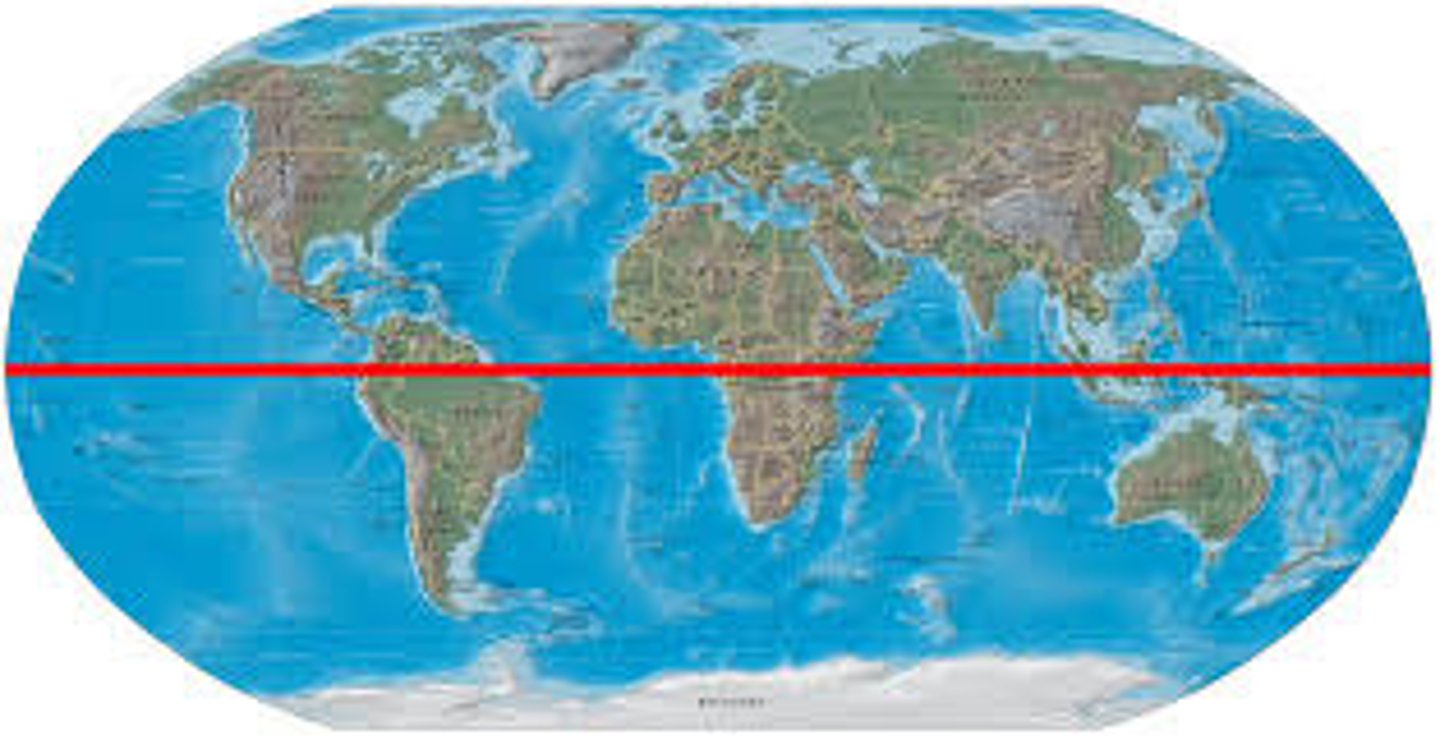
Equator
an imaginary line drawn around the earth equally distant from both poles, dividing the earth into northern and southern hemispheres and constituting the parallel of latitude 0°.
Prime Meridian
0 degrees longitude
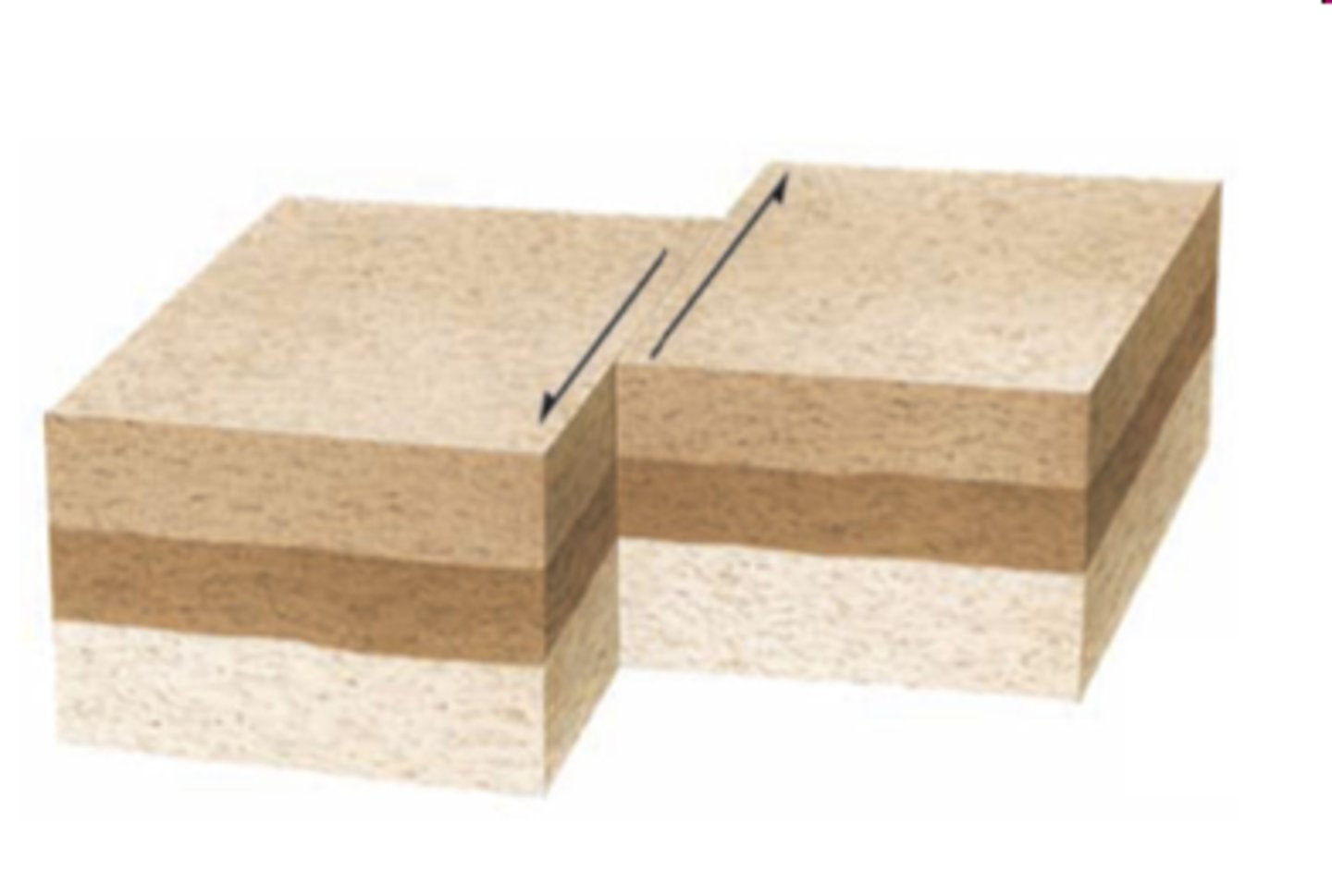
Faults
Breaks in Earth's crust where rocks have movement
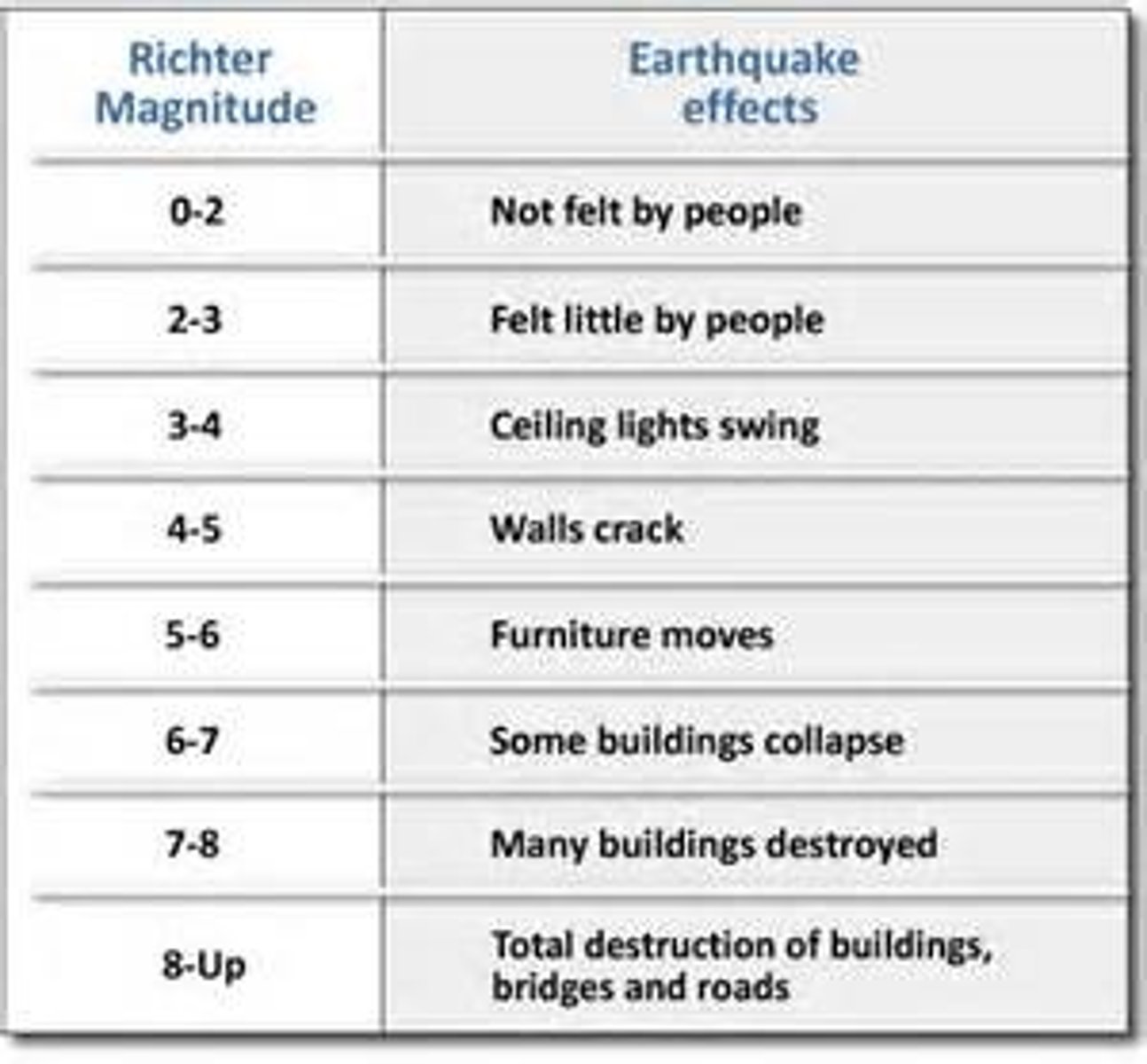
Richter scale
A scale that rates an earthquake's magnitude based on the size of its seismic waves.
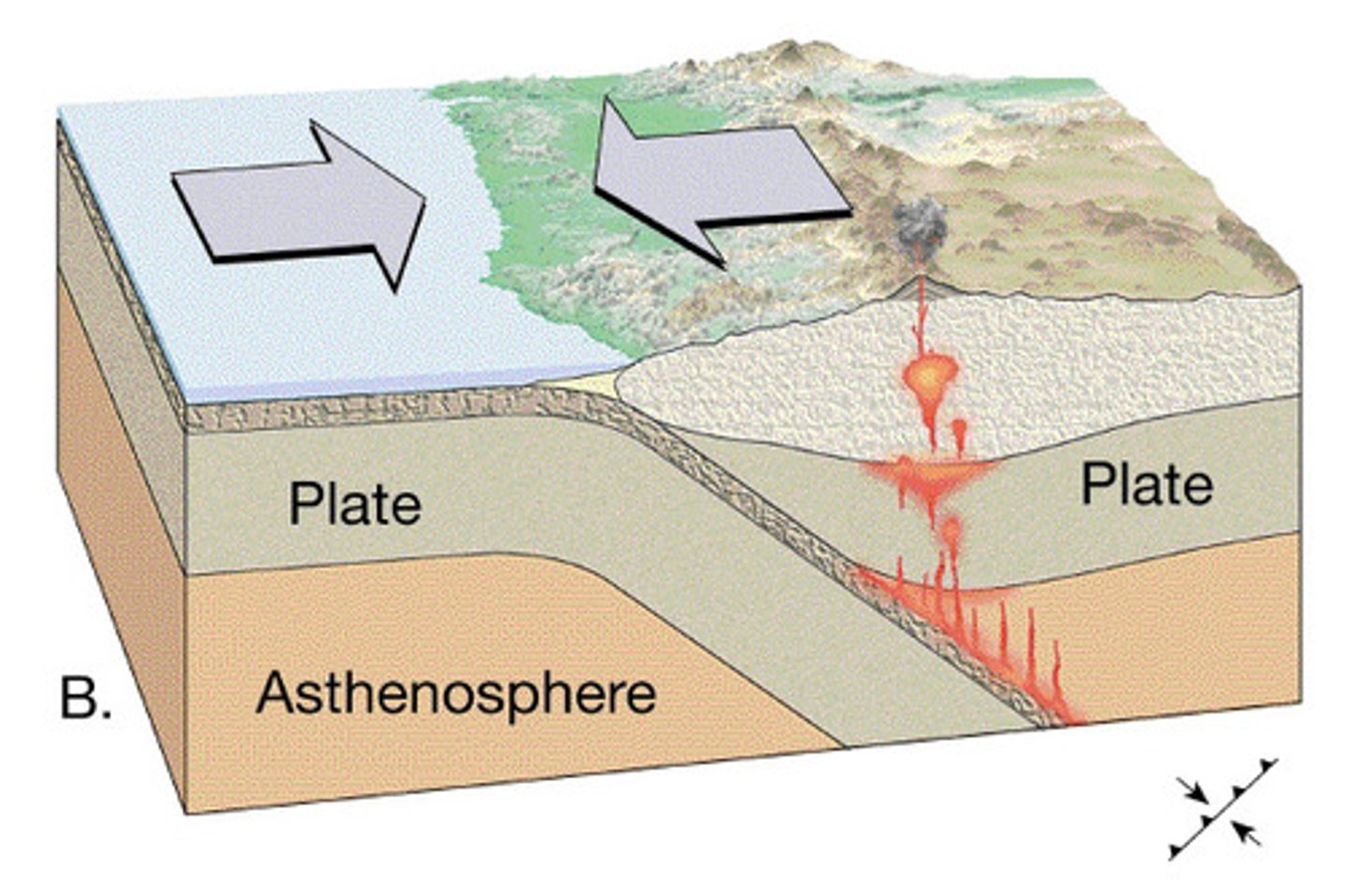
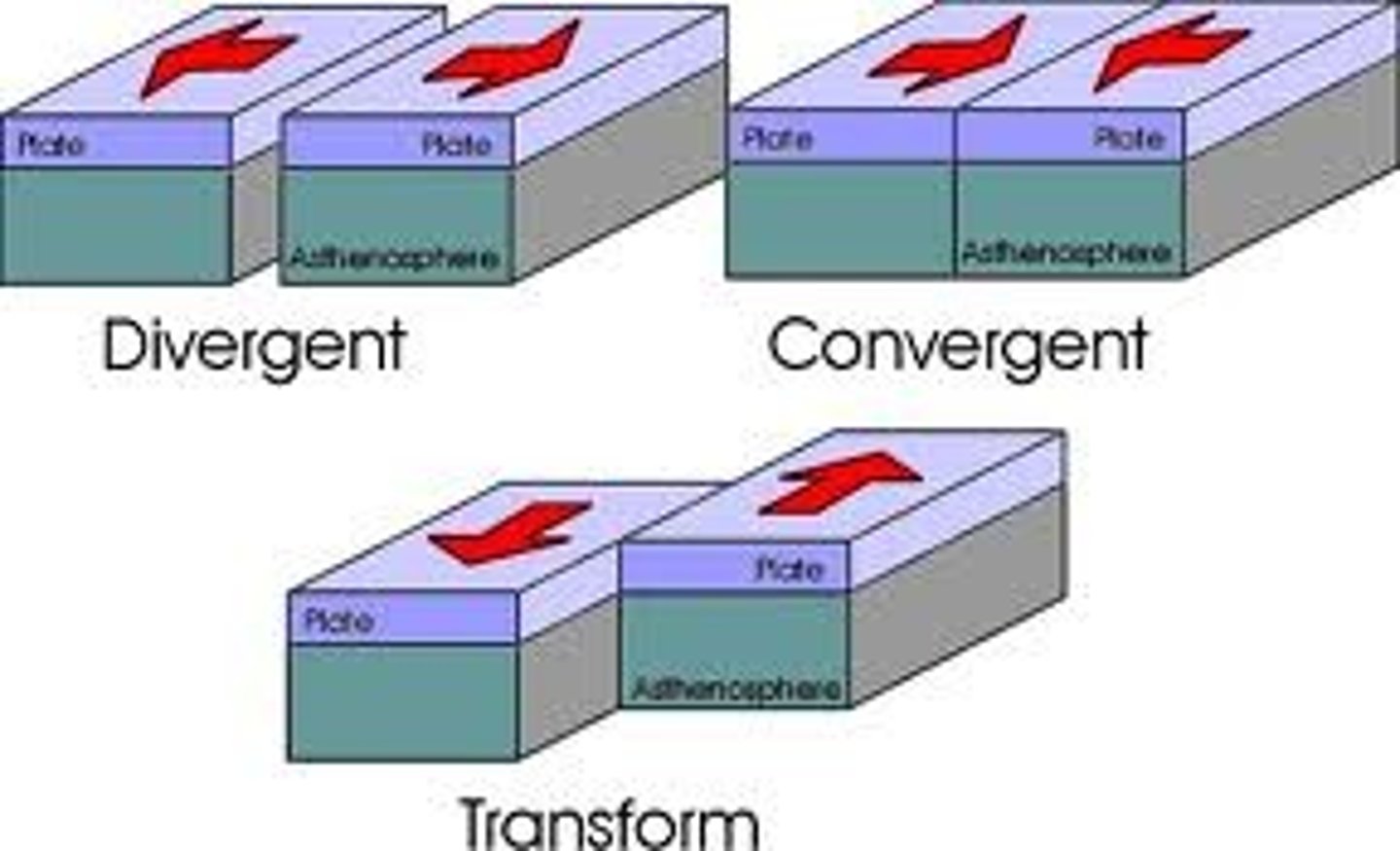
convergent boundary
A tectonic plate boundary where two plates collide, come together, or crash into each other.
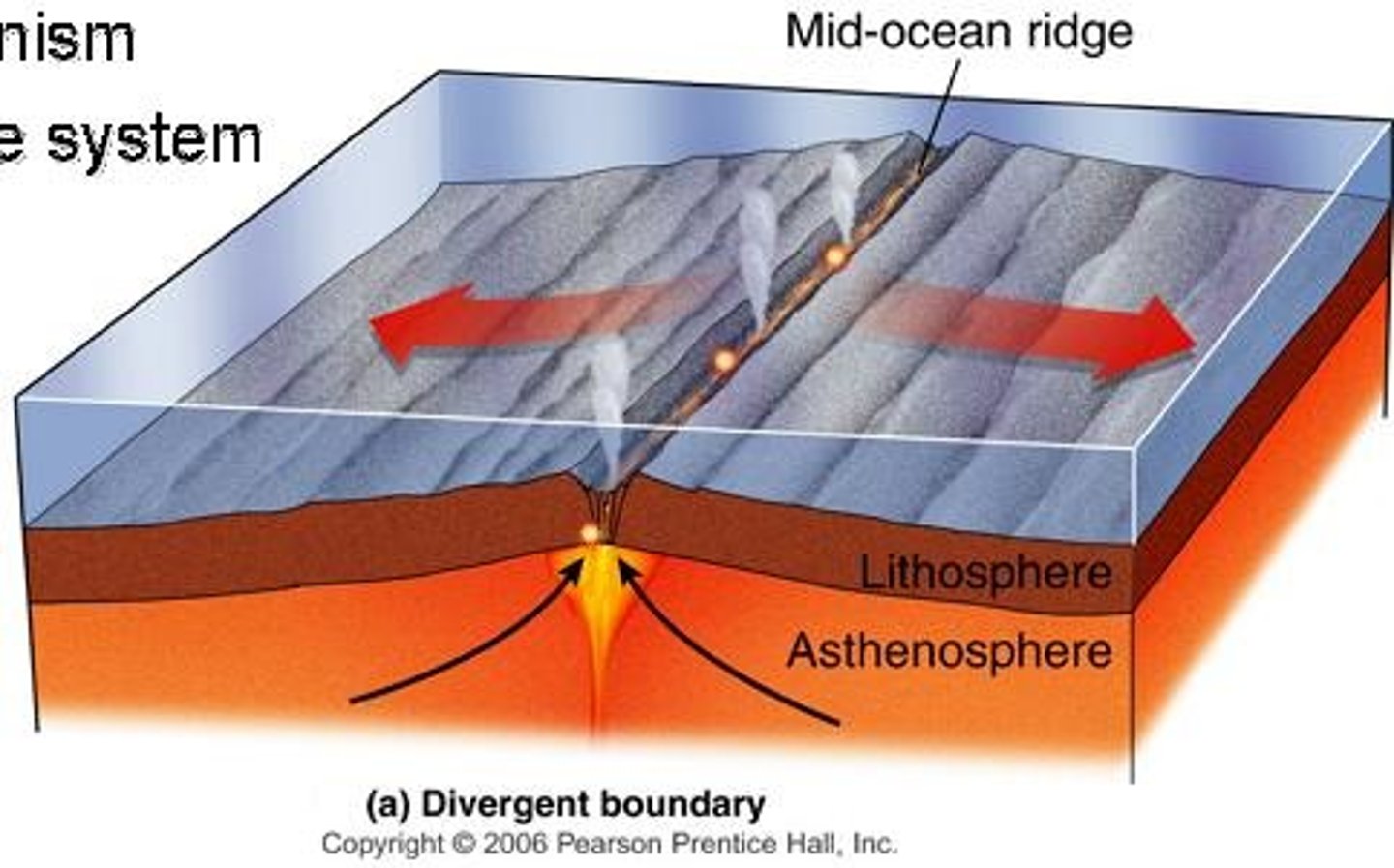
divergent boundary
The boundary between two tectonic plates that are moving away from each other
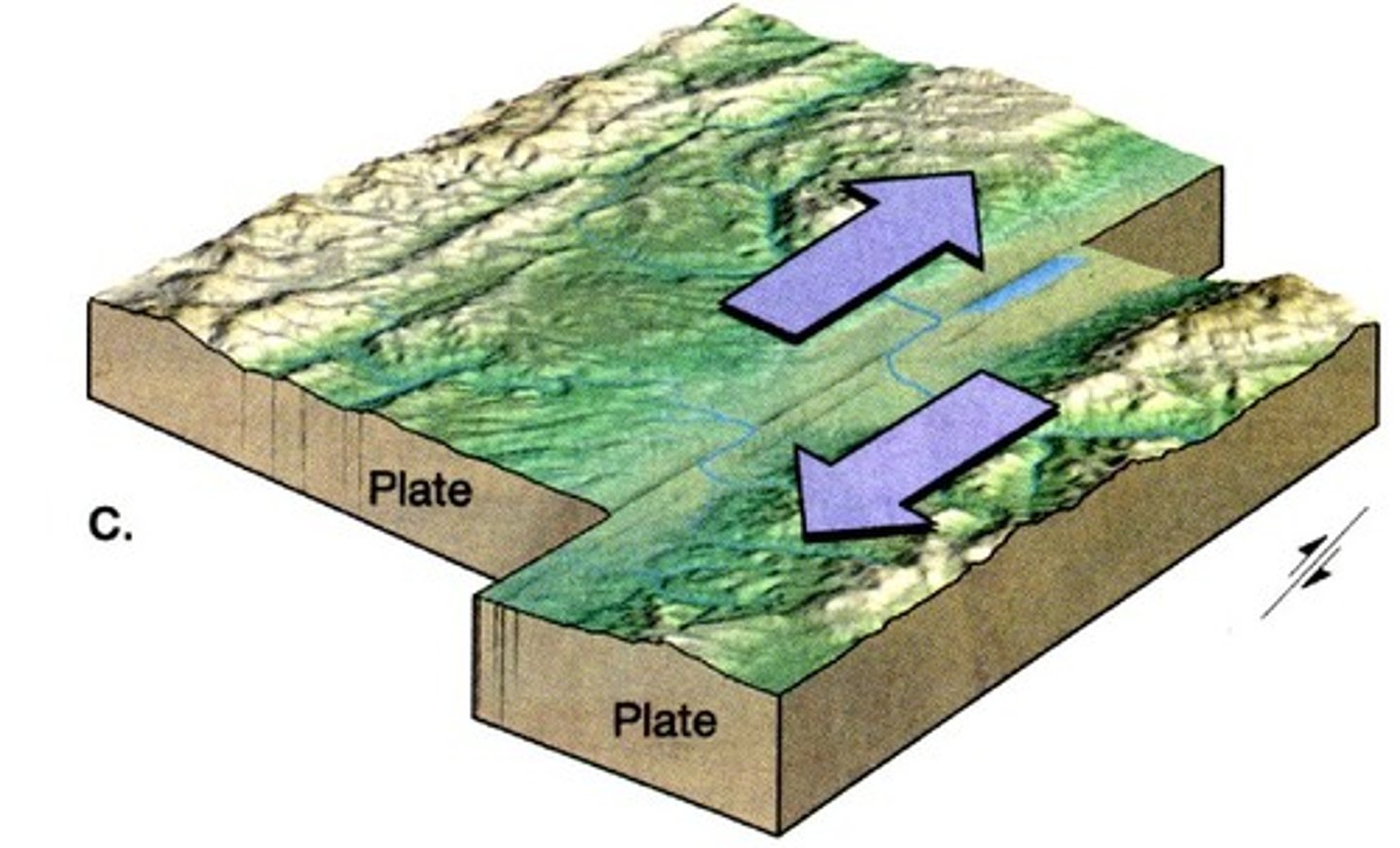
transform boundary (strike-slip)
A plate boundary where two plates move past each other in opposite directions
Energy
The ability to do work or cause change; makes things happen

magnitude
Measure of the energy released during an earthquake
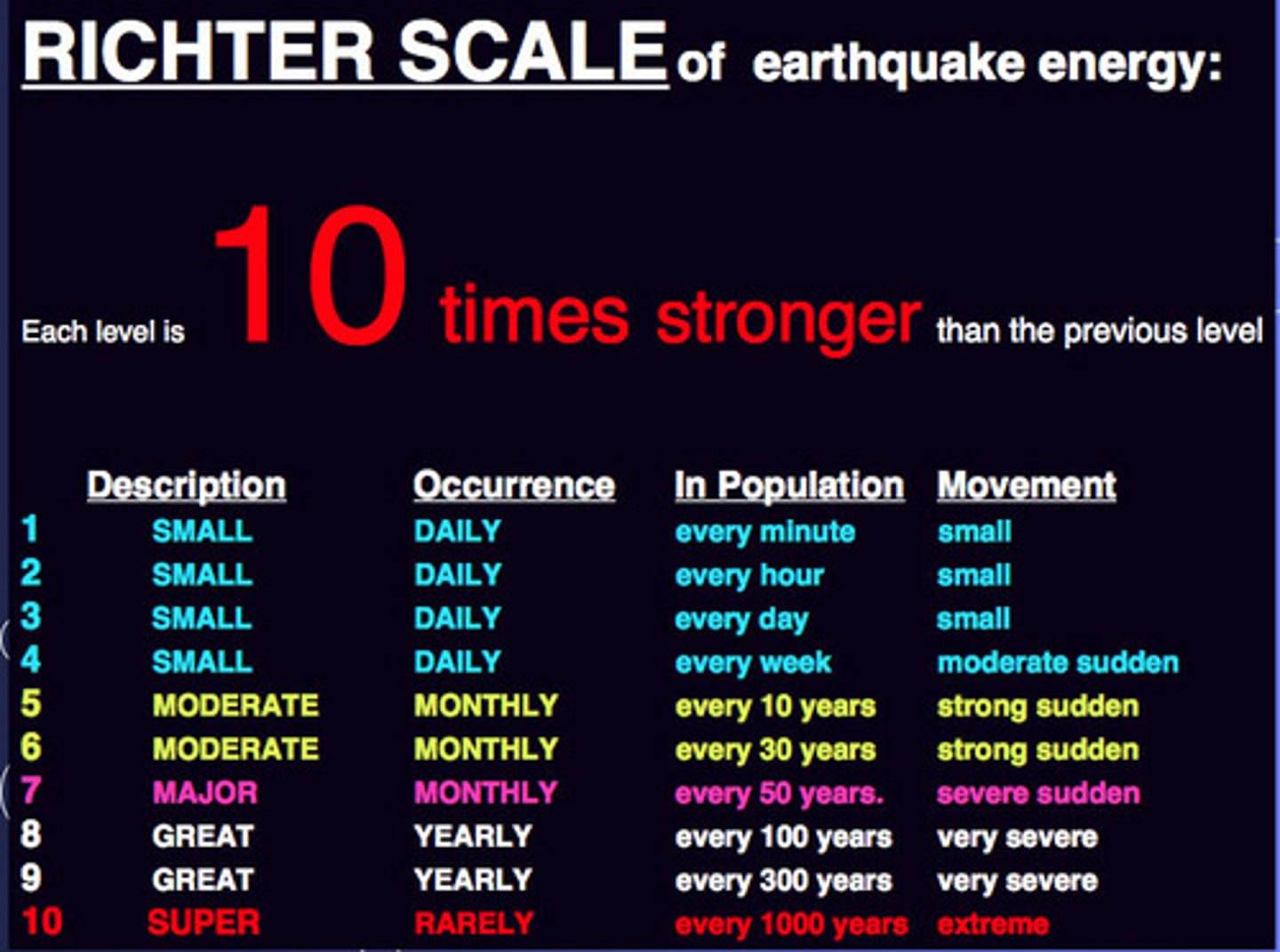
plate boundary
the region where two tectonic plates are in contact
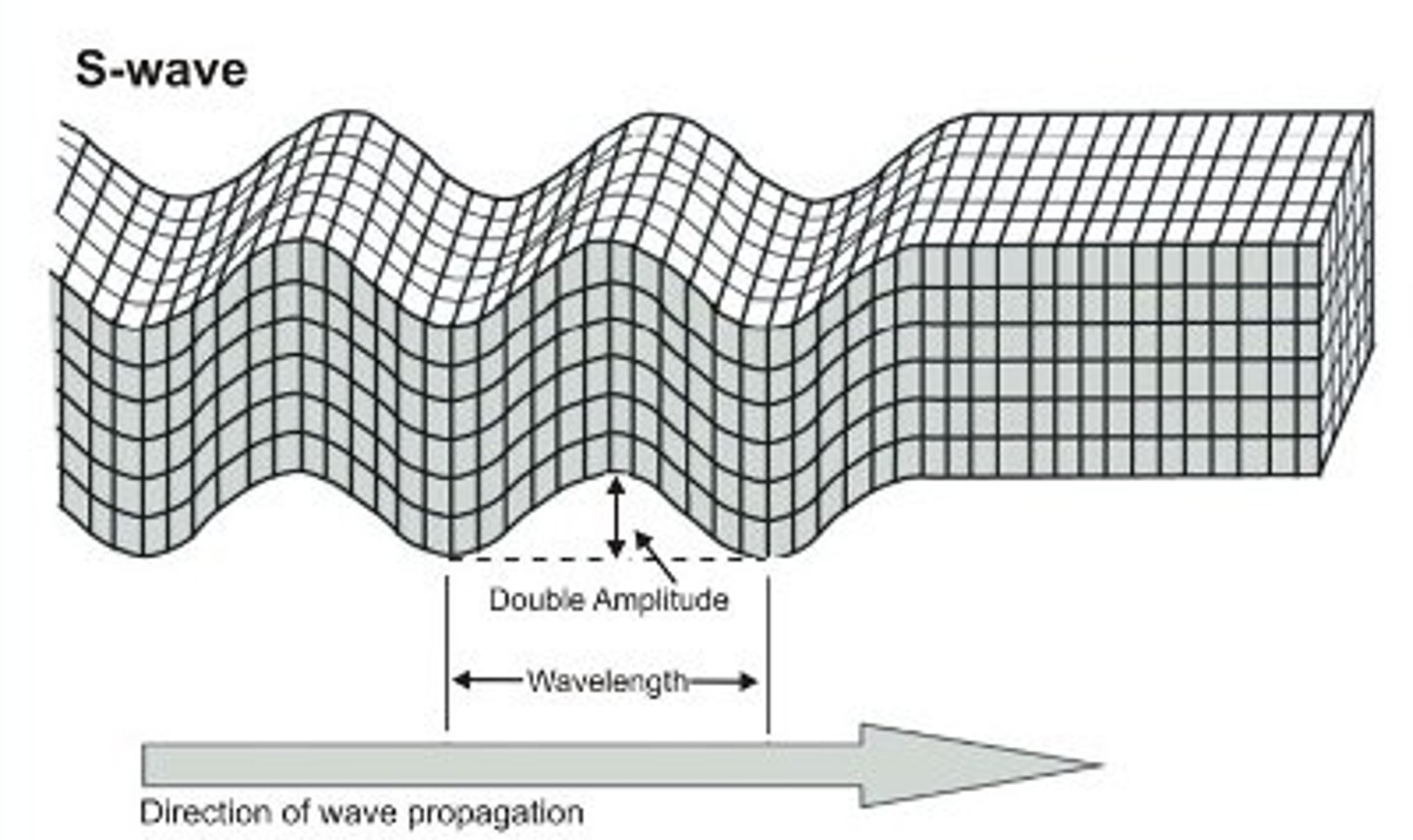
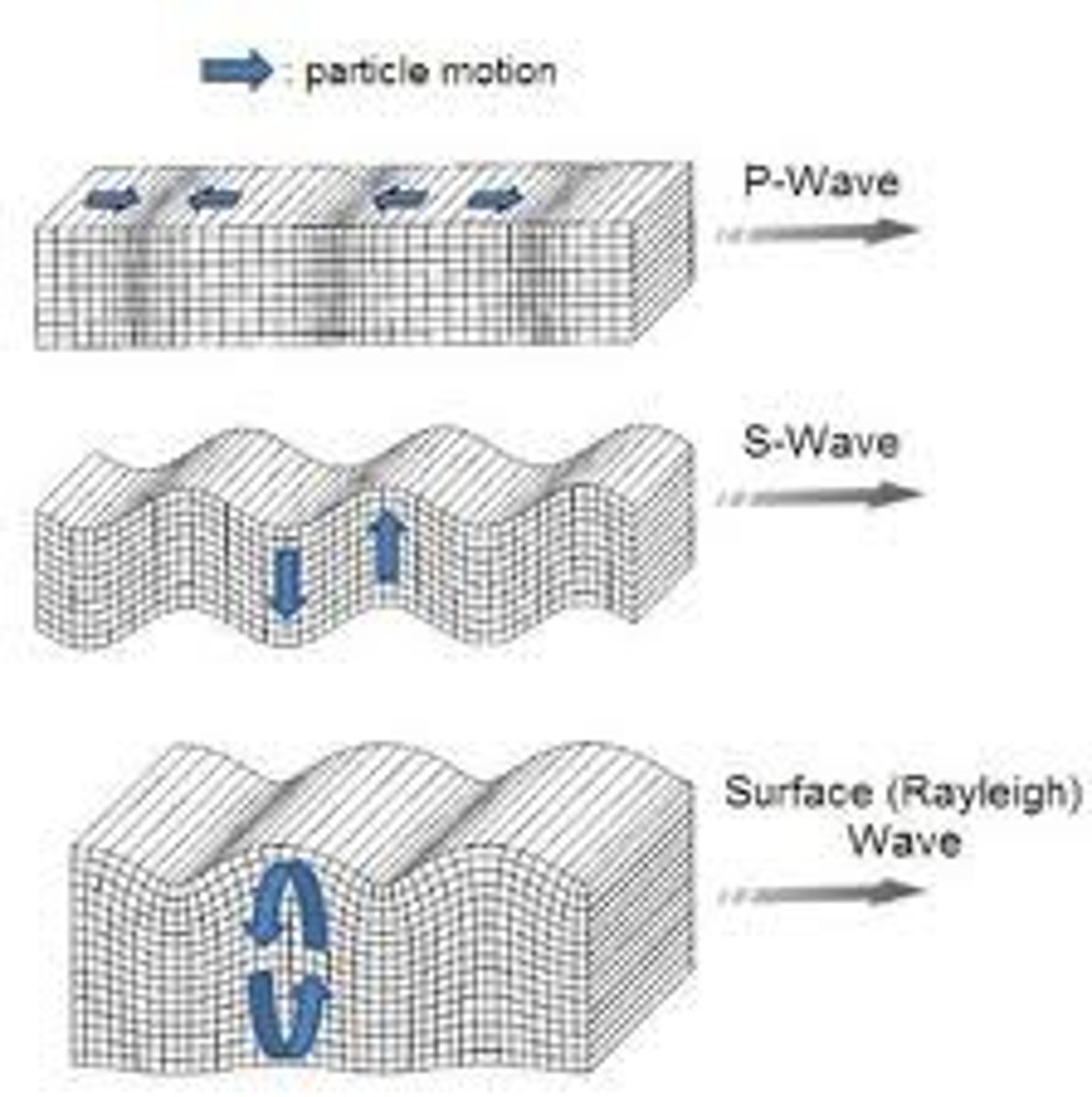
Secondary S waves (shear waves)
a seismic wave that causes particles of rock to move in a side-to-side direction
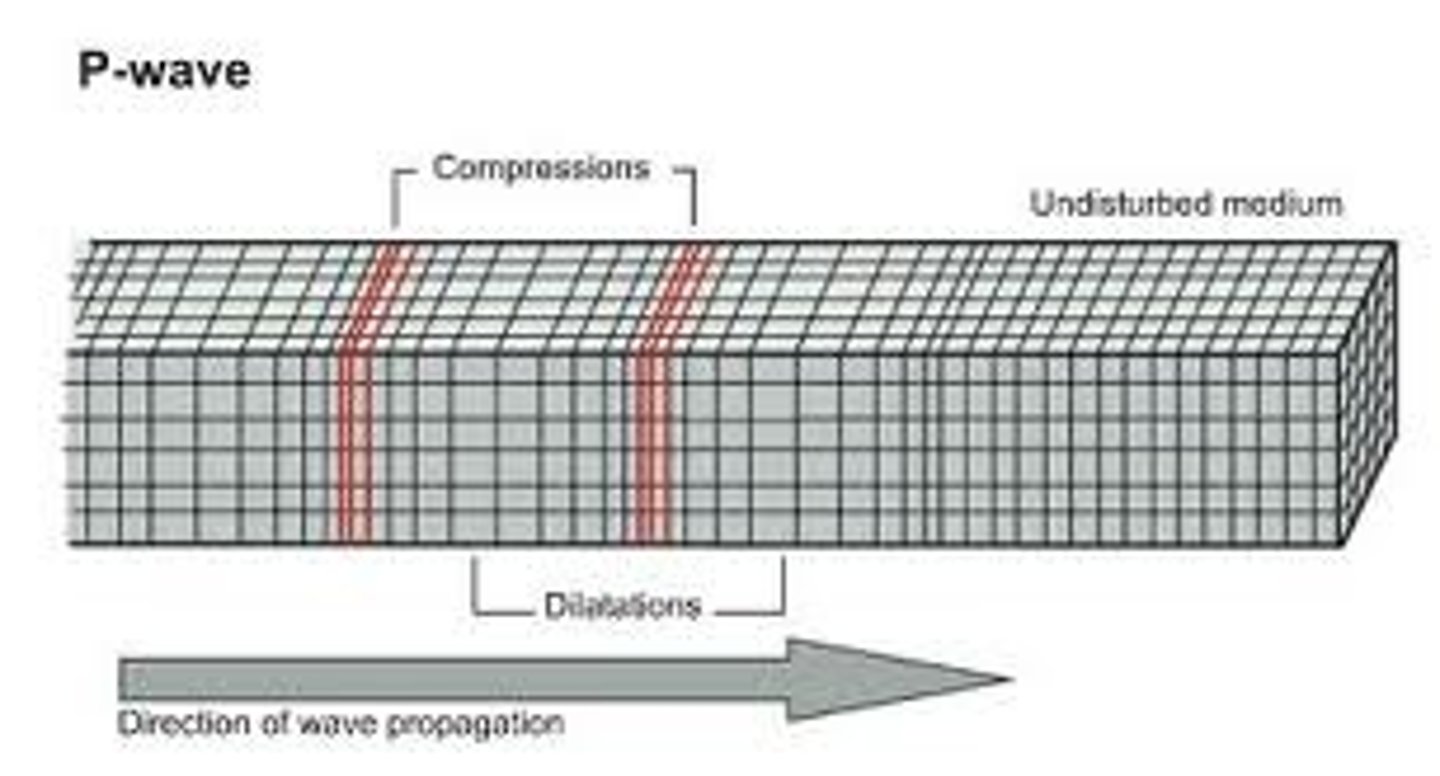
Primary P waves (compressional)
-parallel to direction of movement
-also called primary waves
-fast moving waves
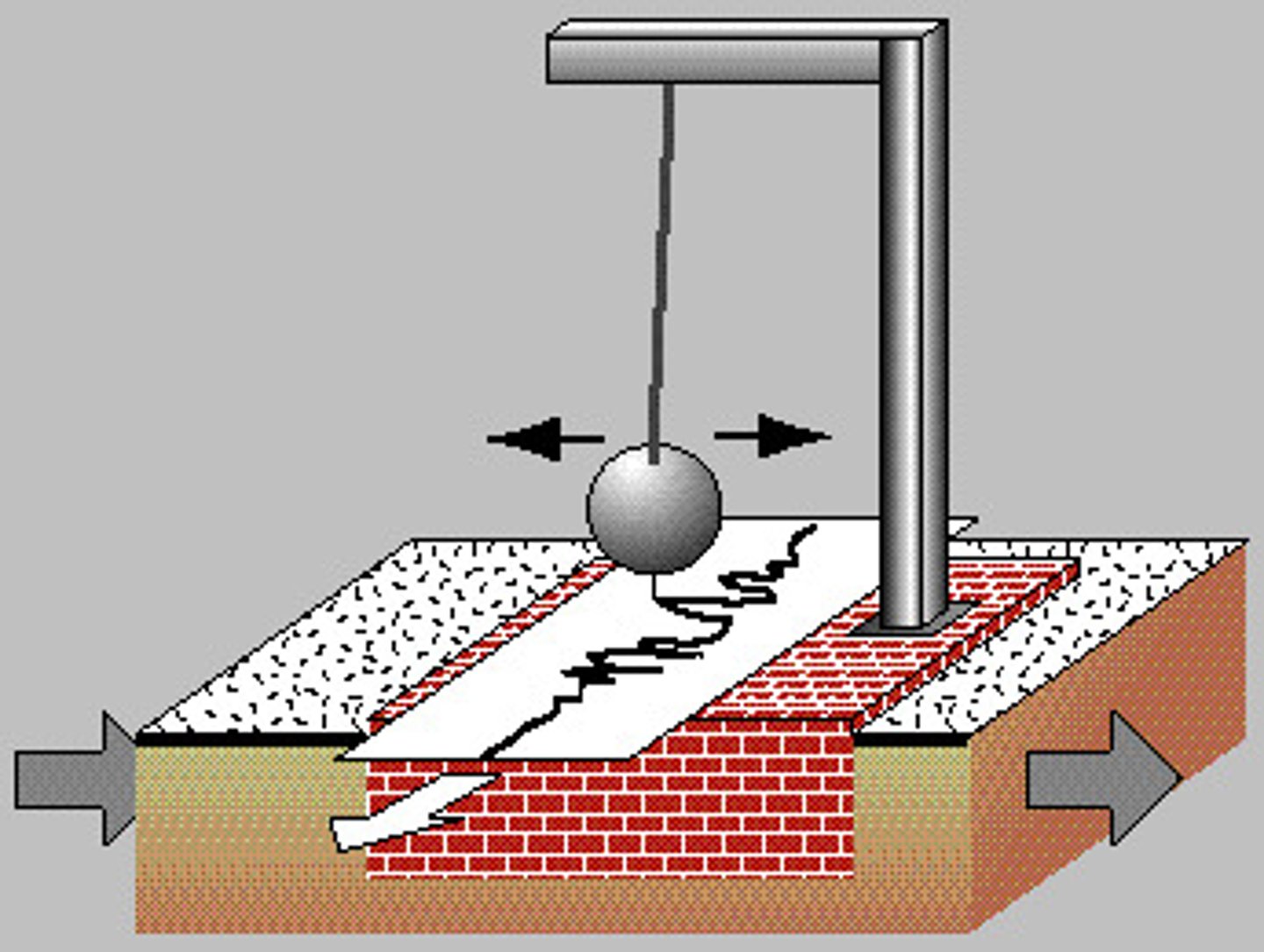
Seismograph
a device that measures the strength of an earthquake
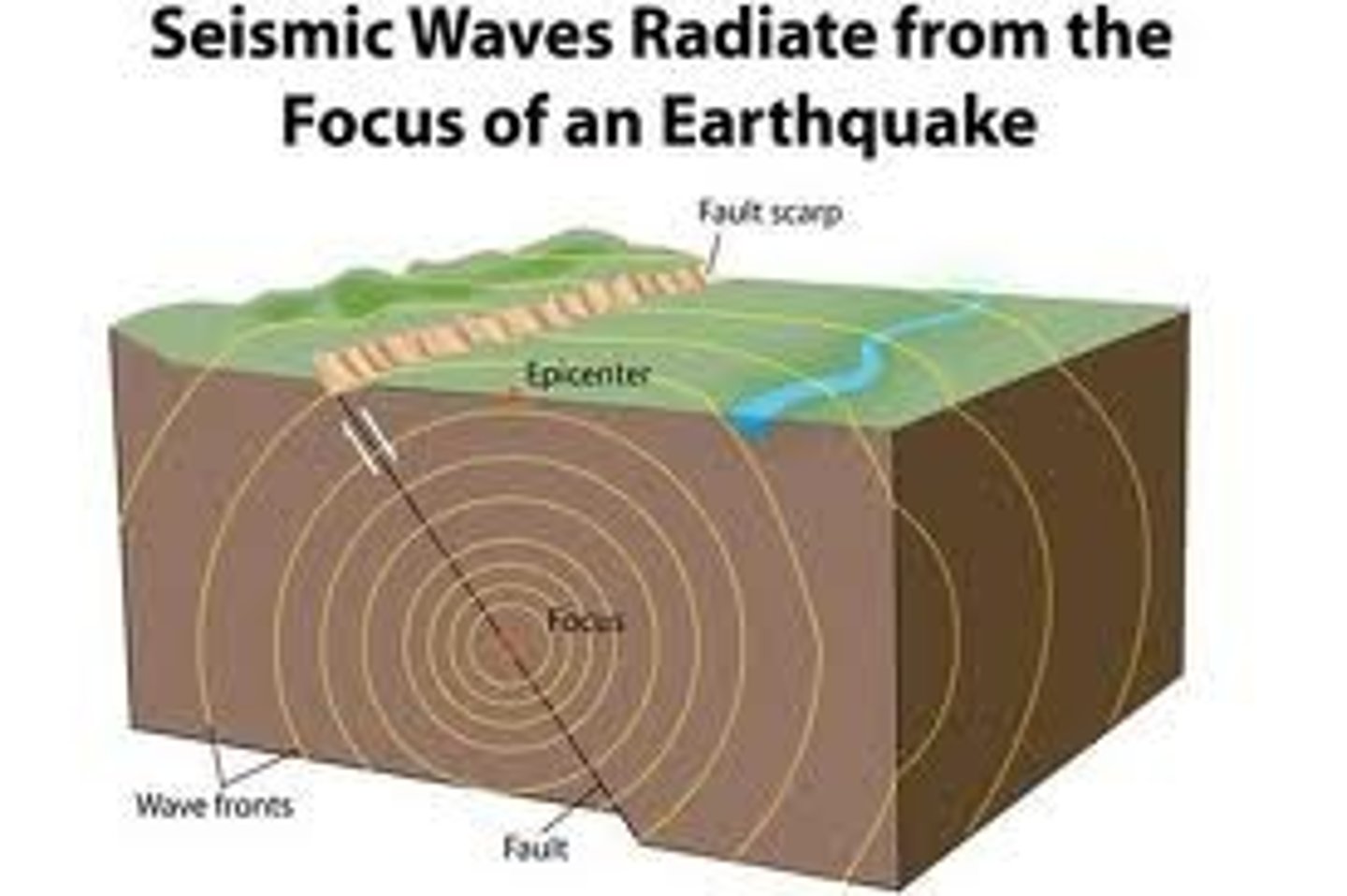
seismic
vibrations of the earth
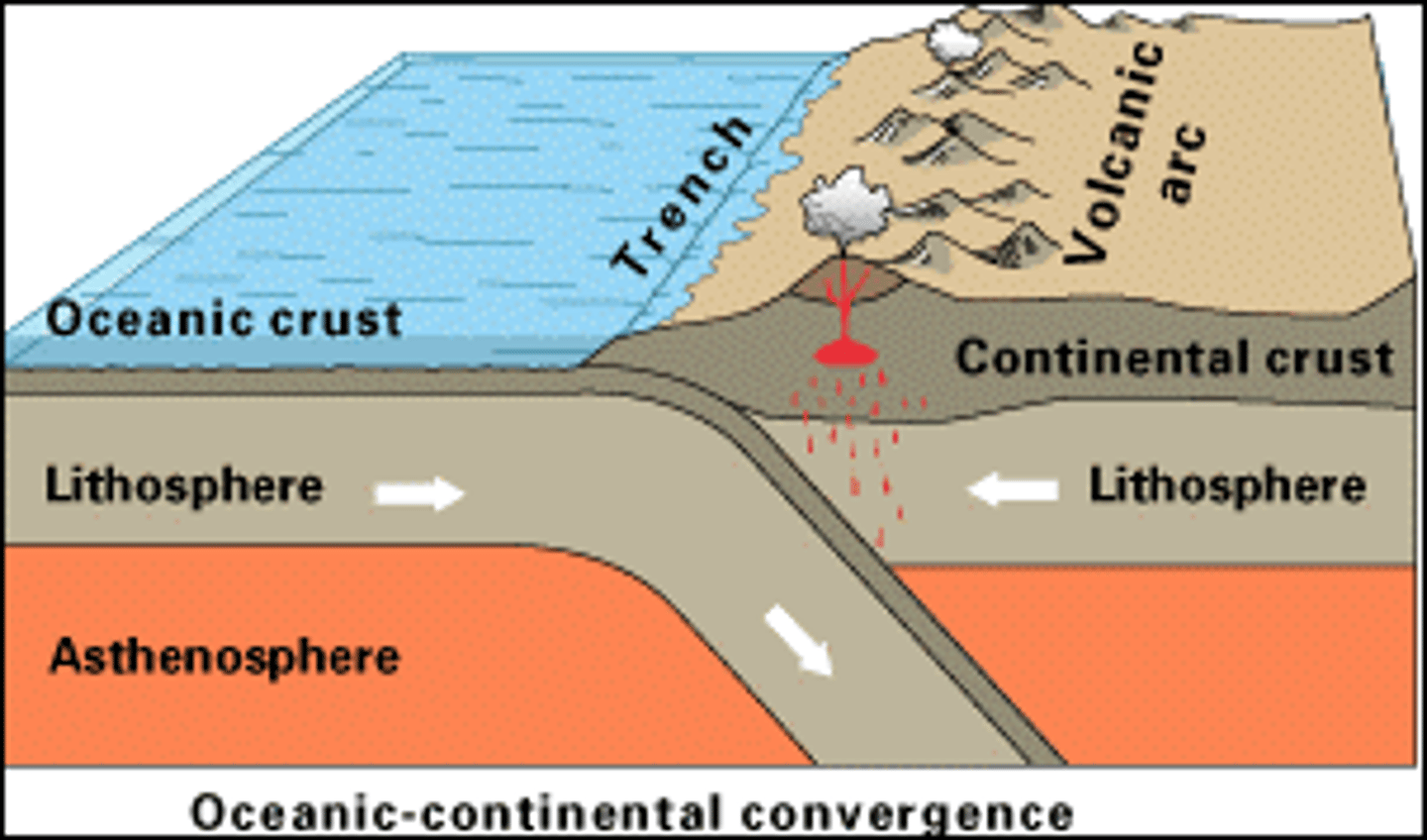
subduction zone
in tectonic plates, the site at which one plate goes under the other
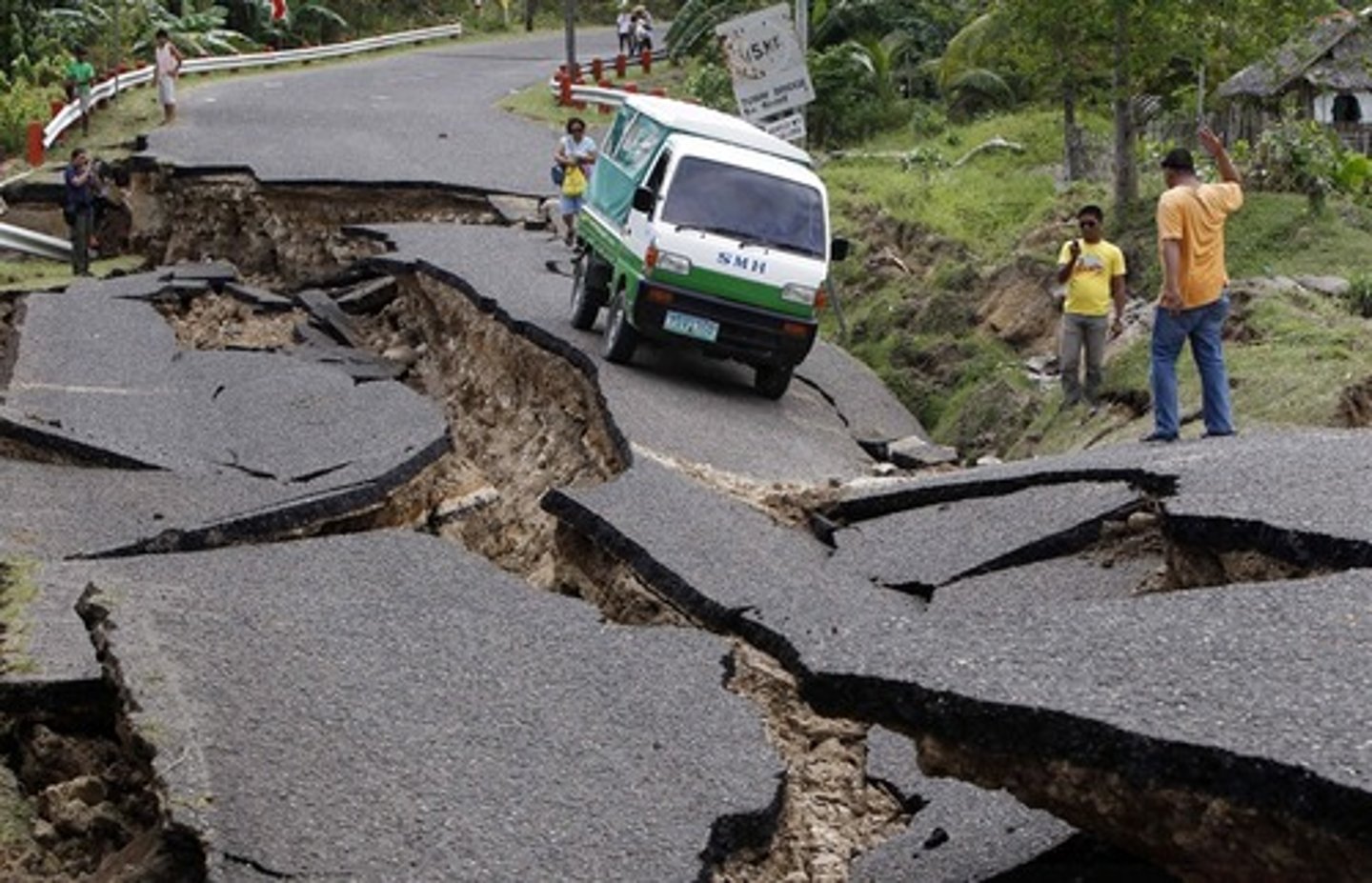
earthquake
energy travelling as waves passing through Earth, caused by a sudden shirt along a fault line or by volcanic activity
surface waves
seismic waves that travel along the Earth's surface instead of below it
Epicenter
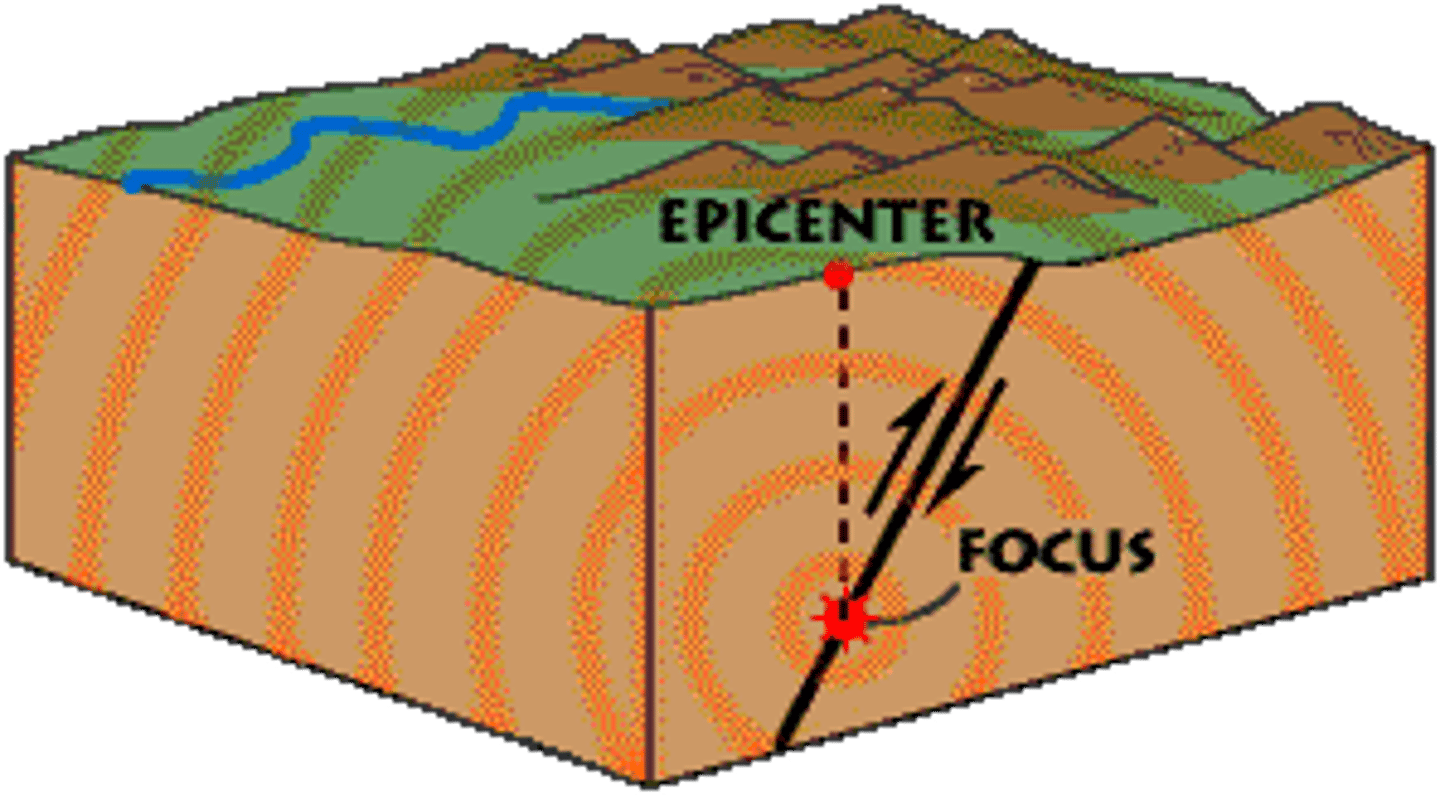
Point on Earth's surface directly above an earthquake's focus