POB Final Exam - Shadwick
 Studied by 0 people
 Call with Kai
 Learn
Learn Practice Test
 Spaced Repetition
 Match
Match Flashcards
 Knowt Play
1/108

There's no tags or description
Looks like no tags are added yet.
Name | Mastery | Learn | Test | Matching | Spaced | Call with Kai |
|---|
No study sessions yet.
109 Terms
who is the father of microbiology?
Antonie van Leeuwenhoek
who proved microbes cause diseases and how to develop methods to control them?
Louis Pasteur
microbiota
all the microorganisms that live in or on a specific environment
what are some beneficial effects of microbes??
they help with digestion
produce vitamins
protect against pathogens
recycle nutrients
chemical evolution vs. biological evolution
chemical: life before cells existed, no reproduction involved
biological: life after cells existed, populations change over generations, driven by mutation + natural selection
1st stage of formation of cells
organic monomers - evolution of monomers, Primoridal soup
stage 2 of formation of cells
organic polymers - evolution of polymers
stage 3 of formation of cells
protobionts - evolution of protobionts
stage 4 of cell formation
living cells - evolution of living cells
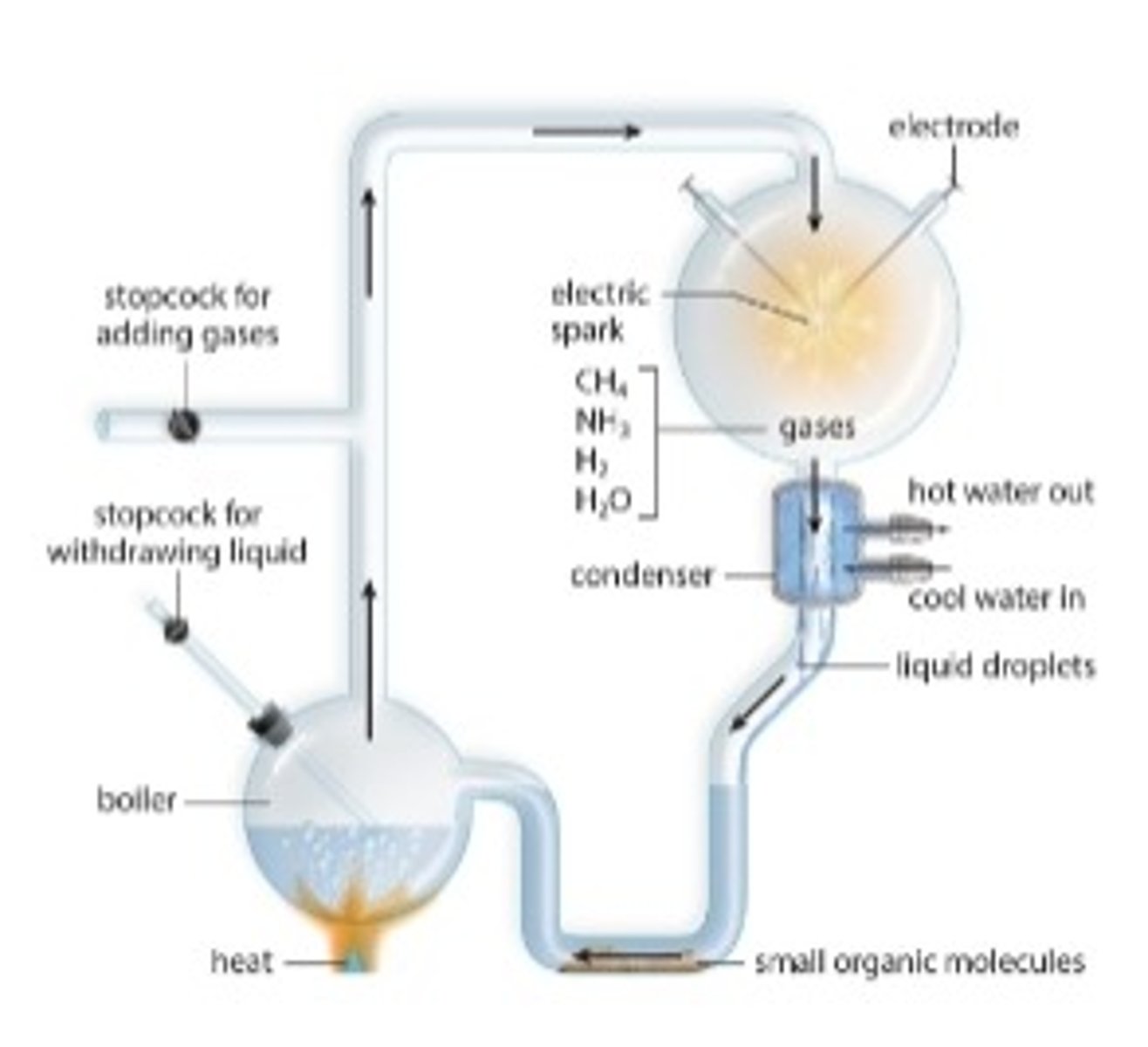
Miller-Urey experiment (1953)
simulated earth’s early atmospheric conditions to show how organic monomers could have formed naturally
Archaea
- small, genome is a single, closed, circular, DNA molecule
- plasma membrane single lipid layer with branched side chains
- 3 main types are based on unique habitats and metabolism
bacteria (domain bacteria)
- most common type of prokaryote on Earth
- bacteria have 3 basic shapes: rod, spherical, & spiral-shaped
ways to distinguish between archaea, bacteria, and eukaryotes
archaea - have no nucleus
bacteria - have unbranched fatty acids
eukaryotes - have a nucleus, large and complex cells
halophiles
salty habitats that are isolated from environments
examples: the Great Salt Lake, the Dead Sea, and hypersaline soils
thermoacidophiles
extremely hot, acidic, aquatic environments evolved to function at temperatures as high as 80 degrees Celsius
examples: hot springs, geysers, and underwater volcanoes
methanogens
- use carbon dioxide and hydrogen as energy sources
- produce methane as a byproduct
- in anaerobic environments like swamps, and intestines of animals
examples: cows and other animals, including humans
3 shapes of bacteria
rod, spherical, and spiral-shaped
rod = bacillus
spherical = cocci
spiral-shaped = spirillum
bacteria reproduction
- the bacterial cell replicates its genome and divides into two new daughter cells
- bacteria reproduction is asexual, by binary fission
the 3 ways bacteria can increase their genetic variation
conjugation: donor cell passes DNA to a recipient call by way of a sex pilus
transformation: bacterium takes up DNA from environment released by dead bacteria
transduction: viruses carry bacterial DNA from cell to cell
functions of cyanobacteria
metabolism:
they perform photosynthesis / use sunlight, water, and CO2 to make glucose
ecological: as a result of the photosynthesis, they release oxygen for other organisms as a producer
4 diseases caused by Streptococcus pyrogenes
strep throat (Pharyngitis): sore throat, fever, swollen tonsils
impetigo (in infants): mild skin disease with honey-colored crusts
scarlet fever: produces a red rash
rheumatic fever: auto-immune after strep throat
diseases caused by Staphylococcus aureus
skin infections: boils, impetigo, etc.
MRSA: a strain resistant to methicillin that kills young, healthy individuals
two types of food poisoning
food poisoning producing toxins while growing in food
ex) clostridium botulinum
food poisoning that causes an infection while growing in the intestines
ex) salmonella
antibiotics
inhibit bacteria by interfering with bacterial pathways
2 functions of most antibiotics
inhibit protein synthesis by bacteria
example: erythromycin
inhibit cell wall biosynthesis
example: penicillin
viruses
- acellular structures that are parasites
- use the host cell's components, such as ribosomes and certain enzymes
prions
- infect protein particles
- normal proteins change their shape
viral reproduction stages
“AERBAB”
1) Attachment: spike combines with the receptor
2) Entry: virus enters host cell and uncoating occurs
3) Replication: viral DNA is replicated
4) Biosynthesis: viral components are synthesized
5) Assembly: new viruses are now present
6) Budding: virus acquires an envelope and spikes
antigenic drift
a gradual change caused by small genetic mutations, occurring in RNA genomes
not many changes
antigenic shift
a sudden + major change in antigens due to the reassortment of DNA segments of two different strains of a virus infecting the same host cell
prion diseases and who they affect
Bovine spongiform encephalopathy ("mad cow disease")
- it affects cattle
Chronic wasting disease
- affects deer, elk and moose
evolution and characteristics of the first eukaryotic cells
characteristics:
had a nucleus with a nuclear membrane
internal cytoskeleton
membrane-bound organelles
evolution: endosymbiotic theory
a prokaryotic cell engulfed a bacterial cell
5 protists characteristics
- are eukaryotes that are not plants, animals, or fungi
- very diverse
- many unicellular
- have meiosis and genders
- have mitochondria
4 ways protists obtain food and energy?
- through photoautotrophs, called algae, producing their food by photosynthesis
- through heterotrophs, called protozoans, eating bacteria and other protists
- through heterotrophs, called parasites, derive their nutrition from a living host, who is harmed by the interaction
- through mixotrophs, using photosynthesis and heterotrophy
Archaeplastids examples
land plants, green algae, red algae, spirogyra
what are 4 chromalveolates
brown algae, diatoms, ciliates, dinoflagellates
Excavates
heterotrophic protozoans that propel themselves through one or more flagella
ex) euglenids
Amoebozoan examples
amoeboids and plasmodial slime molds
Opisthokonts
animals, fungi, and certain flagellates
5 spirogyra characteristics
- an archaeplastid
- filamentous green alga
- has chloroplast
- sexual reproduction by conjugation
- cell walls connect by a tube and haploid cells fuse
3 diatom characteristics
- unicellular algae
- do 20 to 25% of photosynthesis on Earth
- glassy cell wall containing silica
brown algae
- multicellular and marine
- brown because of pigments
- include kelp
- primary producers for diverse and productive community
dinoflagellates
- unicellular algae
- cause "blooms" in polluted coastal waters
ciliates
- unicellular protists including heterotrophs
- named for their use of cilia to move and to sweep food into their mouth
euglena
- has a flagellum
- performs photosynthesis
- mixotrophic (can photosynthesize and absorb food from the environment)
- has an eyespot for detecting light intensity
amoeba
- organisms with pseudopodia
- feeds from phagocytosis
plasmodial slime molds
- a single cell
- large and multinucleate
- feed on decomposers on dead plant matter
sac fungi (phylum Ascomycota)
- named after cup-like sexual reproductive structure, the ascocarp
- many sac fungi reproduce by producing chains of asexual spores called conidia
examples: yeasts, truffles, penicillium
yeasts
- unicellular fungi, many are sac fungi
- produce bread, wine, beer
club fungi (Phylum Basidiomycota)
- produce spores on club-shaped structures called basidium
- they use basidium to reproduce
examples: mushrooms, smuts, bracket fungi
lichens
- efficient at acquiring nutrients and moisture
- primary colonizers because they produce organic matter and soil that supports plants
mycorrhizae
mutualistic relationships with plant roots
- allow plants to grow more successfully in poor soils
challenges of plants moving from a watery environment onto land
- gametes, zygotes and embryos must be kept moist
- must obtain and move water throughout body
what 3 characteristics do plants and green algae share?
- chlorophyll A and B
- store carbohydrates as starch
- have cellulose in cell walls
the 5 major evolutionary events
1. development of embryo protection
2. development of vascular tissue (to get taller)
3. development of megaphylls (large leaves with branching veins)
4. development of seeds
5. development of flowers and fruit
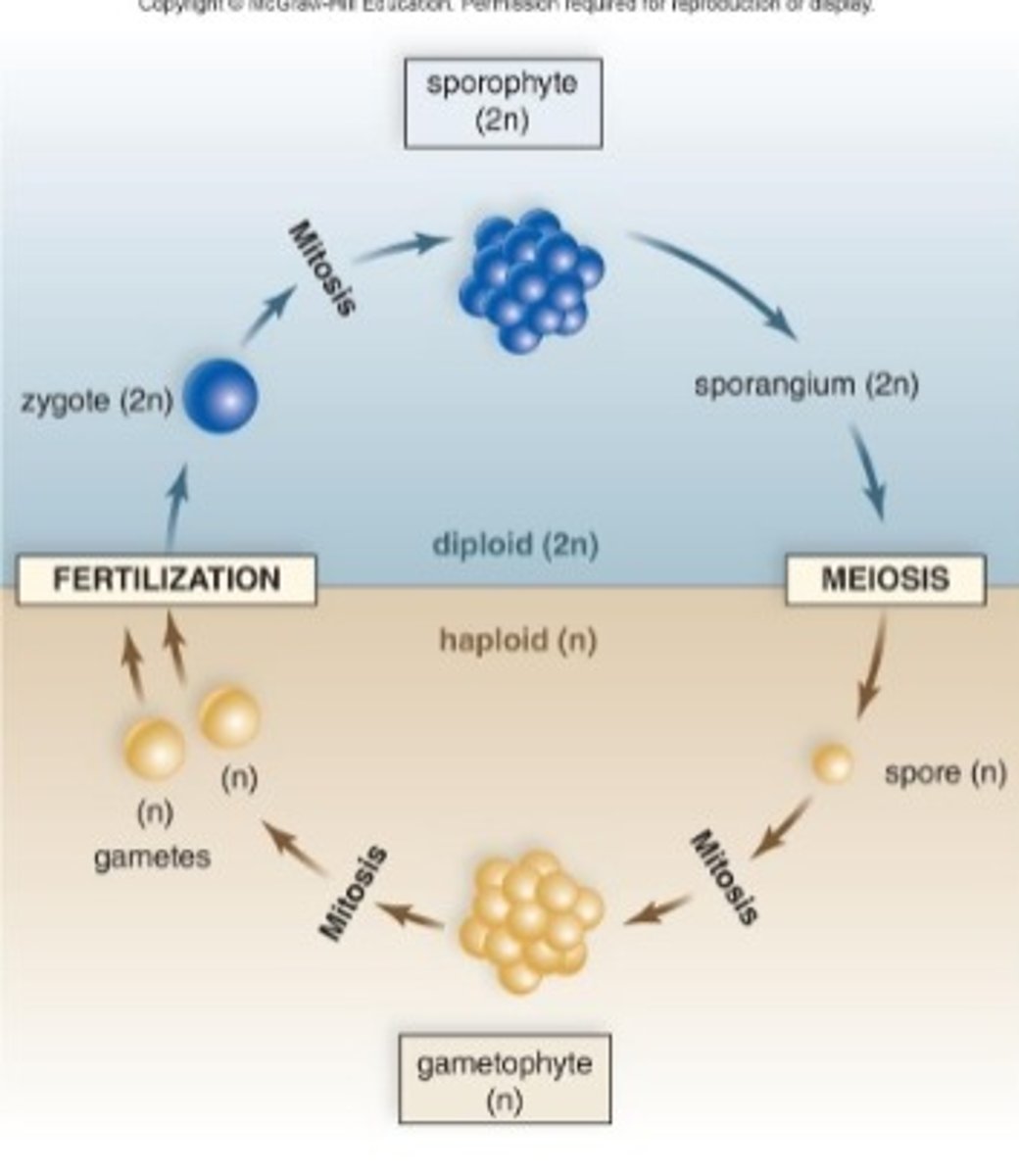
Alternation of Generations Life Cycle
- plants have a life cycle that with alternation of generations
- two multicellular individuals alternate, each producing the other
- Sporophyte (2n or diploid)
- produces spores by meiosis
- gametophyte (n or haploid)
- produces gametes by meiosis
- a sperm and egg fuse, forming a diploid zygote
nonvascular plants - mosses
- no vascular tissue and no seeds
- small
- live mostly in moist areas
- the gametophyte generation is dominant
- flagellated sperm swim to the egg
- sporophyte relies totally on parent plant
seedless vascular plants - ferns and lycophytes
- vascular plants have true roots, stems and leaves
roots: absorb water and minerals from the soil
stems: conduct water to the leaves
leaves: photosynthesis and gas exchange
ferns (phylum Polypodiophyta)
- sporophyte dominant
- fronds grow from horizontal stem
- spores often found on bottom of frond
- fronds are megaphylls
lycophytes
- also called club mosses
- among first land plants with vascular tissue
- upright stems
- small leaves called microphylls with single vein
- sporangia borne on clusters of leaves
gymnosperms ("naked seeds")
- most are cone-bearing
- ovules located on surfaces of their cone scales
- no enclosing tissue around seeds
conifers (phylum Pinophyta)
-gymnosperms
- adapted to cold, dry weather
- needle-like leaves conserve water with thick cuticle
- pollen cones and seed cones
gingkoes (phylum Ginkgophyta)
- only one species survives.. Gingko biloba
- female trees produce bad smelling seeds
- male trees are preferred for ornamental planting
- gingkoes are resistant to pollution and disease
angiosperms
- seeds develop from an ovule within an ovary (the vessel
- ovary becomes the fruit
- produce covered seeds (not naked)
animal pollinators
- animal pollinated flowers usually have showy petals or strong fragrance
- bees and other insects, bats, birds
wind pollinators
- wind pollinated flowers usually lack showy petals
- grasses, oaks, hickory
fruit to seed distribution
dry fruit can break open to scatter seeds, have wind blown fruit, or attach to animals
the parts of seeds and the evolutionary advantages that they have
embryo with a nutrient supply that allows them to survive harsh conditions while also giving them reproductive advantages over single-celled spores
characteristics that all animals share
- multicellular eukaryotes
- locomotion with muscle fibers
- ingestion of food
- diploid adult with sexual reproduction, only gametes are haploid
- zygote divides in mitosis and creates a ball of cells called a blastula
- embryonic development
asymmetrical
- no particular symmetry
example: sponges
radial symmetry
- circular organization; many longitudinal slices will produce mirror images
bilateral symmetry
definite right and left halves - only one longitudinal cut down midline produces mirror images
- bilaterally symmetric animals show cephalization (brain and sense organs at anterior)
levels of organization
cellular
- no true tissues
- sponges
tissue
- have 2 of 3 germ layers: ectoderm and endoderm
- cnidarians like hydra
organ
- have all 3 germ layers: ectoderm, endoderm, and mesoderm (triploblastic)
- majority of animals
deuterostomes
the blastopore becomes the anus; the mouth forms second
protostomes
the blastopore (first opening in the embryo) becomes the mouth
sponges - asymetry (phylum Porifera)
- cellular level or organization
- sac-like body with many pores
- multicellular, but lack organized tissues
- filter feeders; filter water for food
- choanocytes: flagellated cells
- spongin: proteinaceous skeleton
cnidarians- radial symmetry
- have true tissues
- all aquatic
- named for cnidocytes, specialized stinging cells contain nematocysts
examples: hydra, anemones, corals, and jellyfish
contrast sponges and cnidarians
sponges lack true tissues and cnidarians have true tissues, which is their stinging cells
flatworms (Phylum Platyhlminthes)
- incomplete digestive tract with one opening (mouth)
- no body cavity
- free-living planarians
- have muscles and excretory, reproductive, and digestive systems
- parasitic flukes and tapeworms
planarians
- freshwater
- eyespots
- feed on small organisms
tapeworms
- parasitic
- live inside the intestines of vertebrate hosts
- have no digestive system
molluscs
3 basic characteristics:
1. visceral mass: includes most organs
2. foot: muscular portion used for locomotion
3. mantle: covering that almost encloses visceral mass
extra: radula - rasping organ for feeding
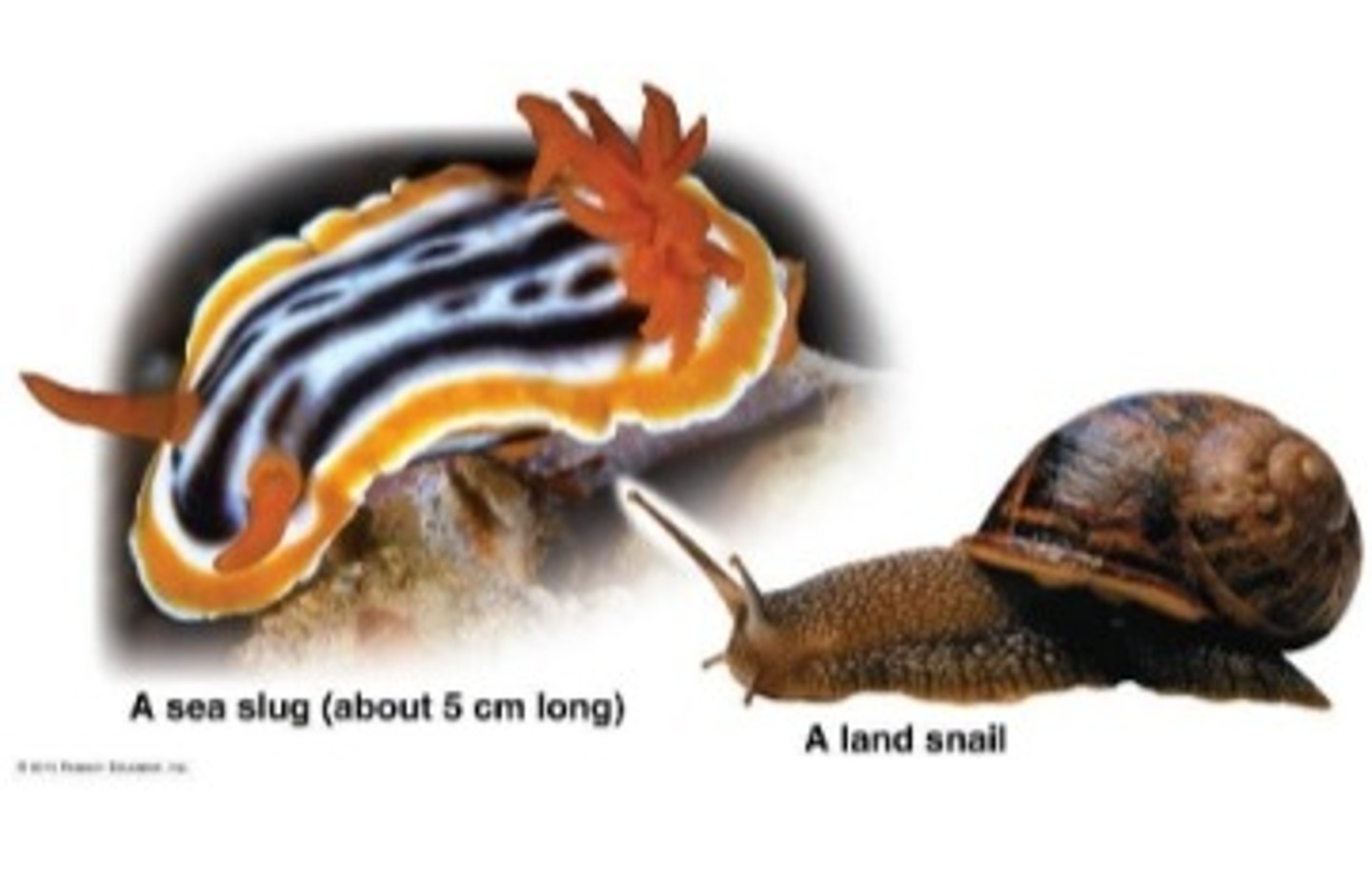
gastropods
- foot is flattened ventrally
- move by muscle contractions along the foot
- some are herbivores, others carnivores
- existence of shell varies
examples: conchs and snails
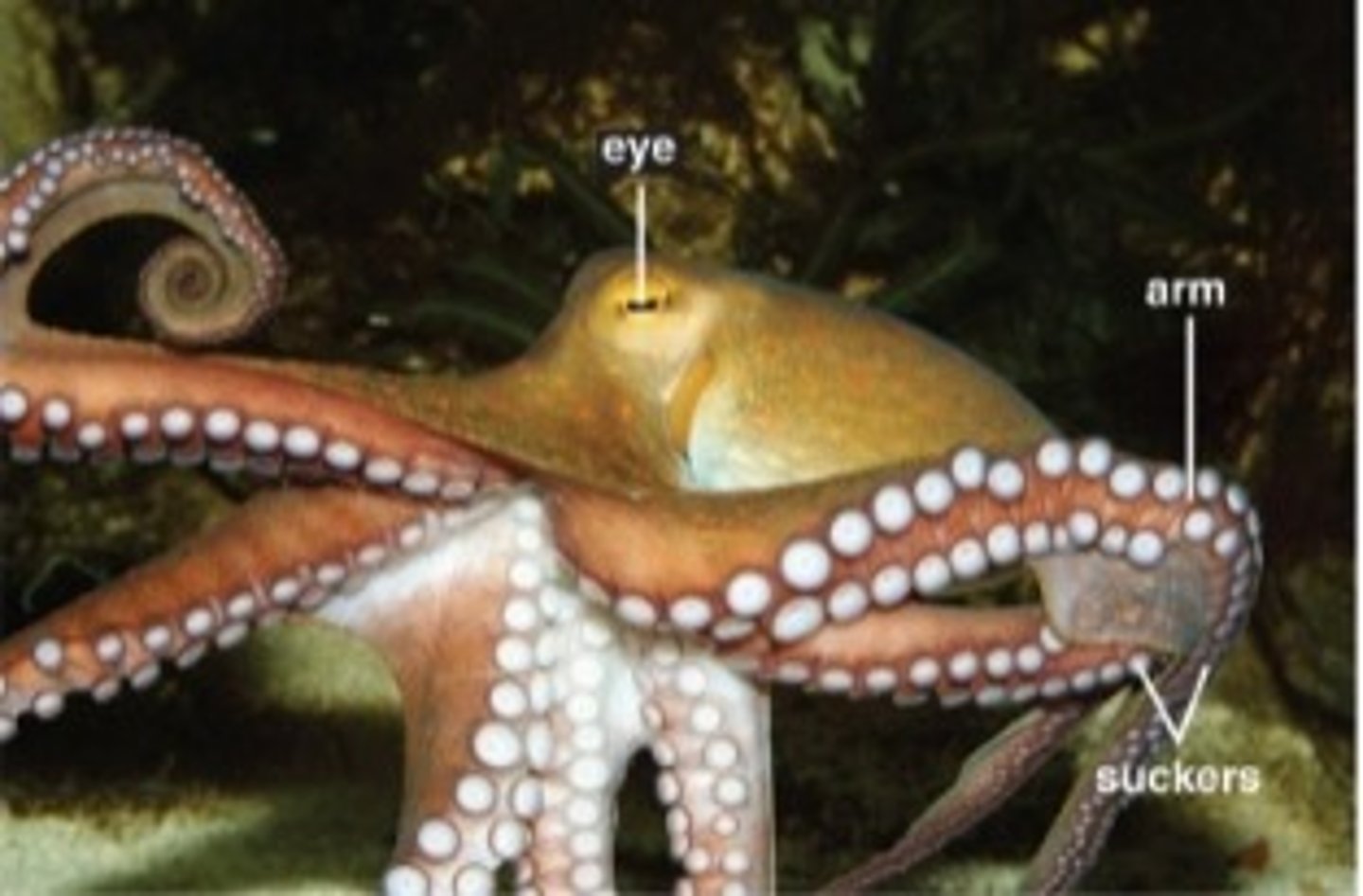
cephalopods
- foot has evolved into funnel or siphon
- powerful beak and radula used for feeding
- cephalization is apparent
examples: squids, octopus, nautilus
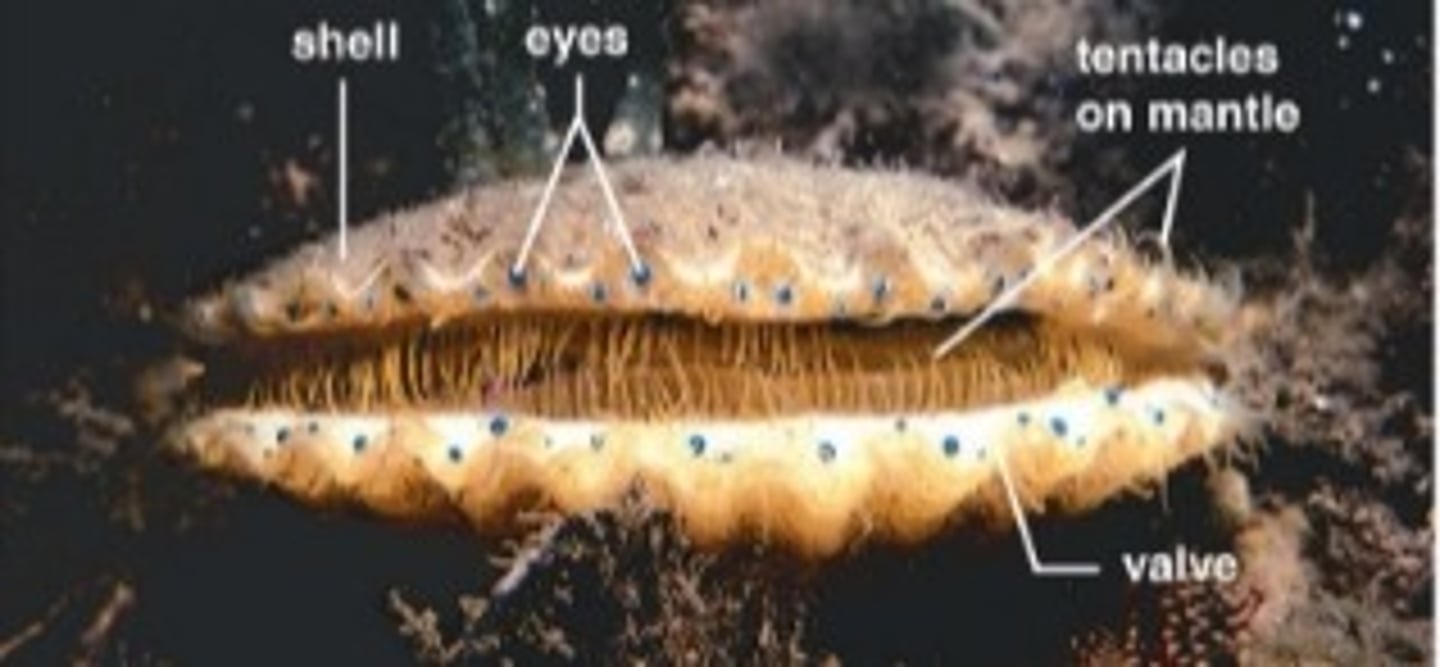
bivalves
- 2 part shells composed of protein and calcium carbonate are secreted by male
- gills located within the mantle cavity, used for gas exchange
- filter feeders: water enters through incurrent siphon
examples: clams, oysters, scallops, mussels
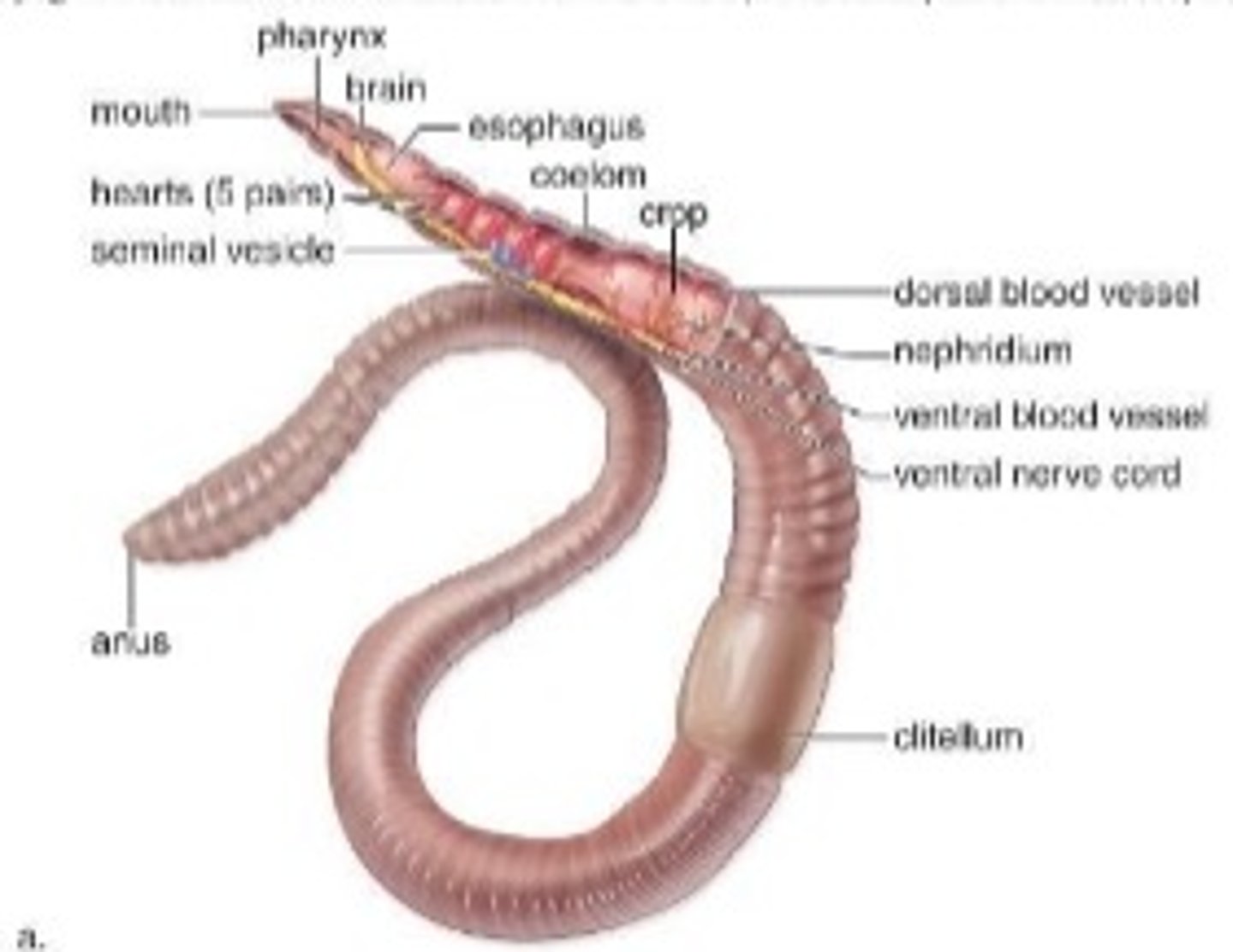
annelids (phylum Annelida)
- segmented; visible rings encircling outside body
- no internal or external skeleton
- hydrostatic skeleton: a fluid filled interior that support muscle contraction
- enhances flexibility
- each body segment moves independently
- locomotion by contraction and expansion of each body segment
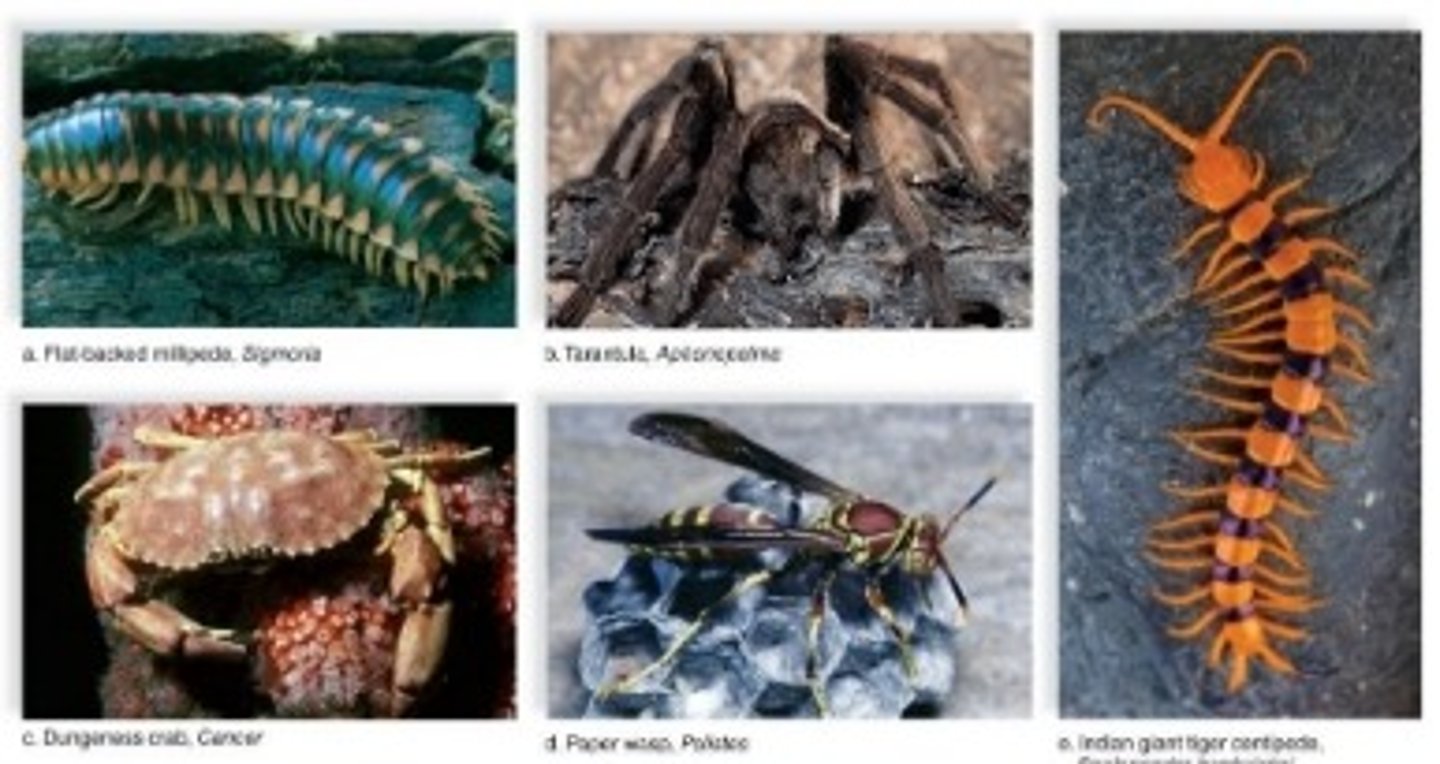
arthropods (phylum Arthropoda)
3 basic characteristics:
- exoskeleton
- segmented body
- jointed appendages (legs, antennae and mouthparts with joints that allow complex, flexible movement)
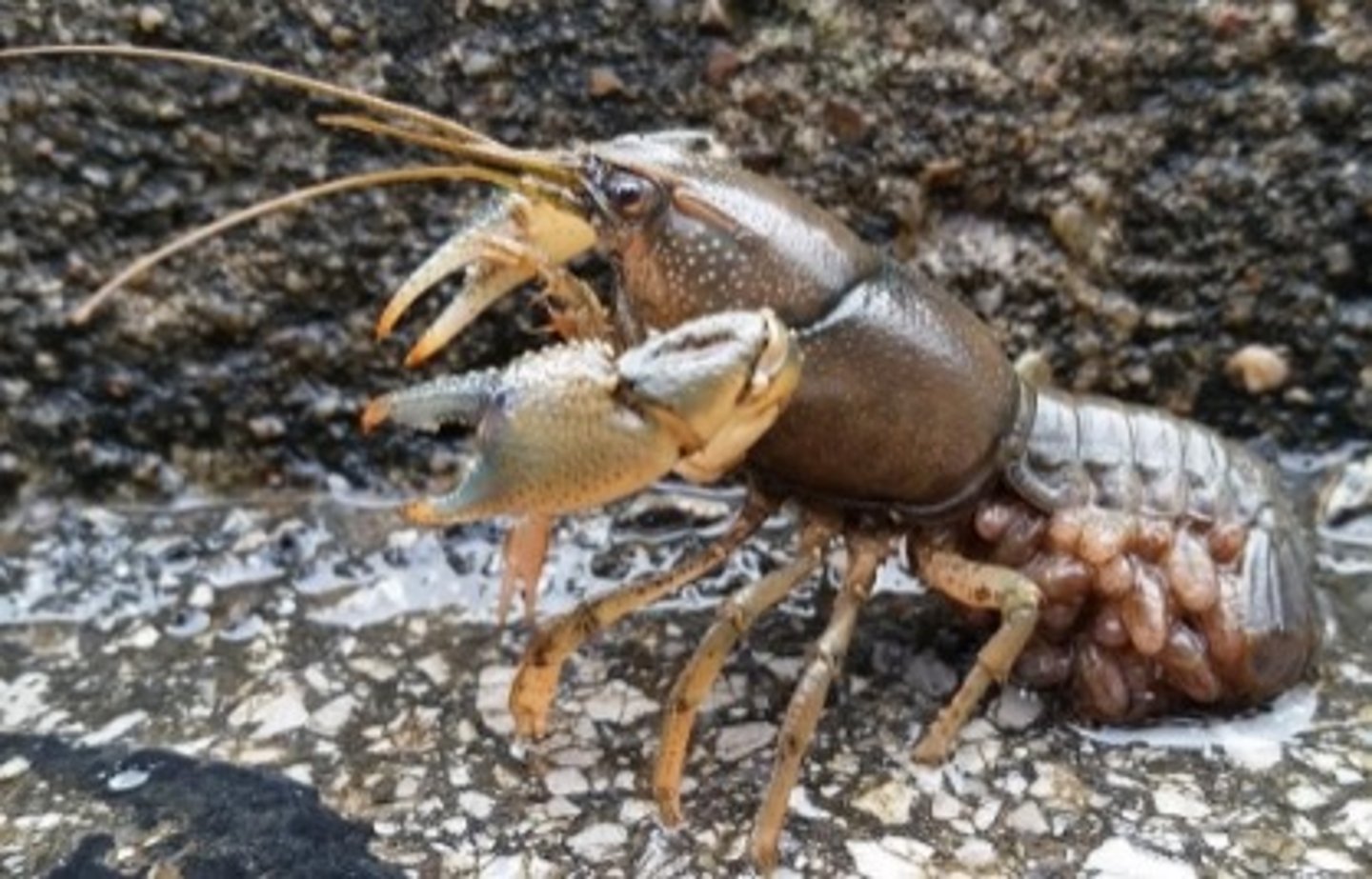
crustaceans (subphylum Crustacea)
- largely marine arthropods
- some freshwater, including crayfish
- some terrestrial, including sowbug or pillbug
- named for their hard exoskeleton
insects (subphylum Uniramia)
- body is divided into 3 regions:
head - sensory antennae, compound or simple eyes / mouthparts adapted to each insect's way of life
abdomen - contains most internal organs
thorax - 3 pairs of legs and wings, if present / wings provide certain advantages
examples of advantages: escape from predators, mating, and finding food
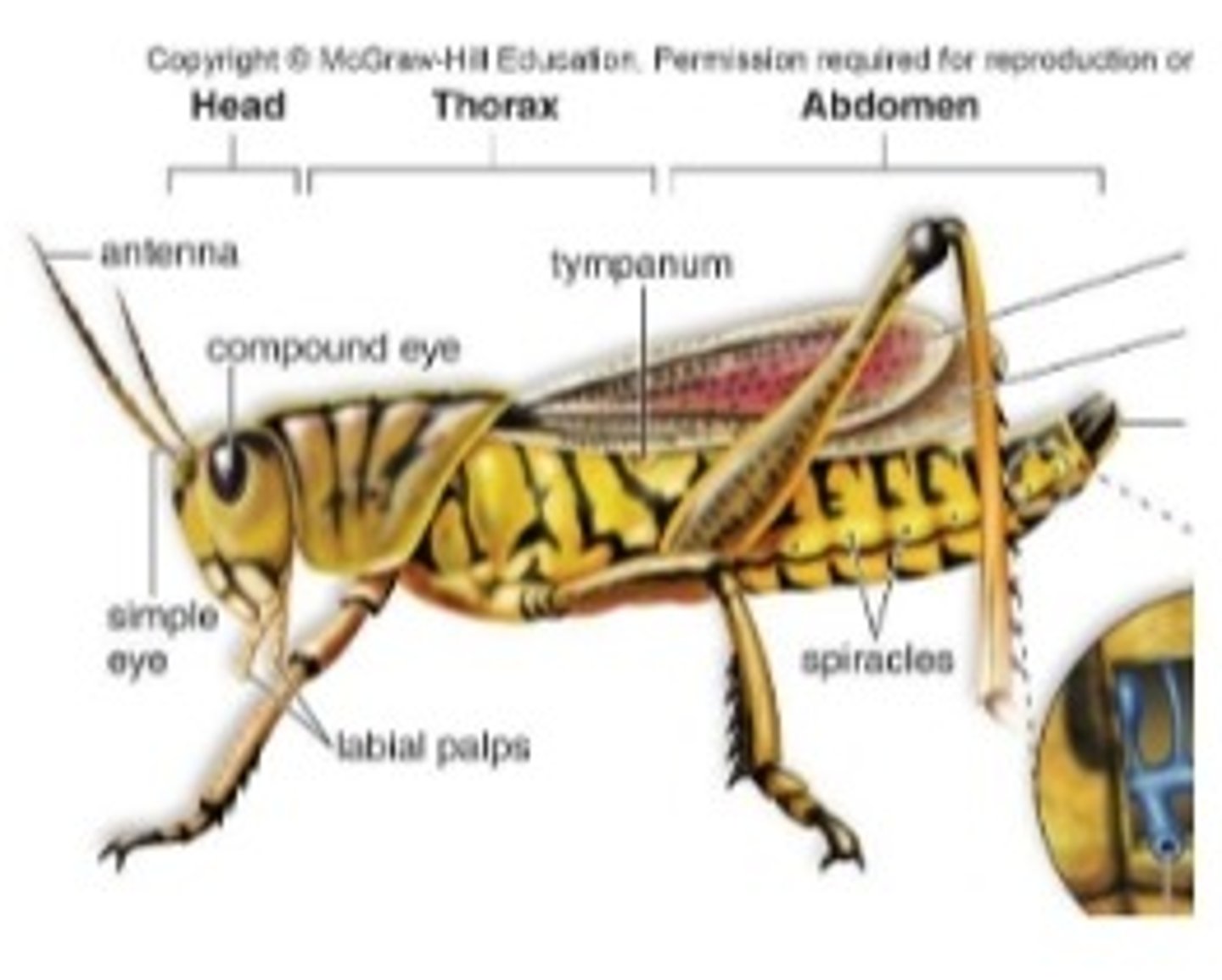
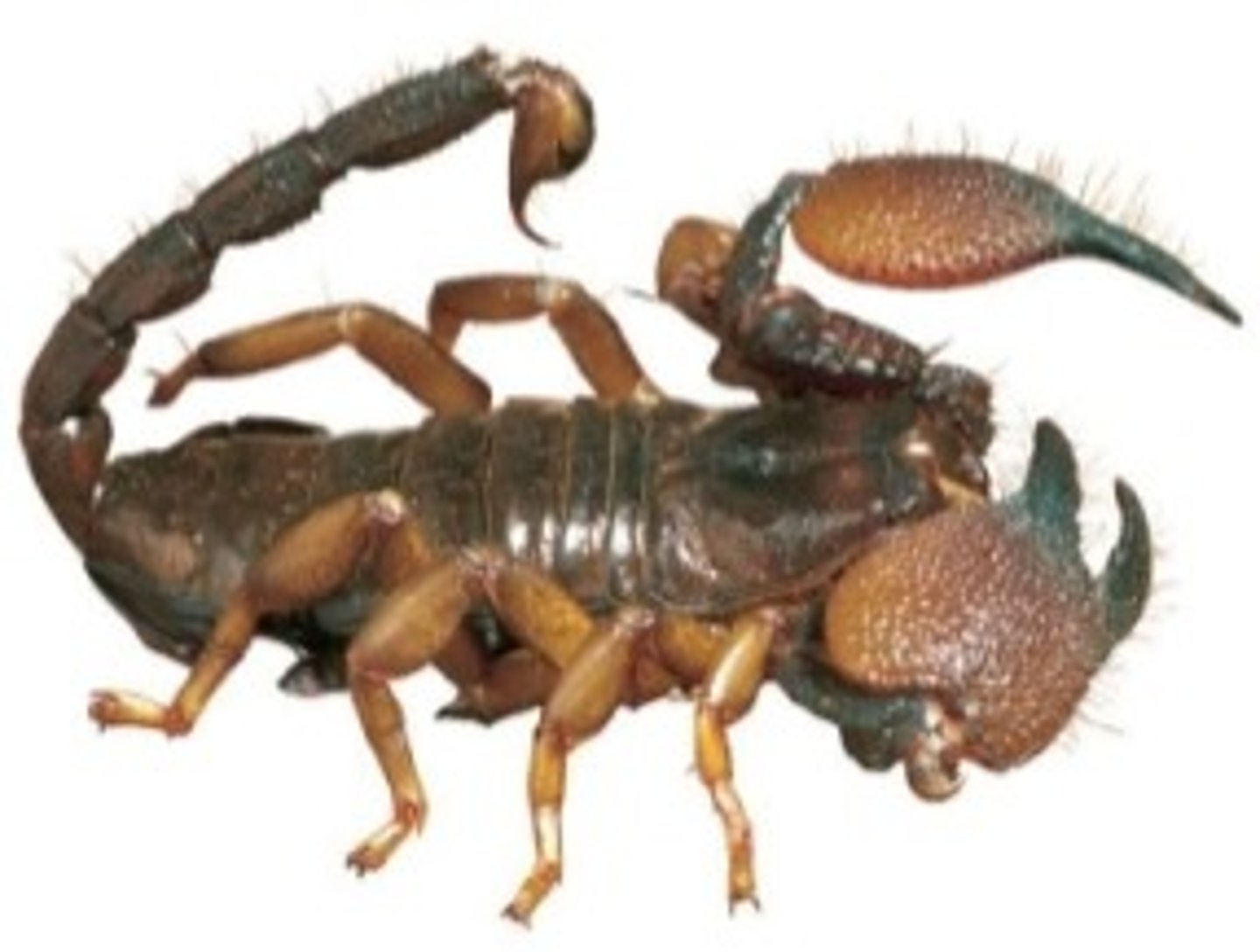
arachnids (suphylum Chelicerata)
examples: scorpions, spiders, ticks, and mites
- cephalothorax has 6 pairs of appendages: chelicerae, pedipalps, and 4 pairs of walking legs
- abdomen contains internal organs
echinoderms
- diverse group of marine animals
- endoskeleton made of calcium-rich plates
- named for spines sticking out of their skin
- lack features associated with vertebrates
sea star (starfish)
- is an echinoderm
- 5 rayed body with mouth on underside (oral) and anus on upper side (aboral)
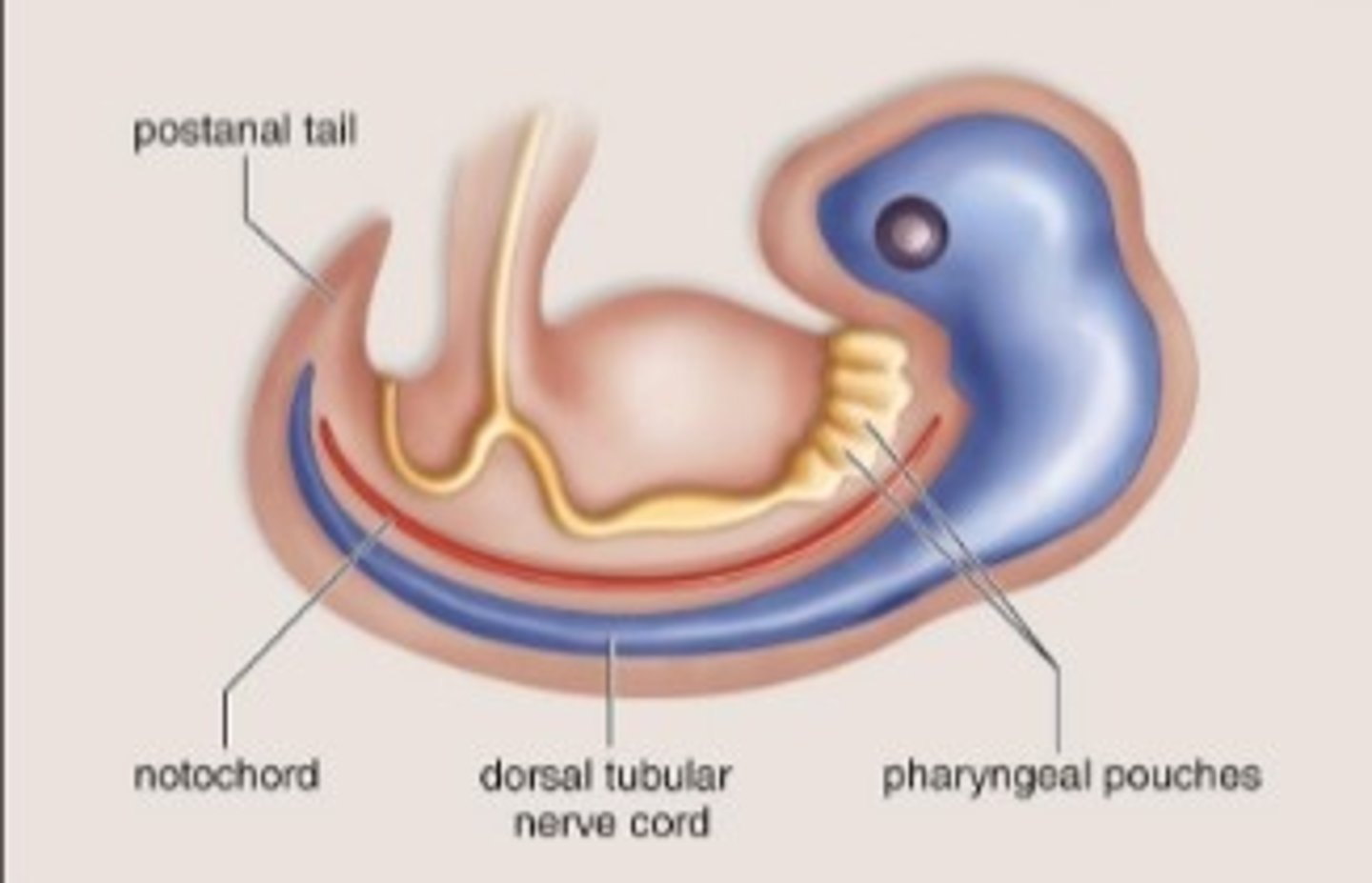
4 characteristics that all chordates share at some point in their life cycle
notochord: dorsal supporting rod, replaced by vertebral column during development in vertebrates
dorsal tubular nerve cord: nerve cord containing a fluid-filled canal
pharyngeal pouches: final development depends on the adult chordate
postanal tail: extends beyond the anus
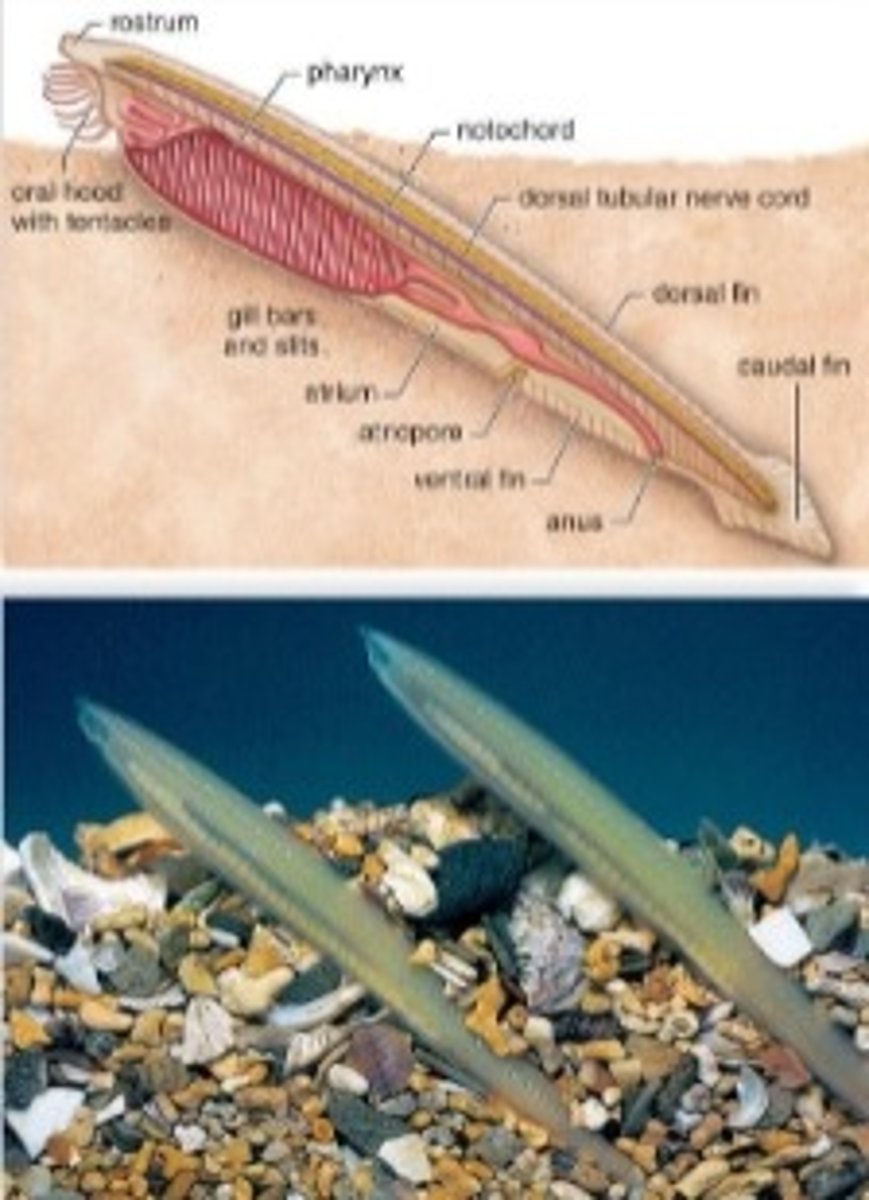
lancelets
- live in shallow coastal waters
- retain all 4 chordate characteristics as an adult
- filter feeder
phylogenetic tree practice:
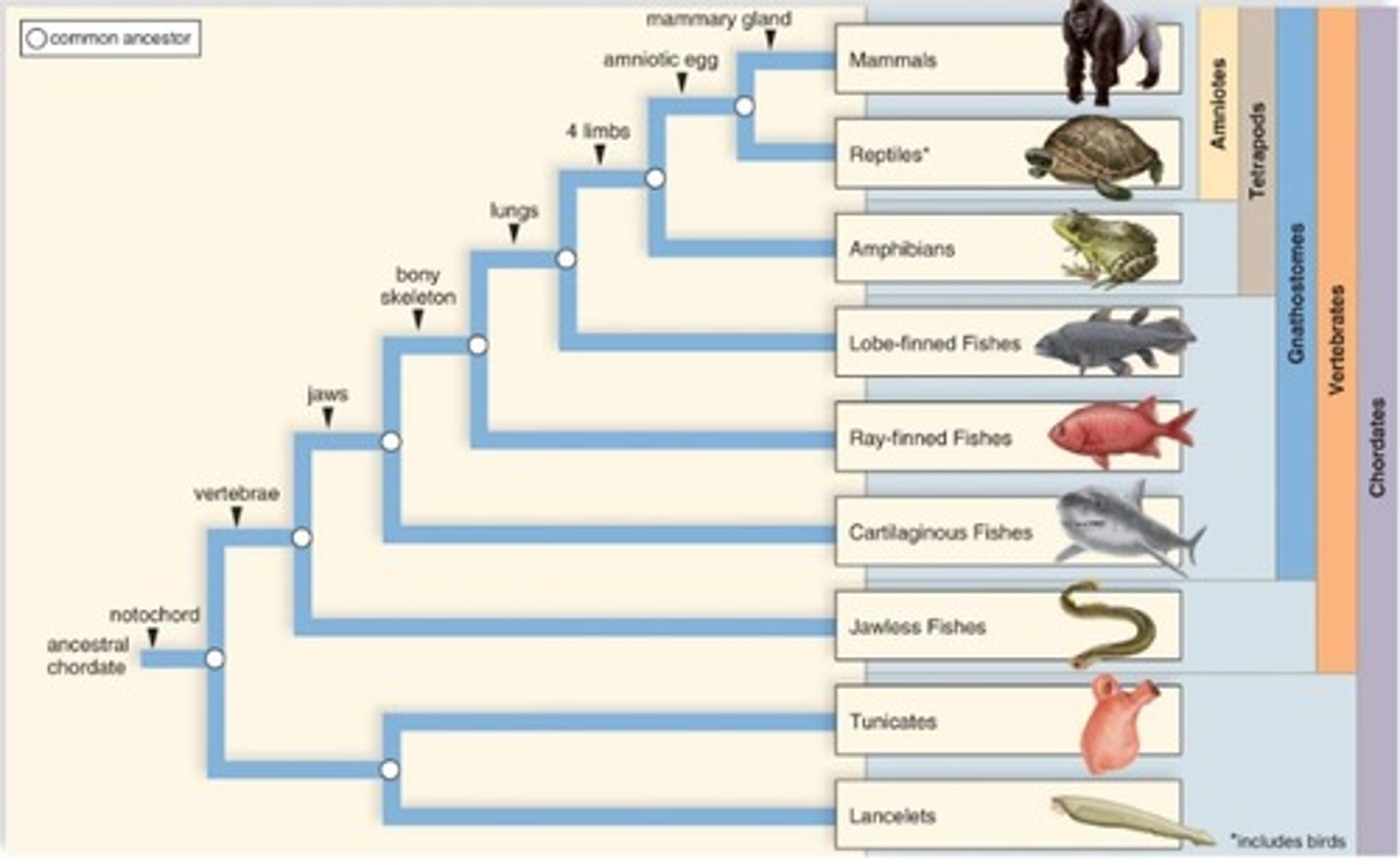
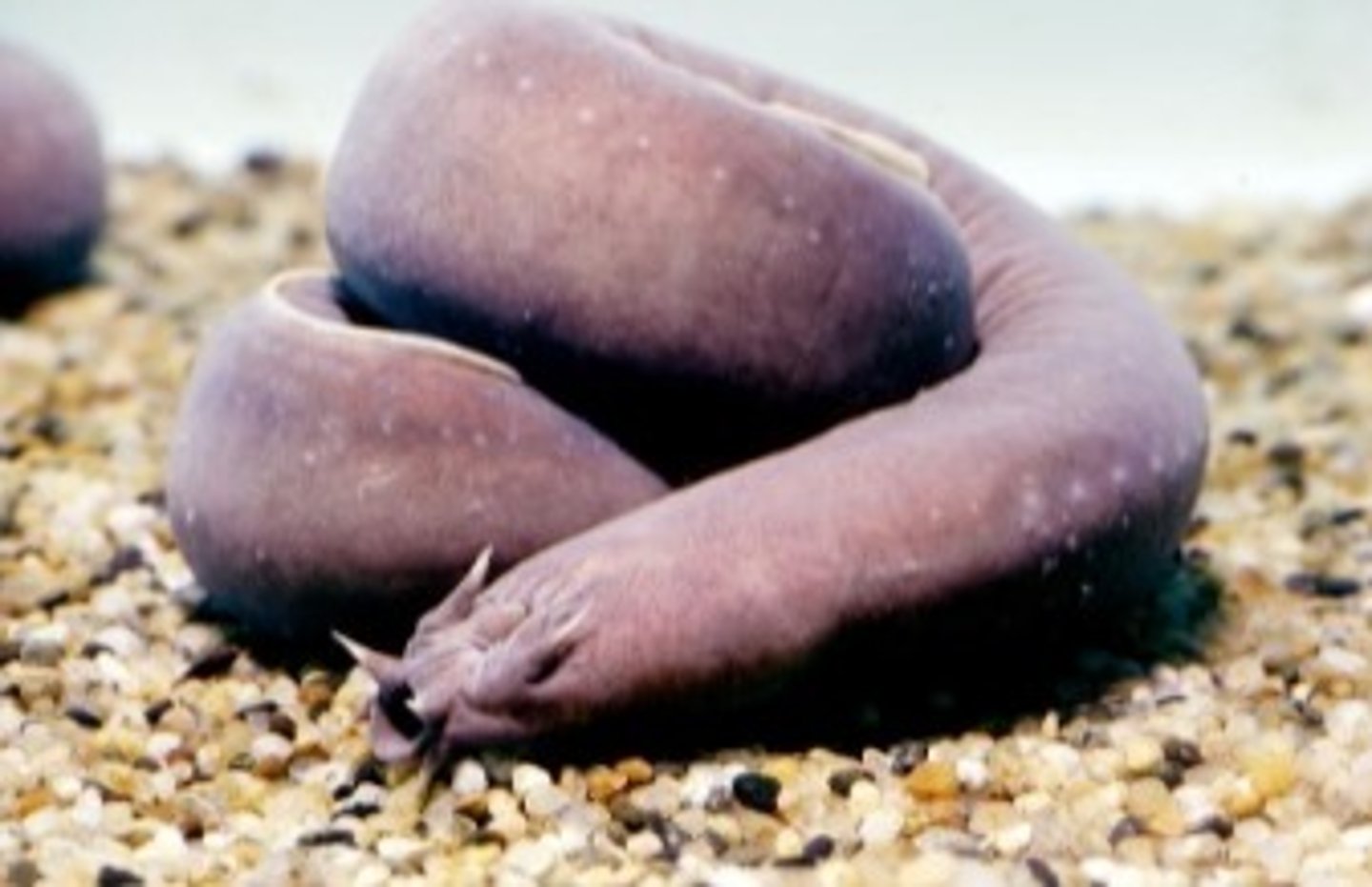
jawless fish
- cylindrical body shape with smooth, scaleless skin
- no jaws or paired fins
- scavengers
- extreme slime defense
example in picture: hagfish
jawed fish
- have jaws
- have paired fins
- may have cartilage or bone skeletons
examples: sharks rays and all bony fishes
major evolutionary innovations distinguishing fish from amphibians
- lungs for breathing air
- fleshy appendages; could be adapted for locomotion on land
frogs and toads
- no tails as adults
- long, powerful hind legs for jumping
- typically vocal; many have distinct mating calls
salamanders and newts
- longs bodies with tails
- four legs of similar size
- most have regeneration
 Note
Note  Flashcards (58)