Ch6 meteorology Air pressure and winds
 Call Kai
 Learn
Learn Practice Test
 Spaced Repetition
 Match
Match Flashcards
 Knowt Play
1/15

There's no tags or description
Looks like no tags are added yet.
Name | Mastery | Learn | Test | Matching | Spaced | Call with Kai |
|---|
No analytics yet
Send a link to your students to track their progress
16 Terms
how does atmospheric pressure affect wind?
Wind is the result of horizontal differences in atmospheric pressure
atmospheric pressure
the force exerted against a surface by continuous collision of gas molecules
Measuring Air Pressure
Air pressure is measured in millibars (mb), where 1 millibar is equal to 100 newtons/m^2
Mercury Barometer
An instrument that measures changes in air pressure, consisting of a glass tube partially filled with mercury.
- Air pressure pushes on a pool of mercury, which forces the mercury up a tube
Pressure Changes with Altitude
Air pressure is defined as the force exerted against a surface by continuous collision of gas molecules
Air pressure decreases with altitude
Air pressure increases with depth
Why does air pressure vary?
Altitude, Temperature, Humidity, Movement of air masses
how does moisture affect air pressure?
- the amount of water vapor reduces the density of air
- cold hair has higher pressure
- warm, dry air has higher pressure compared to moist air
Convergence/Divergence and Air Pressure
-Convergence occurs when a net airflow causes pressure to rise
- Divergence results when there is a net outflow of air from a region and surface pressure drops
Factors affecting wind
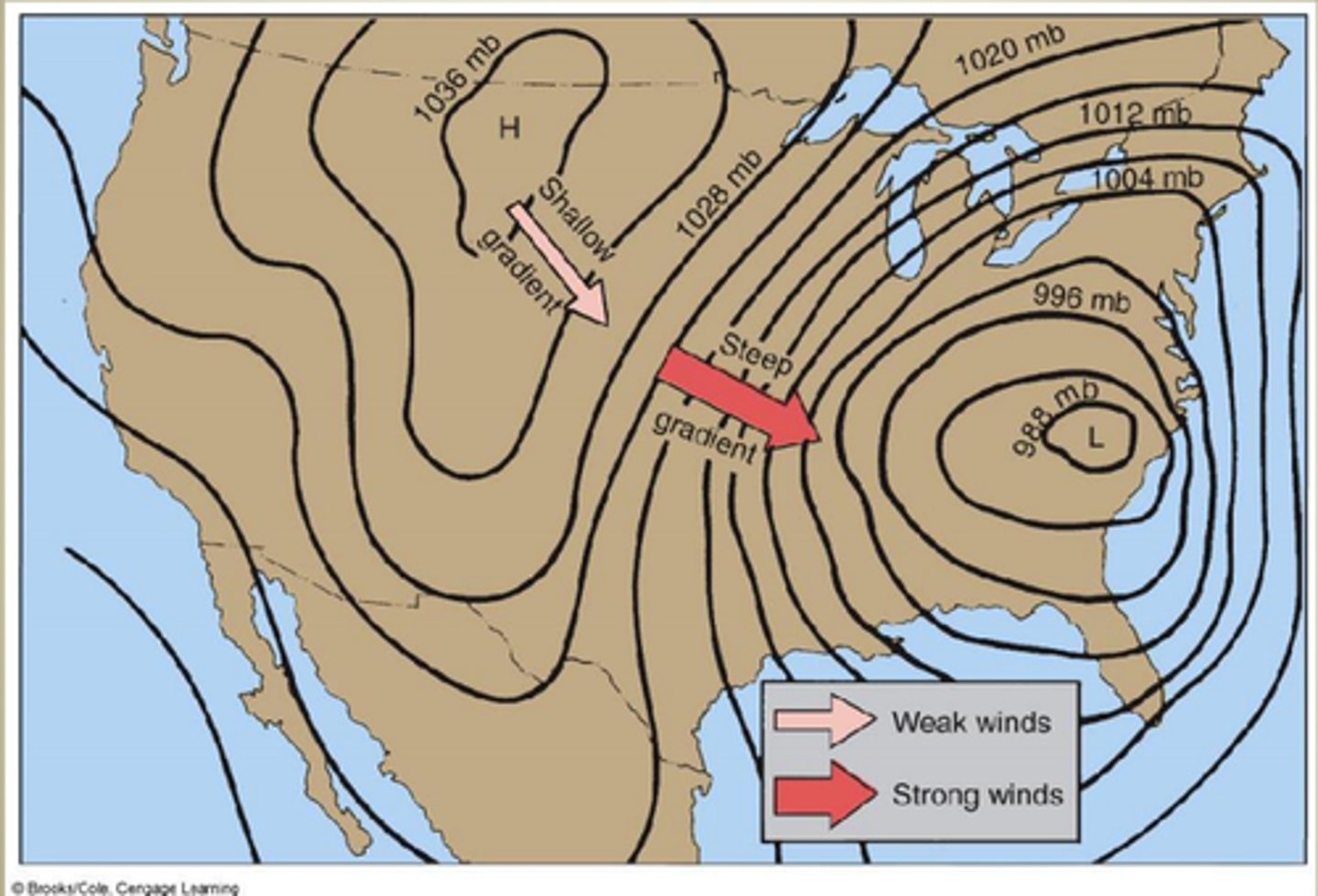
1. pressure gradient force
2. coriolis effect
3. friction
Pressure Gradient Force
Drives air from areas of higher barometric pressure to areas of lower barometric pressure, causing winds.
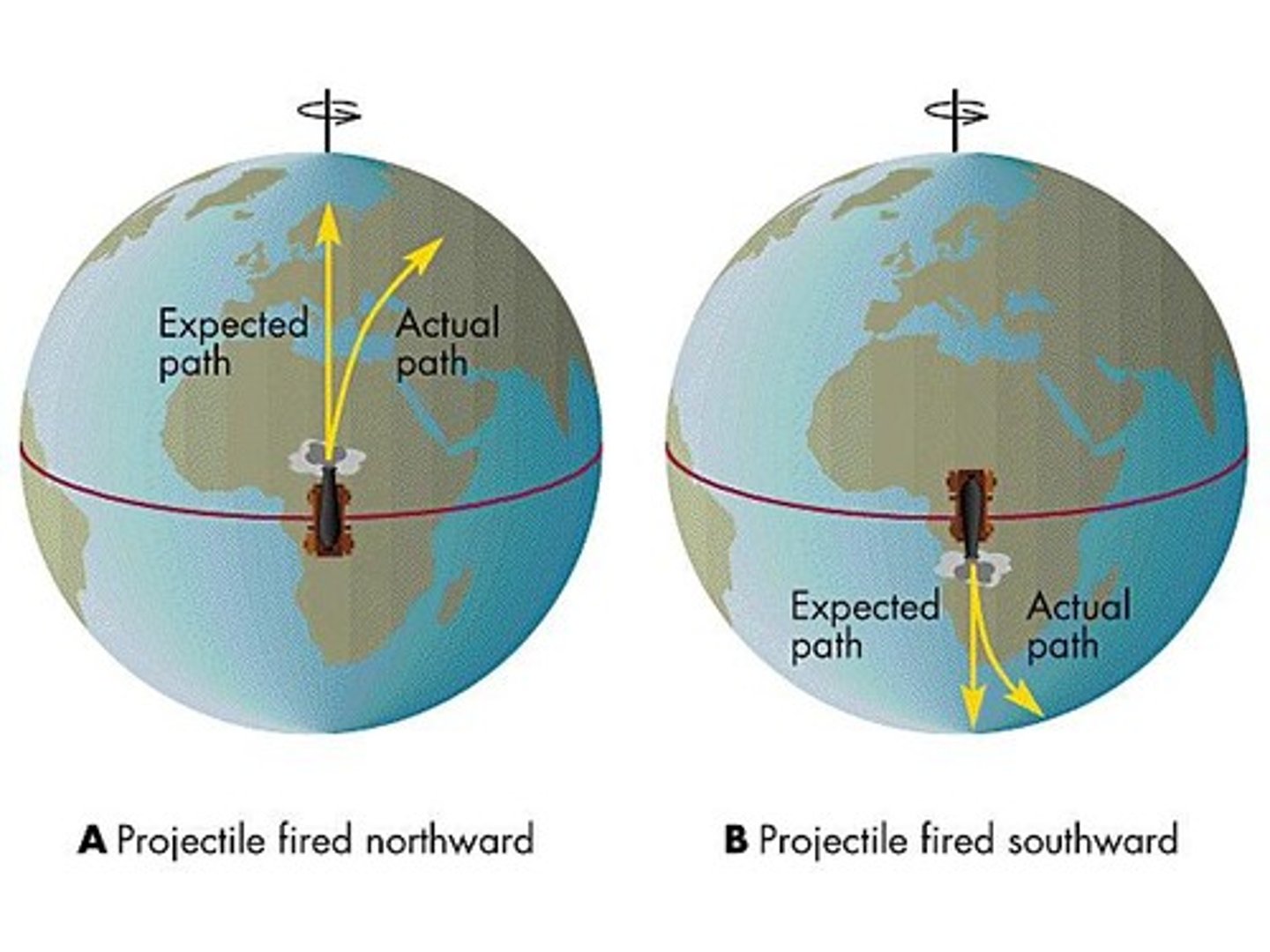
Coriolis Effect and how it effects wind
-Doesn't generate wind, only modify airflow
- In northern hemisphere, deviates to the right
- in southern hemisphere, deviates to the left
Friction in Wind
- Friction significantly influences airflow near Earth's surface, but its effect is negligible at higher altitudes.
- Slows down the air speed causing a reduction in the Coriolis effect, allowing the wind to cross the isobars at an angle-
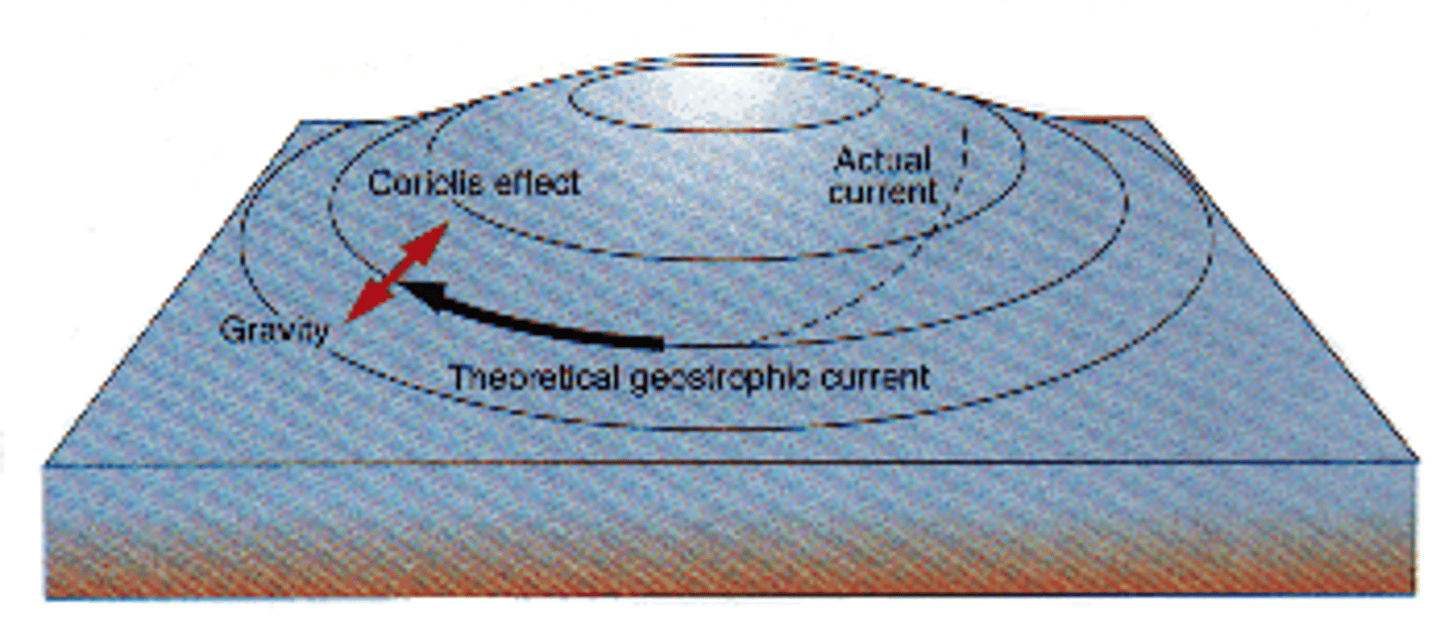
Geostrophic Flow
occurs when the pressure gradient force and the Coriolis force are balanced.
curved airflow
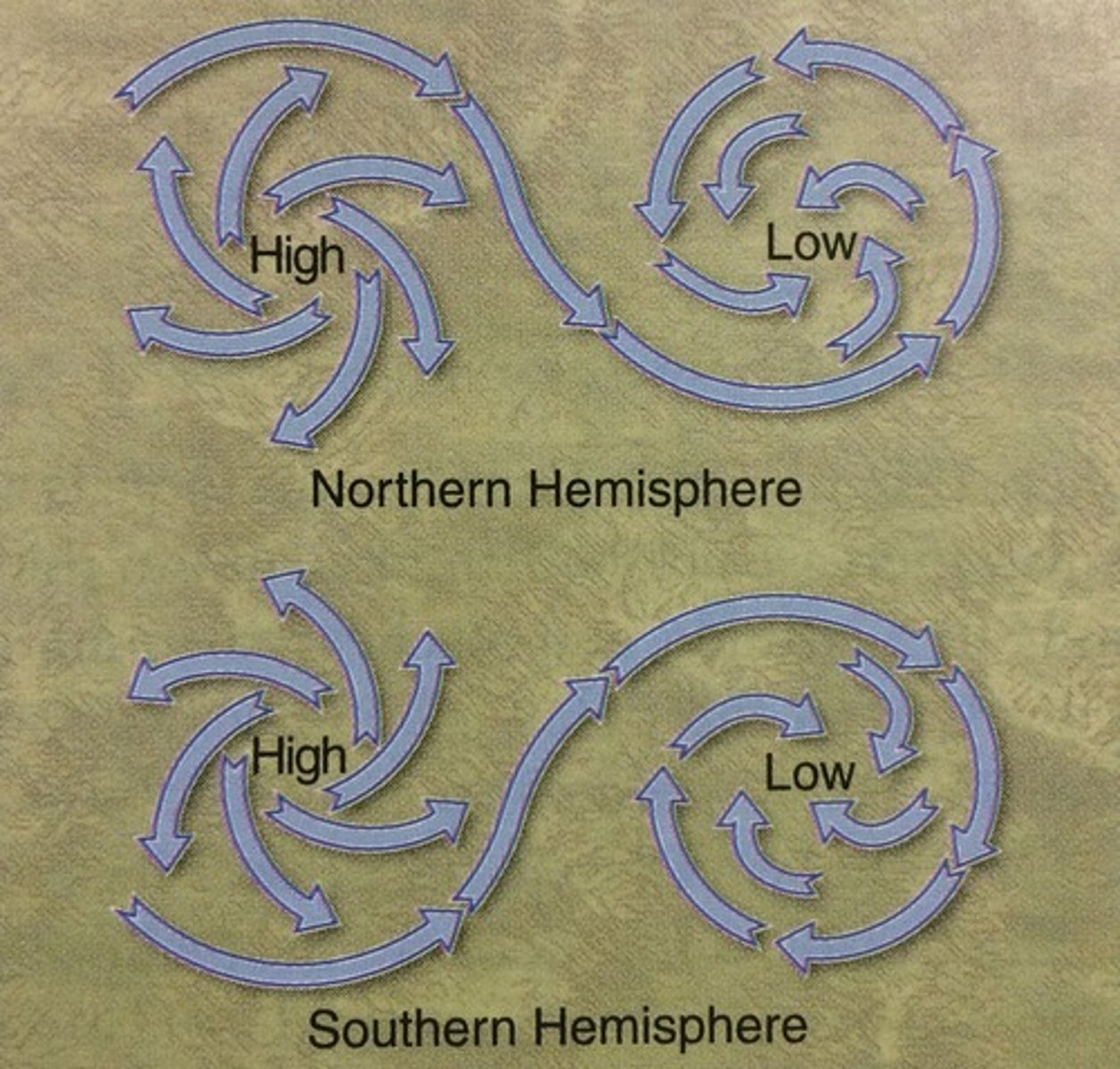
winds around cells of high pressure or low pressure follow curved paths
cyclone/anticyclone
Cyclone: A low pressure region with an accompanying surface wind Anticyclone: a high pressure system with accompanying winds
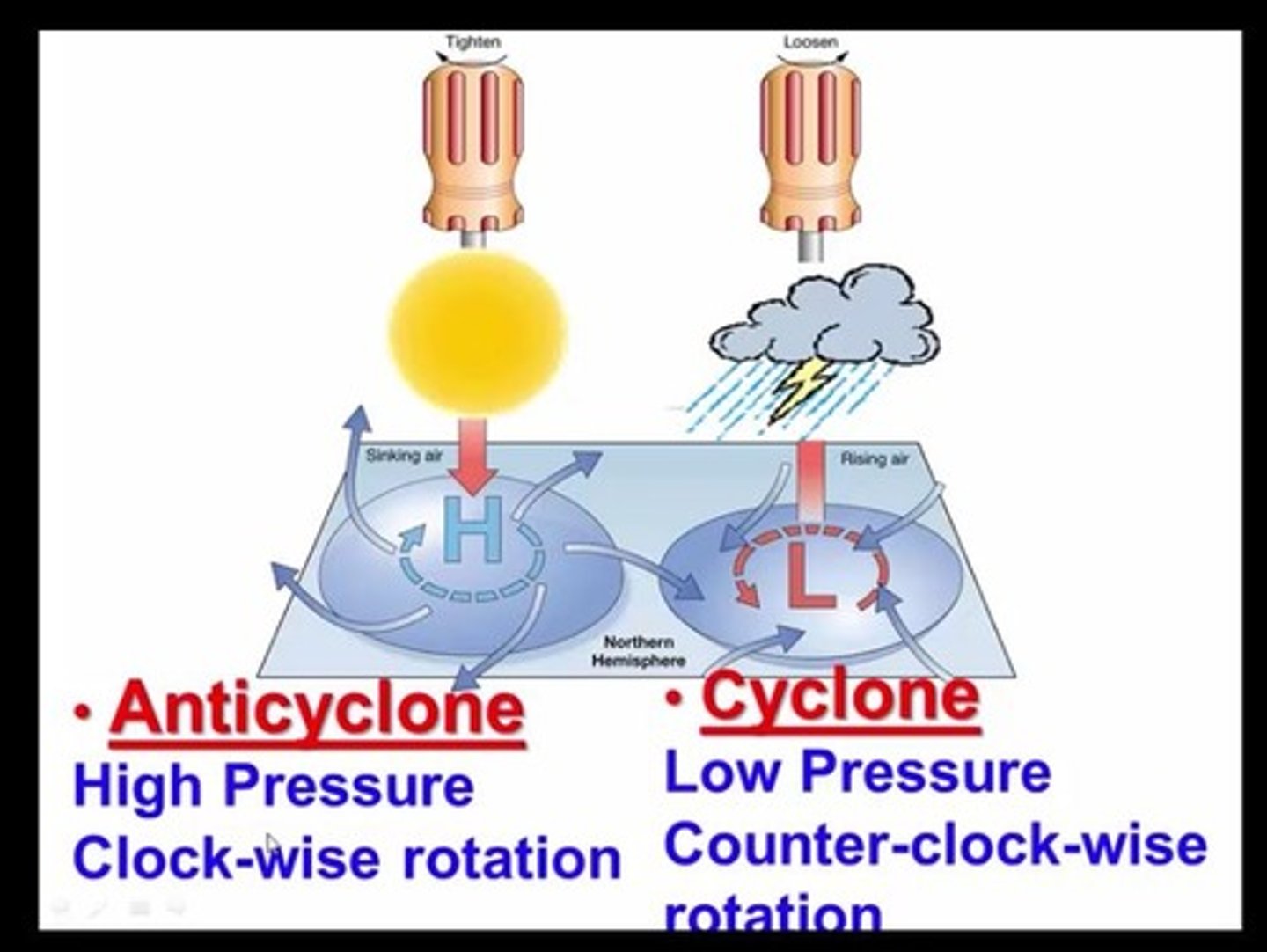
cyclone and anticyclone at north and south hemispheres
Northern hemisphere: Counterclockwise
Southern hemisphere: Clockwise