4.5 role of the state in the macroeconomy
 Call Kai
 Learn
Learn Practice Test
 Spaced Repetition
 Match
Match Flashcards
 Knowt Play
1/56

There's no tags or description
Looks like no tags are added yet.
Name | Mastery | Learn | Test | Matching | Spaced | Call with Kai |
|---|
No analytics yet
Send a link to your students to track their progress
57 Terms
types of govt expenditure
Capital govt expenditure
Transfer payments
Current govt expenditure
Capital govt expenditure
spending on investment goods eg roads, schools and hospitals
Transfer payments
money taken from one group and give to another e.g tax -> pension
Current govt expenditure
recurring day to day spending by governments on public services
things that affect the Composition and size of public expenditure
level of GDP
inflation
Higher income countries demand more services from govt
Trade cycle
crisis e.g. global financial crisis
Pressure on govt spending due to aging population
Provision of public + merit goods
Interest payments on national debt
Infrastructure needs
how does inflation affect govt expenditure
increases the nominal value of goods therefore reduces real spending power of govts money therefore increases govt expenditure
how did the global financial crisis affect govt expenditure
increase govt spending on welfare payments, some govt used taxpayers money to bail out banks
impacts of levels of public expenditure on productivity and growth
Increase borrowing -> Crowding out
Spending on infrastructure
Economies of scale - improves productivity
Education - provides human capital
Increase RandD
Multiplier effect
impacts of levels of public expenditure on living standards
Spending corrects market failure and provides public goods
Reduce absolute poverty - benefits, education, healthcare
Govt may suffer from principal agent problem - loss in welfare and fall in living standards
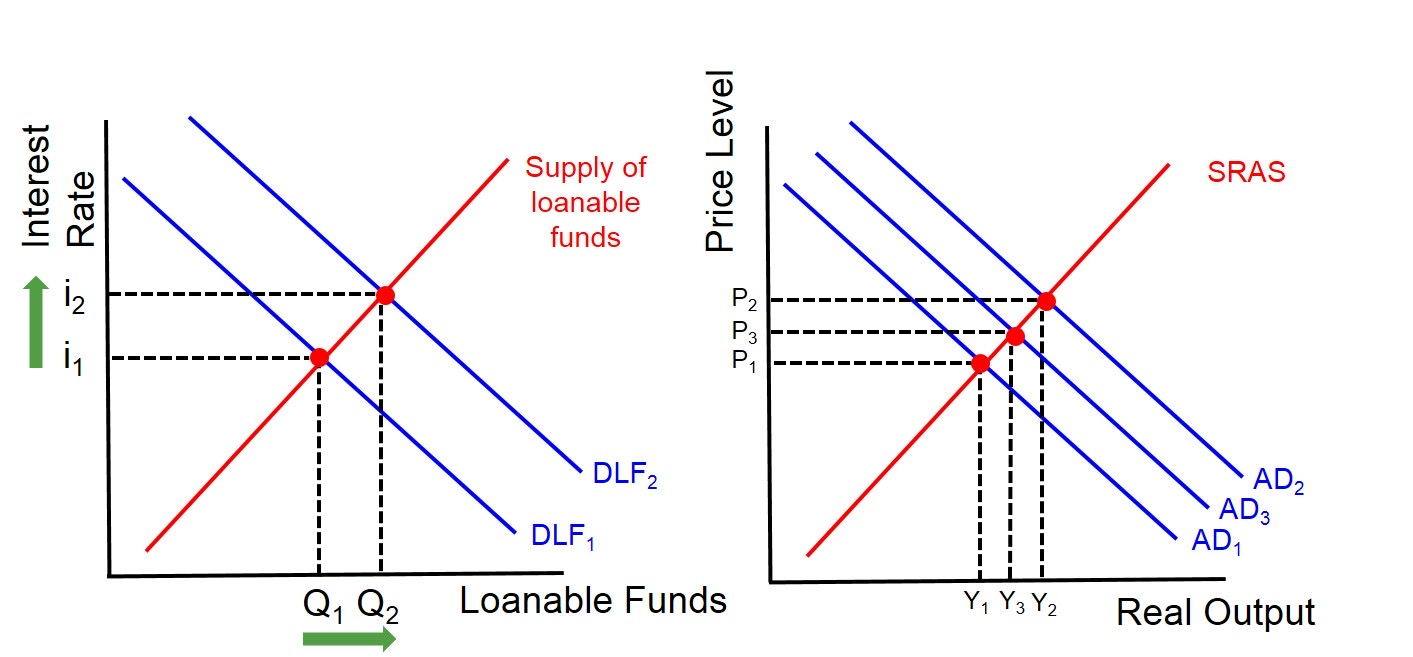
crowding out
Govt borrows from individuals and businesses - money in economy doesn’t increase so govt competes with private sector for finance -> pressures interest rates to rise, discourage firms from investing and individuals buying on credit
Either done by Limited number of resources (increases scarcity for resources - higher ROI required for capital owners) in economy or financial (leads to fiscal deficit)- govt borrowing crowds out private sector
In terms of high unemployment govt spending lead to “crowding in” encourages investment through multiplier
impacts of levels of public expenditure on the level of taxation
Increase in debt/govt spending -> require increase tax or increase IRs for govt bonds for funds or econ growth
Consequences? - incentive? Increase leakage -> decrease AD
impacts of levels of public expenditure on equality
Increase govt spending -> Increase Welfare support policies to help lower income individuals
Increase govt spending - Increase Provision of public services to provide equal opportunities
However some spending e.g. military - no obvious impact on equality
direct taxation
taxes that cant be avoided → tax on income
indirect taxation
taxes on spending that can be passed on to others e.g. in the price of goods
Proportional tax
taxes that are paid as an equal % income at each income level e.g. 23% income tax rate -> Lithuania
Progressive tax
increase as income increases, helps reduce inequality, based on the person's ability to pay. Usually direct taxes
Regressive tax
proportion of income paid on tax is higher in lower incomes, less equitable distribution of income. Usually indirect taxes
objectives of taxation
Raise tax revenue to fund public services (include productive capacity LRAS)
Change patterns of economic activity → e.g. tax on demerit goods
Redistribute income especially progressive tax
Manage the macroeconomy (to change AD)
Raise money for specific causes → hypothecated tax
main taxes in UK
Income tax
Nat insurance
VAT - indirect - uk 20%
Corporation tax - direct - profits
Fuel duty - indirect - demerit good
Council tax - local govt
how does tax changes affect incentives to work
High marginal rates of tax will discourage work, supply of labour is relatively elastic
High tax can cause high income earners to move abroad
Poverty traps
High tax -> increase hours of work -> increase income
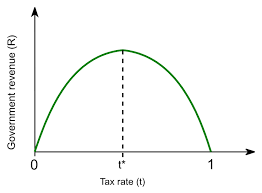
how does tax changes impact the tax revenue
Laffer curve shows the impact of direct taxes on incentives
If ppl were taxed 100% then no work done so tax rev is 0 at 0% and 100%
Similarly increase corp tax may decrease I + FDI
T is not known
Revenue from indirect taxes uncertain due to consumer spending patterns
how does tax changes impact income distribution
Progressive tax will increase income equality
Regressive will increase income inequality
Tax does not give the poor anything so benefits are required
how does tax changes impact Real output and employment
Rise in direct taxes -> decrease income -> fall in AD, effect on output depends on if full employment or not
Higher indirect taxes and NICs increase costs for firms and will decrease SRAS
Incomes taxes cause a disincentive to work -> reduce LRAS
how does tax changes impact Price level
Tax impact LRAS,SRAS,AD -> shift price
Indirect taxes -> cost push inflation
how does tax changes impact Trade balance
Rise taxes - reduce imports, imports at highly income elastic - improve trade balance
Long run - lower AD -> reduce businesses need to I -> reduce competitiveness
how does tax changes impact FDI flows:
Low taxes on profit -> increase business I
Problem - “race to the bottom”, countries continue to decrease tax to encourage I resulting in falling revenues for all countries
fiscal balance
difference between G and T
EU considers deficit as <3% is the benchmark
automatic stabilisers
changes in fiscal policy (G+T) that occur as a result of a change in GDP -> changes in GDP are linked to economy cycle
How do automatic stabilisers help in recession and boom
In recession stabilisers reduce the overall fall in AD e.g. increase benefits (G) + decrease income tax, and in boom tax increases which limits demand
Discretionary fiscal policy
deliberate manipulation of government expenditure and taxes to influence the economy, expansionary and deflationary policies
National debt
Sum of all govt borrowing built over the years when a country runs a fiscal deficit
This debt has an interest which needs to be paid by the govt e.g. uk 24/25 $106 billion
usually measured as a percentage of GDP (EU <3% sensible)
How does govt borrow
BofE -> issues govt bonds to the financial markets, UK govt bonds are bought by financial institutes -> usually seen as ‘safe’ investment, guarantees a fixed return -> interest rate
This IR is effectively fixed borrowing rate
Cyclical deficit
deficit that occurs because G and T fluctuate around the trade cycle e.g. recessions T is low and G is high
Structural deficit
long term, a budget deficit that remain even when economic growth is at trend (e.g. UK -> 2.0/2.5%) or higher
Why is cyclical deficit easier to eliminate than structural deficit
Cyclical deficit will be eliminated by increase econ growth -> trend therefore policy focus = increase econ growth
However difficult to eliminate structural deficits:
Decrease govt expenditure
Increase tax receipts
Actual deficit
structural deficit + the fiscal deficit
Structural surplus
long term, a budget surplus that remain even when economic growth is at trend (e.g. UK -> 2.0/2.5%) or below
Factors influencing the size of fiscal deficits
Trade cycle
Unforeseen events
Interest rates - IR increase -> increase govt debt -> increase deficit
Privatisation - one off payments to the govt
Govt aims
Number of dependants
Govt revenue
Considerations of national debt
ND is often expressed As a percentage of GDP, gives creditors an idea of affordability
If ND becomes too large - creditors may see govt bonds as high risk - demand higher IR
However its possible for ND to go up in absolute terms but fall as % of GDP
Factors influencing the size of national debts
Govt runs a deficit -> increase national debt i.e. fiscal deficits over 3% will lead to growing national debt
Ageing populations - govt runs structural deficit - increase national debt
Interest rates
Significance of fiscal deficits and national debts
high borrowing -> increase IR -> may cause crowding out
Large amount of money goes to servicing national debt - opportunity cost
High fiscal deficits -> inflation
High debt -> reduced credit rating for the govt -> higher IRS demanded
Borrowed from abroad - difficulty in foreign currency repayments
Borrowing -> increase govt spending -> increase supply side -> may reduce deficit and econ growth
How can govt reduce fiscal deficits and national debts
Policy of austerity - decrease spending, increase taxes - unpopular and could limit growth
Demand stimulus by high spending -> cause econ growth -> rise in tax revenues -> reduce fiscal deficit
Rely on automatic stabilisers - allow econ growth so national debt/fiscal deficit will reduce as percentage of GDP
Defaulting on loans - desperate option as cost is large
How can govt reduce poverty and inequality
Redistribution from rich to poor
Progressive tax system
Benefits
Provision of goods and services - e.g. healthcare, education, housing
Reduce wage differentials
Access to education and training opportunities - allow children from poorer backgrounds to be educated
Price controls - on essential goods
Trickle down concept
Law of diminishing marginal utility
Types of govt benefits
Universal benefits - available to anyone who meet certain criteria, irrespective of personal income
Means tested benefits - only for people with low income, target those who need most help and provide a safety net
How can govt reduce wage differentials
National minimum wage - improve income of the poor
Maximum wages or pay ratios - reduce the incomes of the rich
Equal pay legislation - prevent inequality from race or gender
Trade union friendly legislation - increase wages for workers
Worker benefits - employers can provide sickness benefits, pensions and medical care
Trickle down concept
increasing income of rich, rich spend their money and employ others which creates jobs, increasing the income of the poor
Law of diminishing marginal utility
suggest that redistribution increases total utility, the higher the spending of an individual the less satisfaction gained from spending an extra pound, extra money to poor family increase utility more than for a rich family
Govt policy in changing interest rate and money supply
Central bank has ability to change IR and monetary supply - done for domestic reasons i.e. or control inflation or global issues i.e. low ER
Quantitative easing - BofE used since IR could not be lowered any further
How can govt change international competitiveness
Supply side measures - improve productivity, encourages competition therefore firms competitive in global market
Exchange rate policies - control inflation and macroeconomic stability e.g. China devalues currency to reduce export price
Join WTO or sign trade agreements
Macro policies to reduce external shock of globalisation
Commodity price shock - e.g. oil prices greatly increase, expansionary policy reduce the fall in GDP or deflationary to reduce impact on inflation
Financial crisis - expansionary policy to increase AS
Changes in exchange rates - IR can be changed etc
Political instability - in UK and other countries would mean the govt would need to take action
Transnational companies
Creates jobs
High tax revenues
Investment
Negative economic and social impact e.g. loss in culture, environmental impacts, high profit withdrawal from the economy > injection through investment
How can govt regulate transfer pricing
Transfer pricing allows firm to avoid tax - firm produces good in one country then transfers it to another to make it into another good which it then sells, moves it profits from the high tax country in which it sells the good to a tax haven country to pay little tax
Arm's length principle - aim for the price to be the same as if the 2 parties were independent of each other
Why is it difficult for govt to control TNCs
EU suffer from legal tax avoidance schemes e.g. "Dutch sandwich" and the "Double Irish", where costs, revenues and profits are routed through Ireland, the Netherlands or Luxemburg and then sent to a tax haven like the Bahamas
Solutions to taxation require worldwide agreement, any solution that benefits a coutnry like UK would lead to great losses to countries like Bahamas and Luxembourg
Problems facing policy makers for controlling TNCs
Inaccurate information
Risks and uncertainties
External shocks
Inaccurate information
short term information e.g. GDP figure are unreliable
Cutting down tax avoidance is difficult as govt does not know the full level and who is avoiding the tax
BofE makes decisions based on past data but trends can change
Risks and uncertainties
Future is unpredictable so difficult to know if extra spending is necessary etc
Can't know the full impact of decisions and consumer react unexpectedly
External shocks
Govt is unable to control and prepare for these
Only can hope to lessen their impact
Policies may not have intended impacts or undermine current policies e.g. Brexit has delayed govt plans to balance the budget

