human phys 15.2
 Call Kai
 Learn
Learn Practice Test
 Spaced Repetition
 Match
Match Flashcards
 Knowt Play
1/33

There's no tags or description
Looks like no tags are added yet.
Name | Mastery | Learn | Test | Matching | Spaced | Call with Kai |
|---|
No analytics yet
Send a link to your students to track their progress
34 Terms
blood flow
volume of blood flowing through vessel, organ, or entire circulation in given period
depends on pressure gradient, resistance
blood flow
∆P/R
Blood flow equation
total peripheral resistance
the resistance of the entire cardiovascular system
opposition to blood flow, TPR
resistance
nL/r^4
resistance equation
viscosity and vessel length proportional, radius is inversely because of friction
3 factors vs resistance
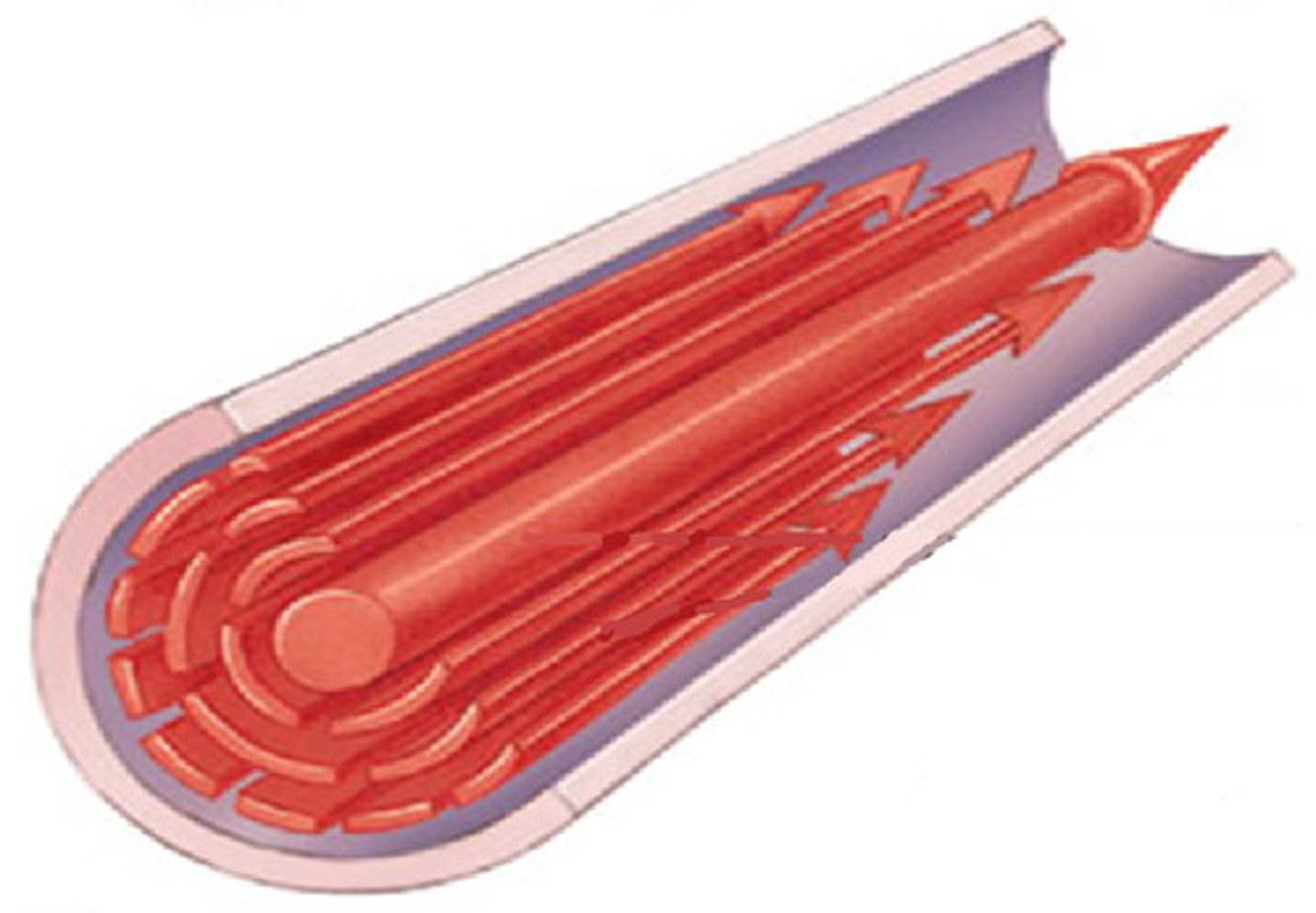
laminar blood flow
type of blood flow not resulting in audible sound; defined by streamline flow or flow in parallel layers without turbulence
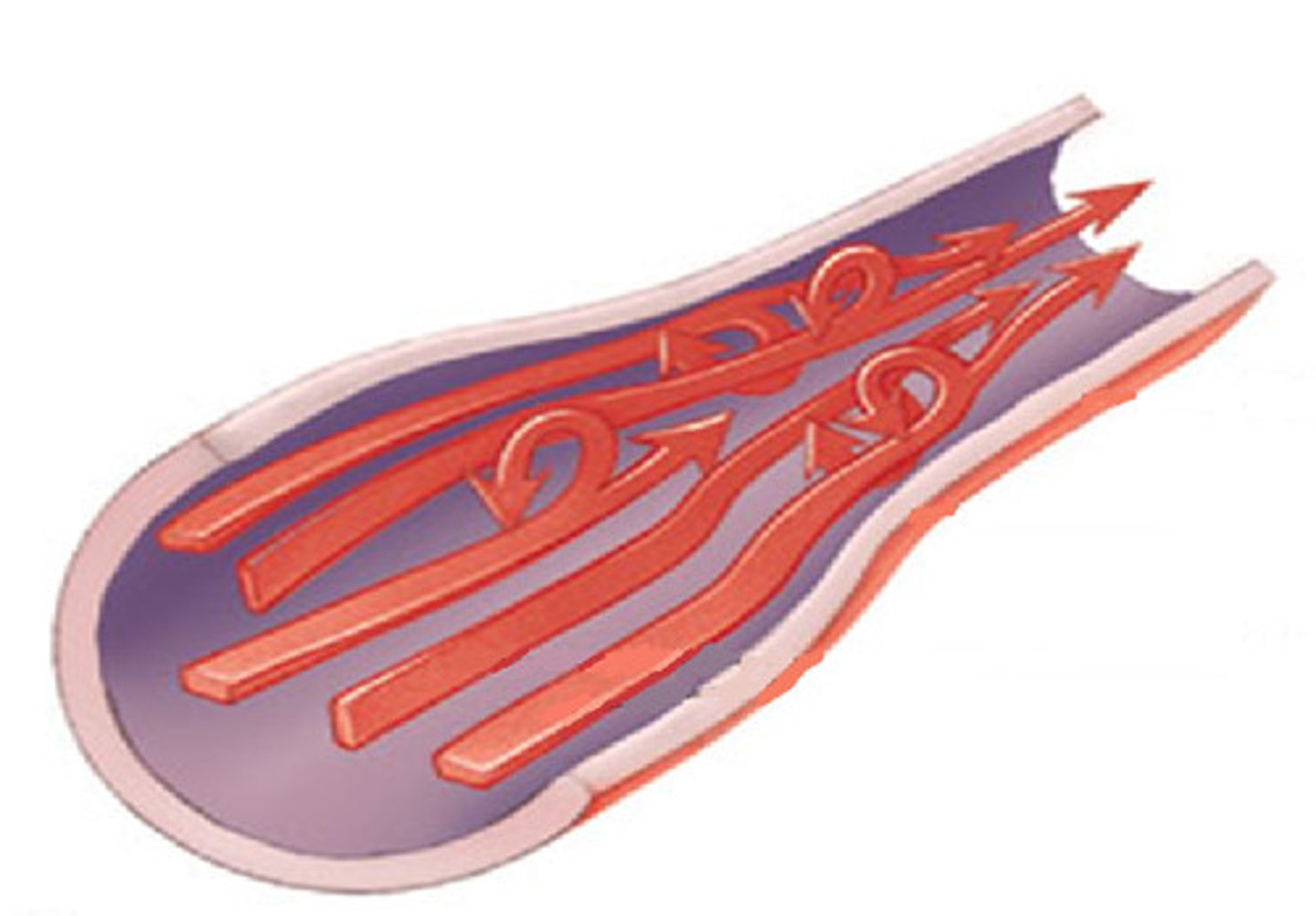
turbulent blood flow
type of blood flow resulting in audible sound; defined by chaotic flow due to variations of pressure and velocity
blood moves in layers, one closest to wall flows slowest bc of resistance
laminar blood flow
abnormal flow through constricted areas, greater resistance than laminar, detectable sounds
turbulent blood flows
blood pressure
the pressure that is exerted by the blood against the walls of blood vessels
systolic blood pressure
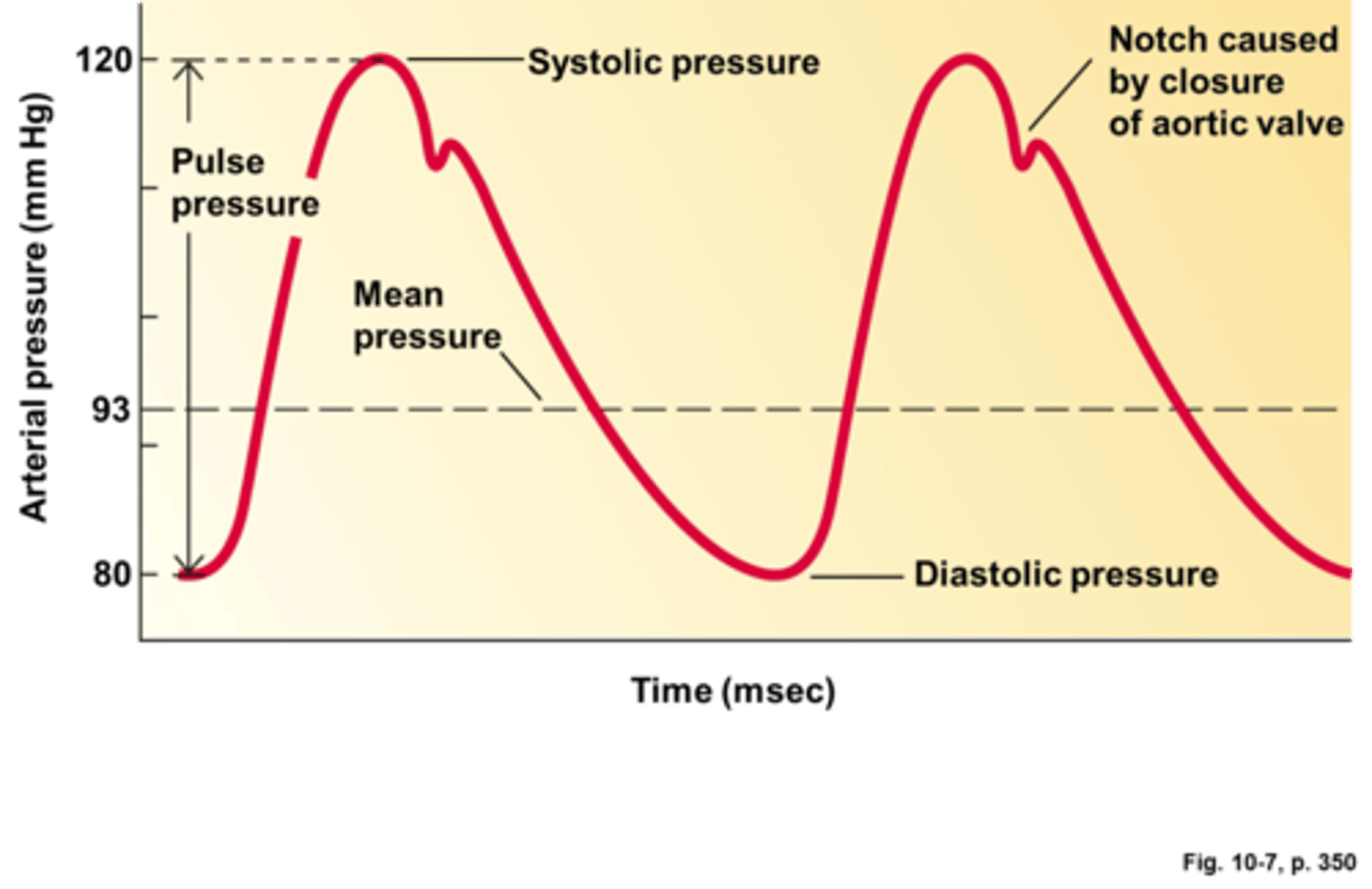
Blood pressure in the arteries during contraction of the ventricles.
created by systolic phase of heart, highest measured pressure
systolic BP
diastolic blood pressure
the pressure in the arteries when the left ventricle is refilling
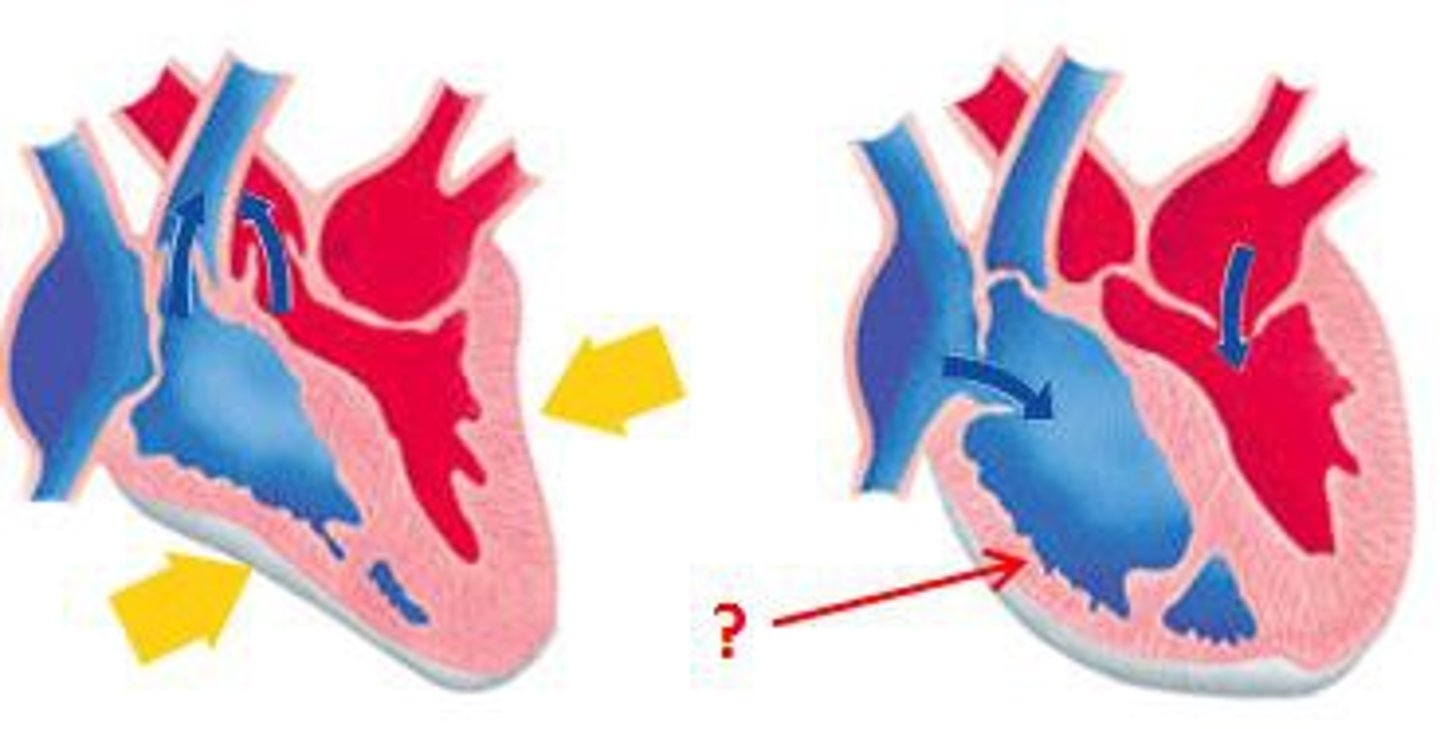
created by diastolic phase, lowest measured pressure
diastolic BP
pulse pressure
difference between systolic and diastolic pressure
Korotkoff sounds
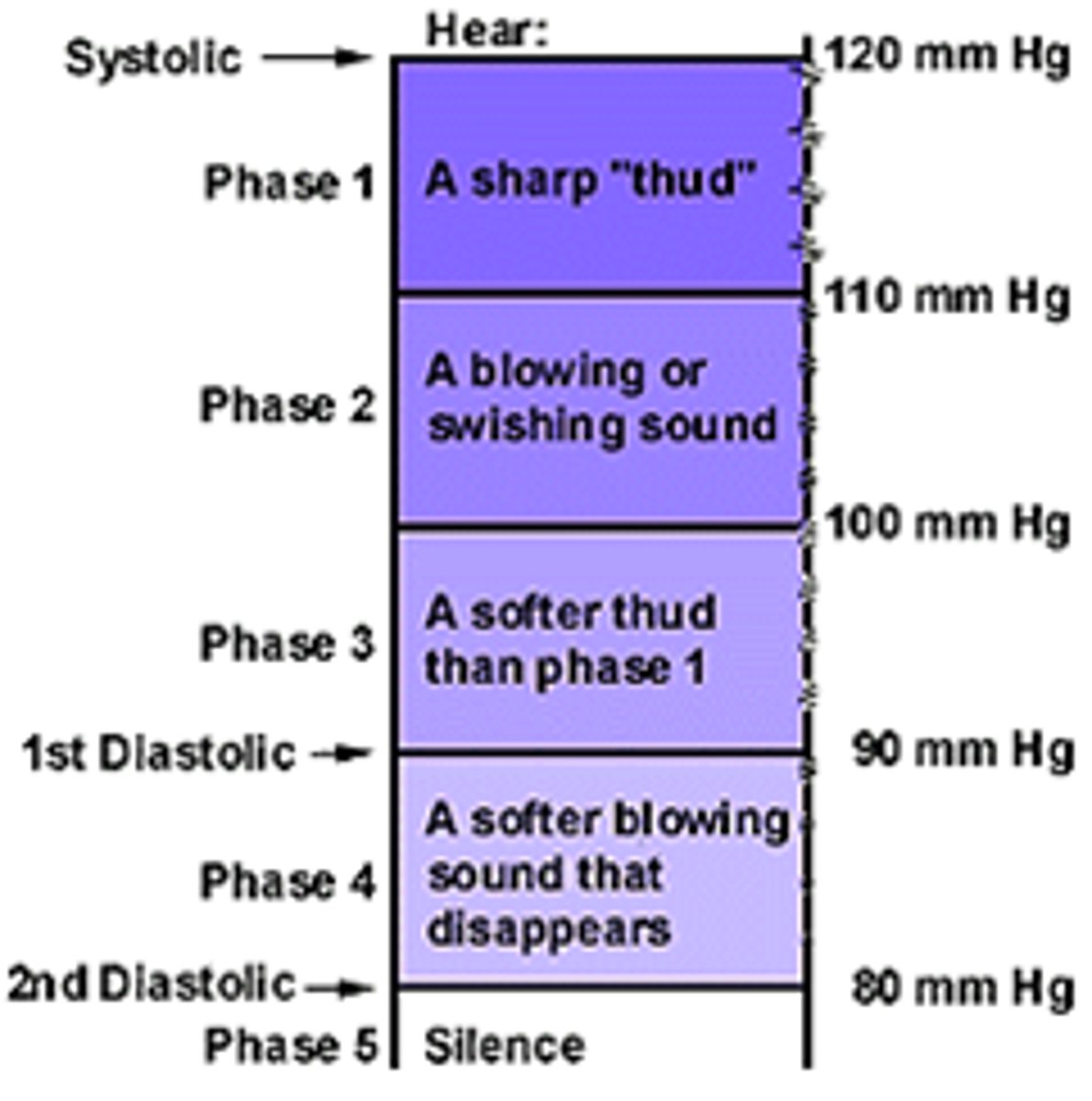
series of sounds that correspond to changes in blood flow through an artery as pressure is released
mean arterial pressure
pressure forcing blood into tissues, averaged over cardiac cycle
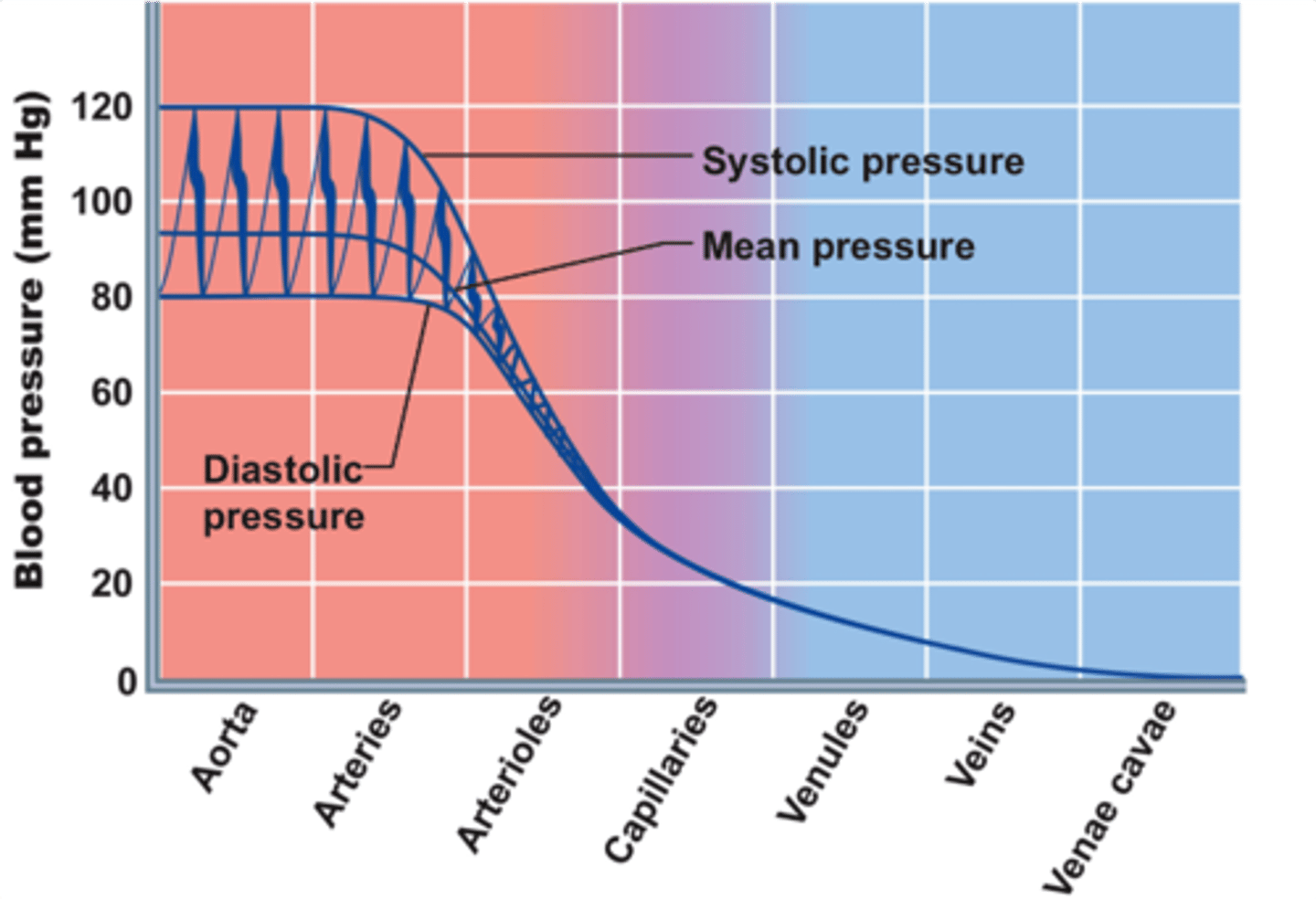
average BP in arteries, DP+1/3PP
MAP
as you move away from heart, MAP decreases
location vs MAP
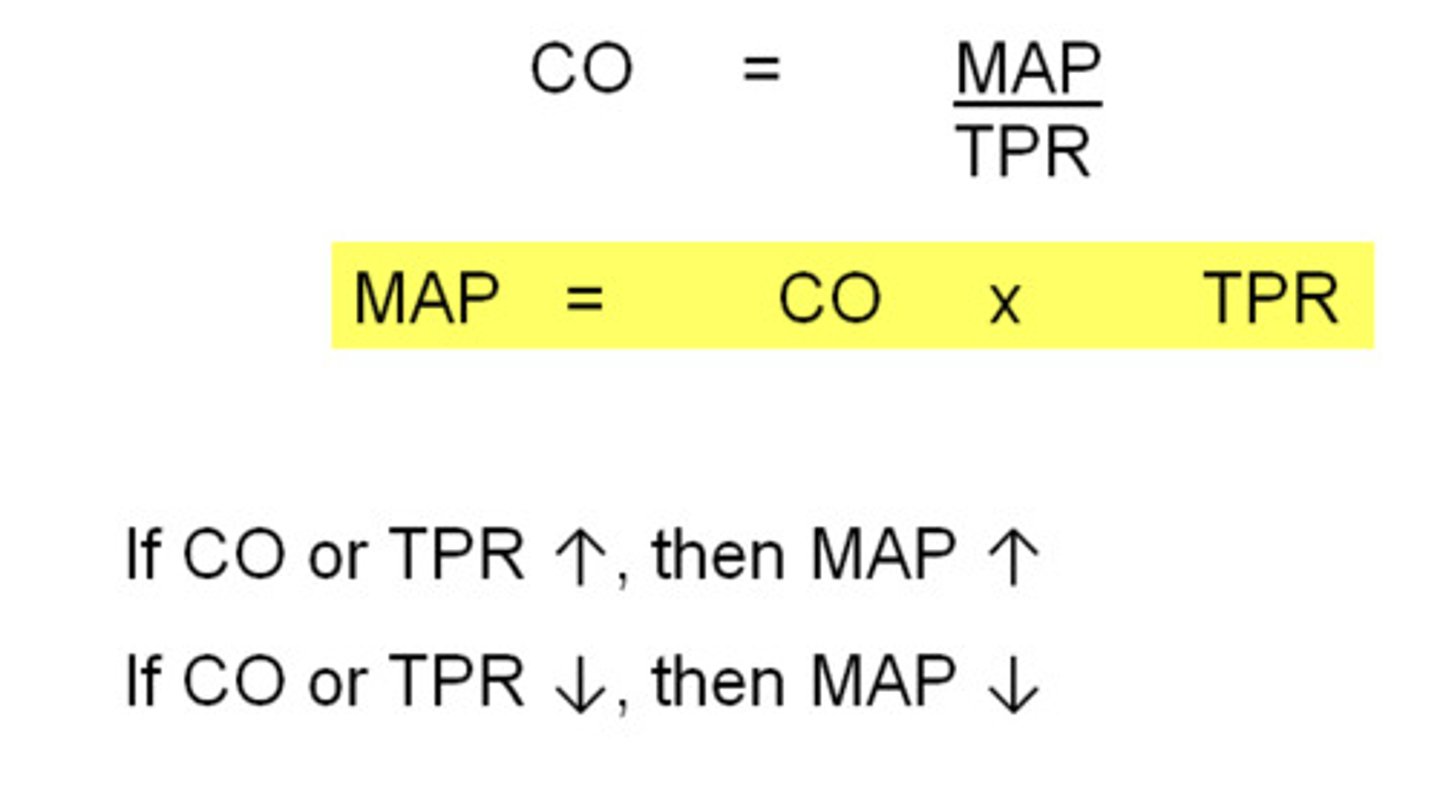
cardiac output x TRP
MAP is also determined by
heart rate x stroke volume
cardiac output =
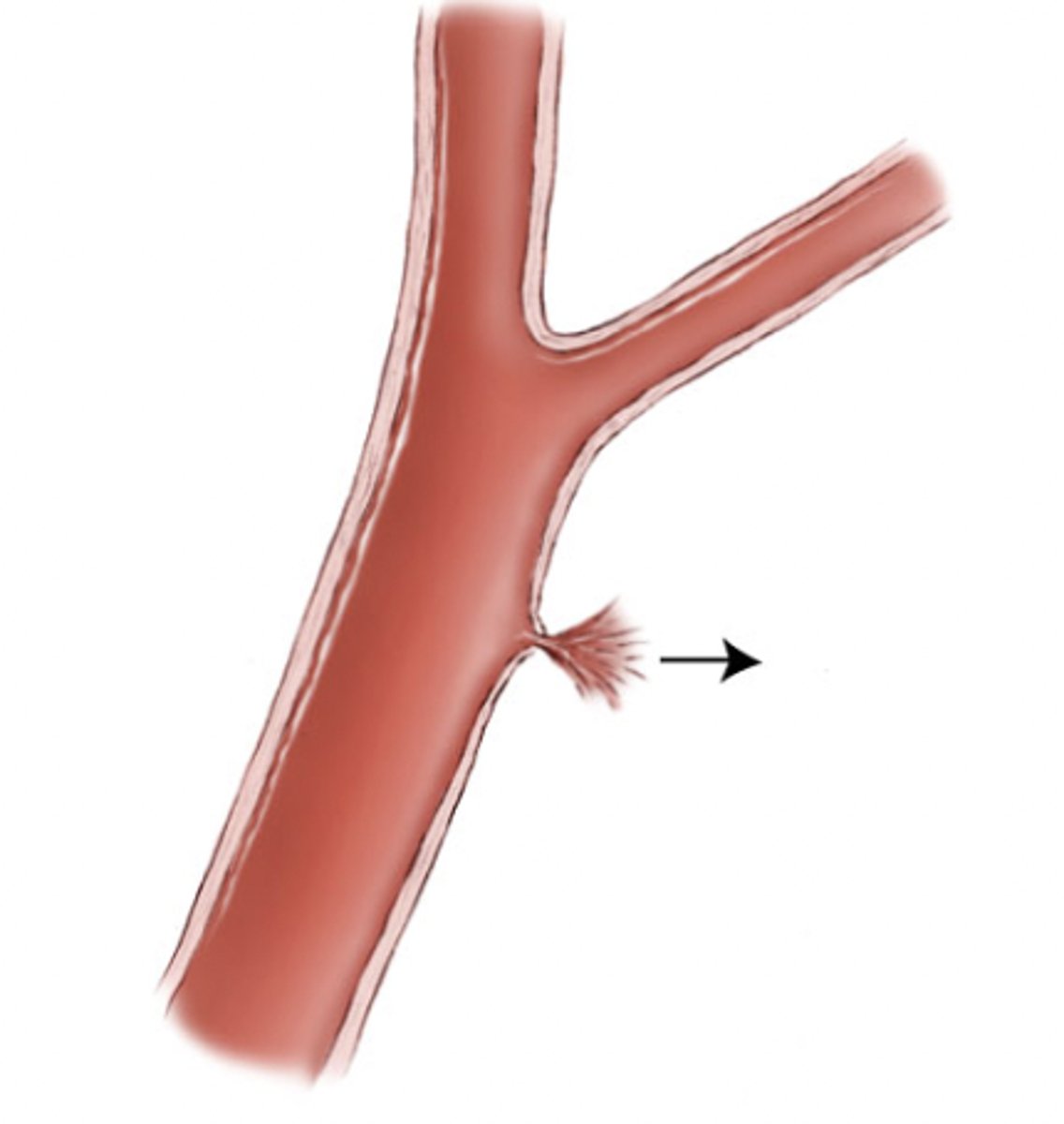
hermorrhage
the loss of a large amount of blood in a short time
anything that increases blood volume increases pressure
blood volume vs pressure
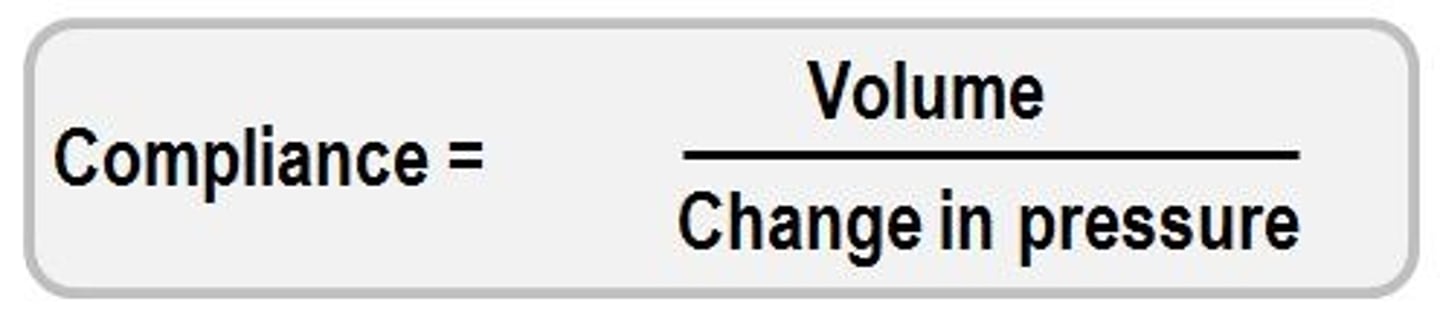
vascular compliance
Tendency for blood vessel volume to increase as blood pressure increases
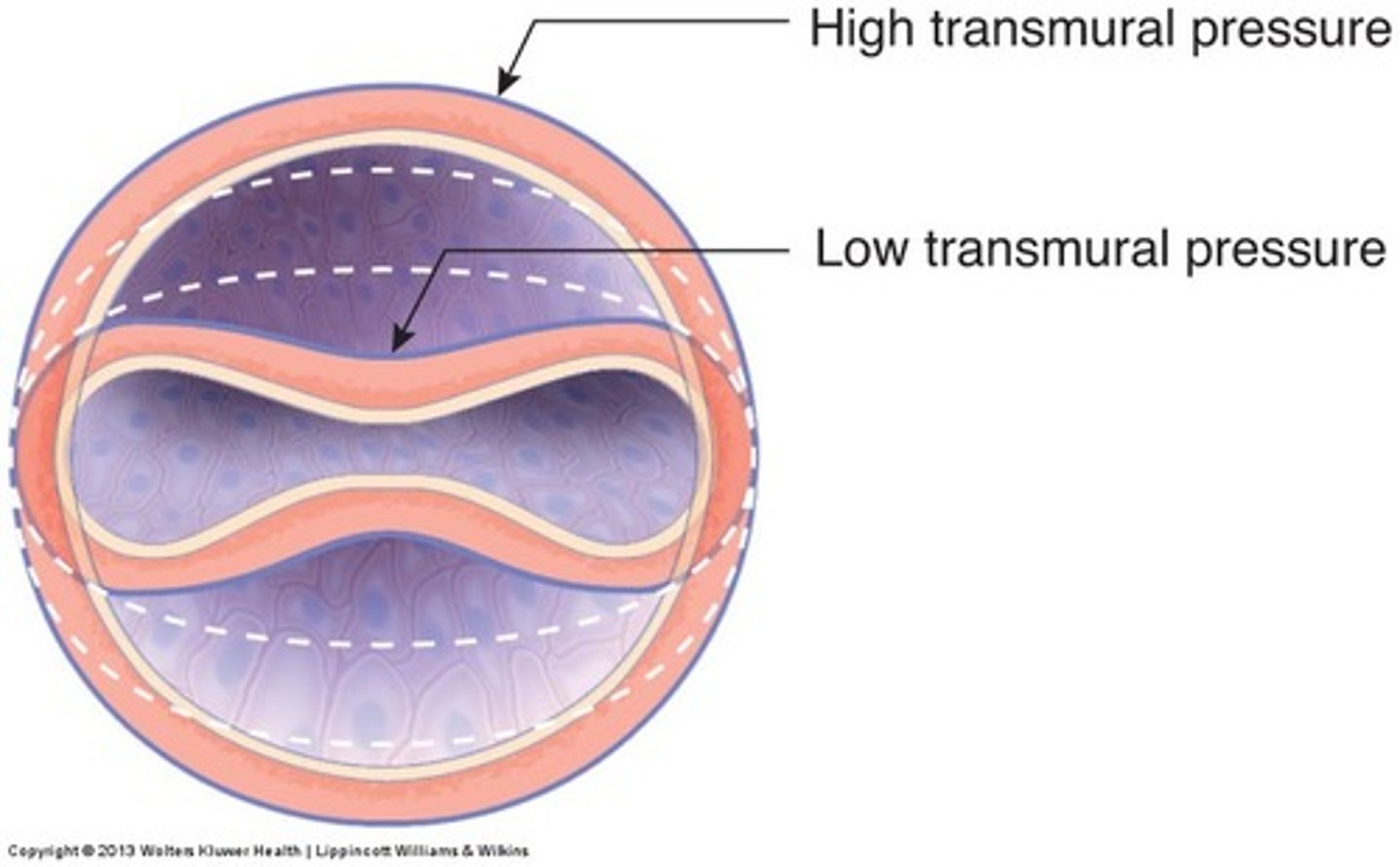
transmural pressure
pressure difference exerted on the two sides of a wall
veins, thin walls that are easily stretched
high vascular compliance
arteries, thick walls
low compliance
velocity is inversely proportional to cross sectional area
vlocity vs area
slowest in capillaries, largest total cross sectional area, highest in aorta
where is velocity slowest/higest
circulation time
time it takes a drop of blood to travel from right atrium back to right atrium
venous return
The amount of blood returned to the heart by the veins
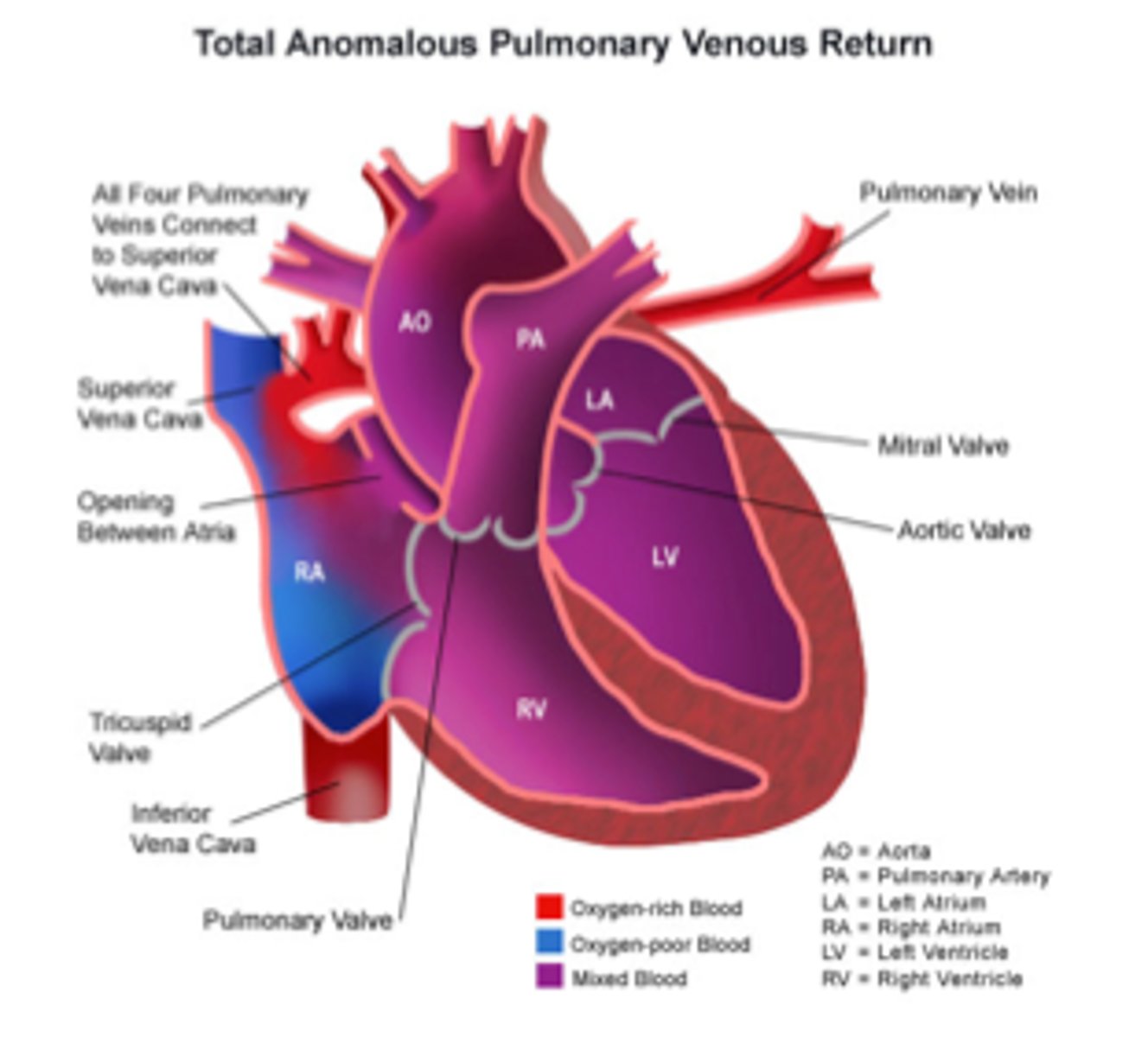
volume of blood flowing back to heart through veins, determined by venous pressure gradient, venous valves, pump
venous return

