OEB 130 Lecture 13+15 (Fish Diversity)
 Call Kai
 Learn
Learn Practice Test
 Spaced Repetition
 Match
Match Flashcards
 Knowt Play
1/26

Earn XP
Description and Tags
Midterm 2
Name | Mastery | Learn | Test | Matching | Spaced | Call with Kai |
|---|
No analytics yet
Send a link to your students to track their progress
27 Terms
2 major Otocephala groups
Ostariophysi
Clupeiformes
Otocephala key trait
ear-head fishes
Ear-swimbladder connection in: clupeomorph fishes
Ear-swimbladder connection in: ostariophysan fishes
Denticeps
a very primitive clupeomorph
Clupeiformes characteristic
Abdominal scutes
Schooling behavior; common bait fish
Anadromous vs catadromous
Catadromous: freshwater to the sea to spawn
Anadromous: migrate from the sea to freshwater to reproduce
blueback herring breeding
anadromous fishes, go from sea to freshwater to spawn
acoustico-lateralis system
lateral-line organs and connection to inner ear system
lateral-line organs that detect vibrations and pressure changes in water
Otic bulla
air-filled sac that contains middle ear bones for hearing
Key traits of otocephela
Caudal skeleton anatomy
Ear-swimbladder anatomy
Weberian apparatus
a chain of small bones known as ossicles that enhances hearing by connecting the swim bladder to the inner ear, allowing for improved sound perception.
including the tripus, claustrum, intercalarium, and scaphium.
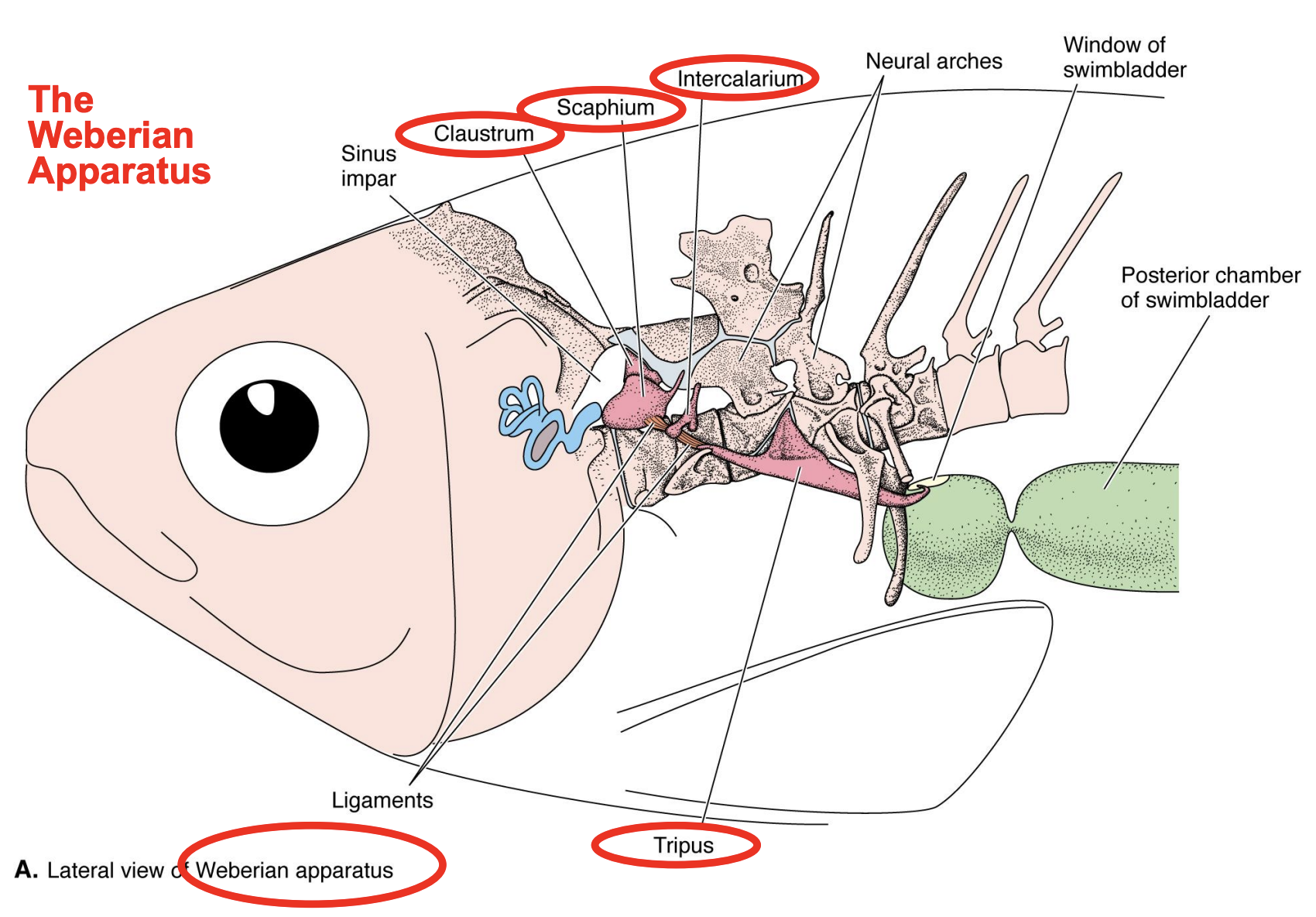
Ostariophysi traits
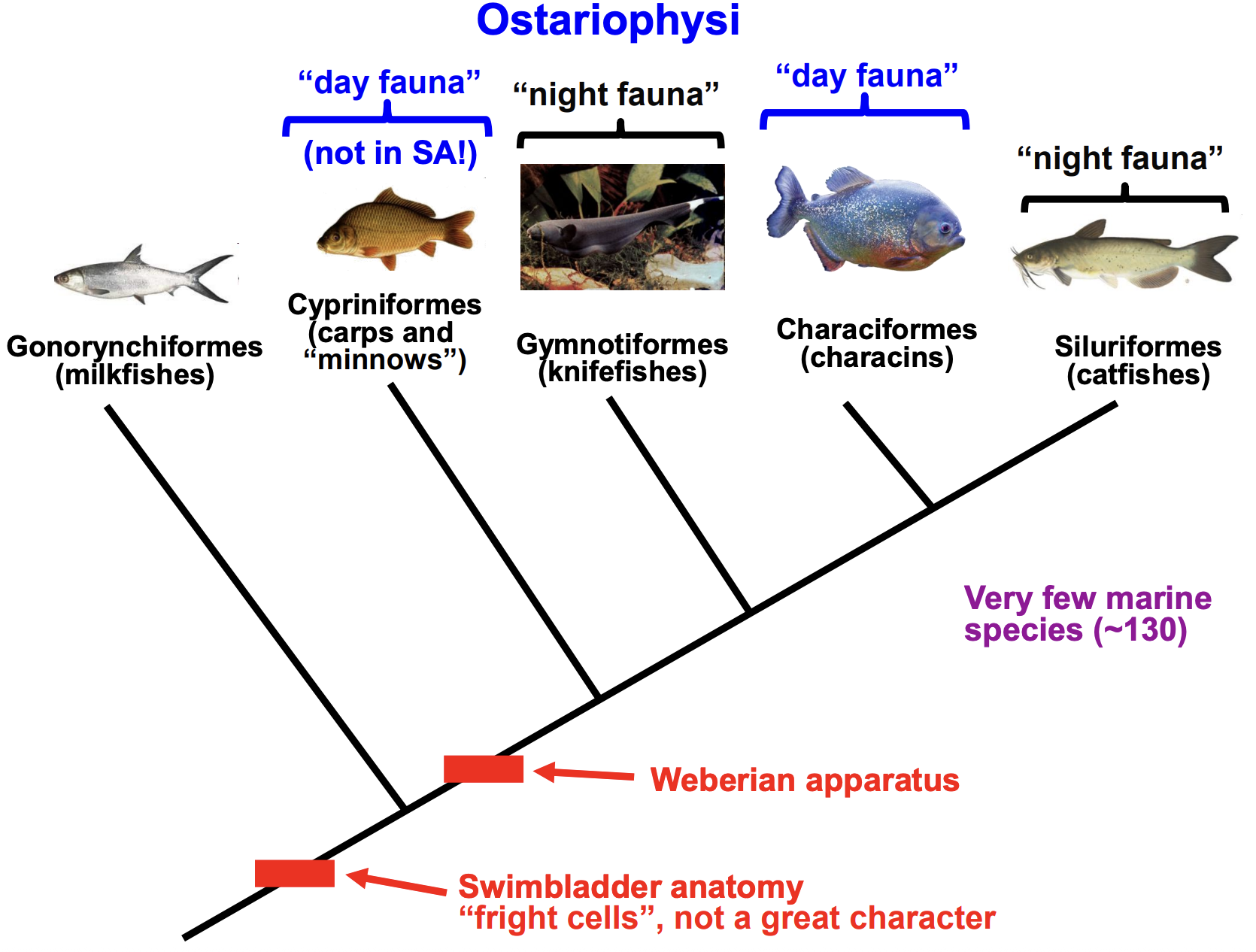
Swimbladder anatomy “fright cells”, not a great character
Webarian apparatus
Alarm substance cells (ASC)
in the epidermis of ostariophysan fishes
can trigger rapid erratic movement
Water Periodicity
large differences in the depth of water based on wet/dry season
Water periodicity impact on fish
As water rises, it carries debris onto the floodplain floor, providing much new food for young fishes in their nursery grounds.
Two types of fauna in Amazonian fish and their families
Night: Siluriformes (catfishes) and Gymnotiformes (electric knife fishes)
Day: Characiformes (characins)
What does division of the Amazonian fishes into these two “faunas” allow for
allow many species to live together and share resources
What family not in SA but is considered day fauna
Cypriniformes (carps and “minnows”)
Phylogeny and key traits of osteryiophysi
Cypriniformes
carps and minnows
Specialized premaxillary protrusion mechanism: kinethmoid bone
Often herbivorous; well-developed pharyngeal jaws, few to no jaw teeth
Gonorynchiformes
milkfishes
basal branch of osteriophysi
kinethmoid bone
Specialized premaxillary protrusion mechanism in Cypriniformes
Gymnotiformes
electric fishes that are able to generate their own weak electrical fields, and detect them
5 families; ~200 species; 1 strongly electric species
electric eel
Lost pelvic girdle and fins; mostly nocturnal
Characiformes
“day fauna” includes:
vegetarian browsers
insect eaters
Pickers of algae and small invertebrates living on plants
some feed near the surface
feed in midwater
and piranhas
Siluriformes
catfishes
35 families; 2 marine families; 1 family of strongly electric species
Some species venomous; popular food fishes; spines on fins

