ACTUALLY surviving physics 2
 Call Kai
 Learn
Learn Practice Test
 Spaced Repetition
 Match
Match Flashcards
 Knowt Play
1/186

There's no tags or description
Looks like no tags are added yet.
Name | Mastery | Learn | Test | Matching | Spaced | Call with Kai |
|---|
No analytics yet
Send a link to your students to track their progress
187 Terms
thermodynamics
exchange of heat energy between bodies and the conversion of heat energy
temperature
average kinetic energy of the atoms withina system;measure of internal energy
kinetic energy
K= 3/2kbT or 3/2nRT = 1/2mv²
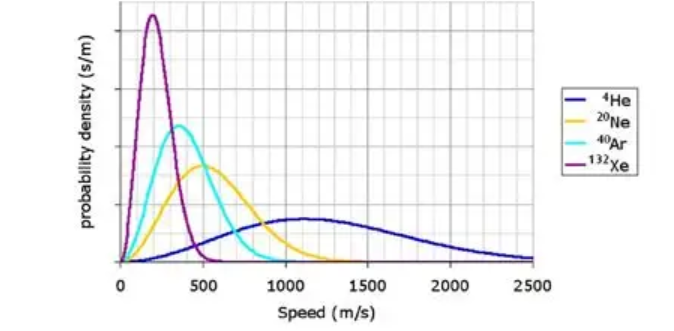
maxwell-bolton distribution
graph of the speed average
when speed increases, graph flattens on the right
when it decreases, it scooches up on the left
ideal gas
has random instantaneous velocities of its atoms
negligible volume
random elastic collisions
only forces during collisons matter
density and pressure are constant at all points
pressure of an ideal gas is the same everywhere
no potential energy
ideal gas law
PV= nRT
Heating
transfer of energy into a system
Cooling
transfer of energy out of a system
Conduction
Convection
radiation
where does energy flow
most likely from high temperature to low temperature
transferred until systems are the same temperature
thermal equilibrium
when no net energy is transferred between 2 systems
internal energy(U)
Q+W= 3/2 nRt
Equal to sum of all kinetic energy in the system
Change in internal energy leads to change in internal structure and behavior of a system
First law of thermodynamics
U = Q+W
In an isolated system the total energy is constant
In a closed system, the change in internal energy is the sum of energy transferred to the system by heating + work
Thermal work
W = -P* change in V
Pressure volume graphs
Represent thermodyanmic processes
Work = area underneath curve
isovolumetric/isochoric
constant volume
isothermal
constant temperature
isobaric
constant pressure
adiabatic
no energy transferred
Energy required to change temperature
Q=mc*change in T
c = specific heat
Rate at which energy is transferred by conduction
Q/change in t= (kA*change in T)/L
k = Thermal conductivity
A = area
T = temperature
L = length
Second law of thermodynamics
total entropy of an isolated system never decreases and is constant when all processes a system goes under are reversible
entropy
tendency of energy to spread/unavailability of a system’s energy to do work
maximized in thermal equilibrium
isolated systems move toward thermal equilibrium
entropy of an isolated system never decrases, but in a closed system it can decrease due to energy being transferred in our out
Charge
positive/negatie quantity of all matter
Electron have -e, protons have +e, neutrons have no charge
Coloumbs law
k or 1 /4pi epsilon not * q1q2/r²
direction of force
opposites attract, likes repel
electric permittivity
measure of the degree to which a material/medium is polarized in the prescence of an electric field
electric polarization
rearrangement of electrons by an external electric field
Constant in free space
Net charge
changes due to transfer of charge(electrons) between a system and its surroundings
Grounding
connecting a charged system to a larger neutral system
Electric field
ratio of electric force to charge
E=fe/q or E= V/r
acts positive; points away from positive charges and towards negative charges
measured in N/C
electrostatic equilibrium
charge of a conductor is distributed on surface; electric field is 0
electric field is perpendicular to surface of a conductor
electric field is same at every point in the sphere and 0 at the center
insulator has charge distributed inside and on the surface
electric potential energy
equal to work required for an external force to bring the point charges to their current position from infinitely far away
Ue=kq1q2/r
Measured in joules
Electric potential
electric potential energy per unit charge
V= k*sum of (q/r) or Ue/q
Measured in volts
electric potential difference is change in electric potential energy when a test charge is moved between 2 points
Isolines
lines of electric potential in space
electric field is stronger when closer together
stronger for negatives lower for positives
Capacitors
two separated parallel conducting surfaces that can hold equal amounts of charge with opposite signs
Capacitance
C=Q/V
Depends on capacitor
For parallel plates with a dielectric in the middle
C = K(epsilon not) * A/d
Measured in farads
Electric field of a capacitor
Ec= Q/k(epsilonnot)A
Electric potential energy of a capacitor
Uc= 1/2QV
Conservation of electric energy
Ue= qV
Current
the rate at which charge passes through the cross-sectional area of a ire
I= q/t
Measured in amperes
Moves in the direction of positive charge
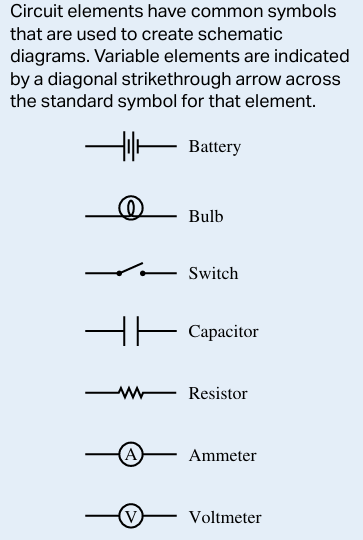
Circuit
composed of electrical loops which can include elements such as wires, batteries, resistors, lightbulbs, capacitors, switches, ammeters, and voltmeters
Closed electrical loop
closed path where charges can flow
Closed circuit
a circuit where charges can flow
Open circuit
one where charges can’t flow
short circuit
charge can flow with no potential difference
Circuit elements
battery, bulb, switch, capacitor, resistor, ammeter, voltmeter
Resistance
measure of the degree an object opposes the movement of electric charge
R = pl/A(resistor with uniform geometry)
p = resistivity
l = length
A = area
Measured in ohms
Ohm’s law
I = V/R
Ohmic material
A material with constant resistance for all currents and constant resistivity for all temperatures
Electric power
P = IV
P = I²R = V²/R
Brightness of a bulb increases with power
Series connection
connection where charges must pass through all elements with no other paths available; current in each element must be the same
R = sum of all Rs
parallel connection
Connection where charges will flow through one of multiple paths
1/R = sum of 1/R
Resistance of the group decreases
Ideal batteries and wires
negligible resistance
nonideal battery
resistance like a resistor in series with an ideal battery and remainder of the circuit
Potential difference(V) = E(emf)- Ir
Ammeter
used to measure current at a specific point in a circuit; must be in series and have 0 resistance
nonideal if it changes properties of circuit being measured
Voltmeters
used to measure potential different beteen two points; must be connected in parallel and have infinite resistance
nonideal if it changes properties of circuit being measured
Kirchoff’s loop rule
potential difference of all circuit elements in a closed loop must equal 0
Kirchhoff’s junction rule
Current entering a junction must equal that leaving a junction
Capacitors in series
1/C
Capacitors in parallel
C
Time constant of an Rc circuit
measure of how quickly a capacitor will charge/discharge
tau = Req*Ceq
Charging capacitor time constant
time required for capacitor charge to increase from 0 to 63 percent
Discharging capacitor
time required for capacitor charge to decrease from fully charged to 37 percent
Potential difference and current of a capacitor
Charges but steadies over time
Magnetic field
a vector field that can be used to determine magnetic force exerted on moving electric charges, electric currents, or magnetic materials
produced by dipoles
north and south polarity
form closed loops
decreases getting farther away from the dipole
points away from north pole, towards south
earth is a dipole
perpendicular to velocity and position of an object
magnitude is max when velocity vector is perpendicular
independent from electric field
permanent magnetism
ferromagnetic materials
induced/weak magnetism
paramagnetic materials
dimagnetism
electronic structure is weakly aligned with dipoles
magnetic permeability
measurement of the amount of magnetization in a material in response to an external magnetic field
free space
constant magnetic permeability uo
magnetic force
exerted by a field on a charged object
F=qvBsin0
B = magnetic field
Hall effect
describes potential difference created in a conductor by an external magnetic field that has a component perpendicular to the direction of charges moving in the conductor
magnetic field of a current carrying wire
B= uoI/2pir
Direction with the right hand rule
multiple with vectors
magnetic force on a current carrying wire
F=IlBsin0
I = current
l = length
light ray
straight line that is perpendicular to the wavefront of a light wave and points in the direction the wave travels
law of reflection
the angle between the indirect ray(when it touches the surface) and the normal line(line perpendicular to the surface) is equal to the angle between the reflected ray and normal line
diffuse reflection
the reflection of light from a rough surface, resulting in light being reflected in many directions
specular reflection
the reflection of light from a smooth surface, resulting in light uniformly reflected from the surface
focal point
the common location that incident light rays gather
focal length
distance from lens to the focus; specific to different lens
plane mirrors
only produce upright and virtual images that are the same size as the object and same distance behind the mirror as the object is in front
infinite focal length
concave mirror
a converging mirror where all the rays gather towards one point; positive focal length
real images form in front of the mirror and can be projected, while virtual form behind and cannot be projected
focal length = R/2
convex mirror
a diverging mirror where all the rays reflect in different directions; negative focal length
image is always smaller than the object and behind the mirror; upright and virtual
focal length = -R/2
spherical mirror
focal point located between principal axis of the mirror halfway between the surface of the mirror and the center of the mirror’s radius of curvature
real image
formed by a mirror when light rays coming from a common point are reflected and intersect at a common point
virtual image
formed by a mirror when light rays diverge to look like they originated from a common point
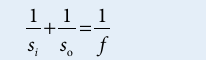
Location of an image
distance between the image and mirror = distance between the object and mirror
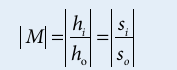
Magnification of an image
ratio of size/height of the image formed by the object and the size/height of the object itself
if greater than 1, the image is enlarged
if less than 1, image is reduced
ray diagrams
used to determine ray location, type, size, and orientation formed by mirrors
important rays: parallel to the principal axis, the ray that reflects at the center of the mirror, the ray that passes through the focal point
refraction
a result of the speed of light changing when light enters a new medium
index of refraction
value showing how prone a medium is to refraction
n=c/v
Snell’s law
relates incidence angles and refraction of a light ray passing from one medium to another
when a light ray travels from a medium with a higher index of refraction into a medium with a lower index of refraction, the ray refracts away from the medium, and vice versa
when a light ray is incident along the normal, the ray is not refracted

total internal reflection
occurs when light passes from one medium into another with a lower index of refraction; occurs at the critical angle of incidence
critical angle
at the critical angle, incident rays refract at 90 degrees and travel along the surface of the material; beyond it all light is reflected
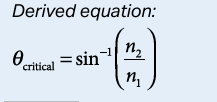
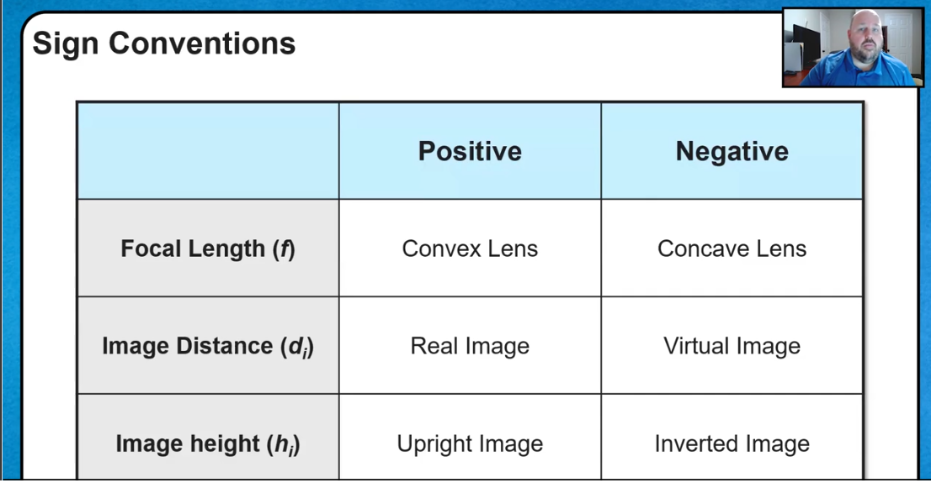
sign conventions
positive focal length; convex
negative focal length; concave
positive image distance; real
negative image distance; virtual
positive image height; upright
negative image height; inverted
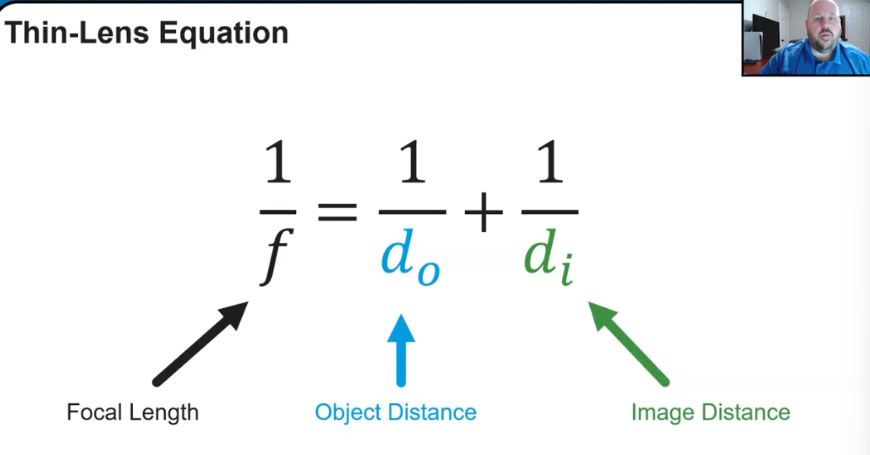
thin lens equation
wave
transfers energy WITHOUT TRANSFERRING MATTER between two locations

