disturbance and succession
 Call Kai
 Learn
Learn Practice Test
 Spaced Repetition
 Match
Match Flashcards
 Knowt Play
1/20

Earn XP
Description and Tags
disturbances
Name | Mastery | Learn | Test | Matching | Spaced | Call with Kai |
|---|
No analytics yet
Send a link to your students to track their progress
21 Terms
succession
the change in species composition and associated substrate over time
primary or secondary determines trajectory
measured by progression to an intact, undisturbed, reference or climax community but can often end up at different outcomes
long time interval, focus on natural processes, embedded in science
primary succession
disturbance is so severe that little or no biological legacy remains (plants, microbes, SOM)
ex post glacial, volcanoes (natural) [or post-mining, dam removal (human)]
secondary succession
substantial biological legacy remains post disturbance
ex low severity fire, insect caused tree mortality (natural) [or ploughing, invasives (human)]
succession vs restoration
disturbances are generally natural vs human caused, but both concerned with response to disturbance
both predict sequences of events, based on ecological function and community structure
no values vs well integrated with values, socioeconomic and political dimensions
major differences is who caused the disturbance and values
restoration
assisting in the recovery of damaged, degraded, or destroyed ecosystem
has a desired end state, integrated with values
phases of succession
from bare site → amelioration, establishment (colonization, biotic interactions), species assembly, ecosystem development to recovered ecosystem
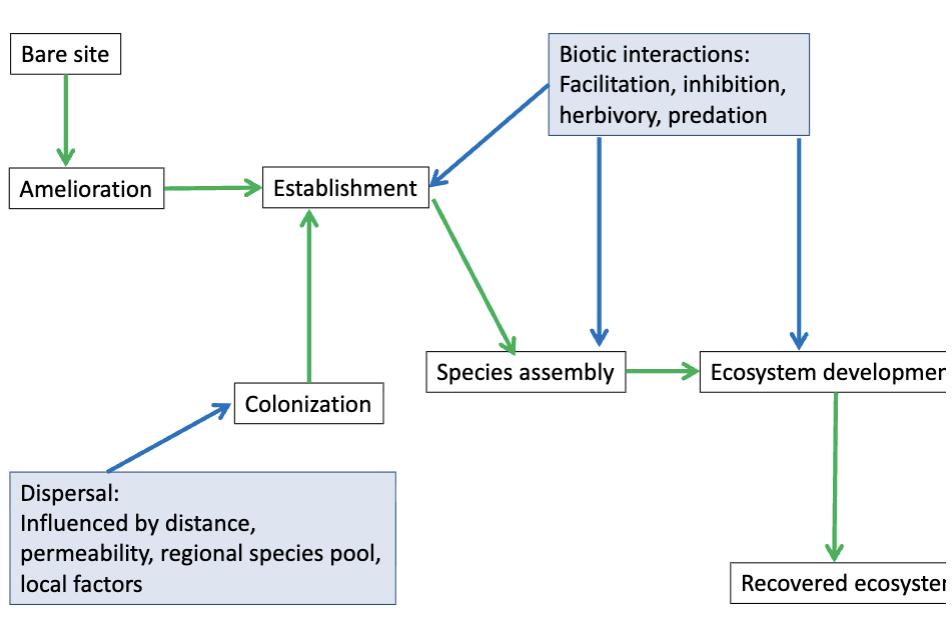
amelioration influencing restoration
degraded substances may be infertile, dry, lack OM
restoration might add soil amendments, CWD, or increase heterogeneity
dispersal and colonization influencing restoration
most species are dispersal limited
restoration will add seeding or planting to eliminate dispersal limitation
establishment influencing restoration
safe sites are critical, facilitation can improve establishment → nurse plants, N fixers to facilitiate N, etc
and herbivory can reduce establishment → fences or enclosures
assembly or ecosystem development influencing restoration
species and community composition accumulates and adjusts over time
dense vegetation and non-target species may need to be removed
restoration may replant, or remove weeds, disturbances may need to be added as part of management
types of disturbances
biological, physical or chemical
can also be frequency (number events per time period), extent (area disturbed per time, size), shape, magnitude (intensity or severity), and timing
biological disturbance type
consumes or kills biomass
ex grazing, insects, disease
physical disturbance type
rearranges biomass
ex flooding, wind
chemical disturbance type
reforms biomass
ex fire, grazing, etc
causes of fire exclusion
banning of traditional burning, land conversion, livestock grazing, active suppression of human and lightning caused fires
protecting our infrastructure, farmers, ranchers, etc
impacts of fire exclusion
significantly less area is being burned compared to historical
fire severity is increasing due to fuel loads, weather and climate
how can fire stabilize forests
low severity fires
when there is an open stand structure, different aged trees, little ladder fuel
little overstory mortality and reduced understory competition
removes fuel loads so they dont build up and promote higher severity fire
allowed room for more plants and animals
negative feed back
how can fire destabilize forests
high severity fires, fire replacing stands
high fuel loads and connectivity
leads to over story mortality, recruitment failure and can lead to conversions of land to non woody vegetation, etc *******
native species and values
some scientists argue to exclude normative values from science, but restoration has values - how can this co-exist?
many people bring values into discussions on native species and invasive or introduced species - but science doesn’t always support the idea that native species are better for the ecosystem
transparency required, its okay to have values but be clear about it
traits of megafauna impacting plants
diet selectivity - bulk feeding increases native plant diversity
as muzzle size increases so does native plant diversity (muzzle width being a measure for selectivity)
global tree restoration potential methods
1) quantified tree cover with pictures
2) used known environmental variables to correlate with extent of tree cover
3) applied to the rest of the world
4) investigated current land uses which cannot be forested
5) assessed carbon storage potential of restored forests
6) future canopy cover with climate change predictions

