bi108 quiz 6
 Call Kai
 Learn
Learn Practice Test
 Spaced Repetition
 Match
Match Flashcards
 Knowt Play
1/111

There's no tags or description
Looks like no tags are added yet.
Name | Mastery | Learn | Test | Matching | Spaced | Call with Kai |
|---|
No analytics yet
Send a link to your students to track their progress
112 Terms
homeostasis
the stability of the internal environment and the mechanisms used to maintain that stability
external cell environment
the internal cellular envrionment is always challenged by the ____________________
1. sensors/receptors provide info
2. control mechanism obtain and process info
3. effectors receive commands
three components of a homeostatic control system
control systems
sense when conditions deviate from 'normal' and initiate physiological mechanisms to correct the error
feedback information
information that is compared to the set point by the sensor
error signal
any difference between the set point and feedback information
effector
tissues/organs that can alter the internal environment
negative feedback
information that returns system to set point
positive feedback
amplifies a response and increases deviation from a set point
at constant levels
how are blood glucose levels maintained?
insulin and glucagon
in the pancreas, there are multiple types of cells that produce diff hormones, ie: _____-
glycogen
in the liver, glucose is stored as
pancreas secretes insulin which reduces blood glucose levels
when glucose levels are high...
pancreas secretes glucagon which breaks down glycogen and increases glucose
when blood glucose levels are too low..
both negative
the increase/decrease of glucose levels are examples of what type of feedback?
the endocrine system
the collection of glands that secrete hormones that control prolonged activities
the circulatory system and affect a distant target
endocrine cells release hormones that travel through ___________
the brain controls the secretion of many hormones
how do the nervous system and endocrine system work together?
1. neurosecretory cells
2. nonneural endocrine cells
two types of endocrine cells
neurosecretory cells
excitable cells that propagate action potentials
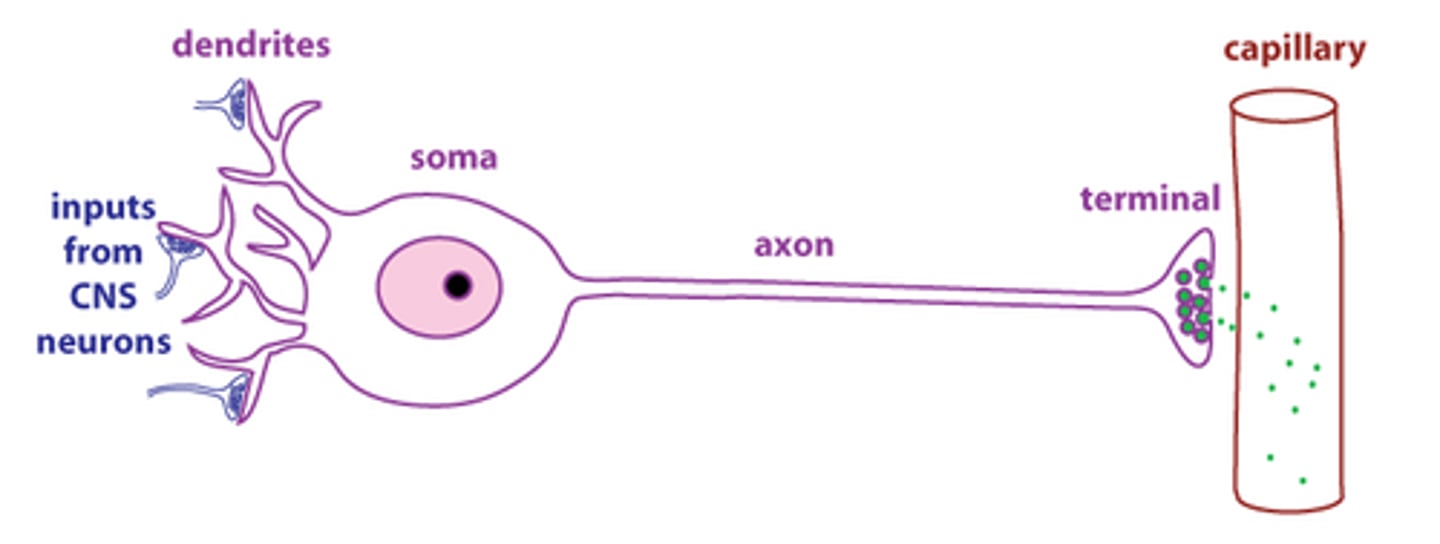
CNS; the axon terminals release hormones into the blood
neurosecretory cells have cell bodies in the ____________
nonneural endocrine cells
not excitable; typically stimulated to secrete hormone by other hormones
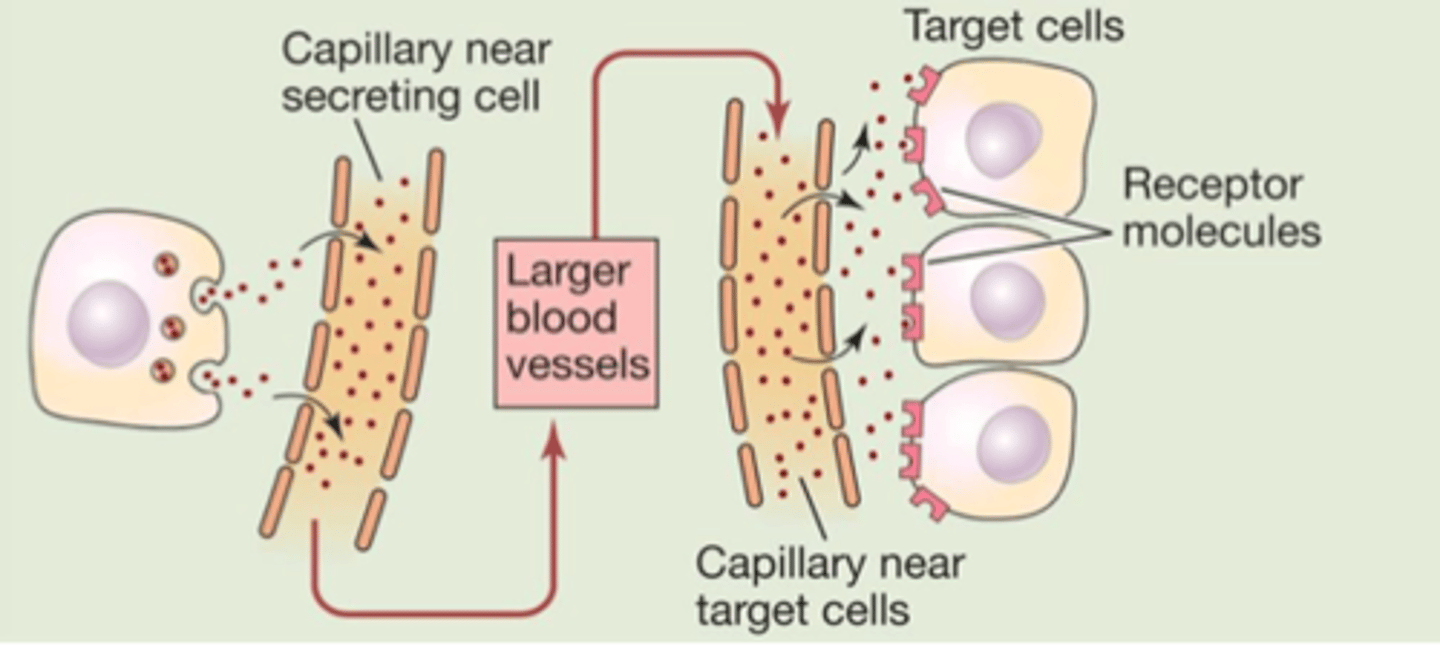
pituitary gland
secretes hormones that control many other glands
attached to the hypothalamus of the brain (directly attached to CNS)
where is the pituitary gland
1. anterior pituitary
2. posterior pituitary
two parts of the pituitary gland
- growth
- blood pressure
- metabolism
- water balance
- temp regulation
- stress response
what do pituitary glands control?
hypothalamic-pituitary-adrenal (HPA) axis
a major neuroendocrine pathway relevant to the stress response involving the hypothalamus, pituitary gland, and the adrenal cortex
neurohormones
produced and released by neurons in the brain, rather than by the endocrine glands, and delivered to organs and tissues through the bloodstream
tropic hormones
hormones that stimulate other glands to release their hormones
hormones
chemical messengers that are manufactured by the endocrine glands, travel through the bloodstream, and DIRECTLY affect other tissues
neurohormones
what type of hormone stimulates from the hypothalamus to the anterior pituitary
tropic hormones
what type of hormone stimulates from the anterior pituitary to other endocrine glands
hormones
what type of hormone stimulates from other endocrine glands to hormones that stimulate cells/tissues
secretes a neurohormone
in the HPA axis, in response to stress the hypothalamus _________
stimulates the anterior pituitary to release a tropic hormone
in the HPA axis, once the neurohormone is released it ________
travels through the blood to adrenal cortex which secretes the hormones: cortisol and epinephrine
in the HPA axis, once the tropic hormone is released, it __________
respiratory system
A system of organs, functioning in the process of gas exchange between the body and the environment
1. bulk flow: inhaling air into nose and mouth
2. diffusion: oxygen goes into blood stream from small pocket in lungs
3. bulk flow: moving oxygen through blood stream
4. diffusion: oxygen goes into muscle cells
steps of the respiratory system
rate of diffusion is proportional to (surface area)(concentration gradient)(membrane permeability)/ membrane thickness
fick's law
from the body tissues to the lungs
hows does the body remove CO2?
4 polypeptide subunits and each polypeptide surrounds an iron containing heme group that can bind O2 (or CO2)
what is the hemoglobin made of?
1. 5% carried in plasma
2. 20% carried in hemoglobin
3. remainder carried as bicarbonate ions
three mechanisms by which CO2 is transported
red blood cells meaning higher partial pressure in body tissue
the conversion of CO2 to HCO3- lowers the partial pressure of CO2 in _____________
from tissue into blood because we've maximized partial pressure difference between body cell and blood stream
as we lower the pressure of CO2 where will it move?
lower pH, so more acidic
what does more CO2 say about the pH
- increase cellular respiration
- increase production of CO2
- more CO2 means more H+
- chemosensory cells detect this CO2 and H+ and increase breathing rate
when cells need more ATP they..
open circulatory system
what type of circulatory system do arthropods have?
hemolymph
blood and other fluids that slosh around the tissues and organs in an open circulatory system
1. heart (the muscular pump)
2. "tubes": the passageway for blood
3. blood (fluid pumped)
three parts of the closed circulatory system
capillaries
site of exchange between blood and tissue
arteries
move blood away from the heart
veins
return blood to heart
Vasolidation
the enlargement of blood vessels/ relaxes muscles to increase blood supply,
vasoconstriction
Reduces blood flow and heat transfer by decreasing the diameter of superficial blood vessels.
respiratory pigments
proteins that transport oxygen, greatly increase the amount of oxygen that blood can carry
4
how many oxygens does hemoglobin hold?
270 million
how many hemoglobin per red blood cell
oxygenation
when a pigment picks up oxygen: "oxygen loading"
deoxygenation
process of removing or having a lack of oxygen "unloading"
75%
blood returns to lungs ___________ saturated
the pressure of oxygen decreases (due to it being used in cellular respiration).
oxygen held in hemoglobin is released when...
rarely
is hemoglobin ever fully unloaded?
75%
at rest hemoglobin is _________ saturated
more
the lower the partial pressure of oxygen, the _______________ oxygen molecules hemoglobin will release
lungs
where is hemoglobin 100% saturated?
systemic circuit
brings oxygenated blood to body tissues
pulmonary circuit
brings deoxygenated blood to lungs (goes to lungs, picks up CO2, releases CO2, then goes back to heart)
right ventricle --> lungs --> left atrium
what is the order of organs for the pulmonary circuit?
left ventricle --> body --> right atrium
what is the order of organs for the systemic circuit?
right atrium and right ventricle
first, oxygen depleted blood enters the _________ which then flows into _________
pulmonary arteries to the lungs
after deoxygenated blood enters right ventricle, its pumped through the _________________
left atrium and then left ventricle
O2 rich blood in the lungs goes to.....
aorta to the systemic tissues
once o2 rich blood is in the left ventricle it is pumped through ______
1
during exercise, how many oxygen molecules does the hemoglobin hold?
cardiac cycle
cycle of contraction and relaxation o the heart
pacemaker
initiates the contraction (heartbeat)
sinoatrial (SA) node
pacemaker of heart in right atrial wall that rhythemically depolarizes without external stimulus
cardiac muscle cells
electrically coupled (when 1 cell contracts so does its neighbors)
atrioventricular (AV) node
relays the depolarization to the conducting system (modified muscle cells) and then ventricles contract in unison
contractions reach the AV node so the atria contract before the ventricles
what happens when both atria are depolarized?
adrenal glands release epinephrine that increases speed of contractions
how to increase heart rate?
heart rate and blood vessel constriction
what two things can manipulate blood pressure
immune system
A system (including the thymus and bone marrow and lymphoid tissues) that protects the body from foreign substances and pathogenic organisms by producing the immune response
lymphatic system
Composed of a network of vessels, ducts, nodes, and organs. Provides defense against infection.
lymph
fluid derived from blood (But no red blood cells)
collected from body tissues, filters through lymph nodes, eventually returns to blood
pathway of lymph
Leukocytes
white blood cells that recognize non-self cells and initiate an immune response
innate and adaptive
two types of immune defenses
innate defenses
this type of defense is non-specific and always present
skin, mucus,
examples of innate defenses
yes
do innate defenses respond in the same way to every non self cell?
Phagocytosis
A type of endocytosis in which a cell engulfs large particles or whole cells
phagocyte
A white blood cell that destroys pathogens by engulfing them and breaking them down
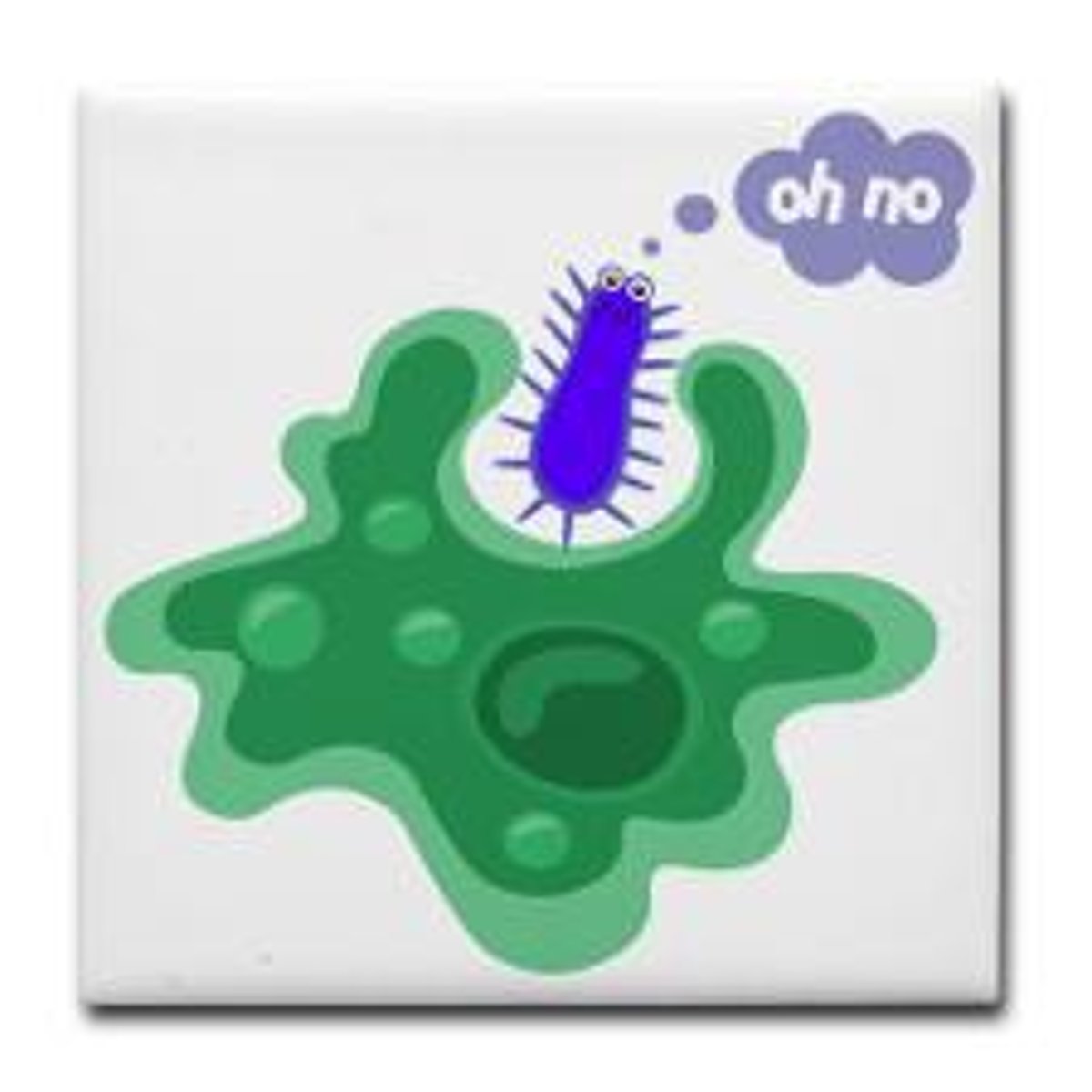
digestive enzymes to break down the non-self cell
phagocytes for a vesicle and then bind with a lysosome that contains ___________
1. diversity
2. specificity
3. ability to distinguish self from nonself
4. immunological memory
four keys of adaptive immunity
10 million
how many antigens can humans respond specifically to?
antigen
any particle, cell, or molecule that can trigger an immune response
antibodies
produced by specialized lymphocytes (white blood cells) that recognize an antigen
free antibodies or carried by B-cell
where are antibodies found?
one antigen
each antibody is specific to _______
Explore top notes

