Plane of Occlusion, Neutral Zone
 Call Kai
 Learn
Learn Practice Test
 Spaced Repetition
 Match
Match Flashcards
 Knowt Play
1/44

There's no tags or description
Looks like no tags are added yet.
Name | Mastery | Learn | Test | Matching | Spaced | Call with Kai |
|---|
No analytics yet
Send a link to your students to track their progress
45 Terms
what makes an acceptable plane of occlusion?
-curve of spee
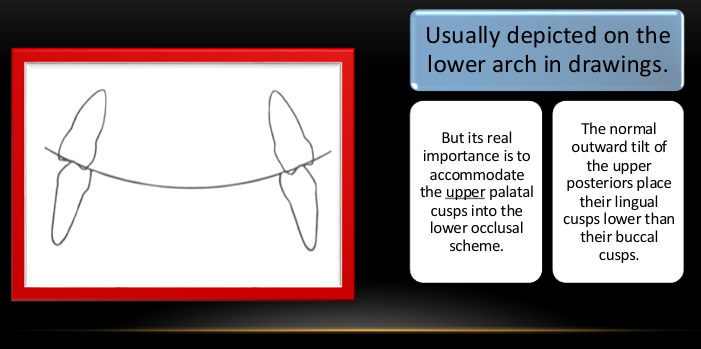
-curve of wilson
-mutual protection
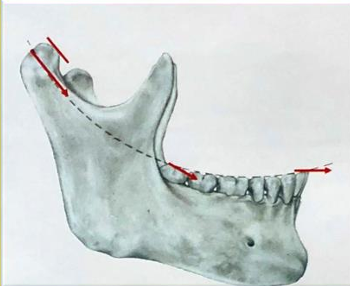
curve of spee
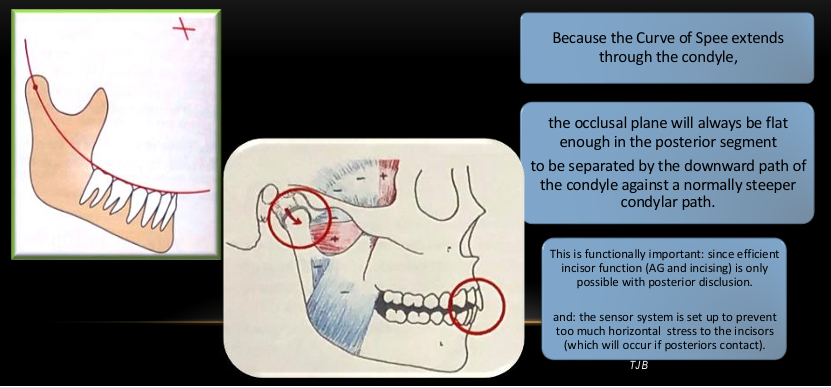
-begins at the tip of the cuspid and touches the tips of all the posterior
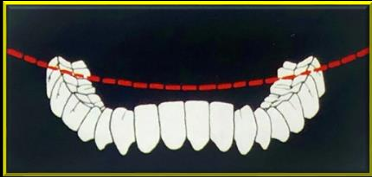
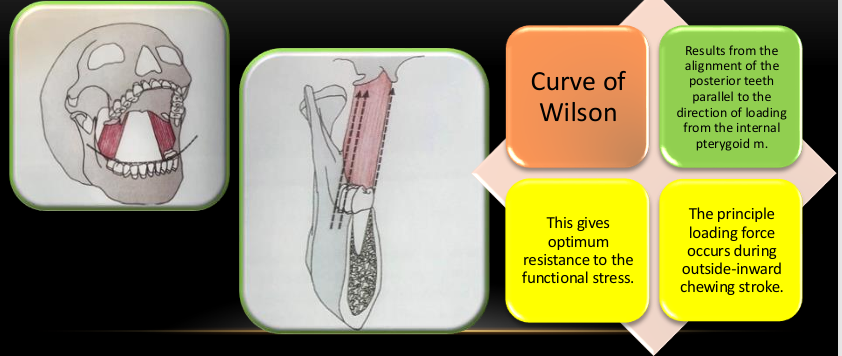
curve of wilson
-mediolateral curve that contacts the buccal and lingual cusp tips on each side of the arch
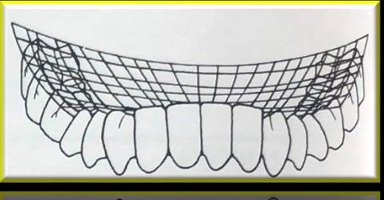
curve of occlusion
-combines the spee and wilson curves with the curve of the incisal edges
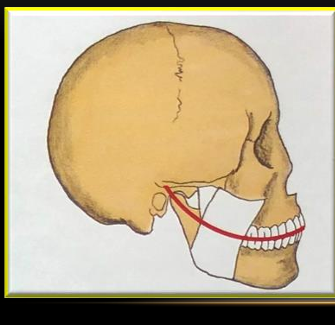
ideal curve of spee
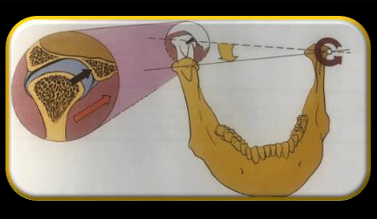
-aligned so that a continuation of its arc would extend through the condyles
-curve of this arc relates on average with a 4 inch radius (or an 8 inch diameter) sphere
plane of occlusion- structural/geometric relationships
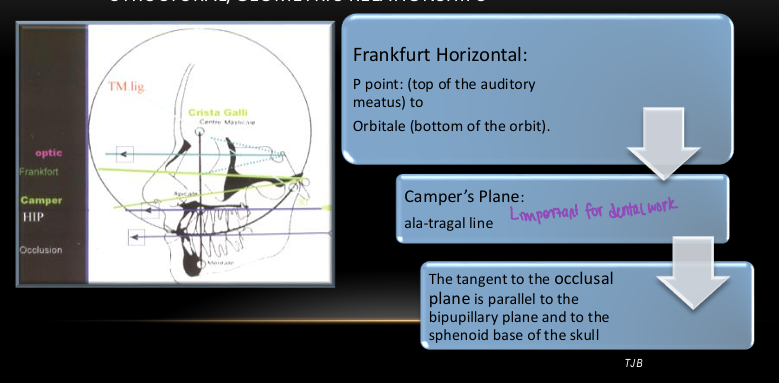
plane of occlusion- relationships
-arcs of curves of wilson and spee related to an arc centered at the crista gali
-sphere that is defined by this arc includes the trajectory of the TMJ ligament
-ligament helps form the axis of swing of the condyle and mandible
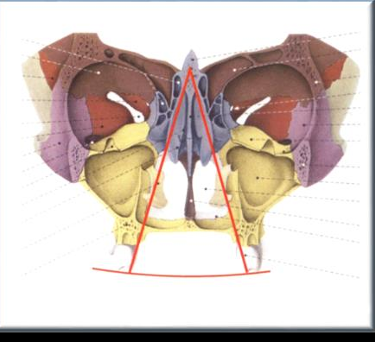
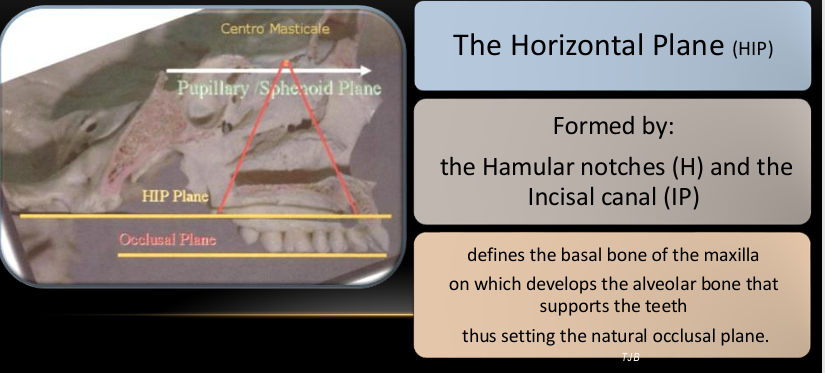
horizontal plane
what makes an acceptable plane of occlusion?- curve of spee
-results in part from aligning each lower tooth parallel to its arc of closure
-the last lower molar is inclined at the greatest angle
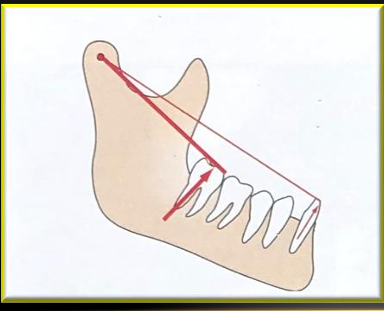
what makes an acceptable plane of occlusion?- curve of spee extending through condyle
curve of wilson and muscles
advantages of design of plane of occlusion
-lingual inclination of the lower posterior teeth positions the lingual cusps lower than the buccal cusps
-allows the tongue to position food on the occlusal table
-the longer buccal cusps stops the food from going past the chewing position
-outer inclination of the upper teeth positions the buccal cusp higher for easier access from the buccal corridor
-buccinator squeezes the food to the chewing table
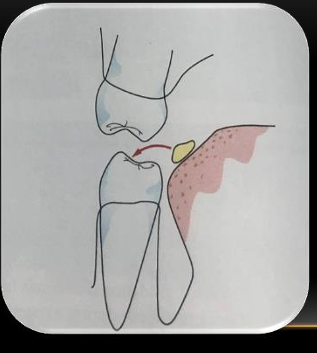
curve of wilson- lateral excursion
-design of curve of wilson would not work if the lower posteriors could move directly horizontally toward the midline
-the longer lower buccal cusps would clash with the longer upper palatal cusps
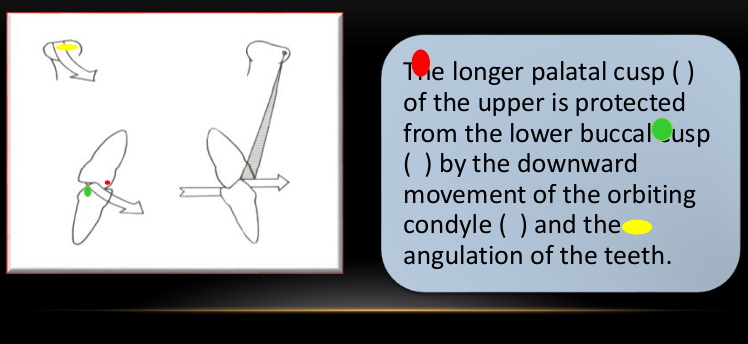
curve of wilson on upper cusps
curve of wilson in function- laterotrusion
-angle of glenoid fossa changes how teeth move against each other
-impacts how cusps are formed in development
design of curve of wilson would not work if the lower posteriors could mov
-directly horizontally toward the midline
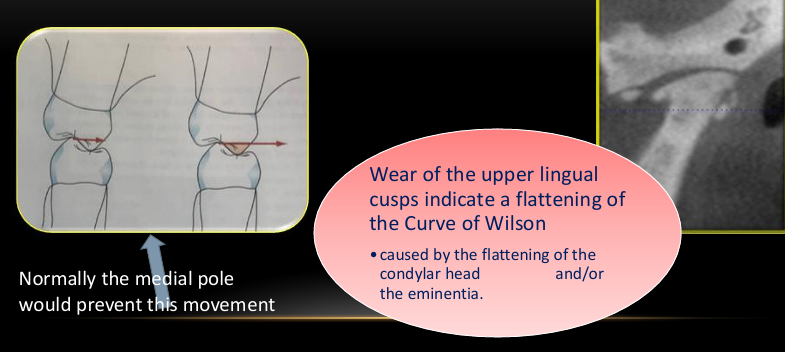
-the medial pole of the condyle prevents any side shift until after the condyle has moved downward along the eminentia
wear of the upper lingual cusps
an acceptable POC is one in which the _____ is allowed to do its job
-anterior guidance
-also allows best tooth alignment to accept forces by paralleling to the closure of muscle fibers
-allows food placement onto occlusal table
AG is doing its job if
-protrusion can occur without posterior interference
-noninterfering lateral excursion occurs (nonworking side disclusion without loss of function on the working side)
wide degree of flexibility in occlusal plane design
-will still fulfill the requirements of disclusion
-even a flat plane can be sufficient
-but flat may create stress if the alveolus does not somewhat match the POC
-so a POC will usually have curvatures
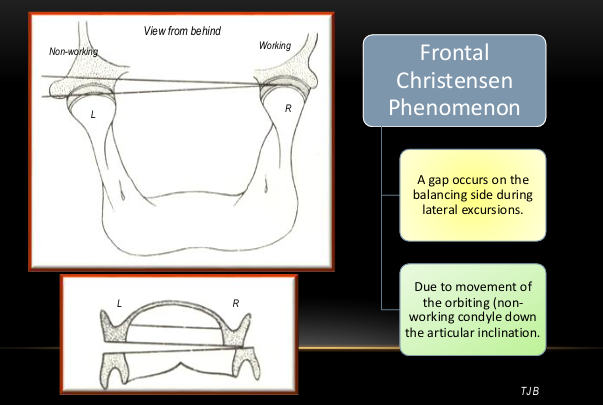
Christensen’s phenomenon
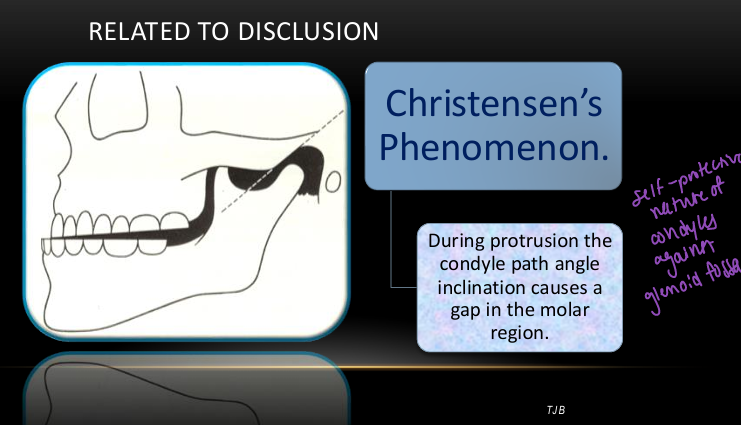
frontal Christensen phenomenon
most intolerable problem of a POC
-a cant (tilt)
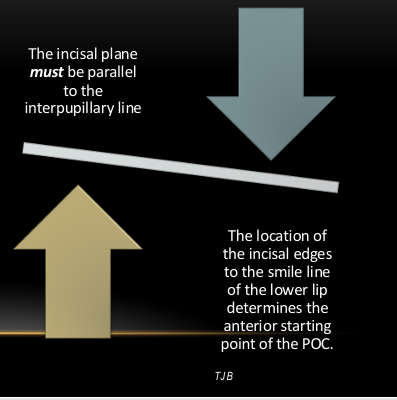
examination for POC problems
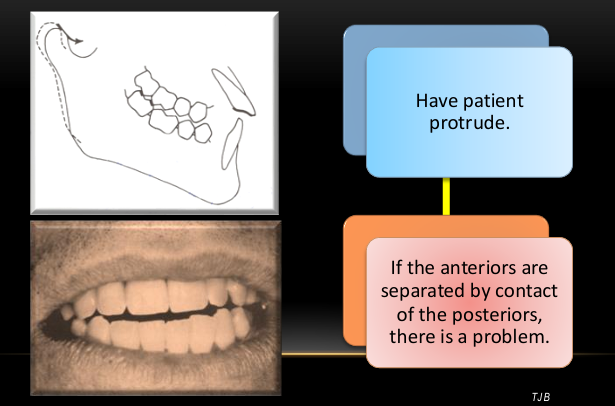
taking proper records
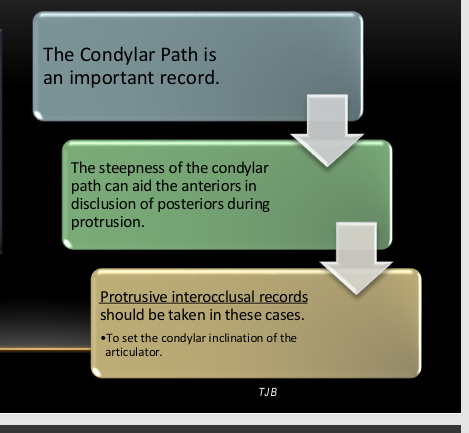
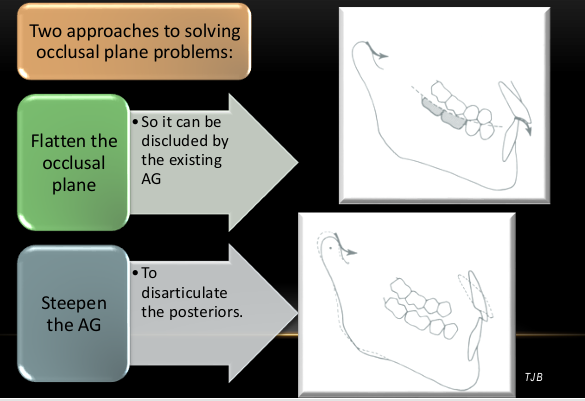
2 approaches to solving occlusal plane problems
formulating a plane of occlusion- analysis using instrumentation
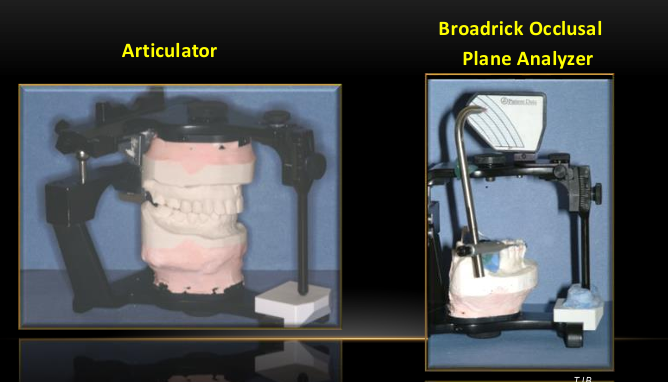
articulator
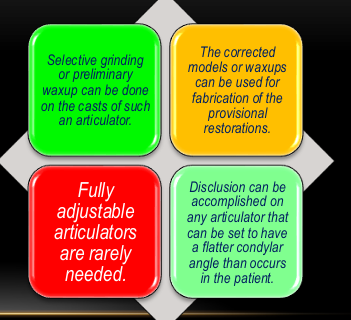
-any instrument that can duplicate condylar border paths can be used to analyze or establish a correct occlusal plane as long as AG can also be programmed into the instrument
simplified occlusal plane analyzer (SOAP)- uses
occlusal plane analyzer- Broadrick flag
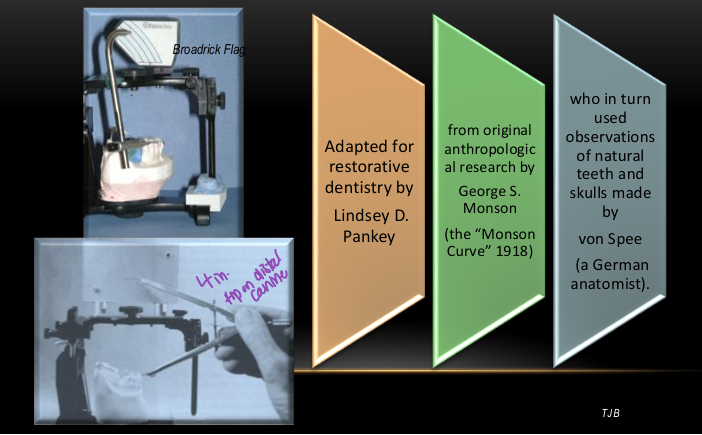
technique with facebow
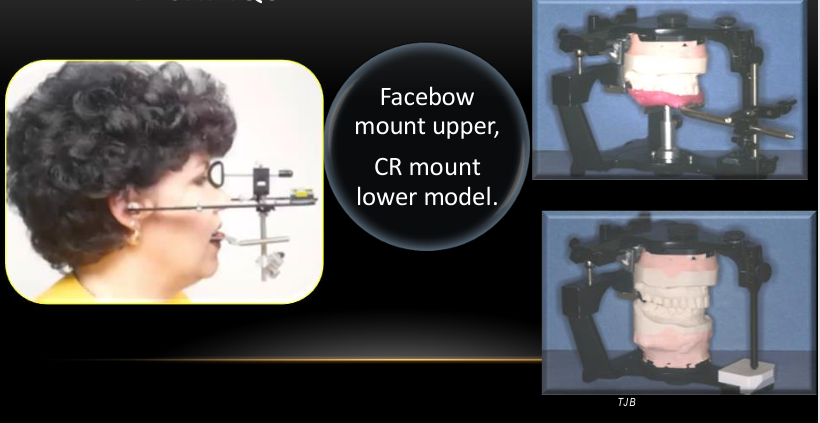
technique- using caliper
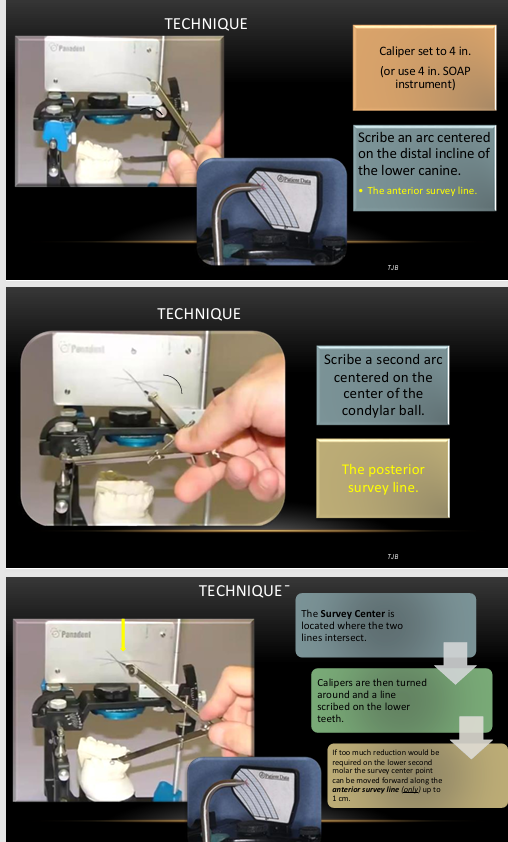
once an acceptable height is found for the most distal lower tooth,
-this will be the height of the buccal cusp tips
-a preparation line is formed by opening the calipers 1.5mm
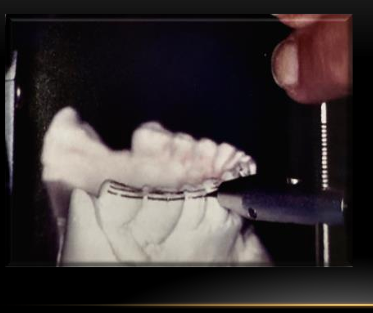
once preparation line established
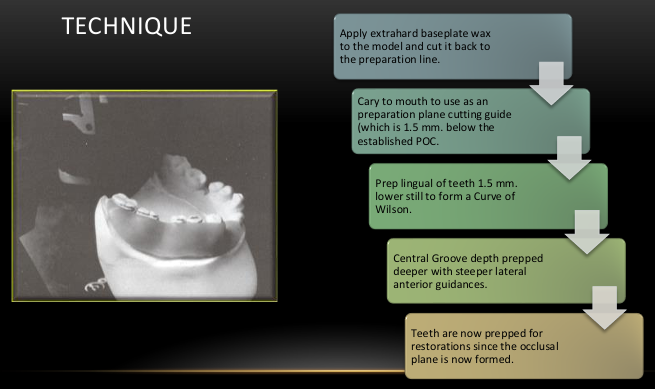
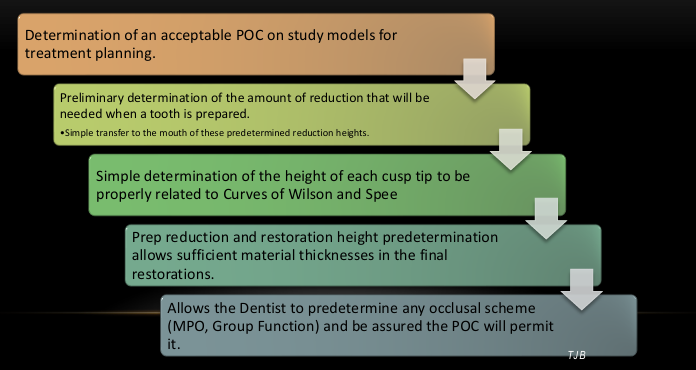
procedure for determining the POC
-same procedure can be used on the waxups to establish the correct plane
-technician waxes the cusp heights to the established POC of the guide
cutting blade
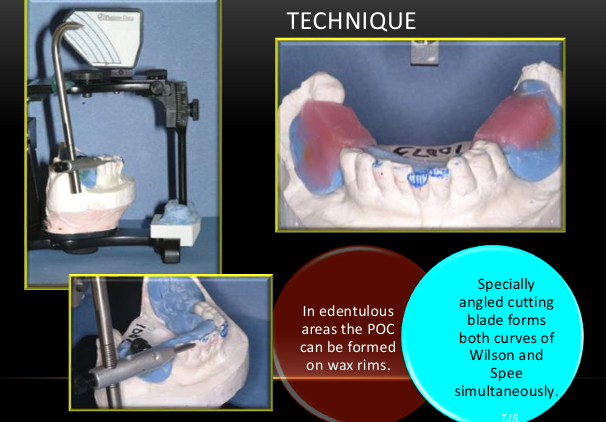
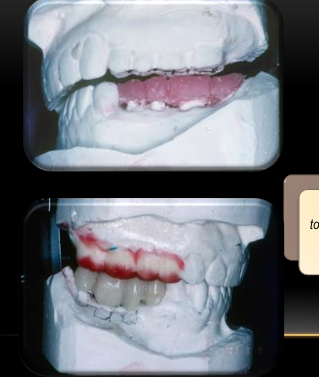
technique- rims can be used to
-adjust the opposing teeth to the POC
-form provisionals whose occlusal surfaces conform to the new POC
neutral zone
-teeth will not stay where muscle does not want them to be
-if outward horizontal forces from the tongue are greater than the inward forces exerted by the buccinator muscle bands and the lips, the teeth will move horizontally until opposing forces are equal
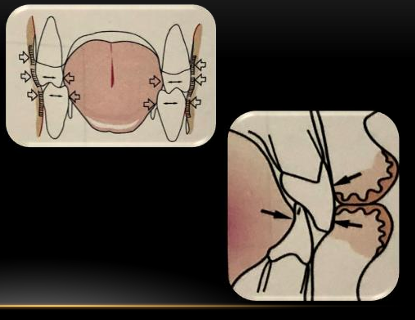
perioral musculature
-the three bands of the buccinator muscle
-the orbicularis oris
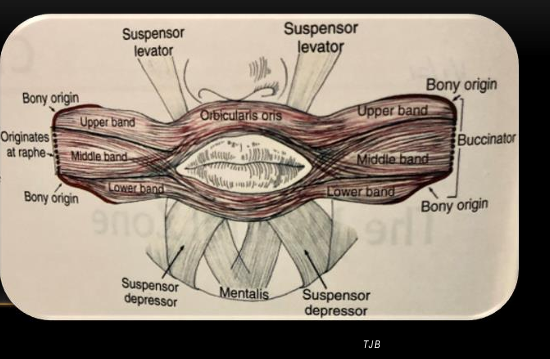
neutral zone- bands of buccinator and tongue posture
-lower band of the buccinator is usually the strongest
-if the tongue posture is normal, it resists the inward pressure
-forms a corridor of neutrality between opposing forces
neutral zone determines ____ and ____
-position of each tooth
-the shape and position of the entire arch and the alveolar process
linear dimension of the perioral musculature
-is limited, but it can be changed in shape
-several different arch configurations may be possible without any change in muscle lengths
neutral zone and facial profile
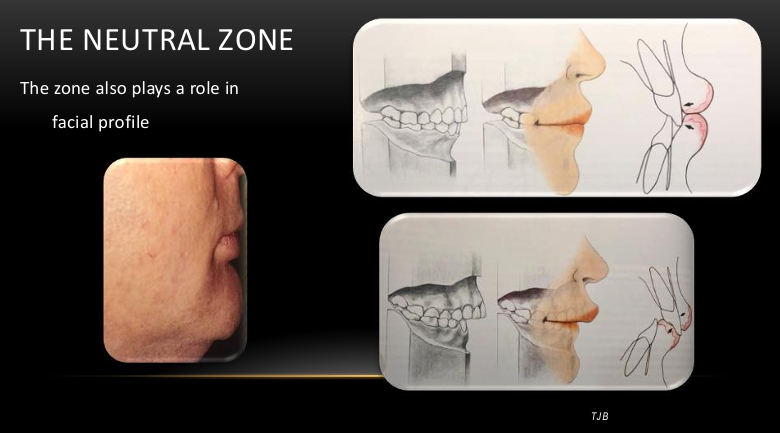
limit for arch size
-the strength of the contractile force and the length of the band during contraction forms an inviolate limit for arch size
violation of the neutral zone can lead to
-complete or partial denture failures
-orthodontic relapse
-orthognathic surgery relapse
-thus, the neutral zone must be evaluated as an important factor before making any changes in arch form or alignment of teeth

