Invert Zoo lecture 2
 Call Kai
 Learn
Learn Practice Test
 Spaced Repetition
 Match
Match Flashcards
 Knowt Play
1/40

There's no tags or description
Looks like no tags are added yet.
Name | Mastery | Learn | Test | Matching | Spaced | Call with Kai |
|---|
No analytics yet
Send a link to your students to track their progress
41 Terms
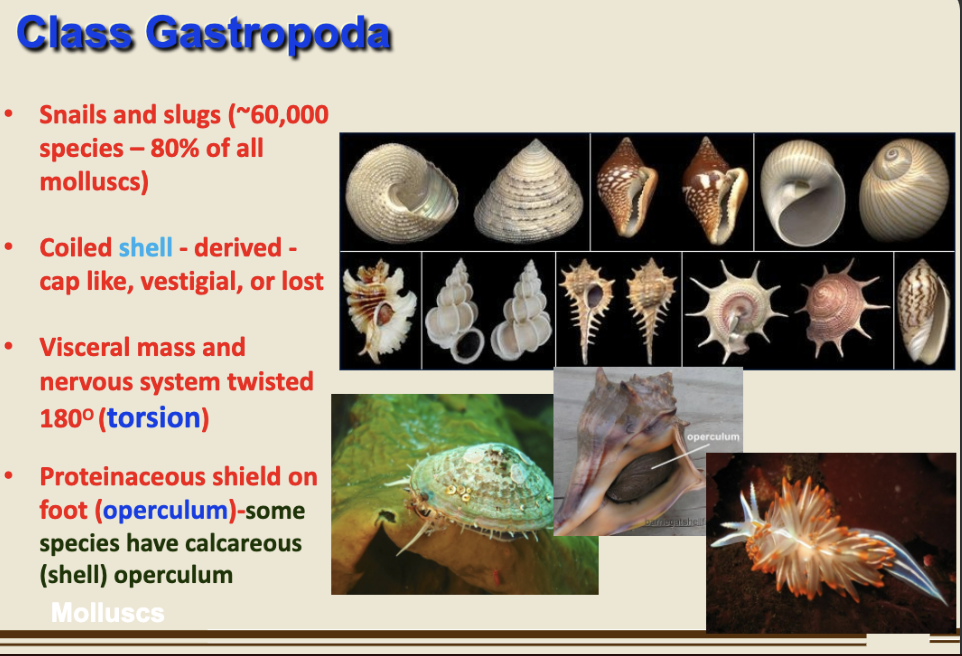
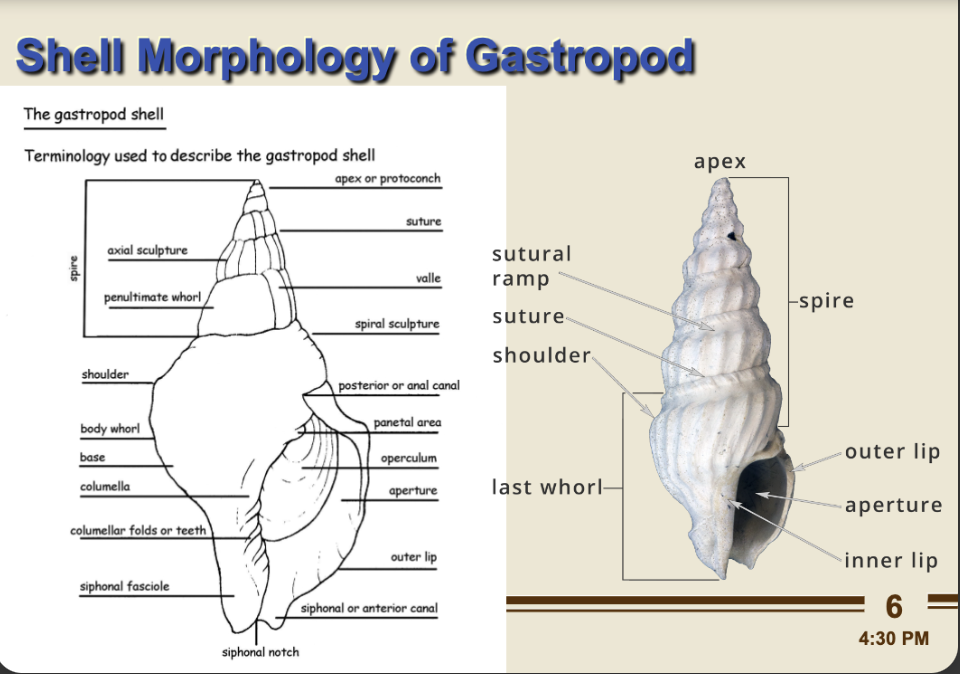
most keys depend on shell features! info card for anatomy flip for more
tropics
why tropics = ornate complex shells?
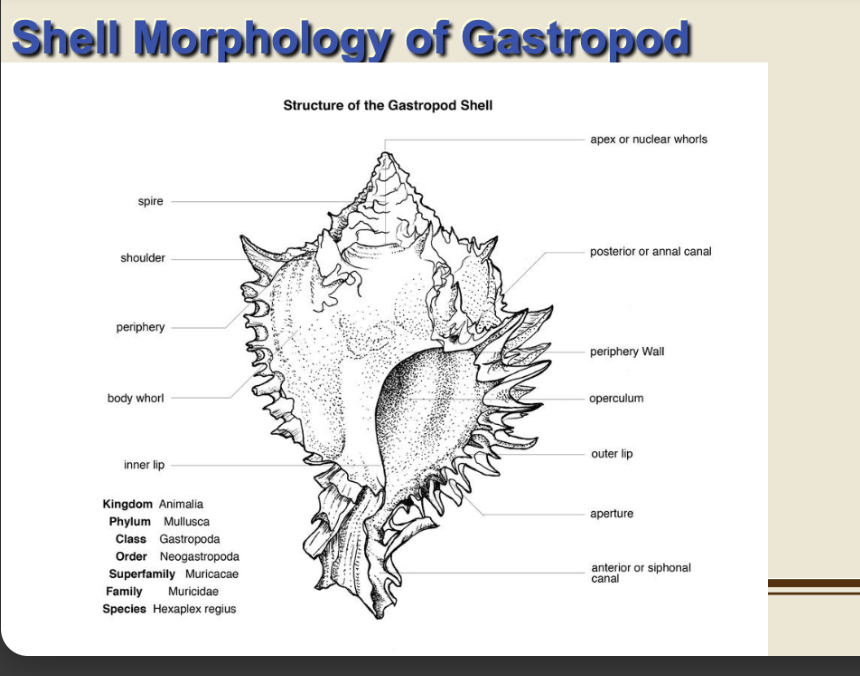
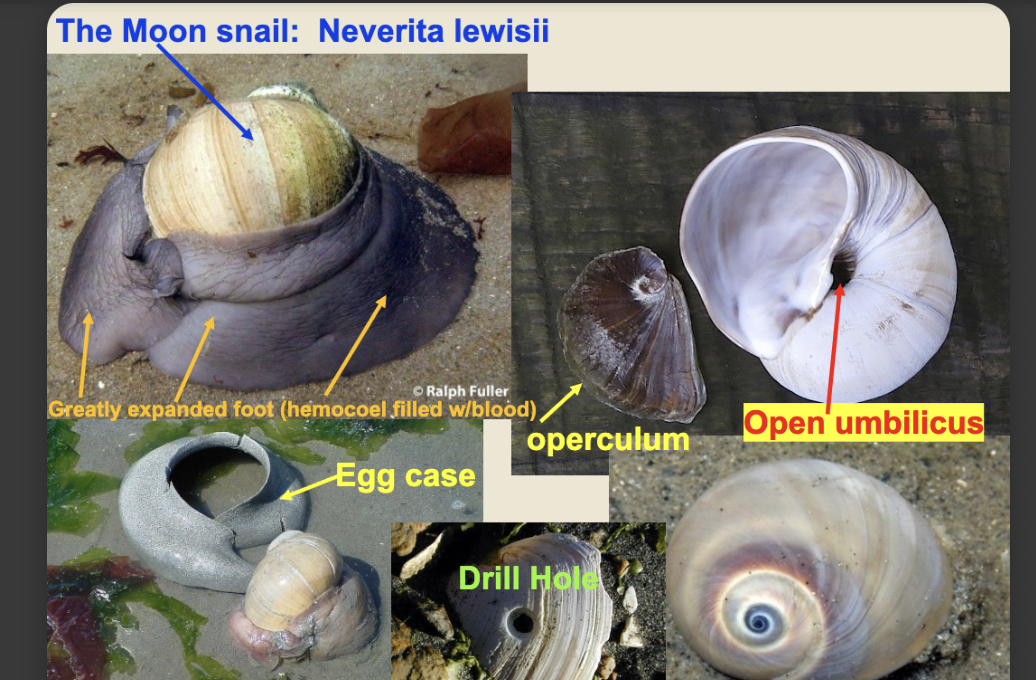
open umbillicus (curls outward leaving gap or hole between body whorls (shell) and columella(what it curls around))
-lays egg cases
-foot attaches to sediment
-0siphon is for smell not prey much bc they have small siphons
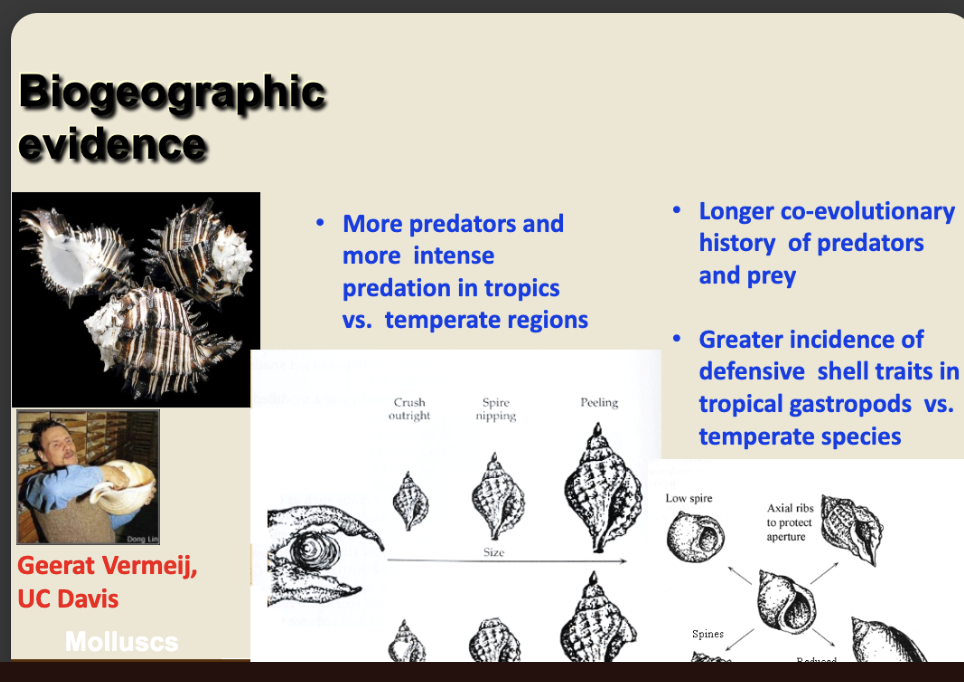
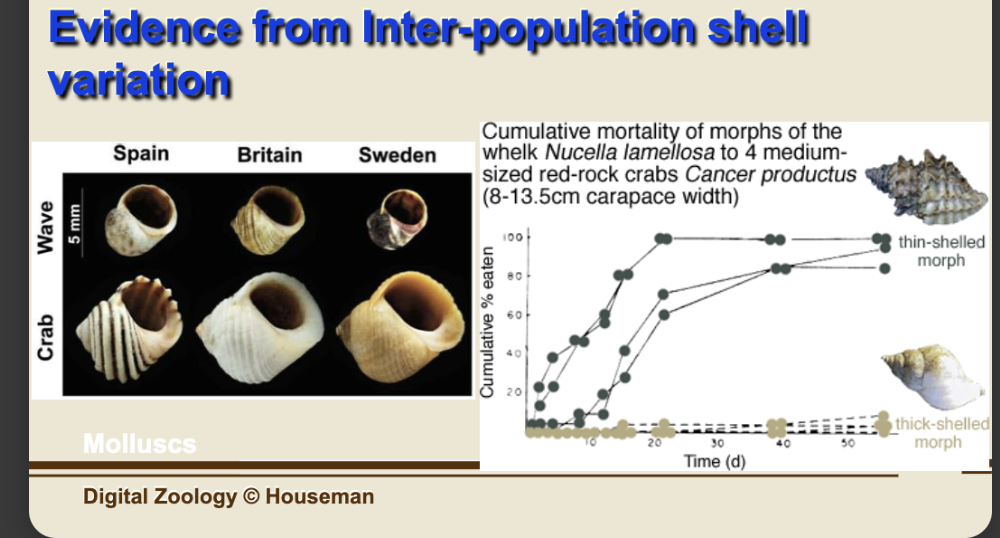
Co-evolution!! (why do tropical snails look different?)
-Predators are different causing the need for different/changed prey
-shells got thicker and harder to grap (spikes etc)
-grow faster! (crab claws can crush small shells)
-shorten spire! (crabs can snip it off)
-Narrow apertures! (crabs scrape from inside out)
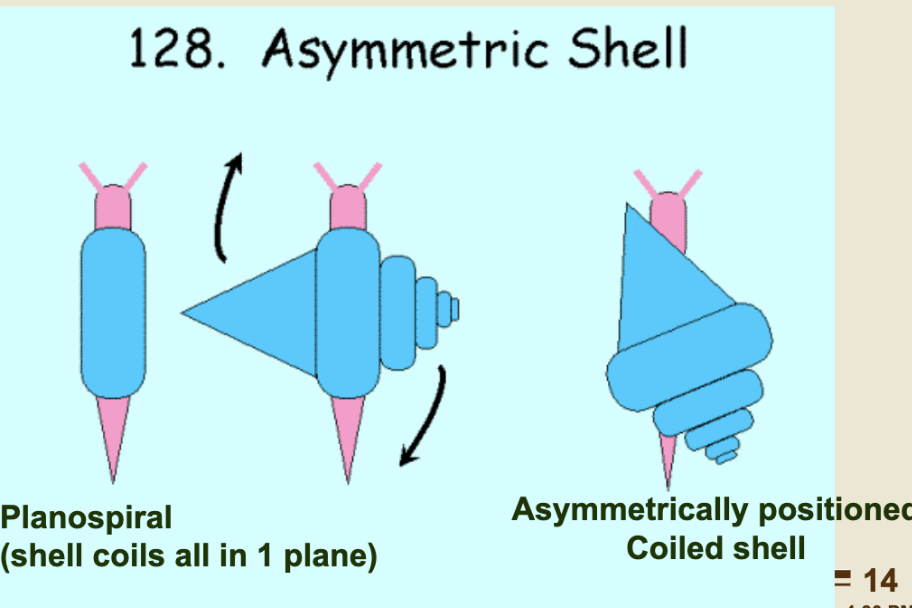
SHELL coiling!
-planospiral: seen in old animals…. evolution changed this feature because of balance, waves, predators, weight, etc
-evolution twisted or turned the shell for balance (right figure) and loses a gill on one side
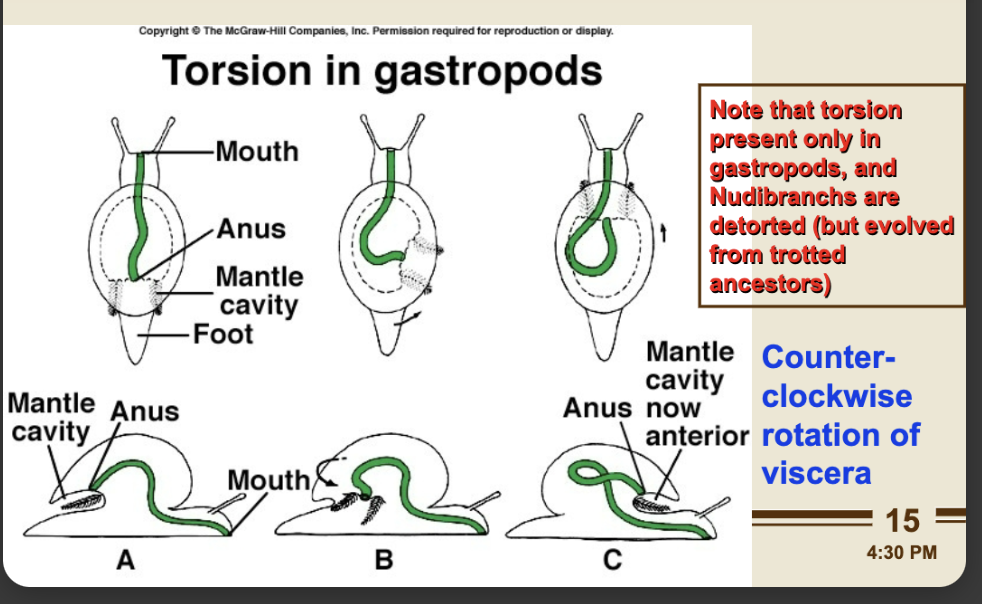
ORGAN (coiling) torsion!
rotates organs 180 degrees counter-clockwise in development, ending with the anus over the head
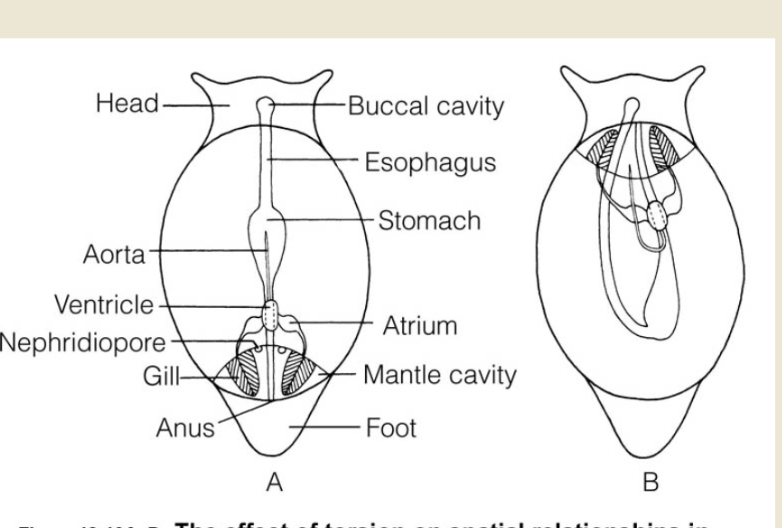
what issues come with torsion?
sanitation!
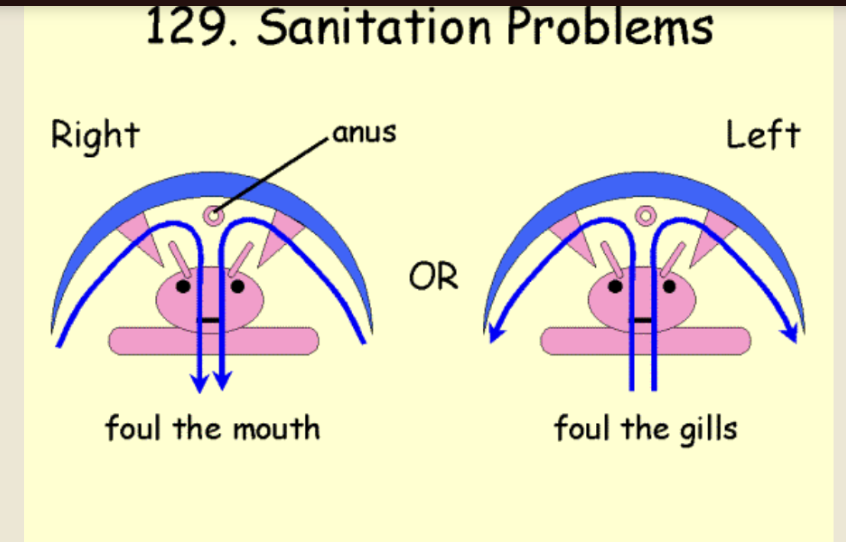
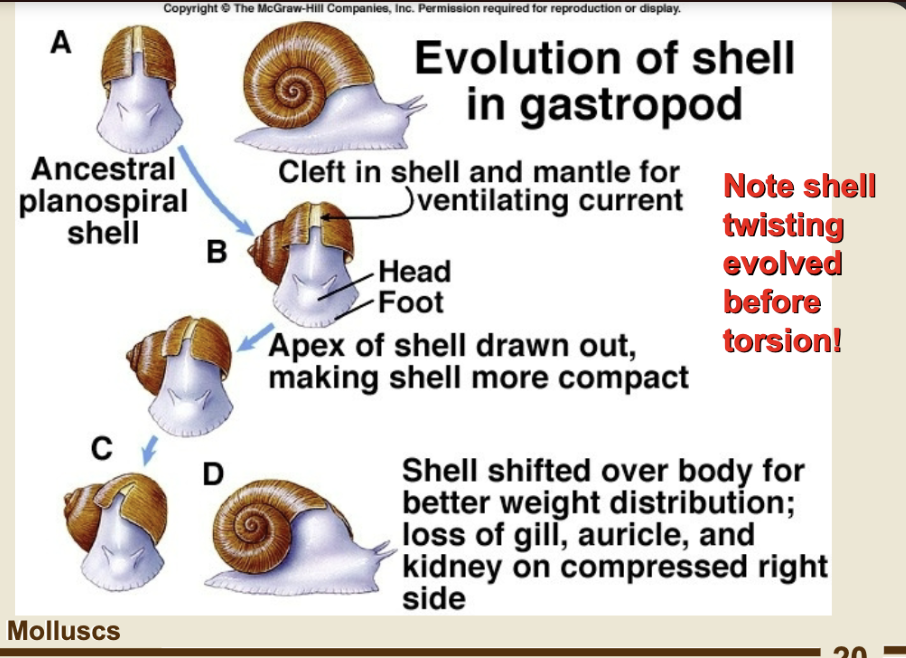
snail evolution info card flip for more
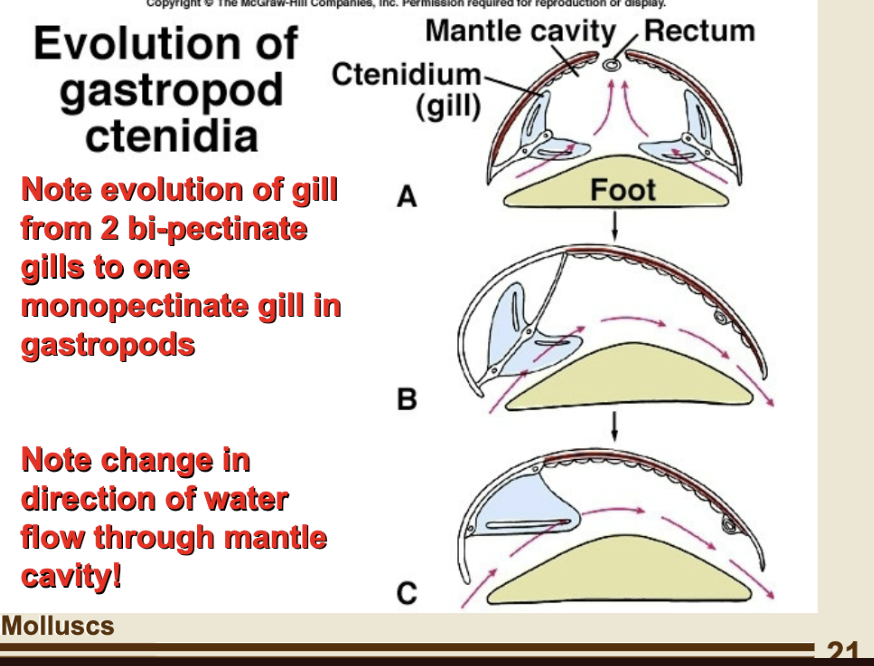
INFO CARD
more co2 more hydrogen ions more acidic less pH.... screws with caco3 shells and acidifies water... ocean can buffer but this is too extreme... calcareous skeletons are effected by lower pH…
INFO CARD
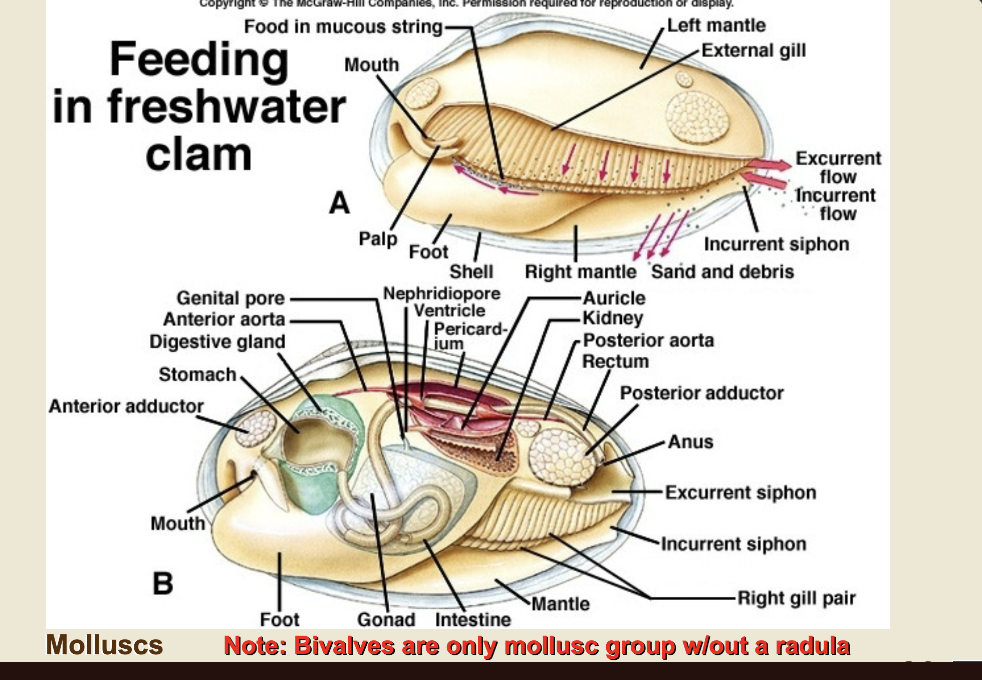
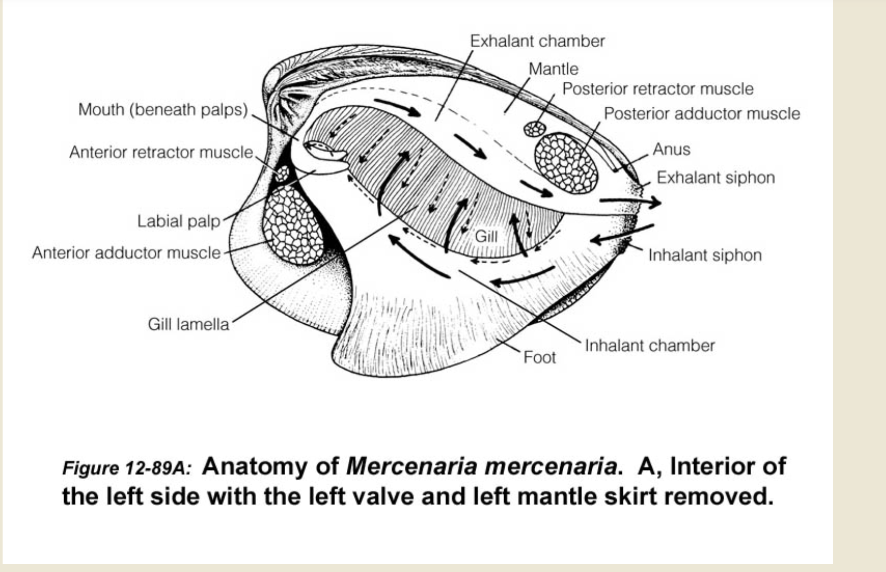
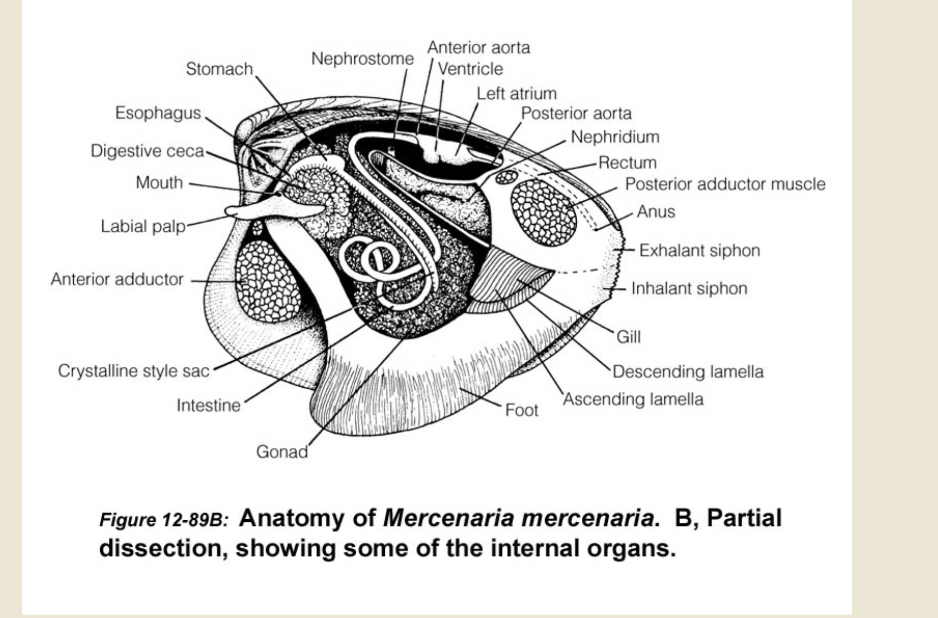
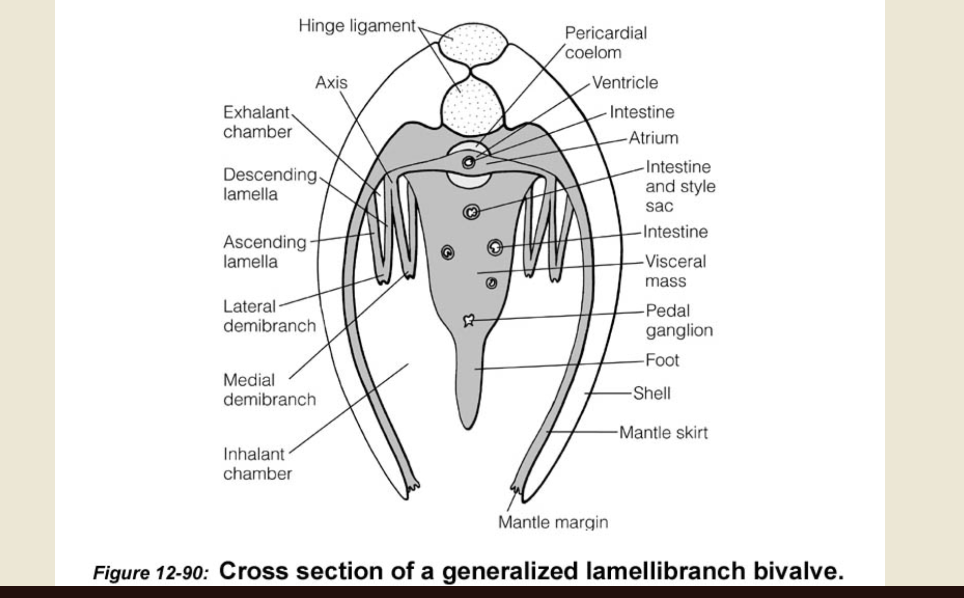
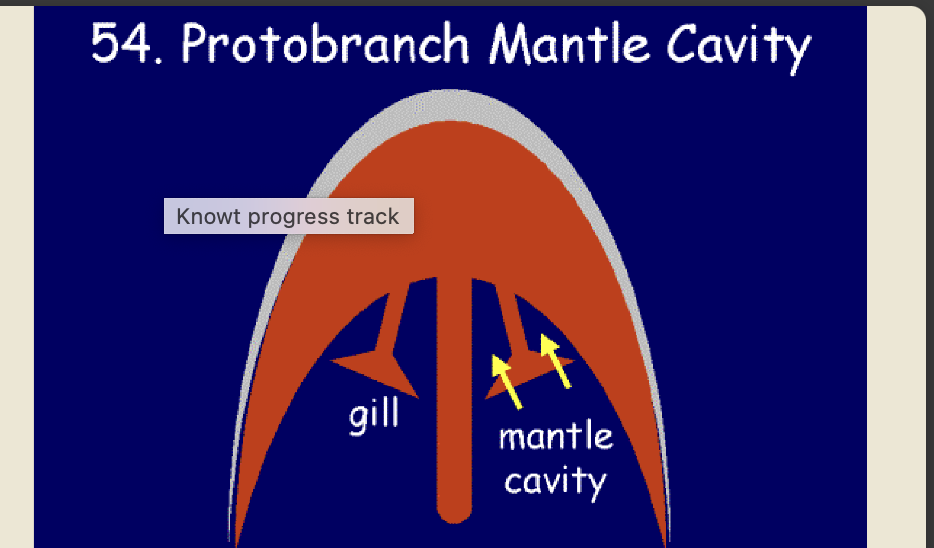
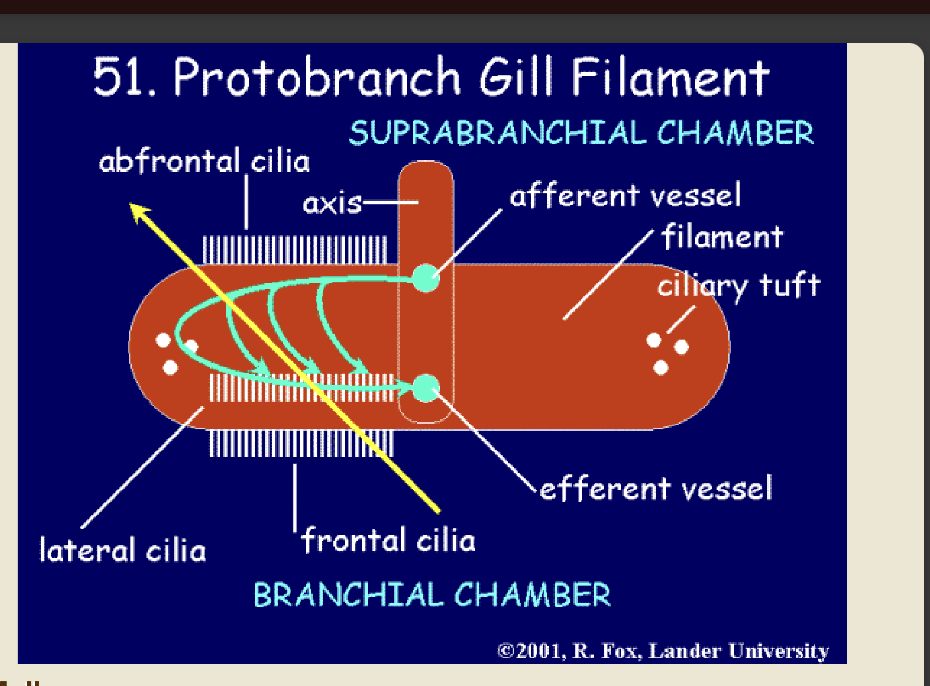
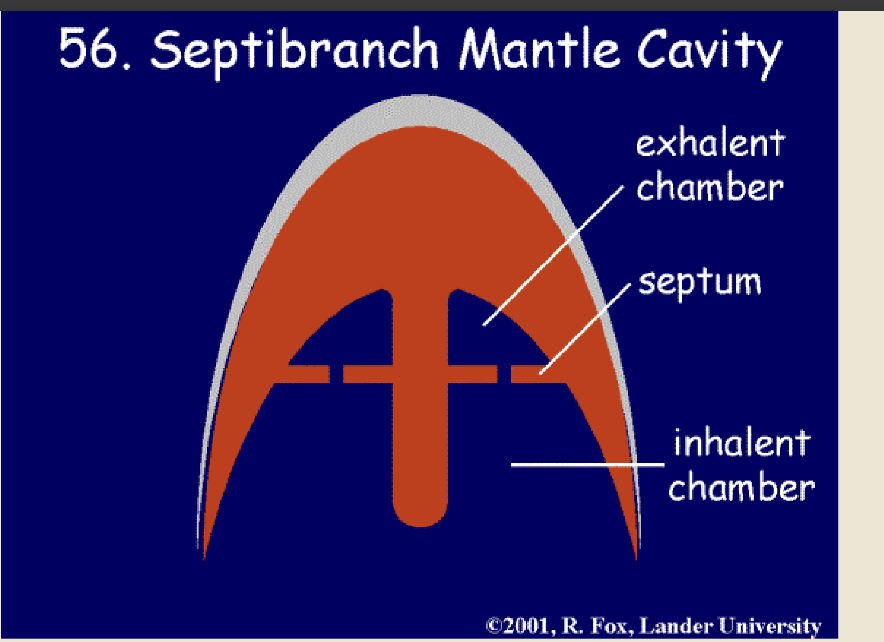
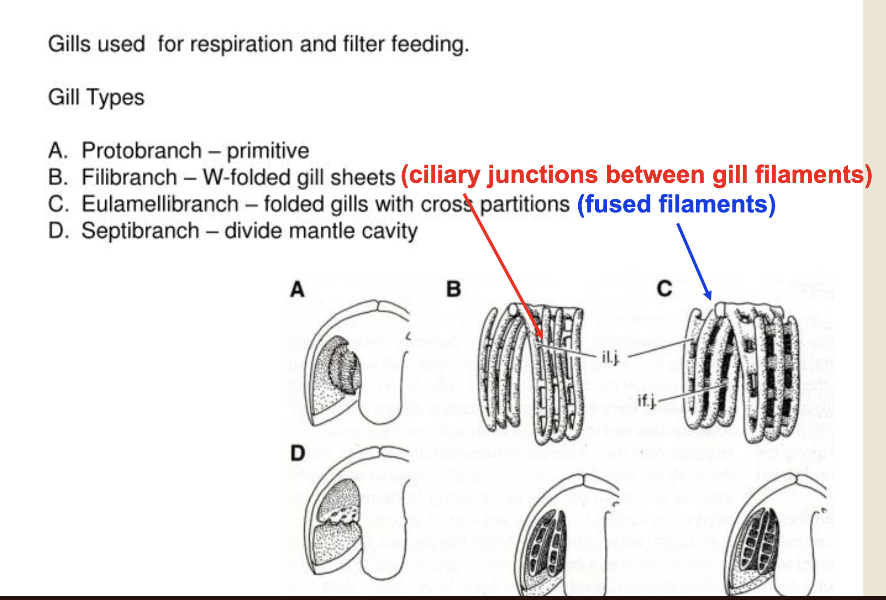
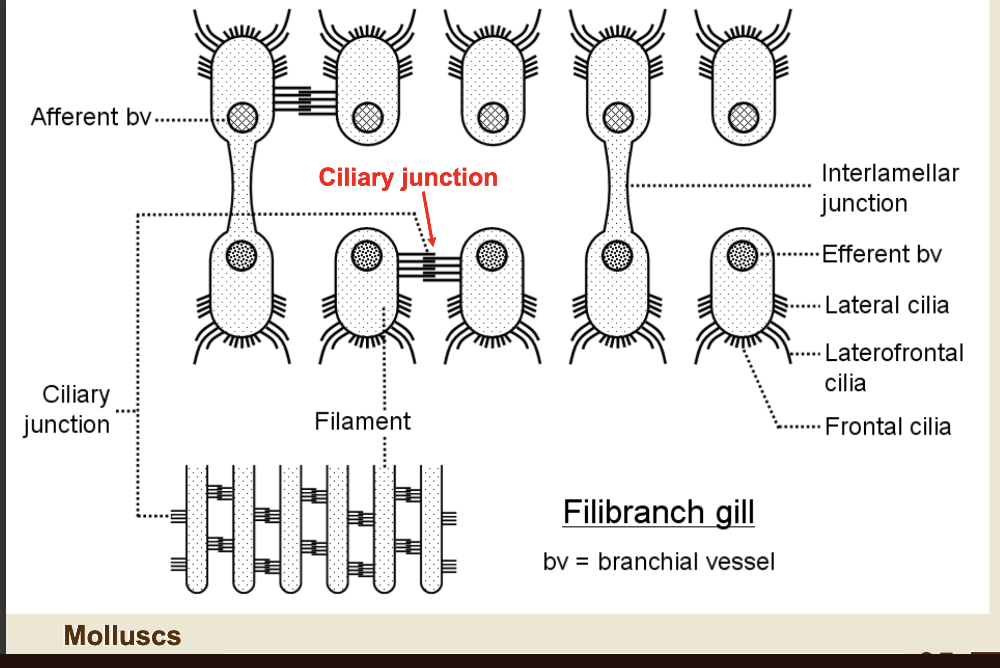
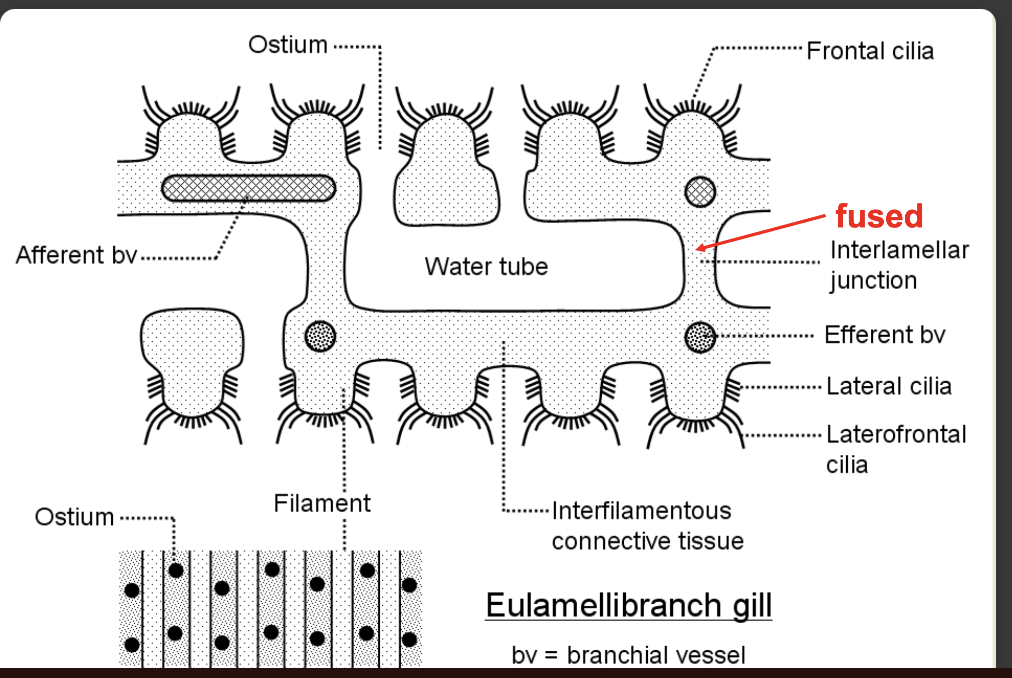
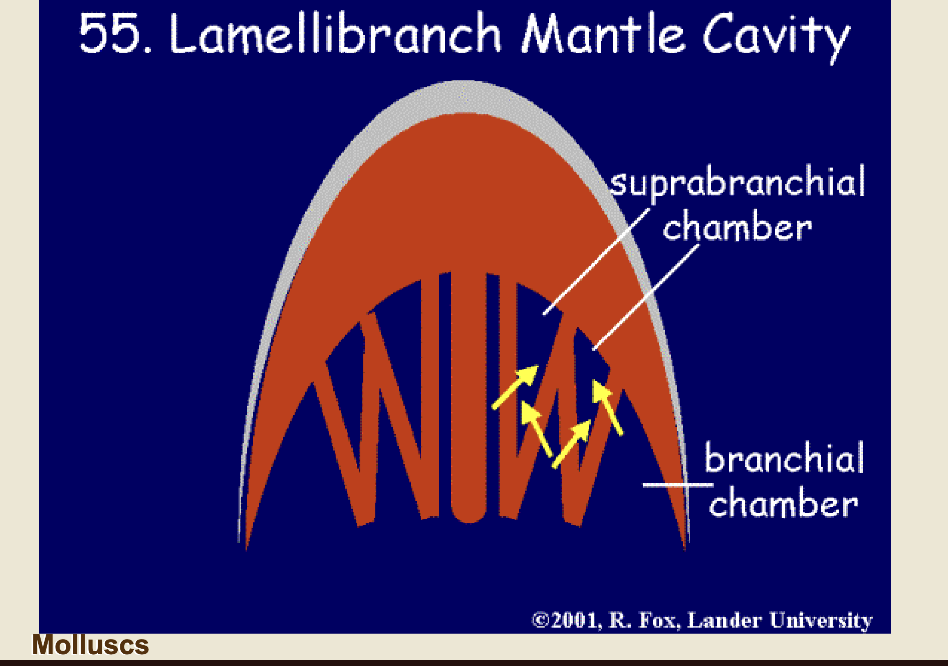
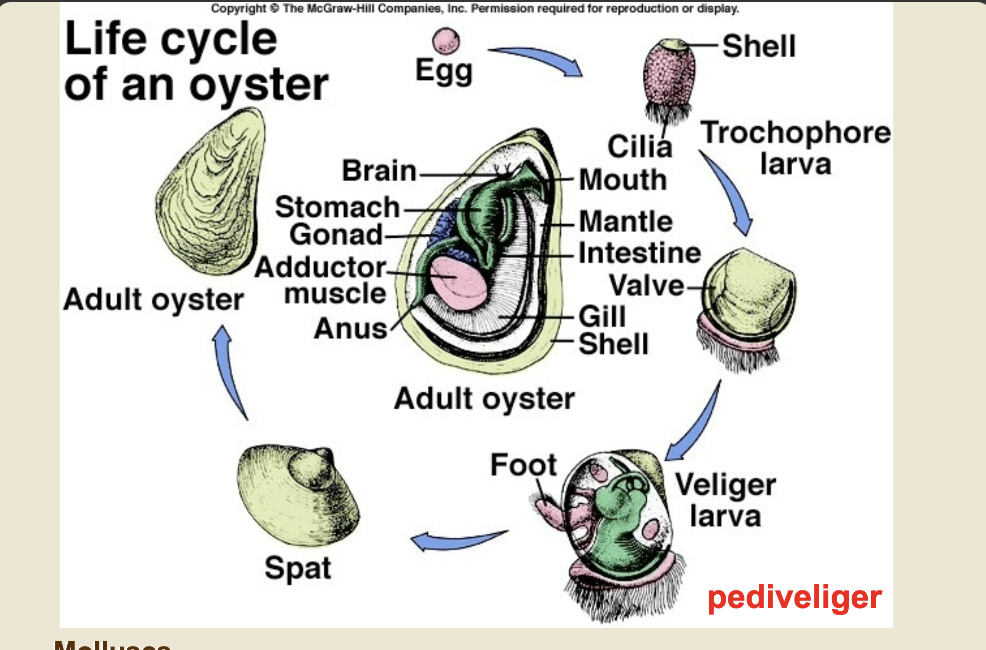
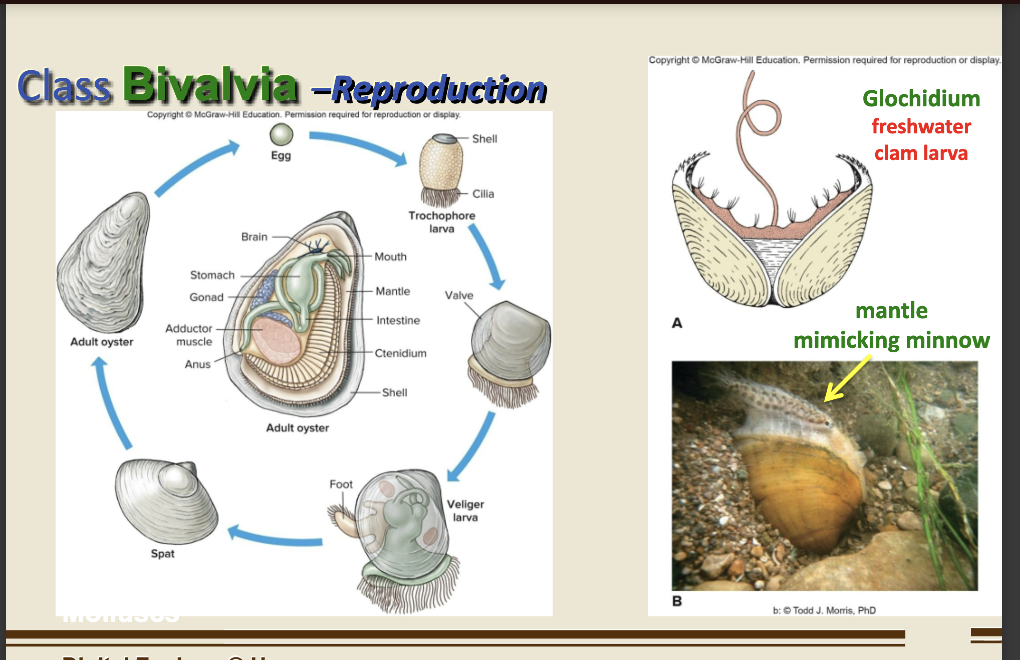
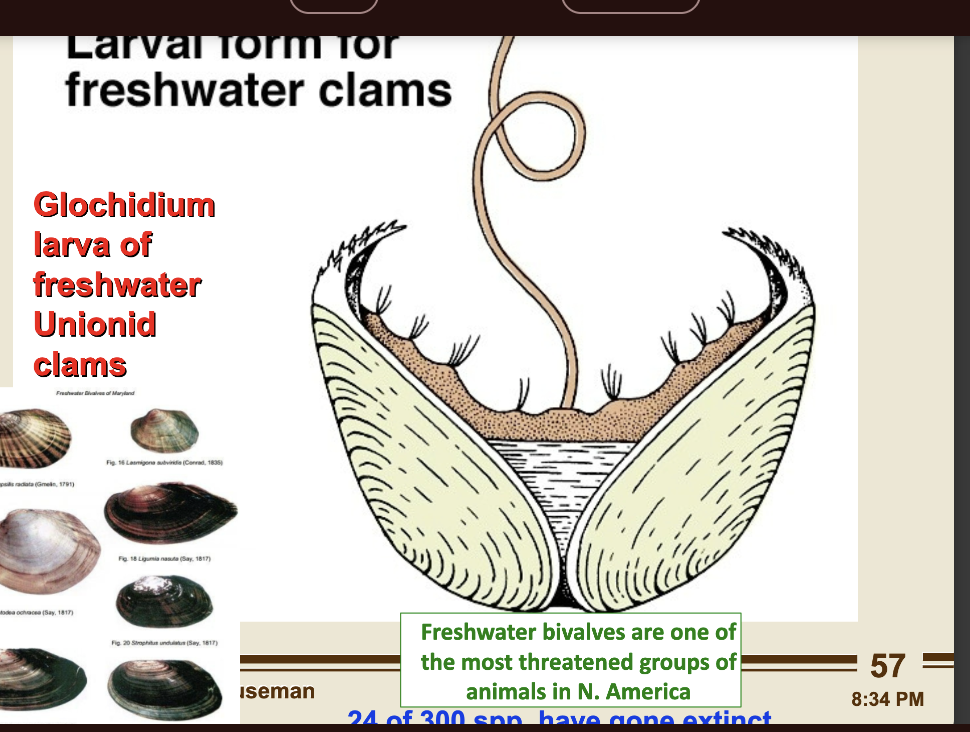
bivalvia: shell broken into 2 parts with valve.. foot is hatchet shaped to dig into mud... blood flows into hemocoel into foot to dig, gills on either side of foot in mental cavity...pedal rectactor muscles bring foot back into body cavity unless its anchored (blood into hemocoel, dig, swell up tip, and contracting retractor muscles to pull into sand with anchor)....can sometimes secrete threads to hold onto rock... gills have cillia to suspension feed lining food groove to move towards mouth and labial pouch puts into mouth... eat phytoplankton!....have anterior and post adductor muscles to close shell... gut is long and windy.. true feces after filter mechanisms... gills are complicated W shapes for high surface area for trapping fine particles (lamellabranch highly folded(2))
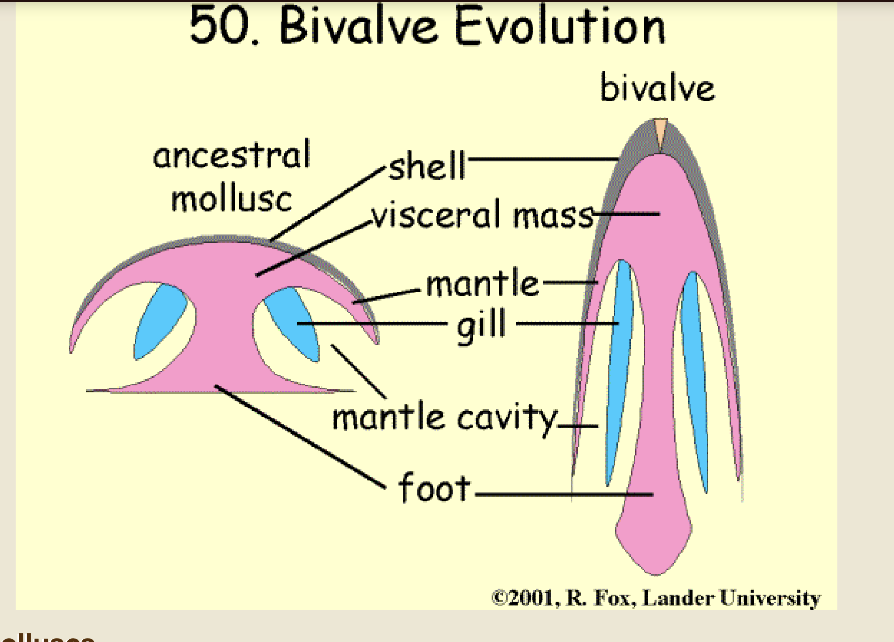
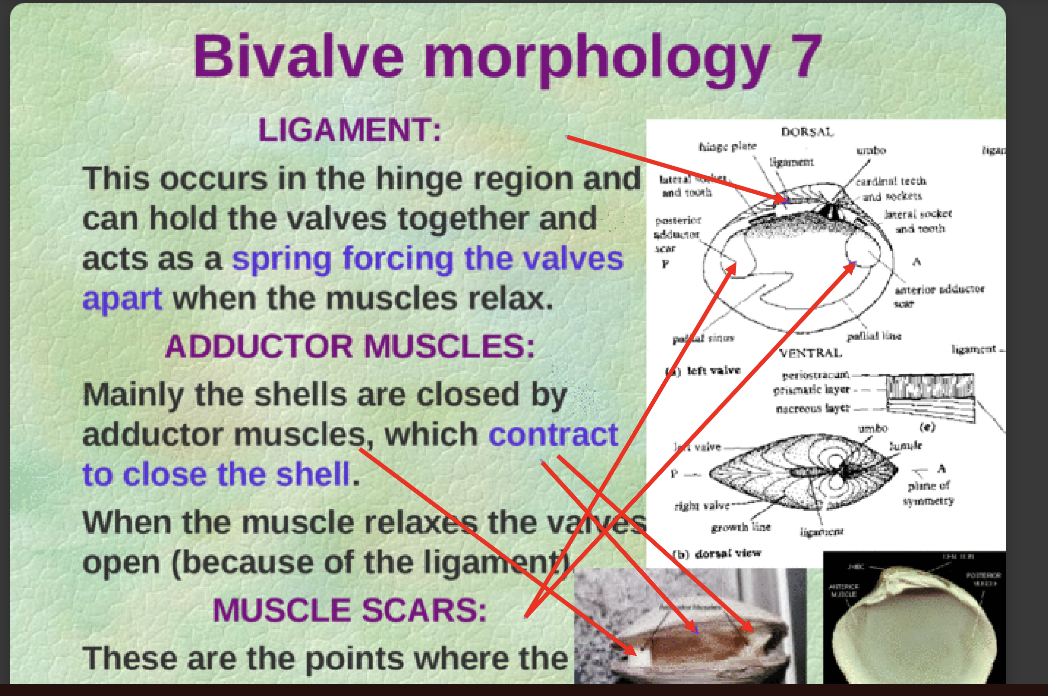
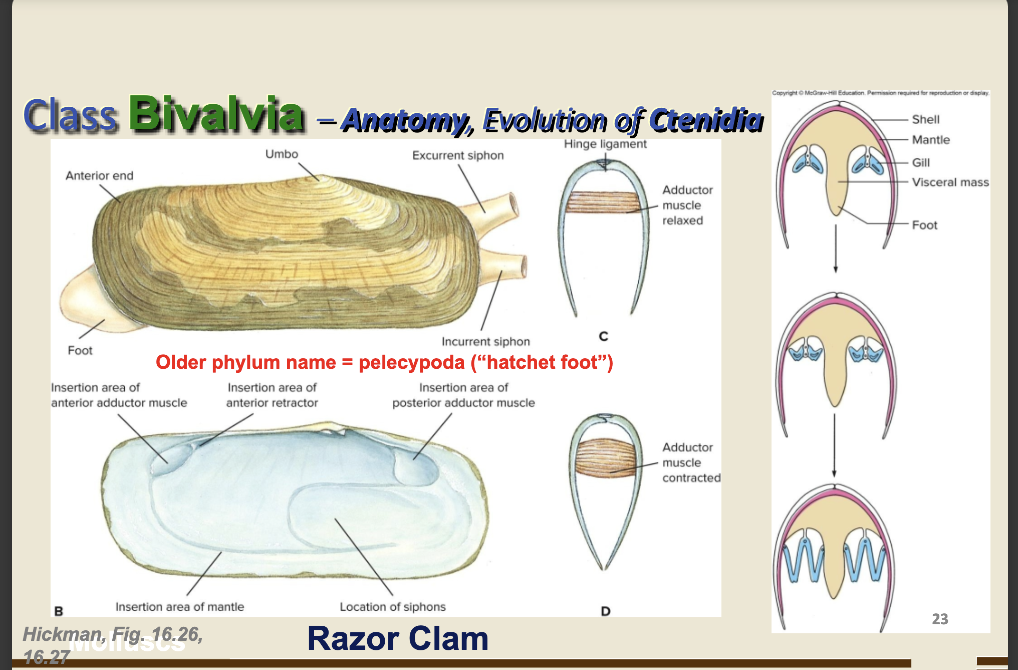
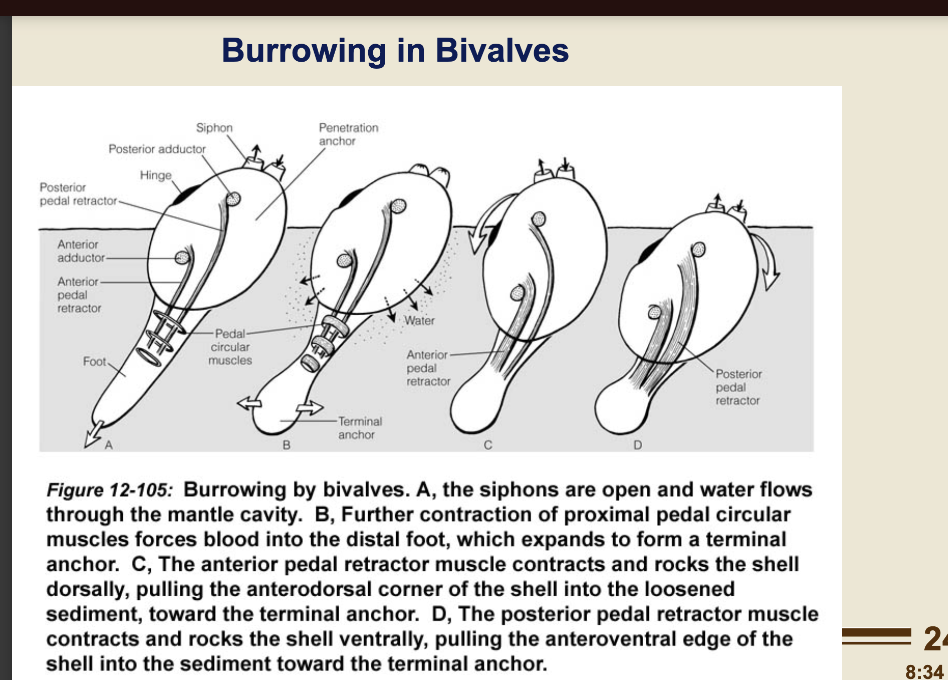
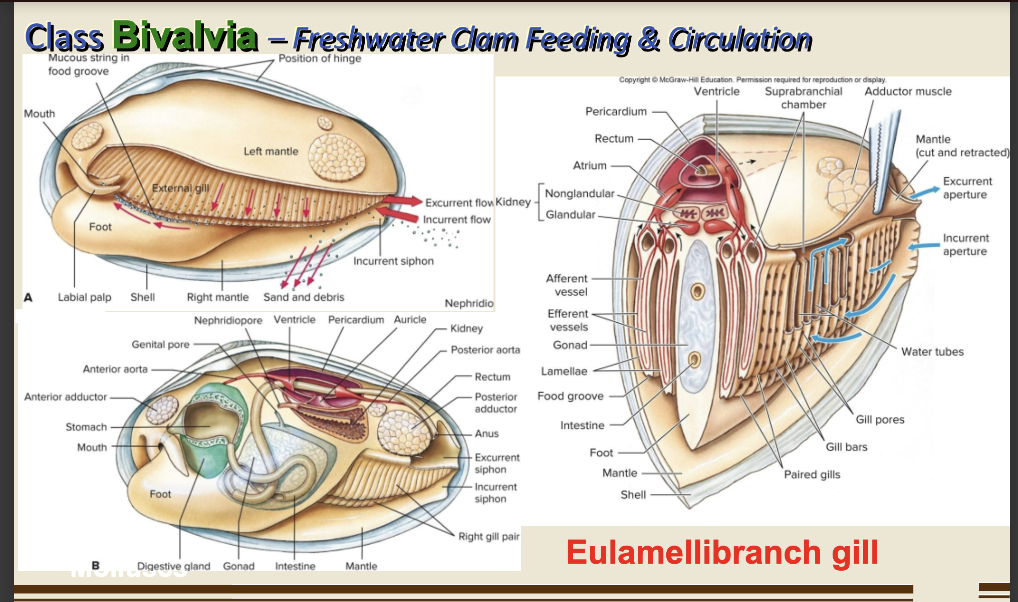
mucus and palps put into mouth
give an example of mollusk invasions
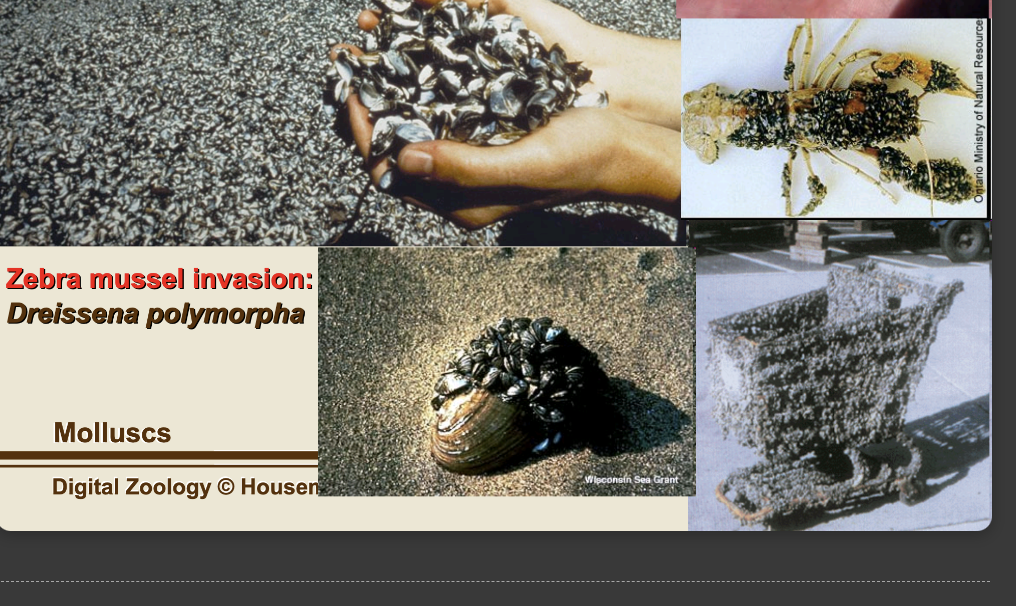
-zebra mussels… cleans the water but when they wash up they have toxins in them so when a lot die its a lot of toxic waste…
-coat EVERYTHING
-large efforts to stop the spread of these mussels.. can stow away in boats and be transferred into lakes
-issues from these mussels: water sewage treatment plants in NYC have been completely blocked… billions of dollars of damage, established high populations in CA from boats, cannot tolerate high salinity.. brackish or fresh only… cost 5 billion dollars from 2000-2010… from Europe.. their natural predator is not here so its invasive
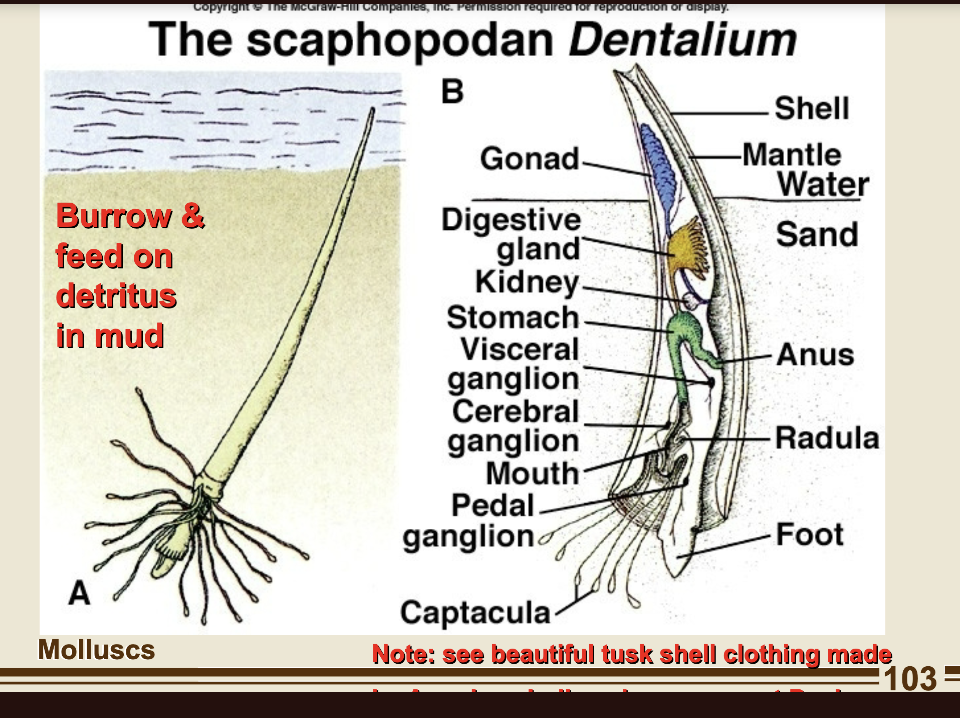
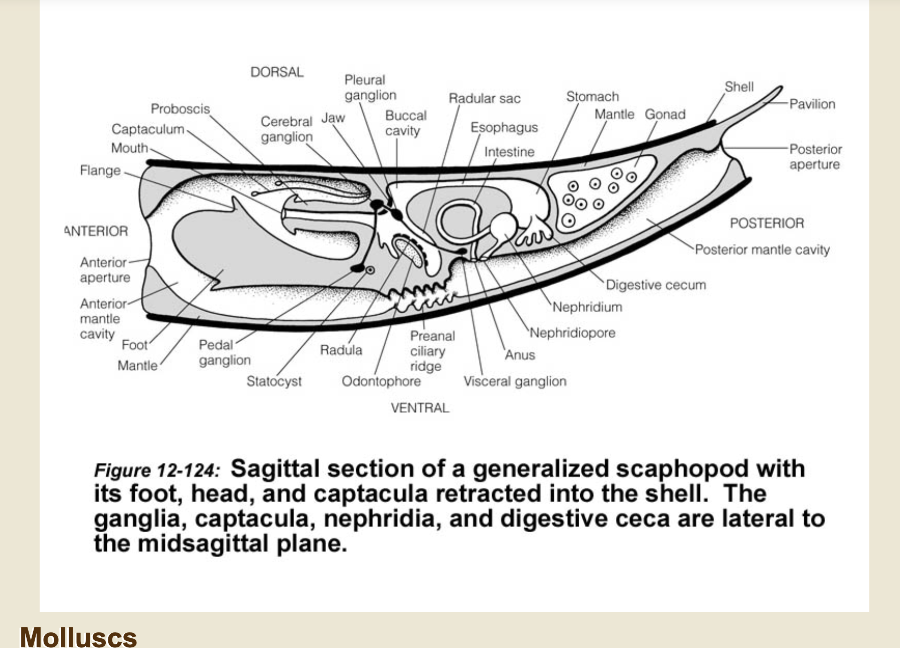
phylum mollusca class scaphopoda
Native Americans used these shells as a form of money and on clothing
-feed by extending captacula, eating little animals (interstitial) between sand grains
info card
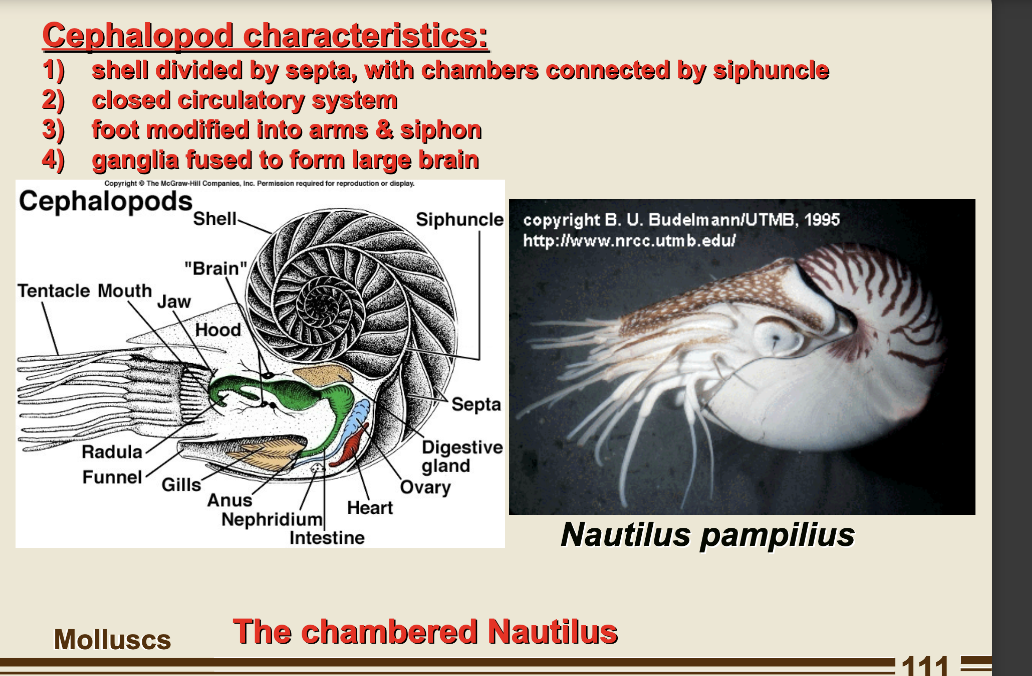
phylum Mollusca class Cephalopoda
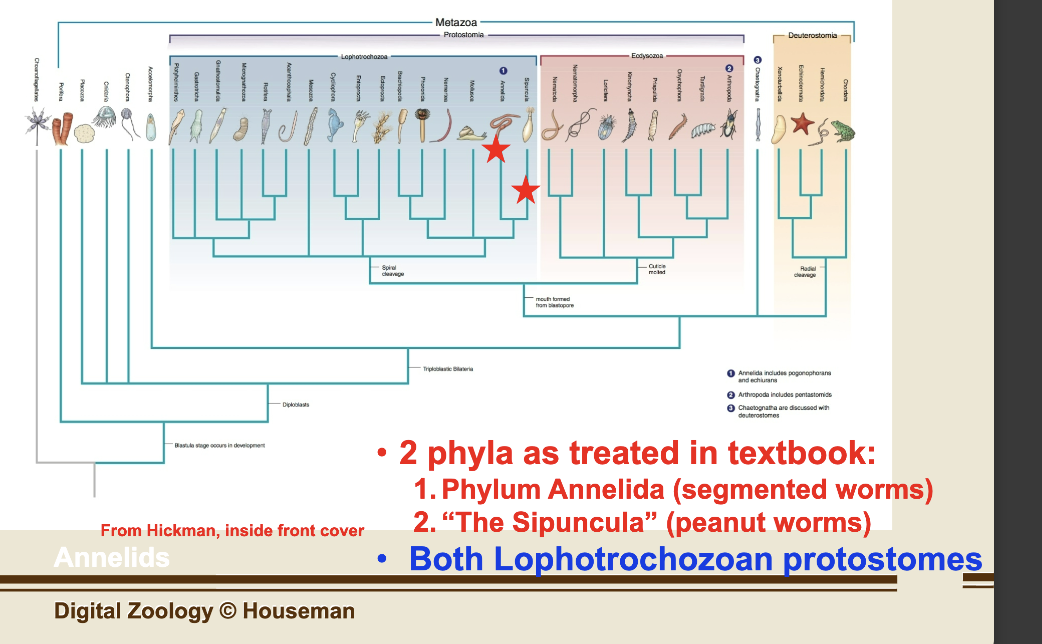
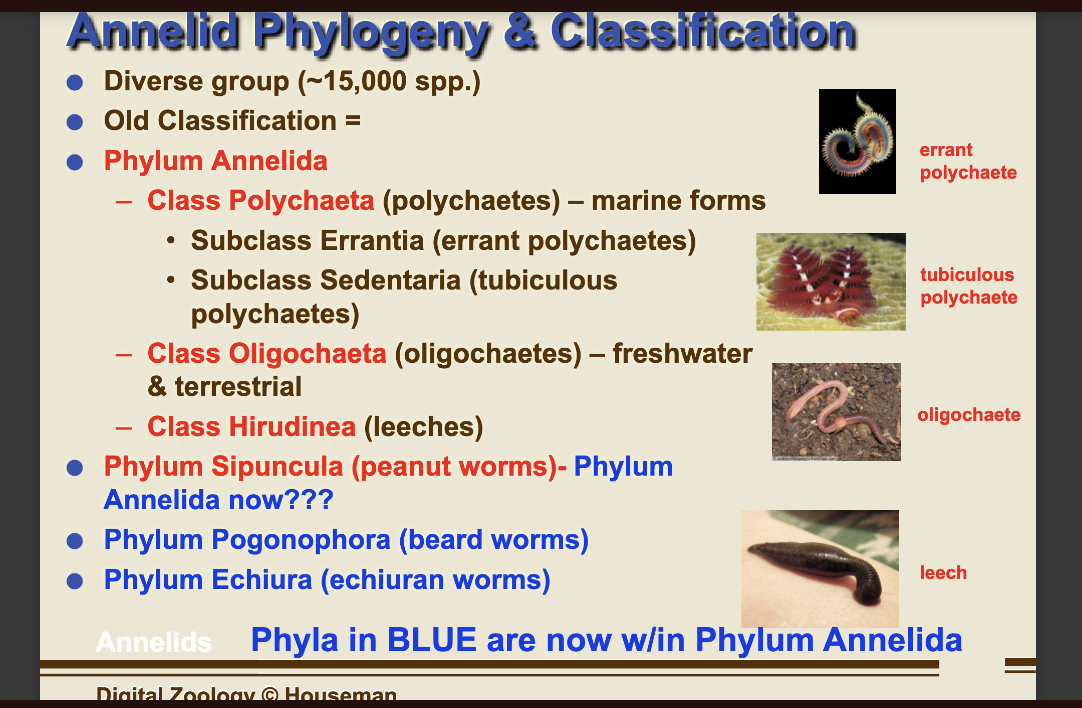
Phylum Annelida (segmented worms)
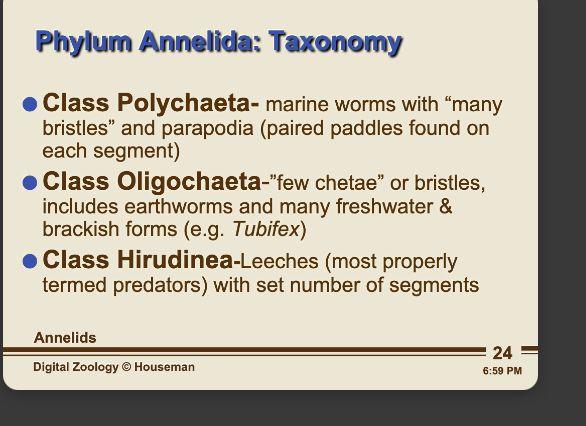
marine worms: polychaetes -many chaetea
errant- moving/active
sedentaria- sitting/lazy
fresh/terrestrial worms:
oligochaeta- few chaetea
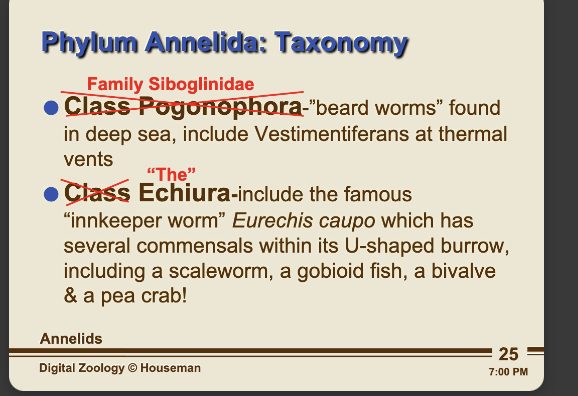
peanut worms, beard worms, echiuran worms are all part of annelida now but its messing everything up cuz DNA evidence…. nothing makes sense now
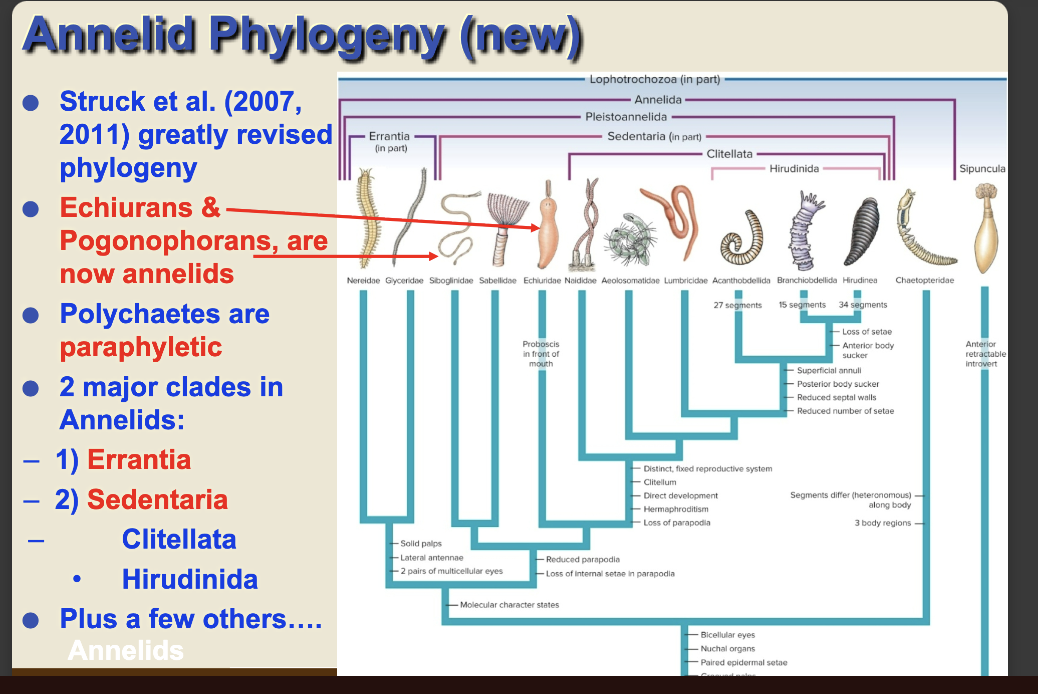
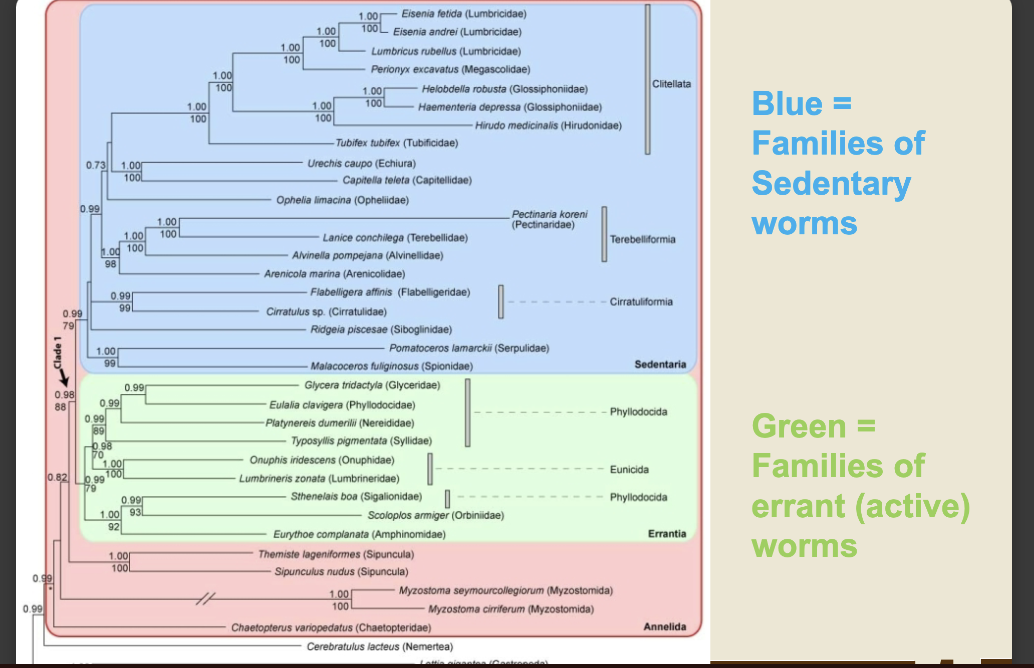
Annelida NEW PHYLOGENY flip for more
-a few unsegmented AND segmented worms together now bc DNA info changed it…
-NEW CLADES INSTEAD OF ALL DIFFERENT PHYLUMS AND NEED TO REMOVE POLYCHAETES CLASS
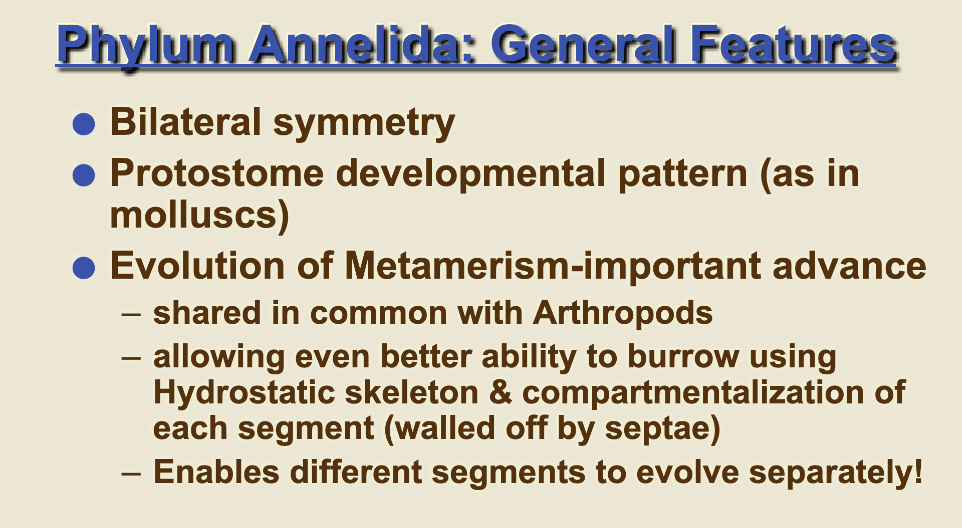
annelid general features info card flip for more
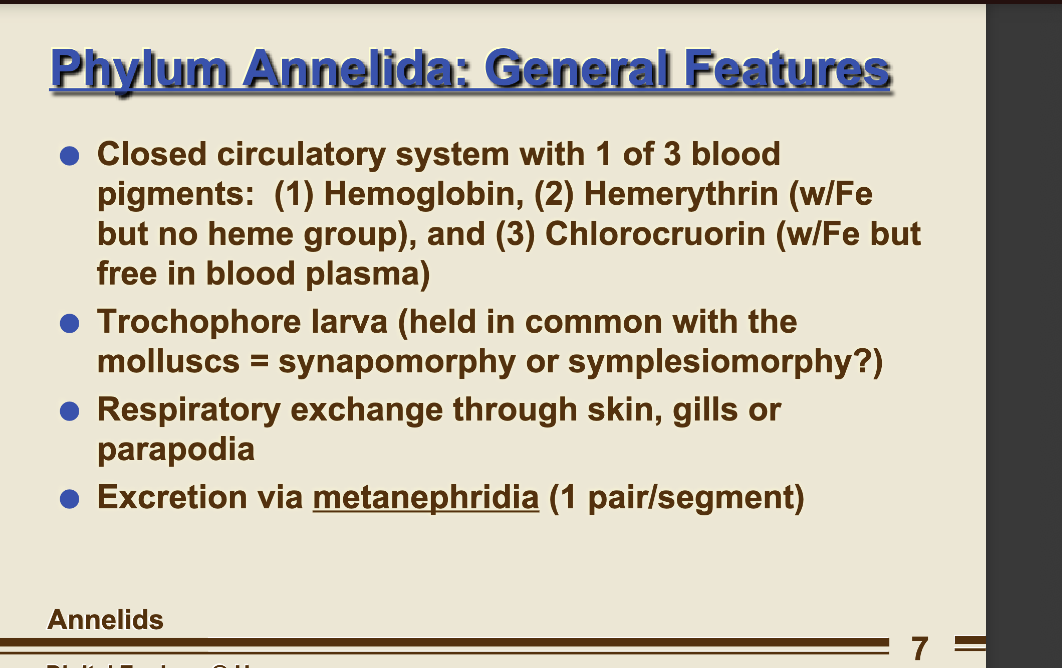
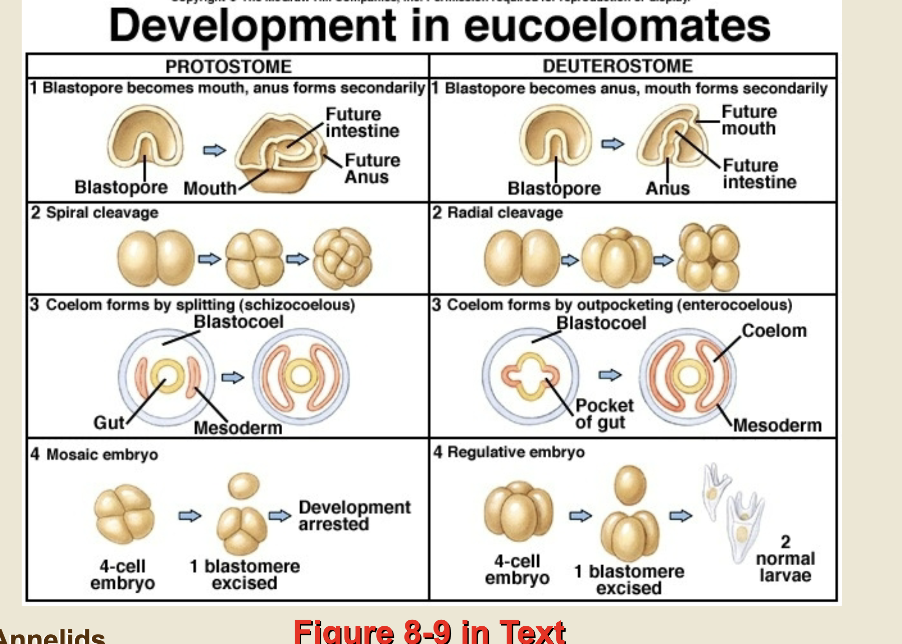
development info card flip for cleavage patterns
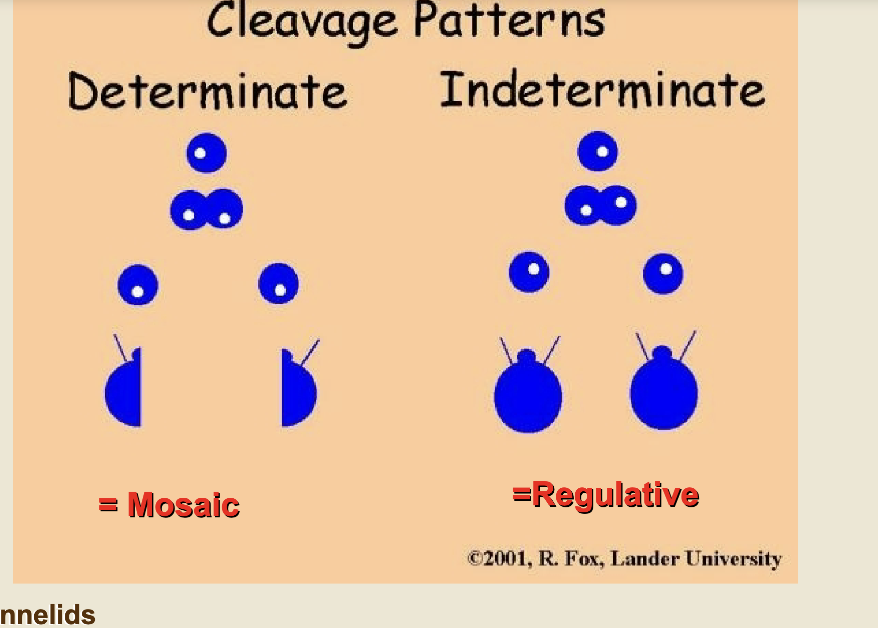
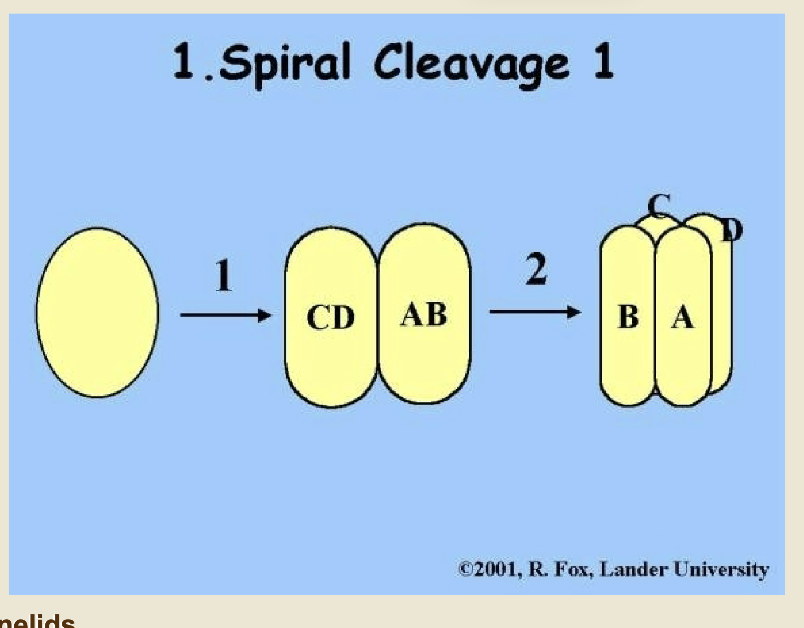
spiral cleavage info car flip for more
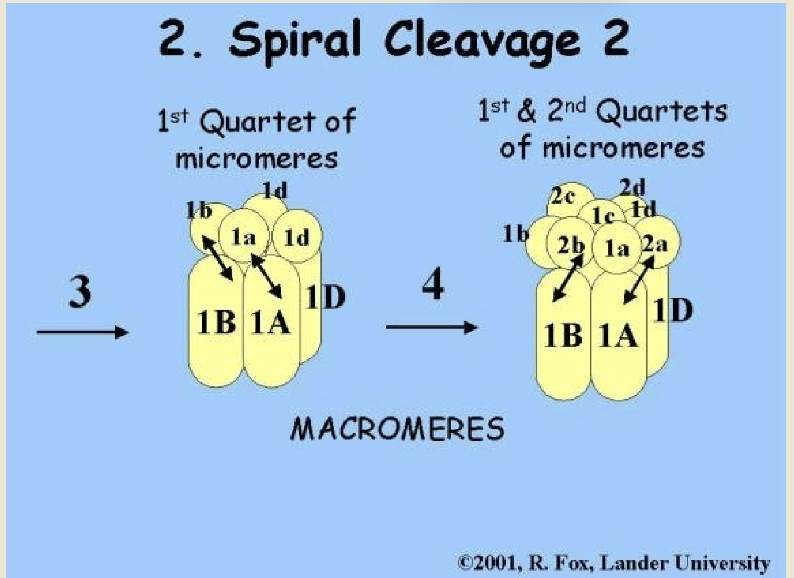
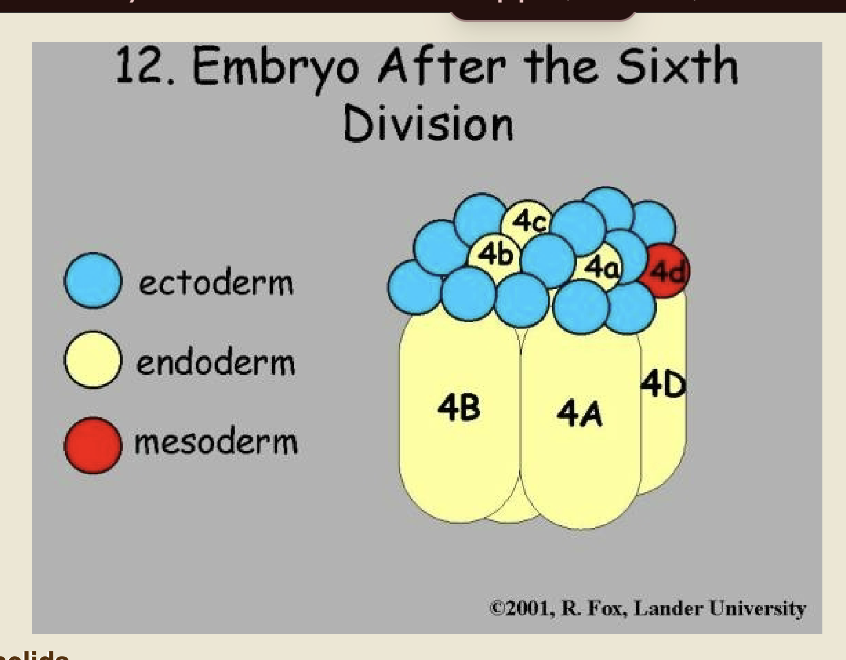
development post spiral cleavage info card flip for schizocoely
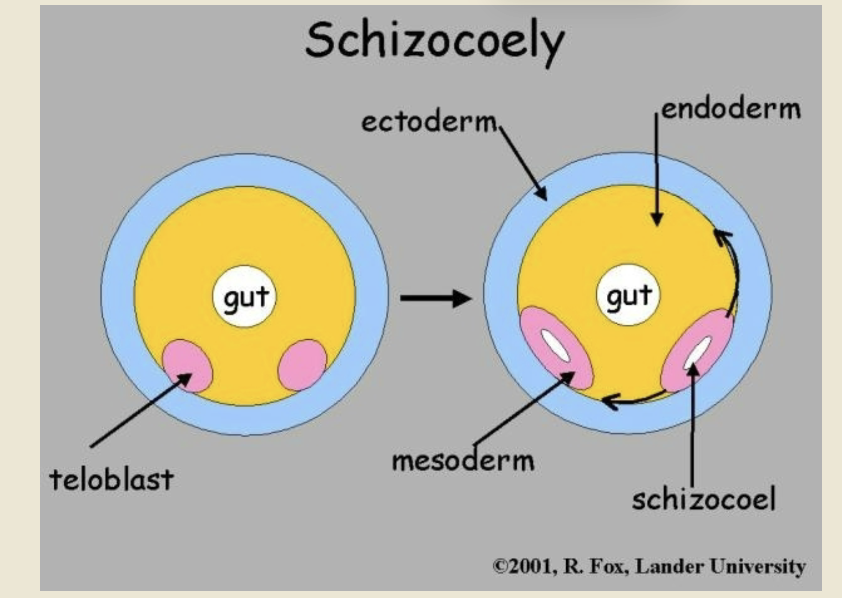
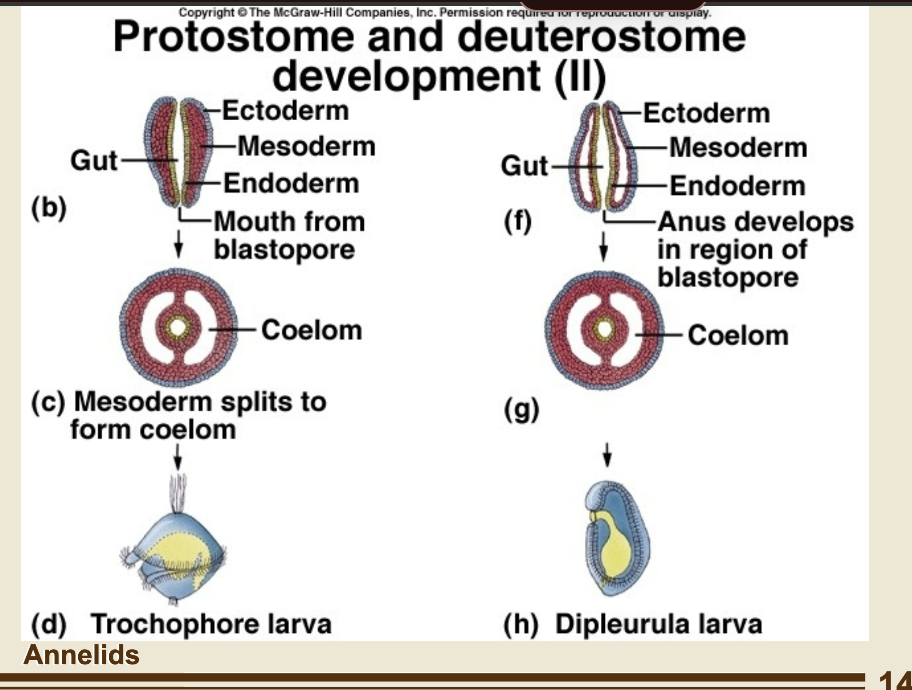
development info
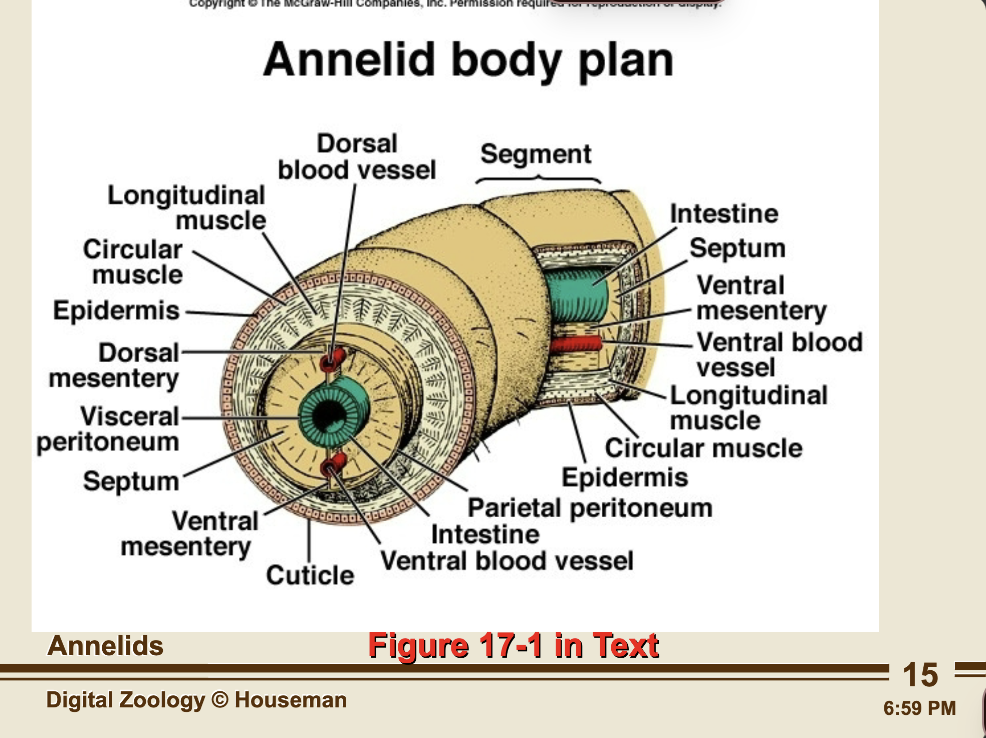
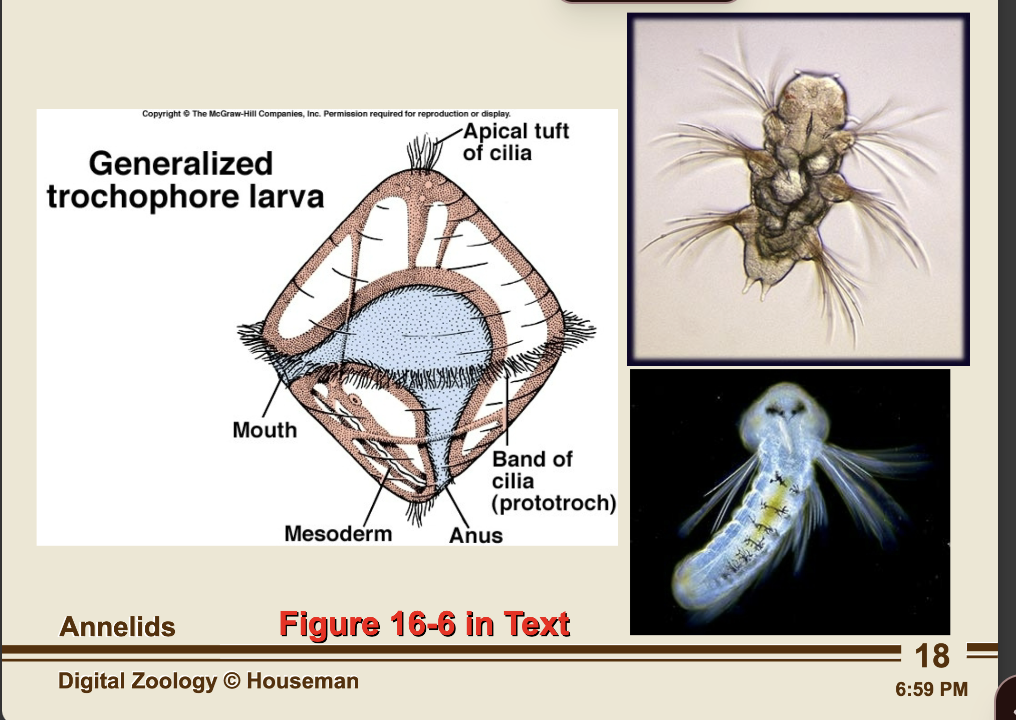
Annelid body plan! flip for larva info
-segmented marine worms have well-defined segments and each has coelomic fluid to move independently (narrow or wide) helpful for digging
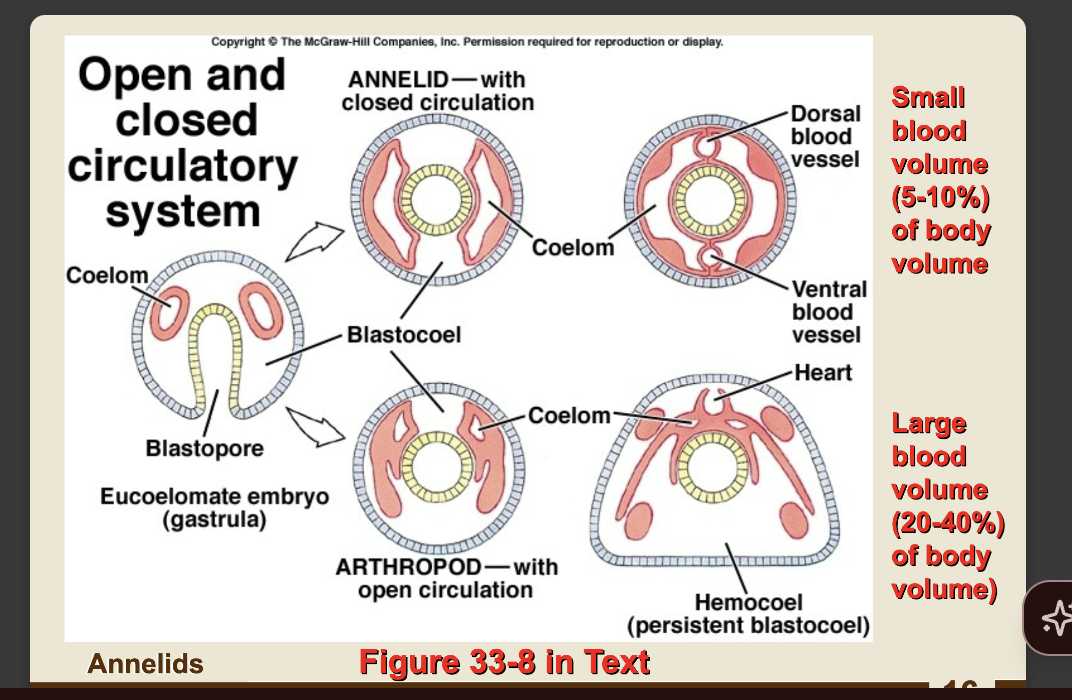
annelid circ system body plan flip for more
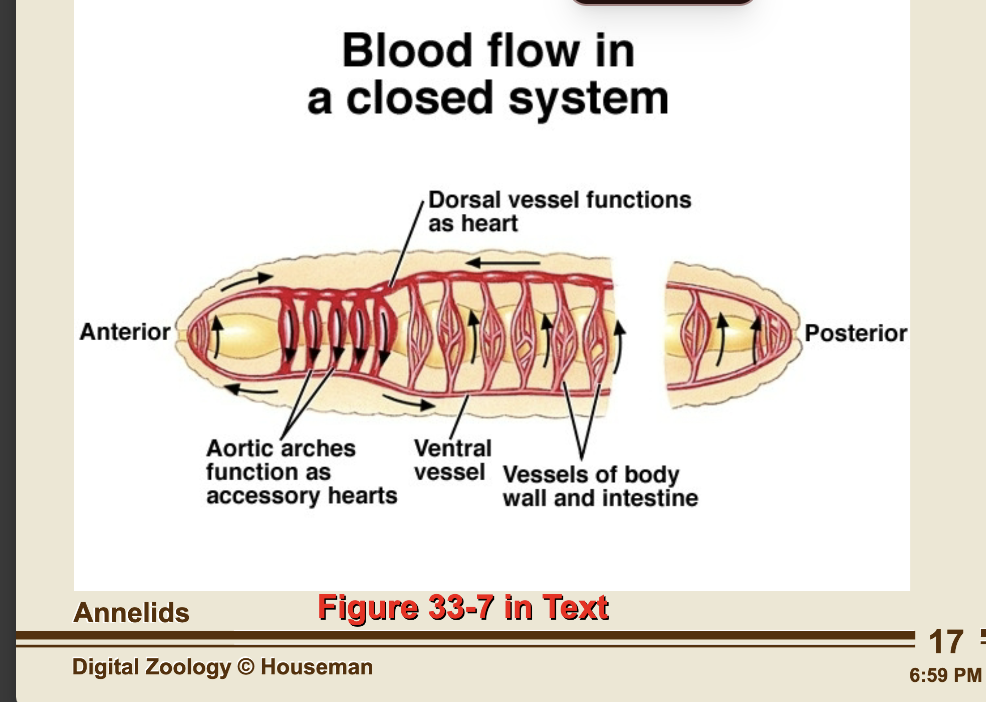
-closed circ. system
-small blood volume bc its maintained in blood vessels
-…open circ. In hemocoels, blood volume is high bc it's not contained… not in marine worms!
-blood vessels are connected by aortic arches(work like hearts)
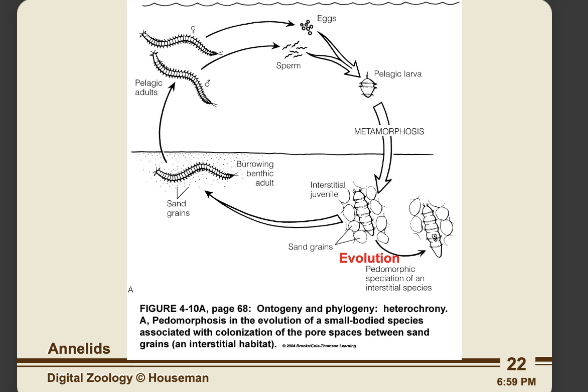
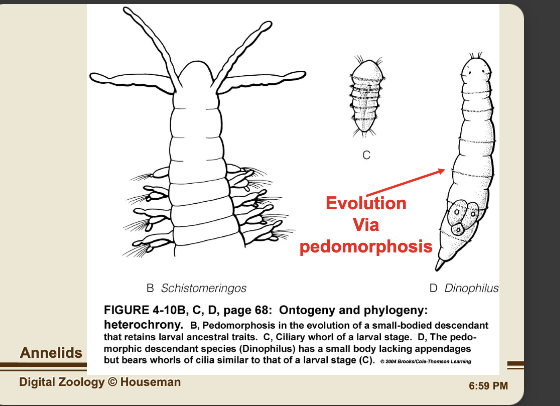
annelid evolution
synapomorphies: shared derived characters that evolved to be unique and not ancestral
-ex: COLLAGEN, segmentation.. helps with burrowing
annelid TAXA
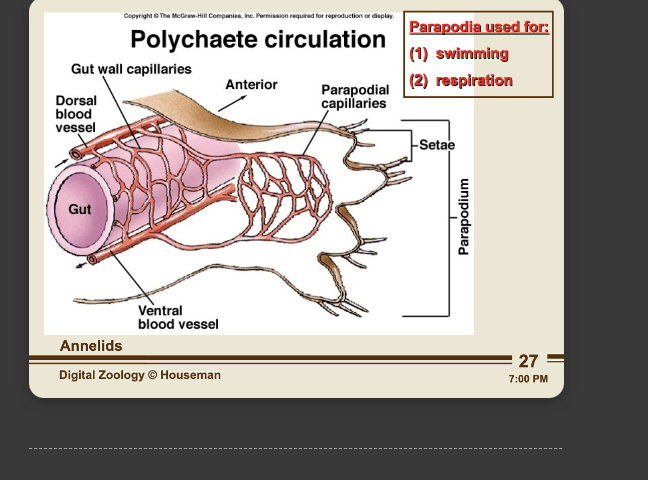
info card flip for info on muscle attachment
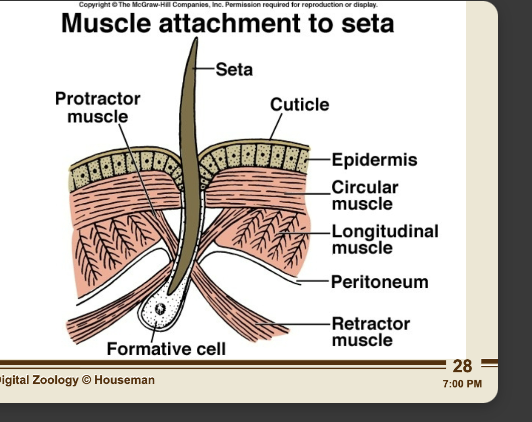
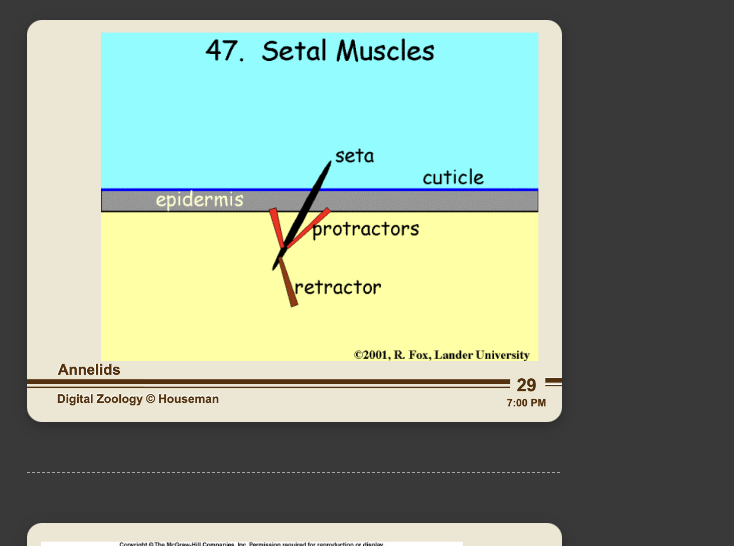
how are setal muscles attached?
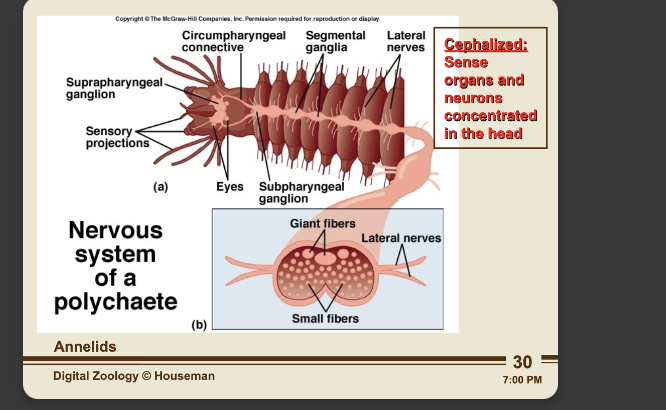
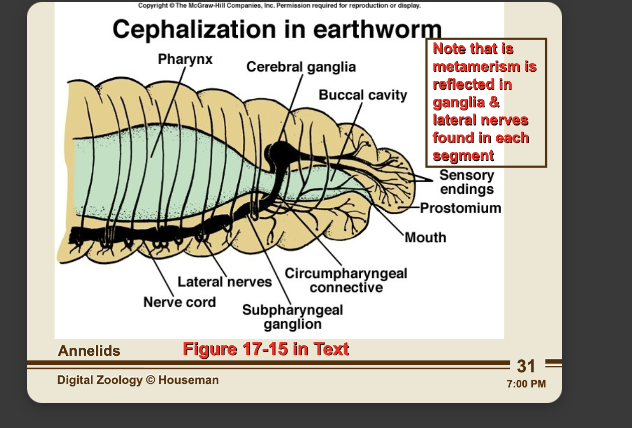
annelid nervous system info card flip for more (cephalization)
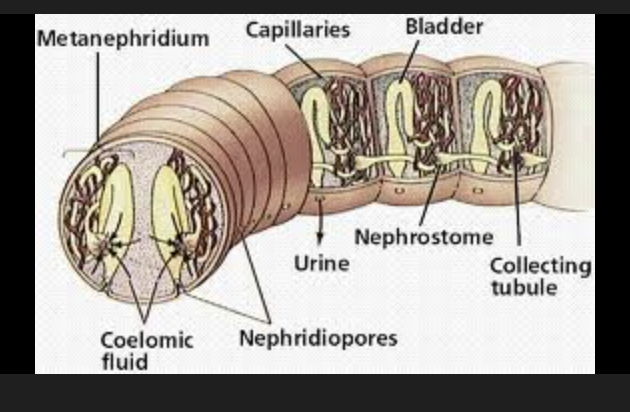
metanephridia
-unique: open funnel bc it is a coelomate bc it needs coelomic fluid… wouldnt work in protonephridians bc they arent true coelomates… requires LARGE coelomic body cavity
-anything in the coelomic cavity will be released via metanephridia (sperm/eggs)
-blood filters waste and primary urine enters open funnel and some is reabsorbed and then 2ndary urine (final) is excrected (toxins)
-pre-kidneys
-opening (nephrostome) (mouth)
-funnel is metanephridia itself
Be able to describe metanephridia function and compare ot protonephiridia
marine worms have many cheate (polychates)
-often scavengers

