enzymes and digestion
 Call Kai
 Learn
Learn Practice Test
 Spaced Repetition
 Match
Match Flashcards
 Knowt Play
1/17

There's no tags or description
Looks like no tags are added yet.
Name | Mastery | Learn | Test | Matching | Spaced | Call with Kai |
|---|
No analytics yet
Send a link to your students to track their progress
18 Terms
what does digestion involve?
the breakdown of large, biological molecules into smaller molecules.
the smaller molecules can then be taken up by the cells and used for a number of function
what is hydrolysis?
the reaction that breaks down large, biological molecules
the reaction requires water and splits larger molecules into their smaller components
these smaller molecules (e.g- glucose) can easily diffuse into cells or be transported using protein channels
products of hydrolysis?
hydrolysis of proteins produces amino acids
hydrolysis of carbs produces disaccharides and monosaccharides
hydrolysation of lipids produces fatty acids and monoglycerides
where does the digestion of carbs begin and what enzyme is involved?
begins in the mouth, and the enzyme amylase is involved
amylase is an enzyme that is produced in the salivary glands and the pancreas
amylase catalyses the hydrolysis of starch into maltose
hydrolysis of carbs breaks bonds called glycosidic bonds
what are membrane-bound disaccharides?
enzymes in the cell membranes of the epithelial cells in the ileum (small intestine)
membrane-bound disaccharidases catalyse the hydrolysation of disaccharides into monosaccharides
how are monosaccharides transported into the epithelial cells in the ileum?
using transporter proteins
glucose and galactose are transported by co-transporter proteins
fructose is absorbed by facilitated diffusion
once inside the cells, monosaccharides can be used in respiration
what is lipase?
an enzyme that is produced by the pancreas and is released into the small intestine
lipase hydrolyses lipids into fatty acids and monoglycerides
hydrolysis of lipids breaks bond called ester bonds
what are bile salts?
they are produced by the liver
they also help digest lipids by forming small lipid droplets called micelles
the process of forming micelles is called emulsification
the many micelles have a larger surface area than a single larger micelle
this allows the lipids to be hydrolysed by lipase more quickly
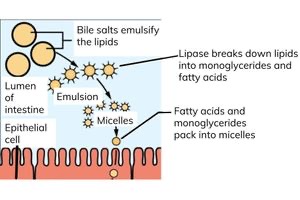
micelles?
the micelles allows the monoglycerides and fatty acids to be absorbed by the epithelial cells in the ileum
the monoglycerides and fatty acids diffuse through the cell surface membrane into the cell cytoplasm
what are endopeptidases?
they are enzymes that catalyse the hydrolysis of bonds within a protein to amino acids
hydrolysis of proteins breaks bonds called peptide bonds
examples of endopeptidases include:
trypsin
chymotrypsin
pepsin
trypsin and chymotrypsin are released by the pancreas into the small intestine
pepsin is released into the stomach
what are exopeptidases?
they are enzymes that catalyse the hydrolysis of peptide bonds at the ends of proteins
e.g- dipeptidases hydrolyse the peptide bond between 2 amino acids
what are co-transporter proteins needed for?
they transport amino acids into the epithelial cells in the ileum
what happens after larger molecules are hydrolysed into monomers?
they are absorbed by the cells
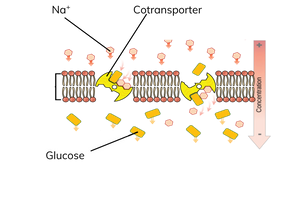
active transport of sodium ions?
sodium-dependent co-transporter proteins are located in the epithelial cell membranes
the co-transporter proteins actively transport sodium ions into the blood
this causes the concentration of sodium ions in the epithelial cells to decrease
diffusion of sodium ions?
the decreased concentration of sodium ions in the epithelial cells causes sodium ions in the ileum to diffuse down their concentration gradient
the sodium ions diffuse through a co-transporter protein in the cell surface membrane
binding of amino acids and sugars?
when sodium ions bind to a co-transporter protein, amino acids, or monosaccharides also bind to the protein
binding of amino acids or monosaccharides causes the transporter protein to undergo a conformational change
the amino acids or monosaccharides, along with the sodium ions are transported into the epithelial cell cytoplasm
once inside the epithelial cells, the amino acids or monosaccharides can then be used inside the epithelial cells or absorbed into the bloodstream
formation of micelles?
after larger lipid molecules have been broken down into monoglycerides and fatty acids, bile salts are secreted by the liver
the bile salts associate with the monoglycerides and fatty acids to form micelles
micelles are circular formations that are made up of phospholipid tails
incorporation of micelles?
the micelles move through the ileum and come into contact with the epithelial cells
the micelles incorporate themselves into the epithelial cell surface membrane and are absorbed
Explore top notes

Explore top flashcards
